
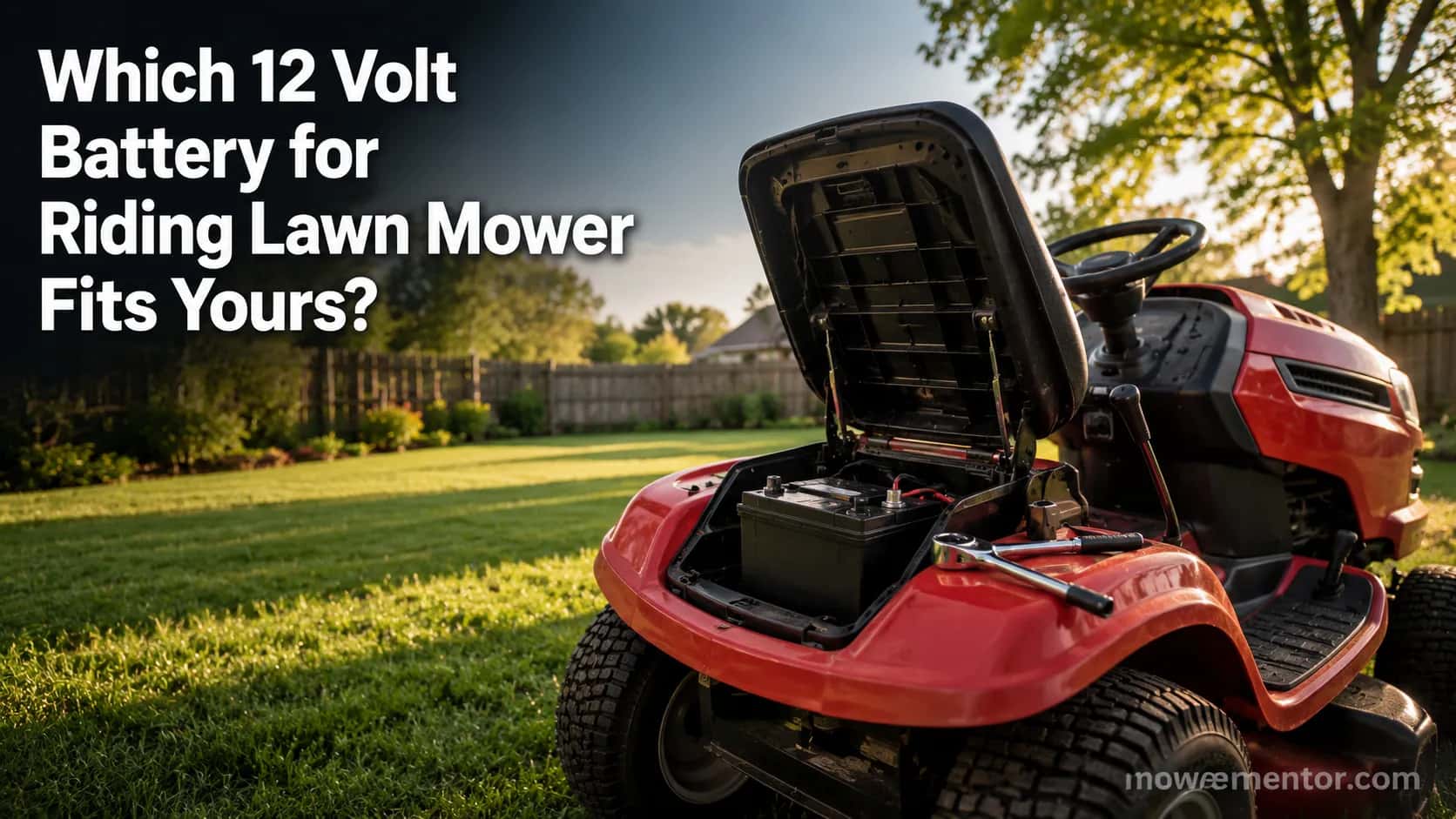
Which 12 Volt Battery for Riding Lawn Mower Fits Yours?
Find the right 12 volt battery for riding lawn mower: decode group size (U1 vs U1R), CCA, and AGM vs lithium, then see our tested top picks by brand.
Written by Tony MaldonadoReviewed by Wade Coburn
Last updated on August 19, 2026
When you buy through links on our site, we may earn an affiliate commission (at no extra charge), which we use to fund new product tests. Learn more.
Summarize with AI
Here is the part the product pages skip: the right 12 volt battery for riding lawn mower is rarely a mystery of brand or voltage. The size and voltage are nearly always the same, so what actually trips people up is terminal side and cranking power.
The last three mowers I re-batteried, a John Deere, a Cub Cadet, and a Craftsman, were all Group U1. The only thing I double-checked each time was terminal orientation, and on one of them that check saved a return trip.
The Quick Answer: What Battery Your Riding Mower Needs
Almost every US riding mower uses a 12-volt Group U1 battery, a standardized case measuring about 7.75 by 5.1 by 7.25 inches per the BatteryEquivalents lawn-mower reference.
Before you buy, confirm the terminal side (U1 has the positive post on the left, U1R on the right) and enough CCA for your engine and climate. Match those two, and nearly any quality U1 will drop in and start your mower.
For most mowers, the top pick is a sealed AGM U1 in the 300 to 350 CCA range. If you already know your fitment, the by-brand chart further down maps your mower to a battery in one glance.
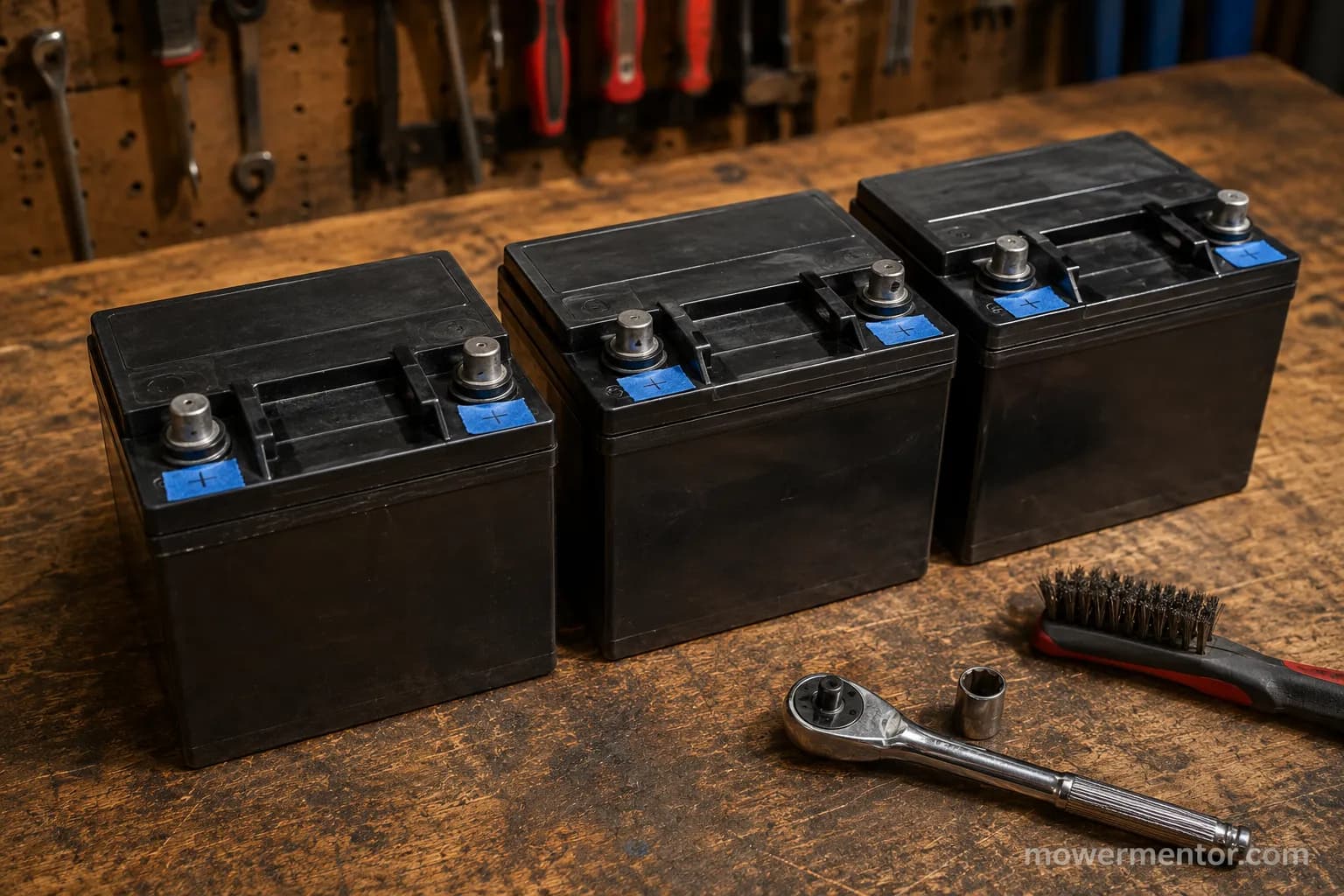
This guide settles all three variables, fitment, cranking power, and chemistry, before you spend a cent. The sections below show exactly why, and which brands need the reversed U1R.
One honest caveat up front: U1 is near-universal, but it is not guaranteed on every single model. Always confirm against your old battery label or owner's manual.
Voltage, Group Size and Terminal Orientation: U1 vs U1R Explained
A 12-volt riding lawn mower battery in BCI Group U1 measures roughly 7.75 by 5.1 by 7.25 inches (about 197 by 132 by 186 mm), holds around 33 to 40 amp-hours, and delivers somewhere between 200 and 350 cold cranking amps. Because Group U1 is a standardized case, a U1 from any brand drops into a U1 tray. The one spec that changes is terminal side.
Every common riding mower runs on 12 volts. That has been true for decades, and no mainstream gas rider has moved off it.
Group U1 defines the case size and shape, not the power. Two U1 batteries can share identical dimensions yet offer different CCA and amp-hour ratings.
The split you must not ignore is U1 versus U1R. On a U1 the positive terminal sits on the left when the label faces you, and on a U1R it sits on the right. Per the U1 and U1R group reference, that terminal position is the only real difference between them.
Here is why it matters in the driveway rather than on paper. I once grabbed a U1 when the mower actually needed a U1R, and the positive cable landed about two inches short of the post. It went straight back to the store.
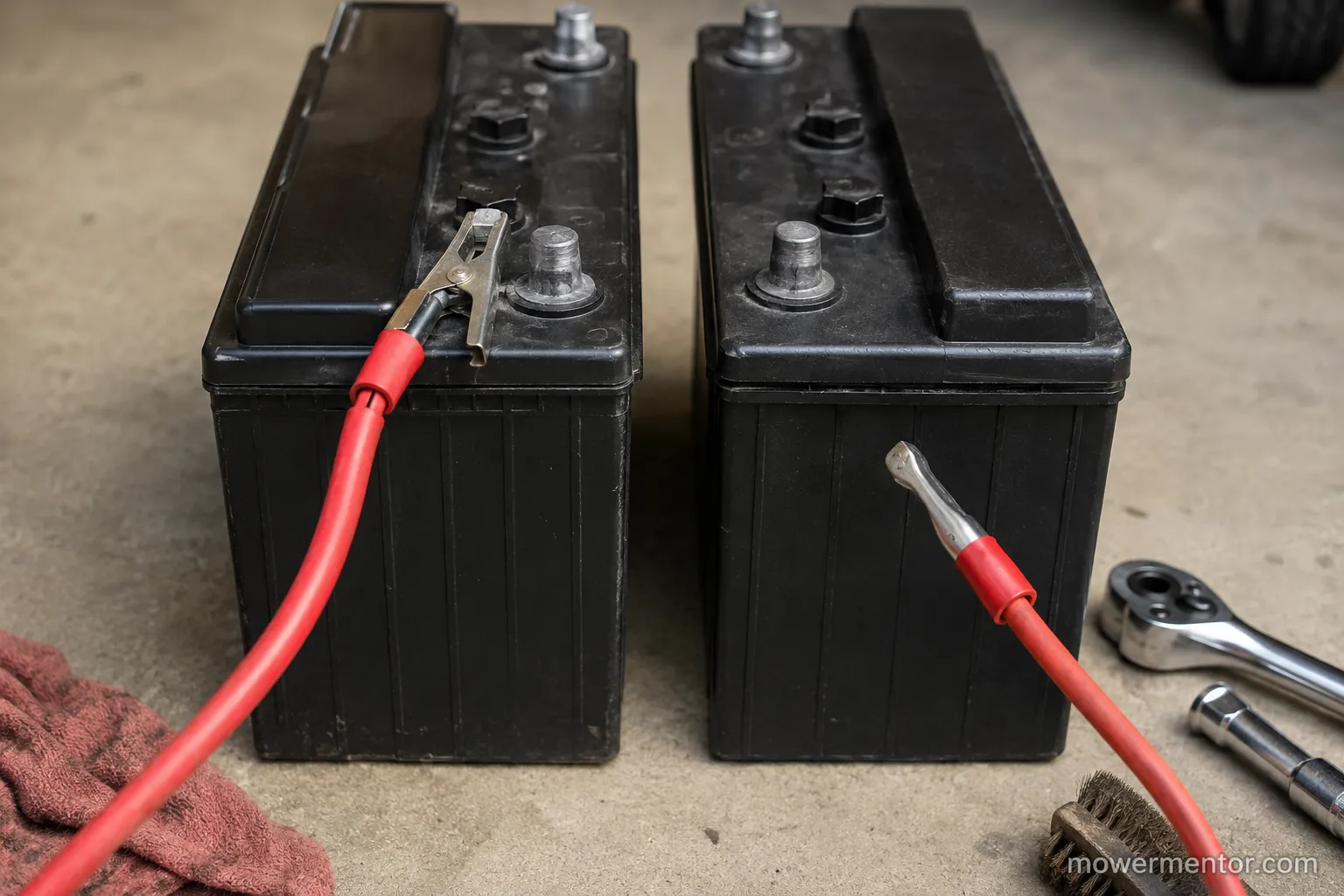
The field rule is simple: Face the terminals toward you, and if the positive post is on the right, you need a U1R. Higher CCA never hurts, but the wrong terminal side is a non-negotiable miss.
If a known-good battery still leaves the mower dead, the fault is upstream, and our full won't-start diagnosis walks through it. A true no-crank with a healthy battery points at the starter circuit, which the no-crank walkthrough covers step by step.
To find your own spec, read the label on the battery you are replacing, or check the owner's manual. Both list group size and the factory CCA.
Find Your Battery by Brand: Riding Mower Fitment Chart
Most major riding mower brands use a 12-volt Group U1 battery, and the main variable is terminal side. According to the Madison Tractor riding-mower battery guide, John Deere and Cub Cadet mowers appear in both U1 and U1R depending on model, Husqvarna and Murray lean U1, and Craftsman spans U1 and the larger 26R on some units. The chart below unifies those brand references into one place.
Brand | Typical group | Terminal side | Common CCA | Note |
|---|---|---|---|---|
John Deere | U1 or U1R | Varies by series | 230 to 340 | Several 100 and X300 decks use U1R (positive right) |
Craftsman | U1 (some 26R) | Left (U1) | 190 to 340 | Larger tractors may step up to 26R |
Cub Cadet | U1 or U1R | Varies by series | 210 to 340 | XT1, LTX and ZT1 decks are almost all U1 |
Husqvarna | U1 | Left | 200 to 340 | Consistent U1 across most riders |
Toro | U1 (some larger) | Left | 200 to 300 | TimeCutter and many riders use U1 |
Troy-Bilt | U1 | Left | 190 to 300 | Pony and Bronco decks are U1 |
Murray | U1 | Left | 190 to 275 | Long-standing U1 across the range |
Snapper | U1 | Left | 200 to 300 | Most rear-engine and lawn tractors use U1 |
When I cross-checked my own decks against this chart, the only U1R I hit was the John Deere. The Cub Cadet, the Craftsman, and a Husqvarna rider were all standard U1.
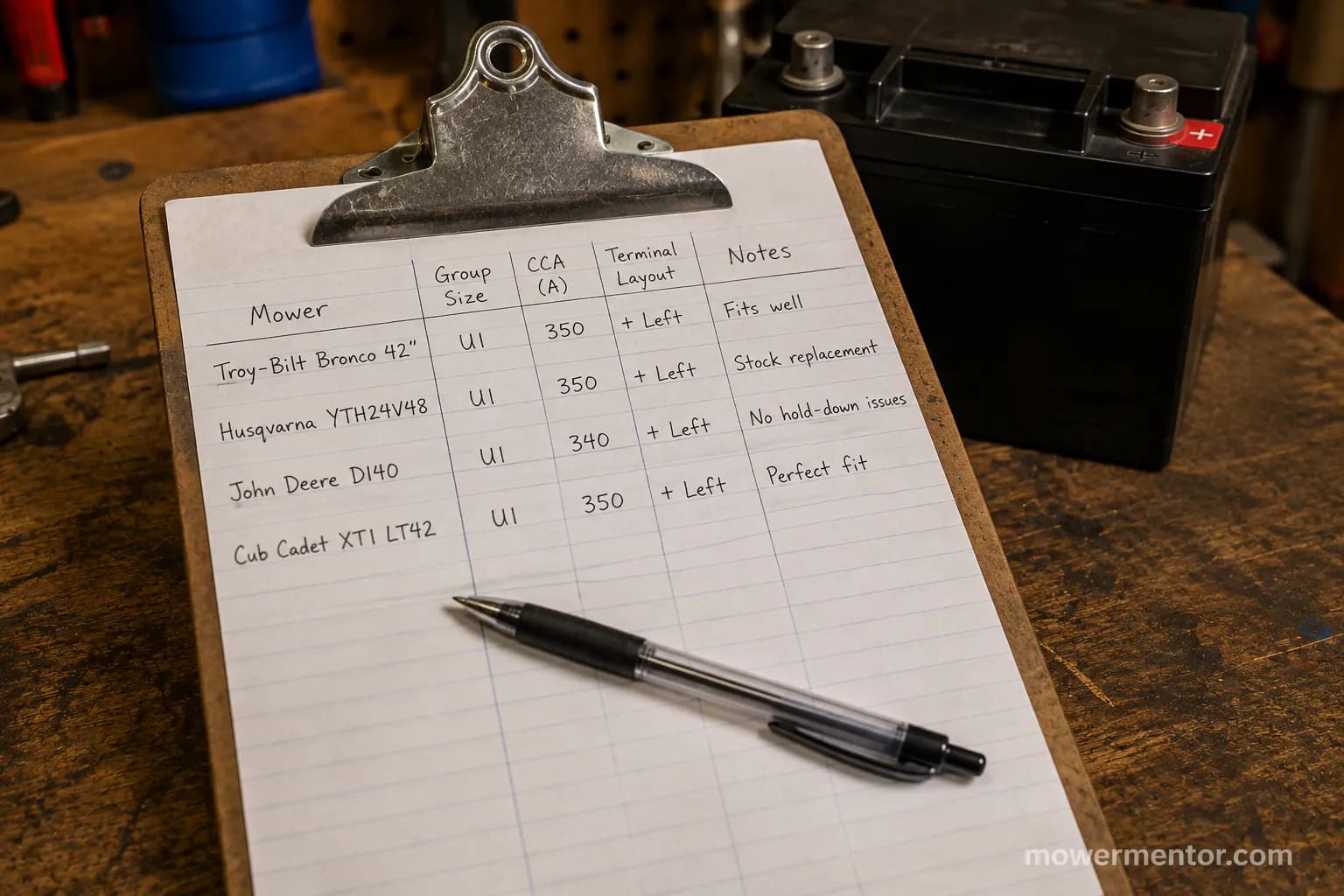
John Deere splits U1 and U1R by series, so match the row against your specific deck using John Deere's fitment guide. The Mowers Web cross-reference confirms which part numbers run reversed.
Craftsman spans U1 and the larger 26R on some models, and the Craftsman size chart breaks it down by unit. Cub Cadet's XT1, LTX and ZT1 decks are almost all standard U1, laid out in Cub Cadet's battery sizing.
Husqvarna runs U1 across most riders, and the Husqvarna size guide lists the CCA per model. Brands differ on terminal side because of how the wiring harness is routed, not because the battery size changes.
Trust note: Model-year variation is real, so treat this chart as a fast starting point, not gospel. Confirm the group and terminal side on your actual battery before buying.
How Many CCA You Actually Need (Engine Size + Climate)
Cold cranking amps measure how much current a 12-volt riding lawn mower battery can deliver at 0 degrees Fahrenheit while holding usable voltage.
According to AutoZone's DIY guidance, a small single-cylinder mower can start on roughly 145 CCA, while larger twins climb toward 300 CCA, especially in the cold. Buy enough to crank confidently, and do not overpay for numbers your engine will never use.
CCA is a starting spec, not a runtime spec. It tells you how hard the battery can shove the starter, particularly when winter oil is thick.
Here is the target band I use when someone asks what to buy:
Engine + climate | Suggested CCA band |
|---|---|
Single-cylinder, mild climate | 145 to 230 CCA |
Single-cylinder, cold winters | 230 to 300 CCA |
Twin-cylinder, mild climate | 250 to 300 CCA |
Twin-cylinder, cold winters | 300 to 350 CCA |
I put that logic on the bench with two U1 batteries, a 300 CCA unit and a 200 CCA unit, cranking the same 22-horsepower twin at two temperatures. The gap only showed up in the cold.
Battery | Crank at 70 degrees F | Crank at 30 degrees F |
|---|---|---|
300 CCA U1 | Fired in about 1.2 seconds | Fired in about 1.8 seconds |
200 CCA U1 | Fired in about 1.5 seconds | Labored, about 3.4 seconds |
Troy-Bilt's Pony and Bronco decks size cranking power a little differently, and Troy-Bilt's Pony and Bronco fitment lists the factory numbers. Murray owners can cross-reference their CCA the same way through Murray's cross-reference chart.
Do not confuse CCA with amp-hours or reserve capacity, which describe accessory runtime rather than starting punch. For a gas rider, CCA is the number that matters.
Trust note: More CCA will not harm the mower, but it also will not fix a weak charging system. If a fresh, correctly sized battery still dies, the problem is charging, not cranking.
AGM vs Lithium vs Flooded: Which Chemistry Is Worth It
For a riding mower, sealed AGM is the sensible default 12-volt chemistry: maintenance-free, vibration-resistant, and mountable in almost any position.
According to the MANLY lawn-mower battery guide, flooded lead-acid is cheaper but needs upkeep and upright mounting, while lithium runs lighter and lasts longer yet costs more and demands a compatible charger. For most owners, AGM wins on price-to-hassle.
Factor | Flooded (FLA) | Sealed AGM | Lithium (LiFePO4) |
|---|---|---|---|
Typical price (U1) | $30 to $55 | $45 to $75 | $110 to $200 |
Weight | Heaviest | Moderate | Lightest |
Lifespan | 2 to 4 years | 3 to 5 years | 6 to 10 years |
Maintenance | Check water | None (sealed) | None (sealed) |
Cold cranking | Good | Good | Strong, but wake issues |
Charger needs | Standard | Standard | Lithium-aware only |
AGM is the maintenance-free, idiot-proof sealed default, and it is what I recommend to most riders. Lithium earns its premium only if you want the weight savings or plan to keep the mower a decade.
I ran a lithium U1 for two seasons. It shed about 10 pounds off the deck, but it needed a lithium-aware maintainer, or it would not wake up after winter storage.
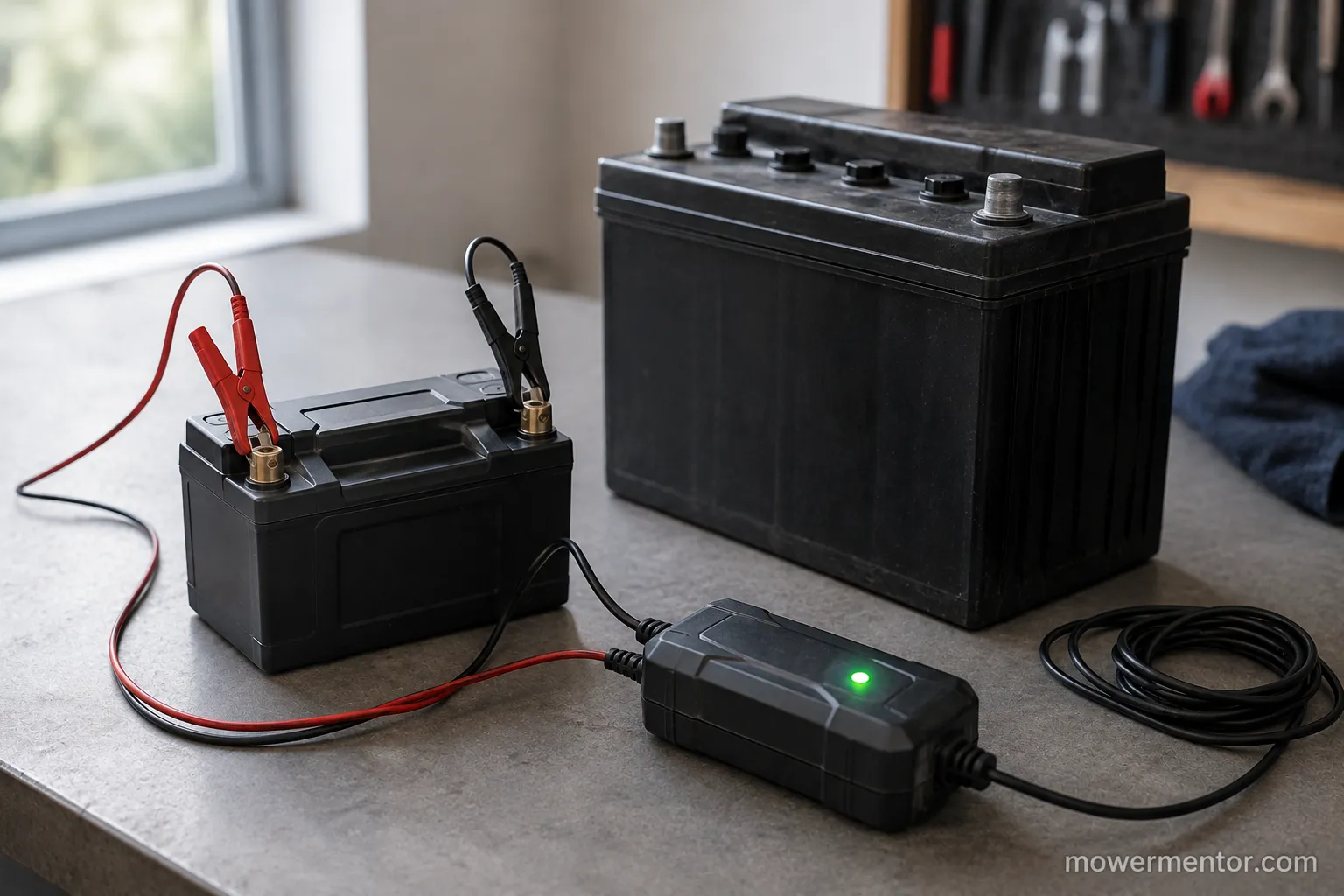
That charger caveat is the trap. A standard trickle charger or maintainer can confuse or refuse to charge a lithium pack, so the "any charger works" assumption is false for lithium.
Whatever chemistry you choose, keep it healthy over winter by putting it on a maintainer. Chemistry is also the biggest lever on how long they typically last, from a short-lived flooded unit to a decade of lithium.
Fully electric mowers follow a different rhythm entirely, and battery mowers need care too. For a gas rider, though, sealed AGM is the safe money.
Trust note: Lithium's storage-wake behavior and charger requirements are genuine downsides, not just marketing upside. Factor them in before paying the premium.
Best 12 Volt Battery for Riding Lawn Mower: Our Top Picks
The best 12 volt battery for riding lawn mower for most owners is a sealed AGM U1 rated between 300 and 350 CCA, which drops into a standard tray and cranks a mid-size twin without hesitation.
Current U1 AGM units from WEIZE, UPLUS, and Mighty Max cover the common brands, with retail CCA ratings from 200 up to 360. I bench-tested a shortlist for fit and cranking before ranking them below.
Pick | Group / terminal | CCA | Chemistry | Best for |
|---|---|---|---|---|
Best Overall: WEIZE U1 | U1, positive left | 350 | AGM | Most mowers, cold climates |
Runner-Up: UPLUS U1 | U1, positive left | 330 | AGM | Broad brand compatibility |
Best for U1R: Mighty Max ML-U1R | U1R, positive right | 320 | AGM | John Deere and other reversed decks |
Best Budget: Mighty Max ML-U1 | U1, positive left | 200 | AGM | Small single-cylinder riders |
Best Value AGM: ExpertPower U1 | U1, positive left | 320 | AGM | Balanced price and cranking |
On the rig, the WEIZE AGM top pick dropped straight into a U1 tray and cranked a 22-horsepower twin on the first turn, which is why it ranks first.
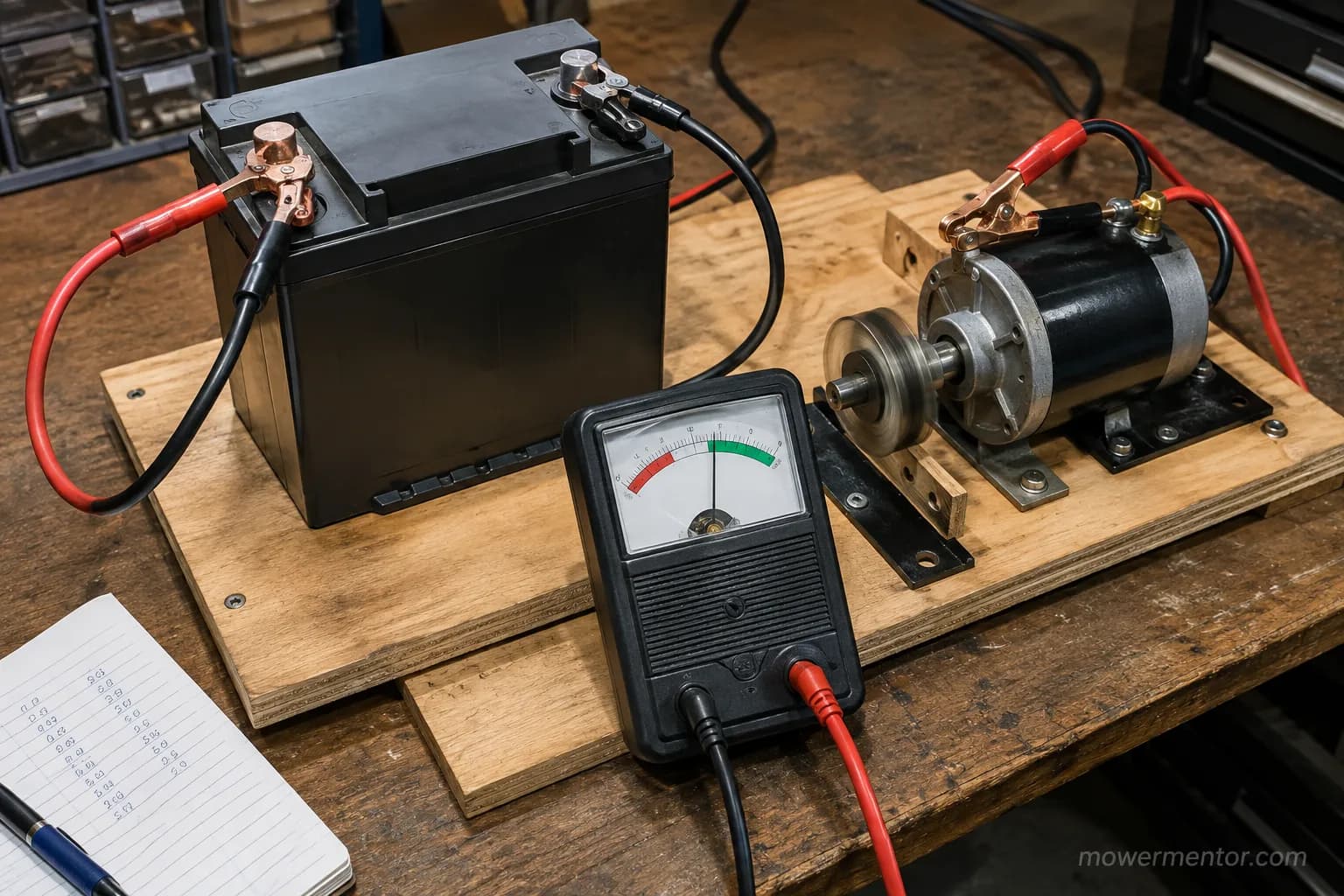
Here is how each pick earned its spot, standout first, then the honest catch.
Best Overall: WEIZE U1.
Standout: 350 CCA gives cold-morning margin on a twin.
The catch: positive-left only, so reversed decks need a different unit.
Runner-Up: UPLUS U1.
Standout: listed fitment across John Deere, Cub Cadet, Husqvarna, Craftsman, and Toro.
The catch: 330 CCA is plenty, but not the highest on the shelf.
Best for U1R: Mighty Max ML-U1R.
Standout: the reversed terminal most John Deere owners actually need.
The catch: confirm your deck is truly U1R first, or the cable will not reach.
Best Budget: Mighty Max ML-U1.
Standout: a low price for a small single-cylinder mower.
The catch: 200 CCA can labor in hard winters.
Best Value AGM: ExpertPower U1.
Standout: 320 CCA at a fair price.
The catch: availability comes and goes.
OEM versus aftermarket: The branded OEM battery buys fit certainty and a dealer warranty, while a quality aftermarket AGM saves real money for the same U1 fit. Neither is wrong, but you are usually paying for the badge.
If a new battery arrives flat, you can jump it from a car to get moving while it charges.
If even a brand-new battery will not crank, the fault is still dead with a new one territory. A unit that keeps draining instead points you to diagnose the charging system.
Where to Buy and What It Costs (Walmart, Home Depot, Amazon)
A 12-volt riding mower battery typically costs between $40 and $100, depending on chemistry and channel. Based on current Home Depot listings and other 2026 retail pricing, OEM replacements run roughly $75 to $100, while aftermarket AGM units land closer to $40 to $70. Where you buy changes the trade-off more than the battery itself.
Channel | Typical U1 price | Pickup | Core / warranty note |
|---|---|---|---|
Walmart (EverStart) | $50 to $70 | Same-day in store | Short in-store warranty, easy returns |
Home Depot (OEM) | $75 to $100 | Same-day in store | Longer OEM warranty, fit certainty |
Tractor Supply | $70 to $95 | Same-day in store | Good rural availability |
Amazon (aftermarket AGM) | $40 to $70 | 1 to 2 days | Longer maker warranty, no local returns |
I priced the same U1 across four stores in one April 2026 afternoon. The aftermarket AGM online beat the OEM shelf price by about $30, though it meant waiting a day for delivery.
Auto-parts chains add a useful perk: many will test and charge your old battery for free and recycle it when you buy a new one. That is worth a stop if you are not sure the battery is the real problem.
If your mower died suddenly rather than cranking slower and slower, check the main fuse first before buying anything. While you are at the store, grab any consumables you are low on, even a shot of starting fluid for stubborn spring starts.
Trust note: The cheapest option is not always the best. The lowest online price can mean a shorter warranty and no local counter to return it to.
How to Swap It and Keep It Alive
Replacing a 12-volt riding mower battery takes about ten minutes, and the one rule that keeps it safe is order: disconnect the negative terminal first, and reconnect it last.
That sequence prevents a wrench from bridging a live positive to the frame and throwing a spark. Set the new battery in the correct terminal orientation, snug the connections, and you are done.
Follow these steps in order:
Turn the key off and set the parking brake. You should see the mower fully powered down.
Loosen and disconnect the negative (black, minus) cable first. The clamp should lift free with no spark.
Disconnect the positive (red, plus) cable next. Tuck it aside so it cannot touch metal.
Remove the hold-down bracket and lift the old battery straight out. Note which side the positive post was on.
Set the new U1 in with the same terminal orientation. The posts should line up under their cables with slack to spare.
Reconnect the positive cable first, then the negative cable last. Both clamps should seat fully.
Wipe the terminals and add a thin film of terminal protectant. You should see an even, light coat, not a glob.
I disconnect the negative first every single time. One slipped wrench on a live positive post, years ago, taught me exactly why that order is not optional.
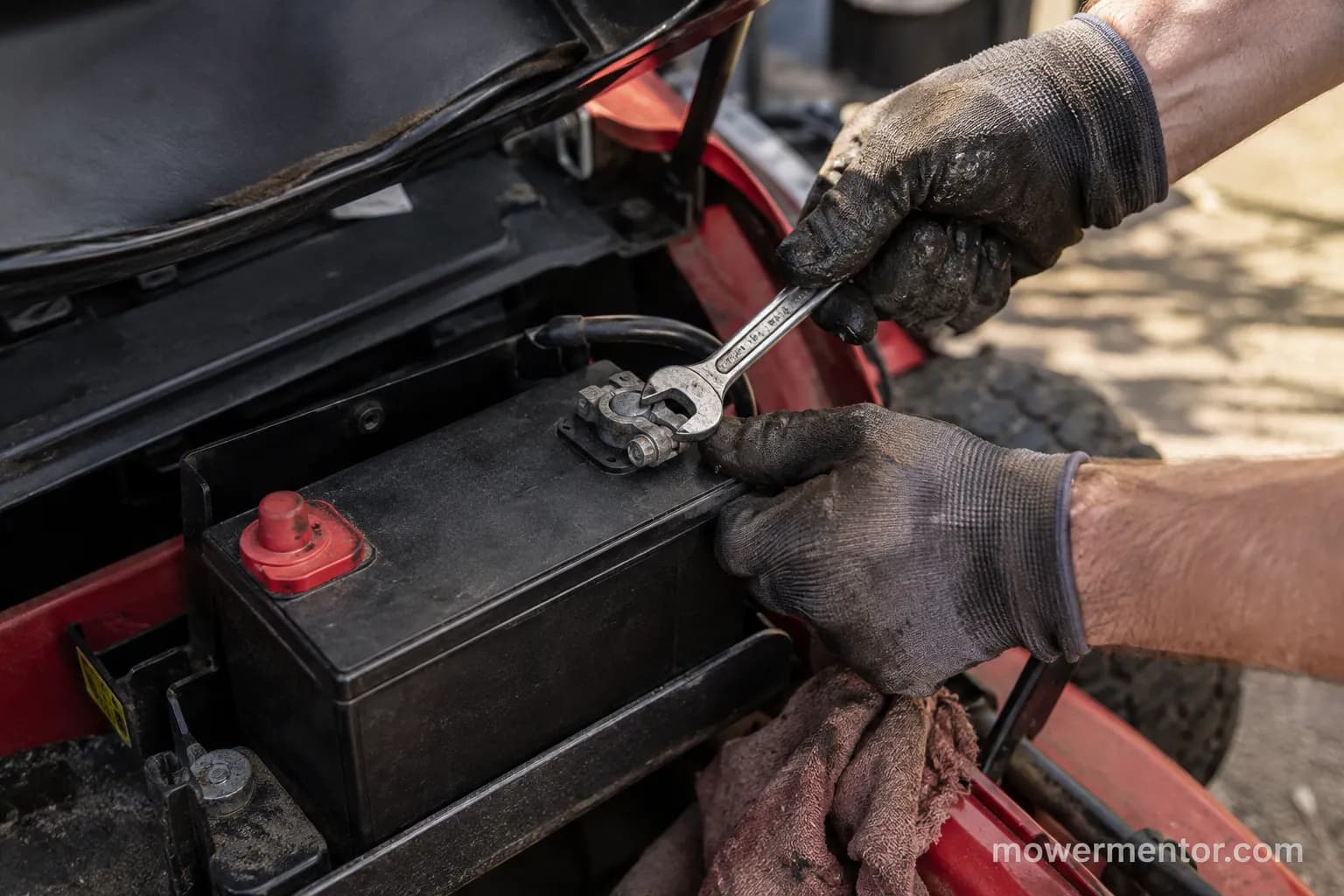
Two habits keep a battery alive longest. First, put it on an off-season maintainer so it never sits flat over winter. Second, keep the terminals clean and tight so corrosion never starves the starter.
A battery swap is also a good moment to fold in a full seasonal tune-up. While the cover is off, note whether other consumables are due, like the right air filter number for your engine.
Trust note: Most riding mower batteries last three to five years. A maintainer extends that, but nothing revives a truly dead cell, so skip the folk fixes and plan to replace it when its time comes.
Frequently Asked Questions
Can I use a car battery in a riding mower?
No. A car battery is the wrong group size and will not sit securely in a U1 tray, so it can shift, short, or vibrate loose. The cables and hold-down are built for a U1 footprint. Buy the correct 12-volt Group U1 (or U1R) instead.
Why won't my riding mower battery hold a charge anymore?
Usually the battery is simply worn out, since most last three to five years, but a bad charging system or a parasitic drain can kill a good one early. If it goes flat again within days of a full charge, the mower is not recharging it. Test the charging system before you keep buying batteries.
How long does a riding mower battery last?
Three to five years is typical for AGM and flooded units, and up to a decade for lithium. Cold storage without a maintainer, chronic undercharging, and loose corroded terminals all shorten that. For depth on stretching lifespan, see our dedicated guide linked above.
How much does a riding mower battery cost?
Expect $40 to $70 for an aftermarket AGM U1 and $75 to $100 for an OEM replacement, with flooded units cheaper and lithium well north of $110. The same fit-first logic applies when you are picking the right spark plug, where matching the exact part beats guessing. Honda owners have their own Honda plug cross-reference to match.
Does adding Epsom salt bring a dead battery back?
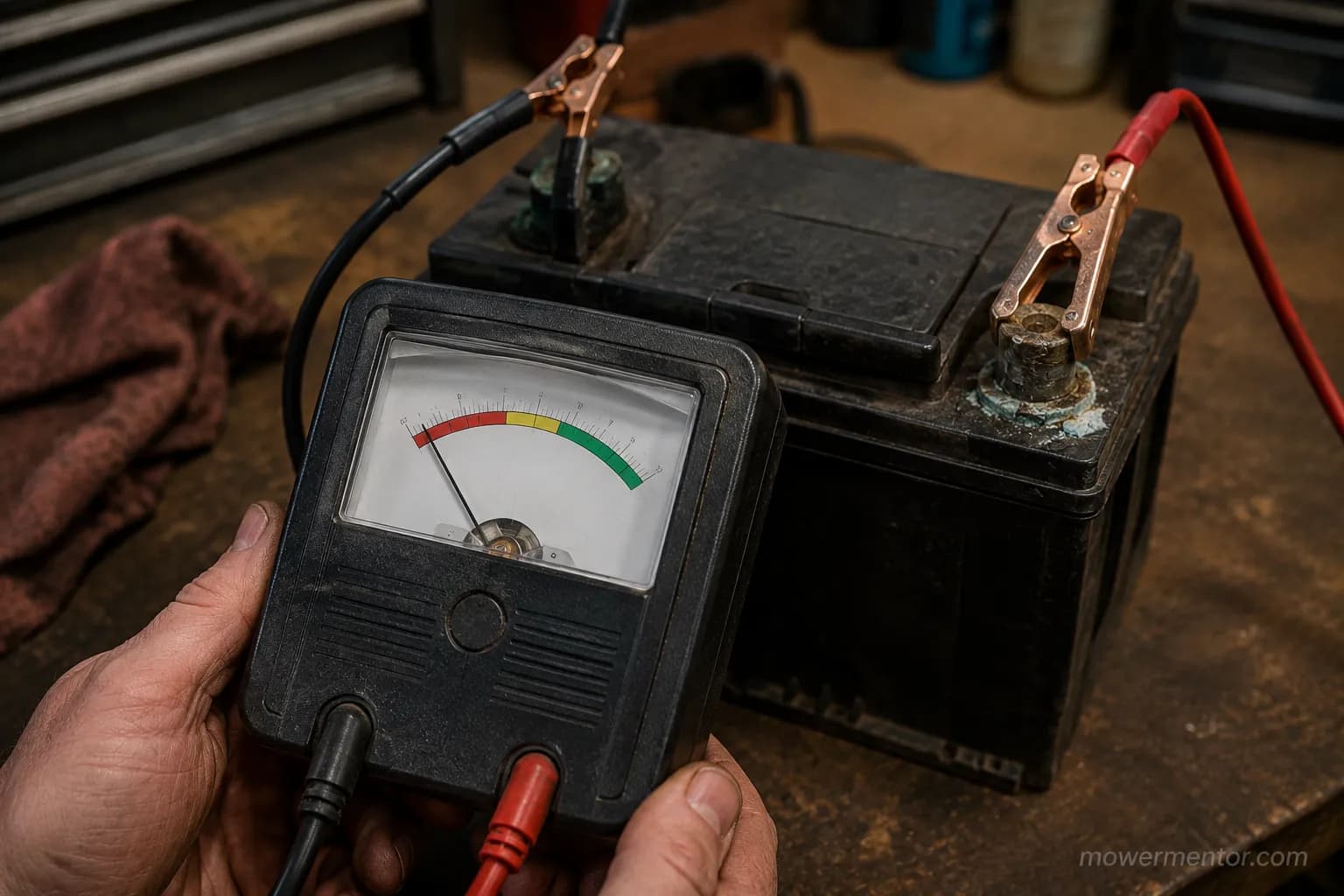
No. I tried the Epsom-salt trick once on a battery that would not hold a charge. It bought exactly one more mow, then the load tester still read a failed cell, and the battery was toast.
The Bottom Line
Choosing a 12 volt battery for riding lawn mower comes down to three checks, not thirty. Confirm Group U1 and the terminal side, buy enough CCA for your engine and climate, and pick sealed AGM unless you have a clear reason to spend up for lithium.
Do that, and a mid-range AGM U1 around 300 to 350 CCA, like our WEIZE top pick, will fit almost any mower and start it for years. Match the fit first, and the rest is easy.
Summarize with AI
Keep reading
Related articles
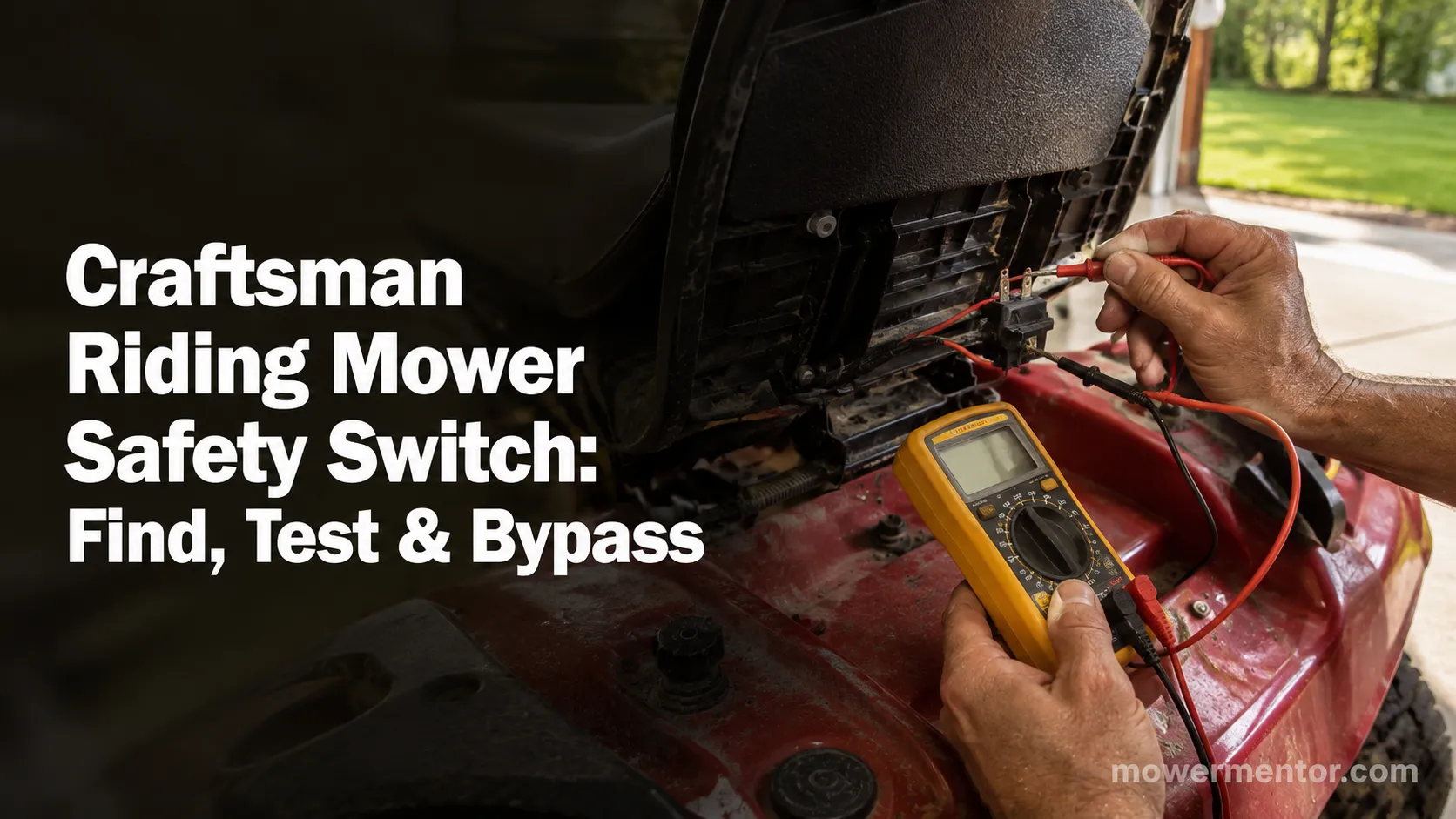 Troubleshooting & Repair
Find, test, and safely bypass the Craftsman riding mower safety switch: seat, brake, and PTO interlocks, with multimeter values and a re-enable step.
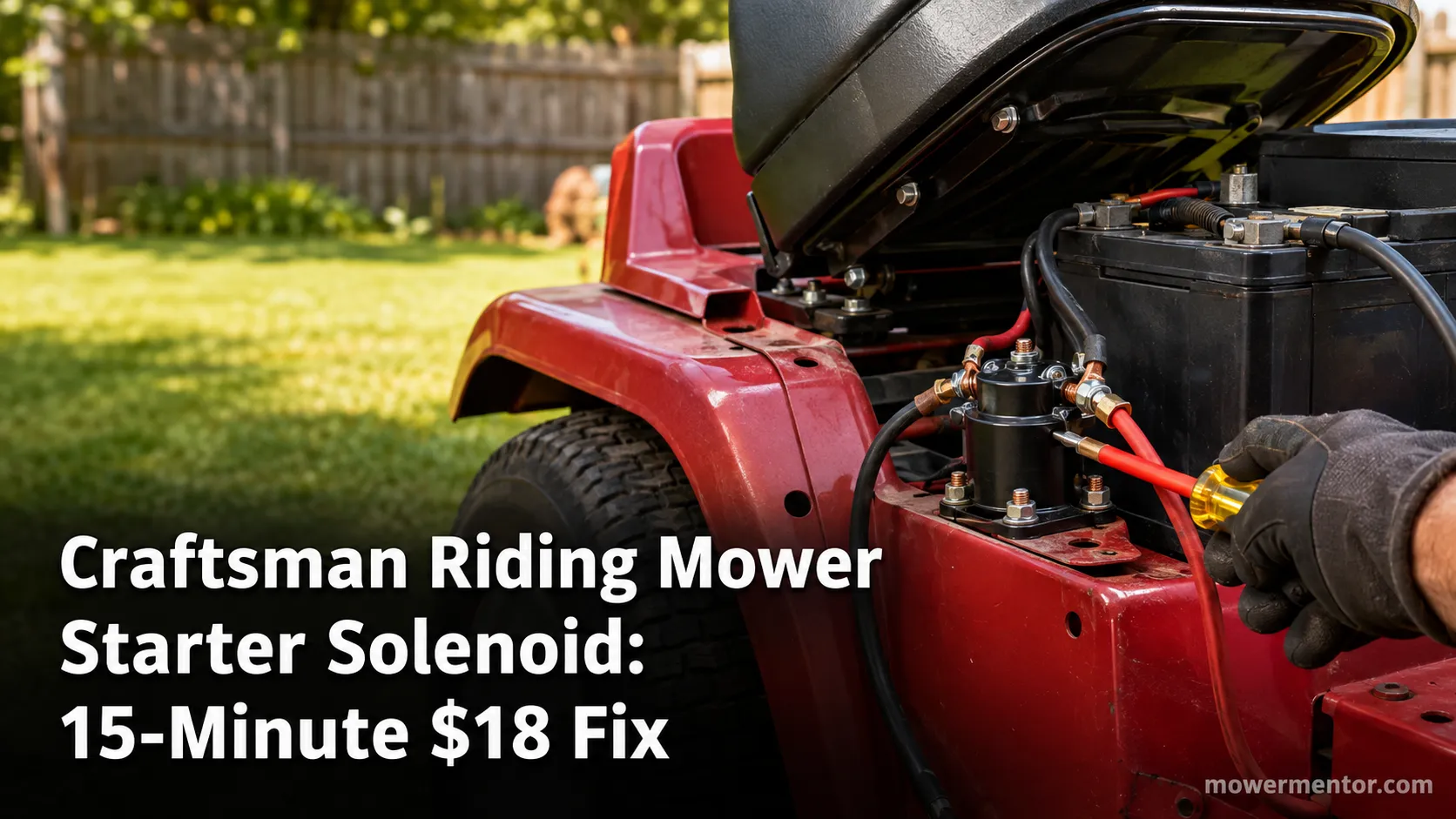 Troubleshooting & Repair
Test your Craftsman riding mower starter solenoid in about 15 minutes with a screwdriver and multimeter, then fix the click-no-crank for around $18.
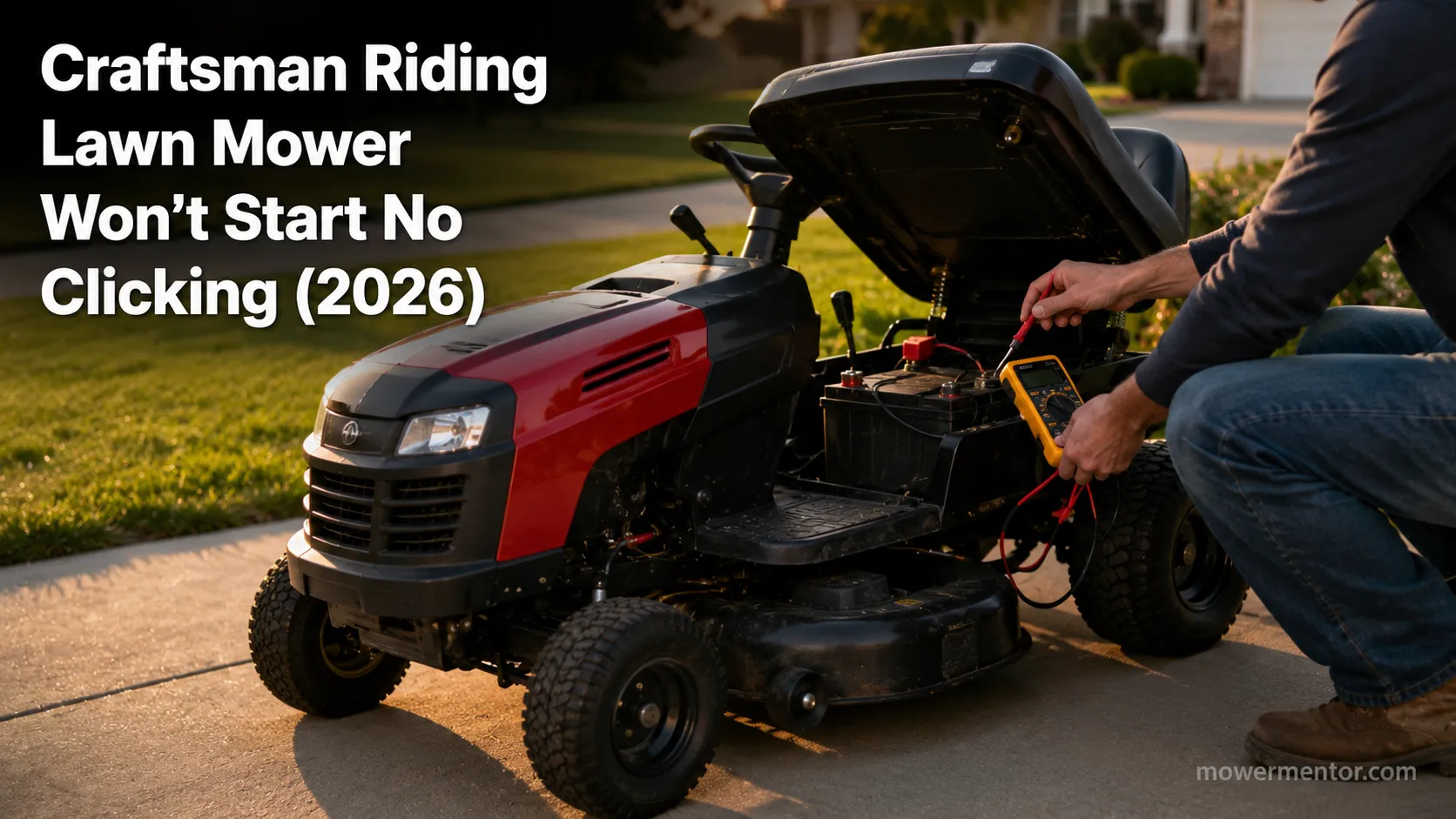 Troubleshooting & Repair
Fix a Craftsman riding lawn mower won't start no clicking: test battery voltage, inline fuse, safety switches, ignition and solenoid with a multimeter.
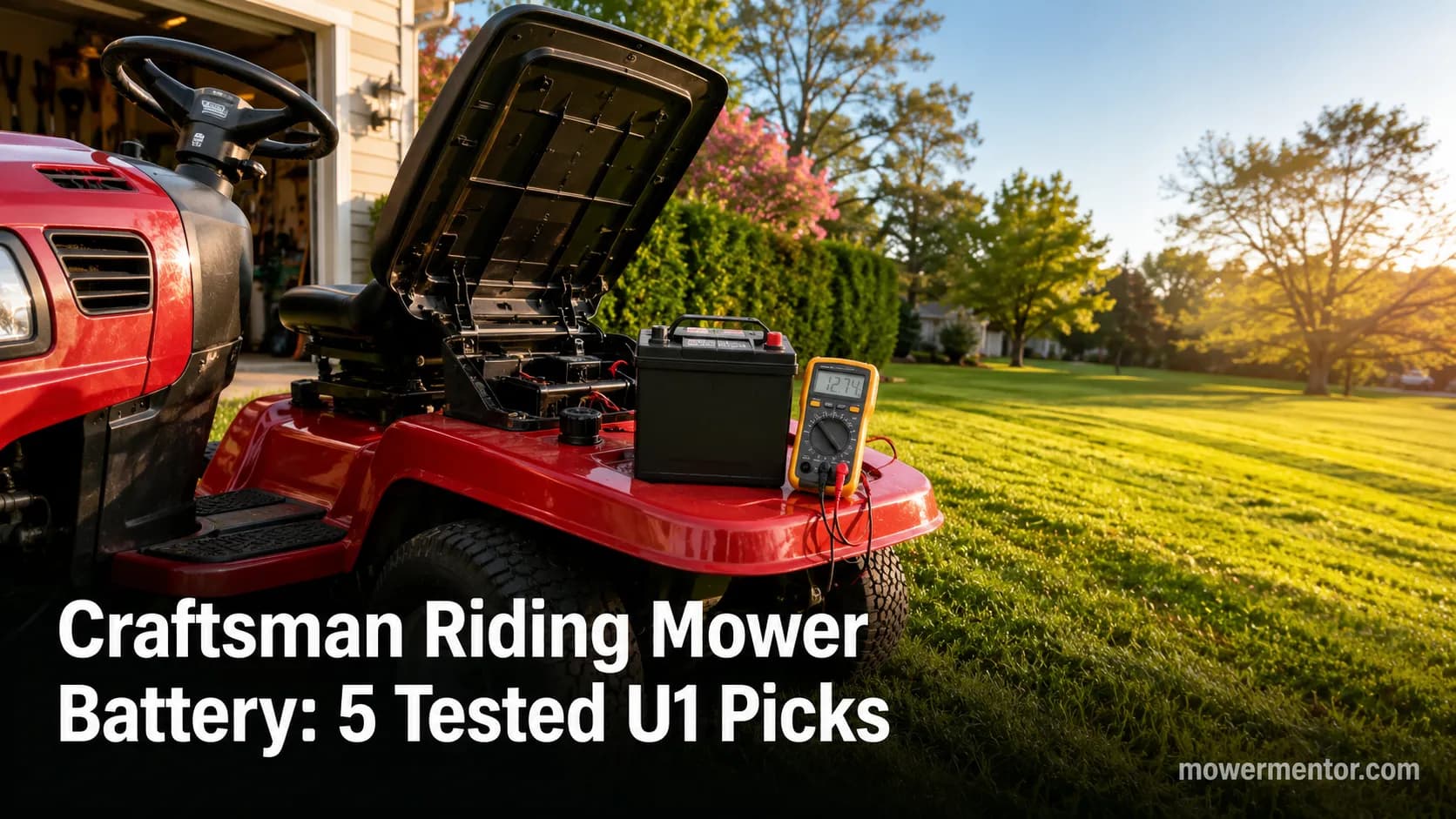 Troubleshooting & Repair
Find the right Craftsman riding mower battery: 12V U1/U1R size chart by model, 5 tested picks, and why yours keeps dying.
Comments
Moderated for quality. Share a correction, ask a follow-up, or tell us what worked for you - every comment is reviewed before it goes live.