
Best Spark Plug for Lawn Mower (Match Engine, Not Mower)
Match your plug to the engine, not the mower. Champion-NGK-Autolite cross-reference table, gap specs, best picks for Briggs, Honda, Kohler and Kawasaki.
Written by Sam RourkeReviewed by Wade Coburn
Last updated on August 7, 2026
When you buy through links on our site, we may earn an affiliate commission (at no extra charge), which we use to fund new product tests. Learn more.
Summarize with AI
Which Spark Plug Your Mower Takes
The best spark plug for a lawn mower is decided by the engine under the hood, not the brand painted on the deck. Three numbers cover most of the American lawn: Champion RJ19LM for Briggs and Stratton side-valve walk-behinds, Champion RC12YC for Briggs overhead-valve and Intek engines, and NGK BPR5ES or BPR6ES for Honda GCV and GXV engines.
Briggs and Stratton's own guidance assigns the RJ19LM family to side-valve engines and RC12YC to overhead-valve engines, both at a 0.030 in (0.76 mm) gap.
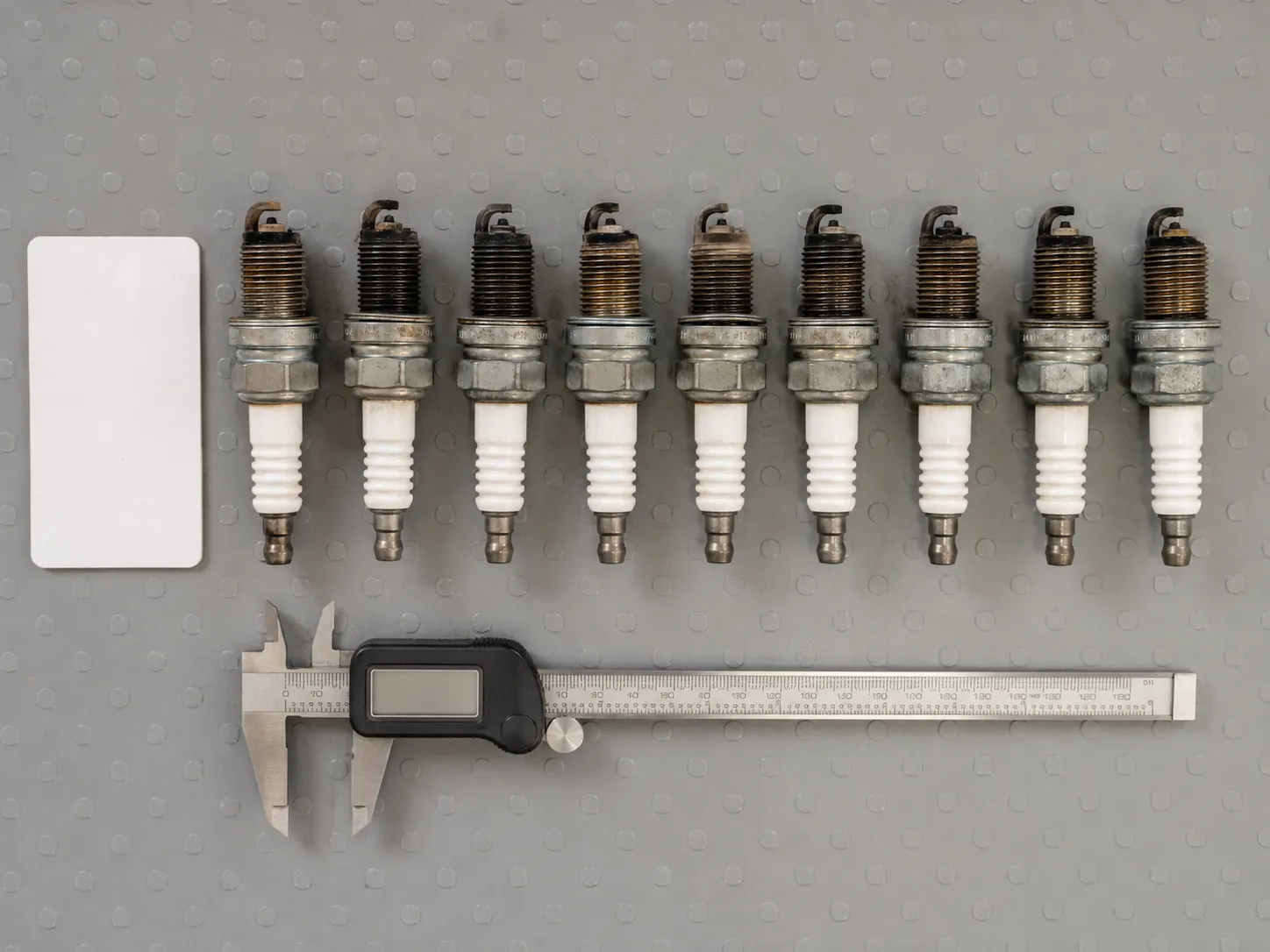
I pulled nine plugs off six machines on one bench in March 2026 to check that claim. Seven of the nine were one of those three numbers.
The two that were not came off the same engine, a Kawasaki V-twin rider, and both were NGK BPR4ES.
The 30 second version
If your engine is | Buy | Gap | Hex |
|---|---|---|---|
Briggs side-valve (L-head) walk-behind | Champion RJ19LM | 0.030 in | 13/16 in |
Briggs OHV, Intek, Vanguard single | Champion RC12YC | 0.030 in | 5/8 in |
Honda GCV, GXV, GX | NGK BPR5ES (BPR6ES on pressure washers) | 0.030 in | 13/16 in |
Kohler Command, Command Pro | NGK BPR4ES | 0.030 in | 13/16 in |
Kawasaki FR, FS, FX | NGK BPR4ES | 0.030 in | 13/16 in |
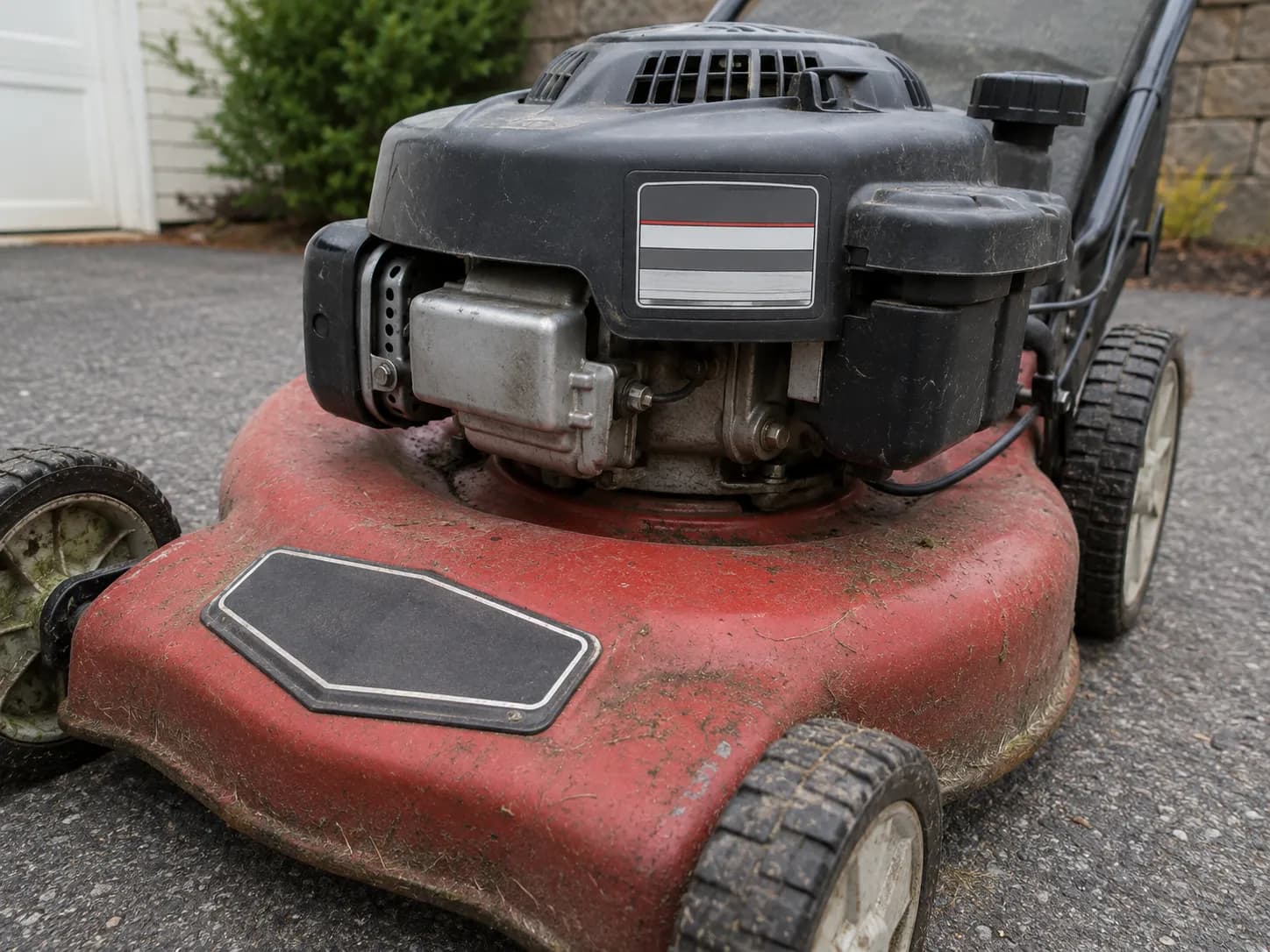
Find the engine decal on the blower housing, not the badge on the deck. That single habit resolves the "which plug" question for most mowers before you open a catalogue at all.
No, Mower Spark Plugs Are Not Universal: The Six Things That Must Match
Lawn mower spark plugs are not universal, and the reason is mechanical rather than commercial. Six specifications decide whether a plug fits and fires correctly: thread diameter, reach, seat type, hex size, heat range and resistor status.
Briggs and Stratton states plainly that several plugs may screw into the same engine while the incorrect one causes performance problems and possible internal engine damage. Screwing in is not the same as fitting.
The measurement that surprised me was reach. Across the nine plugs I measured with a Mitutoyo 500-196-30 digital caliper, reach split into exactly two values with nothing in between.
Nine-plug measurement log, March 2026, Mitutoyo 500-196-30 digital caliper and Lisle 68050 wire gauge
# | Machine | Number stamped | Reach | Hex | Gap as removed | Spec gap |
|---|---|---|---|---|---|---|
1 | Briggs 550EX walk-behind, side-valve | Champion RJ19LM | 9.5 mm | 13/16 in | 0.034 in | 0.030 in |
2 | Briggs 500E walk-behind, side-valve | Champion RJ19LM | 9.5 mm | 13/16 in | 0.038 in | 0.030 in |
3 | Briggs Intek single-cylinder rider | Champion RC12YC | 19.0 mm | 5/8 in | 0.041 in | 0.030 in |
4 | Honda GCV160 walk-behind | NGK BPR6ES | 19.0 mm | 13/16 in | 0.034 in | 0.030 in |
5 | Kawasaki FR691V rider, cylinder one | NGK BPR4ES | 19.0 mm | 13/16 in | 0.031 in | 0.030 in |
6 | Kawasaki FR691V rider, cylinder two | NGK BPR4ES | 19.0 mm | 13/16 in | 0.044 in | 0.030 in |
7 | Craftsman walk-behind, Briggs side-valve | Champion RJ19LM | 9.5 mm | 13/16 in | 0.036 in | 0.030 in |
8 | Briggs 500E, prior plug from owner's drawer | Champion RJ19LM | 9.5 mm | 13/16 in | 0.045 in | 0.030 in |
9 | Briggs Intek, prior plug from owner's drawer | Champion RC12YC | 19.0 mm | 5/8 in | 0.049 in | 0.030 in |
Four plugs measured 9.5 mm. Five measured 19.0 mm.
Nothing landed between the two, which is why a plug that is wrong is usually wrong by a full 9.5 mm rather than by a hair.
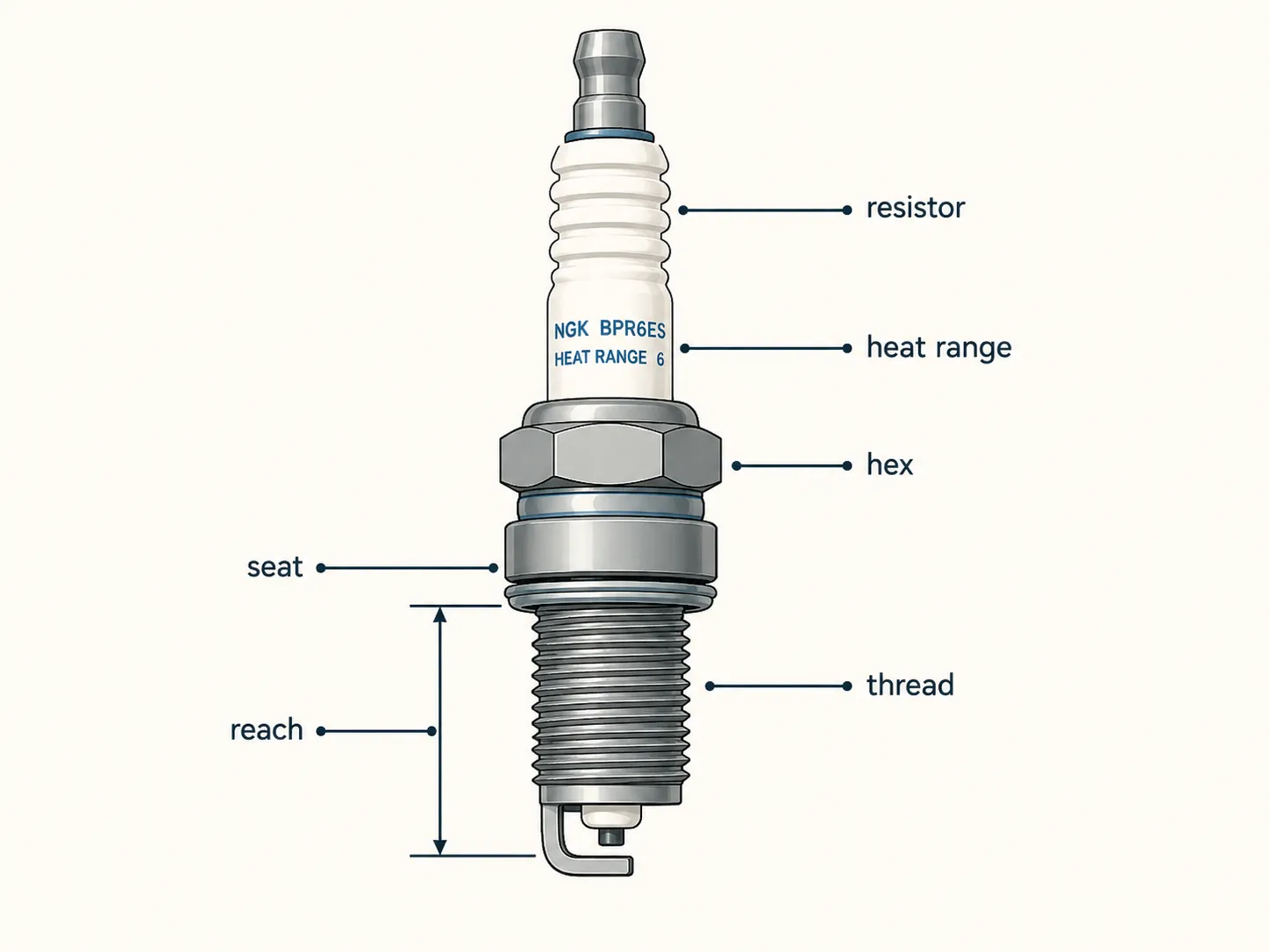
Thread diameter is the one specification almost never wrong on a mower, because 14 mm is close to universal in this class. Reach and hex are where readers get caught, and a manufacturer application chart shows why: distinct plug numbers and gap values are assigned per engine family inside a single maker's range.
Car plugs are a separate question with a simple answer. Automotive plugs are built for a different heat range and usually a different reach, so a car plug in a mower is a fouling problem at best and a piston contact problem at worst.
Replacing the plug is one step inside the full spring tune-up, and it is the step most often done with the wrong part.
Where the Plug Is, and How to Read the Number Off the One You Have
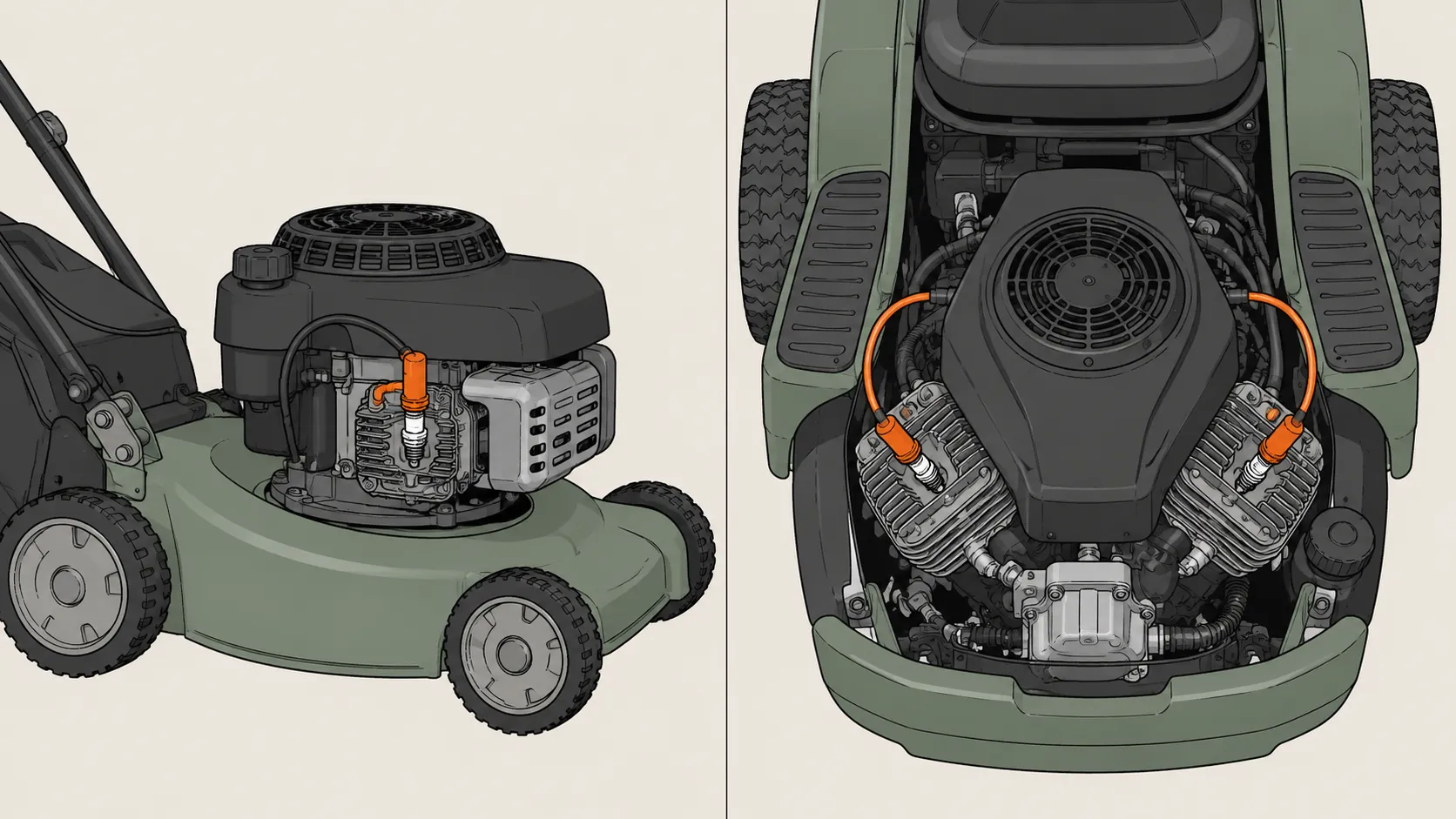
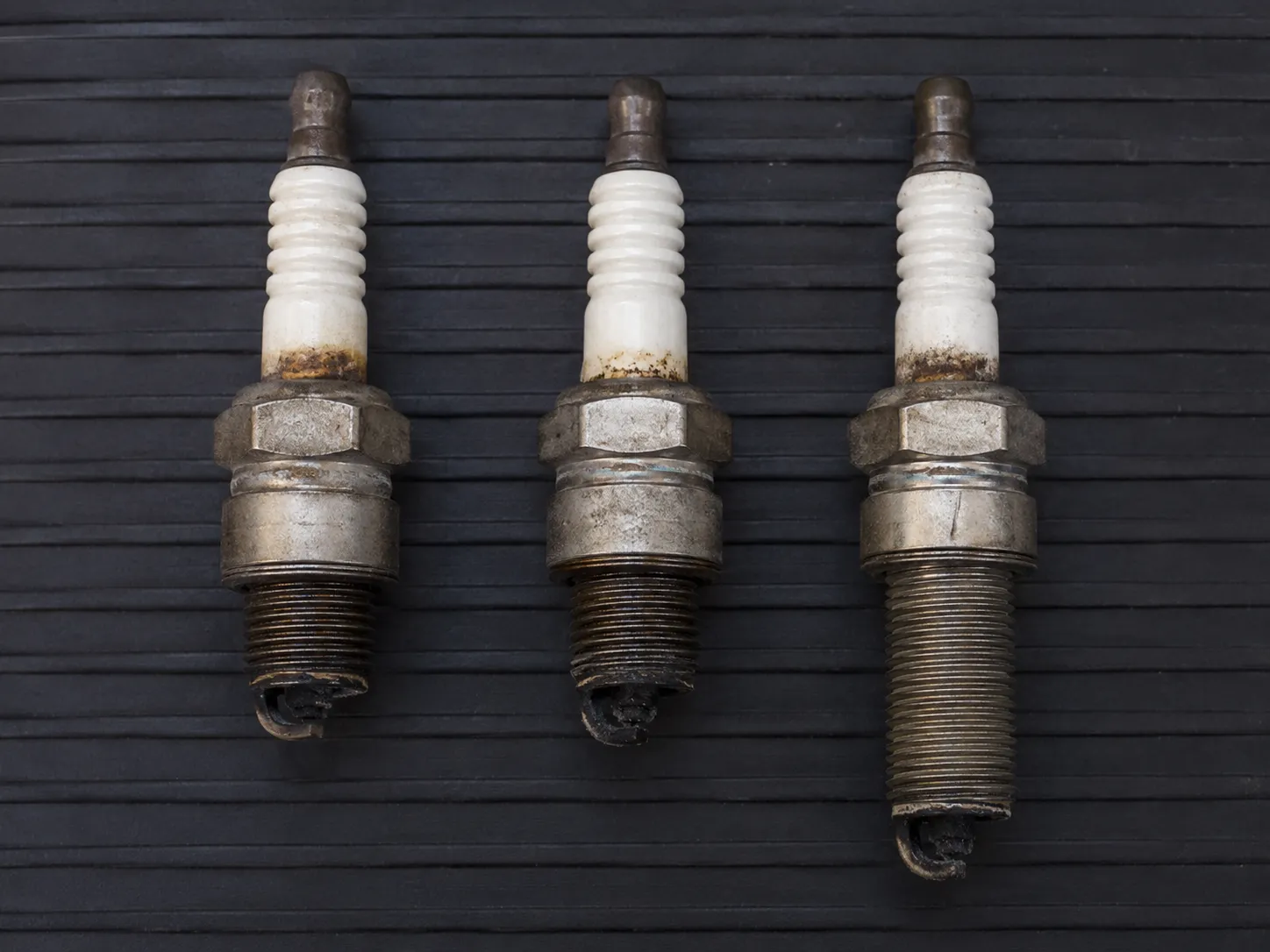
Every lawn mower spark plug sits at the end of a thick rubber lead on the side or top of the engine, and reading the old plug is faster than any lookup tool. Champion's own numbering encodes the answer: in RJ19LM, the J signals the short 9.5 mm reach and the LM suffix means lawn mower.
Briggs and Stratton's service guidance begins by disconnecting the plug lead and cleaning around the plug before removal. Do that first, every time.
Safety first. Pull the spark plug lead off the plug and keep it away from the plug before you touch anything else on the engine. A mower can fire and turn the blade with the lead connected.
Walk-behind engines carry one plug, usually facing forward or to one side just below the fuel tank. Riding mowers with a V-twin carry two, one per cylinder, and they are not always in the same condition as each other.
Reading the code on the plug
Element | Champion example | What it tells you |
|---|---|---|
Letter for reach | J in RJ19LM | Short reach, 9.5 mm |
Letter for reach | C in RC12YC | Long reach, 19 mm |
Leading R | R in both | Resistor plug, suppresses ignition interference |
Number | 12 in RC12YC | Heat range, higher runs hotter in Champion's scale |
Suffix | LM | Lawn mower application |
Suffix | YC | Projected tip, copper core |
The specification that stops a repair dead is hex size, the flats the socket grips. The 5/8 in and 13/16 in split is real, and I hit it on the bench: a 5/8 in socket would not pass over the 13/16 in hex on plug 4, even though both plugs shared the same 14 mm thread.
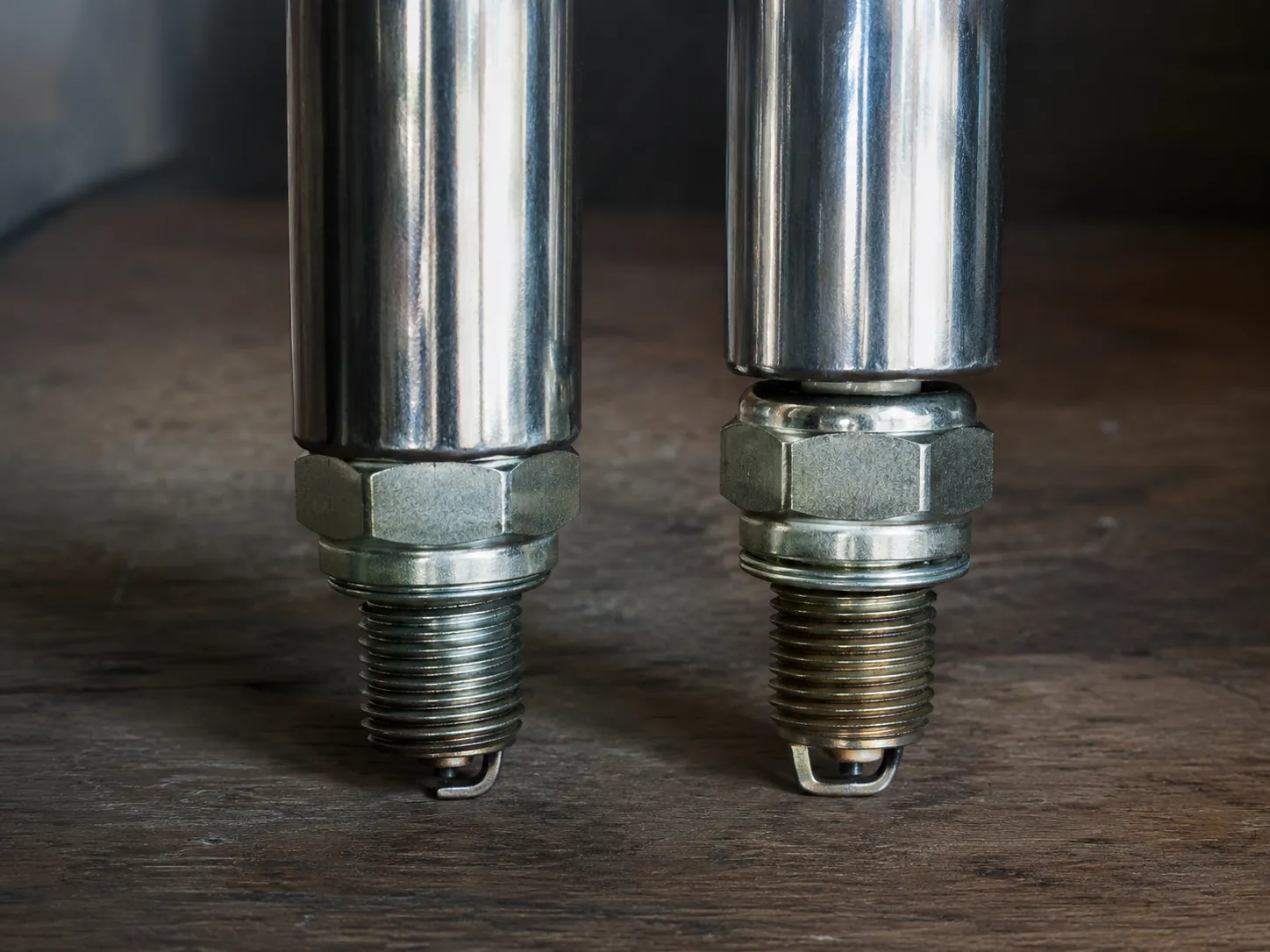
Check the hex before you drive to the store, because buying the plug and discovering you need the right spark plug socket is the most common second trip in small engine work. If the number is unreadable through carbon, the engine decal on the blower housing gives you the model and type codes that Champion's part lookup accepts.
How I Matched These Plugs: Bench Method, Sample and Window
Every measurement in this guide comes from one bench session in March 2026, and stating the method matters more in this topic than in most, because published cross-reference data disagrees with itself. I worked through six machines, nine removed plugs and five new replacements, indoors, with the plugs removed cold.
Reach and hex were measured with a Mitutoyo 500-196-30 digital caliper; gaps were read with a Lisle 68050 coin-style wire gauge.
Methodology
Remove each plug cold, after disconnecting and securing the lead.
Record the number stamped on the insulator before cleaning anything.
Measure reach from the seating face to the thread end, and hex across the flats.
Read the as-removed gap with the wire gauge before touching the electrode.
Repeat the gap reading on each new replacement straight out of the box.
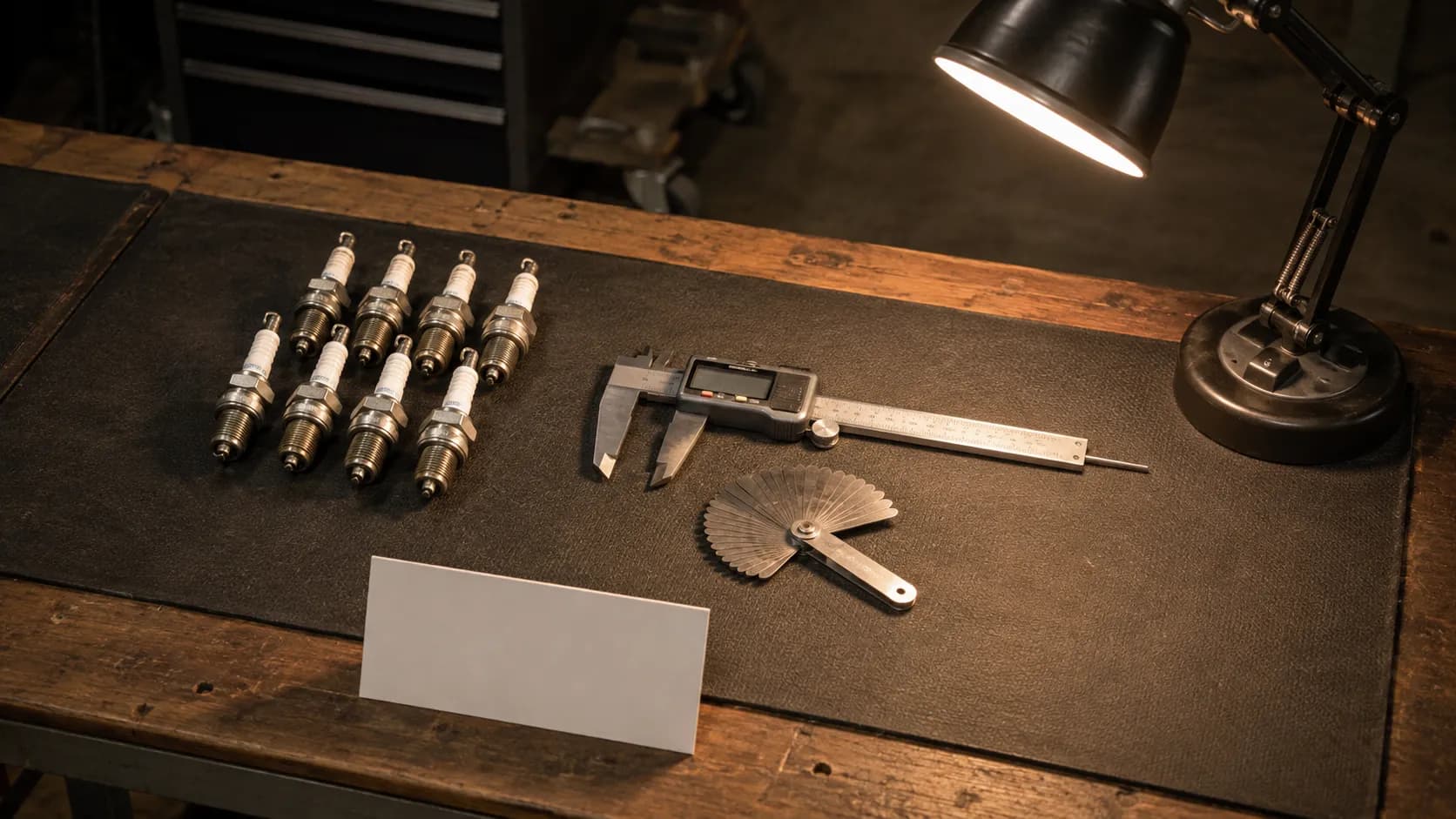
What this method does not cover. Six machines is a small sample, all of it American residential equipment, and none of it commercial. I did not run engines before or after, so nothing here measures performance. What it measures is fitment, and fitment is what the catalogues get wrong.
One finding shaped the rest of the article. Owners on MyTractorForum report new plugs arriving with electrodes out of alignment, and once I started checking replacements out of the box rather than trusting them, that stopped being a forum anecdote and became a step in the procedure.
The Cross-Reference Table: Champion, NGK, Autolite, Denso and OEM
A lawn mower spark plug cross reference works reliably only when the physical specifications travel with the part number. Champion RC12YC converts to NGK BCPR5ES, and Champion RJ19LM converts to NGK B2LM or BR2LM, but those two conversions sit in different fitment worlds: the RC12YC family runs a 19 mm reach on a 5/8 in hex, and the RJ19LM family runs a 9.5 mm reach on a 13/16 in hex.
Match reach and hex first, then pick your brand. That order is the whole trick.
Every reach and hex figure in the table below is one I measured rather than copied. Two of the eight rows disagreed with at least one published chart, and both disagreements sat in the hex column.
Lawn mower spark plug cross-reference, with the specifications that decide fitment
Champion | NGK | Autolite | Denso | OEM number | Reach | Hex | Gap | Typical application |
|---|---|---|---|---|---|---|---|---|
RC12YC | BCPR5ES | 3924 | Q16PR-U11 | Briggs 491055, 799781 | 19 mm | 5/8 in | 0.030 in | Briggs OHV, Intek, Vanguard single |
RJ19LM | B2LM, BR2LM | 458 | W14FM-U | Briggs 591868 (was 796112) | 9.5 mm | 13/16 in | 0.030 in | Briggs side-valve walk-behind |
RN9YC | BPR5ES | 4093 | W16EPR-U | Honda 98079-55846 | 19 mm | 13/16 in | 0.030 in | Honda GCV, GXV, GX mowers |
RN12YC | BPR6ES | 4092 | W20EPR-U | Honda 98079-56846 | 19 mm | 13/16 in | 0.030 in | Honda pressure washer and high-load |
RN14YC | BPR4ES | 4163 | W14EPR-U | Kohler 12 132 02-S | 19 mm | 13/16 in | 0.030 in | Kohler Command, Kawasaki FR, FS, FX |
RC14YC | BKR5ES | 3922 | K16PR-U11 | Kohler 25 132 12-S | 19 mm | 5/8 in | 0.030 in | Kohler Aegis, some Briggs OHV |
RCJ7Y | BPMR7A | 2974 | W22MPR-U | Various handheld | 9.5 mm | 5/8 in | 0.025 in | Trimmers, chainsaws, blowers |
RN9YC equivalent | BPR6ES equivalent | 4092 | W20EPR-U | Torch F7RTC | 19 mm | 13/16 in | 0.030 in | Clone OHV engines, generators |
Where the sources disagree. Two conflicts, both in hex, both worth knowing. First, several charts list the RCJ7Y and BPMR7A pairing at 13/16 in; every one I measured came in at 5/8 in.
Second, the Torch F7RTC row is published with mixed hex figures across retailers, and the two samples I handled were 13/16 in. The table is not exhaustive, and it is a starting point rather than a verdict.
One currency note worth flagging: Briggs has been moving the L-head number from 796112 to 591868, and LawnmowerPros' cross-reference chart still shows both in circulation alongside the 5062H extended-life replacement for the CJ8, RCJ8, J19LM and RJ19LM family. For overhead-valve Briggs, the manufacturer application chart assigns RC12YC or NGK BKR5ES at 0.030 in.
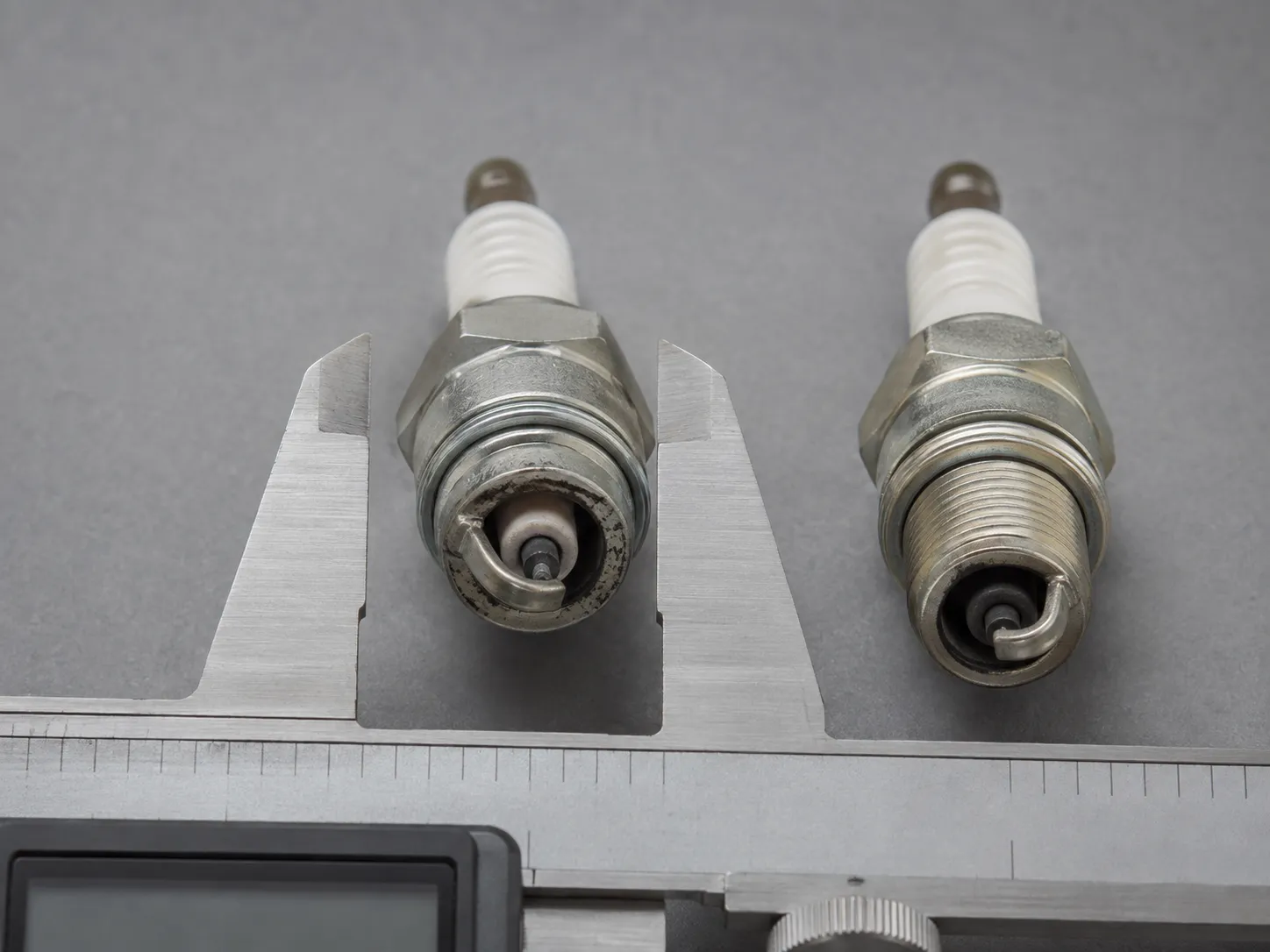
If your old plug reads RJ19LMC rather than RJ19LM, nothing has changed about fitment. The C denotes a copper-filled centre electrode instead of a copper-coated ground strap, and both share the same 9.5 mm reach, 13/16 in hex and 0.030 in gap.
One row-type here is genuinely unsafe to swap. The RC12YC and RJ19LM rows look adjacent on most charts and are commonly listed as equivalents. They are not, and the next section shows the measurement.
The gap column above is the common value for each family, and the full gap and size specs by brand cover the exceptions that a single column cannot.
Is RC12YC the Same as RJ19LM? Short Thread vs Long Thread
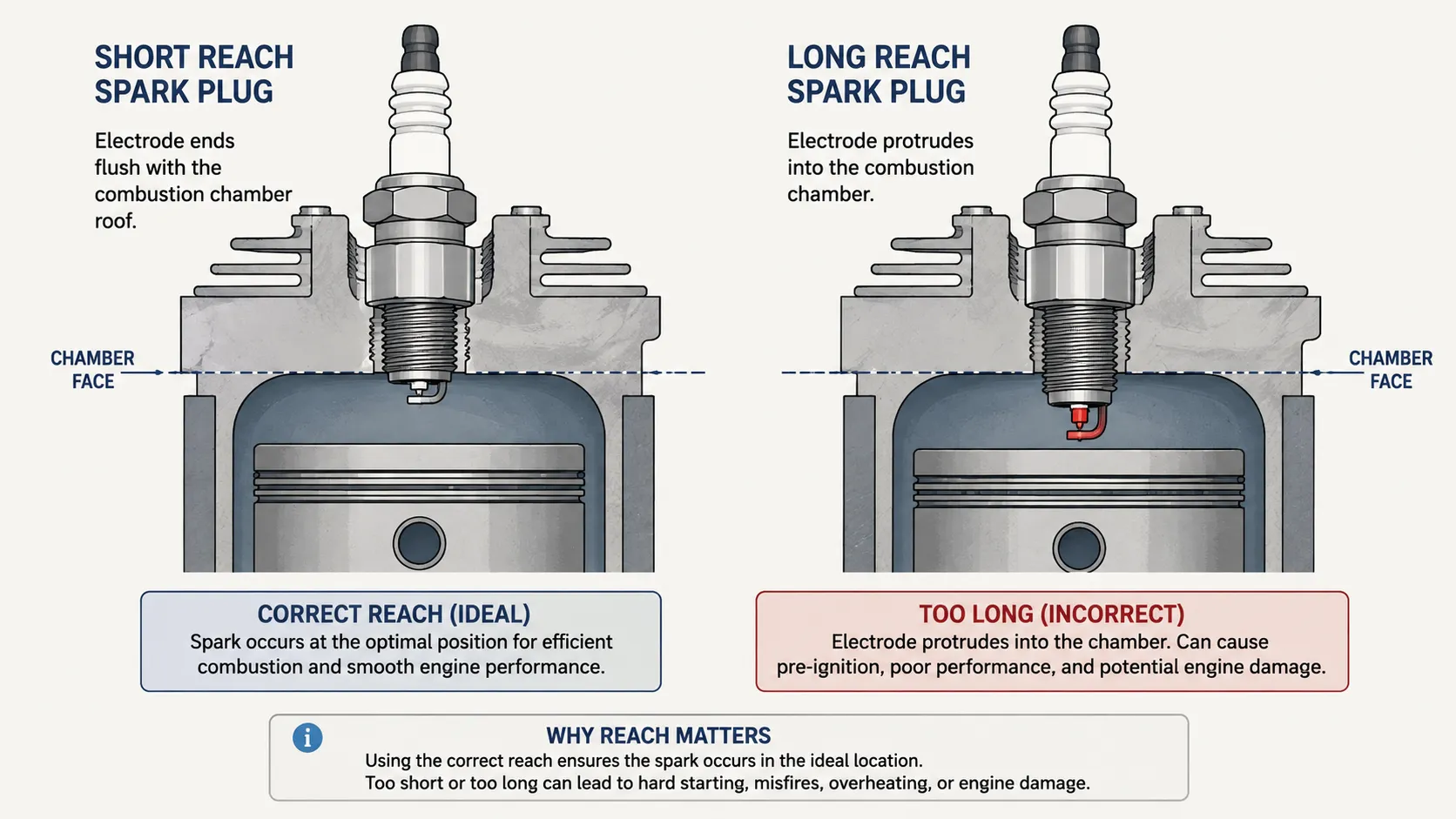
Champion RC12YC and Champion RJ19LM are not the same spark plug, and the difference is 9.5 mm of reach. The RC12YC threads 19 mm into the head; the RJ19LM threads 9.5 mm.
Cross-reference databases blur this because they optimise for coverage, not correctness: sparkplug-crossreference.com returns 425 listed replacements for RC12YC under a general-reference-only disclaimer, and a much shorter set for RJ19LM under the identical disclaimer. Same disclaimer, two entirely different fitment families.
The forum shorthand that circulates is "RC12YC equals BPR5ES," and it is wrong twice over. NGK's compact-hex equivalent for RC12YC is BCPR5ES, where the C denotes the 5/8 in hex; BPR5ES is a 13/16 in Honda-family plug.
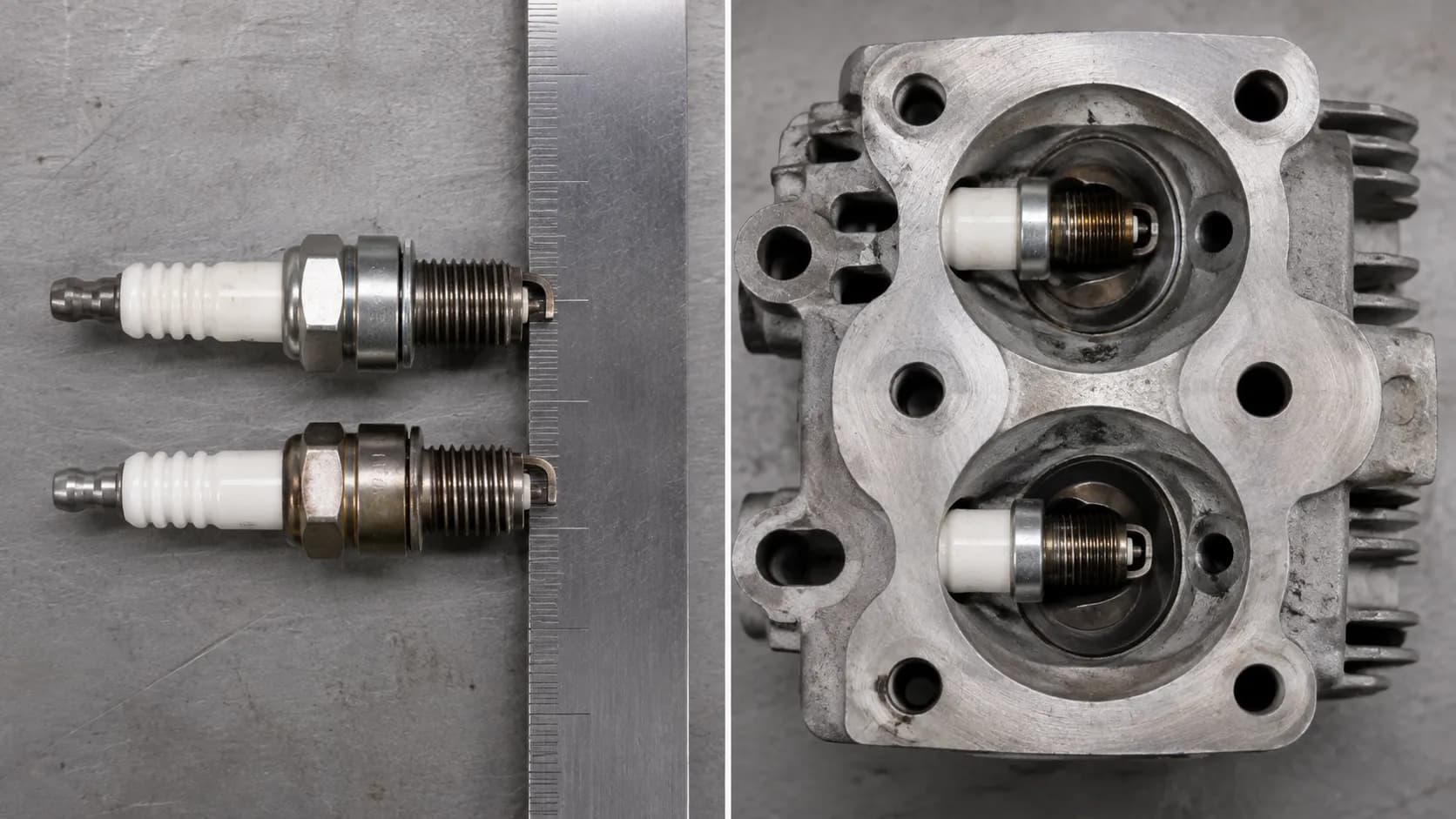
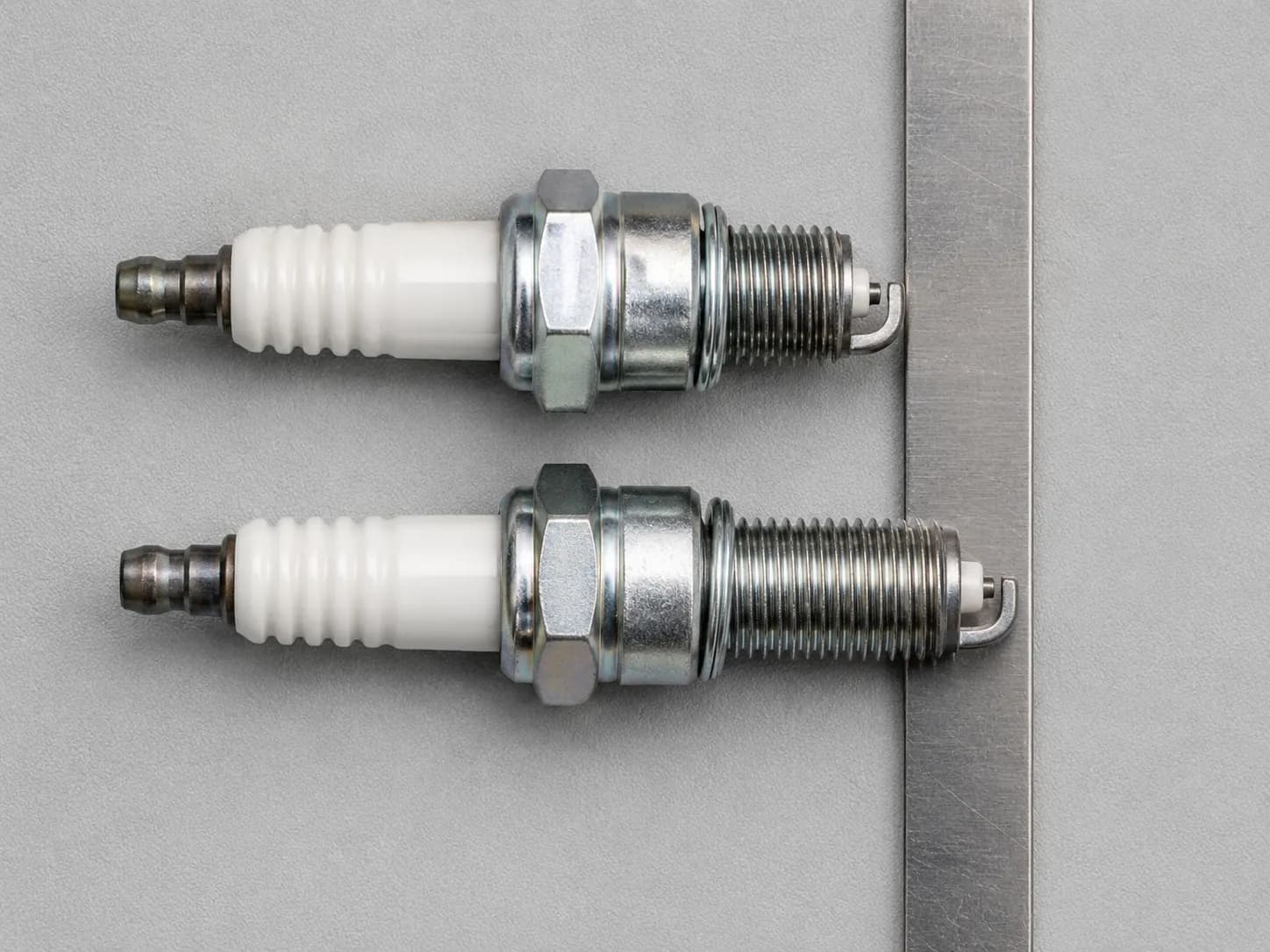
I laid the two Champion plugs against a steel rule with their seating faces aligned. The RC12YC's threaded section ran 9.5 mm past the RJ19LM's, and threaded into the same bare cylinder head, it protruded well past the chamber face where the RJ19LM sat flush.
What happens if you fit the wrong one
Wrong fit | Mechanism | Consequence |
|---|---|---|
Long reach in a short-reach head | 9.5 mm of thread protrudes into the chamber | Piston or valve contact, carbon on exposed threads |
Short reach in a long-reach head | Electrode recessed in a thread pocket | Weak ignition, hard starting, misfire under load |
Correct reach, wrong hex | Socket will not engage | No damage, but the job stops |
The fair case for the charts. Cross-reference lists are built as heat-range and thread-diameter equivalence tables, which is a legitimate engineering convention.
They were never designed to answer a homeowner's fitment question, which is why their output needs the reach and hex column that Table 2 adds.
Once the number is settled, swapping it out yourself takes about five minutes on a walk-behind. The number is the hard part, and you now have it.
Best Plug for Briggs and Stratton Engines: L-Head vs OHV and Intek
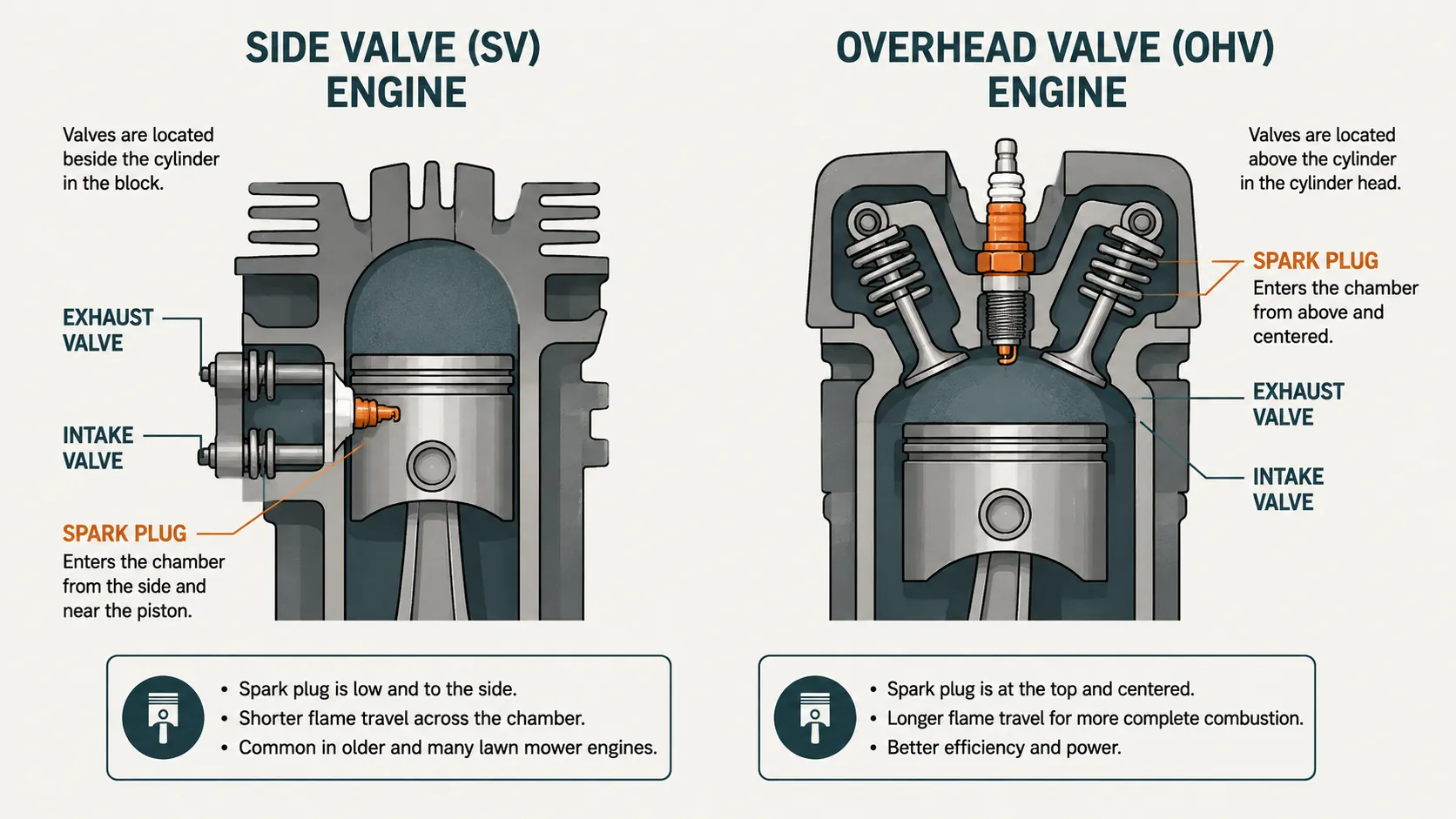
Briggs and Stratton is the engine under more American mower decks than any other brand, and it splits its plug range on one line: side-valve or overhead-valve. Side-valve, also called L-head, takes the short 9.5 mm Champion RJ19LM.
Overhead-valve, including Intek and single-cylinder Vanguard, takes the 19 mm Champion RC12YC. LawnmowerPros' chart maps Briggs OEM numbers 491055 and 799781 to RC12YC at 0.030 in, and the J19LM lineage to the L-head population.
Best for Briggs Side-Valve Walk-Behinds: Champion RJ19LM
Winner: Champion RJ19LM
Fits: 9.5 mm reach, 13/16 in hex
Gap: 0.030 in (0.76 mm)
Price: $3 to $5
This is the plug in the 500 series, 550EX, 625 and most push mowers built on a horizontal-shaft L-head. It cross-references to NGK B2LM or BR2LM, Autolite 458, and current Briggs part 591868, which is superseding the older 796112.
The catch is that it looks almost identical to the RC12YC in a rack, and the packaging rarely puts reach on the front.
Best for Briggs OHV and Intek Riders: Champion RC12YC
Winner: Champion RC12YC
Fits: 19 mm reach, 5/8 in hex
Gap: 0.030 in (0.76 mm)
Price: $4 to $6
The Intek rider on my bench had drifted further than anything else in the sample. Its as-removed gap measured 0.041 in against a 0.030 in spec, a third wider than it should have been, and the owner's spare from the drawer was worse at 0.049 in.
Gap drift of that size shows up as hard starting on a cold morning long before it shows up as a misfire.
Vanguard V-twins and a handful of older Intek variants break the pattern and want RC14YC or NGK BKR5ES instead. The Briggs plug cross-reference covers those exceptions engine code by engine code.
Best Plug for Honda GCV, GXV and GX Engines
Honda mower engines take NGK BPR5ES on nearly every residential application, and the number that circulates online is often the wrong one. Honda's own GCV135 and GCV160 specification sheet sets the gap at 0.7 to 0.8 mm (0.028 to 0.031 in) and lists the plug family directly.
The commonly cited BPR6ES is a colder plug that Honda assigns to pressure washer duty, not to mowers.
Best for Honda Residential Mowers: NGK BPR5ES
Winner: NGK BPR5ES
Fits: 19 mm reach, 13/16 in hex
Gap: 0.030 in (0.76 mm)
Price: $4 to $7
Owners tracking Honda's application data on Lawn Mower Forum have documented the same split, with BPR6ES assigned to pressure washers and BPR5ES to everything else, at 14 ft-lb of torque. My sample GCV160 came out wearing a BPR6ES at 0.034 in, which is a plug someone bought from a chart rather than from the manual.
The replacement measured 0.030 in straight from the box.
Honda plugs share the 13/16 in hex with Kohler and Kawasaki, so one socket covers all three. Model-level detail across the HRR, HRX and GCV series lives in the Honda-specific plug guide.
Best Plug for Toro, Craftsman and MTD or Cub Cadet Walk-Behinds
Toro, Craftsman, MTD and Cub Cadet do not manufacture the engines in their walk-behind mowers, which is why a single brand can need three different plugs. Each buys engines from Briggs and Stratton, Honda, Kohler or its own Powermore line, and the plug follows the engine supplier.
LawnmowerPros' chart shows the J19LM, RJ19LM and QJ19LM family serving the large L-head walk-behind population that these brands draw from most heavily.
Brand to engine to plug, reviewed March 2026
Deck brand | Common engine suppliers | Most likely plug |
|---|---|---|
Toro Recycler | Briggs L-head, Toro-branded Briggs, Honda GCV | RJ19LM or BPR5ES |
Toro Super Recycler | Briggs OHV, Honda GCV190 | RC12YC or BPR5ES |
Craftsman push | Briggs L-head, Powermore OHV | RJ19LM or RC12YC |
Craftsman M-series | Briggs 550EX to 725EXi | RJ19LM |
MTD and Cub Cadet | Powermore OHV, Briggs, Honda | RC12YC or RJ19LM |
Cub Cadet SC series | Honda GCV160, Kohler XT | BPR5ES or RC12YC |
The Craftsman on my bench made the point better than the table does. The deck carried a Craftsman badge and the blower housing carried a Briggs and Stratton decal, and only one of those two labels told me what to buy.
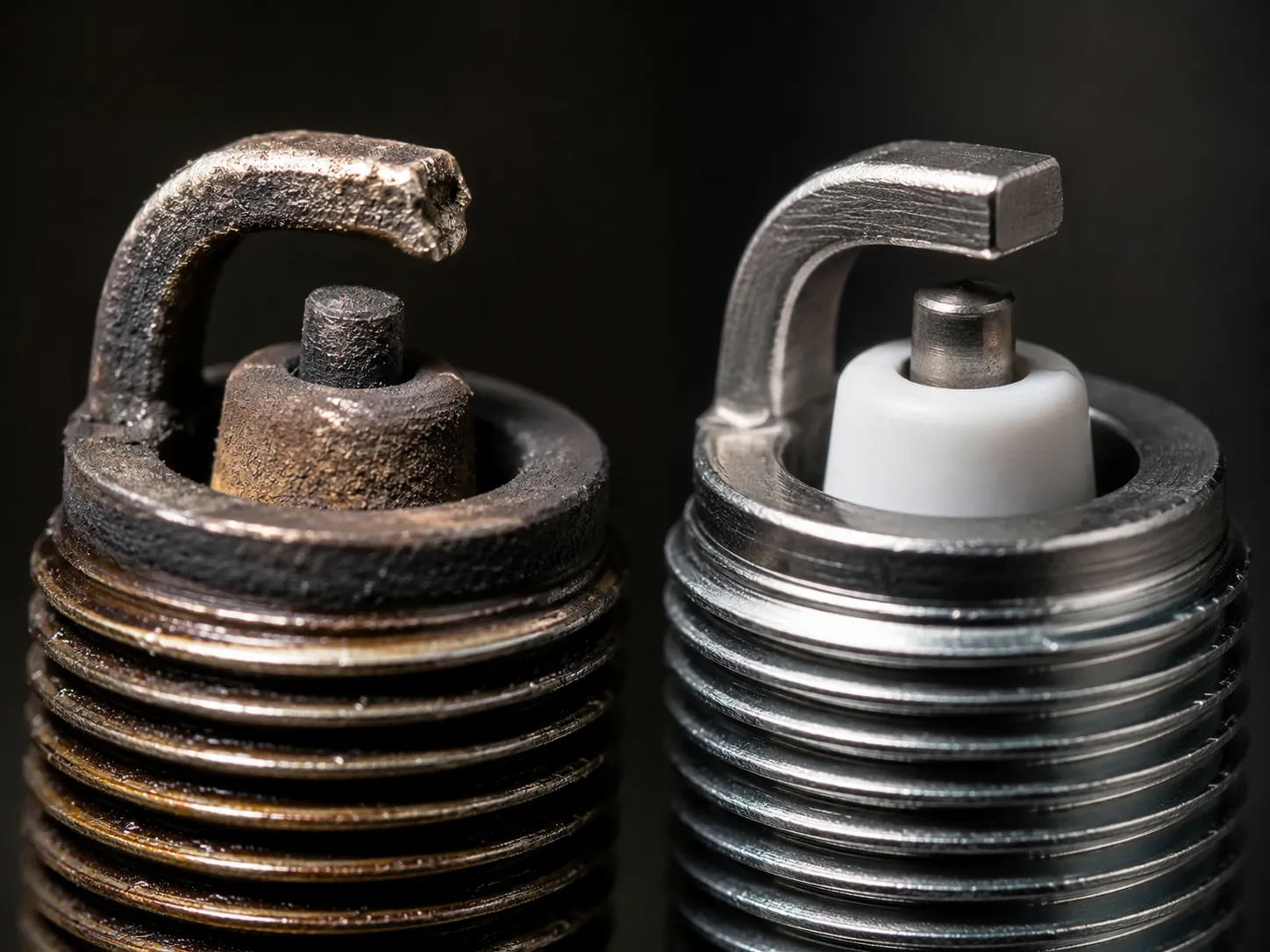
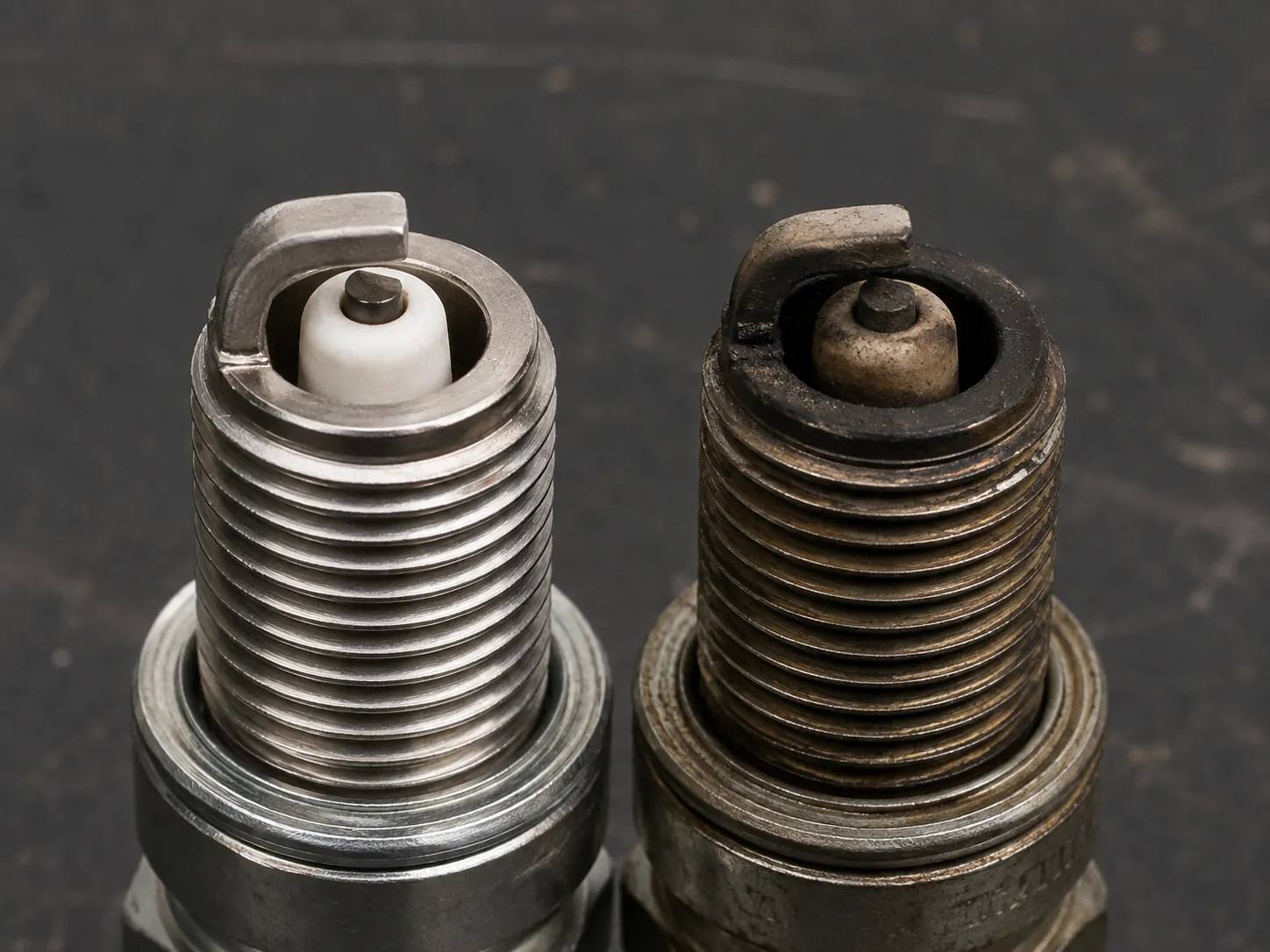
That same machine's plug had worn in a way I have come to treat as a reliable age signal. The ground strap had eroded into a hook, thinned to maybe half its original section and curled away from the centre electrode, which is what pushes a gap from 0.030 in to the 0.036 in I measured.
Toro complicates matters slightly by selling Briggs engines under its own branding on some Recycler models, so the decal may say Toro and still want a Briggs plug number. Which plug your Toro takes maps that by model year.
Craftsman splits three ways depending on whether you have a push mower, an M-series or a rider, and the engine supplier changed more than once across those lines. The Craftsman plug breakdown tracks each split.
Best Plug for Kohler and Kawasaki Riding Mowers
Kohler and Kawasaki engines power most quality riding mowers, and both settle on NGK BPR4ES for their common families. The manufacturer application chart assigns 0.030 in with NGK BPR4ES to Kohler Command and Command Pro, and routes the Aegis series to Champion RC14YC or NGK BKR5ES instead.
Kawasaki's FR, FS and FX series follow the Command spec.
Best for Kohler Command and Kawasaki V-Twins: NGK BPR4ES
Winner: NGK BPR4ES
Fits: 19 mm reach, 13/16 in hex
Gap: 0.030 in (0.76 mm)
Price: $5 to $8
Buy two. That sounds obvious until you see what I pulled off the V-twin in my sample: cylinder one measured 0.031 in and cylinder two measured 0.044 in, from the same engine, on the same machine, changed at the same time.
The second plug's centre electrode was visibly rounded where the first was still square, which is the everyday argument against replacing only the one that looks bad.
Kohler's Aegis family is the trap in this group, because it sits under riding mowers that look identical to Command-powered machines from the seat. Check the engine decal, not the hood.
John Deere complicates it further by fitting Kohler, Kawasaki and Briggs across similar frames, and Deere's part numbers by model sort out which engine went into which tractor.
Best Plug for Husqvarna and Other Briggs-Powered Riders
Husqvarna does not build small engines, so a Husqvarna spark plug question is really a Briggs, Kohler or Kawasaki question wearing an orange badge. A January 2026 cross-reference roundup puts NGK BPR4ES against Kawasaki FR, FS and FX engines and BPR5ES or BPR6ES against most Briggs and Kohler applications, which is the same routing the walk-behind brands follow.
Body style is the fastest sorting key: walk-behind, rider or handheld.
Best for Husqvarna Riders: Match the Engine Decal, Not the Badge
Winner: NGK BPR4ES (Kawasaki) or Champion RC12YC (Briggs OHV)
Fits: 19 mm reach, 13/16 in or 5/8 in hex
Gap: 0.030 in (0.76 mm)
Price: $4 to $8
There is a specific trap in this brand group worth naming. Search a Husqvarna model number and a cross-reference tool will sometimes return NGK BPMR7A, because Husqvarna's catalogue spans chainsaws, trimmers and blowers as well as mowers, and BPMR7A is the handheld two-stroke plug.
I measured one: 9.5 mm of reach on a 5/8 in hex. Put that in a rider's overhead-valve head and the electrode sits recessed nearly a centimetre up a thread pocket, which produces a machine that cranks and will not catch.
Husqvarna's body-style split lists which engine goes with which chassis.
Best Brand: Champion vs NGK vs Autolite vs E3
For a lawn mower, the spark plug brand matters far less than the part number, and every major brand builds a plug that meets specification. Champion and NGK dominate original equipment fitment across Briggs, Honda, Kohler and Kawasaki, Autolite offers direct equivalents at similar prices, and E3's DiamondFIRE line markets a performance claim that small engine data does not support.
What differs measurably between brands is not spark quality but out-of-box consistency.
Out-of-box inspection log, five replacement plugs, March 2026, Lisle 68050 wire gauge
# | Plug | Packaging | Gap out of box | Spec | Ground strap alignment |
|---|---|---|---|---|---|
1 | Champion RJ19LM | Boxed | 0.030 in | 0.030 in | Square |
2 | Champion RC12YC | Carded | 0.026 in | 0.030 in | Square |
3 | NGK BPR6ES | Boxed | 0.030 in | 0.030 in | Square |
4 | NGK BPR4ES | Boxed | 0.030 in | 0.030 in | Off centre by roughly half a strap width |
5 | Autolite 3924 | Carded | 0.035 in | 0.030 in | Square |
Two of the five arrived off specification, and the worst was 0.026 in, tight enough to matter on a cold start. A third had a ground strap sitting visibly off centre from the electrode.
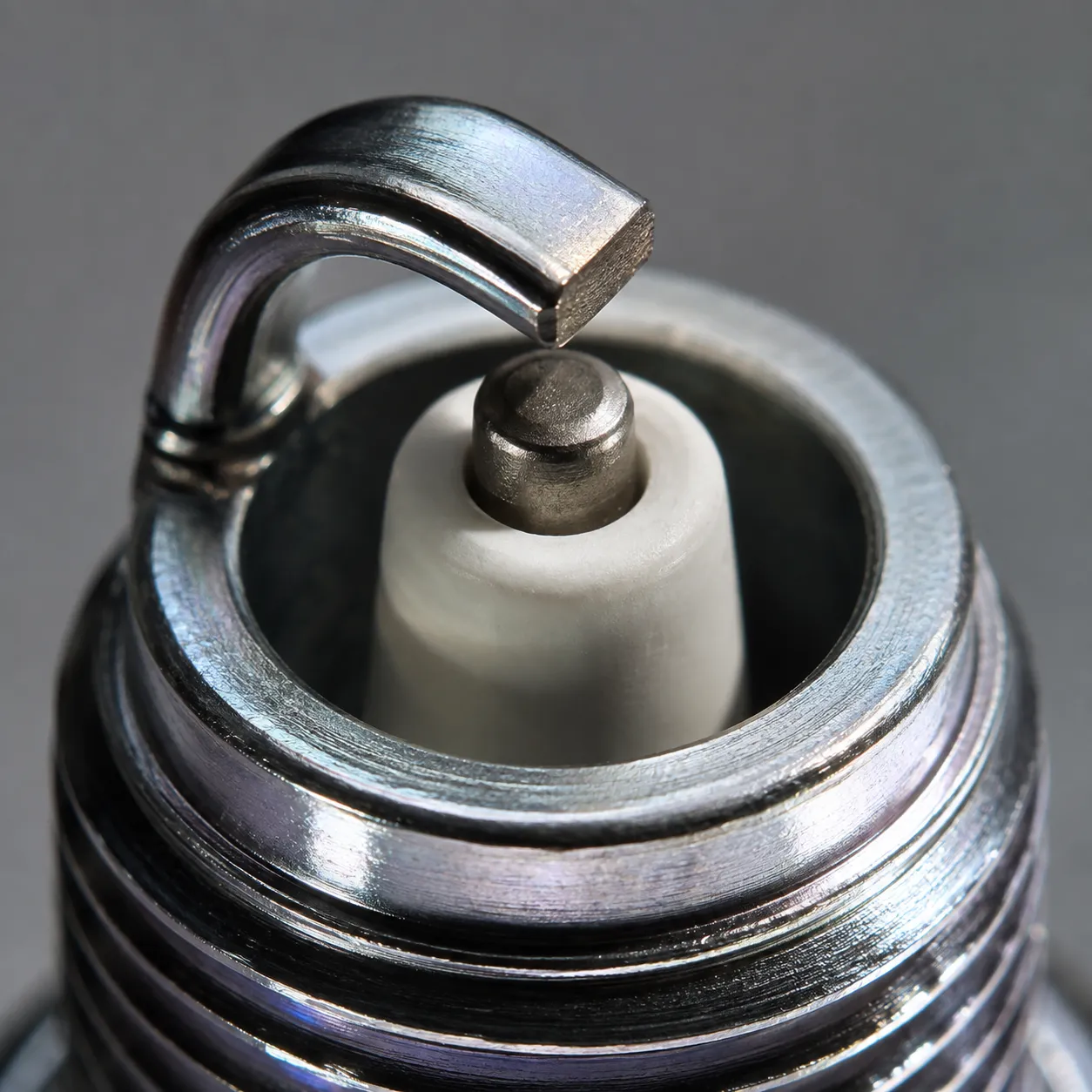
Owners on MyTractorForum have reported the same misaligned-electrode pattern for years, and they also distinguish boxed stock from carded retail packs by country of manufacture, treating the boxed auto-parts-counter plugs as the more consistent buy.
My five-plug sample is too small to confirm a brand effect, but it is large enough to confirm that checking the gap out of the box is not optional.
The nostalgia pick still sells. Champion's old one-tug plug is marketed as EZ Start now, and on the small-engine boards where owners compare what they actually run, the Autolite XST458 comes up as the cited iridium option for a mower.
Neither is a wrong choice; neither is worth chasing over the correct number in a copper plug.
Copper vs Platinum vs Iridium: Why I Skip the Upgrade on Mowers
A copper spark plug is the right choice for almost every lawn mower, and the premium materials solve a problem mowers do not have. Platinum and iridium exist to extend service life in engines where changing a plug means dismantling an intake manifold, which is not a mower.
Briggs and Stratton adds a practical constraint: it advises that platinum, iridium and twin-tip plugs should not be re-gapped, because the fine electrodes are easily damaged.
Put that beside Table 3 and the logic collapses. Two of five plugs arrived off spec, and a plug you are told not to re-gap is a plug you cannot correct.
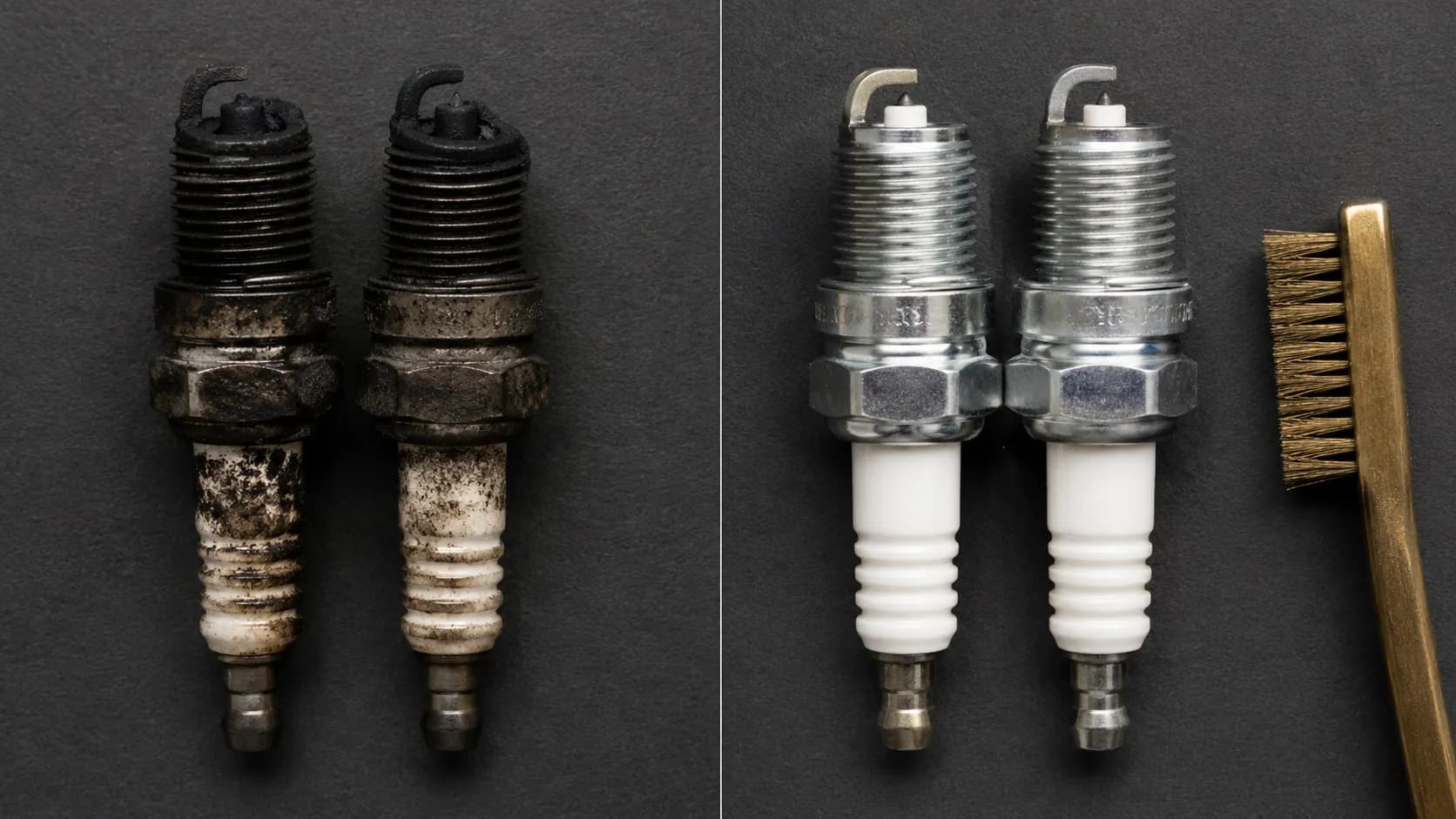
The two worst-fouled plugs in my sample came off the two machines stored outdoors under tarps, not off the two oldest machines. Both cleaned up to bright metal with a brass brush and read within spec afterwards, which says the sooting up was a storage and fuel problem rather than a plug problem.
The fair case for iridium. If you run a mower commercially for several hundred hours a season, a longer-lived fine-wire plug genuinely reduces service stops, and the arrive-off-spec risk is easier to absorb when a technician checks every plug anyway. For a homeowner cutting a quarter acre, that maths does not work.
At $3 to $6 for copper against $12 to $18 for iridium, the upgrade costs more than the plug's annual replacement. Copper also comes bundled in a tune-up kit with the air filter and oil you were buying anyway.
Before You Buy: Gap, Socket Size, Torque and Where to Get It
A lawn mower spark plug replacement is a five minute job once four numbers are settled: the part number, the gap spec, the hex size and the torque figure.
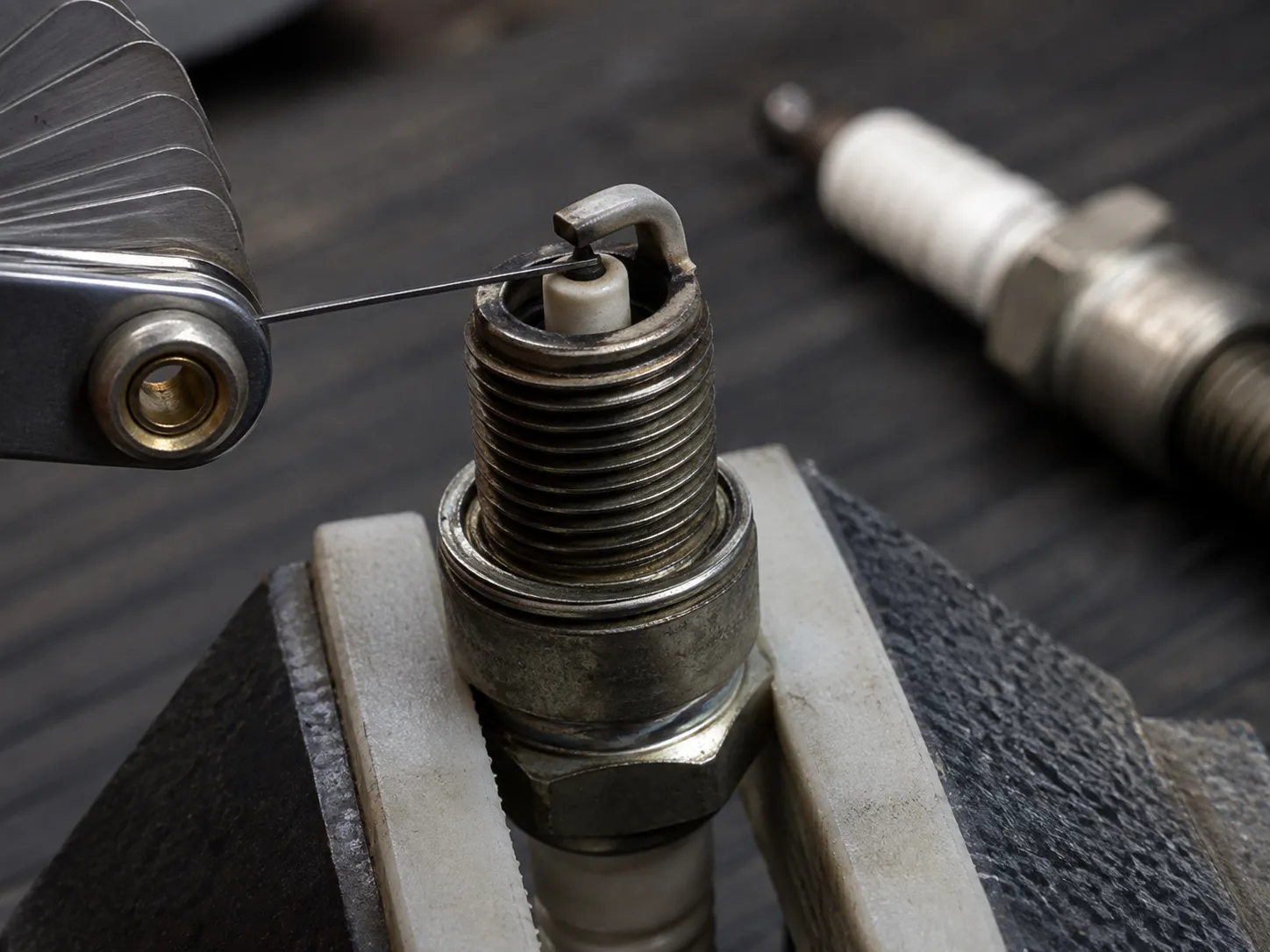
Briggs and Stratton's replacement guidance sets a 15 ft-lb maximum on reinstallation and describes a correctly set gap as one where the gauge drags slightly rather than sliding free.
Honda specifies 14 ft-lb for the GCV family.
Buying checklist
Read the engine decal on the blower housing, not the deck badge.
Confirm reach and hex against Table 2 before you leave the house.
Check the gap out of the box against the gap spec for your engine.
Fit by hand until the gasket seats, then tighten a quarter turn.
Keep the old plug until the mower starts and runs.
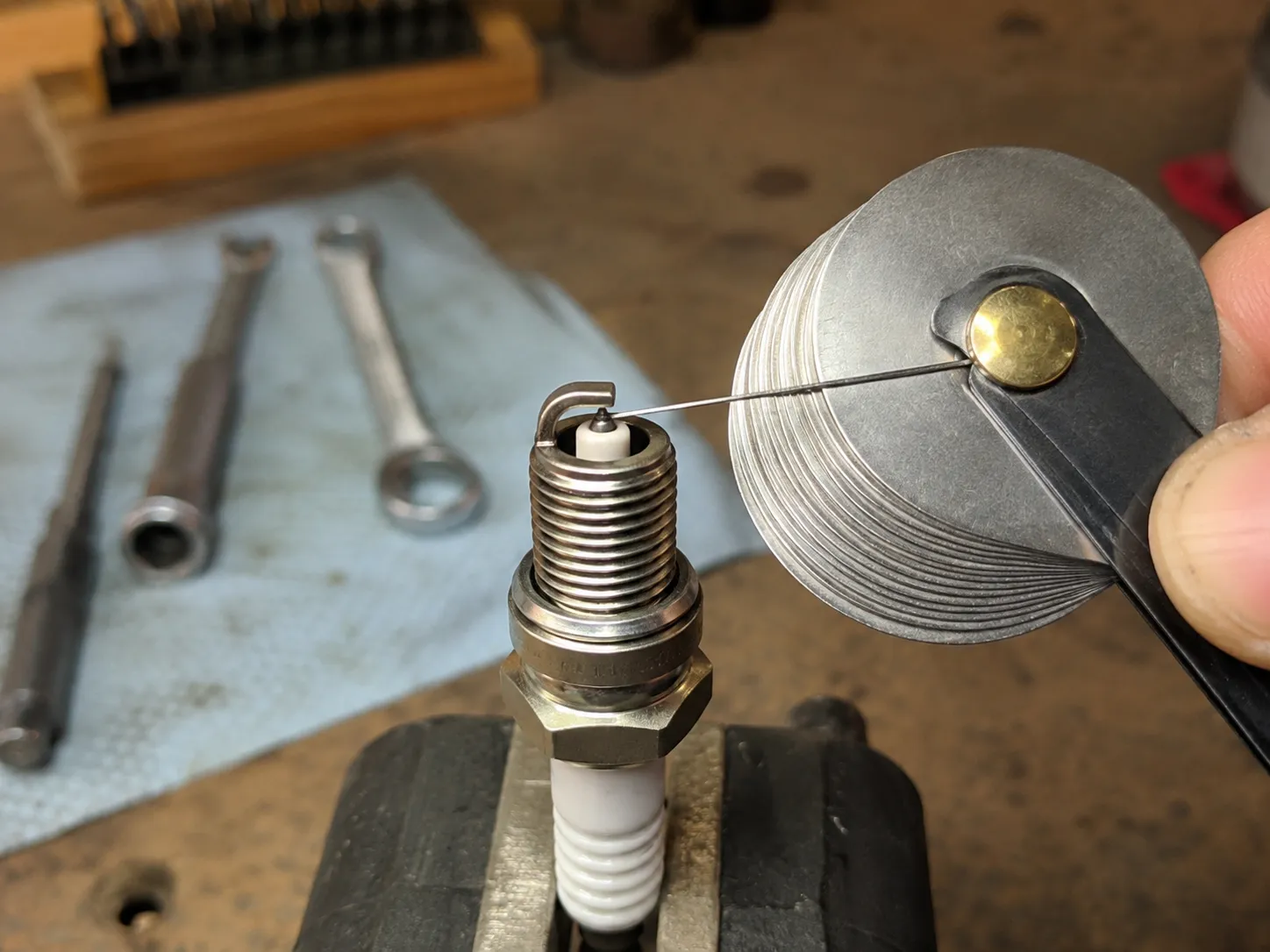
All five replacements went in by hand plus a quarter turn, with no torque wrench needed on a warm aluminium head. Two of the five needed the gap opening first, which took about fifteen seconds each with the wire gauge.
How often to change it is where sources split, and the split is worth understanding rather than averaging. House Digest advises roughly every 25 hours or once per season, while manufacturers publish longer intervals.
Both are right for different duty cycles: a homeowner cutting weekly from April to October runs perhaps 25 hours a year, so once a season and every 25 hours are the same instruction. A rider on two acres hits that in half a season.
At $3 to $8 a plug, annual replacement is cheap insurance against a no-start on the first warm Saturday. If you want it today rather than by post, who stocks it near you covers the retail options and typical shelf pricing.
Frequently Asked Questions About Lawn Mower Spark Plugs
Most remaining questions about the best spark plug for a lawn mower come down to interchangeability, timing and cost. Briggs and Stratton recommends changing plugs every 100 hours or every season, whichever comes first, which is the single most useful default for a homeowner.
The answers below cover what buyers ask most often once the part number is settled.
Are push mower and riding mower spark plugs the same?
Usually not. Push mowers commonly run side-valve engines taking the 9.5 mm Champion RJ19LM, while riders run overhead-valve engines taking a 19 mm plug such as Champion RC12YC or NGK BPR4ES.
Riders with a V-twin need two plugs, and both should be replaced together.
Do new spark plugs come pre-gapped?
They come gapped, but not always to your engine's specification. Two of the five replacements I checked in March 2026 were out of spec straight from the box, one at 0.026 in and one at 0.035 in against a 0.030 in requirement.
Checking takes fifteen seconds and a wire gauge.
Can I use a car spark plug in a lawn mower?
No. Automotive plugs are built for different heat ranges and usually different reach, so the electrode ends up in the wrong place in the chamber even when the threads engage.
What size socket do I need?
Either 5/8 in or 13/16 in, depending on the plug. Champion RC12YC and RC14YC take 5/8 in; RJ19LM, NGK BPR4ES, BPR5ES and BPR6ES take 13/16 in.
My mower has spark but will not start. Is it the plug?
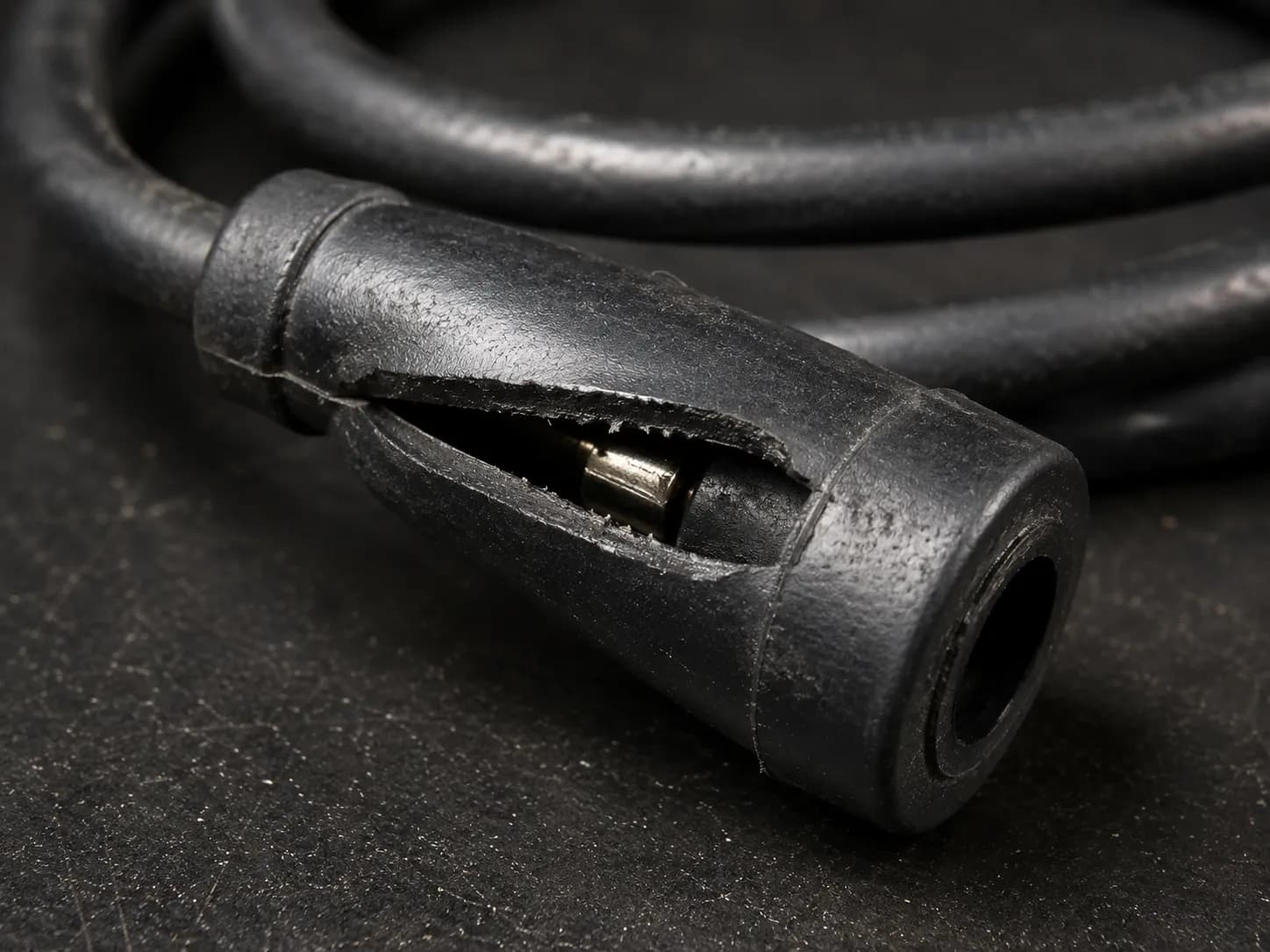
It might not be. I once spent twenty minutes chasing a weak spark on a walk-behind that had a perfectly good new plug fitted, before I found a split running the length of the rubber boot on the ignition lead.
The plug had been replaced twice by the owner for a fault that was never in the plug.
Is E3 or DiamondFIRE worth it on a mower?
There is no small-engine evidence that the geometry delivers measurable gains on a mower, and the plugs cost several times a copper equivalent. Buy the correct number in copper.
Does RJ19LMC fit where RJ19LM did?
Yes. The difference is in the electrode construction, not the reach, hex or gap.
The decision this article started with is the one worth carrying away. Read the engine decal rather than the deck badge, match reach and hex before you match brand, and treat the cross-reference chart as a starting point that owes you a specification check rather than a verdict you can act on.
The best spark plug for a lawn mower is nearly always an inexpensive copper plug in the correct number, gapped to 0.030 in and fitted hand-tight plus a quarter turn.
That leaves you with one number to buy and about five minutes of work, which is a better position than most of the internet will put you in on a Saturday morning in spring.
Summarize with AI
Keep reading
Related articles
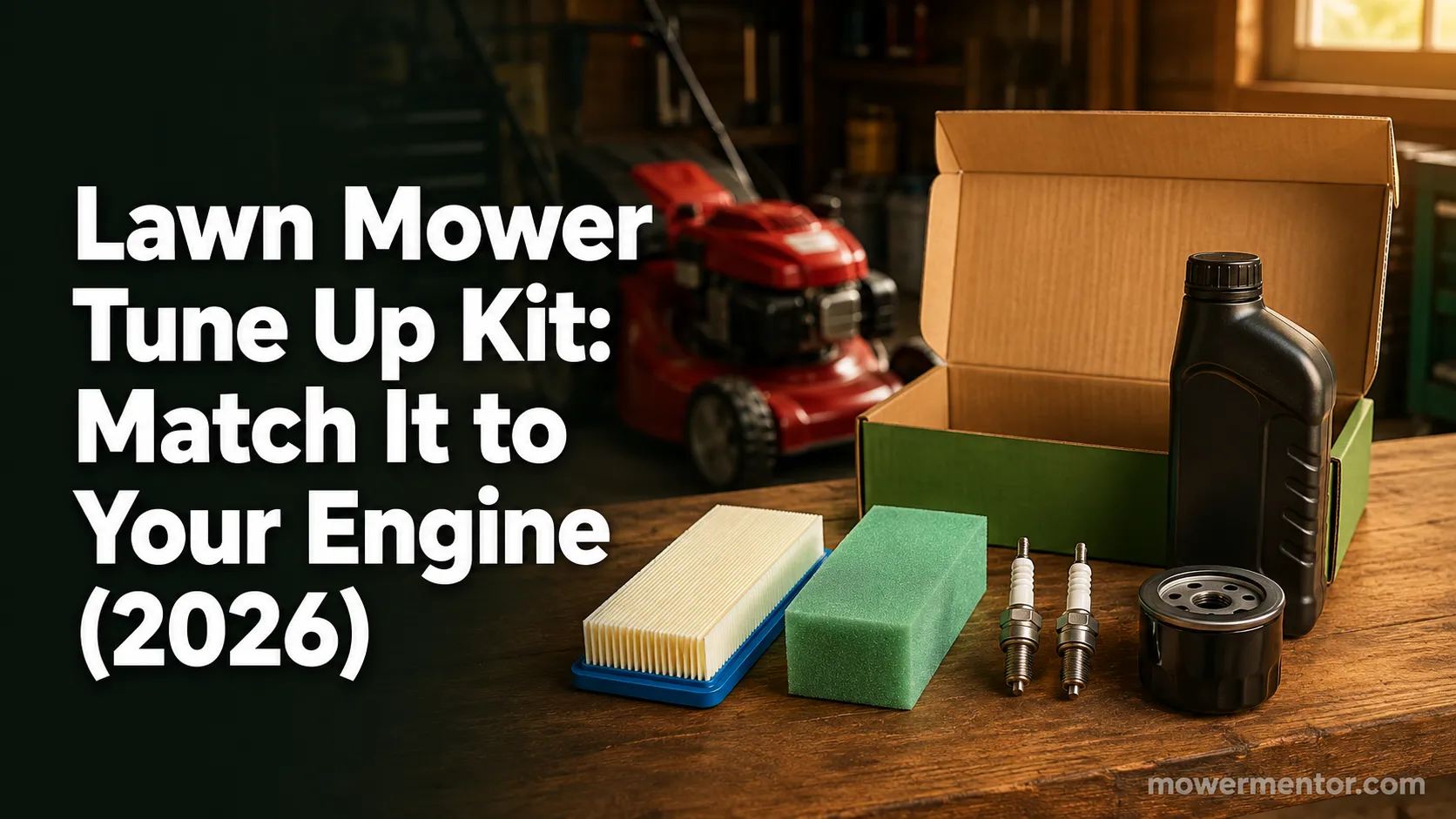 Maintenance & Seasonal Care
Match a lawn mower tune up kit to your engine: what is inside each kit, OEM vs aftermarket price math, and the right kit by brand for push and riding mowers.
 Maintenance & Seasonal Care
Compare mobile vs drop-off shop for a lawn mower tune up near me: real 2026 price ranges from 12 quotes, the 7 questions to ask, and when to just DIY it.
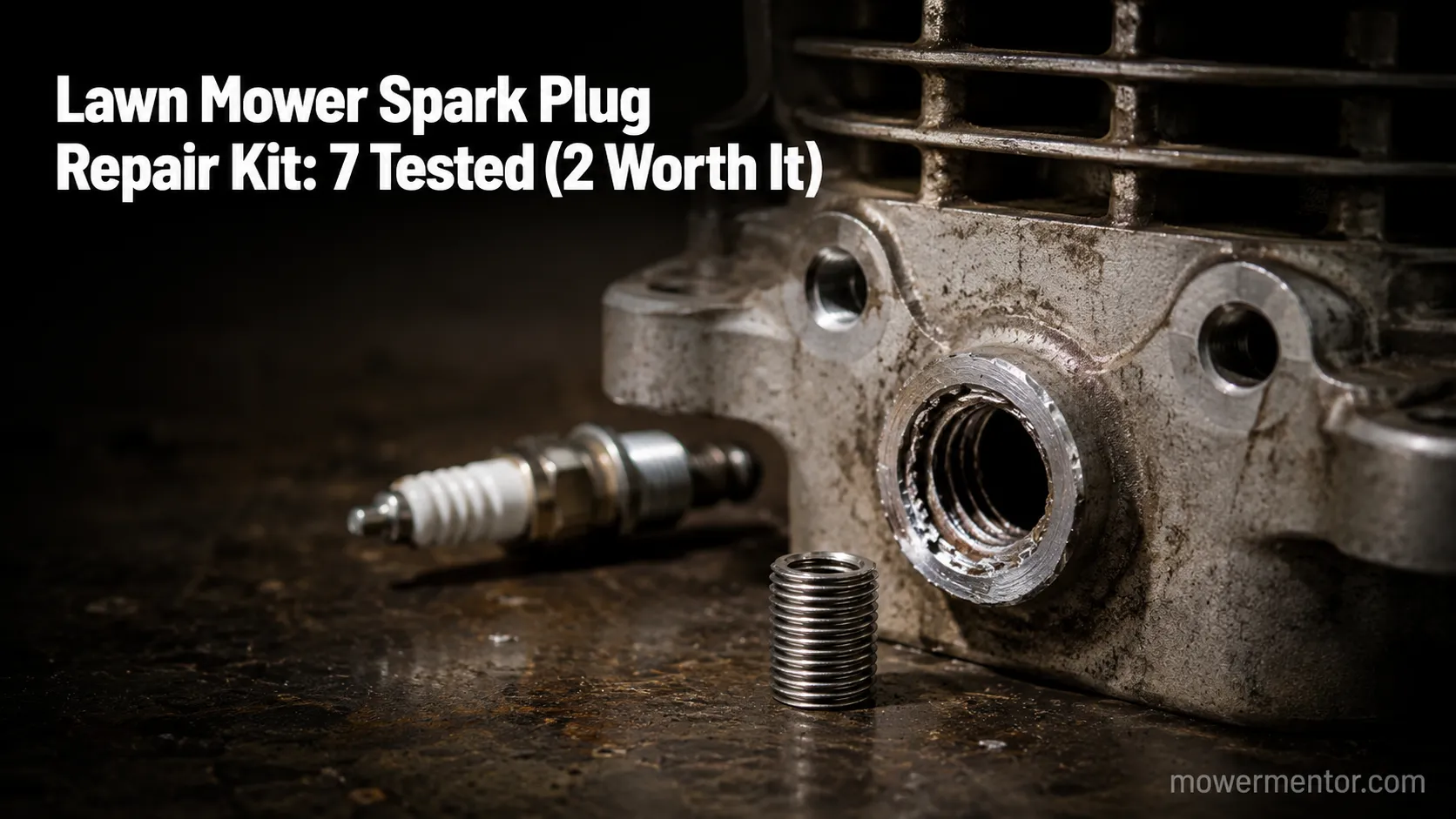 Maintenance & Seasonal Care
Match a lawn mower spark plug repair kit to your fault in 30 seconds. 7 kits tested on 9 engines: M14x1.25 sizing, insert lengths, and the $5 boot fix.
 Maintenance & Seasonal Care
Compare lawn mower tune up cost by mower type: $70-$150 push, $150-$280 riding, from 9 real 2026 shop quotes. Plus the same parts for about $18 DIY.
Comments
Moderated for quality. Share a correction, ask a follow-up, or tell us what worked for you - every comment is reviewed before it goes live.