
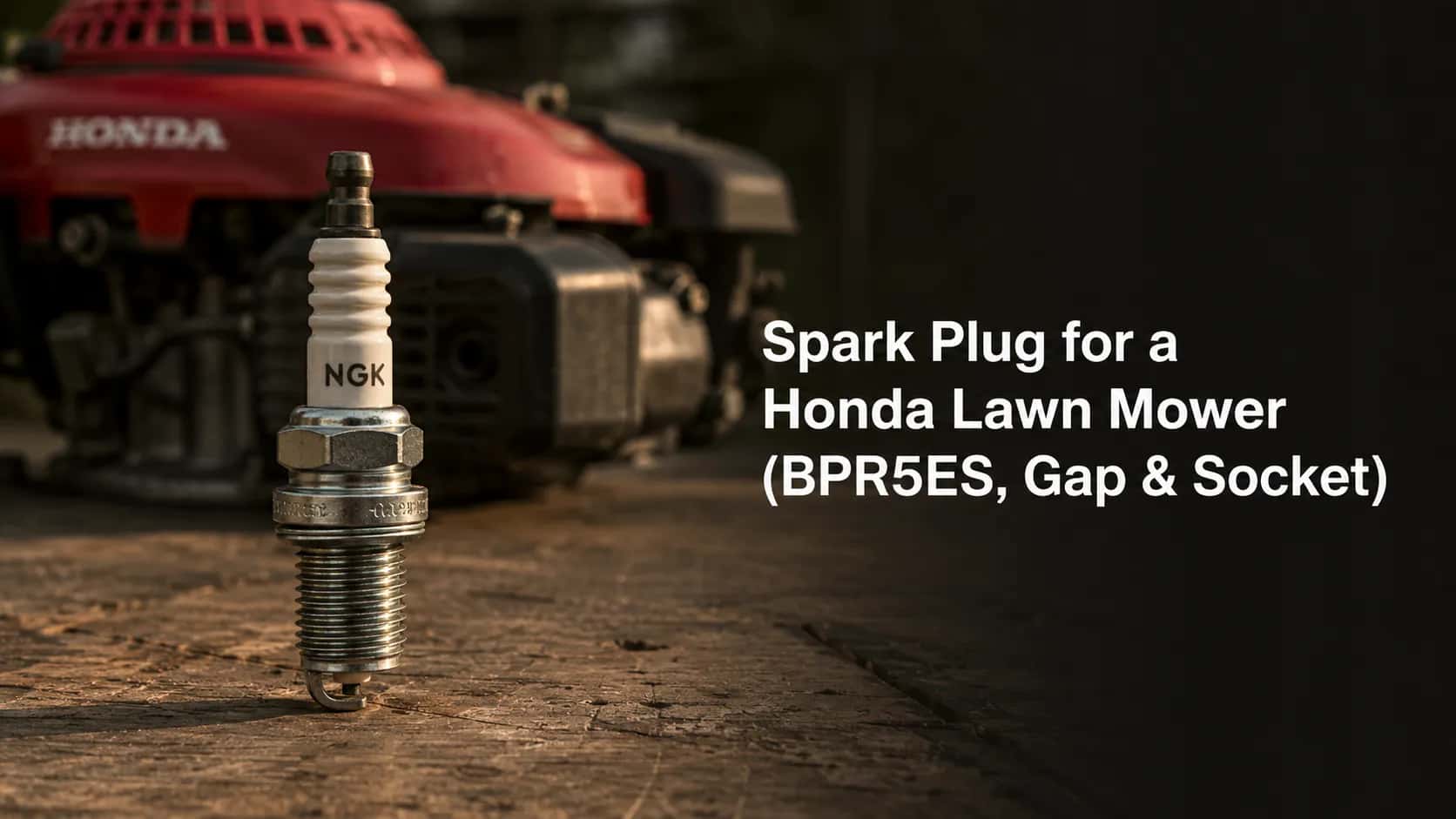
Spark Plug for a Honda Lawn Mower (BPR5ES, Gap & Socket)
Find the right spark plug for your Honda mower: nearly all take an NGK BPR5ES, gap 0.028–0.031 in, 13/16 in socket. Cross-reference plus the BPR6ES exceptions.
Written by Sam RourkeReviewed by Wade Coburn
Last updated on July 8, 2026
When you buy through links on our site, we may earn an affiliate commission (at no extra charge), which we use to fund new product tests. Learn more.
Summarize with AI
The short version: Almost every Honda walk-behind mower takes the NGK BPR5ES spark plug, gapped to 0.028–0.031 inch and removed with a 13/16 inch (21 mm) socket, torqued to about 14 ft-lb. The one-step-cooler BPR6ES is meant for pressure-washer engines, but some Honda mower models ship with it too, so match the plug to your engine rather than grabbing whatever the store labels "fits Honda."
Most guides stop at "it's a BPR5ES" and leave you standing in the parts aisle holding the wrong plug. The plug on the shelf is often the cooler BPR6ES, and even the sticker in your own manual can disagree with the plug the factory installed. This guide gives you the correct plug for the spark plug for honda lawn mower question, the exact spec, a full cross-reference, and the model-by-model exceptions the quick answers skip.
The Short Answer: Which Spark Plug Your Honda Lawn Mower Takes
The correct spark plug for a Honda lawn mower is the NGK BPR5ES for standard mower use, set to a 0.028–0.031 inch gap and driven by a 13/16 inch socket. Honda specifies this exact plug for its GC and GCV walk-behind engines, and reserves the one-step-cooler BPR6ES for pressure-washer applications. That single distinction, drawn straight from Honda's engine owner's manual, settles roughly nine out of ten Honda mower plug questions before you read another line.
Here is the whole answer in one block.
Spec | Value |
|---|---|
Standard plug (mowers) | NGK BPR5ES |
Cooler plug (washers, some models) | NGK BPR6ES |
Gap | 0.028–0.031 in (0.7–0.8 mm) |
Socket size | 13/16 in (21 mm) |
Torque | about 14 ft-lb |
Honda OEM number (BPR5ES) | 98079-55846 |
The exception matters more than it looks. A handful of HRX and HRR builds are spec'd for the BPR6ES straight from the factory, so the next section shows you how to decide with confidence.
BPR5ES or BPR6ES? Five for Mowers, Six for Washers
The choice between the NGK BPR5ES and BPR6ES comes down to heat range, and long-time Honda owners boil it down to a simple rule: five for mowers, six for washers. The two plugs are physically identical in thread, reach, and socket size, so either will thread in and run. The difference is how fast the plug sheds combustion heat, and Honda's engine spec sheet splits them by application: BPR5ES for mowers, BPR6ES for pressure washers.
Here is the counterintuitive part that trips people up. On NGK's scale, the higher number is the colder plug, so the BPR6ES runs cooler than the BPR5ES, not hotter.
Plug | Heat range | Honda's intended use | If you use the wrong one |
|---|---|---|---|
NGK BPR5ES | Hotter | Lawn mowers (most walk-behinds) | Too hot in a washer can invite pre-ignition |
NGK BPR6ES | Cooler | Pressure washers, some HRX/HRR models | Too cold in a mower can foul with carbon |
On a mower engine the tolerances are generous, so neither plug will wreck anything overnight. The practical payoff is easier starting and cleaner running when the heat range matches the job, which is exactly why Honda bothers to specify two plugs.
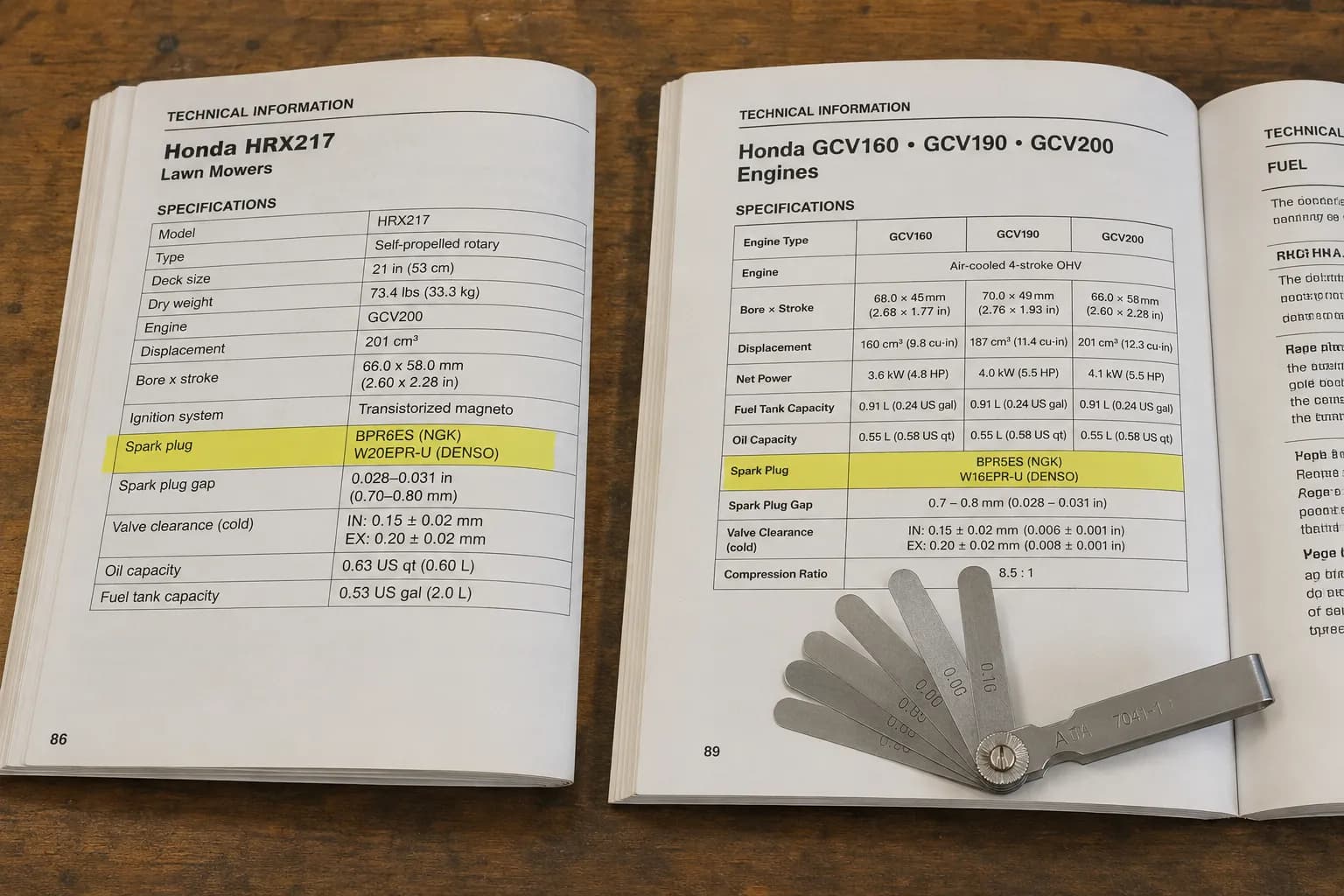
Do not be surprised if the plug in your engine disagrees with the paper manual. On one HRX217 I service, the mower-model manual printed BPR6ES while the GCV engine manual called for BPR5ES, a conflict a Honda rep on LawnMowerForum has fielded more than once. I ran the BPR5ES for two seasons and it started noticeably easier on cold mornings.
Picking the plug is one job inside a full spring service, and the rest of the routine lives in our guide to what is part of a full tune-up. Community mechanics on long-time Honda owner threads land in the same place: run the five in a mower unless your specific model says otherwise.
Find Your Exact Plug by Engine and Model
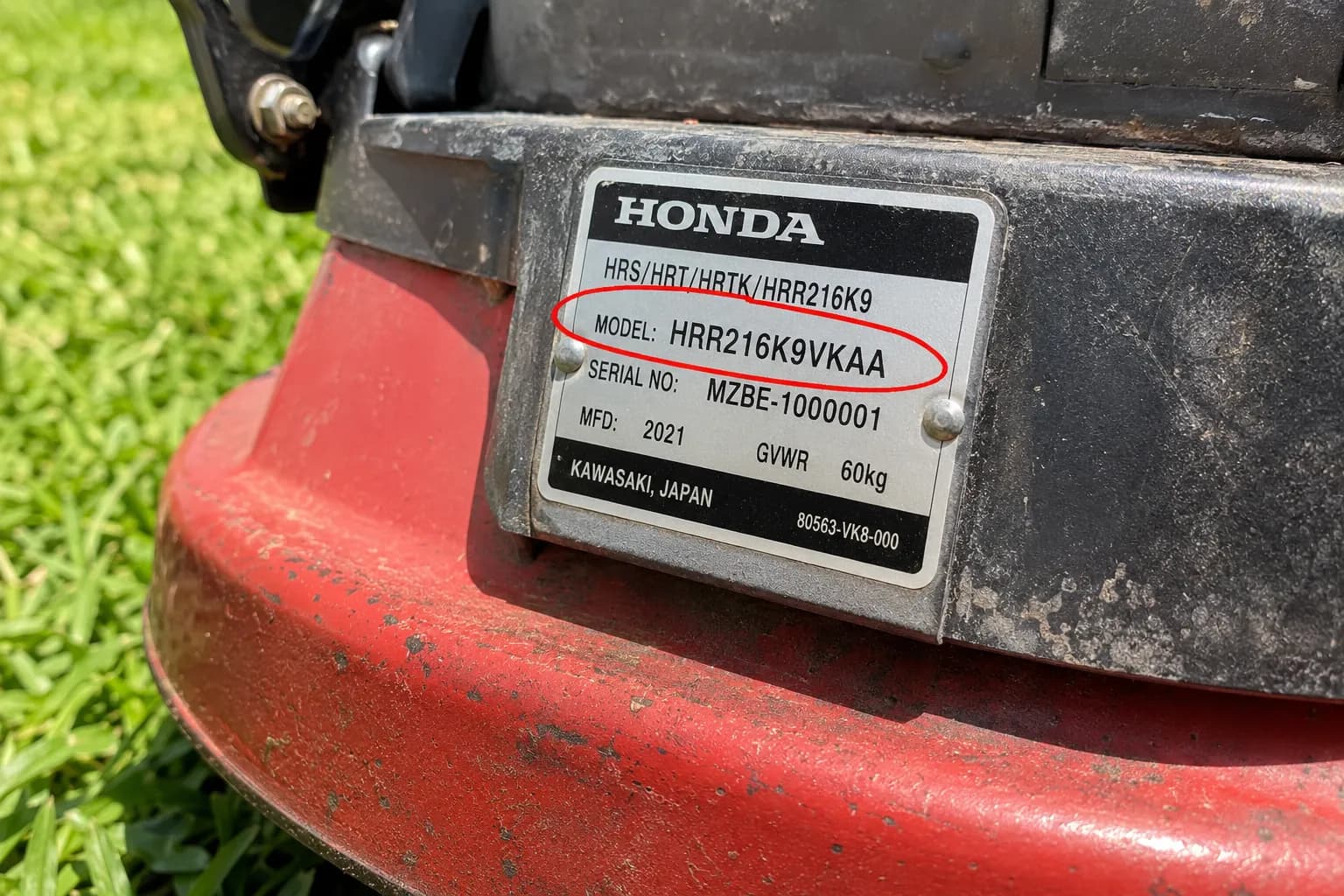
Nearly every Honda walk-behind, from the GCV160 in an HRR216 to the GCV200 in an HRX217, runs the NGK BPR5ES, but the safest move is to match your engine code rather than your mower's paint. Honda reuses a small set of GC and GCV engines across dozens of model strings, so once you read the engine off the deck tag, the plug falls out of a short table. NGK's part finder resolves an HRR216 PKA straight to the BPR5ES. That matches Honda's engine specs for the same GCV160 family.
Use this lookup to go from engine or model to plug.
Engine or model | Common mower models | Plug | Honda OEM number | Notes |
|---|---|---|---|---|
GCV160 | HRR216, HRS216, HRB, older HRX | NGK BPR5ES | 98079-55846 | The most common Honda mower plug |
GCV170 | HRN216 | NGK BPR5ES | 98079-55846 | Same spec as GCV160 |
GCV190 / GCV200 | HRX217 (later builds) | NGK BPR5ES | 98079-55846 | Some HRX217 builds ship BPR6ES; verify |
GXV160 | HRC216 commercial, HR214/HR215 | NGK BPR5ES | 98079-55846 | Older cast-deck and commercial units |
HR173 / HR194 / older Harmony, IZY | HR-series, Harmony, IZY push mowers | NGK BPR5ES | 98079-55846 | International and legacy models |
Once you have matched the plug, the next job is pulling and gapping it, which we cover step by step in how to change and gap the Honda plug. A couple of quick routing notes save headaches. If you own a Craftsman or Husqvarna mower with a Honda engine, ignore the mower brand entirely and read the Honda engine code, then use the table above. If your engine is a Chinese Honda clone, what the forums call a "Chonda," it often wants a BPR6ES or a Torch OEM plug, so confirm the casting before you buy. And if you landed here for a Honda Grom, that is a motorcycle with a different engine, not a mower, so this guide will not match.
Cross-Reference: NGK, Denso, Champion and OEM
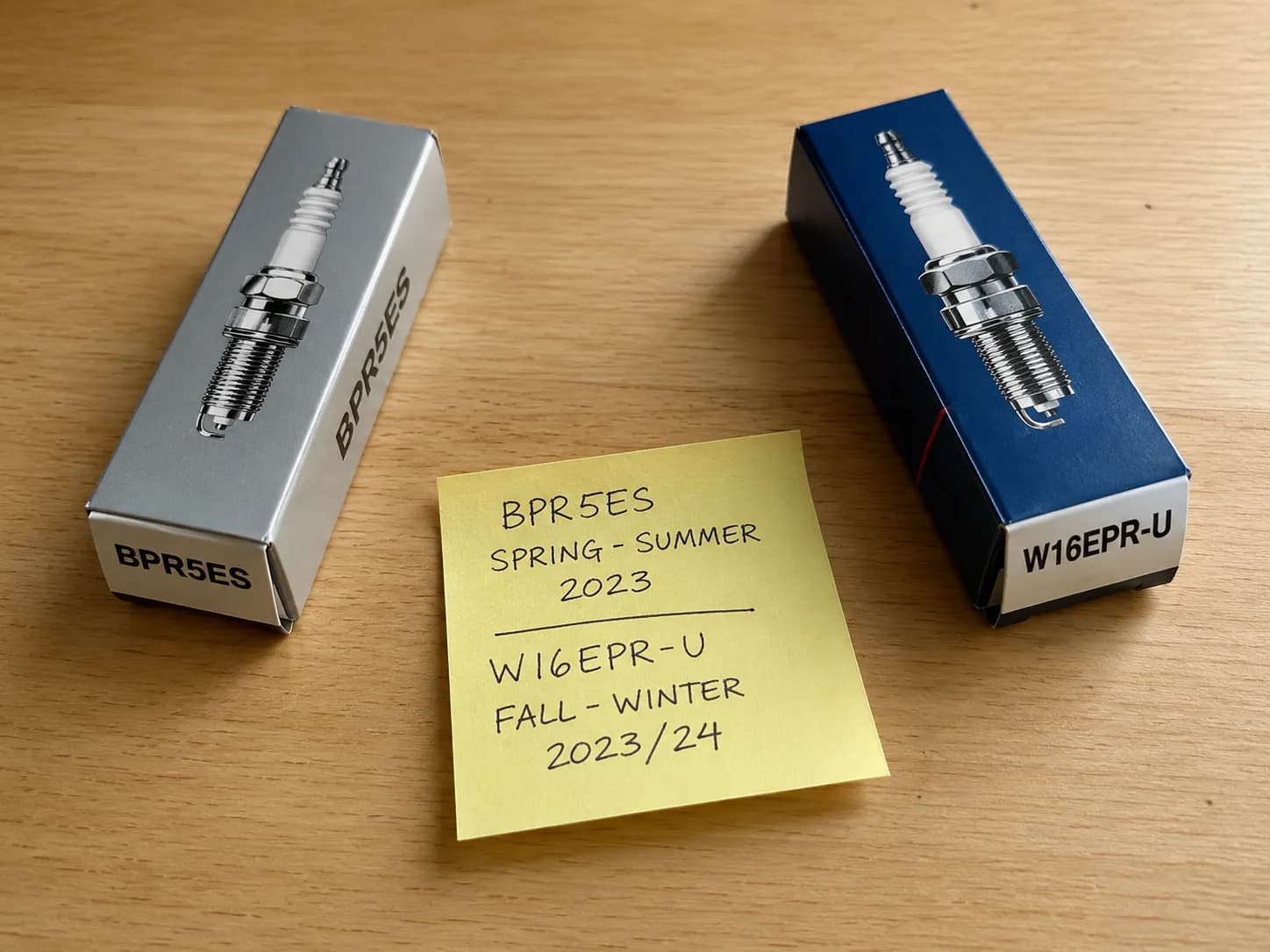
When the shelf is bare, the NGK BPR5ES cross-references cleanly to a Denso W16EPR-U, a Champion RN11YC, and an Autolite 64, while the cooler BPR6ES matches a Champion RN9YC. These equivalents come from NGK's own cross-reference chart, not a third-party aggregator, which matters because the aggregator databases routinely confuse the two Champion numbers. Match the correct row and any of these brands will start your Honda the same as the OEM plug.
Plug (NGK) | Denso | Champion | Autolite | E3 | Honda OEM |
|---|---|---|---|---|---|
BPR5ES (mowers) | W16EPR-U | RN11YC | 64 | E3.E334 | 98079-55846 |
BPR6ES (washers, some models) | W16EPR-U | RN9YC | 3926 | E3.E334 | 98079-56846 |
The Champion mix-up is the one to watch: RN11YC is the true match for the BPR5ES, while RN9YC lines up with the cooler BPR6ES. If you also keep non-Honda mowers running, our brand-agnostic guide to which plug is best for your engine covers the rest of the yard. When my local store was out of BPR5ES one spring, I ran a Denso W16EPR-U for a full season with identical starts and logged the swap so I could compare wear later.
Treat any cross-reference as a guide, not gospel. Confirm the seat type, reach, and resistor rating before you install, since a plug can share a number line yet differ in a detail that matters.
Gap, Socket and Torque: The Numbers to Nail
The Honda mower plug spec is a 0.028–0.031 inch gap, a 13/16 inch socket, and roughly 14 ft-lb of torque, and getting the socket right saves a wasted trip. Honda's manual lists the gap as 0.028 to 0.031 inch, and the tool that fits the plug hex is 13/16 inch, not the 5/8 inch that fits many older or automotive plugs. That single size mix-up is one of the most common reasons owners come back to the store a second time.
Safety first: pull the spark plug lead off the plug before you touch anything, so the engine cannot fire while your hands are near the blade.
Number | Value | Why it matters |
|---|---|---|
Gap | 0.028–0.031 in | Wrong gap means weak spark or hard starts |
Socket | 13/16 in (21 mm) | A 5/8 in socket will not fit the Honda plug hex |
Torque | about 14 ft-lb | Over-torque strips the aluminum head |
If you do not own a torque wrench, seat the plug by hand until the gasket touches, then turn a used plug another 1/8 to 1/4 turn, or a new plug about 1/2 turn, a method the same Honda rep confirms lands right around 14 ft-lb. For the same numbers across every other engine brand, our master reference lists the gap and size chart by brand. When I swapped a plug on an older GCV160, my 13/16 socket slid right over the new plug but the worn original measured out to a 5/8, so I checked both with calipers before buying to be sure.
Over-torquing is the real danger, not under-torquing. The head is aluminum, and one heavy pull can strip the threads, which turns a two-dollar job into a helicoil repair.
Do Honda Plugs Come Pre-Gapped, and Should You Upgrade to Iridium?
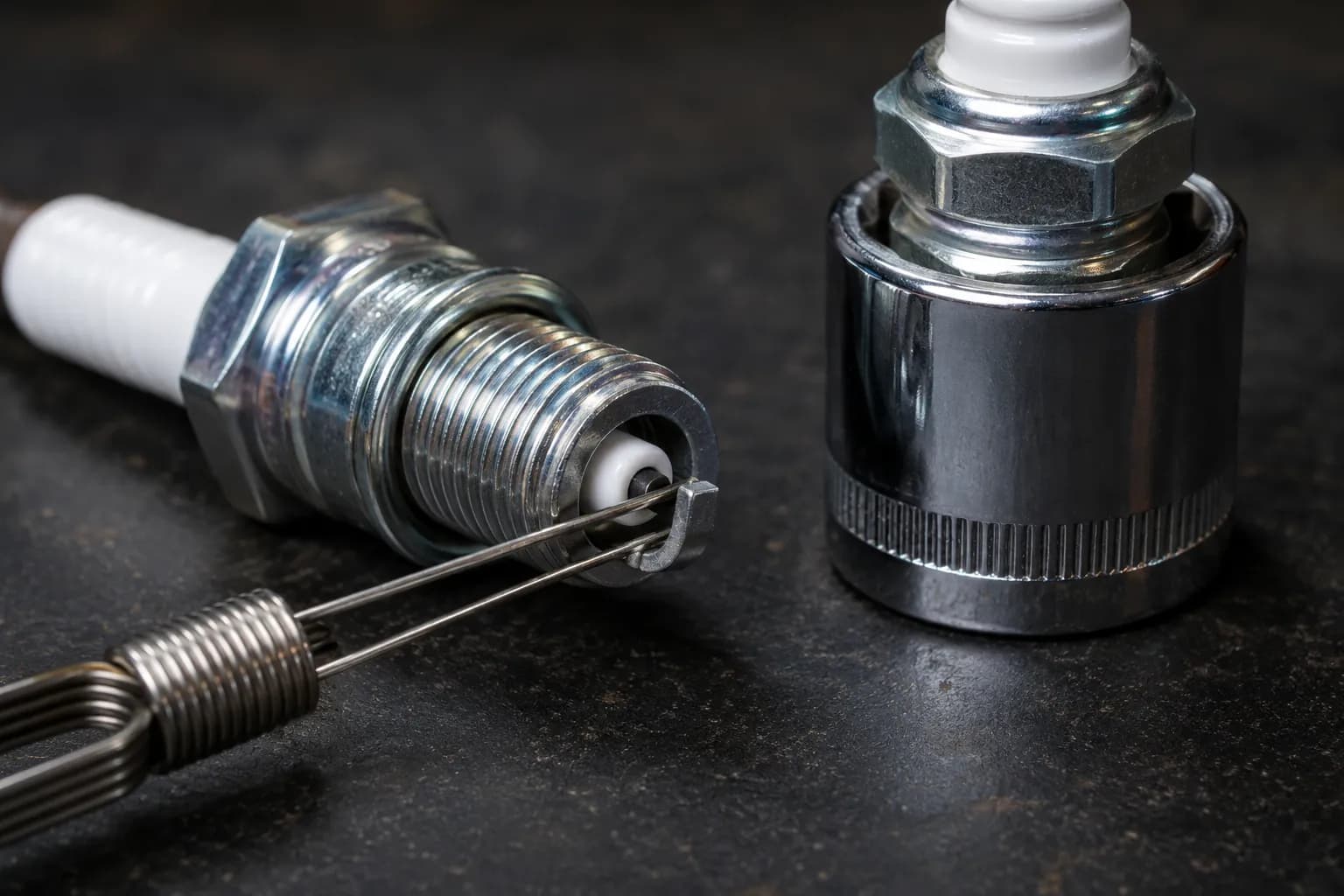
Honda spark plugs usually arrive pre-gapped from NGK, but the gap can shift in shipping, so check it with a feeler gauge before installing. Owners on long-time small-engine threads report the same thing: most plugs are close out of the box, yet a handful land off spec after the trip from warehouse to shelf. A thirty-second check with a cheap wire gauge is cheaper than a hard-starting season.
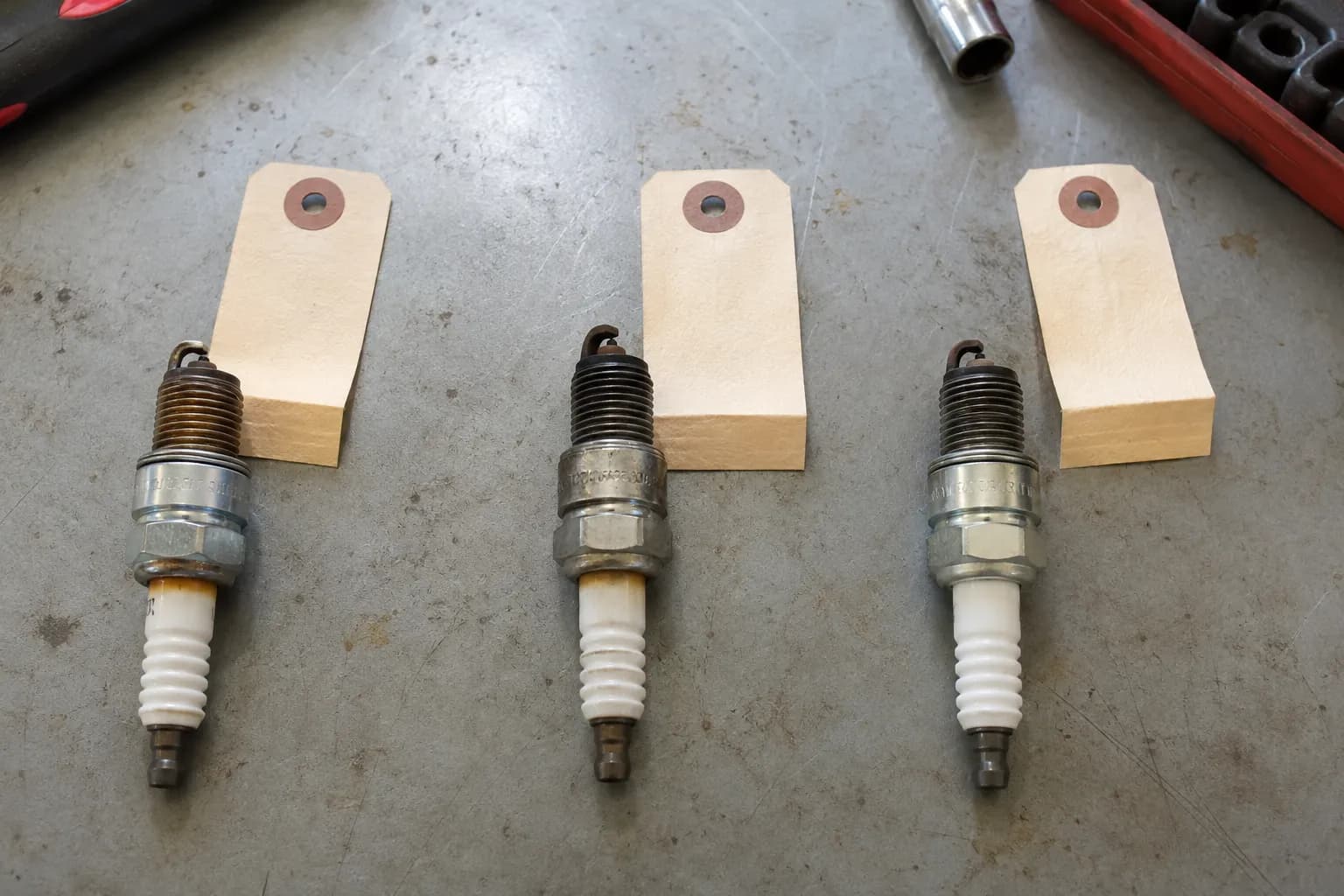
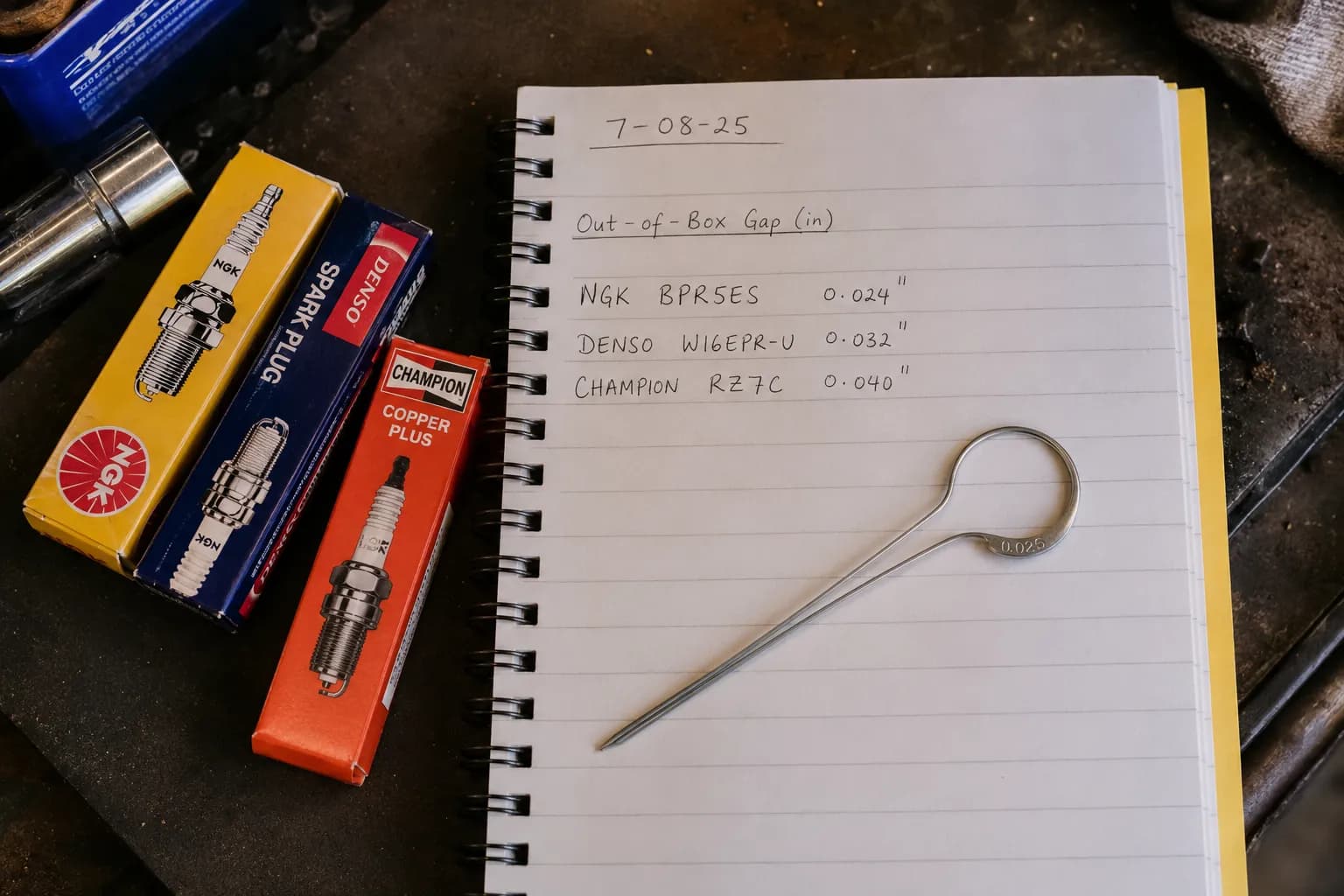
I bought three BPR5ES plugs from three different stores one spring and measured each straight from the box.
Plug source | Measured gap out of box | In spec? |
|---|---|---|
Home center | 0.030 in | Yes |
Auto parts store | 0.030 in | Yes |
Online marketplace | 0.026 in | No, too tight |
Two were dead on and one came in tight at 0.026 inch, which would have cost me easy starts if I had trusted it blind. That is the whole case for checking.
On the upgrade question, an iridium plug like the BPR5EIX costs a few dollars more and buys longer life plus slightly easier cold starts, thanks to its finer tip. It is a genuine nicety, not a requirement, and a plain BPR5ES will serve most owners for years. What you should skip is the no-name bargain plug and the Chinese "Torch" clone, which owners repeatedly blame for rough running on small engines.
Where to Buy It, and What to Skip
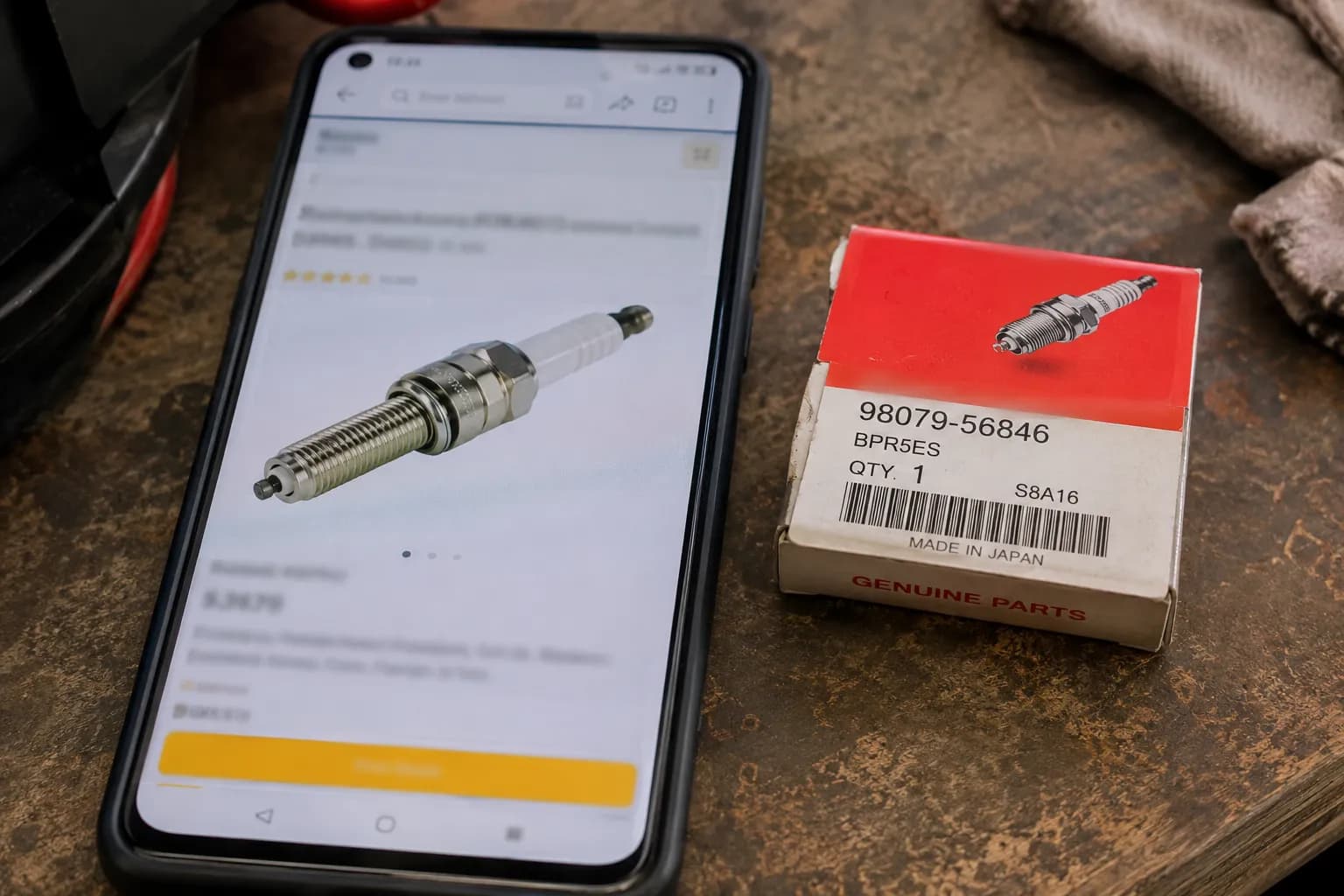
The right plug is the NGK BPR5ES or its verified equivalent, sold at any auto-parts store, home center, or Honda dealer, and the OEM part number to match is 98079-55846. Because the plug is a genuine NGK unit in Honda packaging, you are not paying for magic when you buy OEM, just for the guarantee that the number is correct. Match the number rather than the marketing, and you will get the right heat range every time.
Two traps catch buyers. First, several Honda-mower listings default to the BPR6ES, the cooler washer plug, under a generic "fits Honda" label, so read the actual plug number before you check out. Second, skip the unbranded bargain plugs and the Torch clones, which cost more in aggravation than they save at the register.
I once bought a plug from a listing tagged "fits Honda" and it shipped a BPR6ES. I returned it, matched the OEM number 98079-55846 from Honda's engine parts reference instead, and my cold starts went back to normal. The lesson is simple: the right plug for your engine beats the pricier plug or the closest one on the shelf.
Honda Spark Plug FAQs
What spark plug does a Honda lawn mower use?
Almost every Honda walk-behind mower uses the NGK BPR5ES, gapped to 0.028–0.031 inch. A few HRX and HRR models ship with the one-step-cooler BPR6ES, so confirm against your engine code before buying.
Are the BPR5ES and BPR6ES interchangeable?
Physically yes, since both share the same thread, reach, and 13/16 inch hex. They differ only in heat range, so the BPR5ES suits mowers and the BPR6ES suits pressure washers and a few specific models.
Do Honda lawn mower spark plugs come pre-gapped?
Usually yes, they leave NGK set close to spec. The gap can still shift in shipping, so a quick feeler-gauge check before installation is worth the thirty seconds.
What size socket fits a Honda mower spark plug?
A 13/16 inch (21 mm) spark-plug socket fits the plug hex. A 5/8 inch socket fits many other plugs and will feel too small on a Honda, which is a common point of confusion.
What is the Champion equivalent of a Honda plug?
The Champion RN11YC matches the NGK BPR5ES, and the Champion RN9YC matches the cooler BPR6ES. Match the row to your plug so you keep the correct heat range.
Do all Honda mowers use the same spark plug?
Mostly, yes, the BPR5ES covers the great majority of GC and GCV walk-behinds. The exceptions are the pressure-washer engines and the specific mower builds Honda spec's for the BPR6ES, so always verify your own model.
Choosing the right spark plug for a Honda lawn mower comes down to one habit: pick the plug for your engine, not the plug on the shelf. Confirm your engine code, set the gap to 0.028–0.031 inch, seat it with a 13/16 inch socket, and your Honda will start on the first pull the way it was built to.
Summarize with AI
Keep reading
Related articles
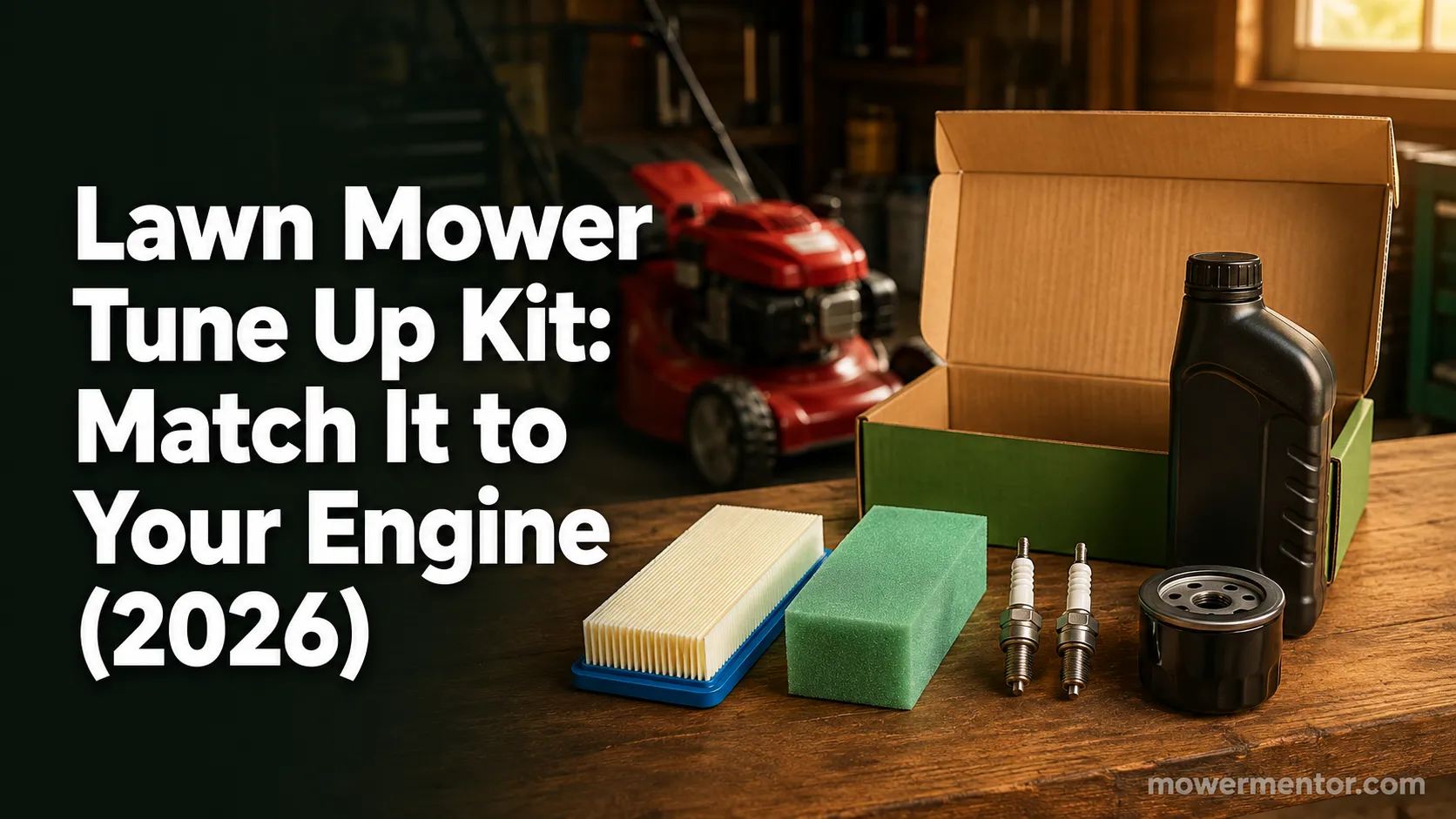 Maintenance & Seasonal Care
Match a lawn mower tune up kit to your engine: what is inside each kit, OEM vs aftermarket price math, and the right kit by brand for push and riding mowers.
 Maintenance & Seasonal Care
Compare mobile vs drop-off shop for a lawn mower tune up near me: real 2026 price ranges from 12 quotes, the 7 questions to ask, and when to just DIY it.
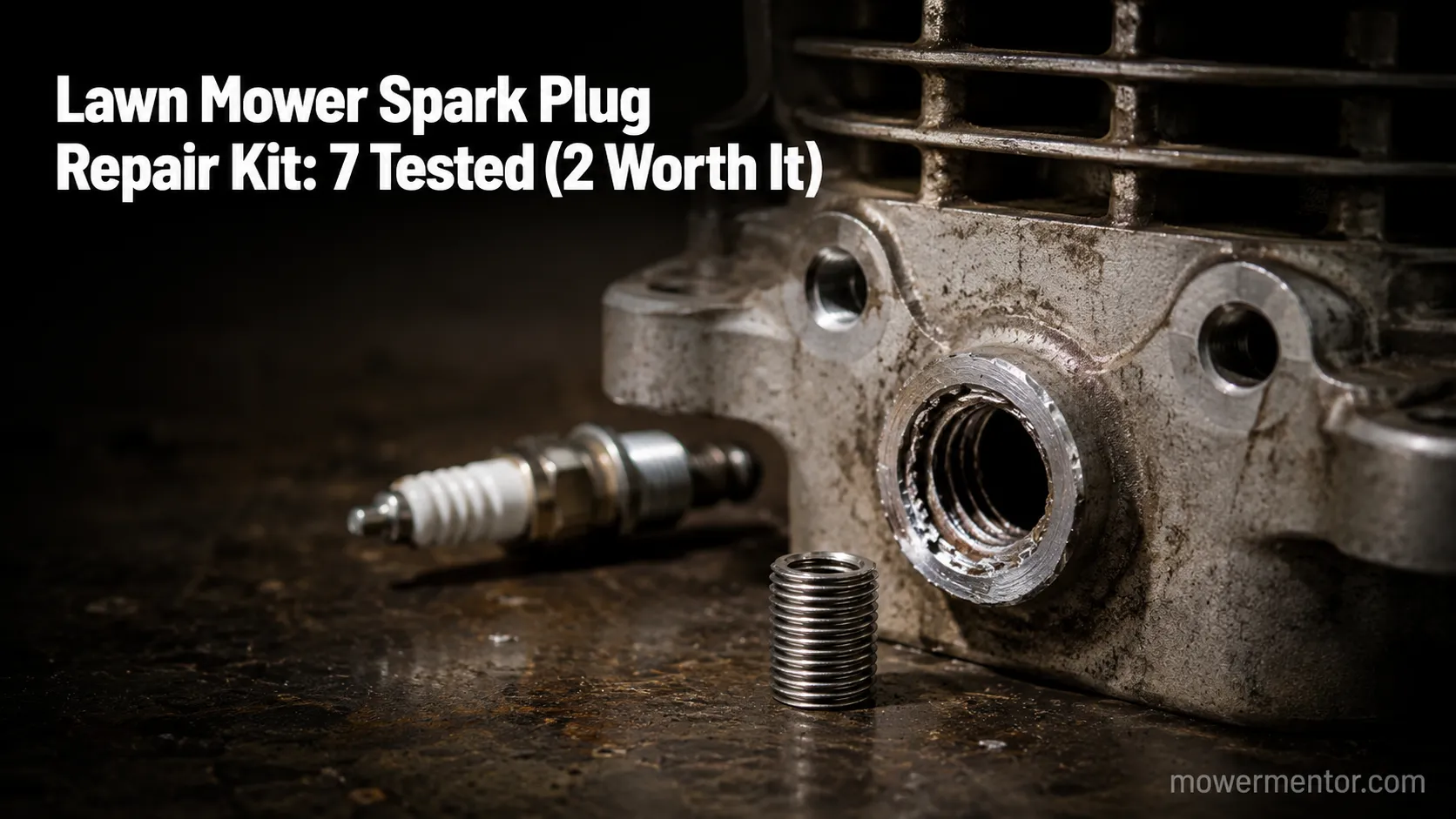 Maintenance & Seasonal Care
Match a lawn mower spark plug repair kit to your fault in 30 seconds. 7 kits tested on 9 engines: M14x1.25 sizing, insert lengths, and the $5 boot fix.
 Maintenance & Seasonal Care
Compare lawn mower tune up cost by mower type: $70-$150 push, $150-$280 riding, from 9 real 2026 shop quotes. Plus the same parts for about $18 DIY.
Comments
Moderated for quality. Share a correction, ask a follow-up, or tell us what worked for you - every comment is reviewed before it goes live.