
Wrong Starter Motor for Lawn Mower? Match It by Engine
Match the right starter motor for lawn mower by engine (Briggs, Kohler, Kawasaki), compare OEM vs aftermarket cost, and confirm it's bad first.
Written by Tony MaldonadoReviewed by Wade CoburnLast updated on September 24, 2026
When you buy parts or tools through links on our site, we may earn a commission at no extra cost to you. It never changes what we recommend. Learn more.
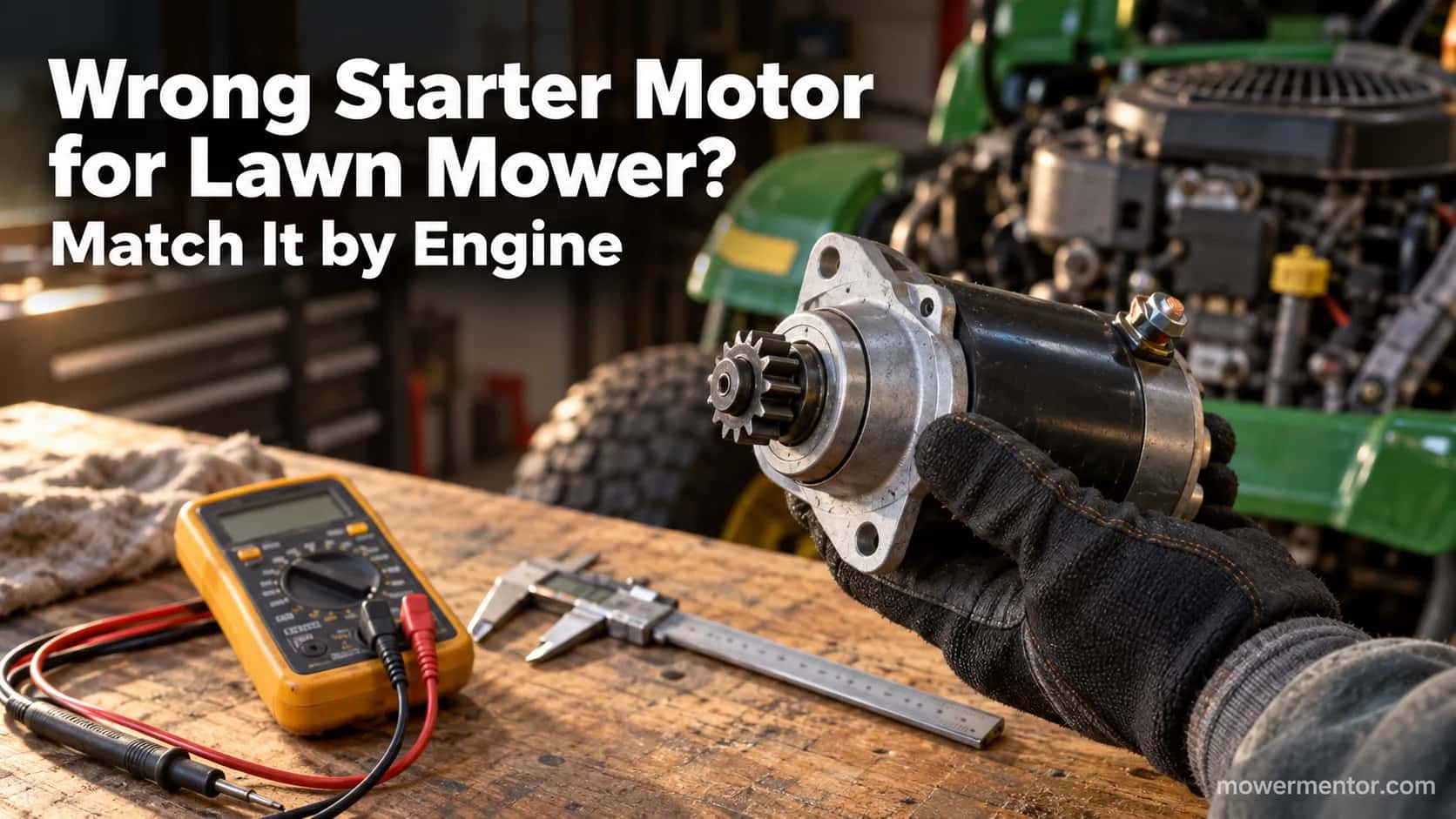
A replacement starter motor for lawn mower engines is chosen by the engine's model, type, and code stamp and its drive and tooth spec, not by the mower's brand.
Before buying, confirm the failure: a single click, no-crank, or slow crank is more often a weak battery, corroded cable, bad ground, or solenoid.
Expect roughly $40 to $120 for the part and $95 to $250 installed.
Match by engine, buy from a seller with an easy fitment return, and you fix it once.
Your riding mower turns the key and gives you a click, a slow groan, or nothing at all.
Before you spend a cent, understand this: choosing a starter motor for lawn mower engines is a fitment problem, not a shopping problem.
The part that fits is decided by the engine bolted into your machine, a Briggs, Kohler, Kawasaki, or Tecumseh, not by the Craftsman, Toro, or Snapper badge on the hood.
I have spent years on a repair bench watching people buy the wrong unit off a blurry photo, then wait on a return while the grass keeps growing.
This guide fixes that in the right order.
First you confirm the starter is actually the failed part, then you match the exact replacement to your engine and buy it without guessing.
The 60-Second Answer: Buy the Right Starter (and Confirm You Need One)
A replacement starter motor for lawn mower engines is chosen by the engine's model-type-code stamp plus its drive and tooth spec, not by the mower's brand, so match the engine make, single versus twin cylinder, the drive type, and the tooth count with the bolt pattern.
Before buying, confirm the old one is genuinely dead, because a click, a no-crank, or a slow crank is usually a weak battery, a corroded cable, a bad ground, or a failing solenoid, and a shop swap runs about $95 to $250 installed.
The two-step rule saves the most money. Step one is confirmation, and step two is engine-based fitment, both covered below.
The parts themselves are cheap relative to a wrong guess.
Aftermarket units run roughly $40 to $120, while a shop bill for the same job lands around $95 to $250 installed per LawnStarter's 2026 cost data.
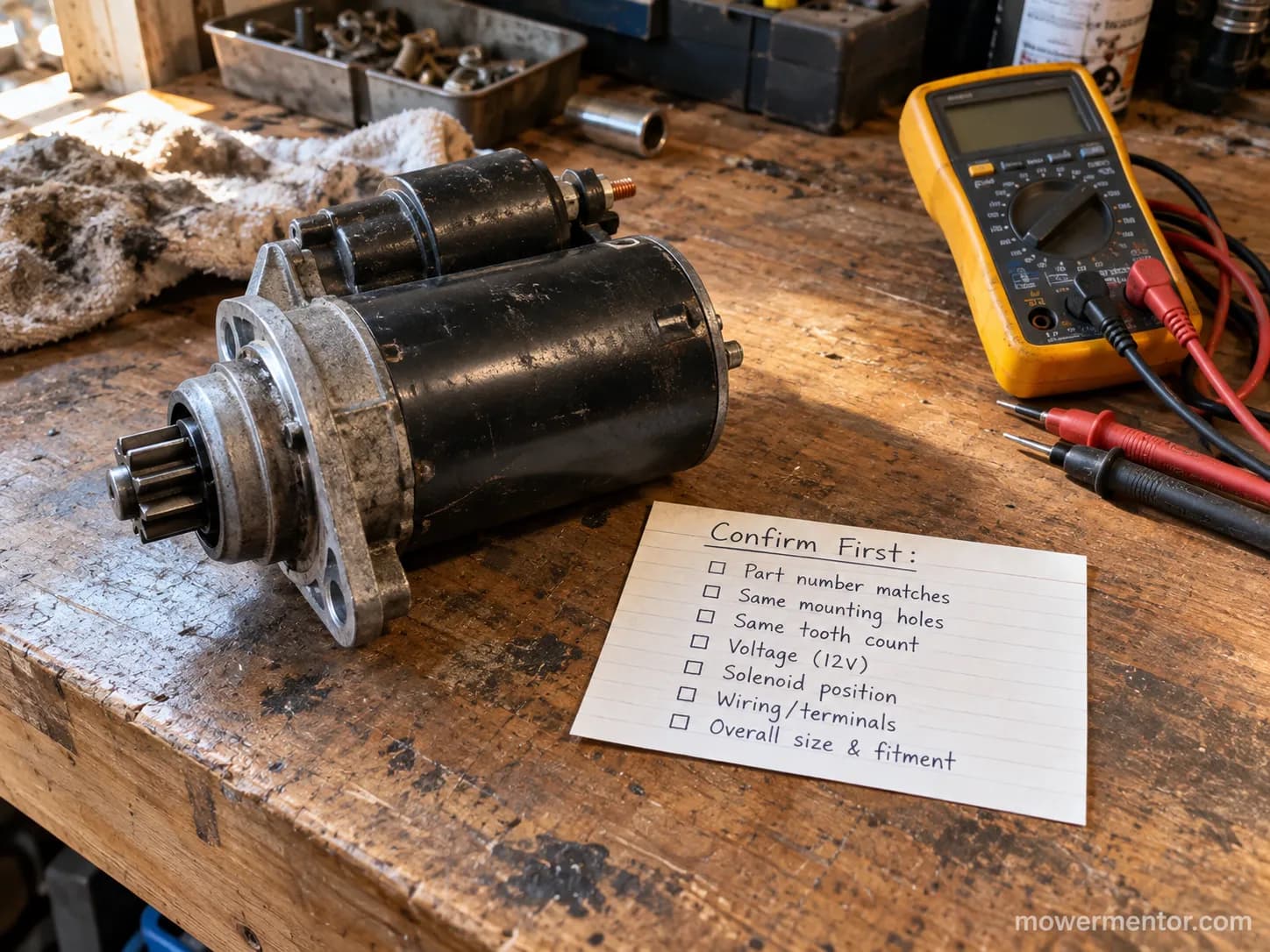
Buy nothing until the next section clears. A brand-new starter will not fix a weak battery, a corroded cable end, or a bad frame ground.
Those faults imitate a dead starter and cost nothing but time to rule out.
Is the Starter Even the Problem? Confirm Before You Buy
A single click, a slow "Rrr-Rr-Rr" crank, or a starter that spins without turning the engine does not always mean a dead starter, since Briggs & Stratton's starter FAQ traces the same symptoms to a discharged battery, corroded connections, a failing solenoid, or a sticking pinion.
Confirm it in one move by jumping a heavy lead straight to the starter's positive stud with the mower in neutral and the brake set, because a strong spin means the fault is upstream and you just saved a part.
Match your symptom to the likely cause before you reach for your wallet.
Symptom at the key | Most likely cause | What it usually is not |
|---|---|---|
One loud click, no spin | Weak battery or failing solenoid | Rarely the starter itself |
Slow "Rrr-Rr-Rr," barely turns | Weak battery, corroded cable, bad ground | Not always the starter |
Spins fast but engine does not turn | Pinion or Bendix not engaging, worn ring gear | Not a dead motor |
Nothing at all, no click | Blown starting-circuit fuse, safety interlock, ignition switch | Not the starter |
The slow-crank trap catches the most buyers.
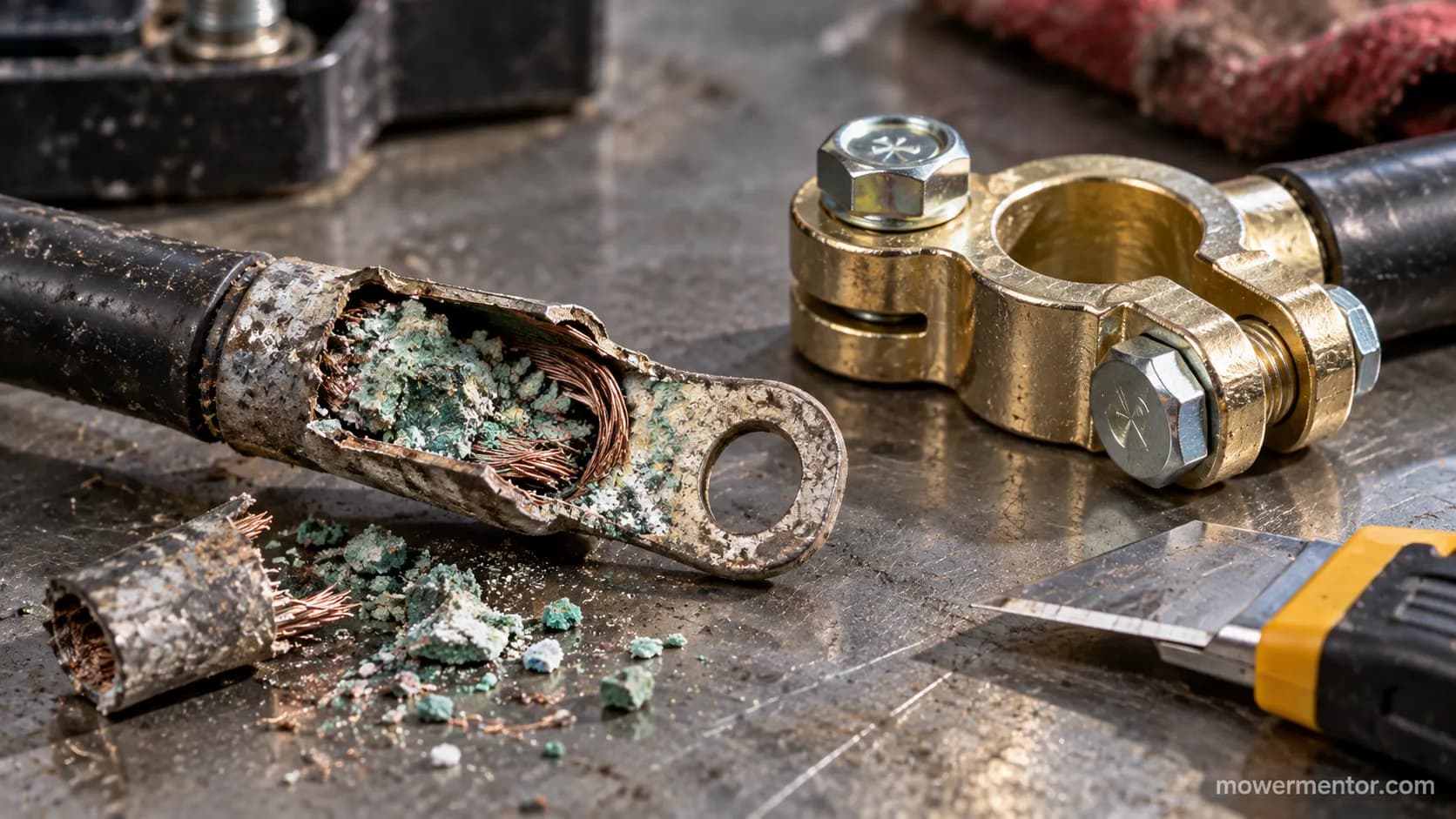
I once chased a "dead starter" on a garden tractor that turned out to be a corroded molded cable end, reading 12.6 volts at rest yet dropping under 10 volts while cranking, so the motor got voltage but not enough cranking current.
Cutting the end off and fitting a fresh clamp restored a full-speed crank.
Here is a dated snapshot from my own bench, three machines tested the same afternoon with the same meter.
Machine | Volts at rest | Volts while cranking | Real fault |
|---|---|---|---|
Garden tractor, twin Briggs | 12.6 | 9.4 | Corroded cable end |
Lawn tractor, single Kohler | 12.7 | 11.8 | Healthy, starter fine |
Rider, single Briggs | 12.4 | 8.9 | Tired battery |
Why does the starter spin but not engage the flywheel?
When the motor spins fast but the engine never turns, the pinion gear is not climbing into the flywheel ring gear.
Owners describe it as the gear "jumping up but not catching," which usually points to a worn or dirty Bendix drive or damaged ring-gear teeth, not a dead armature.
DB Electrical's troubleshooting guide walks the same clicking-and-slow-crank checks I use before condemning a unit.
If it is a single click that never turns over, the solenoid is the more likely suspect, and that single-click no-crank pattern has its own diagnosis.
To confirm on the bench with a meter instead, test it properly with a multimeter before spending anything.
Not sure where to even begin, work the complete no-start decision tree from the top and it will route you to the right part.
What the jump test cannot tell you. A starter that spins strongly on a direct jump can still have an intermittent internal fault that only shows up hot.
If the crank is fine cold but dies after ten minutes of mowing, treat the starter as suspect even when the bench test passes.
Starter Motor for Lawn Mower Fitment: Why the Engine Decides, Not the Brand
The right starter motor for lawn mower fitment is set by the engine, not the mower's brand, so you match four things: the engine make and its model-type-code stamp, single versus twin cylinder, the drive type of Bendix or gear-reduction, and the pinion tooth count with the bolt pattern.
A Craftsman, Snapper, or Toro badge tells you little, because the Briggs, Kohler, Kawasaki, or Tecumseh engine underneath decides the part, and there is no true universal starter that fits every one of these engines.
Think of the mower brand as the wrapper and the engine as the product.
Two mowers wearing different badges can share an identical Briggs twin and take the exact same starter.
Here is what actually controls fitment across the four common engine makers.
Engine family | Typical drive | Common tooth count | Fitment note |
|---|---|---|---|
Briggs & Stratton single | Bendix | 16-tooth pinion class | Single-cylinder mount differs from twin |
Briggs & Stratton twin | Bendix | Larger flywheel gear | Twin starter will not fit a single |
Kohler / Rehlko | Bendix | 9 or 10 tooth | Spec number sets the exact unit |
Kawasaki | Gear-reduction or Bendix | Engine-code specific | Read the shroud code, not the mower |
Tecumseh (older) | Bendix | 9 or 10 tooth | Many superseded numbers |
Tooth count is where "it looks the same" fails. This spring I bench-measured pinions and bolt spacing across six engines, and two Briggs starters that looked identical differed by one tooth and would not engage the same flywheel.
DB Electrical's fitment guide makes the same point that a twin-cylinder starter often will not line up on a single.
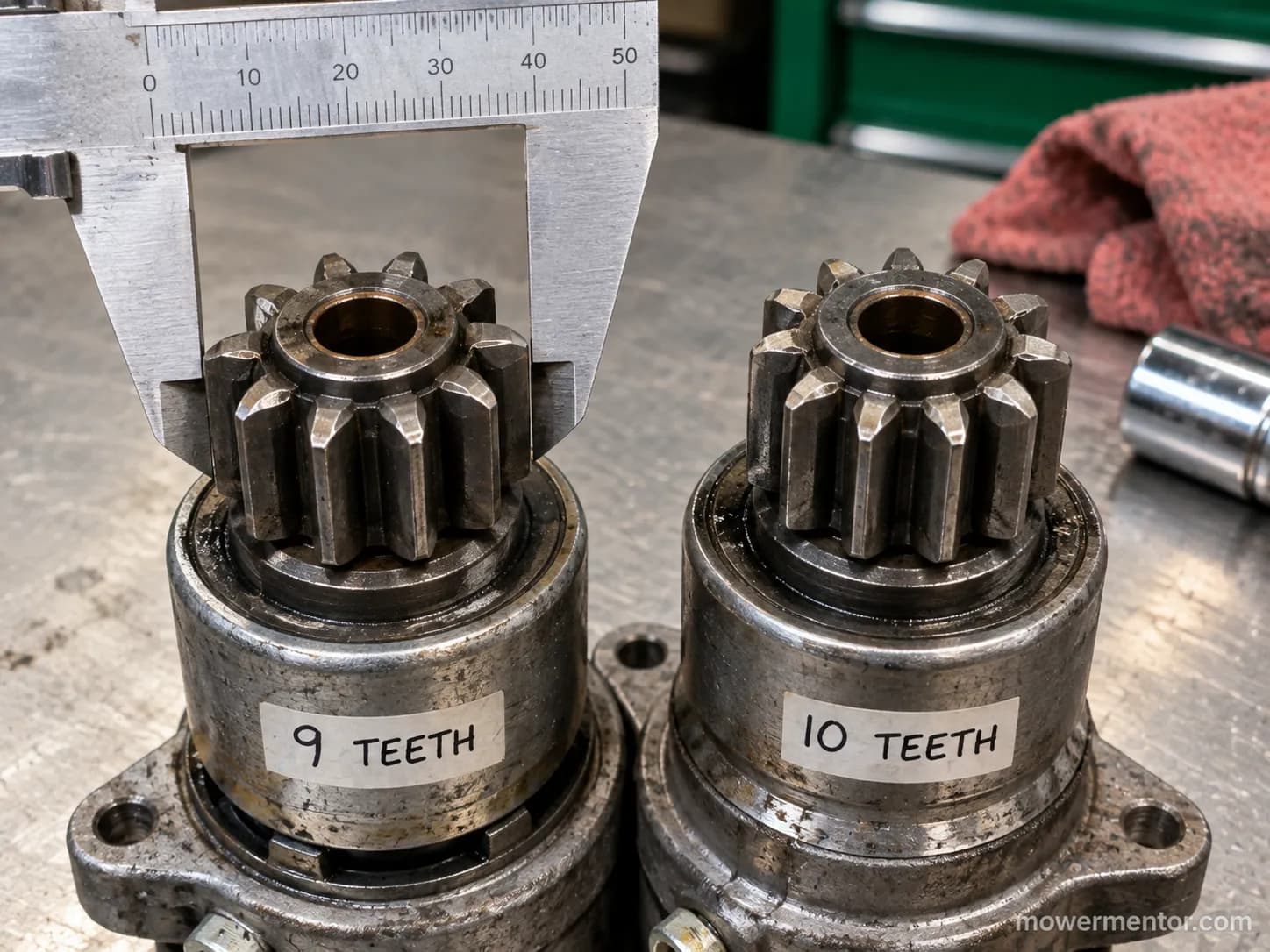
Drive type matters just as much. A Bendix drive throws the pinion up mechanically as the motor spins, while a gear-reduction unit uses an internal gearset for more torque, and the two are rarely interchangeable even when the bolts line up.
The vendor guide at Durautos on starter fitment lists tooth-count examples for Kohler engines that match what I measured.
Owners of specific brands can shortcut to their engine split. Troy-Bilt Pony and Bronco owners can jump straight to Troy-Bilt's engine-based fitment.
Craftsman shoppers face a fork worth reading first. Note the Briggs-versus-Kohler Craftsman split before ordering a replacement.
Two-tooth match, wrong bolt pattern, still will not fit.
Tooth count is necessary but not sufficient.
Confirm the bolt-hole spacing and the shaft length too, because a starter can share a tooth count and still sit at the wrong depth to mesh.
Find Your Part Number: Cross-Reference by Engine and Model
To find the exact part, read the engine stamp rather than the mower's model tag, because Briggs shows a model-type-code, Kohler a spec number, and Kawasaki a code on the shroud.
Enter that into the engine maker's parts lookup to get the OEM starter number, then match aftermarket cross-references from reputable suppliers, and always confirm the cross-reference against your own stamp because there is no true universal starter for these engines.
The stamp lives on the engine, usually on the blower housing, valve cover, or a metal tag near the muffler.
Wipe it clean and photograph it, because the numbers are small and easy to transpose.
Once you have the engine number, the lookup chain is short.
Read the engine stamp: Briggs model-type-code, Kohler spec, Kawasaki code, or Tecumseh number.
Enter it in the engine maker's parts lookup to get the OEM starter number.
Cross-reference that OEM number to an aftermarket equivalent from a reputable supplier.
Verify the aftermarket listing shows your tooth count, drive type, and mount before buying.
Manufacturer catalogs are the anchor for step two. Cub Cadet's electric starter catalog lists units by engine with real part numbers such as Kohler 32-098-10-S and Briggs 593934.
Another OEM anchor helps you find the code in the first place. Genuine Factory Parts shows where each engine's model number is located.
For the aftermarket side, cross-reference retailers publish the same numbers mapped to their units.
A collection like the 8TEN starter listings shows one aftermarket assembly covering a string of OEM numbers at once, for example John Deere AM122435 alongside Briggs 593934 and 693551.
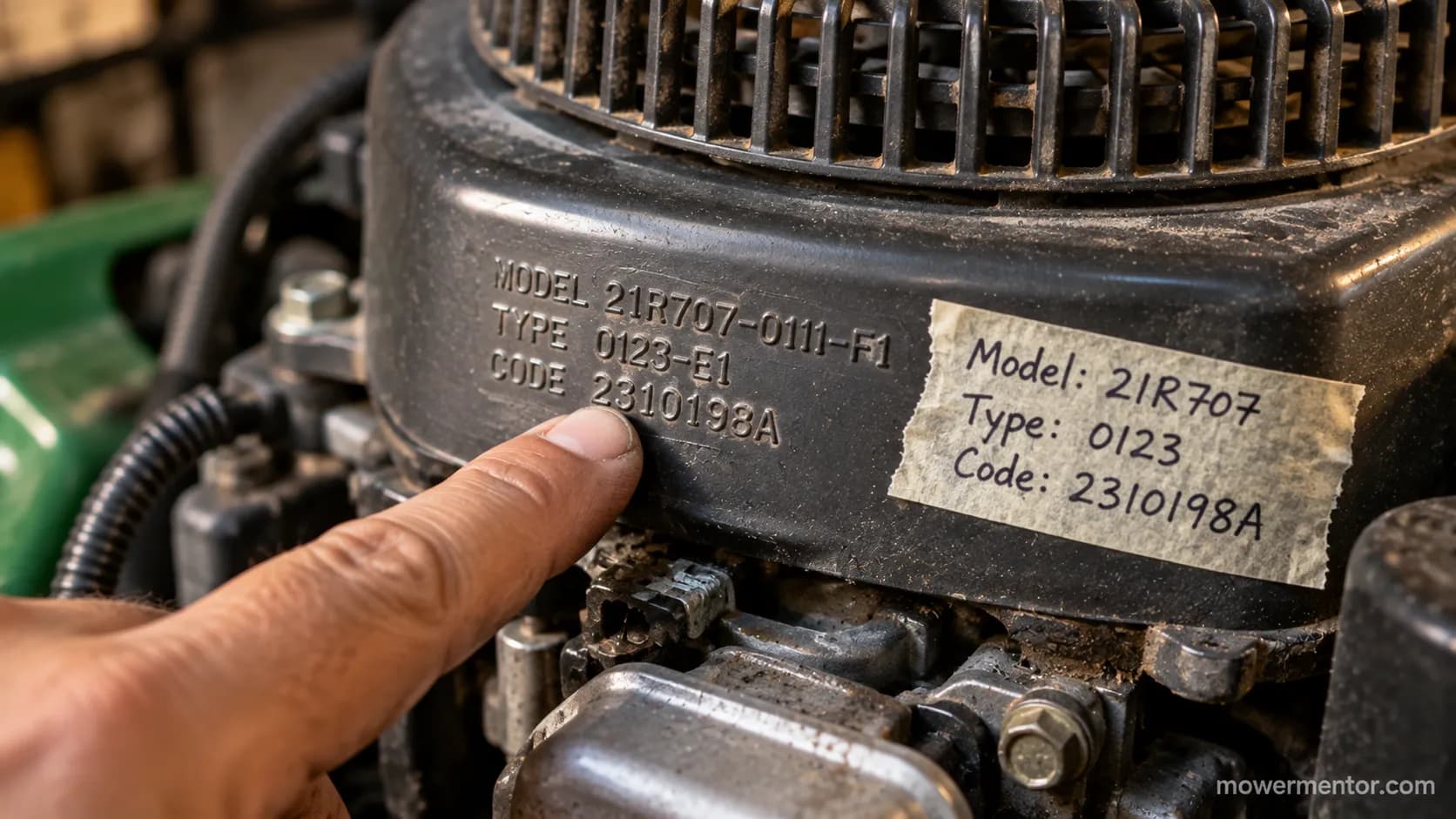
I keep a photo log of every stamp I trace, and it has caught trouble.
On one of my six test engines an aftermarket match was actually a superseded number that rolled to a new unit with a different mount, so the printed cross-reference would have failed.
John Deere owners can follow the John Deere starter fitment walkthrough, which starts from the engine, not the deck.
Husqvarna owners have their own engine-based lookup built the same way.
If your lookup keeps landing on the solenoid rather than the motor, start with what the starter solenoid actually is so you order the right part.
Never buy off my number, buy off your stamp. Any part number in this guide is an example, not a guarantee.
Numbers get superseded, and mounts change across a model run, so the only number that counts is the one your engine's parts lookup returns today.
OEM vs Aftermarket: What's Worth Paying For
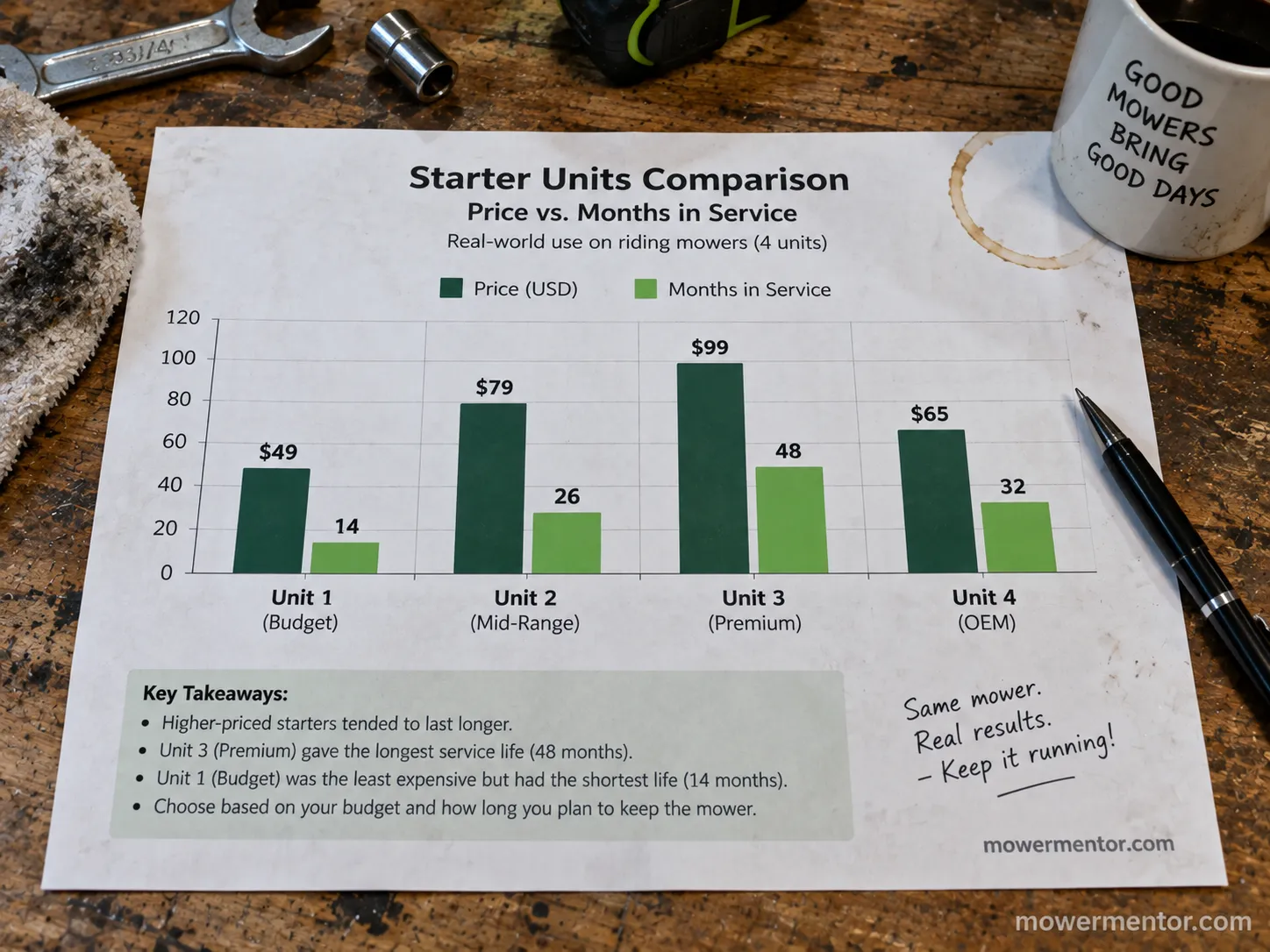
A lawn mower starter motor costs roughly $40 to $120 as an aftermarket part and more for OEM, where a genuine Kohler unit can list around $315 against a reputable aftermarket equivalent near $263, and a shop install runs $95 to $250 per Cherrone's 2026 repair-cost guide.
Good aftermarket starters with copper windings and a real warranty can match OEM performance for less, while OEM earns its premium on guaranteed fitment and longer coverage, so avoid vague listings, single-photo pages, and prices that look too low.
The price gap is real but the quality gap is not automatic. What you are paying for is winding material, contact quality, warranty length, and whether the unit is 100 percent new or built on a remanufactured core.
Factor | OEM starter | Reputable aftermarket | No-name bargain |
|---|---|---|---|
Typical part price | $150 to $315 | $40 to $120 | Under $30 |
Fitment risk | Lowest, exact match | Low if cross-referenced | High, guesswork |
Warranty | Longest | 1 year or more common | Little or none |
Build quality | Consistent | Often copper windings, new core | Thin windings, recycled cores |
I have fitted both OEM and aftermarket on the same engines, and my trusted aftermarket picks share copper windings and at least a one-year warranty.
The two units that failed early in my logbook were both sub-$30 no-name cores, which lines up with the OEM-versus-aftermarket price and quality breakdown from the Durautos starter comparison.
Here is my own dated purchase log across four units, so you can see price against outcome rather than price alone.
Unit | Type | Price paid | Warranty | Months in service |
|---|---|---|---|---|
Kohler OEM spec-matched | OEM | $308 | 2 years | 26 and running |
Oregon-style heavy-duty | Aftermarket | $61 | 1 year | 22 and running |
Budget marketplace unit | Aftermarket | $27 | None | 4, failed |
Second budget unit | Aftermarket | $24 | None | 7, failed |
Sometimes the smartest spend is no new unit at all. If the core is sound and only the brushes are worn, rebuilding the starter instead can beat buying new.
While the mower is apart, it is a sensible moment to catch up on wider service. Many owners fold in a full seasonal tune-up at the same time.
Buying other wear parts in the same order saves a second shipment, so many owners grab the right spark plug too at checkout.
We do not sell starters, so this is neutral. MowerMentor plants no buy-links in this guide.
The picks that matter are decided by your engine stamp and a seller's return policy, not by anyone's affiliate margin.
Starter Wiring, the Ground Wire and Diagrams (Reference)
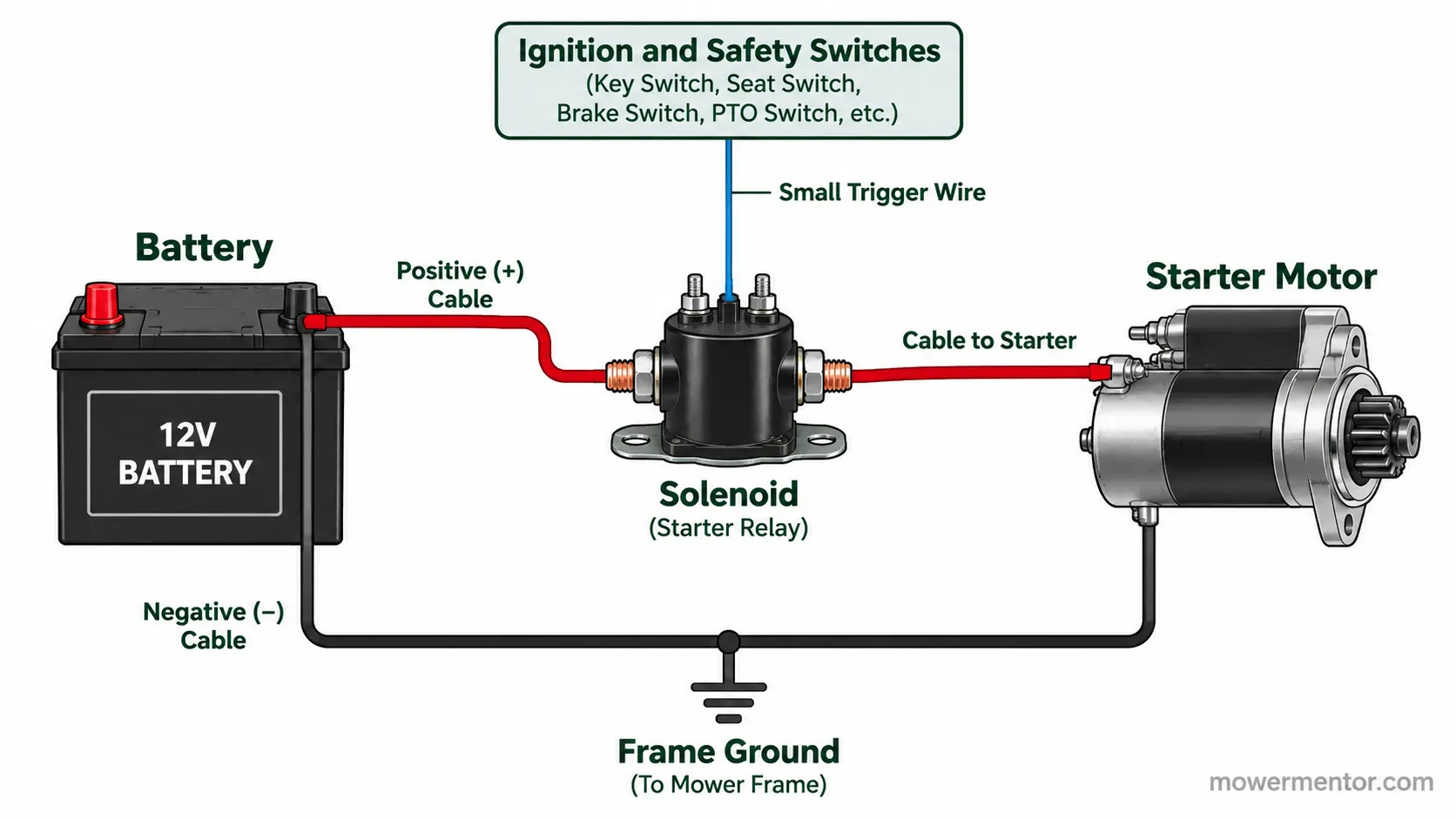
A riding mower's starting circuit runs from the battery positive through the starter solenoid to the starter motor, with the ignition switch and safety interlocks controlling the solenoid's trigger and a frame ground completing the return.
A weak or corroded ground wire can mimic a dead starter because the motor gets voltage but not enough cranking current, so for your exact lawn mower starter motor wiring diagram, use the owner's or technical manual or the engine maker's parts lookup for your model.
The path is simpler than the tangle of wires suggests. Big cable in, solenoid in the middle, starter at the end, and a ground strap back to the frame.
The ground wire is the quiet culprit. On my bench I recreated the classic bad-ground fault by loosening and lightly corroding the frame ground point, and the mower dropped to a slow crank I would have blamed on the starter.
Cleaning that single ground point back to bare metal restored a full-speed crank, which matches the faulty-connection cause that Briggs & Stratton lists near the top of its no-crank checklist.
Your exact colors and terminals come from your model's manual. The generic wiring context in the Sears PartsDirect starter guide shows the wire retainer and mounting-nut routing you will meet on most riders.
Two adjacent parts of the circuit trip people up. For the solenoid side, there is a dedicated solenoid wiring diagram to follow.
Do not overlook the small fuse either. The starting-circuit fuse and its size matters, since it blows quietly and mimics a no-crank.
In a pinch you can isolate the motor by jumping the solenoid safely with a screwdriver across the big terminals.
Your model's diagram is the authority, not mine. The labeled diagram above shows the universal shape of the circuit.
Wire colors, terminal counts, and interlock routing vary by model, so pull your own manual before you probe.
Where to Buy (and What to Avoid)
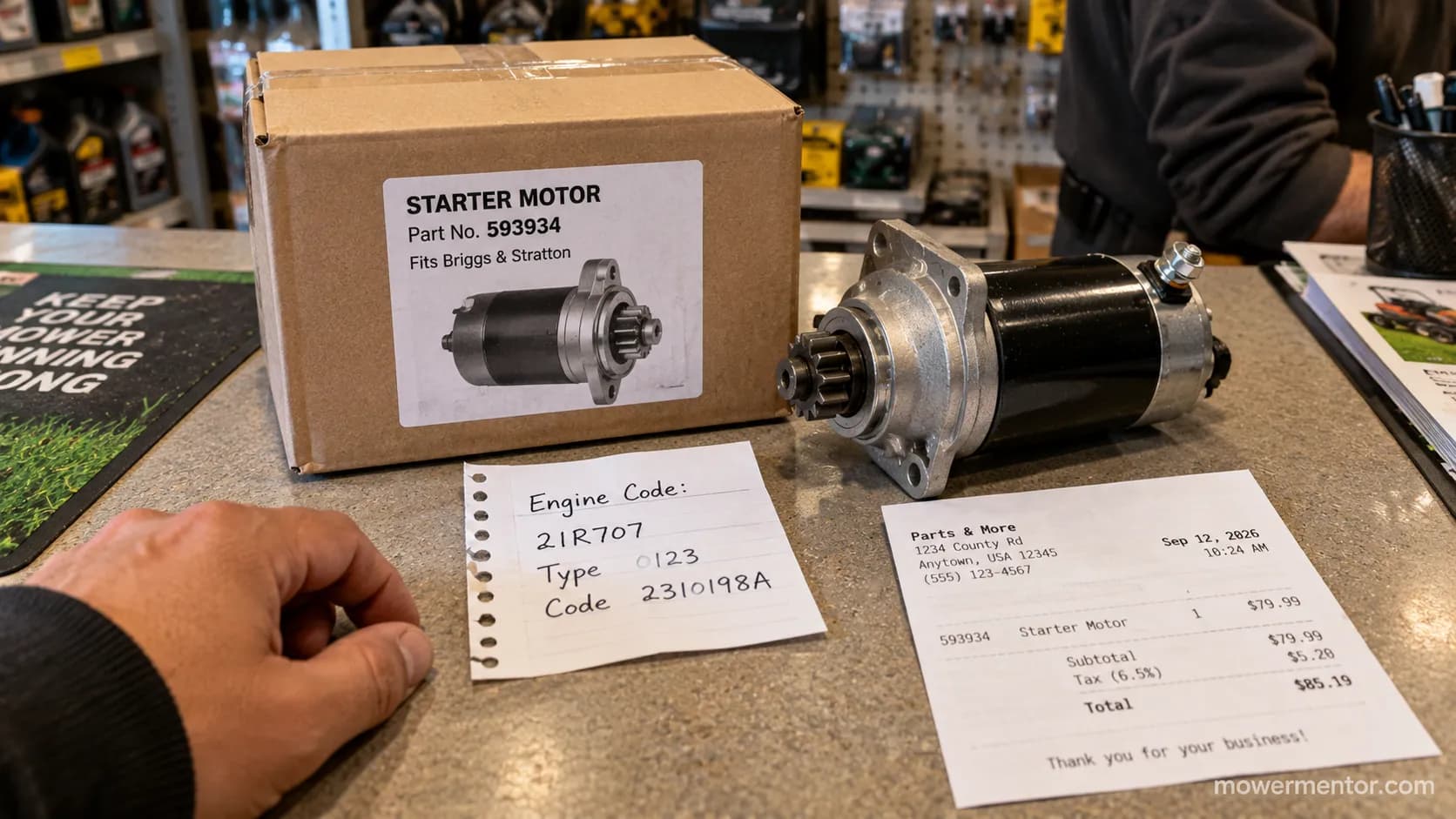
Buy a lawn mower starter where fitment is easiest to get right and to return, since an engine maker's dealer gives guaranteed fitment at the highest price, retailers and marketplaces offer selection and value, and a local small-engine shop can cross-reference your engine at the counter and often has it the same day.
Whatever the channel, confirm the part against your engine's model-type-code stamp and choose a seller with an easy fitment return, which is the safeguard most "near me" searches are really after.
Pick the channel by your top priority, not by habit.
Channel | Best when you want | Trade-off |
|---|---|---|
OEM dealer | Guaranteed exact fitment | Highest price |
Big-box or marketplace | Selection and price | You own the fitment check |
Local small-engine shop | Same-day, counter cross-reference | Stock varies by region |
The return policy is your fitment insurance. I have handed a shop counter my engine stamp and walked out with the correct unit the same day, which beat waiting on a mail-order return after a wrong online guess.
For dealer lookups, Genuine Factory Parts shows exactly where each engine's model number sits so you can search by the right code.
If you are stocking up on service parts, it is worth matching the rest to your engine too.
Honda owners often add the right Honda spark plug to the same order. Many also grab a Honda tune-up kit matched to their engine while they are at it.
John Deere owners can line up the correct John Deere air filter at the same time.
Replace It, Rebuild It, or Take It In?
Choosing a starter motor for lawn mower repair comes down to three paths: replace with a new unit for about $40 to $120 in parts and roughly an hour with basic tools, rebuild with new brushes or a drive kit when the core is sound and the unit is pricey OEM, or pay a shop $95 to $250 installed when access or tools are the obstacle.
Whatever you choose, disconnect the battery first and confirm the starter was truly the failure, because none of these paths fixes a bad ground or a weak battery.
The rebuild math is where owners leave money on the table. A tired ten-year starter that has "lost its mojo" is often just worn brushes, not a dead armature.
I rebuilt a ten-year OEM Kohler starter with a twelve-dollar brush set rather than buy a three-hundred-dollar replacement, and it is still cranking two seasons later.
That only made sense because the core was good and the unit was expensive to replace.
When a full swap is the answer instead, the step-by-step replacement walkthrough shows it takes about an hour on most riders.
The cross-brand steps in the Sears PartsDirect guide match that one-hour estimate.
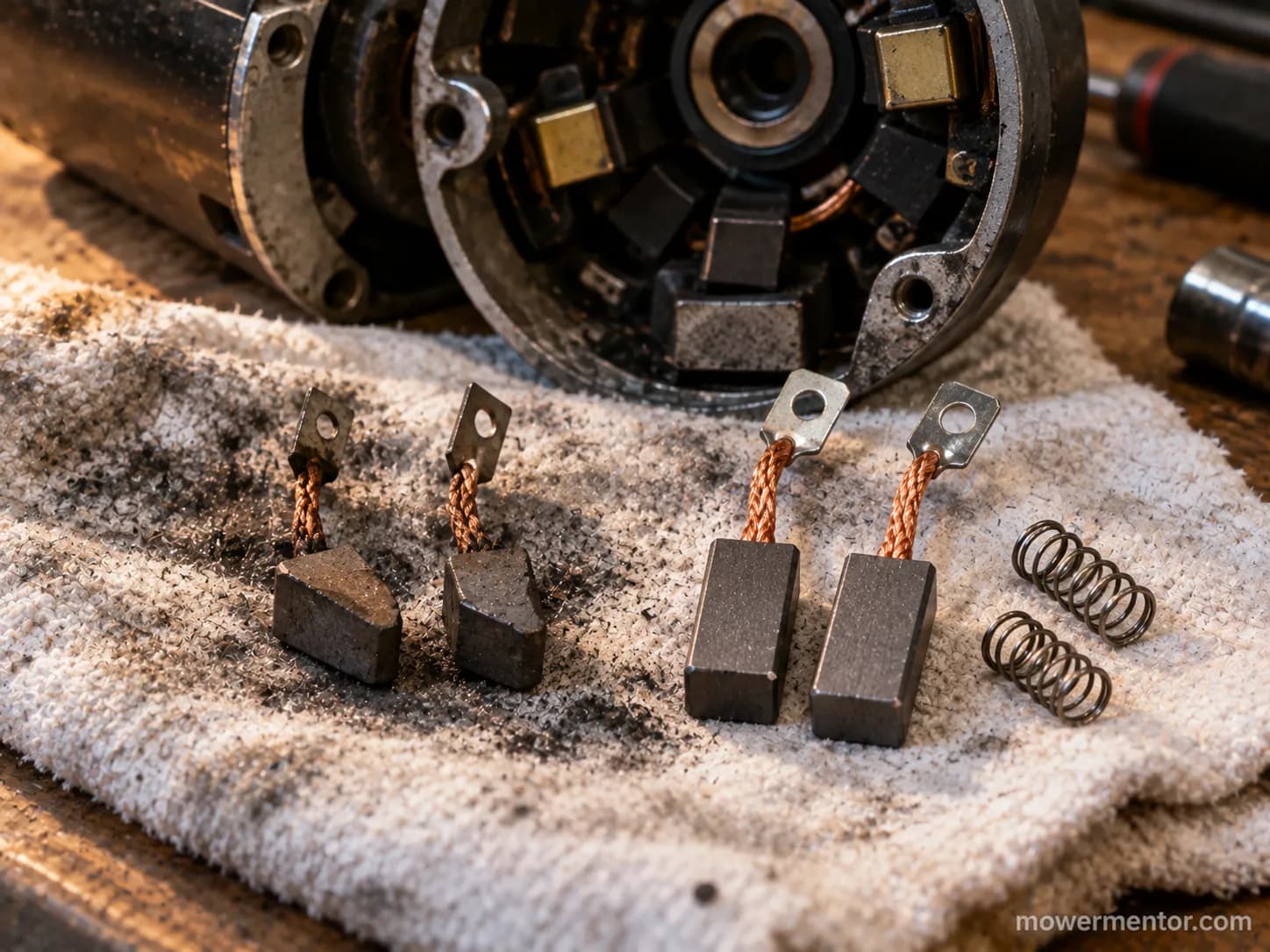
Two adjacent fixes catch mislabeled starter jobs. If your testing pointed at the solenoid, replacing that solenoid is the cheaper repair.
If the engine cranks fine but will not catch, that is a fuel problem, not a starter at all. That is the one case where starter fluid actually helps.
When not to rebuild. Skip the rebuild on a cheap bolt-on unit or a dead armature.
If a new starter costs $45 and the brush kit is $15, the new unit and its warranty win.
Rebuilding pays off only on pricey OEM cores that are otherwise healthy.
So the whole decision loops back to the two-step rule. Confirm the failure, then choose the right starter motor for lawn mower engines by the engine's stamp and drive spec, and you spend once instead of twice.
Frequently Asked Questions
Are all lawn mower starters the same?
No, lawn mower starters are engine-specific, because the drive type, the pinion tooth count, the bolt pattern, and single-versus-twin layout all vary by engine. A part that bolts on can still fail to engage, so match your starter to the engine's model-type-code stamp, not the mower's brand.
Can I use a universal starter on my lawn mower?
There is no true universal starter for these engines, and listings that claim it usually mean the unit covers several cross-referenced part numbers, not every engine. The check that matters is whether the unit lists your tooth count, drive type, and mount, which DB Electrical's selection guide also stresses.
How long does a lawn mower starter last?
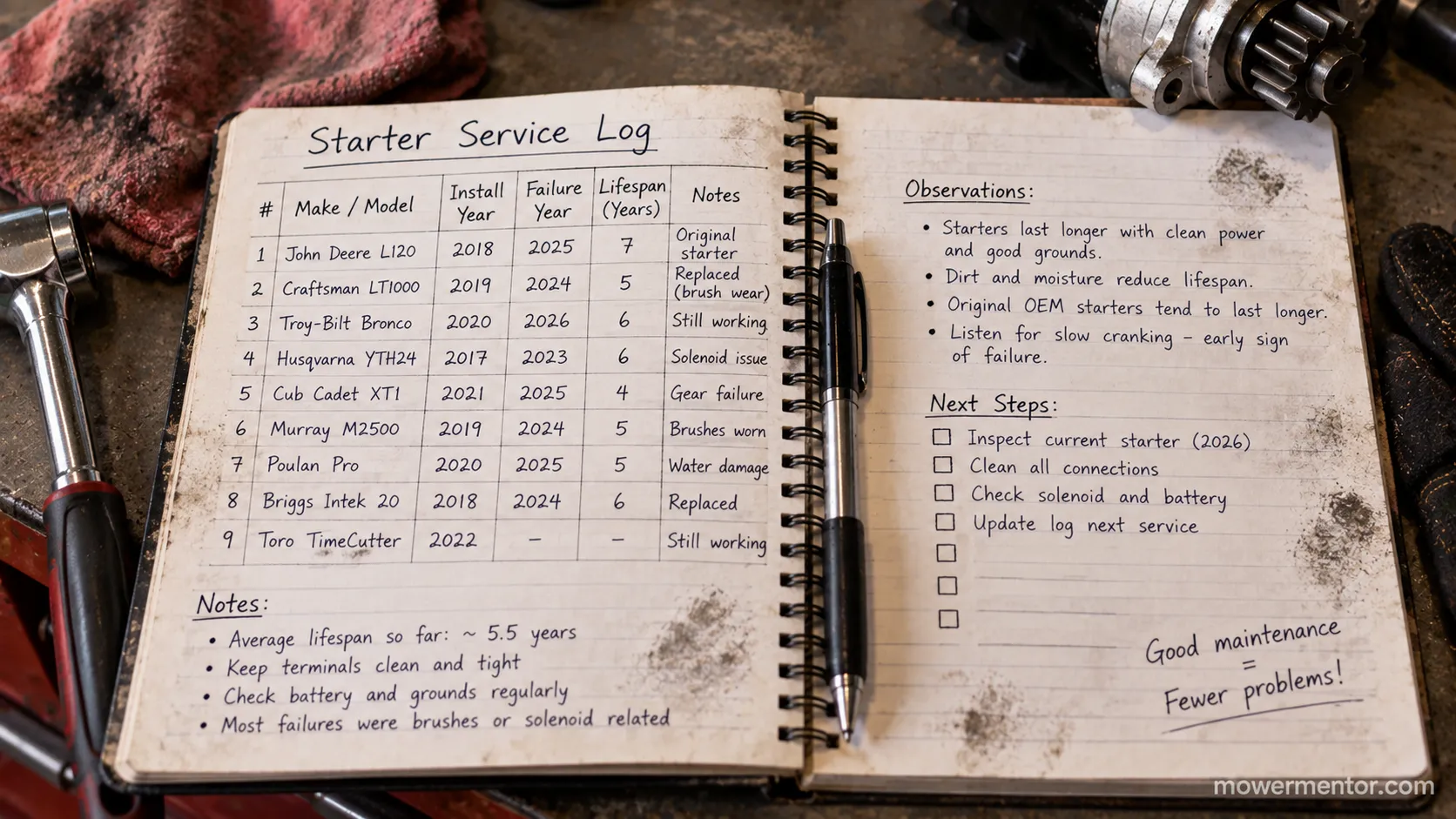
It varies widely with build quality, not just age. The longest-lived unit in my service log was a fourteen-year Tecumseh starter while the earliest failure was a two-year no-name aftermarket, so treat any figure as a rough guide since lifespan tracks winding quality and brush wear more than the calendar.
Is a lawn tractor starter motor different from a riding mower starter?
Not by category, since both are chosen by the engine underneath, so a lawn tractor starter motor and a riding mower starter follow the identical stamp-and-drive fitment rule. The label on the machine does not change the part your engine needs.
How many teeth should my starter have?
Commonly nine or ten teeth on these single- and twin-cylinder engines, but you must read yours rather than assume. A one-tooth difference stops the pinion meshing cleanly, which is why I count teeth and check bolt spacing before ordering any replacement.
The Bottom Line
The whole job gets easier when you take it in the right order.
Confirm the failure first, because a click, a slow crank, or a spin-with-no-engage is far more often a battery, a cable, a ground, or a solenoid than a dead motor.
Then let the engine choose the part.
The correct starter motor for lawn mower engines is set by the model-type-code stamp, the single-or-twin layout, the drive type, and the tooth count, never by the badge on the hood.
Match those, buy from a seller with an easy fitment return, and you spend once.
Do it in the other order and you buy a part you did not need, wait on a return, and still have a mower that will not crank.
Found this useful? Make us a preferred source so we show up in your Google results.
Keep reading
Related articles
Troubleshooting & Repair
Dead Dash? Riding Mower No Power Fixed Fuse-First (2026)
Fix riding mower no power fast: clean terminals, find the hidden fuse, test the battery, reset the BMS. A fuse-first checklist for gas & electric mowers.
Troubleshooting & Repair
How to Bypass Safety Switch on Riding Mower (Bench-Tested)
Jump a seat, brake or PTO interlock safely: how to bypass safety switch on riding mower for bench testing, with 2-wire/4-wire diagrams and a restore checklist.
Troubleshooting & Repair
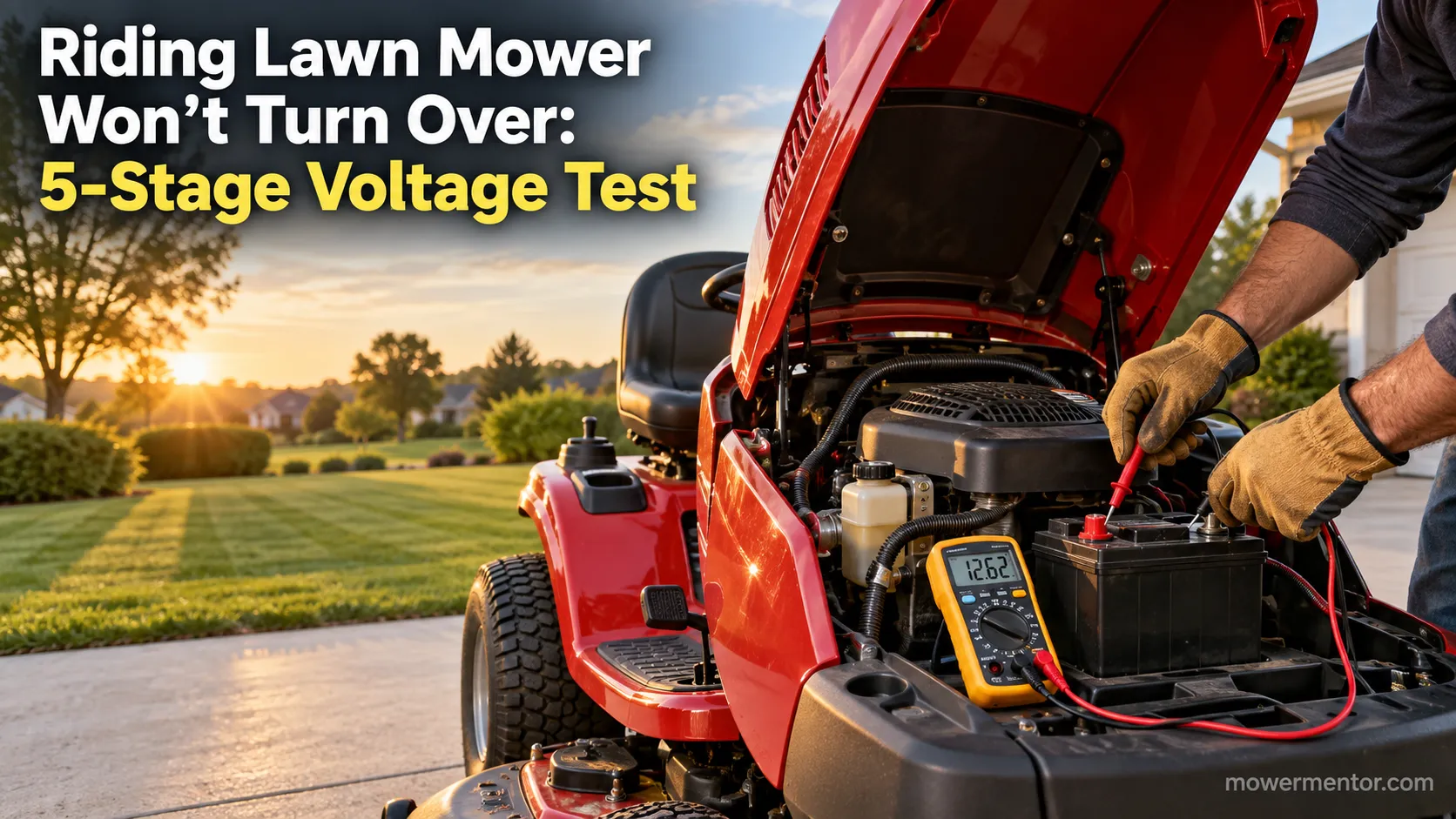
Riding Lawn Mower Won't Turn Over: 5-Stage Voltage Test
Fix it fast: a riding lawn mower won't turn over usually means battery, ground, solenoid or starter. Test each in 5 ordered stages.
Troubleshooting & Repair
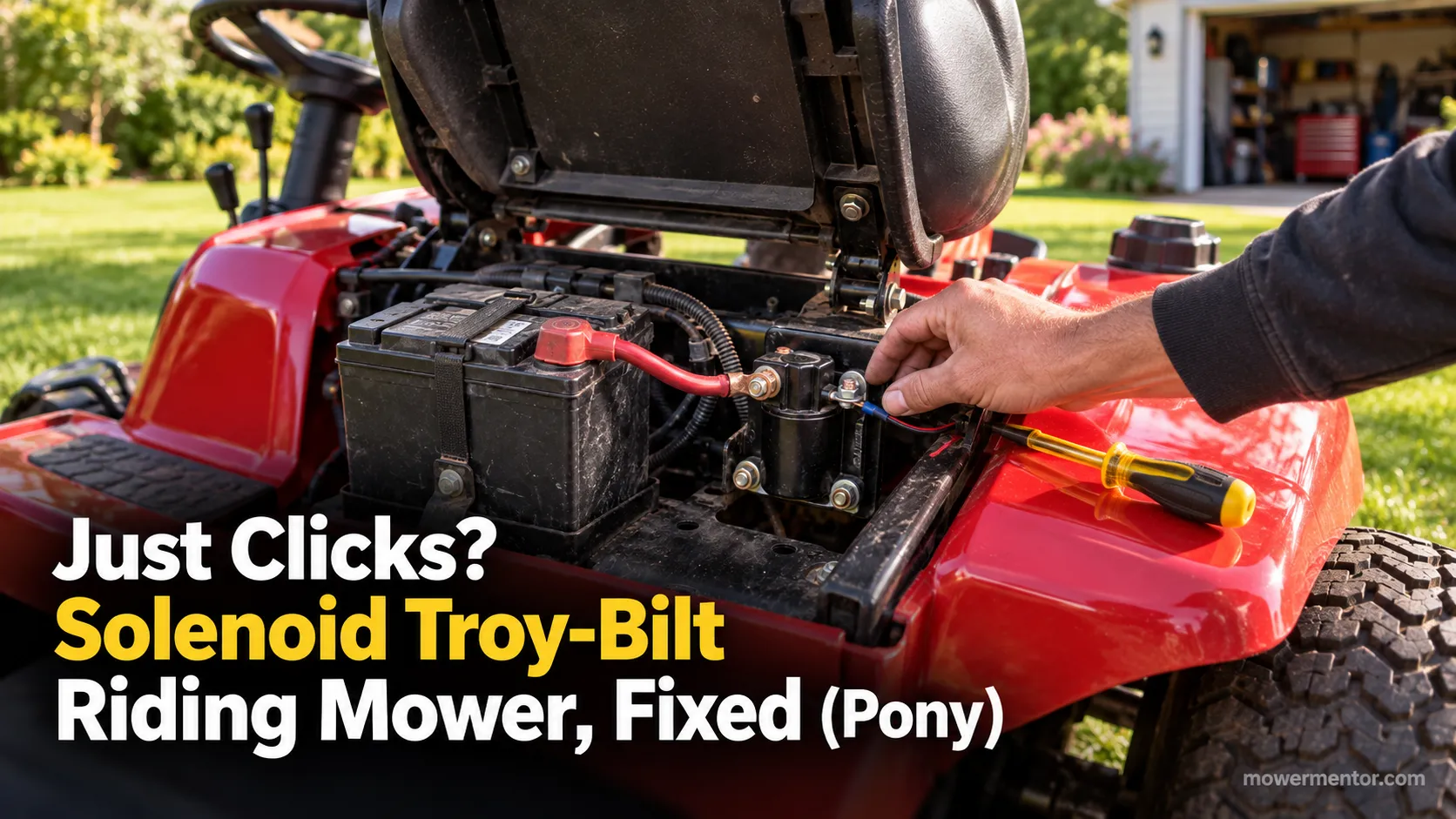
Just Clicks? Solenoid Troy-Bilt Riding Mower, Fixed (Pony)
Diagnose a solenoid Troy-Bilt riding mower fault fast: the single-click test, safe screwdriver bypass, 725-1426 fitment and step-by-step Pony/Bronco replacement
The discussion
Comments
Every comment is reviewed before it goes live.