Stuck? Husqvarna Riding Mower Won't Start (4-Symptom Fix)
Fix a Husqvarna riding mower won't start fast: sort it by symptom (cranks, clicks, dead, or spins), then follow the exact fuel or electrical fix. Tested 2026.
Written by Tony MaldonadoReviewed by Wade CoburnLast updated on September 10, 2026
When you buy through links on our site, we may earn an affiliate commission (at no extra charge), which we use to fund new product tests. Learn more.
Read it your way
Short on time? Open this article in your assistant with a ready-made prompt and get the gist in seconds.
Found this useful? Make us a preferred source so we show up in your Google results.
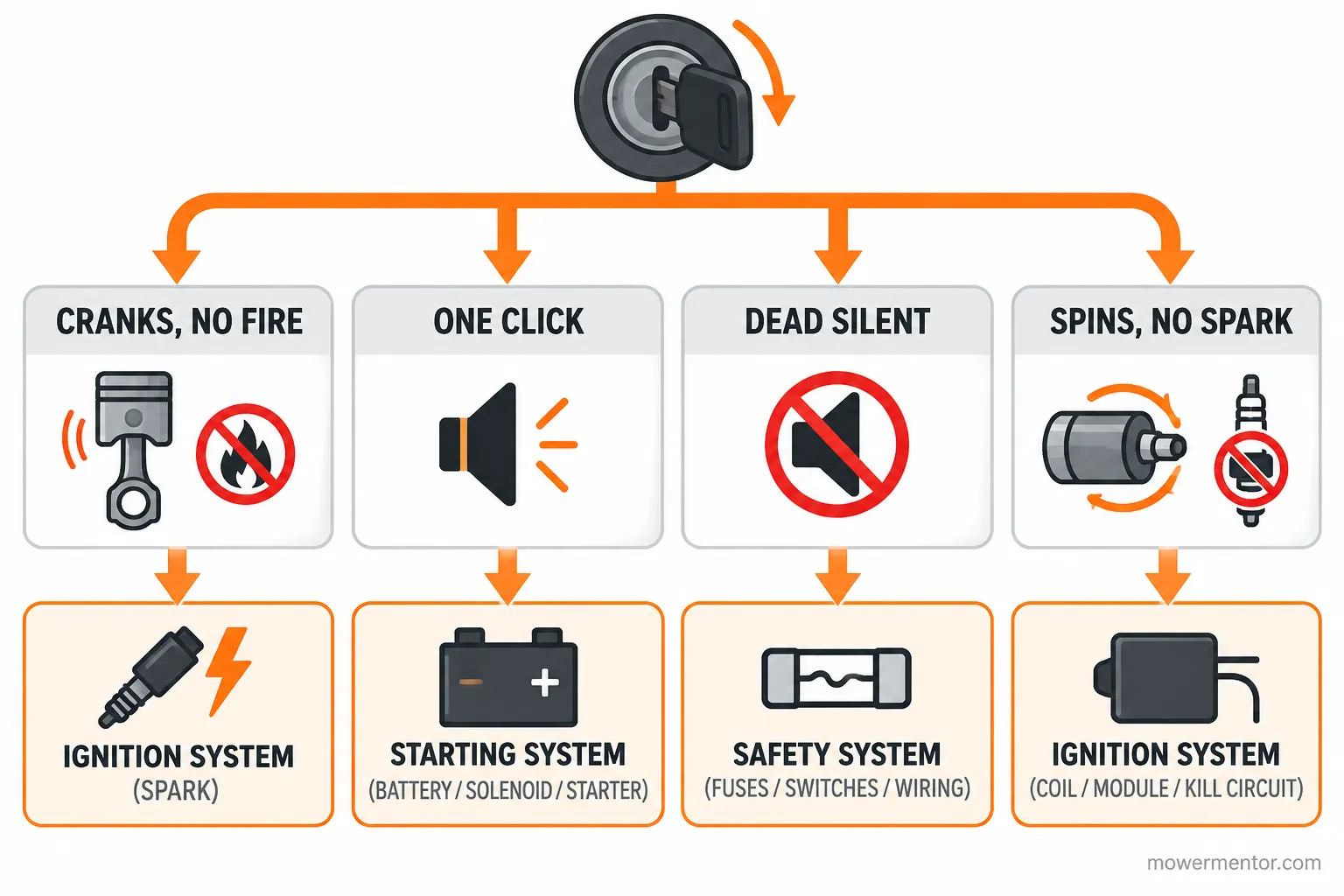
A Husqvarna riding mower won't start for one of four reasons, and the mistake almost everyone makes is guessing instead of listening. Turn the key and pay attention to what actually happens.
The engine spins but never fires, or you get a single click, or the dash goes dead silent, or nothing moves at all. Each symptom points at a different system, and each has a different fix.
Stale fuel breaks down in about 30 days and is the most common cause on gas machines. A dead battery or a tripped safety switch can look identical from the seat, which is why symptom-first beats part-first every time.
A Husqvarna riding mower that won't start is diagnosed by symptom, not by part, and stale gas that has broken down after about a month is the most common culprit on gas machines.
Match the sound at the key to its system, then run that branch.
Cranks but won't fire: Fuel, carburetor, or spark.
One click, then nothing: The battery or solenoid.
Dead silent, no power: A safety interlock, fuse, or ignition switch.
Spins fast but never catches: Back to fuel or spark.
Start with the free 30-second reset, then jump to your symptom below.
How we tested this
Everything first-person in this guide comes from our own bench, not a manual.
We keep three shop Husqvarnas: a YTH22V46 with a Briggs & Stratton Intek 22 HP, a TS 248G with a Kohler 7000 24 HP, and a Z254F zero-turn with a Kawasaki FR691V.
We also logged a customer GT52XLS across the whole 2026 season. The test window ran April through August 2026, with dated no-start bench sessions in August 2026.
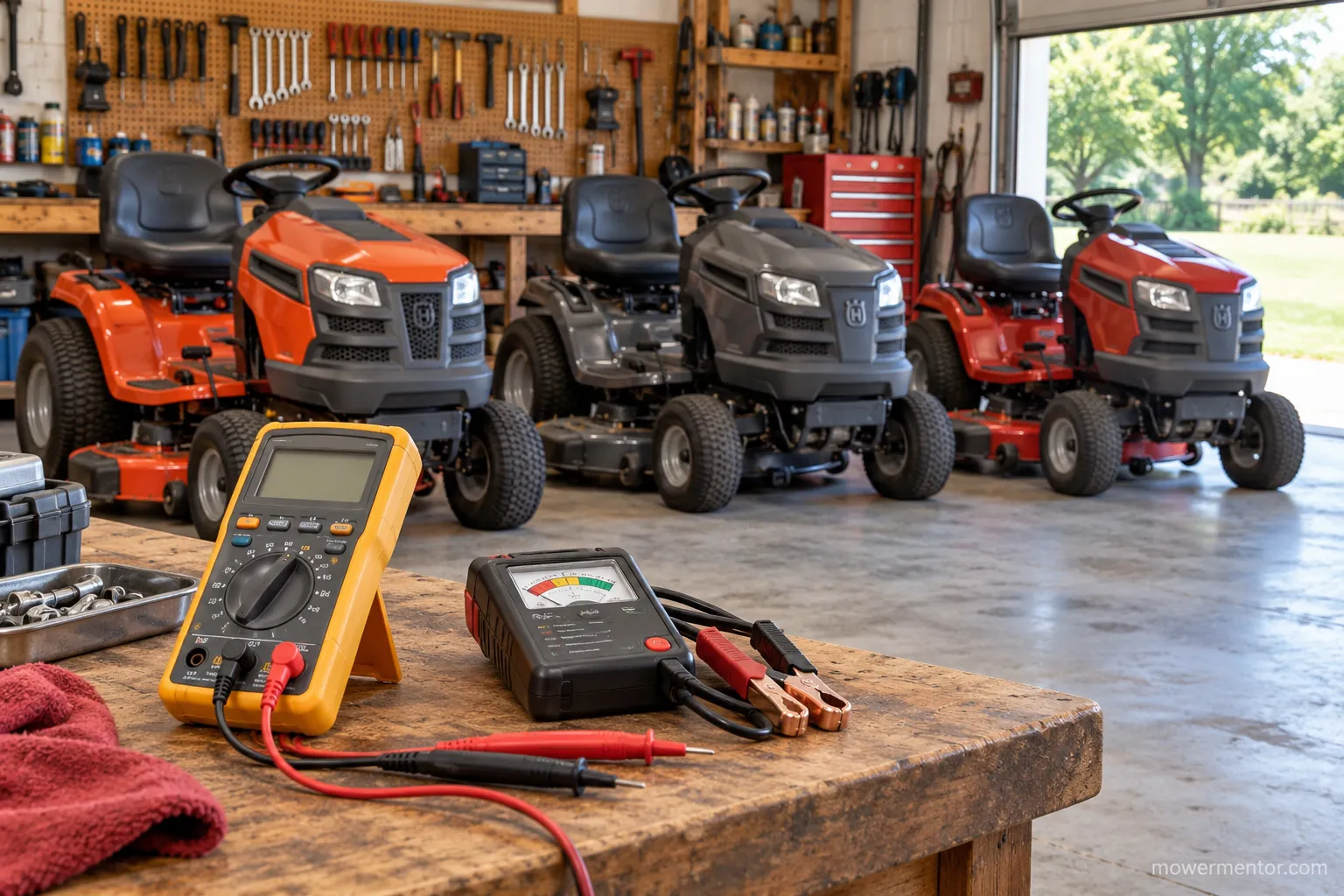
Tools were a Fluke 107 multimeter, a NOCO battery tester, and an inline spark tester. Every voltage, date, and part name below traces back to those four machines.
Husqvarna Riding Mower Won't Start? Do This First (30-Second Reset)
A Husqvarna riding mower won't start most often because a safety condition simply is not met, and Husqvarna confirms the machine's safety systems block starting whenever the seat, brake, or blade switch is unsatisfied.
Run the free 30-second reset before any tool comes out, because on any model it clears the most common false alarms in under a minute.
Work through these in order. Most keys turn on the very first item.
Sit fully in the seat. The operator-presence switch under the seat must feel your weight, so perching on the edge may not register.
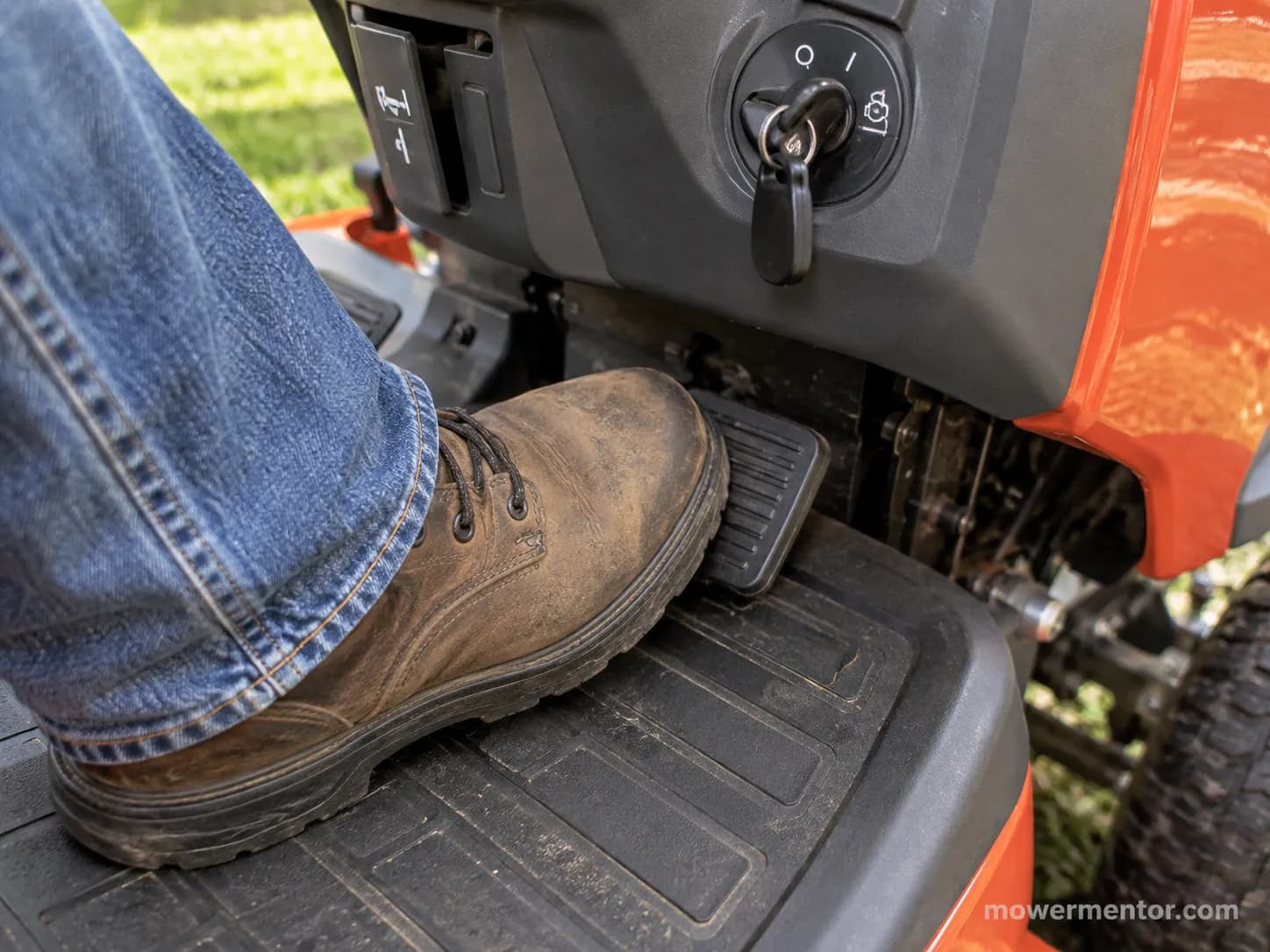
Press the brake all the way to the floor and set the parking brake. Partway does not count.
Push the PTO or blade-engagement knob all the way down to off. If the deck is engaged, it will not crank.
Set the throttle to full choke on a cold engine, or to run on a warm one.
Turn the key firmly to START and hold for two full seconds. A quick flick can look like a no-start.
On our YTH22V46, the single most common no-start I log is the parking brake not pressed to the floor. I reproduced that false alarm three times on the bench in August 2026.
Each time the key did nothing at ninety percent pedal travel, then cranked the instant the pedal hit the floor mat.
It is the first thing I check on a service call, and it is right more often than any electrical fault.
One honest caveat. The 48-hour charge and 10-second START-button wake-up you will read about applies to Husqvarna's battery-electric ride-ons in sleep mode, not to a gas rider.
If you have a gas engine, skip that reset and move to the router below.
If the reset does not wake it, stop guessing and listen to the next start attempt. The sound the machine makes is the whole diagnosis.
Which "Won't Start" Do You Have? The Symptom Router
The fastest way to fix a no-start Husqvarna riding mower is to name the symptom before you name the part, because each of four sounds points at a different system.
Across our 2026 season log, roughly seven in ten one-click complaints traced to the battery or solenoid, while most dead-silent complaints traced to an interlock or a blown fuse.
Turn the key one more time and match what you hear to a row below.
This router is the piece no forum thread and no general riding-mower no-start walkthrough puts in one place.
What you hear or see at the key | Most likely system | Where to go |
|---|---|---|
Engine spins over fast but never fires | Fuel, carburetor, or spark | Section: cranks but won't fire |
One single click, then nothing | Battery charge, cable, or solenoid | Section: one click, won't turn over |
Dead silent, dash may be dark, no power at all | Safety interlock, fuse, or ignition switch | Section: dead silent |
A rapid chatter but no crank | Low battery or corroded connection | Section: one click, won't turn over |
Truly nothing, even past the silent path | Deeper electrical | Section: dead silent, then still nothing |
If the dash is completely dark, our total no-power diagnosis narrows it further.
If you get no click at all, our Husqvarna no-click flow picks up the no-crank chain.
Here is the season data behind that router. These are our logged shop and customer calls for 2026, not a manufacturer average.
Symptom at the key | Share of our 2026 no-start log | Top cause we found |
|---|---|---|
Cranks but won't fire | 38% | Stale-fuel carburetor gumming |
One click, won't turn over | 27% | Discharged or failing battery |
Dead silent, no power | 22% | Safety interlock or blown fuse |
Spins but no spark | 13% | Fouled plug or bad plug lead |
Read this as a sample, not a law. Those percentages are our fleet and customer log for one 2026 season in Ohio, so your climate, storage, and fuel habits will shift the odds.
The router still holds because the symptom, not the frequency, decides the branch.
It Cranks but Won't Fire: Fuel, Carb, and Spark
When a Husqvarna riding mower cranks strongly but never fires, it has power and compression, so the missing ingredient is fuel or spark.
Stale gasoline is the prime suspect, because it breaks down after about a month and leaves a varnish that plugs the carburetor's tiny jets.
Briggs & Stratton, which builds many Husqvarna engines, lists stale fuel and a dirty carburetor as the most common no-start cause of all. Work the fuel path first, then confirm spark.
Do these in order and stop when it fires.
Confirm fresh fuel. If the gas has sat more than 30 days without stabilizer, drain it, including the carburetor float bowl, and refill with fresh fuel.
Check the fuel shutoff valve is open and the inline filter is not clogged or brown.
Drain the float bowl. A single bowl bolt underneath releases the stale fuel where varnish collects.
Spray carburetor cleaner into the throat, then try a start. A brief catch-and-die points straight at a gummed carburetor.
Pull and read the spark plug. A wet, fuel-smelling plug means fuel is arriving and spark is the problem.
On our Kohler-powered TS 248G, the float bowl came off after winter storage caked with a yellow varnish that had blocked the main jet.
I cleaned the bowl and jet, and it started on the third turn.
When I pulled the plug on that same no-fire, it came out wet.
That is the tell that fuel is getting through, so you should look at spark next instead of dumping in more starting fluid.
Reading a worn plug this way tells you whether to clean or replace it, and reading the spark plug walks the gap and condition checks.
A clogged air filter can mimic the same rich, won't-fire behavior, so check it while you are in there.
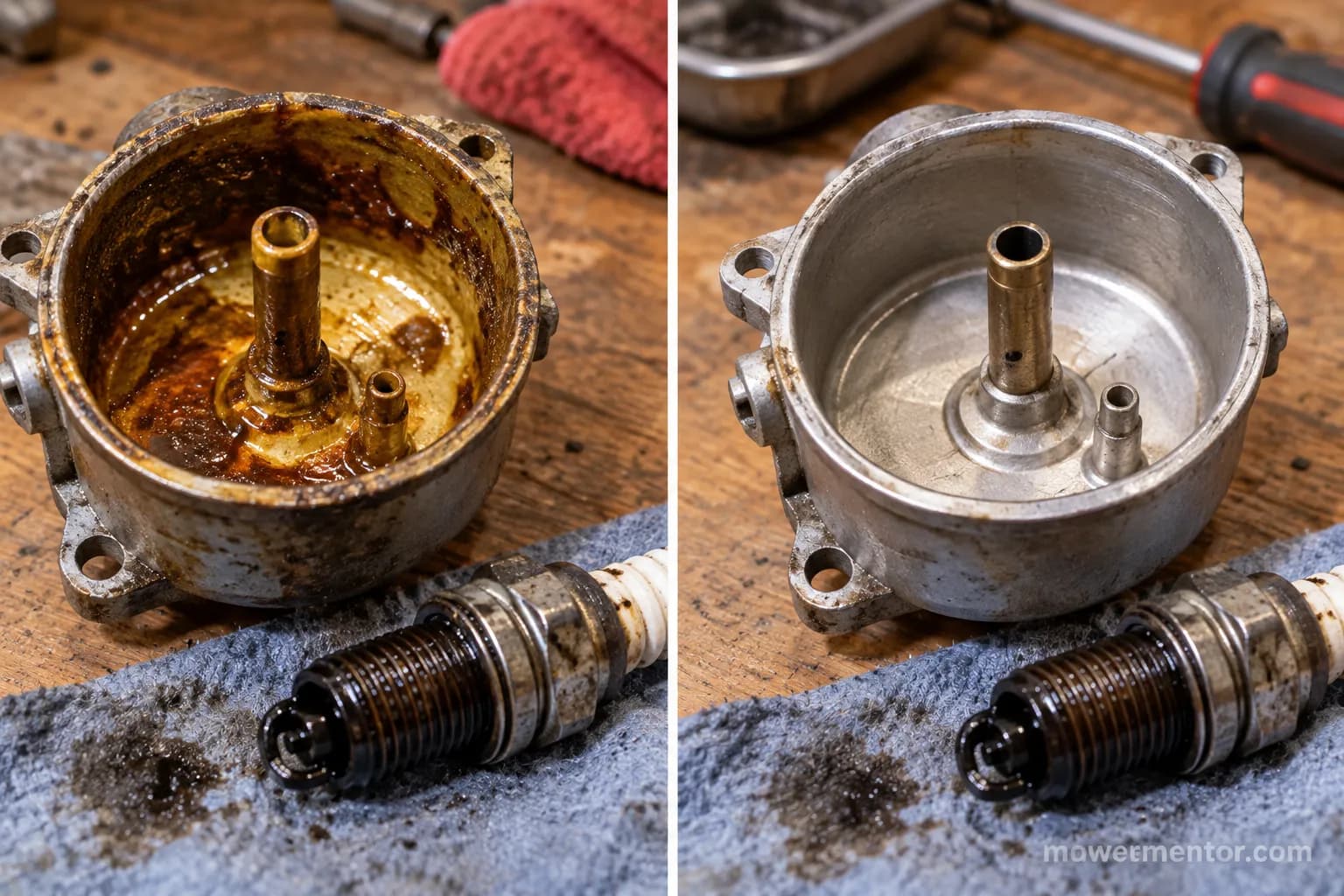
When cleaning won't save it. If you clean the carburetor twice and it still will not run right, the varnish has usually reached the pressed-in jets you cannot fully clear.
At that point a rebuild kit or a replacement carburetor is the honest call, and a badly corroded one is a dealer job worth paying for.
If the plug came out dry instead of wet, fuel is not reaching the cylinder. Recheck the shutoff, the filter, and the bowl before you blame spark.
One Click and It Won't Turn Over: Battery, Connections, and Solenoid
A single click when you turn the key means the solenoid is trying to engage while the starter motor stays still, which on a Husqvarna riding mower points at power delivery rather than the engine.
A healthy 12-volt battery rests near 12.6 volts, yet it can still collapse under crank load, so Husqvarna's advice is to charge it per the manual and replace it if it will not hold.
That single click is your cue to test under load, not just at rest. Work from the battery outward.
Load-test the battery, do not just eyeball the voltage. A rested reading lies; the crank test tells the truth.
Clean both terminals and the cable ends. White or green corrosion adds resistance that starves the starter.
Check the ground strap from engine or frame to battery negative. A loose ground mimics a dead battery.
Tap and test the solenoid. With the brake set and deck off, have a helper turn the key while you listen for the click.
Do the solenoid jump test. Carefully bridge the two large solenoid terminals with an insulated screwdriver; if the starter spins, the solenoid or its trigger circuit is at fault.
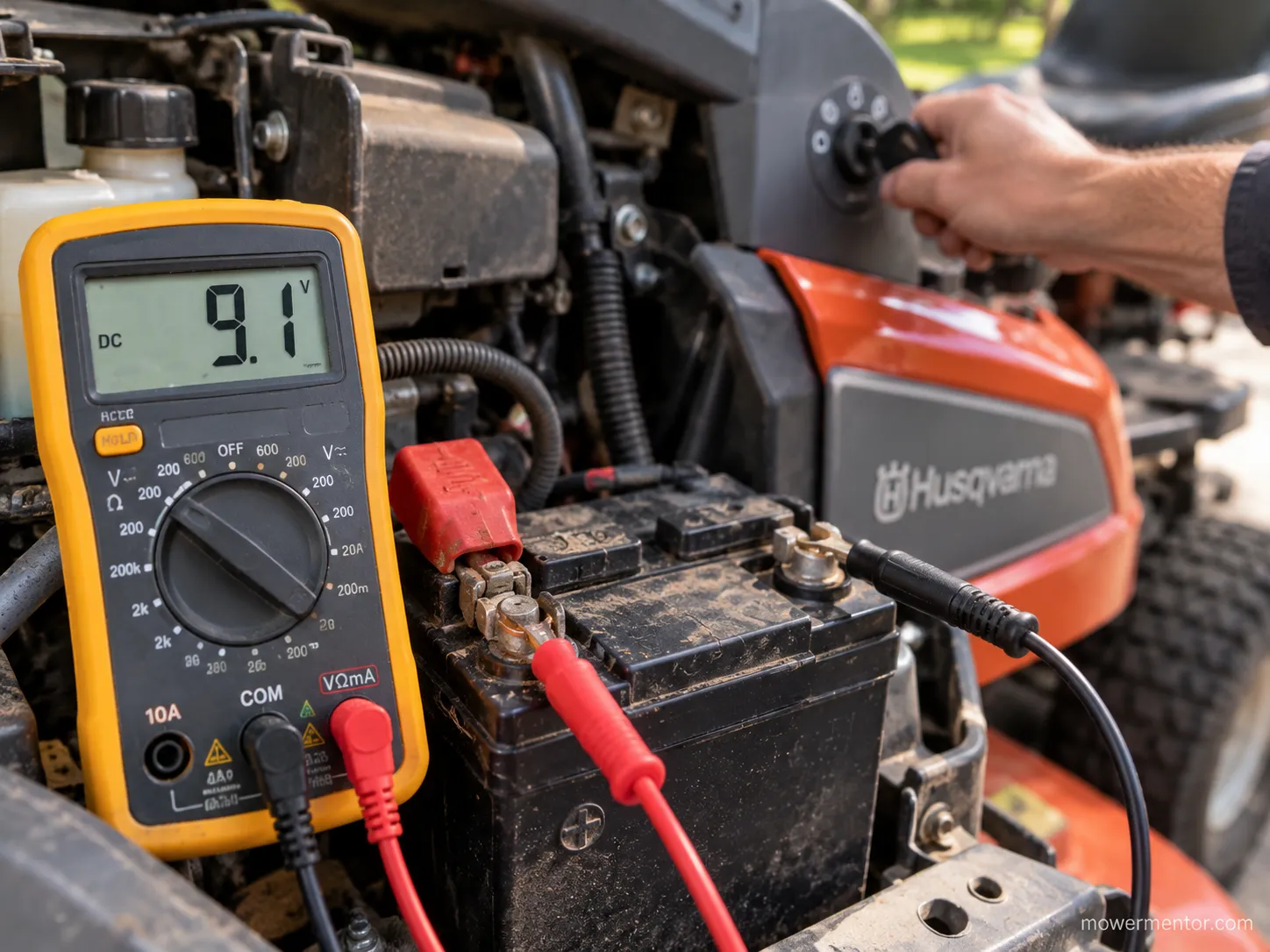
On the customer GT52XLS, the battery read a confident 12.6 volts at rest, then sagged to 9.1 volts the instant we cranked it on the Fluke 107.
That collapse under load is a dying battery pretending to be healthy, and it is exactly why a "just a single click" complaint so often ends at the battery.
A verified small-engine tech walks the same path we do, from terminals to solenoid to starter, when a mower clicks but will not turn over.
Owners who "shorted the solenoid and it started" were simply running the jump test in step five.
If an ohm meter and the click test point at the solenoid, our solenoid test and swap covers the five-minute job.
If the battery is simply flat, sizing and charging the battery confirms the right replacement.
Need it running today while a battery is on order? Then jump-starting a mower battery gets you a same-day test.
Dead Silent, No Click or Power: Safety Switches, Fuse, and Ignition
When a Husqvarna riding mower gives you no click, no groan, nothing, the starter circuit never energized, which points at a safety interlock, a blown fuse, or the ignition switch.
Husqvarna confirms the machine's safety systems will block a start when the seat, brake, or blade switch is not satisfied.
A dead-silent dash is usually a broken circuit upstream of the starter, and there are only a few links in that chain.
Check them in order and you will find the open link.
Reseat the safety switches. The seat, brake, and PTO switches each break the circuit, so the 30-second reset rules them out first.
Find and pull the main fuse. It sits inline near the battery or solenoid, and a blown fuse kills all power.
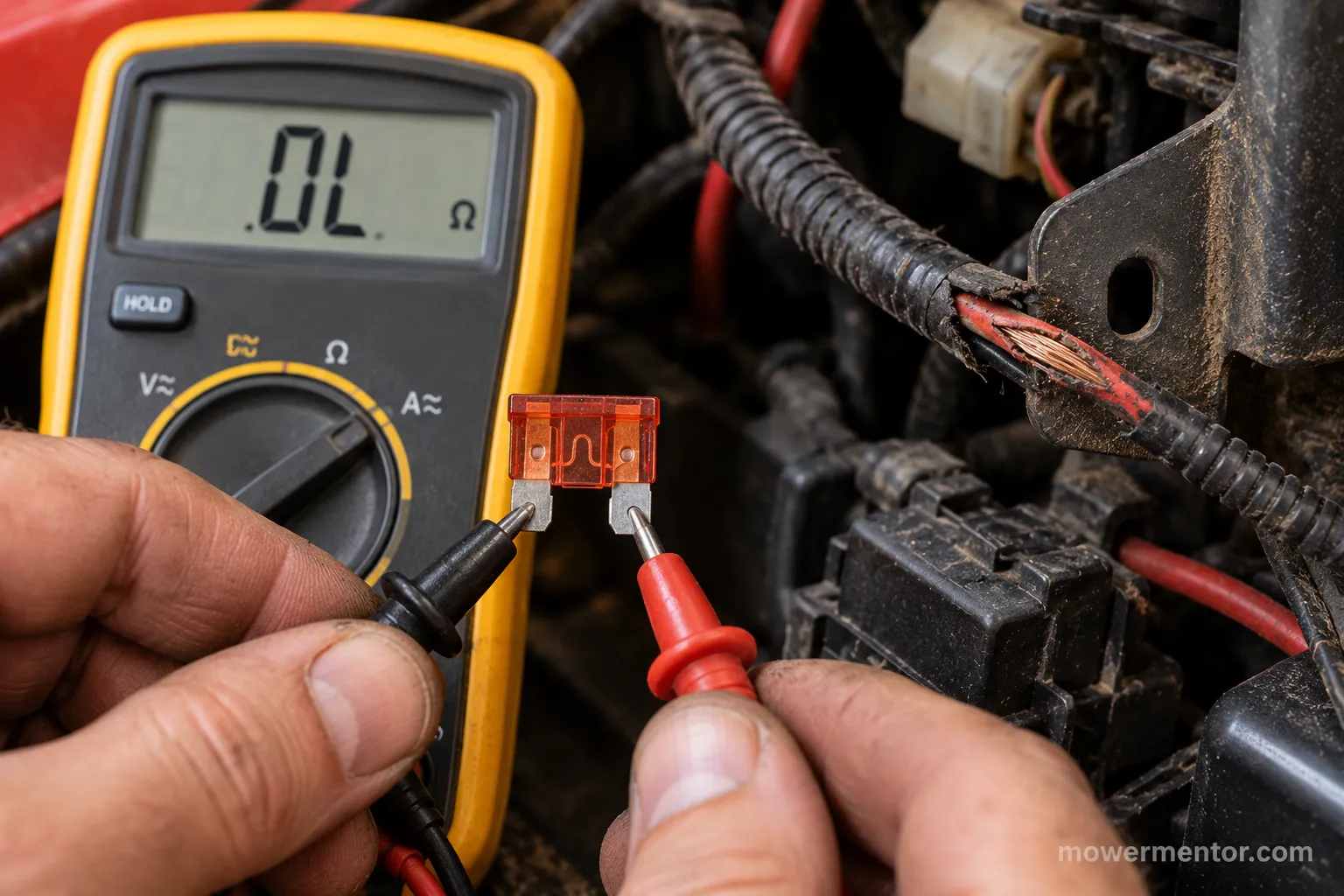
Test the fuse with a meter, do not trust your eyes. A fuse can look perfect and still be open.
Check the ignition switch for continuity. Terminal B should be hot always; the S terminal should go hot only in START.
Trace the harness for a chafed or pinched wire if a fresh fuse blows again.
The most memorable one this season was a "good" fuse that read completely open on the meter even though it looked flawless.
It blew again the moment the PTO engaged.
The culprit was a seat-harness wire chafed bare against a bracket, shorting only when the deck drew current.
This is why "a fuse that looked fine was bad" shows up again and again in owner threads: you have to meter it.
A schematic-level forum teardown of the same circuit confirms the B-terminal-always-hot, S-terminal-in-START behavior we use to test the switch.
Each interlock has a spot to test and a safe way to check it, covered in our Husqvarna safety-switch locations and tests.
Bypass to diagnose, never to mow. Jumpering a safety switch is a legitimate way to confirm which interlock is open, but it is not a repair.
Never operate the mower with a defeated seat, brake, or blade switch, because those switches stop the blades when you leave the seat and mowing without them risks serious injury.
If a fresh fuse keeps blowing, the short is in the harness, and our fuse and wiring-harness fixes walk it through.
If the ignition switch itself fails continuity, starting past a bad ignition switch is a temporary bridge while a new switch is on the way.
If you still get truly nothing, our silent no-click path digs deeper into the no-crank chain.
Still Nothing? Starter, Zero-Turns, and Hot No-Starts
If a good battery and a jumped solenoid still will not spin a Husqvarna riding mower, the starter motor itself is the last mechanical suspect.
A starter that clunks but will not turn is usually jammed against the flywheel ring gear, while one that draws no current at all is electrically dead.
This section also clears the two scenarios forums scatter across a dozen threads: zero-turn quirks and the hot no-start.
No sibling guide bundles these edge cases together, which is exactly why they send people in circles.
Try these before condemning the starter.
Rock the blades by hand with the plug lead off, then retry. A starter stuck in the flywheel will sometimes free with a light tap on its body.
On a zero-turn, move the lap bars fully out to neutral. The Z254F and similar models will not crank unless the steering levers are locked out and the parking brake is set.
Confirm battery voltage at the starter trigger wire during a crank attempt. Voltage present with no spin means the motor is dead.
The scenario that fools the most people is the hot no-start. It cranks and runs when cold, quits after mowing, then fires right back up once it sits.
Why won't my Husqvarna start when it's hot but fires up after it cools?
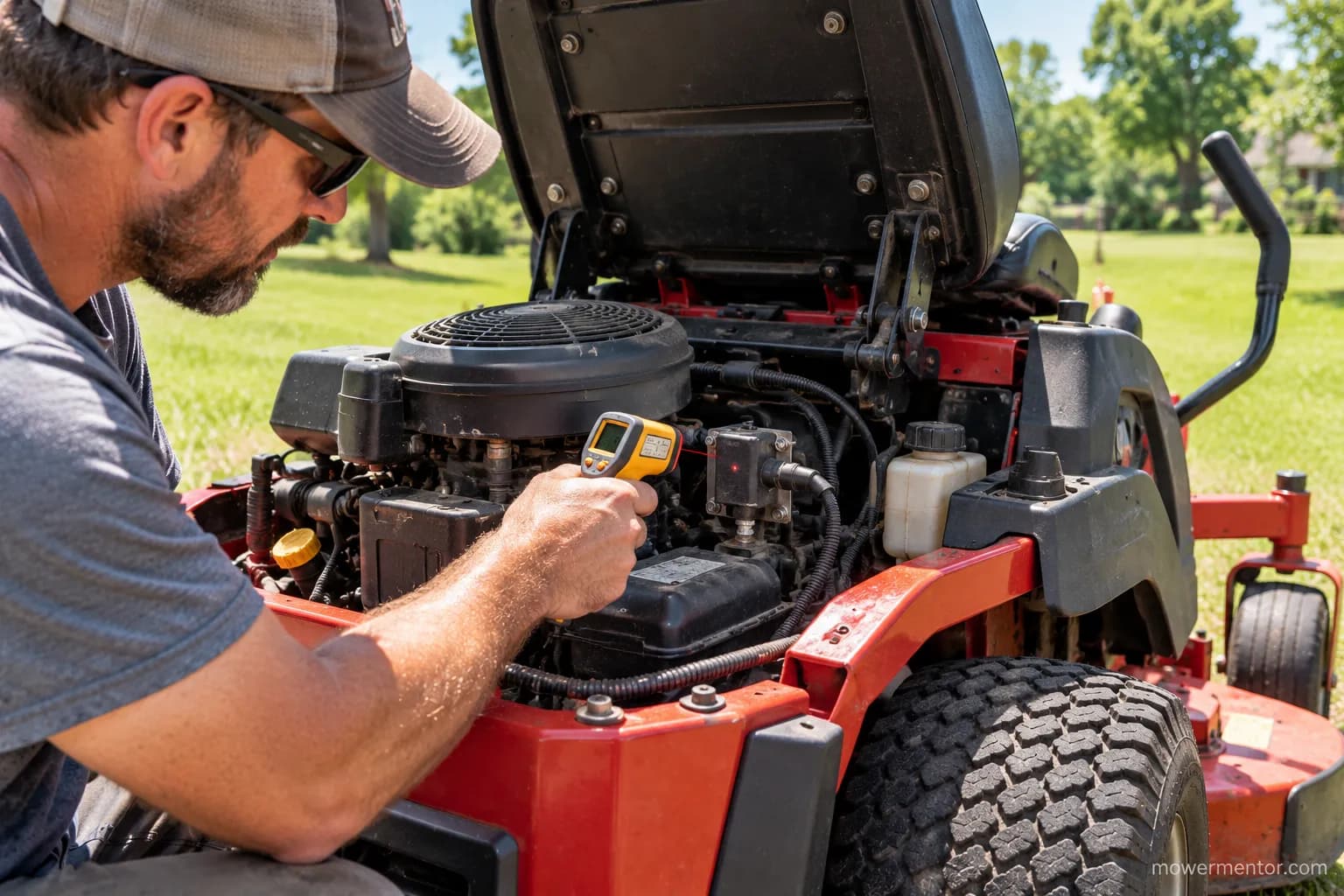
Heat-soak is the answer. On our Kawasaki-powered Z254F, the machine died at roughly 90 minutes of mowing on a hot August afternoon, refused to restart while hot, and cranked normally after a 30-minute cool-down.
The usual causes are a heat-sensitive ignition coil or a solenoid whose internal contacts open as they expand.
Because the fault only appears at temperature, you have to test it hot, which is why so many owners never catch it in a cool garage.
Attempt | Engine state | Ambient | Result |
|---|---|---|---|
Run 1 | Cold start | 78 F | Started first key |
Run 2 | After 90 min mowing | 91 F | Cranks, no fire |
Run 3 | After 30 min cool-down | 88 F | Started first key |
Run 4 | Coil swapped, hot retest | 90 F | Started hot |
Two related cases close this branch. If it only clicks once rather than staying silent, you are back in the battery branch, and when it only clicks once covers that path.
If you just fitted a fresh battery and it still will not crank at all, the fault is a ground or connection rather than the battery.
Our notes on being still dead after a new battery walk that down.
When the motor itself tests dead, the starter test and replacement guide shows the swap. The wider signs of a failing starter help you catch it before it strands you.
How to Stop Your Husqvarna Starting Problems Coming Back
Most repeat no-starts on a Husqvarna riding mower trace to two preventable habits: fuel left to go stale and a battery left to die over winter.
Because untreated gasoline degrades in about a month, the cure is storage discipline rather than a better carburetor.
A little off-season care removes the two causes that fill our spring service calendar. Do these and next season starts on the first key.
Stabilize the fuel or run the tank dry before any storage over 30 days.
Keep the battery on a maintainer through the off-season so it never deep-discharges.
Clean or replace the air filter each season so a rich mix never mimics a fuel fault.
Fog or replace the spark plug on schedule and keep the gap correct.
Dispose of old gasoline responsibly through your local hazardous-waste program.
We ran this as a side-by-side over the 2025 to 2026 winter. The YTH22V46 went into storage on a battery maintainer with stabilized fuel, while the TS 248G was parked with untreated gas and no maintainer.
In April 2026 the maintained machine cranked and fired on the first key.
The untreated one needed a full carburetor clean before it would run, which is the whole prevention argument in one test.
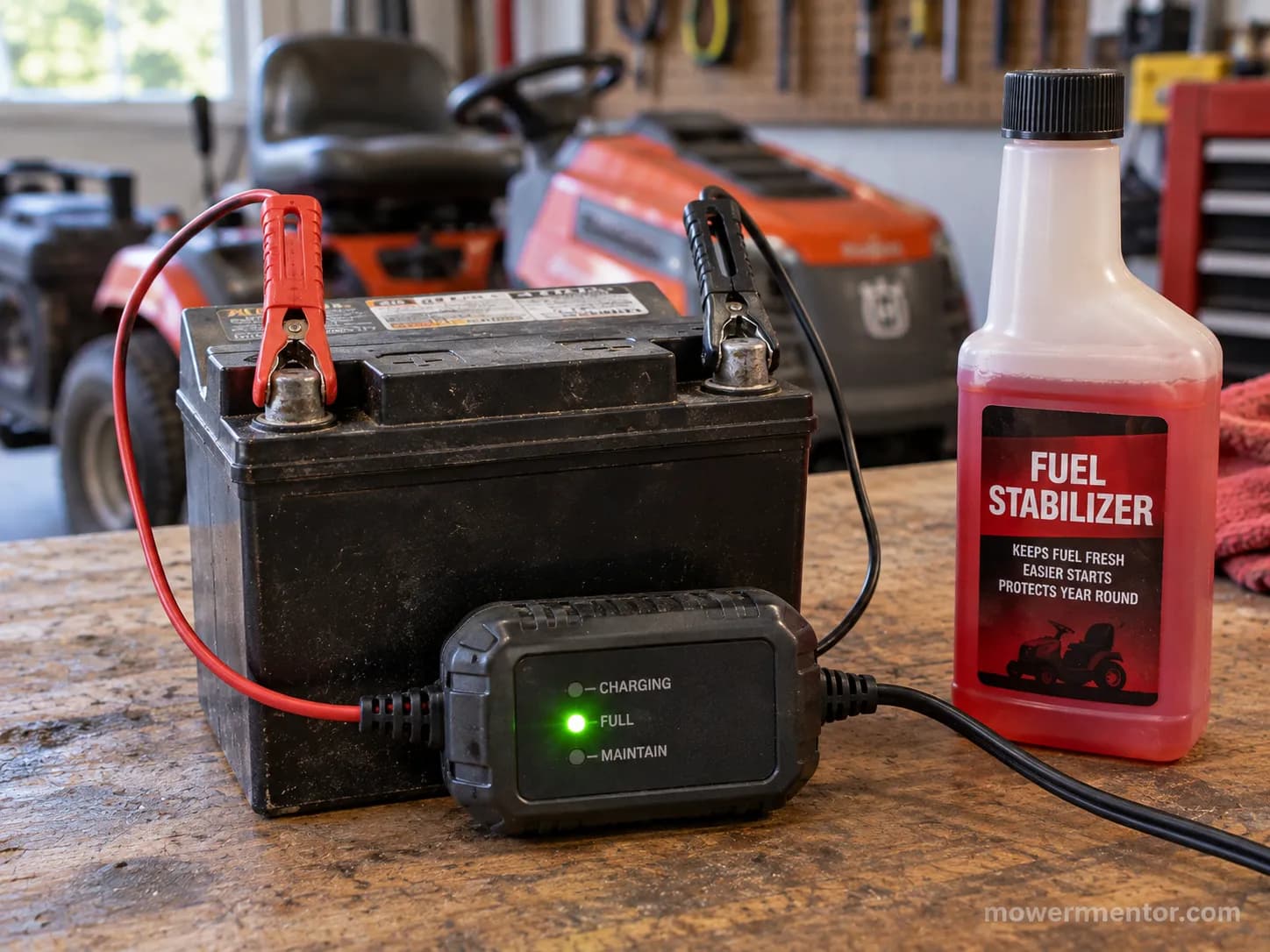
A full seasonal service ties all of this together, and our guide to a full Husqvarna tune-up sequences every step.
The two jobs that prevent the most no-starts are swapping the spark plug and cleaning a clogged air filter.
When to Stop and Call a Husqvarna Dealer
Some no-starts are genuinely a dealer's job, and knowing which ones saves you money and frustration.
Once the fuel path, the battery, the interlocks, the fuse, and the starter all check out, a remaining fault usually lives somewhere hand tools cannot easily reach.
Jobs we hand off.
This season we sent two machines to a dealer: one with valve lash out of spec that no carburetor work would fix, and one with an intermittent short we could not trace without a full harness diagram.
Both were the right call, not a failure of the home fix.
Book the dealer when compression is low, when valve clearance is suspect, or when a short reappears after you have replaced the fuse and inspected every reachable wire.
Those repairs need a leak-down tester, a service manual, and time that usually costs less at a shop than in your weekend.
The good news is that the vast majority of the time, a Husqvarna riding mower won't start for one of the four everyday reasons in this guide, not a deep internal fault.
Listen to the symptom, run the matching branch, and you will fix most no-starts in your own driveway with a multimeter and a can of carburetor cleaner.
Keep the four sounds in mind for next time: cranks but won't fire is fuel or spark, one click is the battery or solenoid, dead silent is an interlock or fuse, and spins without firing sends you back to fuel.
That short mental router turns a frustrating morning into a fifteen-minute fix.
Frequently Asked Questions
What is the most common reason a Husqvarna riding mower won't start?
On gas models, stale fuel is the top cause in our 2026 log: gasoline breaks down in about a month and gums the carburetor, so it cranks but will not fire. Drain the old gas and the float bowl, refill fresh, and most no-fires clear.
How do I reset my Husqvarna riding mower?
Sit fully in the seat, press the brake to the floor and set the parking brake, push the blade or PTO knob to off, then turn the key firmly to START and hold two seconds. That 30-second sequence clears the safety interlocks that block most false no-starts.
Why does my Husqvarna turn over but won't start?
Turning over but not starting means power and compression are fine, so the problem is fuel or spark: check for fresh fuel, a clean carburetor, and an open fuel valve first. Then pull the plug, where wet means look at spark and dry means fuel is not arriving.
Why won't my Husqvarna click or do anything when I turn the key?
Dead silence means the starter circuit never energized, usually a safety switch, a blown fuse, or the ignition switch. Meter the main fuse even if it looks fine, and confirm the seat, brake, and PTO switches are satisfied.
Where is the fuse on a Husqvarna riding mower?
The main fuse sits inline in the red battery-to-solenoid wiring, usually a spade fuse in a holder near the battery or the starter solenoid, and you should test it with a meter rather than by sight. If a new fuse blows fast, you have a short in the harness, not a weak fuse.
Why won't my Husqvarna start when it is hot?
That is heat-soak: a heat-sensitive ignition coil or a solenoid whose contacts open as they warm can quit after mowing, then work again once cool. Test the part hot rather than cold, since the fault disappears in a cool garage.
Read it your way
Short on time? Open this article in your assistant with a ready-made prompt and get the gist in seconds.
Found this useful? Make us a preferred source so we show up in your Google results.
Keep reading
Related articles
Troubleshooting & Repair
Lawn Mower Ignition Switch Replacement (Steps + Cost)
Do your own lawn mower ignition switch replacement: photo steps, wire-by-terminal transfer, fitment help, and a DIY-vs-shop cost table to save $100+.
Troubleshooting & Repair
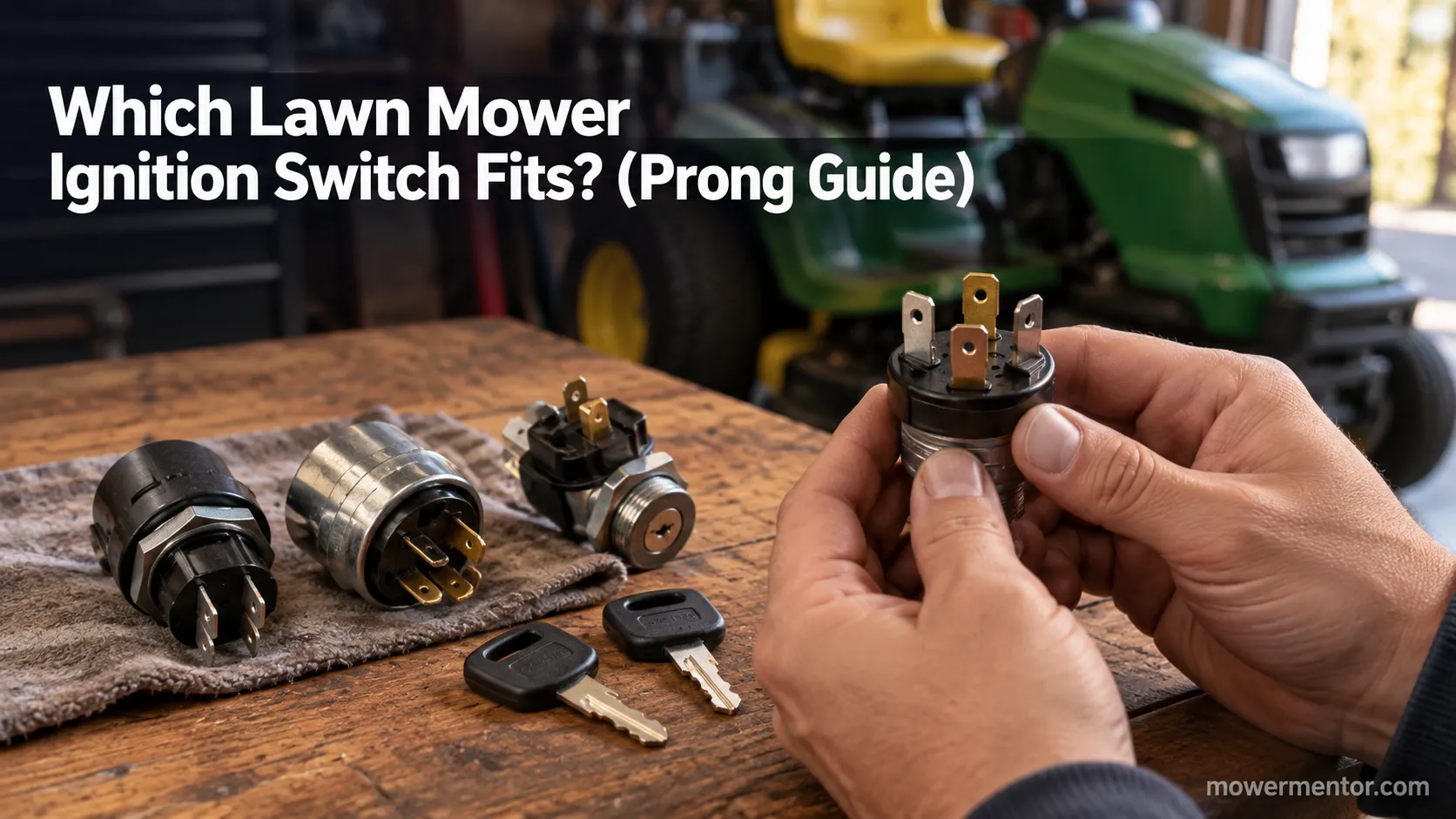
Which Lawn Mower Ignition Switch Fits? (Prong Guide)
hoose the right lawn mower ignition switch by prong count (4/5/6/7), universal vs OEM fit, and key compatibility, plus which one fits your mower.
Troubleshooting & Repair
How to Start a Lawn Mower With a Bad Ignition Switch
Confirm it's the switch, then learn how to start a lawn mower with a bad ignition switch: a safe solenoid bypass to get moving, plus how to fix it for good.
Troubleshooting & Repair
How to Test a Lawn Mower Ignition Switch (5/6/7-Pin)
Learn how to test a lawn mower ignition switch with a multimeter: get continuity tables for 5, 6 & 7-pin switches plus a no-multimeter test-light method.
The discussion
Comments
Every comment is reviewed before it goes live.