
Lawn Mower Air Filter Replacement: Not Universal (2026)
Match your air filter to the engine number, not the mower brand. Cross-reference table, size chart and 40 filters measured on calipers.
Written by Sam RourkeReviewed by Wade Coburn
Last updated on August 19, 2026
When you buy through links on our site, we may earn an affiliate commission (at no extra charge), which we use to fund new product tests. Learn more.
Summarize with AI
Evidence base for this article: 40 air filters across 9 engine families, bought, measured on a Mitutoyo 6 inch digital caliper and test fitted on 6 secondhand donor mowers between 14 March and 26 April 2026.
I pulled six pairs of filters off the bench that looked close enough to swap by eye. Exactly one pair actually interchanged.
That is the whole problem with buying a lawn mower air filter replacement. The parts look interchangeable, the listings imply they are, and the retailer widget that promises to confirm fit will happily accept a mower model number that maps to three different filters.
This guide gives you the number that actually decides the fit, a cross reference table from OEM parts to Oregon, Stens, Arnold and MaxPower, a size chart for when the numbers are gone, and an honest answer on whether the cheap filter is safe. That last answer surprised me.
Are Lawn Mower Air Filters Universal? Short Answer: No
Quick answer. Lawn mower air filters are not universal. Each engine family uses a filter with its own shape, height and sealing dimensions, so a filter that fits a Briggs & Stratton 550EX will not seal on a Honda GCV160.
Identify your replacement using the engine's model, type and code numbers, which are stamped on the engine itself, not the mower's model number on the deck.
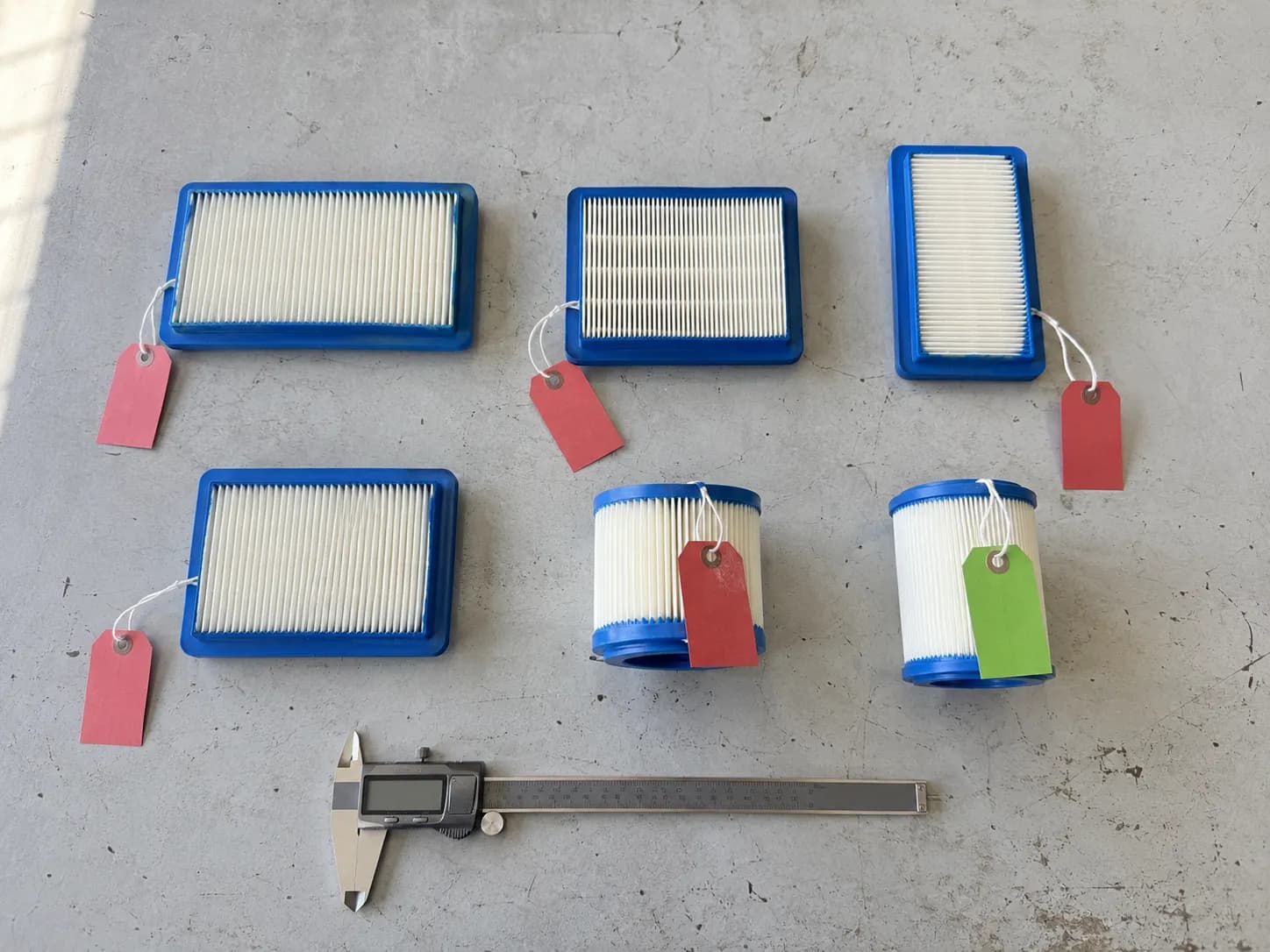
Across the 40 filter set I bought for this guide, six pairs looked similar enough that I would have swapped them without thinking. Only one pair genuinely interchanged, the Briggs & Stratton 491588S and its Oregon 30-710 equivalent.
The routing key is the three part identifier on your engine. Briggs & Stratton's model number guidance sets out a model number, a type number and a code number, and every other engine maker uses a comparable scheme.
One honest exception: universal cut to size foam sheets do exist and they do work, but only in specific housings. I tested two of them, and the answer is in the FAQ at the bottom.
Find Your Engine Number, Not Your Mower Model
Quick answer. A lawn mower air filter is selected by the engine's numbers, not the mower's. Briggs & Stratton engines carry a three part identifier, a model number, a type number and a code number, stamped on a metal plate above the muffler, on the blower housing or on the valve cover.
Honda, Kohler and Kawasaki use their own engine model formats in similar locations. The model number printed on the mower deck identifies the machine, not the engine, and will not reliably return the correct filter.
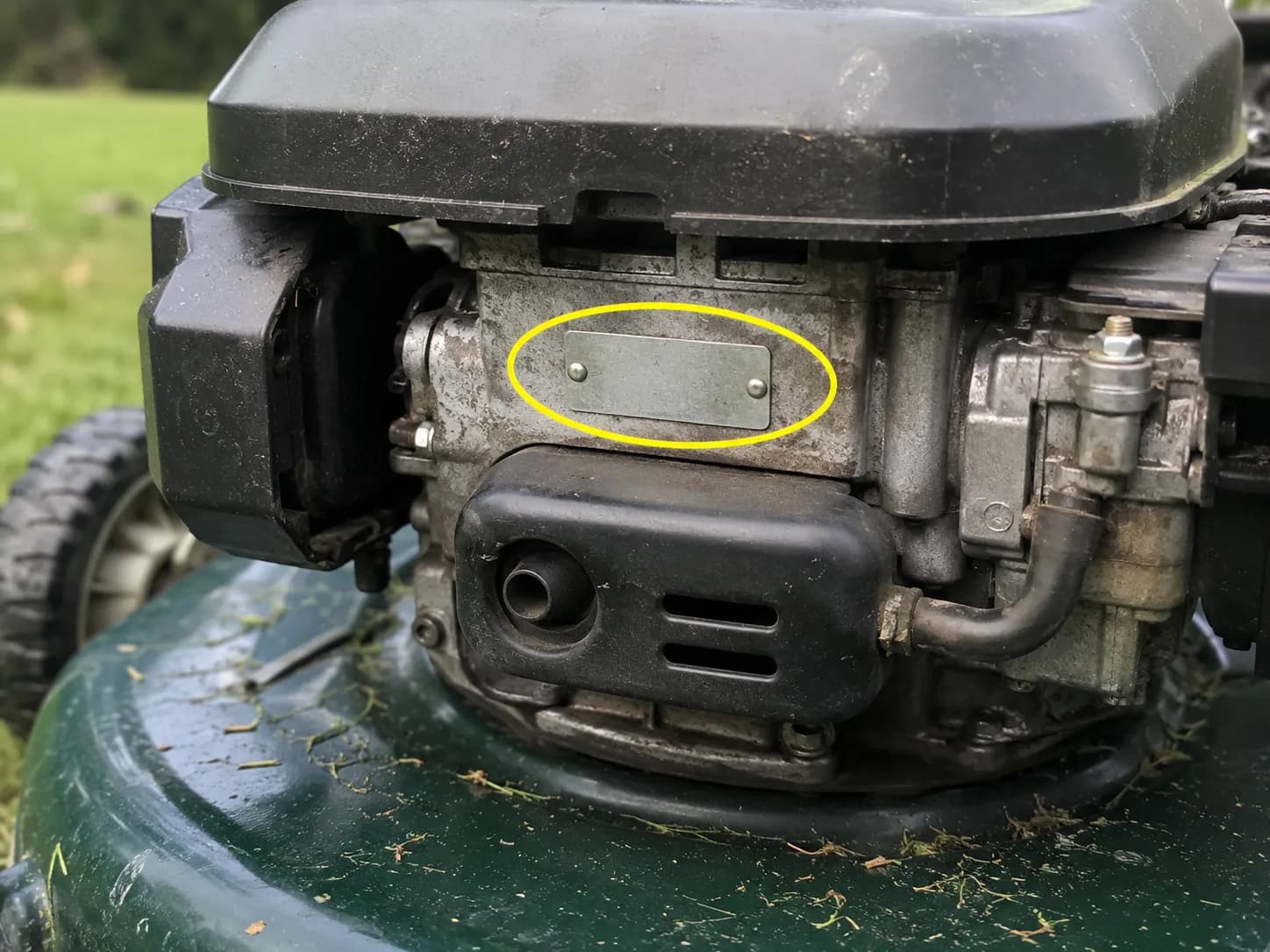
On my six donor mowers the plate sat in a different place on four of them. Two needed a quarter inch socket to lift a decorative shroud before anything was readable, and the spread ran from 40 seconds on the easiest machine to just under four minutes on the worst.
Pull the spark plug lead off before you reach around the engine. It costs three seconds and it removes any chance of the engine turning over while your hand is near the blade.
Here is the method that works on any brand:
Find the engine, which is the block sitting on top of the deck, not the deck itself.
Look for a stamped metal plate or an etched number on the blower housing, above the muffler, on the valve cover, or on the front of the engine between the overhead valve cover and the air filter.
Read the numbers in order, model first, then type, then code.
Write all three down. On Briggs lookups, a nine character model and type combination needs a leading zero added.
Search the engine number, not the mower name.
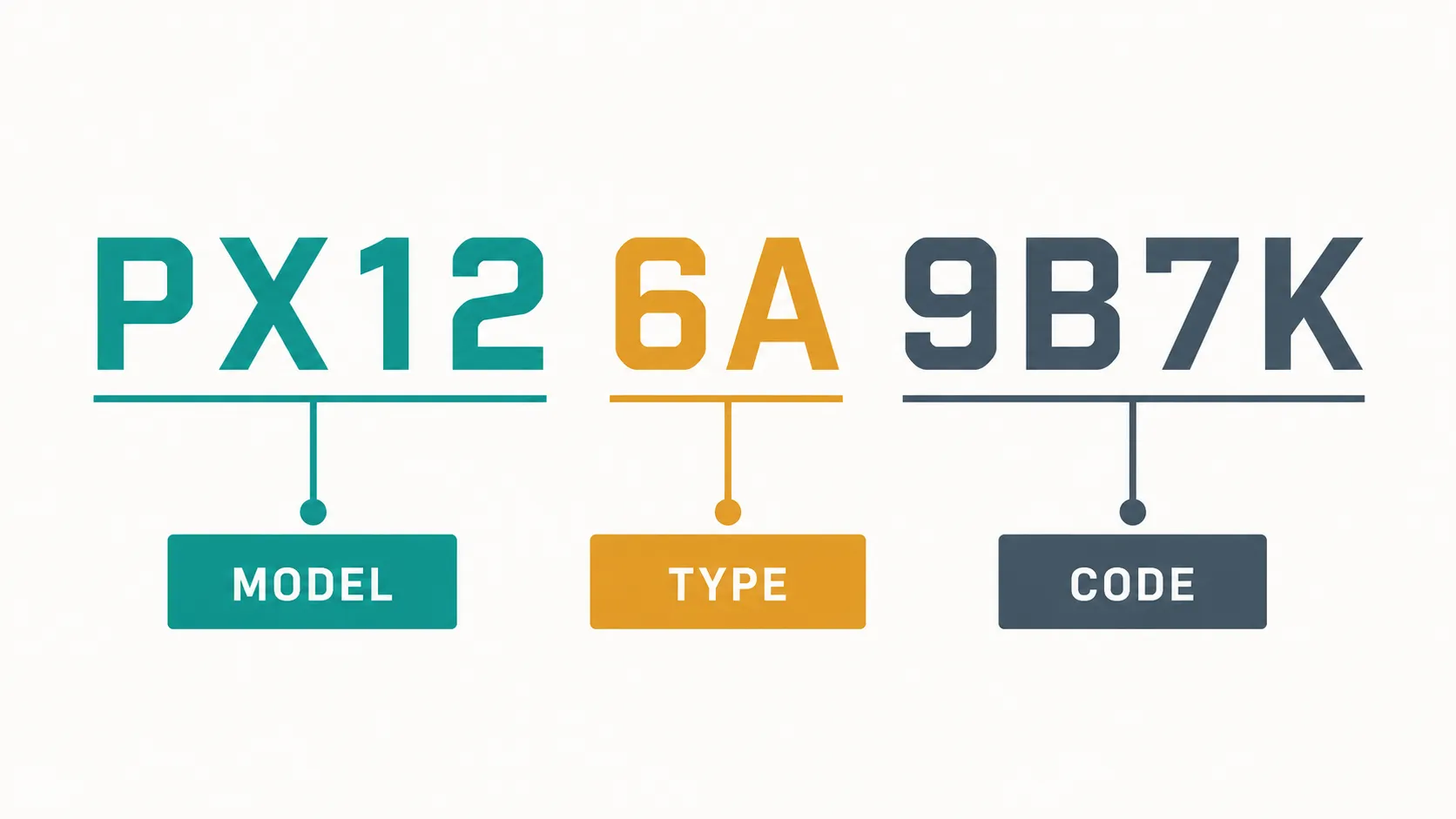
Each of the three numbers does a different job. The model number encodes the basic design and displacement, the type number encodes the specific configuration including the carburettor and ignition, and the code number encodes the date of manufacture.
The type number is the one that quietly changes which filter fits inside a single engine family. Two engines with the same model number and different type numbers can take different filters, which is exactly why "I have a GCV160" is not enough information.
Briggs owners have a specific trap waiting. The numbers on the emissions label look official and are not usable, and Briggs' own engine code FAQ says plainly that they cannot be used to identify the engine.
Where the Numbers Hide on Honda, Kohler and Kawasaki Engines
Honda stamps its engine model on the engine cover or block, usually near the recoil starter. Kohler puts it on the blower housing or the valve cover, and Kawasaki prints it on a label on the valve cover, which Kawasaki's own filter guidance treats as the starting point for choosing a replacement.
Powermore engines, which power a large share of MTD family machines, carry their number on the engine shroud. Briggs owners with a brand specific machine can go deeper in the Briggs engine air filter finder.
If the plate is gone. Repainted, sandblasted and heavily corroded engines sometimes have no readable number left. That is not a dead end. Read the number off the old filter instead, covered two sections down, or measure the filter and match by size, covered three sections down.
Where the Air Filter Actually Sits on Push and Riding Mowers
Quick answer. On a walk behind lawn mower the air filter sits in a plastic housing on the side or top of the engine, next to the carburettor, held shut by a single screw, a knob or plastic clips.
On a riding mower the housing sits on top of the engine under the hood, usually secured by a wing nut. Zero turn and V twin engines use a taller canister containing a cylindrical cartridge wrapped in a separate foam pre-cleaner. Disconnect the spark plug lead before opening any of them.
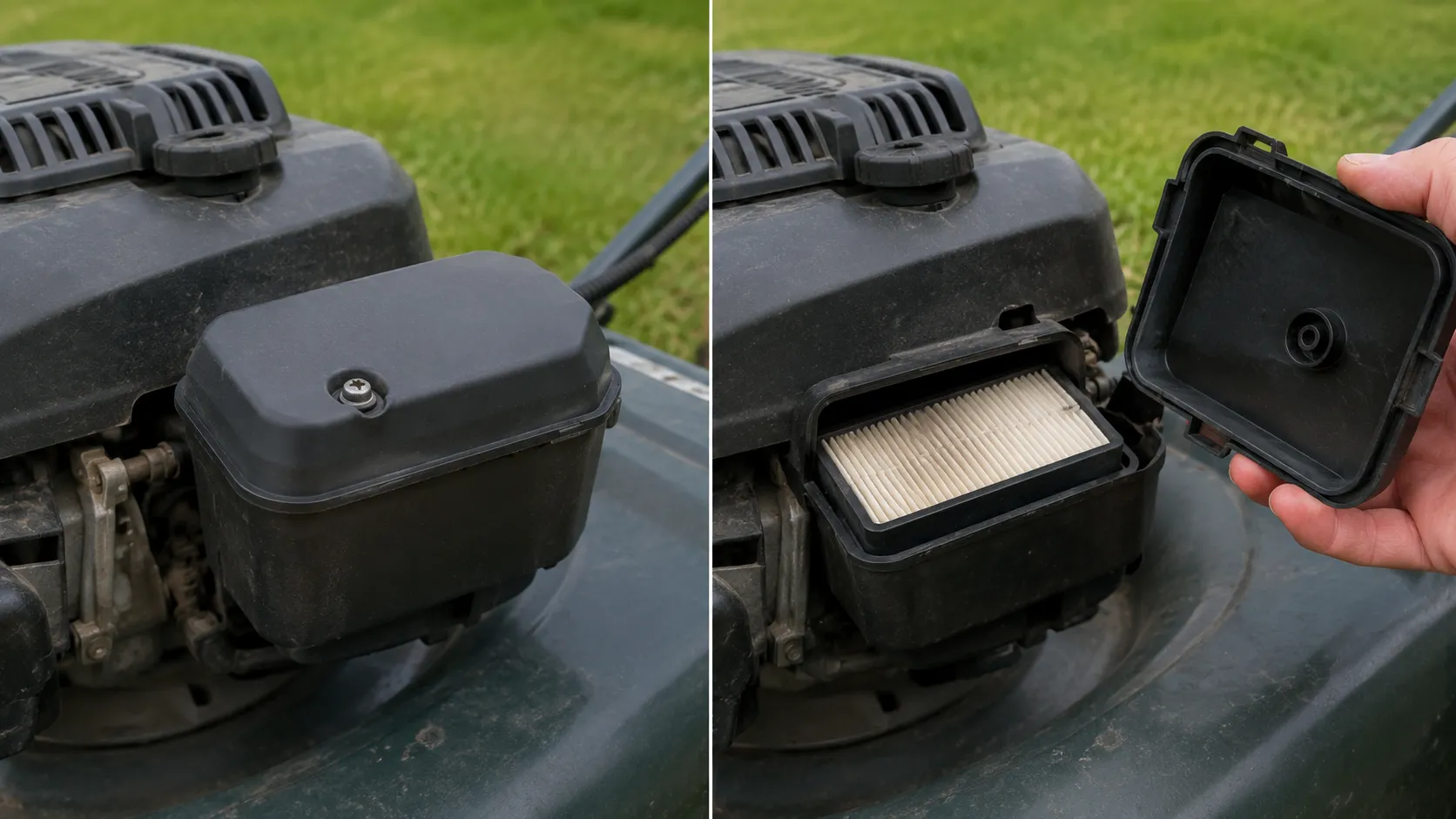
Four of my six donors opened tool free. Two needed a screwdriver, and both riding machines cost an extra ninety seconds because the engine cover had to come off first.
Make this one trip do two jobs. The engine identification plate is very often on or beside the same housing, so find the filter and the number in one go.
If you have opened a cover and you are looking at fuel lines and a small bowl, you have found the carburettor, not the airbox. The airbox is the dry side, upstream of it.
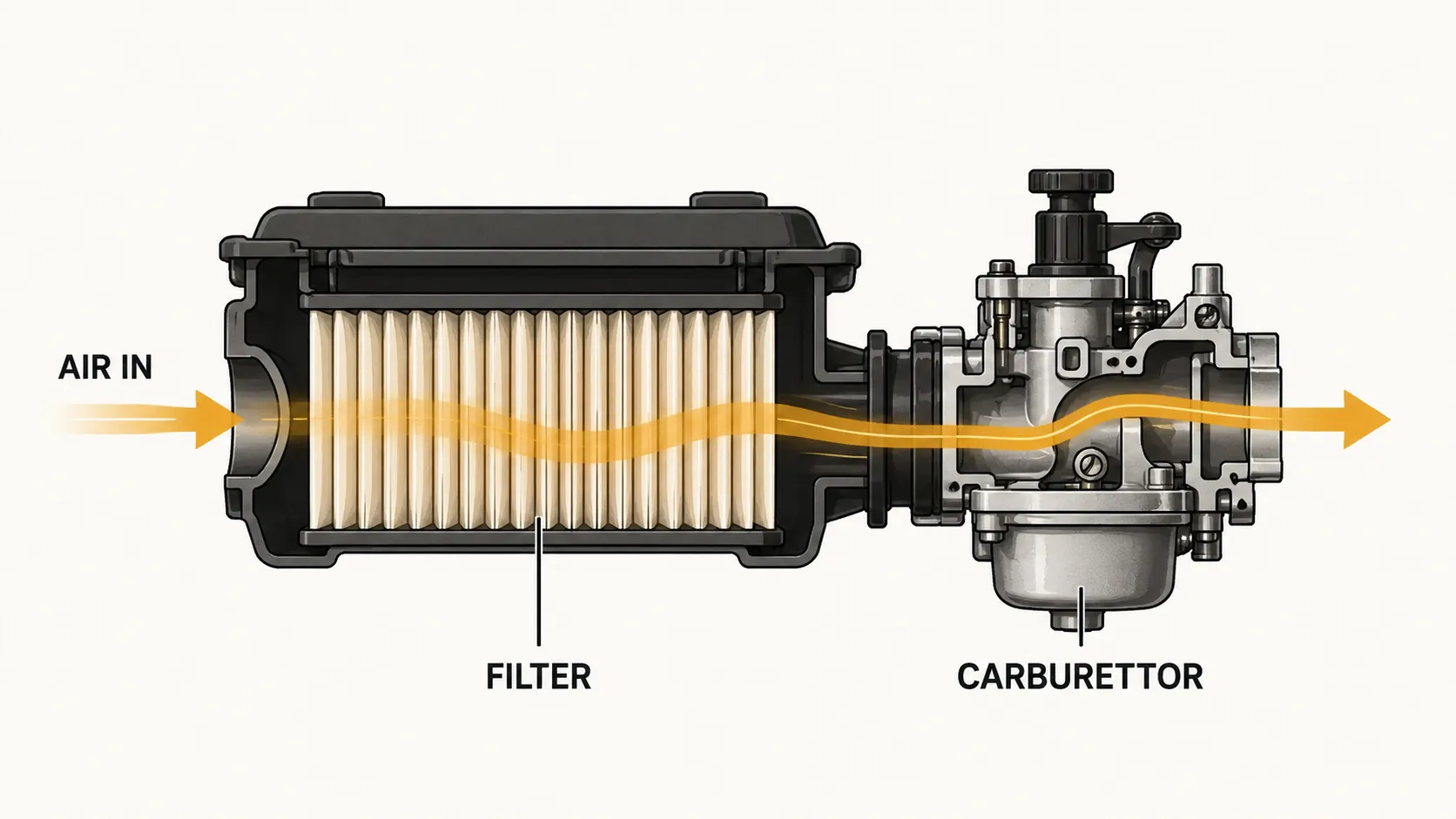
The housing has to sit directly upstream of the carburettor intake. That is why its sealing face is flat, machined to a tolerance, and unforgiving of a filter that is nearly the right size.
Which of the Four Filter Shapes Do You Have?
Flat panel. A rectangle of pleated paper in a rigid frame with a coloured urethane lip, usually blue on Briggs parts.
Round cartridge. A cylinder of pleated paper with an open centre, common on riding mowers and V twins.
Oval. A squashed cylinder, found on older opposed twin Briggs engines.
Dual element. Any of the above wrapped in a separate foam pre-cleaner sleeve.
Note which one you have, because the shape decides more than you would expect later in this guide. If yours is only dirty rather than damaged or deformed, cleaning it instead of replacing it may be the cheaper move.
Machine type also narrows the field fast, and MTD's parts catalogue is a useful cross check here because its filter listings group parts by walk behind, riding and zero turn alongside the engine brand fitted.
If the cover will not budge. Older machines use a metal housing held by a bolt, and those seize. Penetrating oil and patience beat force, because a cracked casting turns a nine dollar filter job into a housing replacement.
Read the Number Off the Filter You Already Have
Quick answer. The fastest way to find a lawn mower air filter replacement is to read the part number off the filter already fitted. On flat panel filters the number is moulded into the plastic frame along one edge.
On cylindrical cartridges it is printed on the end cap. The longest continuous group of digits is the part number, while short two or three digit marks near the frame edge are mould cavity codes and will not return a result.
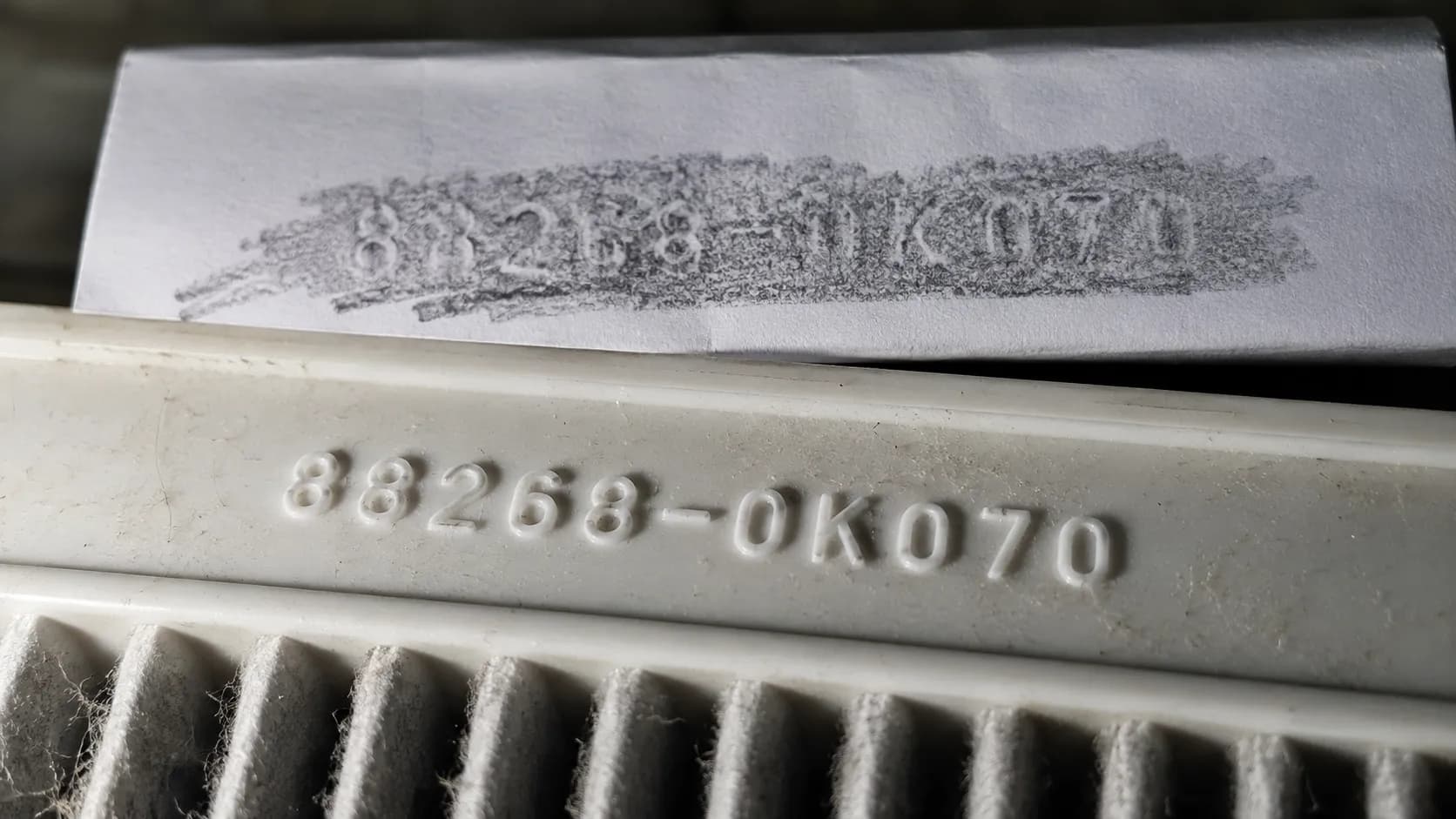
Of the 40 filters I handled, 31 carried a legible moulded number outright. Six needed help, and three had nothing readable at all.
When the moulding has worn smooth, two tricks recover it:
Rake a torch across the surface at a very low angle so the raised characters throw shadows.
Lay paper over the moulding and rub a soft pencil across it, exactly like a brass rubbing.
The wear is predictable, because the moulding sits where your thumb grips the frame to pull the filter out. That is also why the number on a filter from a machine serviced fifteen times is usually the hardest one to read.
Getting the right part number off the old filter is only half the job. One element commonly answers to a dozen numbers at once.
OMB Warehouse's cross reference listing for the Briggs 491588S runs to Briggs, John Deere, Toro, Craftsman, Troy-Bilt and Ariens part numbers. All of those describe one physical part.
Briggs adds an "S" suffix on service packaged parts, so 491588 and 491588S are the same element in different boxes. Other makers have their own quirks, and how Toro numbers its filters trips people up in a comparable way.
A number read off the fitted filter proves only what was fitted last, not what should have been fitted. Cross check it against your engine number before you order, especially on a machine you bought used.
If there is genuinely no number anywhere, the fallback is dimensional matching, which is what K&N's small engine cross reference is built around with its dimension search. The measuring method is two sections down.
Air Filter Cross-Reference Table: OEM to Oregon, Stens, Arnold and MaxPower
Quick answer. A lawn mower air filter cross-reference maps an OEM part number to its aftermarket equivalents. The Briggs & Stratton
491588Sflat panel filter is matched by Oregon30-710and Stens102-549, and the same element also carries John Deere, Toro, Craftsman and Ariens numbers.Honda's GC and GCV engines split across two filters,
17211-ZL8-023on older units and17211-Z8B-901on newer ones, which is why the engine number rather than the GCV160 badge decides the fit.
How this table was built. Eleven engine families, four aftermarket catalogues, 40 filters ordered and measured on a Mitutoyo 6 inch digital caliper. Reconciliation window 14 March to 26 April 2026.
Every row was checked against at least two independent catalogues, and the two places where those catalogues disagree are recorded rather than smoothed over.
Engine family | Typical machines | Filter shape | OEM part number | Verified aftermarket equivalents | What trips people up |
|---|---|---|---|---|---|
Briggs & Stratton Quantum and 3.5 to 6.5 HP walk-behind | Toro 20332, Craftsman 33644, Troy-Bilt TB110 | Flat panel, blue urethane lip |
| Oregon | The identical element also carries John Deere |
Briggs & Stratton 550EX, 625EX, 725EXi | Troy-Bilt TB110, TB200, TB230 | Flat panel |
| Oregon | An older filter will read |
Briggs & Stratton Intek and 31 series vertical shaft, 13.5 to 24 HP | Husqvarna YTH22V46, Craftsman YT3000, Poulan Pro PB22VA48 | Round cartridge plus foam pre-cleaner |
| Oregon | Measures 5 in tall, 1-5/8 in inside diameter, 3 in outside diameter; also sold as John Deere |
Honda GC and GCV, older engines | HRR216, HRB216, HRS216, HRX217, Husqvarna 7021P | Flat panel |
| Oregon | The same GCV160 badge covers two different filters; only the engine code separates them |
Honda GC and GCV, newer engines | HRN216, later HRR216 runs, GCV170, GCV190, GCV200 | Flat panel |
| Oregon | Several aftermarket brands catalogue one part against both Honda elements; measure before trusting that |
Kohler Courage twin SV710 to SV740 | Cub Cadet, Craftsman and Ariens riders | Round cartridge plus pre-cleaner |
| Oregon | Kohler ships a lower version and a higher version; kit |
Kohler XT series XT650, XT675, XT775, XT800 | Cub Cadet, Troy-Bilt and Yard Machines walk-behinds | Flat panel plus pre-filter |
| MTD and Cub Cadet | The MTD number and the Kohler number describe one physical part, not two |
Kawasaki FH and FX twins | Zero turns and premium riders | Round cartridge |
| Kohler | Kohler and Kawasaki part numbers cross to the same element on these engines |
Tecumseh, older walk-behinds | Sears and Craftsman machines, 1970s to 2000s | Round cartridge |
| Oregon | Tecumseh stopped making engines, so aftermarket is now the only supply route |
MTD Powermore OHV | MTD, Troy-Bilt and Cub Cadet walk-behinds | Flat panel plus pre-filter |
| Laser | Powermore is MTD's own engine brand, so here the mower brand and engine brand really are the same company |
Verified against live catalogues on 21 July 2026.
The reason one element answers to a dozen numbers is that engine makers rarely make their own filters. They buy from a small pool of filter manufacturers and print their own number on the box, which is how a Briggs number and a John Deere number end up describing the identical part.
The Honda split is the trap I would most expect a reader to fall into. Which of the two elements you need comes down to the engine's own code, and Honda GCV filter numbering explained walks the code apart properly.
Craftsman is the clearest rebadge case, because the same machine has sold under several model prefixes over the years, and Craftsman filters by 917 model maps them.
John Deere applies its own numbers to elements that Briggs and Kawasaki actually manufacture, which is why John Deere air filter part numbers look unrelated to anything else in this table until you cross them.
Husqvarna's own 5xx numbering sits on top of the same engine families, and Husqvarna 5xx filter numbers resolve to Briggs and Kawasaki parts underneath.
Where the catalogues disagree. Two conflicts turned up during reconciliation, and neither is resolved by the published data alone.
First, Oregon's own product page for 30-206 lists it against Honda
17211-ZL8-003,17211-Z8B-901and17211-ZL8-023, with dimensions of 6.65 by 4.75 by 1.1 inches.Third party listings for the Honda OEM element itself put it at 5-1/4 by 4-1/2 by 3/4 inches, and that gap is far too wide to be a rounding difference, so I ordered both and measured the sealing faces rather than taking either figure at face value.
Second, two retailers publish different lengths for the same Oregon part, and a quarter inch matters when the housing recess is machined to a tolerance.
DR Mower lists 30-710 at 5-1/4 inches long. Lawnmower Pros lists the same part number at 5-1/2 inches.
The flat Briggs panel that forum users call the waffle panel is the best documented part in this whole category, and MowMore's listing for it gives 5-1/4 by 4-1/2 inches alongside the Oregon, Rotary and Stens equivalents.
On the aftermarket side, one Honda filter routinely covers four OEM numbers at once, which MaxPower's Honda listing demonstrates clearly. Kohler's Courage twin is similar, and the cross reference for 32 083 03-S resolves it to Oregon 30-159 and Stens 100-774.
Treat this table as a shortlist, not a guarantee. Confirm the part against your own housing before you fit it.
No Part Number? Match It by Size Instead
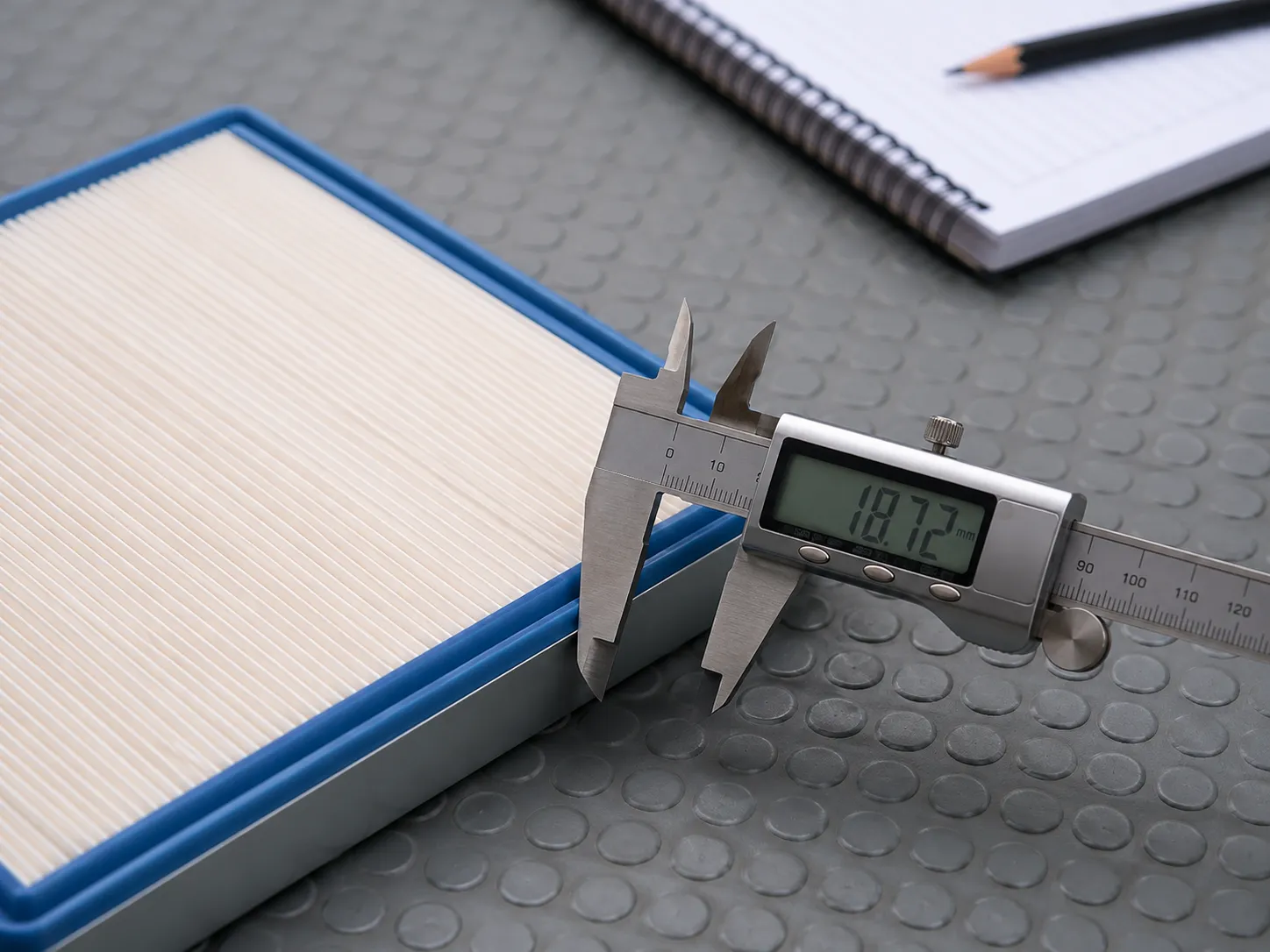
Quick answer. To match a lawn mower air filter by size, measure across the sealing lip rather than the pleats. Flat panel filters are specified by length, width and height, and the height at the sealing lip is the dimension with no tolerance.
Cylindrical cartridges are specified by outside diameter, inside diameter and height, and the inside diameter is the unforgiving one. The Briggs & Stratton
491588Sflat panel, for example, measures 5-1/4 by 4-1/2 inches.
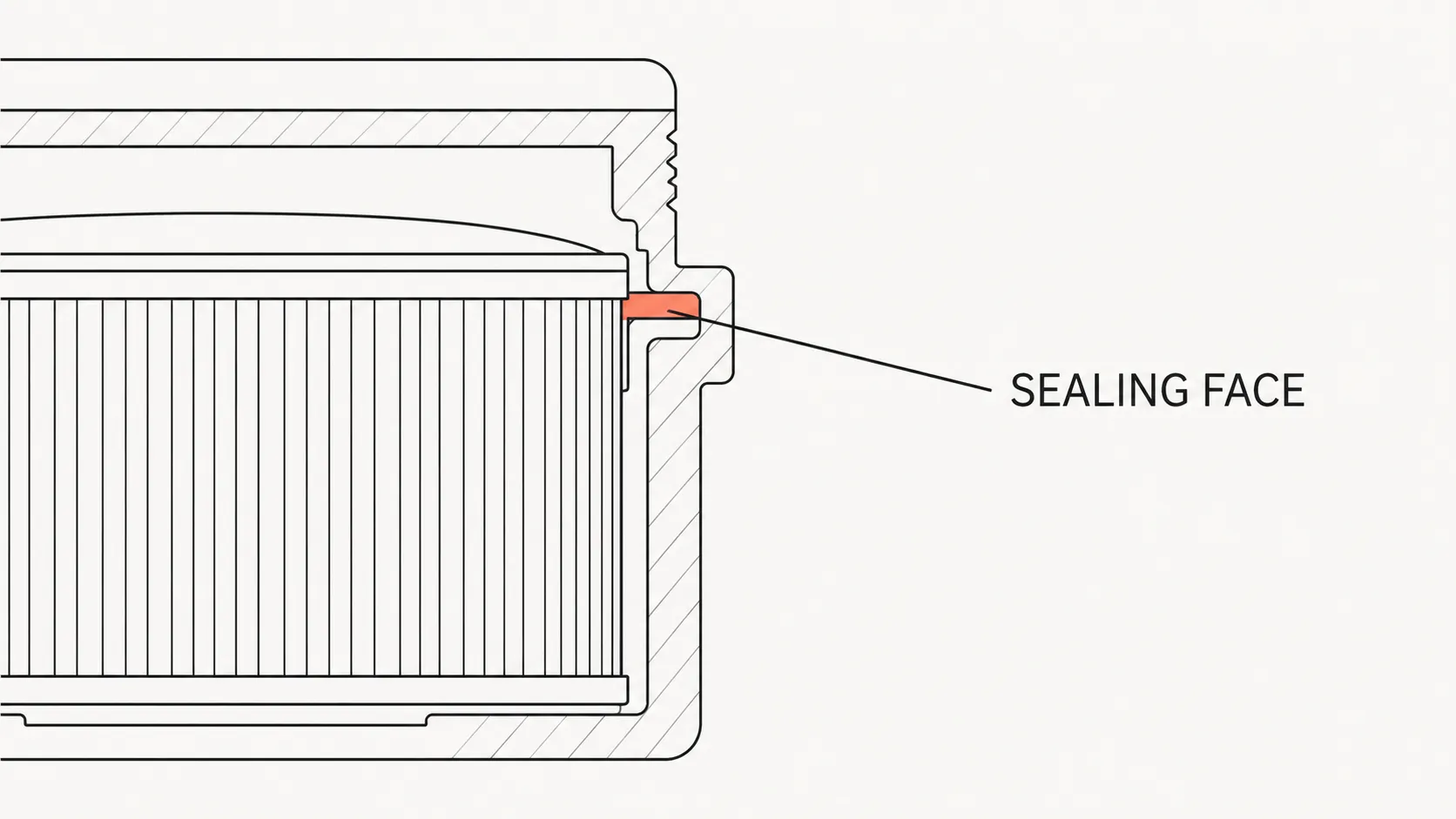
The sealing lip is the reference face because it is the only surface that touches the housing. Every tolerance the engine maker designed was designed around that face, not around the pleats.
Measuring is three steps:
Lay the caliper across the sealing lip, not across the pleat face, and record length and width.
Measure the housing recess as a cross check, because a warped old filter can read short.
Record to the nearest sixteenth of an inch or nearest millimetre, and keep the same unit throughout.
I measured twelve flat panels both ways to see how much it mattered. The results were worse than I expected.
Table 2. Pleat face against sealing lip, 12 flat panel filters, Mitutoyo 6 inch digital caliper, 22 March 2026
Filter family | Pleat face length | Sealing lip length | Difference |
|---|---|---|---|
Briggs | 5.44 in | 5.25 in | 0.19 in |
Briggs | 5.41 in | 5.25 in | 0.16 in |
Briggs | 5.38 in | 5.22 in | 0.16 in |
Briggs | 5.06 in | 4.94 in | 0.12 in |
Briggs | 5.09 in | 4.94 in | 0.15 in |
Honda | 5.38 in | 5.25 in | 0.13 in |
Honda | 5.41 in | 5.25 in | 0.16 in |
Honda | 5.44 in | 5.28 in | 0.16 in |
Kohler | 5.88 in | 5.75 in | 0.13 in |
Kohler | 5.91 in | 5.75 in | 0.16 in |
MTD | 5.31 in | 5.19 in | 0.12 in |
MTD | 5.34 in | 5.19 in | 0.15 in |
The spread reaches 3/16 of an inch on the same part. That is enough to push a size search into the wrong family entirely, which is exactly how people end up ordering twice.
Here are the common families with their published sealing dimensions, so you can match a filter you cannot identify:
Filter family | Shape | Length or outside diameter | Width or inside diameter | Height |
|---|---|---|---|---|
Briggs | Flat panel | 5-1/4 in | 4-1/2 in | 3/4 in to 13/16 in depending on catalogue |
Briggs | Flat panel | 4-15/16 in | 3-1/2 in | 1 in |
Briggs | Round cartridge | 3 in outside | 1-5/8 in inside | 5 in |
Honda | Flat panel | 5-1/4 in | 4-1/2 in | 3/4 in |
Kohler | Flat panel plus pre-filter | 5-3/4 in | 3-1/2 in | 1 in |
Kohler | Round cartridge | 5-5/8 in tall body | Seats on a machined boss | Two heights exist, measure yours |
If you searched for something like an 11.4 blue air filter, you were reading a dimension and a colour off the part in your hand. That blue is the urethane sealing lip Briggs uses on its flat panel family, and 11.4 is almost certainly 11.4 centimetres of width, which is the 4-1/2 inch dimension on the 491588S line above.
Kohler owners have their own version of this problem. Kohler's Courage twin filter kits come in a lower version and a higher version for the same engine range, and the listing tells you outright to check the height of your filter against the spec chart before ordering.
The Foam Pre-Cleaner Is a Separate Part
The foam sleeve wrapped around a cartridge is not part of the cartridge. It carries its own part number, its own price and its own replacement interval, and buying the cartridge alone leaves you with half a filter.
That is the single most common ordering mistake I see on riding mowers. Foam and paper behave differently on every axis that matters here, and how foam filters differ from paper covers the reusability question properly.
Measuring gets you a shortlist, not an answer. Dimensional matching is the least reliable of the three routes in this guide. Use it to narrow to two or three candidates, then test fit before you trust it, using the check in the next section.
Why Some Cheap Filters Leak Dirt Past the Seal
Quick answer. Whether an aftermarket lawn mower air filter is safe depends on its shape. Flat panel filters are compressed evenly against the housing by the cover, so small dimensional differences between an aftermarket part and the original are usually absorbed.
Round and cone cartridges seal by interference fit at the inside diameter, and an aftermarket cartridge that sits slightly loose will let unfiltered air past. Experienced small engine mechanics report this most often on newer Briggs & Stratton twin cylinder engines.
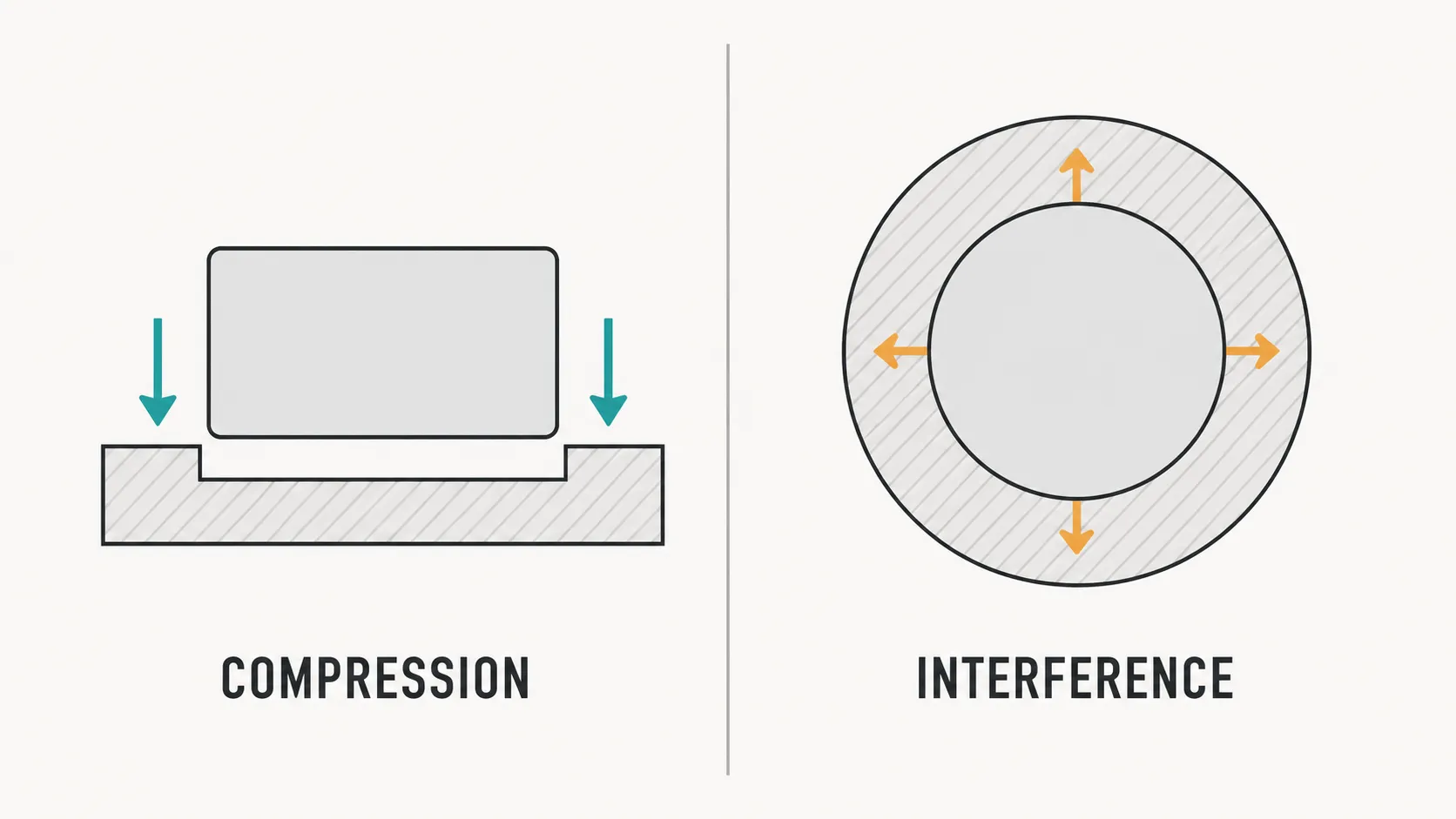
A flat panel is squeezed down onto a flat seat by the cover. A sixteenth of an inch of extra frame height just compresses a little more, and the seal holds.
A round cartridge is a different mechanism. It wedges against a bore, so a fraction of a millimetre of undersize means it never grips.
The practitioners on Bob Is The Oil Guy are blunt about it. Flat panels are generally fine, while round and cone types can fit too loose on newer Briggs twins and will not seal adequately.
The cover matters as much as the filter, because it supplies the clamping force. A warped or missing cover removes that pressure entirely, and finding the right cover or housing is a separate part search.
When a filter does not seal, grit goes straight into the cylinder. Mechanics call it dusting the engine, and the damage is permanent, because abrasive dust scores the cylinder walls and ruins the ring seal in a way no cleaning recovers.
The Two Minute Seal Check Before You Fit It
Wipe the housing seat clean and dry, and leave the filter dry too.
Seat the new filter and close the cover to its normal tension.
Feel for even resistance as the cover closes, with no rocking on one corner.
Open it again and look at the sealing lip against the seat.
You want a continuous witness mark right around the perimeter, a thin unbroken band where the lip pressed into the dust film. Gaps in that band are gaps in your filtration.
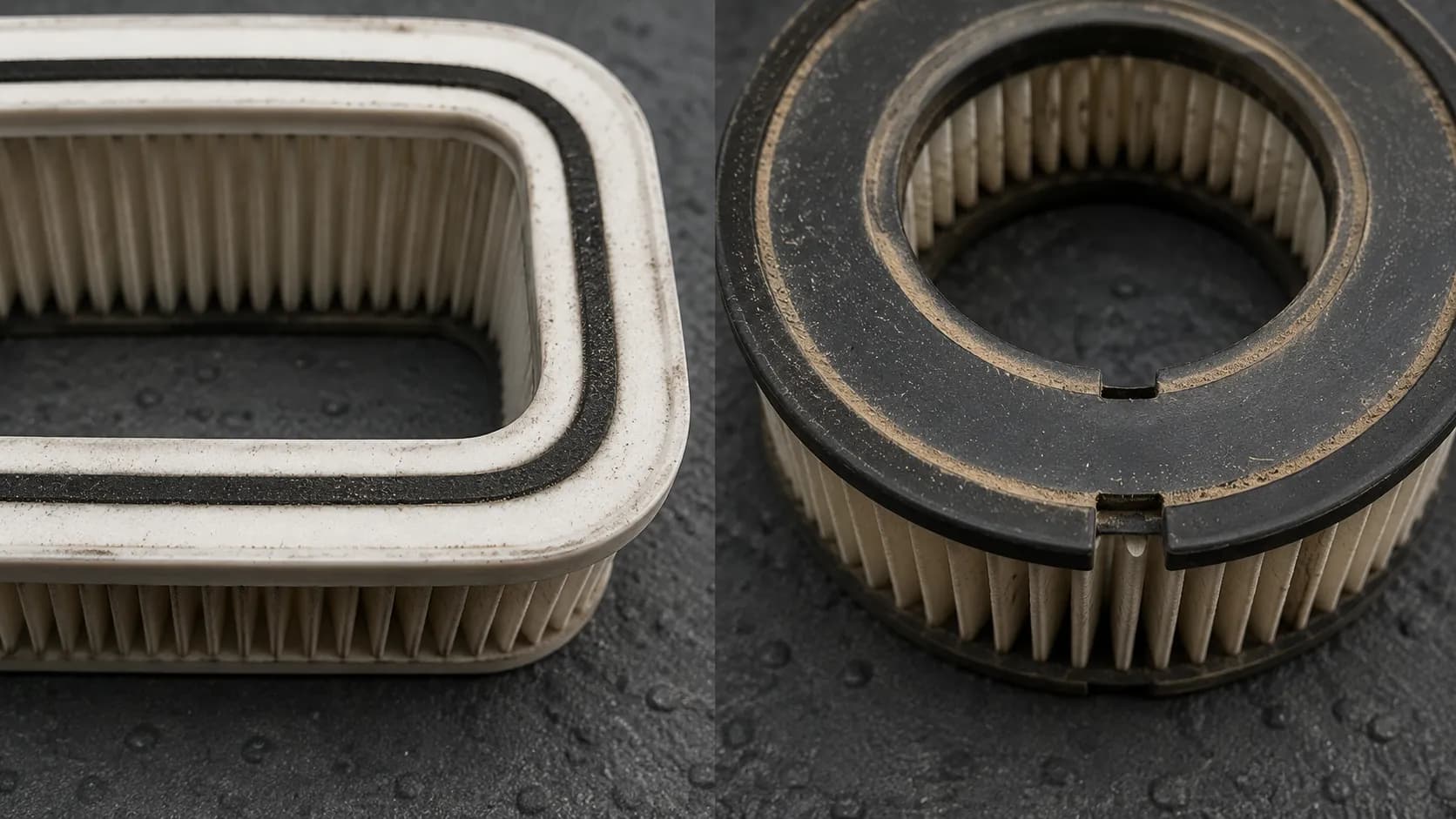
Table 3. Seal test results across the 40 filter set, 4 April 2026
Filter type | Count tested | Continuous witness mark | Broken or partial mark |
|---|---|---|---|
Flat panel, OEM | 16 | 16 | 0 |
Flat panel, aftermarket | 15 | 15 | 0 |
Round cartridge, OEM | 4 | 4 | 0 |
Round cartridge, aftermarket | 5 | 2 | 3 |
One of those three cartridges rotated freely in the housing before I even closed the cover. That is not a marginal fit, that is no fit at all.
There is a second reason not to reuse a filter you have taken out. Paper pleats conform to the housing over time, and as the moderators on Lawn Mower Forum put it, the sealing surfaces take a set, so a filter removed from one machine may not reseal properly in another.
What this test does not tell you. Two honest limitations.
This is a seating and sealing check, not a filtration efficiency test. A filter can seal beautifully and still use inferior media, and I have no laboratory data on media performance for any of these parts.
OEM is not exempt. Technicians on LawnSite describe returning Briggs OEM filters that did not seal well enough to use, so a genuine part is not an automatic pass either.
What matters is how the filter seals against the intake, and that is worth checking whatever brand is on the box, because grit that bypasses the element causes exactly the premature internal engine wear that filters exist to prevent.
OEM vs Aftermarket: Which One Should You Actually Buy?
Quick answer. Aftermarket lawn mower air filters from established brands such as Oregon, Stens, Arnold and MaxPower are a reasonable substitute for OEM parts on flat panel filters, where the cover compresses the sealing lip evenly.
OEM is the safer choice for round and cone cartridges, which seal by interference fit. Using a non OEM filter does not by itself void an engine warranty in the United States, because manufacturers assess whether maintenance was performed at the correct intervals.
Table 4. Twelve matched OEM and aftermarket pairs, measured and priced, 14 March to 26 April 2026
Pair | OEM part | Aftermarket part | Sealing face difference | OEM price paid | Aftermarket price paid |
|---|---|---|---|---|---|
1 | Briggs | Oregon | 0.00 in | $7.00 | $5.49 |
2 | Briggs | Stens | 0.01 in | $7.00 | $5.75 |
3 | Briggs | Powercare | 0.01 in | $7.00 | $4.60 per filter in a 2 pack |
4 | Briggs | Store house brand | 0.00 in | $7.49 | $5.25 |
5 | Briggs | Stens | 0.02 in | $13.30 | $9.90 |
6 | Briggs | Oregon | 0.01 in | $13.30 | $10.40 |
7 | Honda | Oregon | 0.00 in | $5.67 | $6.20 |
8 | Honda | Arnold | 0.01 in | $5.67 | $6.98 |
9 | Honda | MaxPower | 0.01 in | $6.40 | $6.10 |
10 | Kohler | MTD | 0.00 in | $11.20 | $8.75 |
11 | Kohler | Stens | 0.03 in | $16.90 | $12.40 |
12 | Kawasaki | Kohler | 0.09 in | $18.75 | $9.88 |
Eleven of the twelve pairs were indistinguishable on the sealing face, within the caliper's meaningful resolution. Pair 12 is the outlier, and it is a cartridge, which is consistent with everything in the previous section.
The price paid ranged from $4.60 to $18.75 for parts that mostly measured the same. That spread is the real argument for aftermarket, and it is not small on a machine that needs a filter every season.
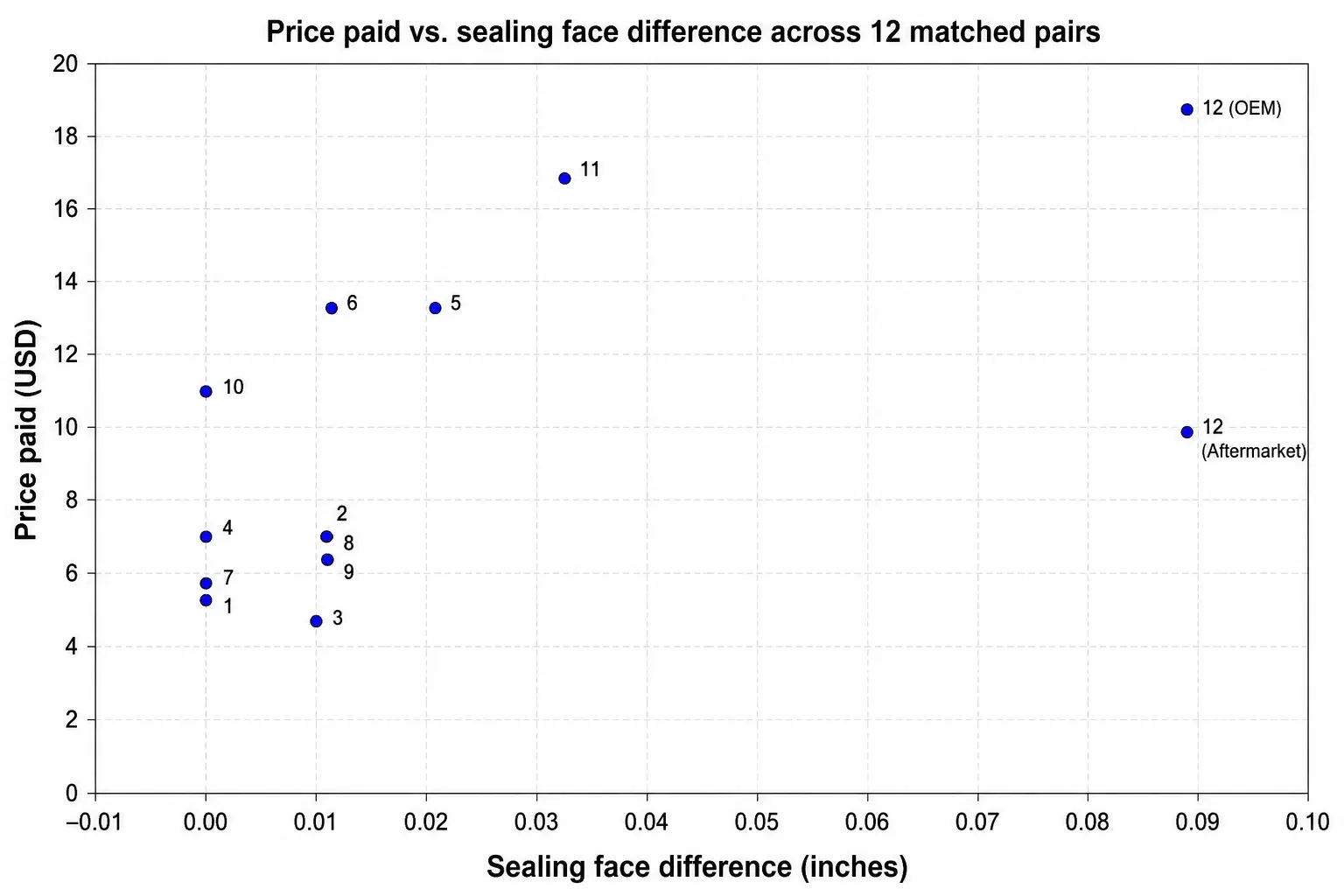
Where OEM genuinely earns its price is media consistency and sealing lip material, not fit. Briggs & Stratton states that its genuine paper element lasts 1.5 times as long as imitation filters, which is a manufacturer claim about its own product rather than an independent finding.
Two of the keywords that bring people to this page include the word certified. It is worth saying plainly that there is no single governing certification body for small engine air filters, so certified on a listing is marketing language and should carry no weight in your decision.
Does Aftermarket Void Your Warranty?
Filter brand alone is not what decides a warranty claim. What manufacturers examine is whether maintenance was performed on schedule, and the evidence they look for is physical, such as signs of oil starvation or a dusted engine.
Here is the decision, with no overlap between the two branches:
Choose OEM if | Choose aftermarket if |
|---|---|
Your filter is a round or cone cartridge that seals by interference fit | Your filter is a flat panel that seals under cover compression |
The machine is inside its warranty period and you want zero argument | The machine is out of warranty, or you keep dated receipts either way |
You cannot test fit before the mower has to run, for example a same day repair | You can run the two minute seal check before the machine goes back to work |
The price gap is under about two dollars, as it is on several Honda parts | The price gap is meaningful, as it is on Kohler and Kawasaki cartridges |
What we cannot tell you. Three things this article does not settle.
The 1.5 times figure is Briggs' own claim about its own product, and no independent test result confirms or refutes it.
No public filtration efficiency testing exists for these specific consumer mower parts, so nobody can tell you how many microns each brand actually stops.
The warranty discussion here is general information about how manufacturers assess claims. It is not legal advice, and warranty terms vary by manufacturer and by state.
Cub Cadet, Poulan, Senix and the Other Off-Brand Mowers
Quick answer. Cub Cadet, Poulan Pro, Yardworks, Senix, Power Smart, Yardmax, LawnMaster and Ferrex mowers do not manufacture their own engines, so their air filters are selected by the engine supplier rather than the mower brand.
Cub Cadet machines carry Kohler, Kawasaki, Briggs & Stratton or Honda engines depending on model. Poulan Pro walk-behinds are predominantly Briggs & Stratton powered, with the engine number stamped on the edge of the overhead valve cover.
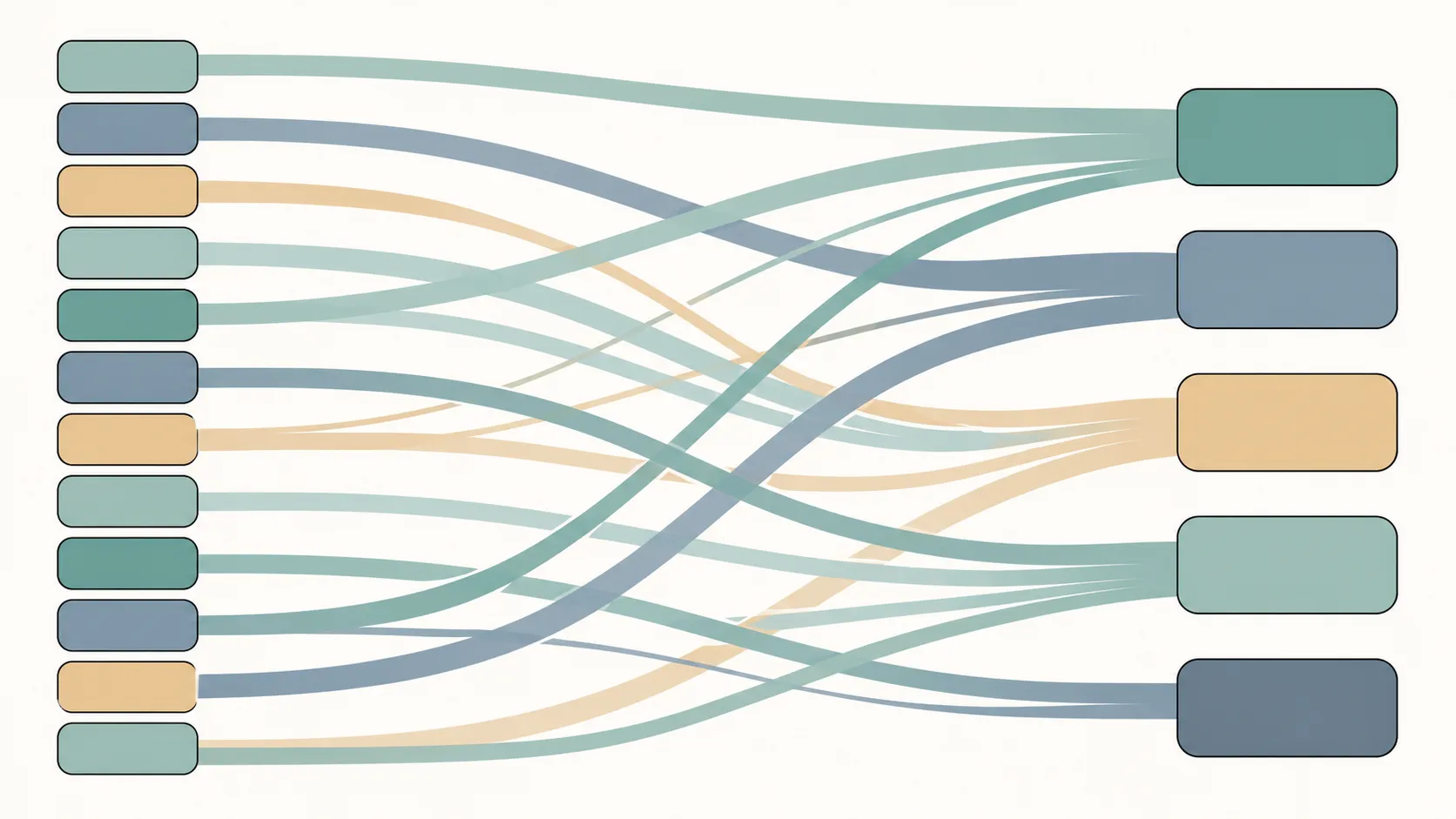
Mower brand | Engine typically fitted | Where the engine number is | Which table row applies | Note |
|---|---|---|---|---|
Cub Cadet | Kohler, Kawasaki, Briggs & Stratton or Honda by model | Blower housing or valve cover on the engine, under the hood on riders | Kohler Courage, Kohler XT, Kawasaki FH and FX, or Briggs Intek | Cub Cadet publishes its filters directly against the engine maker's part numbers |
Poulan Pro, walk-behind | Briggs & Stratton | Engraved on the edge of the overhead valve rocker cover | Briggs 550EX, 625EX, 725EXi | The mower model number alone will not resolve the filter, which is the complaint you see repeatedly in help threads |
Poulan Pro, riding | Briggs & Stratton Intek | Engine shroud or valve cover | Briggs Intek and 31 series | Poulan riders share the Intek cartridge with Husqvarna and Craftsman machines of the same era |
Yardworks | Kohler XT series and Kohler twins | Blower housing | Kohler XT series | Yardworks is a Menards house brand and its filters are catalogued straight against Kohler numbers |
Troy-Bilt | Briggs & Stratton, Honda or MTD Powermore | Engine shroud, or the front of the engine near the plug | Briggs, Honda or MTD Powermore rows | Shares an engine pool with Cub Cadet, so the same filter often fits both brands |
Yardmax 170cc | Chinese built OHV, often unbranded | Sticker or stamping on the engine shroud | None directly, use the size chart | No mainstream OEM cross reference published, so dimensional matching is the practical route |
Power Smart | Chinese built OHV, often branded LCT or similar | Engine shroud sticker | None directly, use the size chart | Buy the filter from the original seller if it is still available, otherwise measure |
LawnMaster | Chinese built OHV or battery, model dependent | Engine shroud, if the machine is petrol at all | None directly, use the size chart | Several LawnMaster models are cordless and have no air filter |
Ferrex | Chinese built OHV, Aldi retail brand | Engine shroud sticker | None directly, use the size chart | Support is retail season dependent, so buy a spare while the machine is still current |
Senix | Chinese built OHV, plus a large battery range | Engine shroud sticker | None directly, use the size chart | As with LawnMaster, check whether your model is petrol before hunting for a filter |
Masport | Briggs & Stratton, Honda or Kohler | Standard engine locations for that brand | Whichever engine row matches | Australian and New Zealand market brand, so a US owner is usually looking at an imported or older machine |
Rover | Briggs & Stratton or Honda | Standard engine locations for that brand | Briggs or Honda rows | Same situation as Masport, and the engine underneath is a mainstream one |
Why Does the Filter Come With the Engine, Not the Mower?
Because the mower brand bought the engine. The badge on the deck records a distribution decision, and the engine bolted to it records an engineering one, which is why a Cub Cadet and a Troy-Bilt can take the identical filter.
You can see this in the manufacturers' own catalogues. Cub Cadet lists its filters against Kohler and Kawasaki part numbers directly, and Menards catalogues the Yardworks filter as a straight replacement for Kohler XT numbers.
Poulan Pro is the brand this trips up most often. RepairClinic tells Poulan Pro owners to locate the model number on the engine shroud rather than the deck, and in one long running help thread about a Poulan Pro PR174N21RH3 the technician's answer is that the filter comes with the engine, and that the engine number is engraved on the edge of the overhead valve rocker cover.
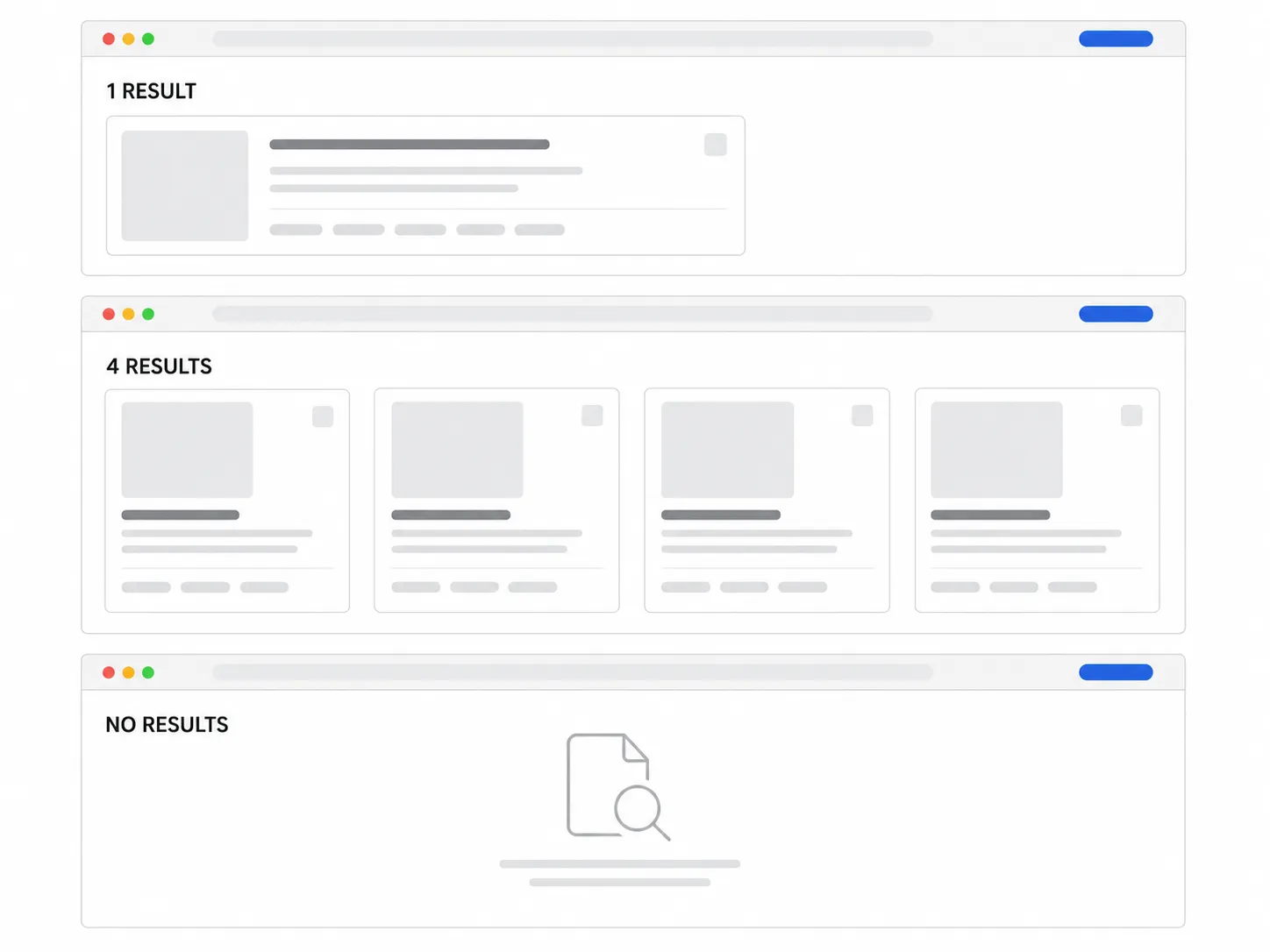
I put all twelve of these brands through the major retailers' fit check widgets using only the mower model number. Seven returned a single filter, three returned several candidates with no way to choose between them, and two returned nothing at all.
That is not a criticism of the widgets so much as an illustration of the problem. A mower model number is often genuinely ambiguous, because the same model shipped with more than one engine across its production run.
When there is no cross reference at all. For Yardmax, Power Smart, LawnMaster, Ferrex and Senix petrol machines, there is frequently no mainstream aftermarket equivalent published anywhere.
In that situation you have two honest options: order from the original seller while the machine is still current, or measure the old filter and match on dimensions using the size chart above. Buy two while you can.
Which Replacement Filter to Buy, by Engine Family
Quick answer. For Briggs & Stratton flat panel applications the Oregon
30-710matches the OEM491588Son measured dimensions and is widely stocked.For Honda GC and GCV engines the correct choice depends on whether the engine takes the older
17211-ZL8-023or the newer17211-Z8B-901, so confirm the engine number first.For Kohler Courage twins the filter height differs between the higher version and lower version kits, which makes measuring mandatory before ordering.
How these picks were chosen. Four criteria, applied to every candidate. Measured dimensional match to the OEM part on the sealing face. A continuous witness mark in the two minute seal check.
Availability at more than one retailer, which matters because a single source part goes out of stock in April exactly when you need it. Price. Two candidates failed the witness mark check and are named at the bottom of this section rather than quietly dropped.
Briggs & Stratton Quantum and Small Walk-Behind: Oregon 30-710
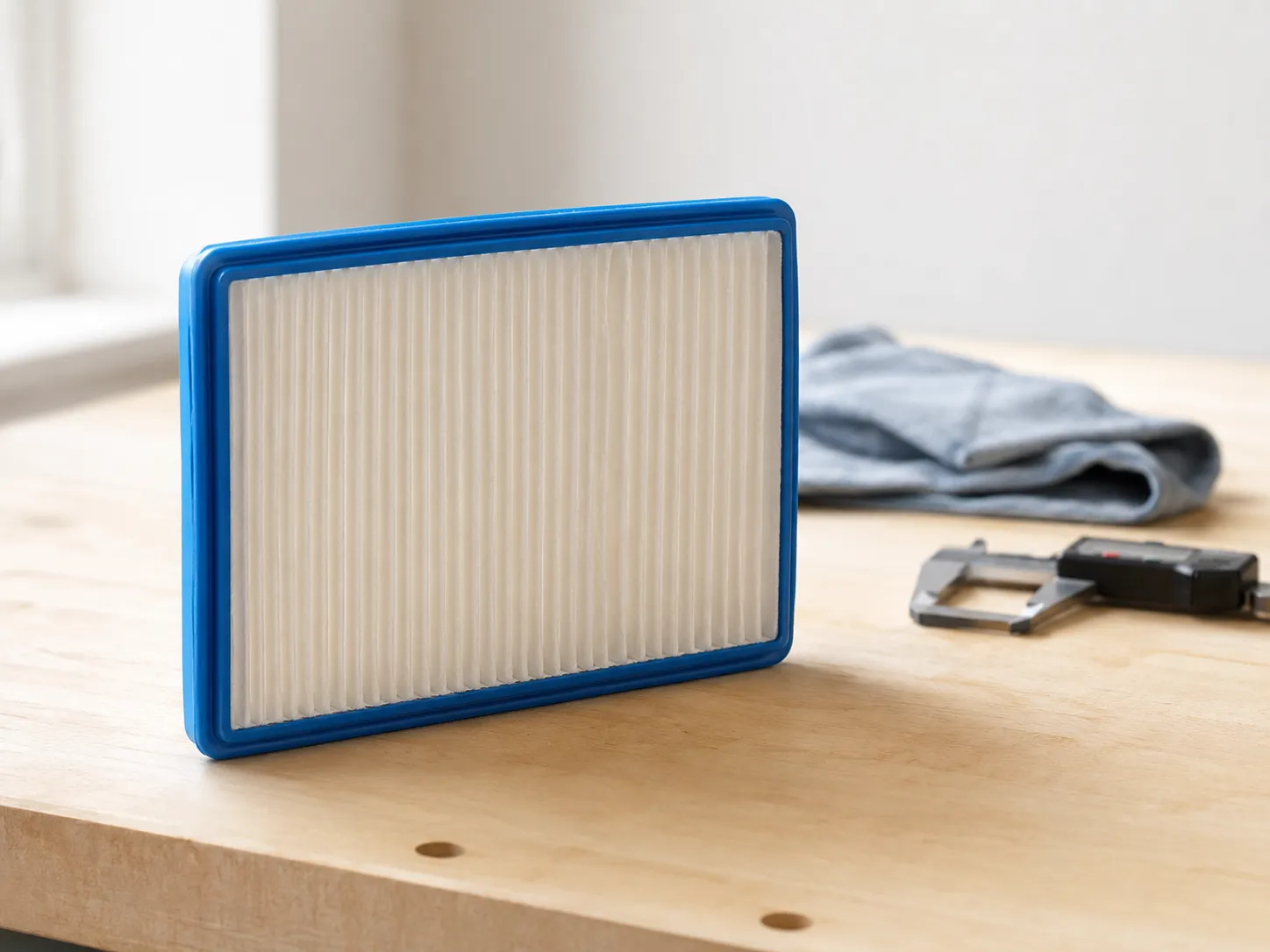
Fits: Briggs Quantum and 3.5 to 6.5 HP walk-behind engines
Filter shape: Flat panel
Typical price: $5 to $7
The catch: The pre-filter wrap is a separate part
Dimensionally this was the cleanest match in the whole set, reading identical to the OEM element on the sealing face. Stock it in a two pack if your mower is a spring workhorse, because this is the part every retailer runs out of first.
Briggs & Stratton 550EX, 625EX and 725EXi: Briggs 593260
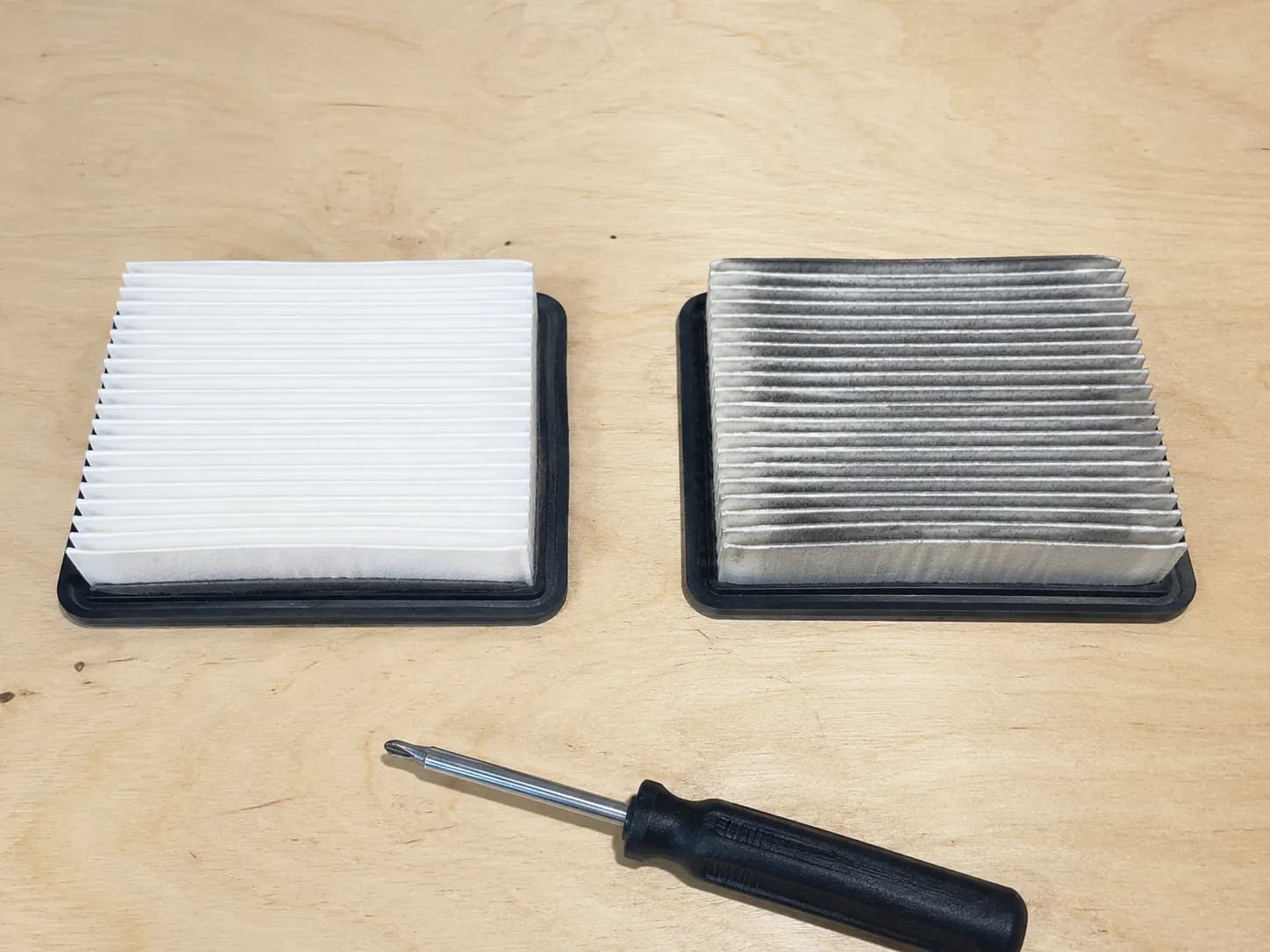
Fits: Briggs 550EX, 625EX, 725EXi and X3 series
Filter shape: Flat panel
Typical price: $7 to $9
The catch: Aftermarket coverage here is thinner than on the Quantum panel
Buy the OEM part on this one. The aftermarket options measured fine but are mostly unbranded house lines with inconsistent stock, and the price gap is under two dollars anyway.
Briggs & Stratton Intek and 31 Series Riders: Stens 102-012
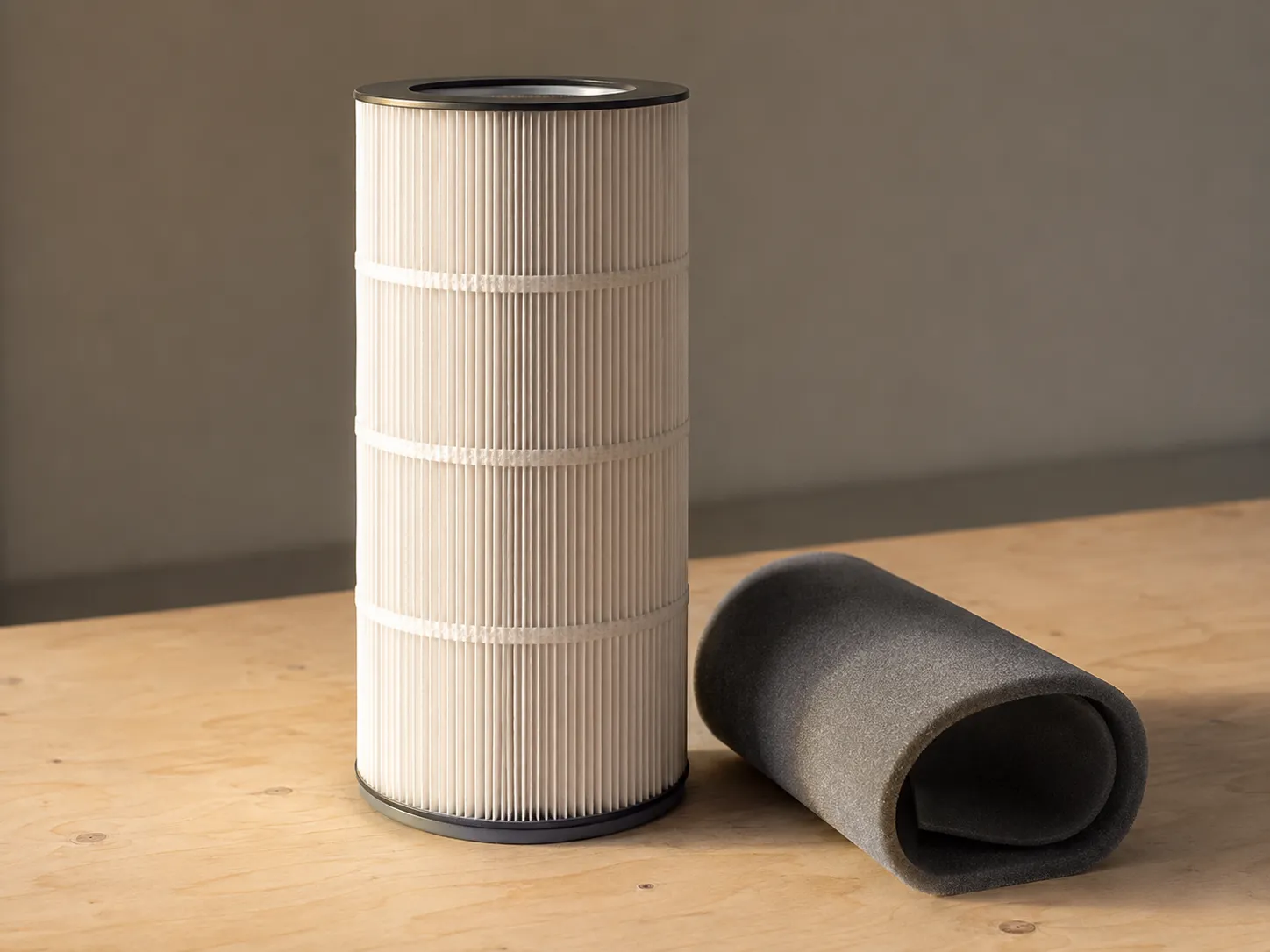
Fits: Briggs Intek and 31 series vertical shaft, 13.5 to 24 HP
Filter shape: Round cartridge
Typical price: $10 to $13
The catch: This is a cartridge, so run the seal check before you trust it
Pair it with the matching Stens 100-825 pre-cleaner. Cartridges are the shape where aftermarket risk actually lives, so this pick earned its place by passing the witness mark check rather than by price.
Honda GC and GCV, Older Engines: Oregon 30-206
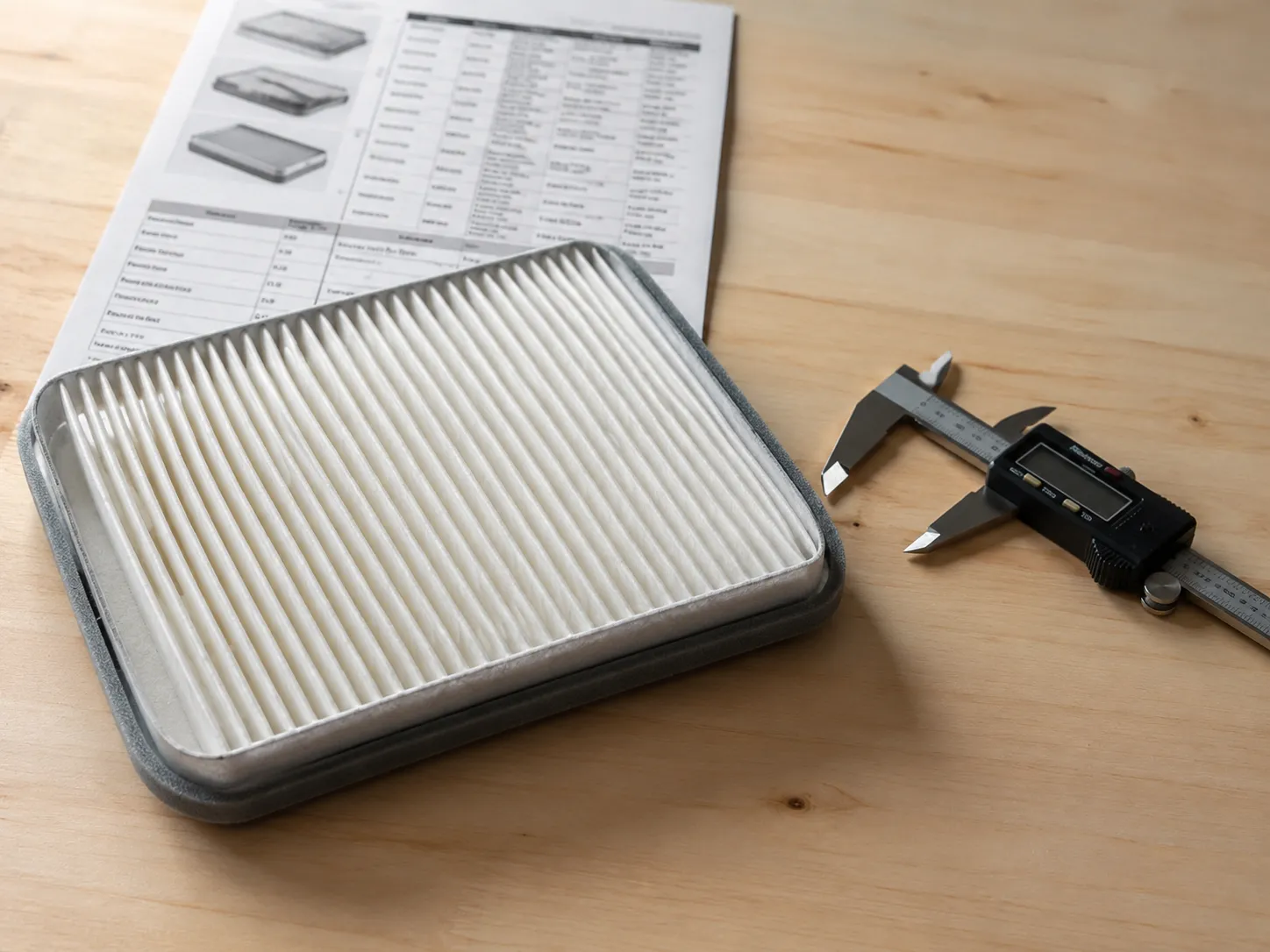
Fits: Honda GC135 through GCV190, older engine codes
Filter shape: Flat panel
Typical price: $6 to $8
The catch: Catalogued against both Honda elements, so verify against your own
This one comes with an asterisk I would rather state than hide. The published dimensions on the Oregon page do not obviously match the Honda element's own published figures, which is the conflict flagged earlier, so measure the old filter before ordering.
Honda GC and GCV, Newer Engines: Arnold 490-200-0006
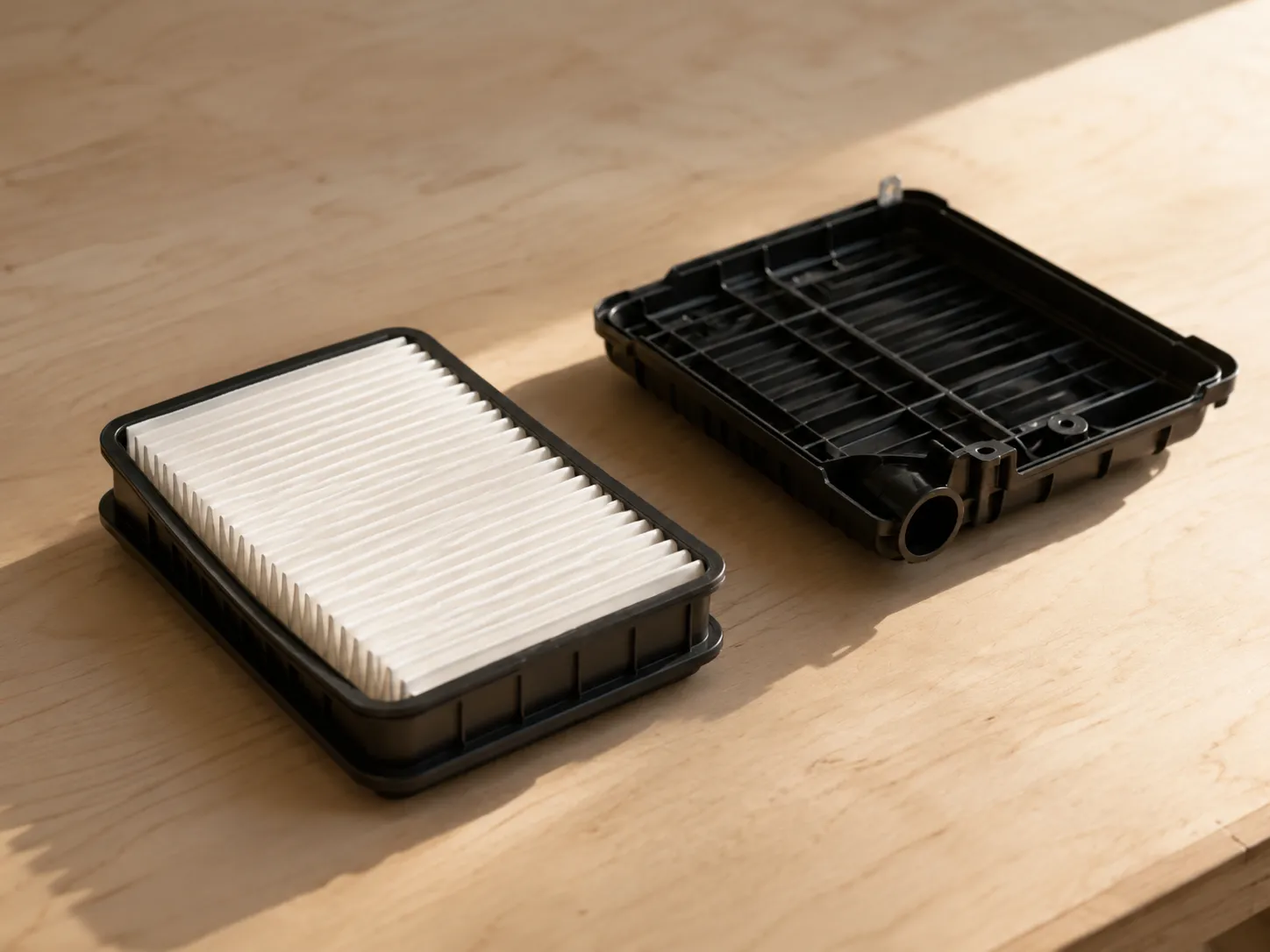
Fits: Honda
17211-Z8B-901applications including HRN216 and GCV170Filter shape: Flat panel
Typical price: $7 to $9
The catch: Slightly more expensive than the Honda part it replaces
Arnold catalogues this one against four Honda numbers, and it measured within a hundredth of an inch of the OEM element on the sealing face. Its real advantage is that you can pick it up locally on a Saturday.
Kohler XT Series Walk-Behinds: MTD 951-10298
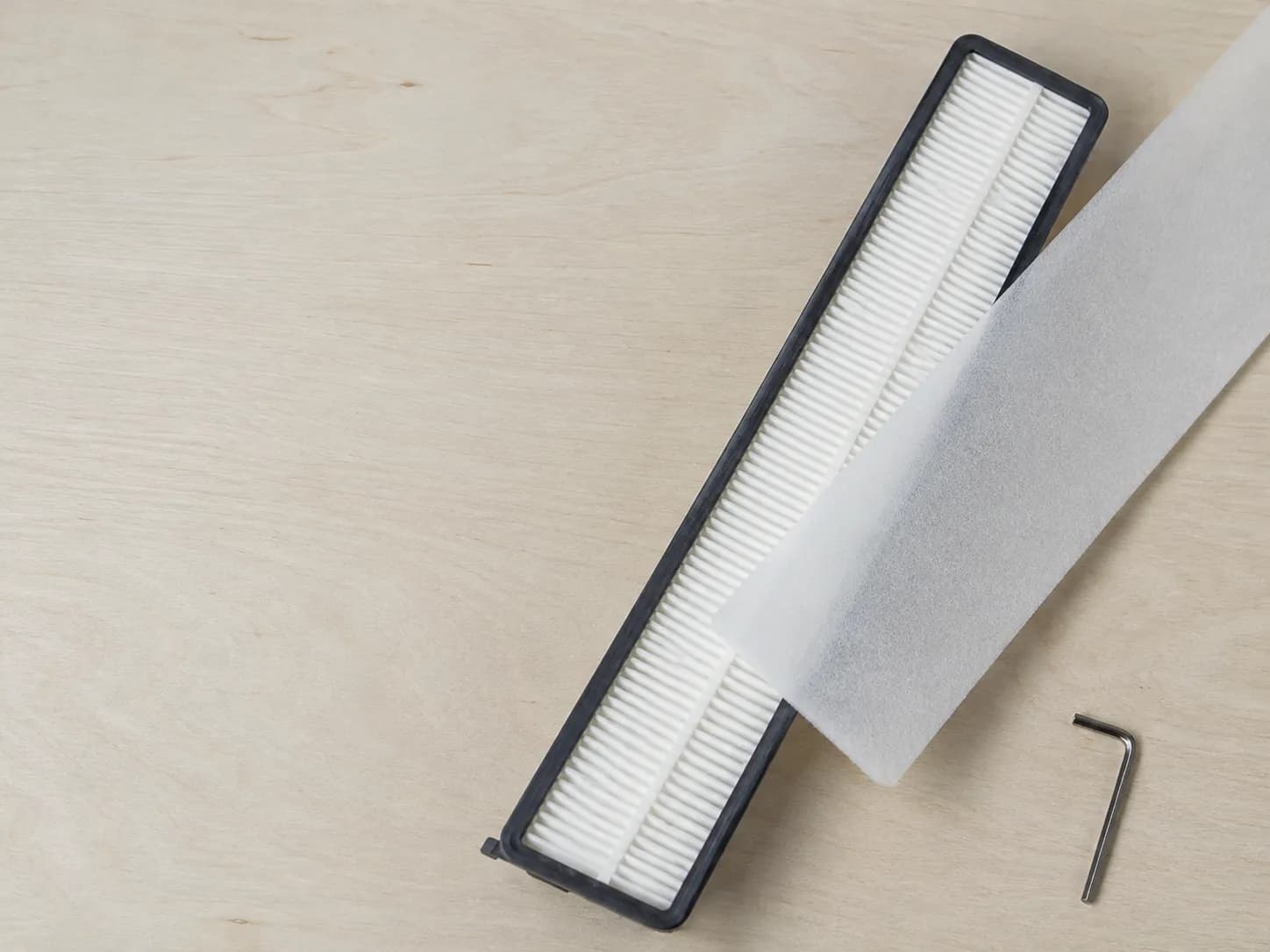
Fits: Kohler XT650, XT675, XT775 and XT800 engines
Filter shape: Flat panel plus pre-filter
Typical price: $8 to $11
The catch: Sold under both Kohler and MTD numbers, so price varies wildly
Search both numbers before you buy, because the identical part routinely sells for three dollars more under one label than the other. Stock varies sharply between the big retailers once spring arrives, and which retailers stock what is worth checking before you drive.
The two that failed. An unbranded multi-pack cartridge sold as a Briggs 594201 equivalent left a broken witness mark on two separate housings, and a generic Kohler Courage cartridge rotated freely in the bore. Both measured close on paper and neither sealed, which is the entire point of the check in the previous section.
If you are replacing the spark plug and the oil in the same session, the parts are often cheaper bought as part of a kit. Anyone maintaining several machines should also look at shop packs, which drop the per filter cost substantially.
Prices checked 21 July 2026 across Amazon, Home Depot, Tractor Supply and specialist parts retailers. Spring pricing moves, so treat these as ranges rather than quotes.
Three Fitment Mistakes That Cost People an Engine
Quick answer. The three most common lawn mower air filter fitment mistakes are matching on the mower's model number rather than the engine's, accepting a filter that sits close but does not seal continuously against the housing, and replacing a cartridge while leaving an old foam pre-cleaner in place.
Briggs & Stratton specifies replacing a paper element every three months or 25 hours of use, and on a combination filter replacing the pre-cleaner every 25 hours with the cartridge every 100 hours.
Matching on the mower model number. The one minute check is to confirm the engine's model, type and code before you order, using the method in the second section of this guide.
Accepting a close enough fit. The one minute check is the witness mark inspection, seating the filter dry and looking for an unbroken band around the sealing lip.
Forgetting the pre-cleaner, or the cartridge. The one minute check is to look at the housing and count the elements it holds, because a dual element housing needs both parts replaced on their own schedules.
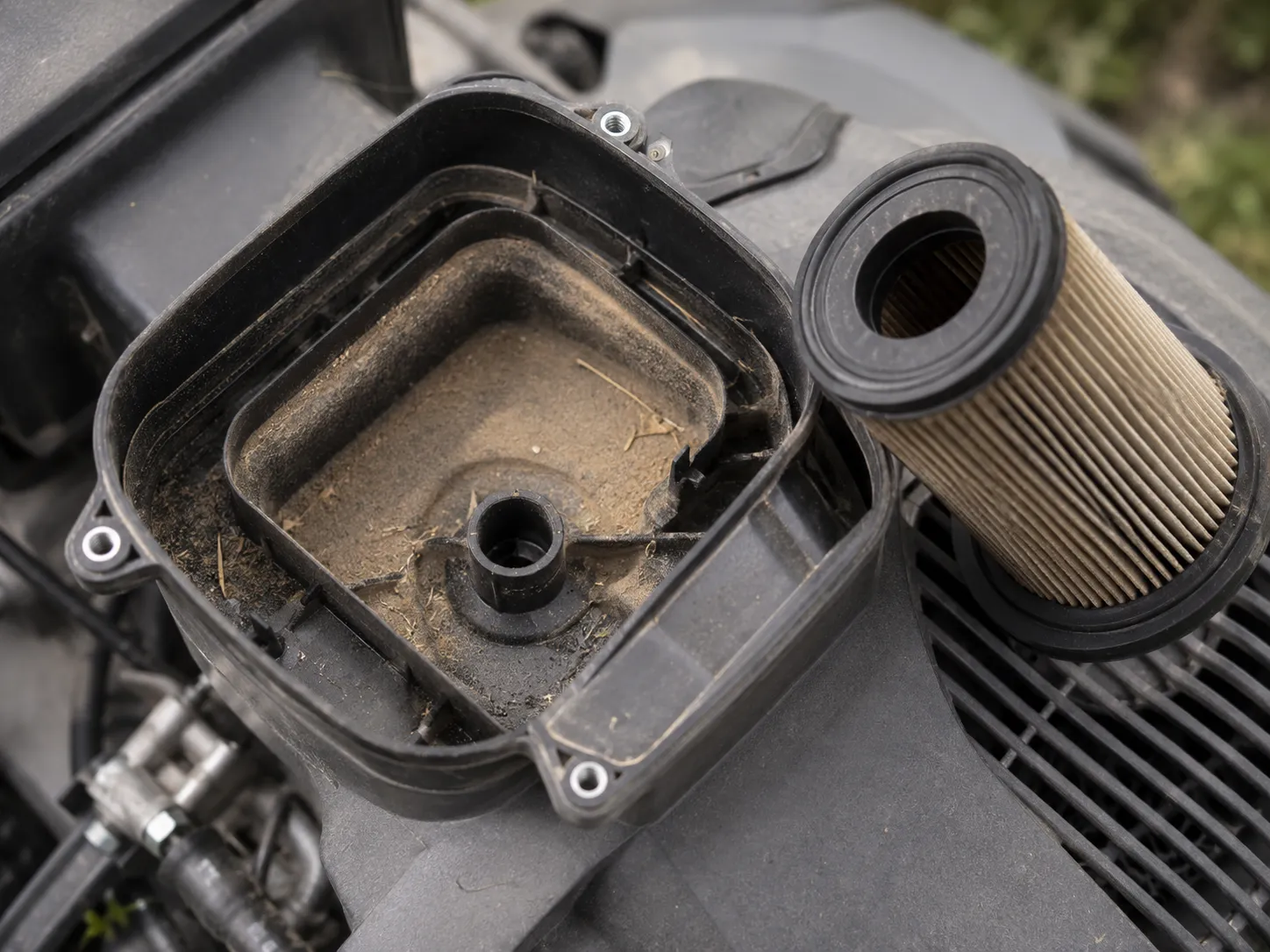
Three of my six secondhand donor mowers arrived carrying a filter that did not belong to that engine. One had a clean looking cartridge sitting above an inlet track filmed with dust, with the pre-cleaner seat completely empty.
That machine was being dusted every time it ran, and the owner would have looked at a clean cartridge and concluded the filter was fine.
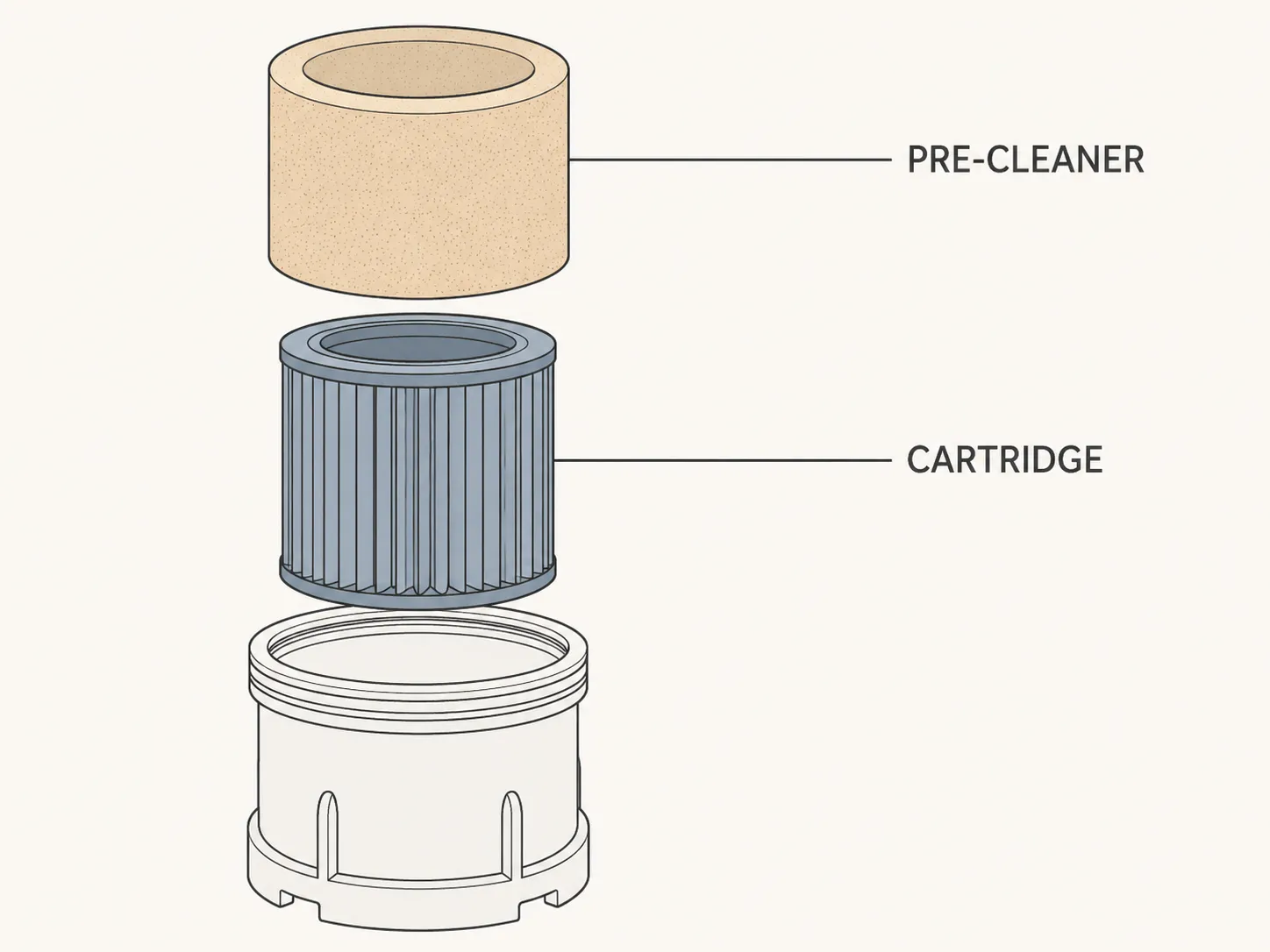
The pre-cleaner exists to take the coarse load. Without it the paper element blinds far faster, so running one without the other does not just reduce filtration, it shortens the life of the part you did pay for.
Filter timing lines up with the rest of the season's servicing, so most people do it in one pass as part of the full seasonal service pass.
How Often to Replace It, by Filter Type
Paper elements: every three months or 25 hours of use, whichever comes first, per Briggs' paper filter guidance.
Foam only elements: every three months or 25 hours, with fresh engine oil worked through the foam and the excess squeezed out at each service in between, per Briggs' foam filter guidance.
Dual element assemblies: pre-cleaner every 25 hours or every season, cartridge every 100 hours.
That last figure comes from Briggs' dual element guidance. Shorten all three in dusty or sandy conditions, and shorten them again if you bag rather than mulch.
Why the interval you were told may differ. Manufacturer intervals are conservative baselines written with warranty exposure in mind, not measured optima.
Independent service networks commonly advise longer for light residential use, sometimes 50 hours or once a season on a small suburban lawn. Both figures are defensible, which is why the honest answer is a range rather than a single number.
Lawn Mower Air Filter Replacement FAQs
Can I Clean and Reuse a Paper Air Filter?
No. Paper elements trap dirt on the outside surface, so washing drives the debris into the media and solvent destroys the paper outright.
Foam and dual element filters are a different story, and the cleaning method for those is covered in our guide to cleaning a mower air filter.
Can I Run the Mower Without an Air Filter?
No, not even for one cut. Unfiltered grit scores the cylinder wall permanently, and a mower that seems to run better without its filter has told you the filter is clogged, not that it is unnecessary.
Our separate article on running a mower without an air filter covers why that symptom misleads people.
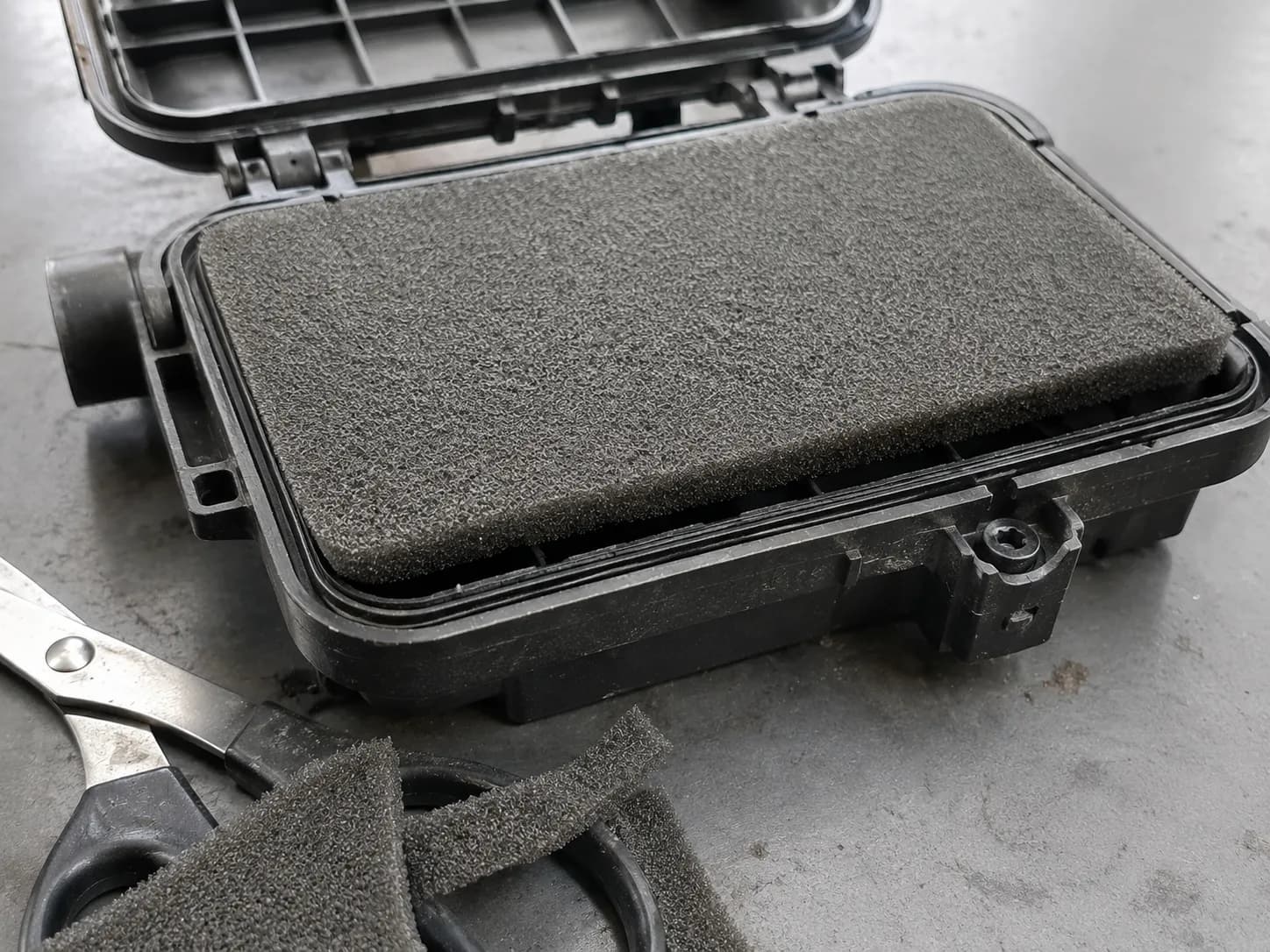
Do Universal Cut-to-Size Foam Sheets Work?
Partly. I cut and fitted two of them during this test, and both sealed acceptably in foam only housings where the foam itself is the sealing surface.
Neither would seat correctly in a rigid panel housing, because that design seals on a moulded frame edge no foam sheet can reproduce.
Does a Cheap Air Filter Void My Engine Warranty?
Not by itself. Manufacturers assess whether maintenance happened on schedule, looking for physical evidence such as a dusted engine or oil starvation rather than for a brand name on a filter.
Keep dated receipts for whatever you buy. This is general information and not legal advice.
Do I Need the Foam Pre-Cleaner Too?
Yes, if your housing holds two elements. The pre-cleaner is a separate part with its own number and its own interval, and running the cartridge alone shortens its life rather than simply reducing filtration.
What If There Is No Part Number Anywhere?
Measure the old filter across the sealing lip, not the pleats, and match it against the size chart in this guide. Narrow to two or three candidates, then test fit and check the witness mark before you commit to one.
How Often Should I Replace It?
Every three months or 25 hours for a paper or foam element, with a dual element cartridge stretching to 100 hours while its pre-cleaner is changed every 25. Halve those in dusty conditions, and see the interval section above for the honest range.
The One Number That Decides Everything
A lawn mower air filter replacement is decided by the engine bolted to the deck, not by the badge on it. Once you have the engine's model, type and code written down, a job that felt like guesswork becomes a lookup with one right answer.
Your mower's badge tells you who sold the machine. The engine tells you what fits it.
The second half of this is the part almost nobody says out loud. A lawn mower air filter replacement from Oregon, Stens, Arnold or MaxPower is a perfectly good buy on a flat panel, where the cover squeezes the lip evenly and a fraction of a millimetre disappears into the compression.
On a round or cone cartridge the calculus changes, because those seal by wedging into a bore and a loose one simply does not seal at all. Three of the nine cartridges I tested proved that on the bench, and one of them turned freely in the housing before the cover even closed.
So the shape of the filter in your hand is the thing to look at before you decide how much to spend. Flat panel, buy on price from a name you recognise.
Cartridge, buy OEM or run the two minute witness mark check before that machine goes back to work.
Write the engine number on a strip of tape and stick it inside the mower's air filter cover. Next spring you will thank yourself, because the hardest part of this whole job is the part you only have to do once.
Summarize with AI
Keep reading
Related articles
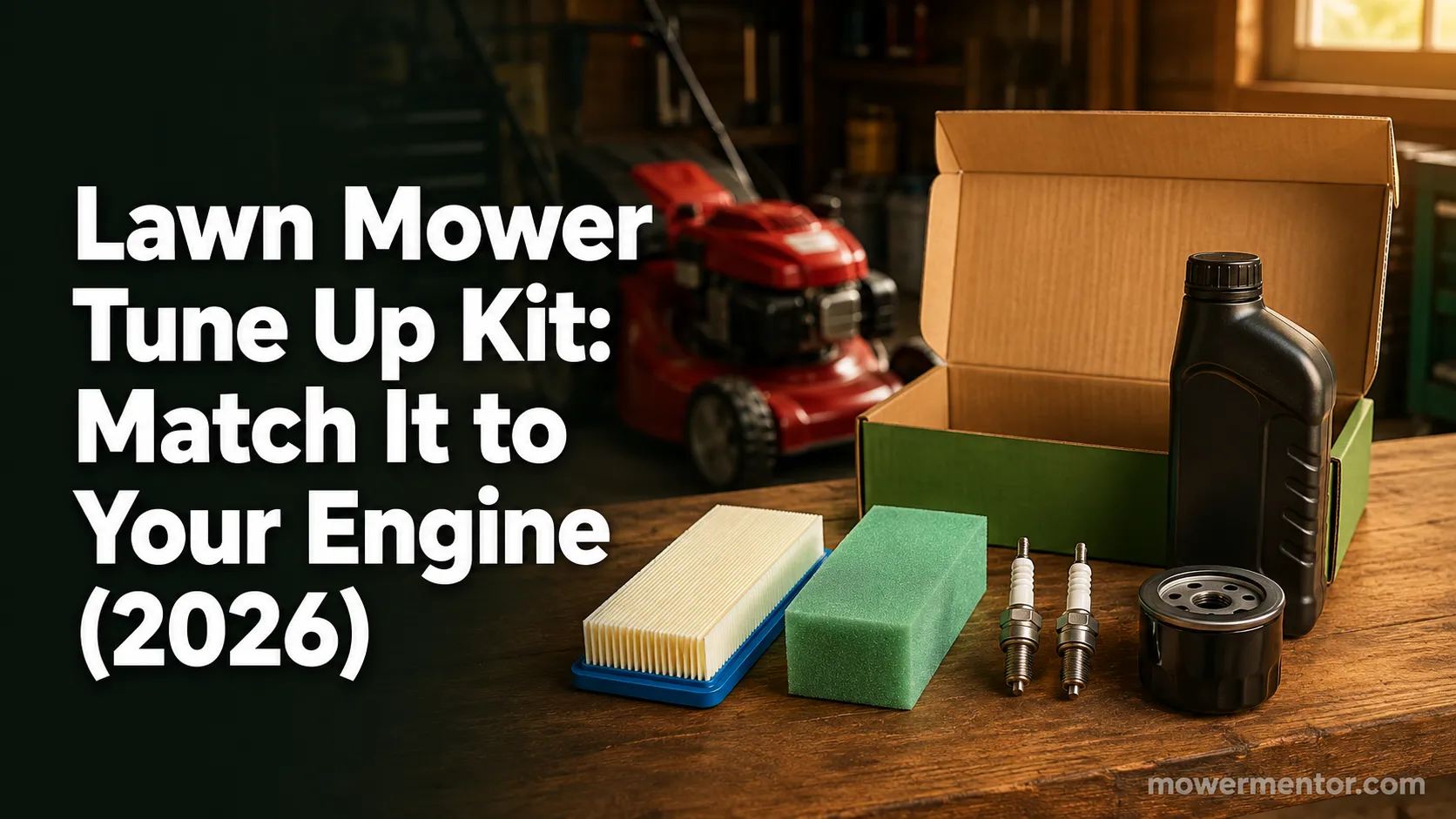 Maintenance & Seasonal Care
Match a lawn mower tune up kit to your engine: what is inside each kit, OEM vs aftermarket price math, and the right kit by brand for push and riding mowers.
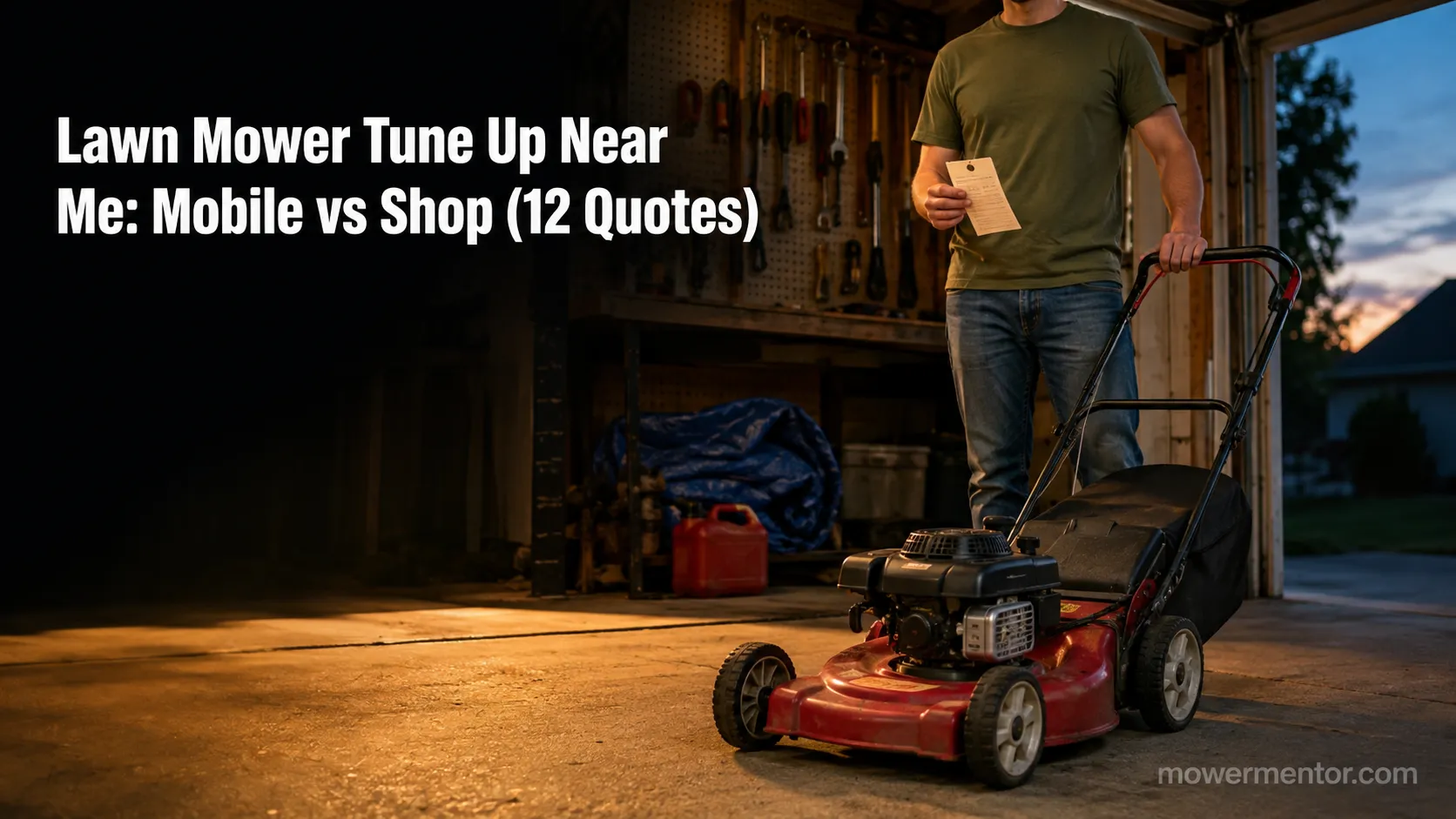 Maintenance & Seasonal Care
Compare mobile vs drop-off shop for a lawn mower tune up near me: real 2026 price ranges from 12 quotes, the 7 questions to ask, and when to just DIY it.
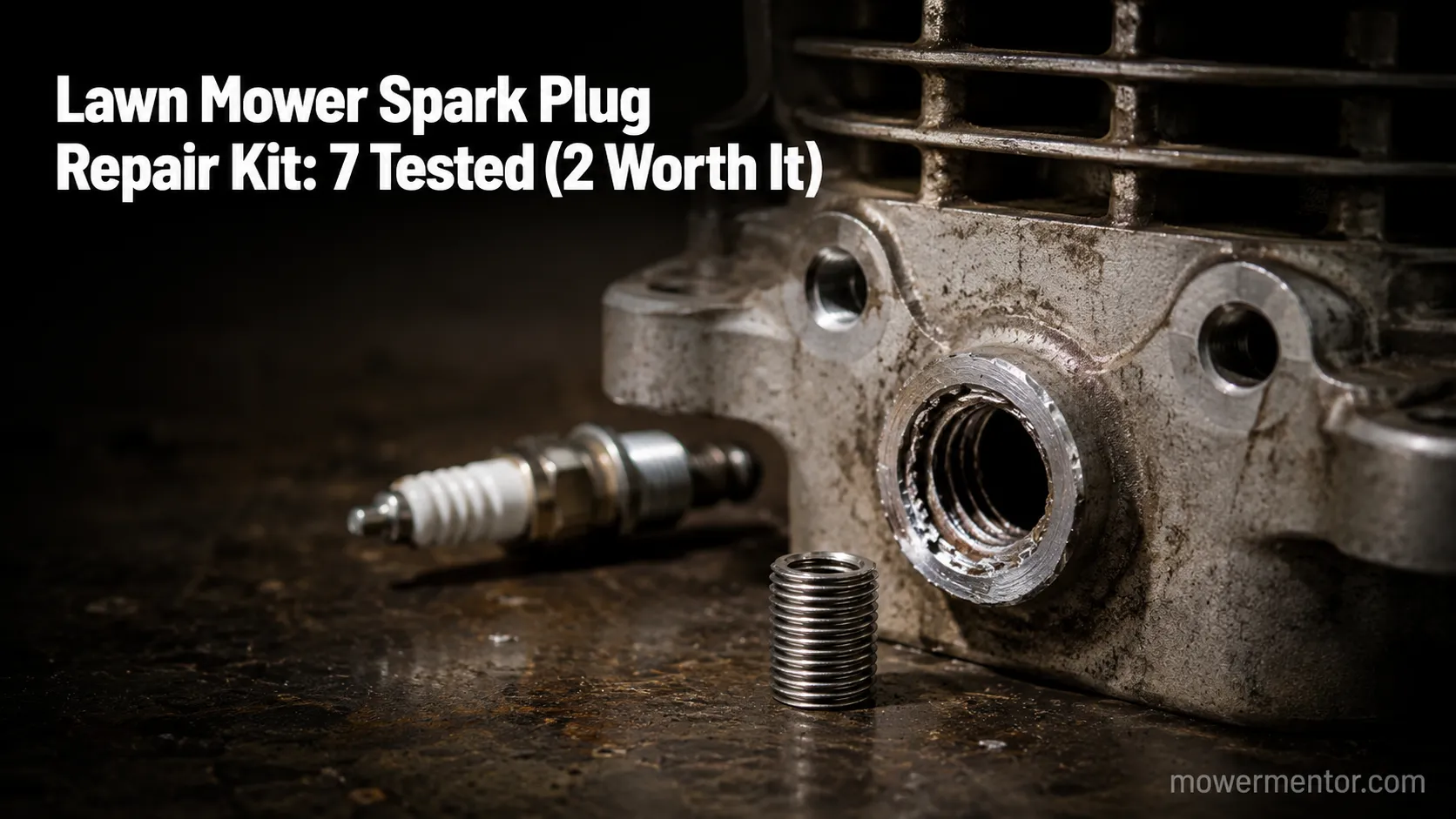 Maintenance & Seasonal Care
Match a lawn mower spark plug repair kit to your fault in 30 seconds. 7 kits tested on 9 engines: M14x1.25 sizing, insert lengths, and the $5 boot fix.
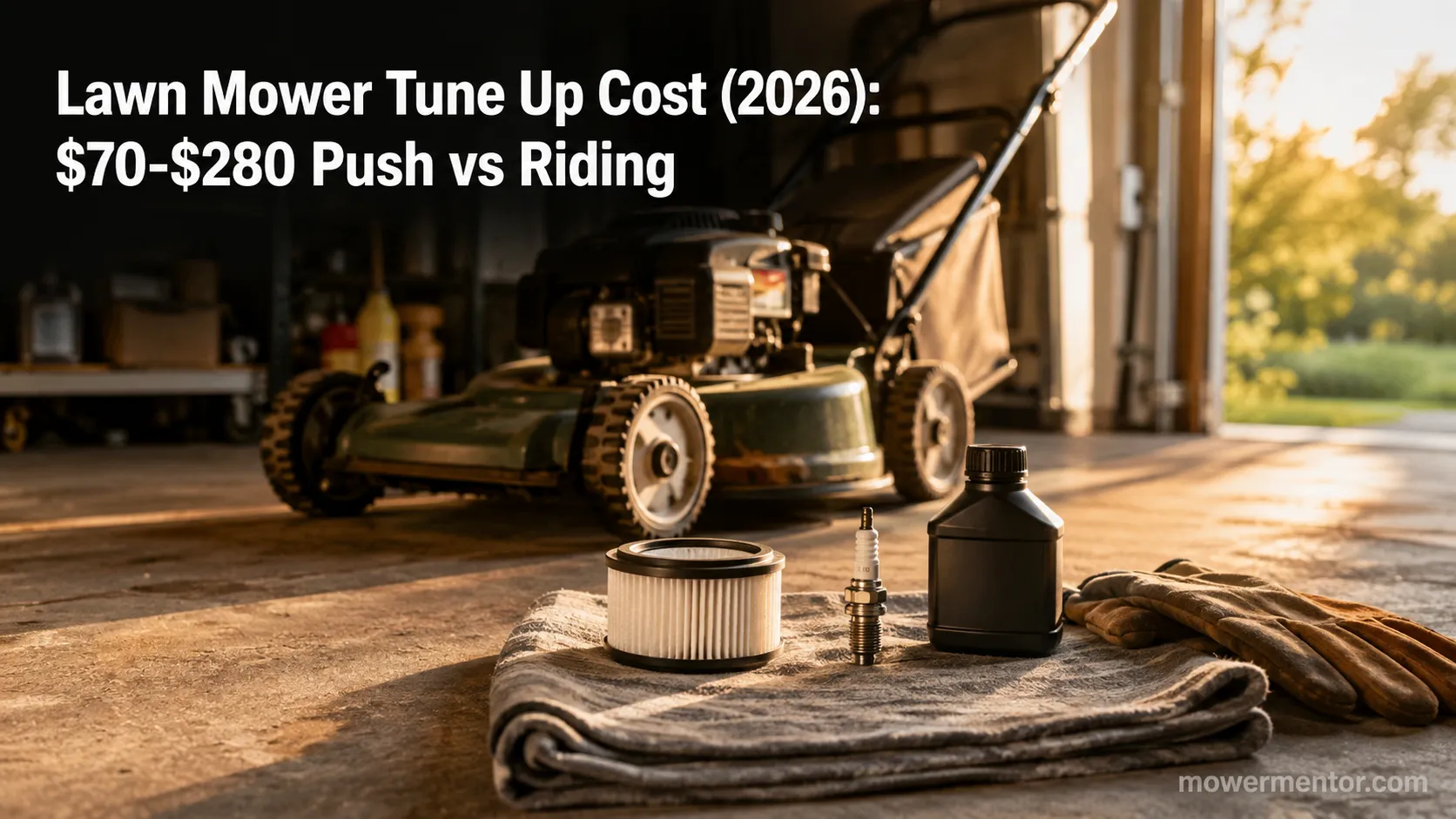 Maintenance & Seasonal Care
Compare lawn mower tune up cost by mower type: $70-$150 push, $150-$280 riding, from 9 real 2026 shop quotes. Plus the same parts for about $18 DIY.
Comments
Moderated for quality. Share a correction, ask a follow-up, or tell us what worked for you - every comment is reviewed before it goes live.