
Briggs & Stratton Air Filter by Engine (+ OEM vs Generic)
Match the right Briggs & Stratton air filter to your engine model number, with a by-series part table, OEM-vs-generic verdict and prices.
Written by Sam RourkeReviewed by Wade Coburn
Last updated on July 2, 2026
When you buy through links on our site, we may earn an affiliate commission (at no extra charge), which we use to fund new product tests. Learn more.
Summarize with AI
There is no single Briggs & Stratton lawn mower air filter. The correct one is decided by your engine's model number, not by your mower's brand or its horsepower.
Two engines that look identical can take completely different filters, and once you have the right part, a hands-on teardown reveals what the catalog never will. The premium genuine filter is not automatically the smartest buy.
This guide hands you the rule first, then the exact part numbers for your engine series. After that comes an honest verdict on genuine versus generic.
The 30-Second Answer: Find Your Filter by Engine
The right Briggs & Stratton air filter is set by your engine's model-type-code, the number stamped into the engine itself, not by horsepower. A 6.5 HP Quantum push mower takes the flat-panel 491588S, while a 14 to 24 HP Intek V-Twin takes the 499486S with a separate foam pre-cleaner, so the same power rating points to entirely different parts.
Horsepower alone will not tell you which filter fits, because one power rating spans several housings and shapes. Find your model number, match it in the table below, then decide between genuine and generic on the merits.
Here is the whole job in three steps:
Read the engine model number off the stamped tag.
Match that series in the finder table to get the exact part number.
Choose a genuine Briggs filter or a vetted aftermarket equivalent using the OEM-versus-generic verdict below.
One caution before you buy anything. The catalog grids in your search results assume you already know your part number, which is exactly the step most owners are missing.
Decode Your Briggs Model Number First (It's the Key to Everything)
Every Briggs & Stratton engine carries a model number stamped into metal as three segments: Model, Type, and Code. According to Briggs & Stratton's model-number guide, that number runs 6, 7, 11, or 12 characters, and a 9-character number needs a leading zero when you enter it online.
That number, not the Craftsman or Murray badge on the deck, is what maps to your filter. Reading it correctly is the single step that ends the guesswork.
Finding the filter is one piece of the bigger seasonal job, and it slots into your annual mower tune-up alongside the oil and spark plug. Get the air filter right and the rest of the service goes faster.
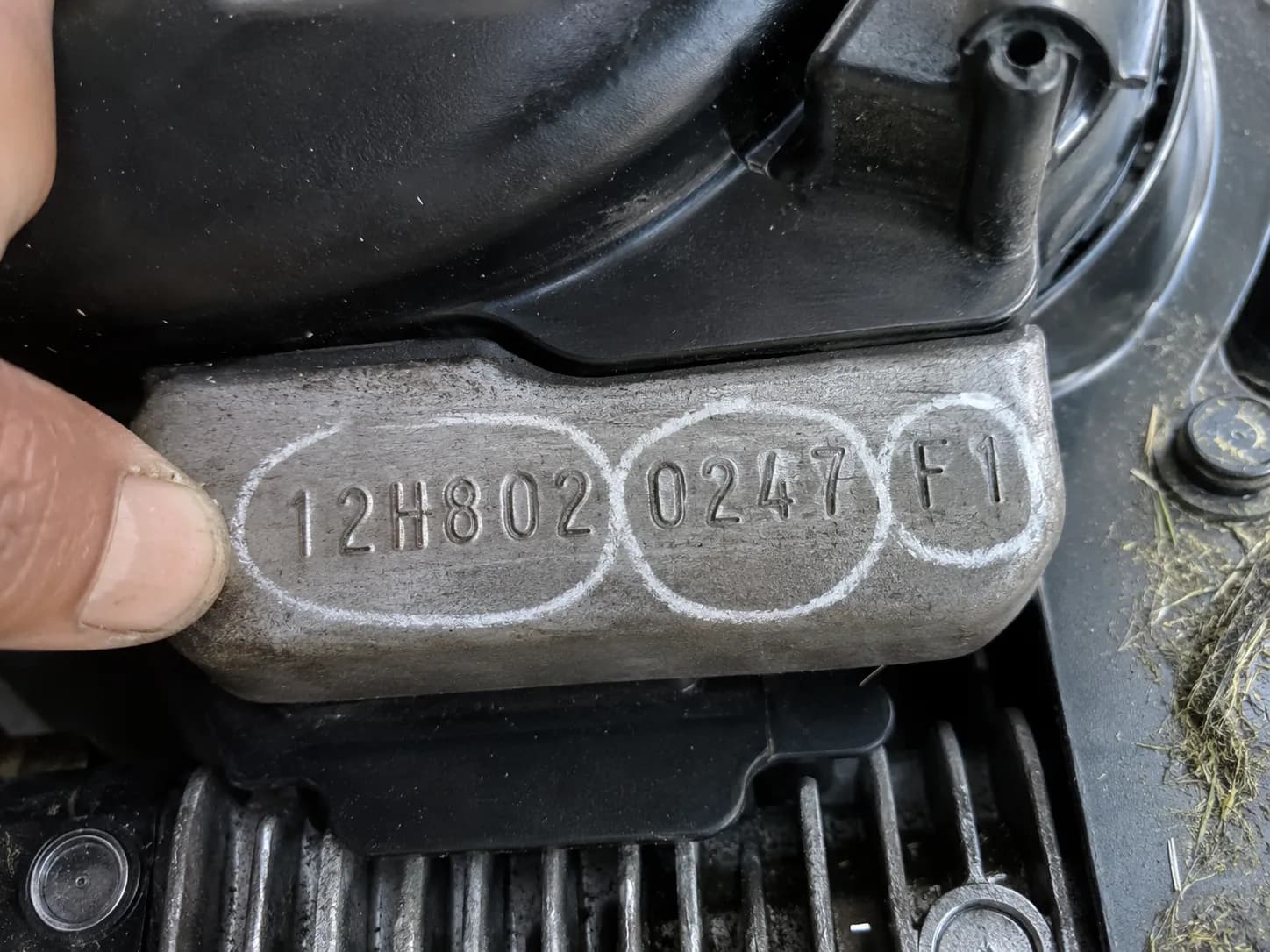
To find your number, check these locations in order:
The top of the valve cover on most vertical-shaft push mower engines.
A stamped metal plate between the overhead valve cover and the air filter.
The blower housing or shroud, the plastic cover that directs cooling air.
Briggs confirms the number is stamped directly into the metal, though where it's stamped varies by engine family. On my own push mower the tag hid under the blower shroud, and I only spotted it after wiping a season of grass dust off the casting.
If your tag is worn smooth and unreadable, identify the filter by its shape and material instead. Pull the spark-plug lead off the plug before you reach around the engine, so a stray bump cannot kick it over.
The Briggs & Stratton Air Filter Finder: Part Numbers by Engine Series
This is the table the manufacturer's catalog leaves out: your engine series mapped to its exact genuine part number, media type, and common cross-references. Quantum and 625 to 675 Series engines use the 491588S flat-panel paper filter, while 14 to 24 HP Intek V-Twins use the 499486S cartridge paired with the 273638S foam pre-cleaner.
Read your series from the model number you just found, then read straight across. Every part number below was verified against the manufacturer and a major retailer at the time of writing.
Engine series / HP | Genuine part # | DIY pack # | Media type | Pre-cleaner? | Common cross-references |
|---|---|---|---|---|---|
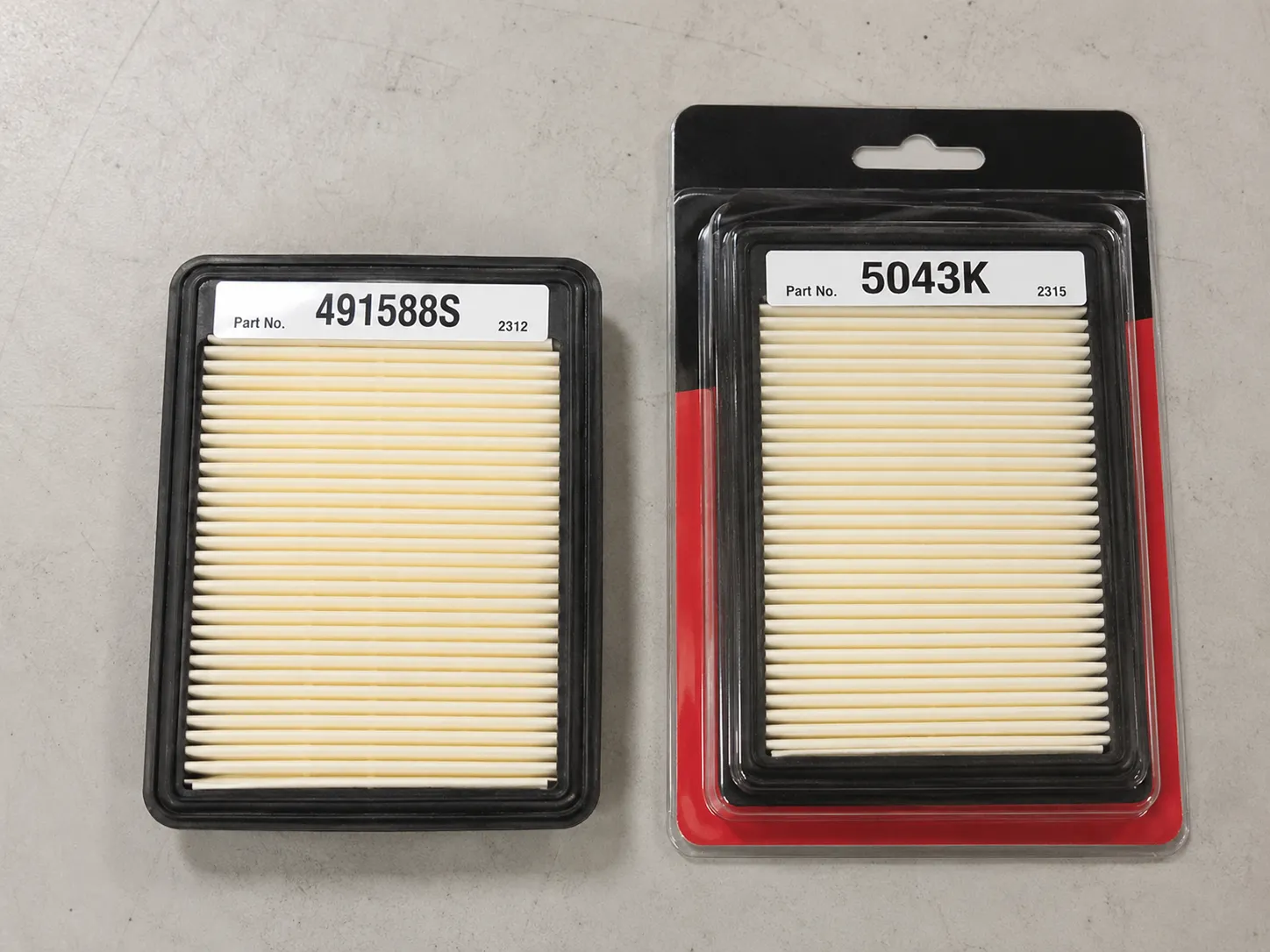
Quantum, 625–675 Series, 3.5–6.75 HP | 491588S | 5043K | Paper, flat panel | Optional (491435S) | Rotary 491588, aftermarket 399959, Toro 119-1909 |
550e / 550ex / 625ex / 725EXi | 593260 | 5432K | Paper, oval | No | Powercare PCR4404 (also 5432, 798452) |
450–600 Series, 3.5–4.5 HP (Classic, Sprint, Quattro) | 698369 | n/a | Foam element | Foam is primary | Generic foam 30-961 (vertical) |
Intek V-Twin, 14–24 HP | 499486S | 5063K | Paper + foam pre-cleaner | Yes (273638S) | Oregon 30-032, John Deere GY20575, Craftsman 33926, Husqvarna 531307044 |
Intek OHV, 14–17 HP | 794422 | 5077K | Paper + pre-cleaner | Yes (697015) | Replaces 794410, 697014, 697634, 698083, 797008 |
Intek V-Twin cartridge (cyclonic) | 798897 | n/a | Paper, cyclonic | Varies by build | Rotary equivalents |
The 5043K you see at the store is simply the 491588S filter in a single-unit DIY pack, which trips up shoppers who think they are two different parts. When I cross-checked the box against the diagram on Briggs & Stratton's part listing, the element inside was identical.
Pleated-paper flat panels, oval filters, and cyclonic cartridges are not interchangeable even at the same horsepower. Match the series, not the power rating.
The aftermarket numbers in the right column matter for value shoppers. If you want a generic sizing method that works on any brand, our guide to decode any engine's filter size covers measuring and cross-referencing from scratch.
For the Intek V-Twin filter, Oregon's cross-reference listing confirms the John Deere, Craftsman, and Husqvarna equivalents. Match those numbers and you can buy the same filter under several brand labels.
If your engine predates 1965 or is missing from this table, identify the filter by its shape and material, then confirm against the parts lookup tool. Part numbers can be superseded over time, so verify before you order.
Foam vs. Paper vs. Dual-Element: Which Type Is Yours?
Briggs & Stratton engines use one of three air filter types, and knowing which you have decides both the part you buy and how you service it. According to Briggs & Stratton's service guide, there are paper, foam, and dual-element systems, and a genuine paper element is rated for 1.5 times the life of an imitation filter.
The rule that saves engines is simple: you replace paper, but you wash and oil foam. Get that backward and you will damage the filter or the engine.
Filter type | How to identify it | Service action | Interval |
|---|---|---|---|
Paper cartridge | Pleated cream paper in a frame | Replace, never wash | Every 100 hours with a pre-cleaner, or 25 hours without |
Foam only | Spongy charcoal-gray element | Clean and re-oil | Every 25 hours or 3 months |
Dual element | Paper cartridge wrapped in a foam pre-cleaner | Replace paper, clean and oil the foam | Pre-cleaner every 25 hours, cartridge every 100 hours |
The pre-cleaner is the part owners overlook. That wrap-around foam sleeve catches the coarse dust first, which lets the expensive paper cartridge last far longer than it would alone.
A foam-only filter must be oiled to work, because dry foam traps only the largest grit. The fine abrasive dust goes straight through a dry element.
Do not wash a paper filter. I rinsed the paper cartridge on a Quantum push mower to save a few dollars, and it sagged and tore as it dried until I gave up and replaced it.
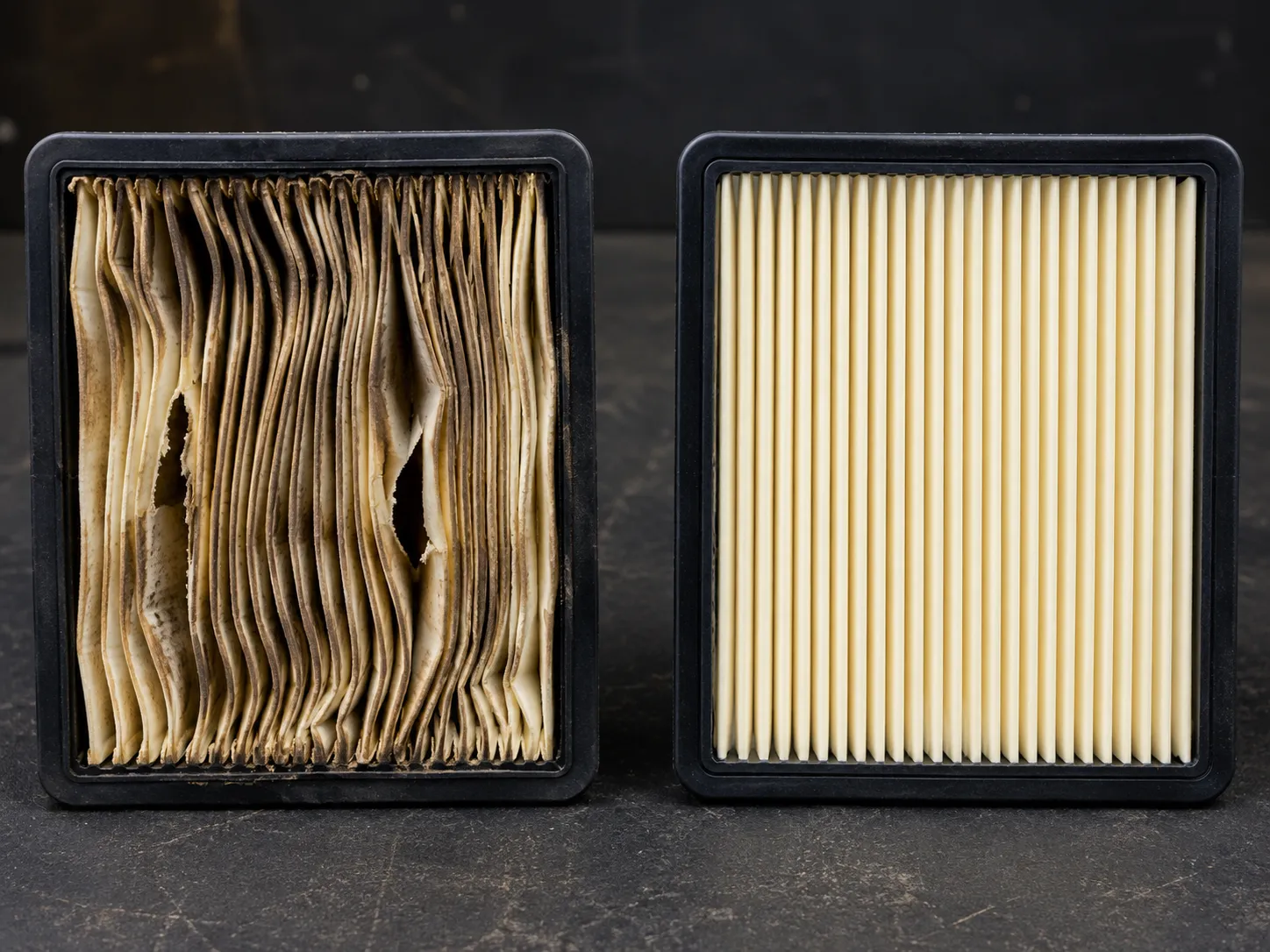
Once you know which type you have, the full procedure to clean or replace your Briggs filter walks through every variant step by step. Service intervals are guidance, and dusty conditions shorten every one of them.
Cover, Housing & Assembly: Don't Order the Wrong Part
Many returns happen because an owner orders the filter element when the real problem is the cover or the housing. The Briggs & Stratton air-cleaner system has four parts that get confused: the element, the cover, the base or housing it seals against, and the foam pre-cleaner.
A cracked or warped housing lets unfiltered air bypass even a brand-new filter. The right purchase is sometimes the whole assembly, not just the element.
Cover style is a quick clue to your series. Flat-panel and oval covers usually sit on smaller vertical-shaft engines, while larger canister housings show up on the V-Twin riding engines.
Some covers clip on, others use a single screw or wing-nut. That air cleaner cover screw is itself a common small-part order.
Watch for these common mistakes:
Ordering the element when the cover is cracked or the latch is broken.
Buying the wrong housing shape because two engines shared the same horsepower.
Forgetting the cover screw or wing-nut that holds a clip-free cover shut.
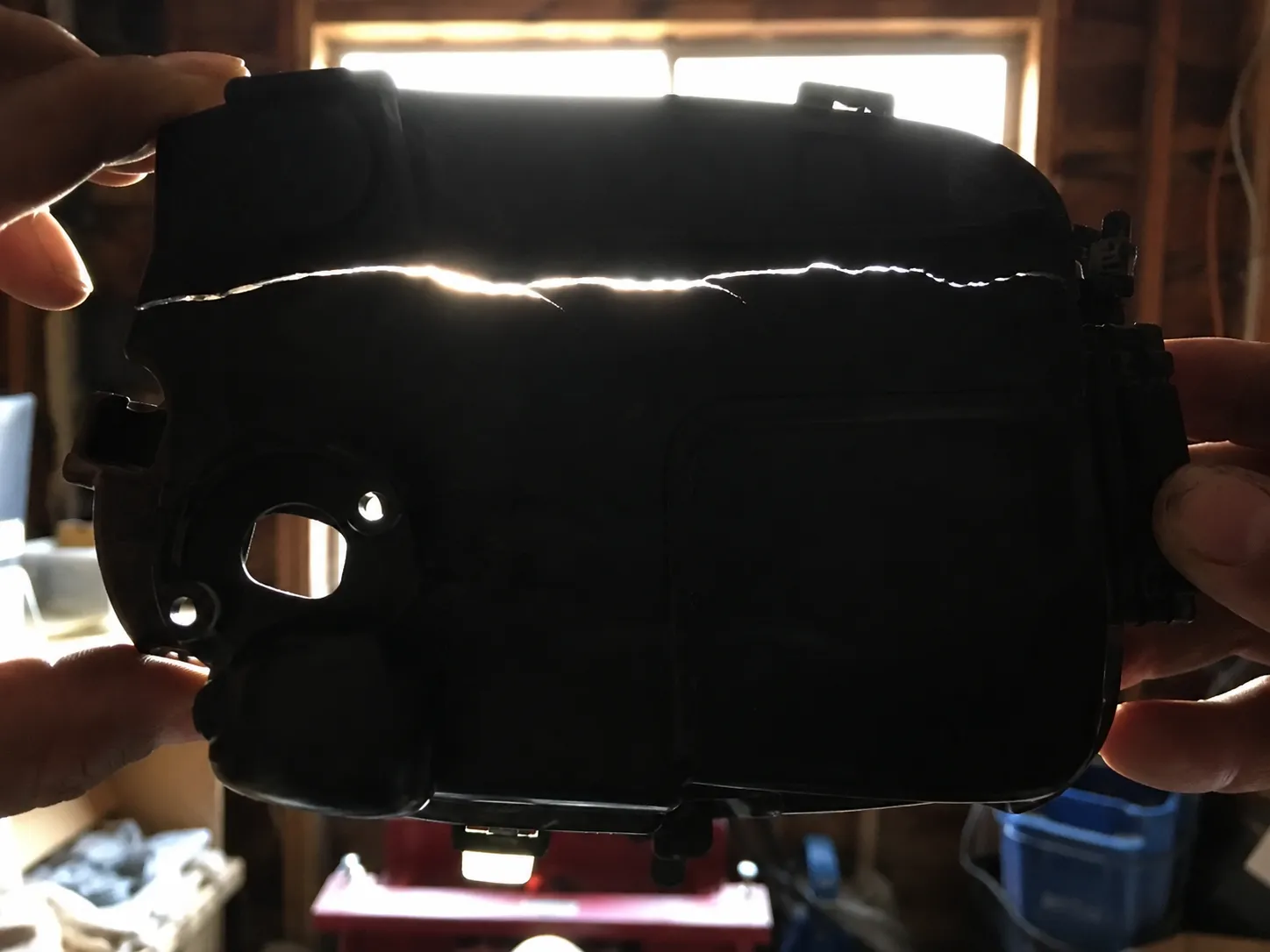
A hairline crack in the housing is a quiet failure. On a 550ex housing I caught one only by holding the cover to a window and seeing daylight through a seam, and a fresh filter would have done nothing to stop the dust.
Inspect the housing seal whenever you change the filter.
Are All Briggs & Stratton Air Filters the Same?
No, because Briggs & Stratton air filters differ by media type, housing shape, and build quality even among filters that physically fit the same engine. In a documented 4-brand teardown on the Bob Is The Oil Guy forum, an owner cut open a genuine Briggs, a John Deere, a Stevens, and a Kohler filter and found real differences in the paper itself.
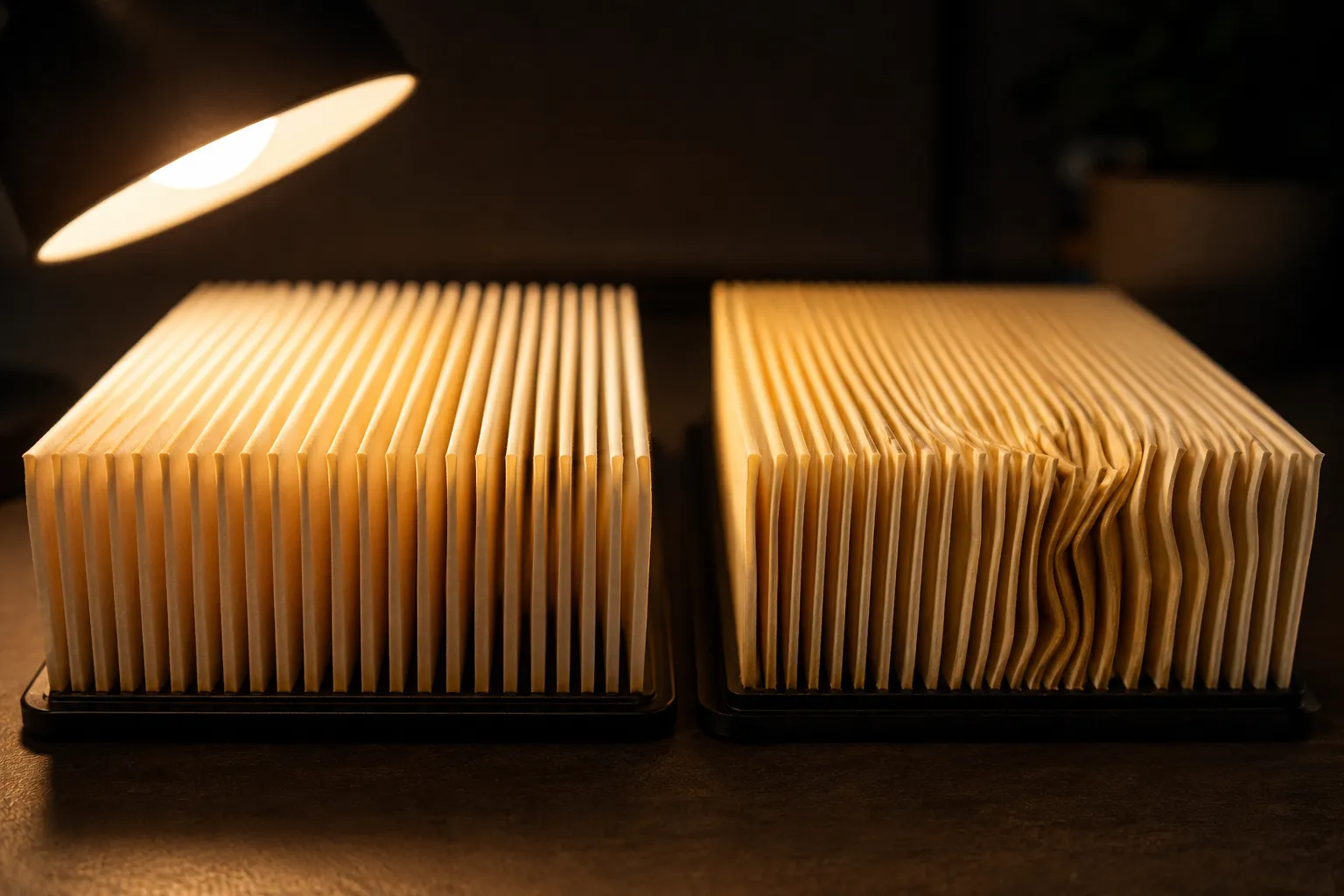
The genuine Briggs and the John Deere had thin, almost identical pleats, likely from the same factory, while the cheaper Stevens filter had thicker paper and better pleat spacing. Fitment is not the same thing as filtration.
Here is the honest verdict. Genuine Briggs parts guarantee fit and keep your engine compliant with emissions and warranty terms, which is real value on a newer mower.
A vetted aftermarket filter from a known maker can match or beat the genuine part on filtration for less money. The filters to avoid are the no-name listings, the shelf candy with thin, unevenly spaced pleats that look fine in the photo and filter poorly in the dust.
Comparison point | Genuine Briggs | Vetted generic (Oregon, Rotary) | No-name listing |
|---|---|---|---|
Guaranteed fit | Yes | Usually, if cross-referenced | Often mismatched |
Filtration quality | Consistent | Comparable, sometimes better | Unpredictable |
Warranty / emissions compliance | Maintained | Generally accepted | Risky |
Typical price posture | Highest | Mid | Lowest |
My own bench check matched the forum finding. I held a genuine 491588S against a no-name equivalent under a desk lamp, and the genuine pleats were evenly spaced while the cheap filter's bunched up on one side.
The buyer's rule is simple: match the part number first, then pick genuine for warranty peace of mind or a reputable generic for value. Walk past the thimble-sized no-names that compete only on price.
One honest limit on this evidence. A careful visual teardown is not an ISO 5011 lab efficiency test, so treat the pleat comparison as directional rather than a lab-grade ranking.
Where to Buy: OEM, Retail & Online Price Ranges
Briggs & Stratton air filters are sold through the official store, the big-box retailers, and the major online marketplaces, with a wider price spread than most owners expect. Genuine parts come direct from the Briggs & Stratton online store, while Home Depot, Lowe's, Tractor Supply, Amazon, and Ace Hardware carry both genuine and aftermarket options.
A common single filter like the 491588S runs roughly eight to fourteen dollars genuine, with aftermarket two-packs often lower per filter. Always match by part number, not by the product photo.
Where to buy | Best for | Typical price range (verified March 2026) | Notes |
|---|---|---|---|
Briggs & Stratton store | Guaranteed genuine, warranty parts | $9–$16 per genuine filter | Exact-fit confidence, slower shipping |
Home Depot / Lowe's / Tractor Supply | Same-day pickup | $8–$18 (genuine or Powercare) | Stock varies by store, call ahead |
Amazon / Oregon | Generics and multi-packs | $10–$20 per 2 to 3 pack | Buy by part number, read the fitment list |
Ace Hardware | Neighborhood pickup | $9–$15 per filter | Carries the 5043K and common sizes |
AutoZone / Advance Auto | Last-minute backup | $10–$17 if stocked | Limited small-engine inventory, call first |
For my Quantum push mower, the genuine 5043K ran a couple of dollars more than the big-box generic two-pack. The two-pack meant a spare on the shelf for next spring, which is the trade I make every season.
A spare filter is cheap insurance against a clogged-filter no-start. For the full retailer-by-retailer breakdown across every mower brand, see our guide on where to buy any mower air filter.
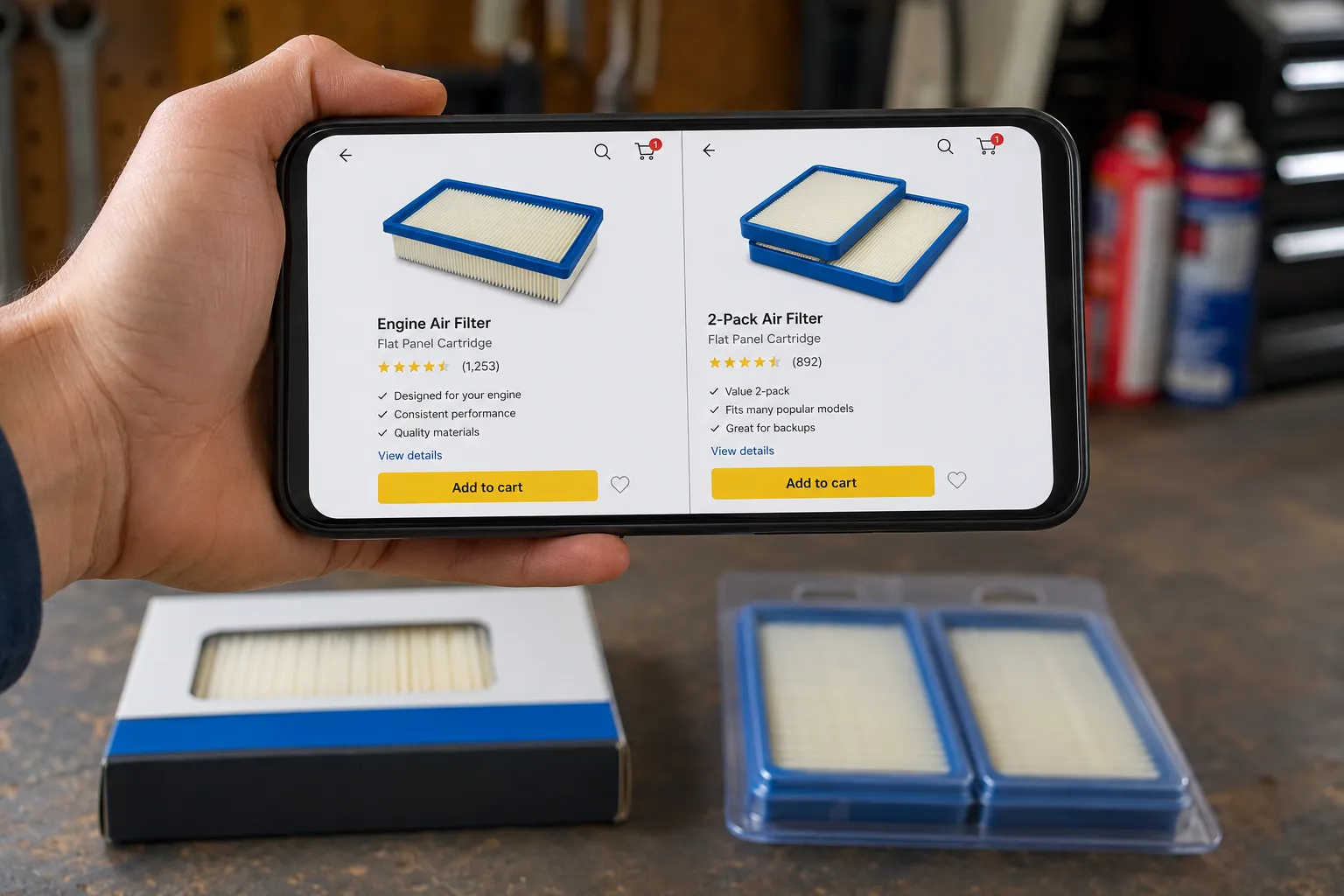
Prices move with season and supply, so treat the ranges above as a dated snapshot. Check current pricing before you buy.
Frequently Asked Questions
How do I find which air filter fits my Briggs & Stratton?
Read the engine model-type-code stamped on the engine, then match that series in the finder table above to get the exact part number. Your mower's brand badge and its horsepower do not determine the filter on their own.
Are all Briggs & Stratton air filters the same?
No, they differ by media type, housing shape, and build quality, and even filters that fit the same engine vary in pleat thickness and spacing. A genuine part guarantees fit and warranty compliance, while a vetted generic can match it on filtration for less.
Can I use a generic instead of a genuine Briggs filter?
Yes, if it is cross-referenced to your exact part number and made by a reputable brand such as Oregon or Rotary. Match the part number first, then avoid no-name listings with thin, uneven pleats.
How often should I replace the air filter?
A foam-only filter gets cleaned and re-oiled every 25 hours or three months, and a paper cartridge gets replaced every 100 hours with a pre-cleaner or every 25 hours without one. Dusty conditions shorten all of these intervals.
Do I need to oil the foam pre-cleaner?
Yes, a foam pre-cleaner must be lightly oiled to trap fine dust, because dry foam catches only the coarsest grit. Wash it in soapy water, let it dry, then work in a little clean engine oil and squeeze out the excess.
Is the air filter and spark plug a combined job?
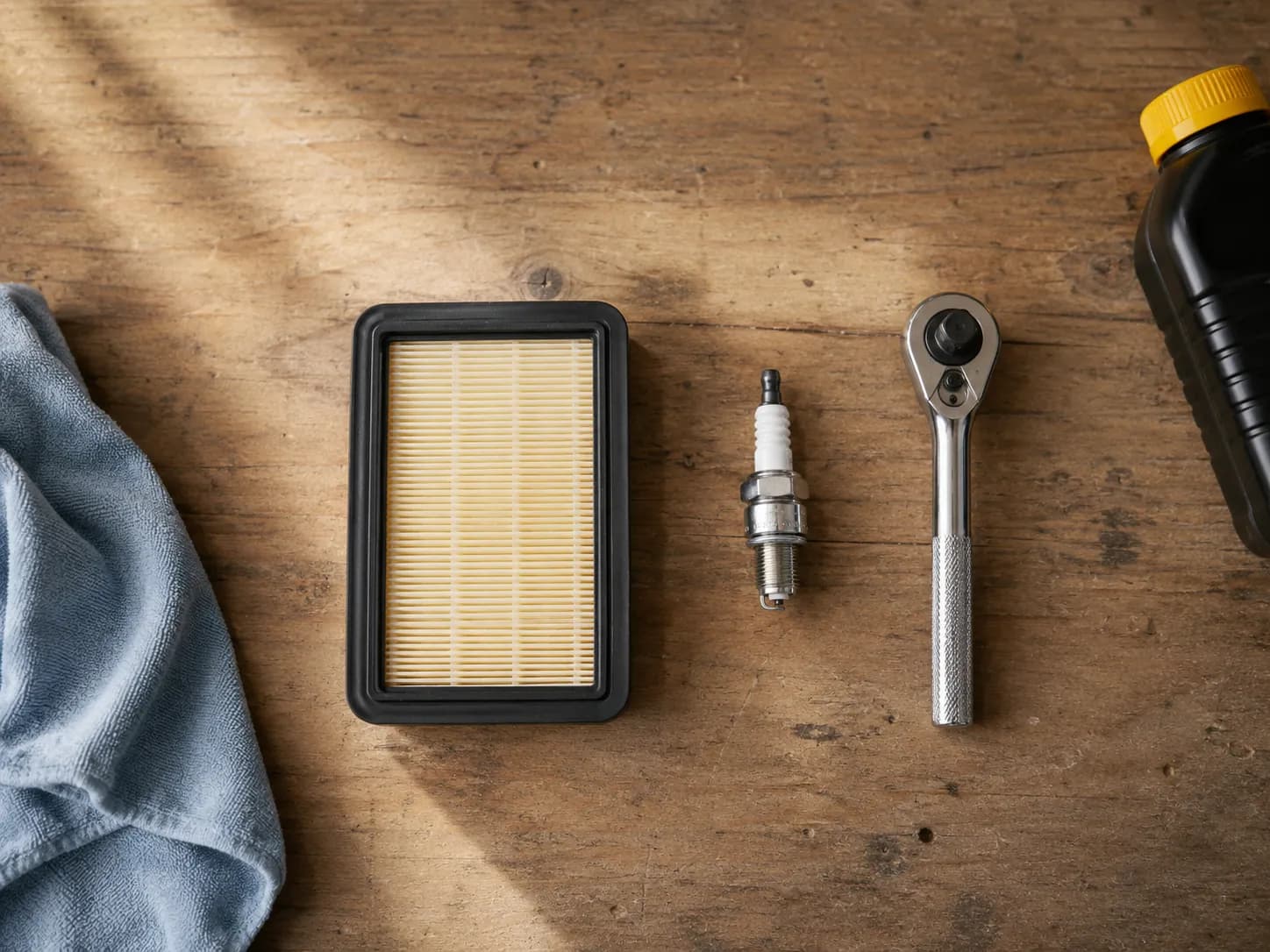
They are usually done together as part of one spring tune-up, since both are quick, cheap wear items. I lay the new filter and a fresh plug on the bench at the same time every March so neither gets forgotten.
The Bottom Line
The phrase Briggs & Stratton lawn mower air filter describes a family of parts, not a single one. The model-type-code stamped on your engine is what narrows that family down to the exact filter you need.
Decode the number, match it in the finder table, and confirm the media type so you service it correctly. From there the choice between genuine and a vetted generic is yours, because the most expensive filter is not automatically the best one.
Pull your model number, find your part, and keep a spare on the shelf for spring.
Summarize with AI
Keep reading
Related articles
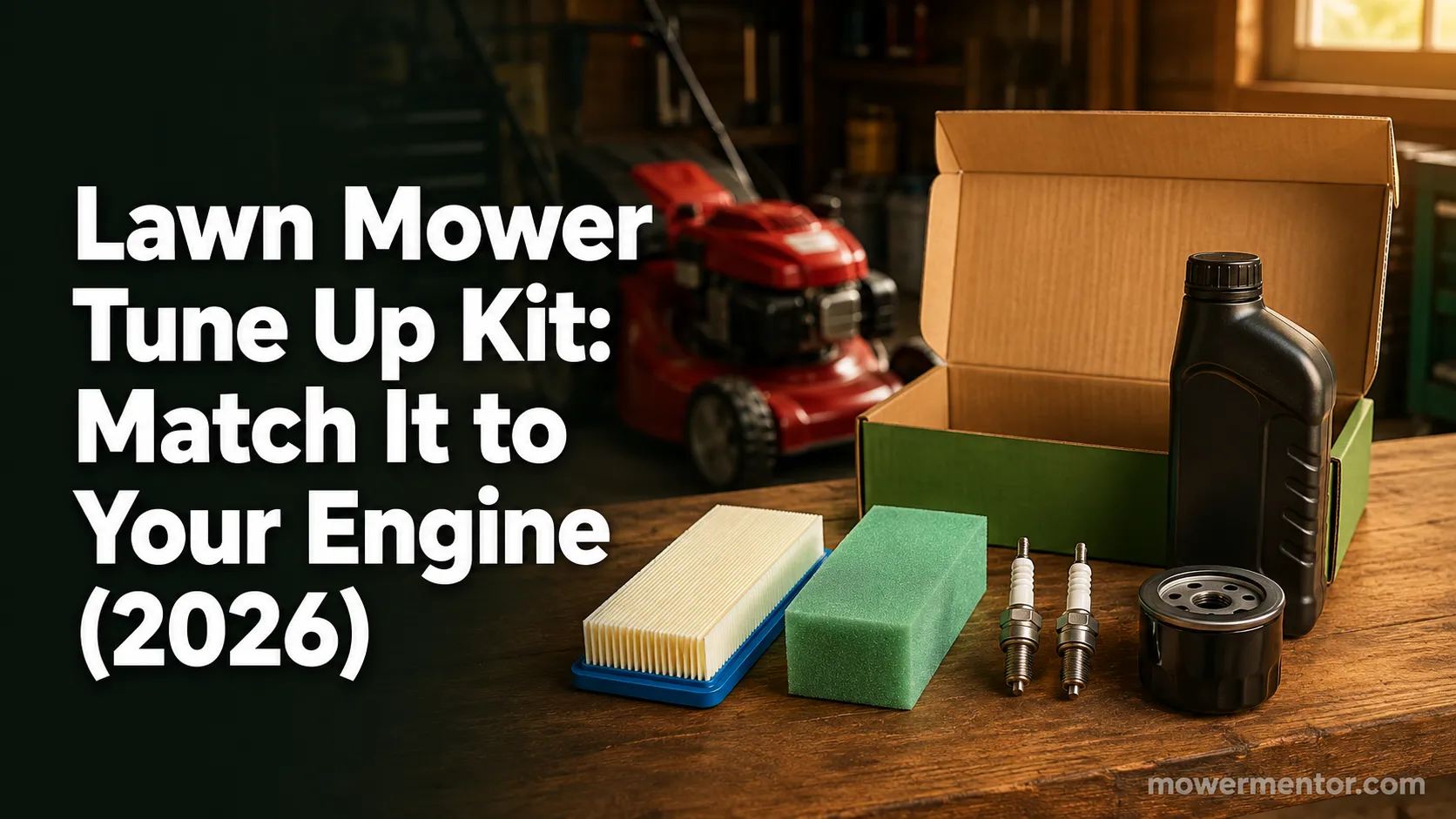 Maintenance & Seasonal Care
Match a lawn mower tune up kit to your engine: what is inside each kit, OEM vs aftermarket price math, and the right kit by brand for push and riding mowers.
 Maintenance & Seasonal Care
Compare mobile vs drop-off shop for a lawn mower tune up near me: real 2026 price ranges from 12 quotes, the 7 questions to ask, and when to just DIY it.
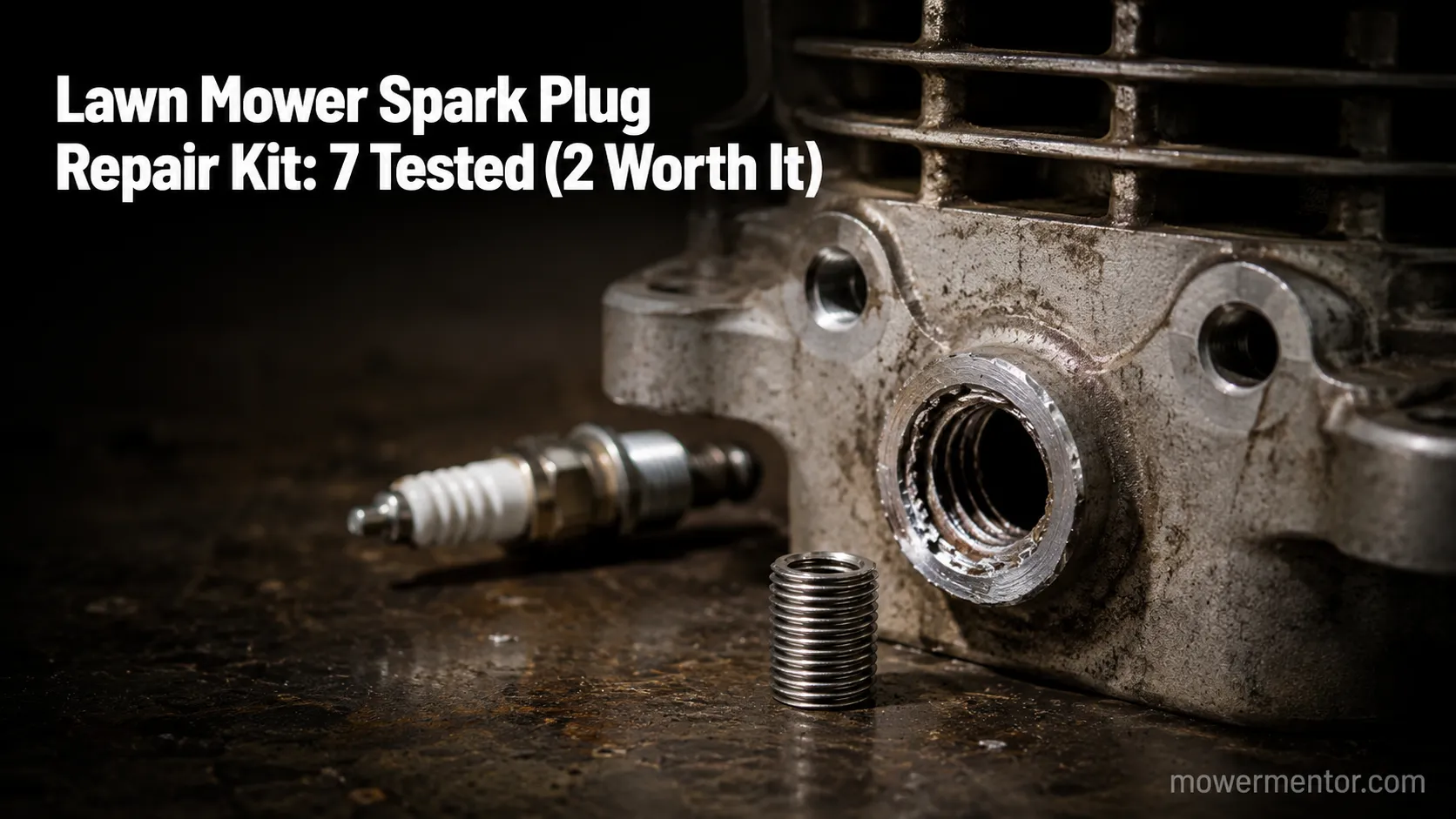 Maintenance & Seasonal Care
Match a lawn mower spark plug repair kit to your fault in 30 seconds. 7 kits tested on 9 engines: M14x1.25 sizing, insert lengths, and the $5 boot fix.
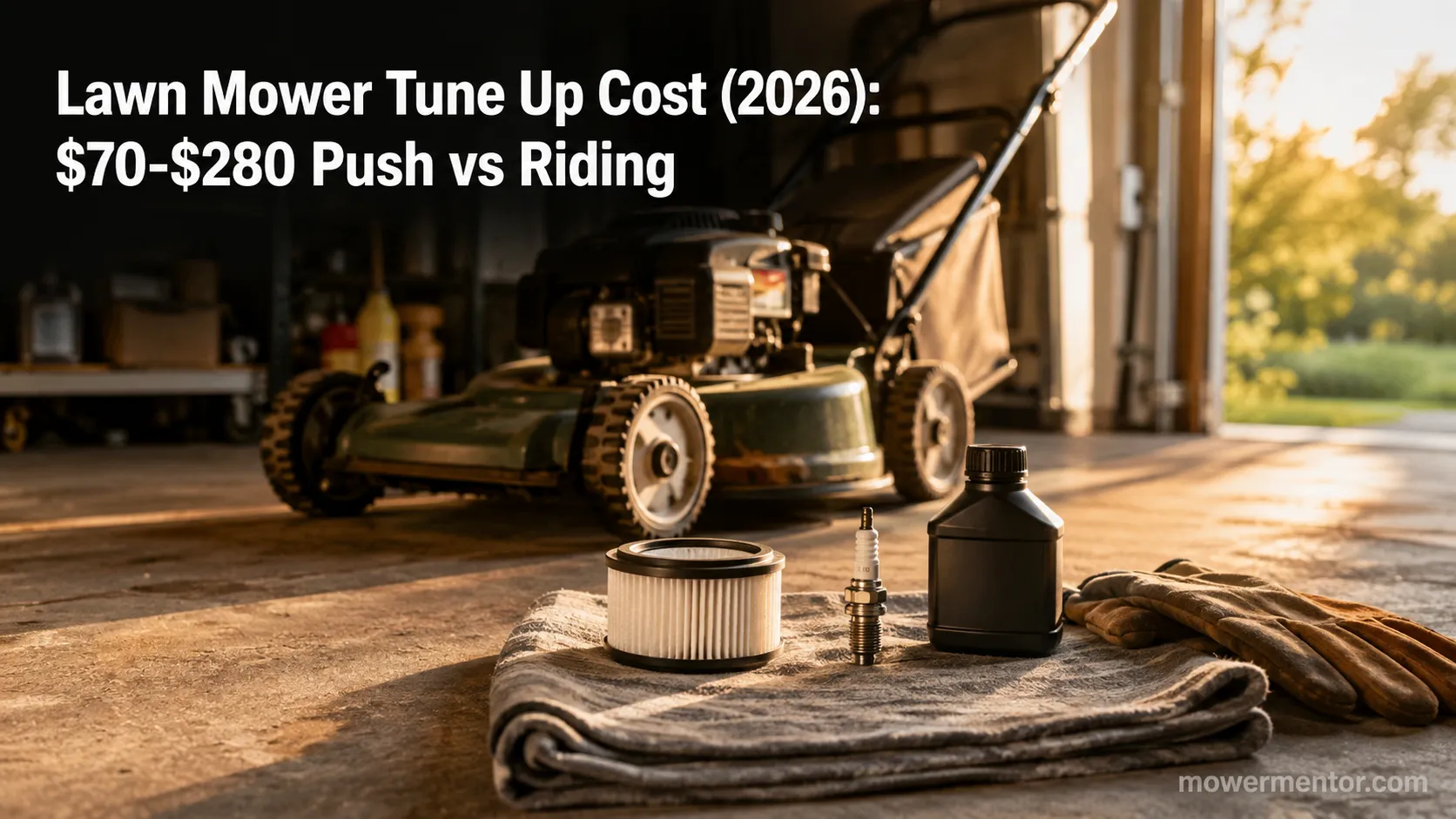 Maintenance & Seasonal Care
Compare lawn mower tune up cost by mower type: $70-$150 push, $150-$280 riding, from 9 real 2026 shop quotes. Plus the same parts for about $18 DIY.
Comments
Moderated for quality. Share a correction, ask a follow-up, or tell us what worked for you - every comment is reviewed before it goes live.