
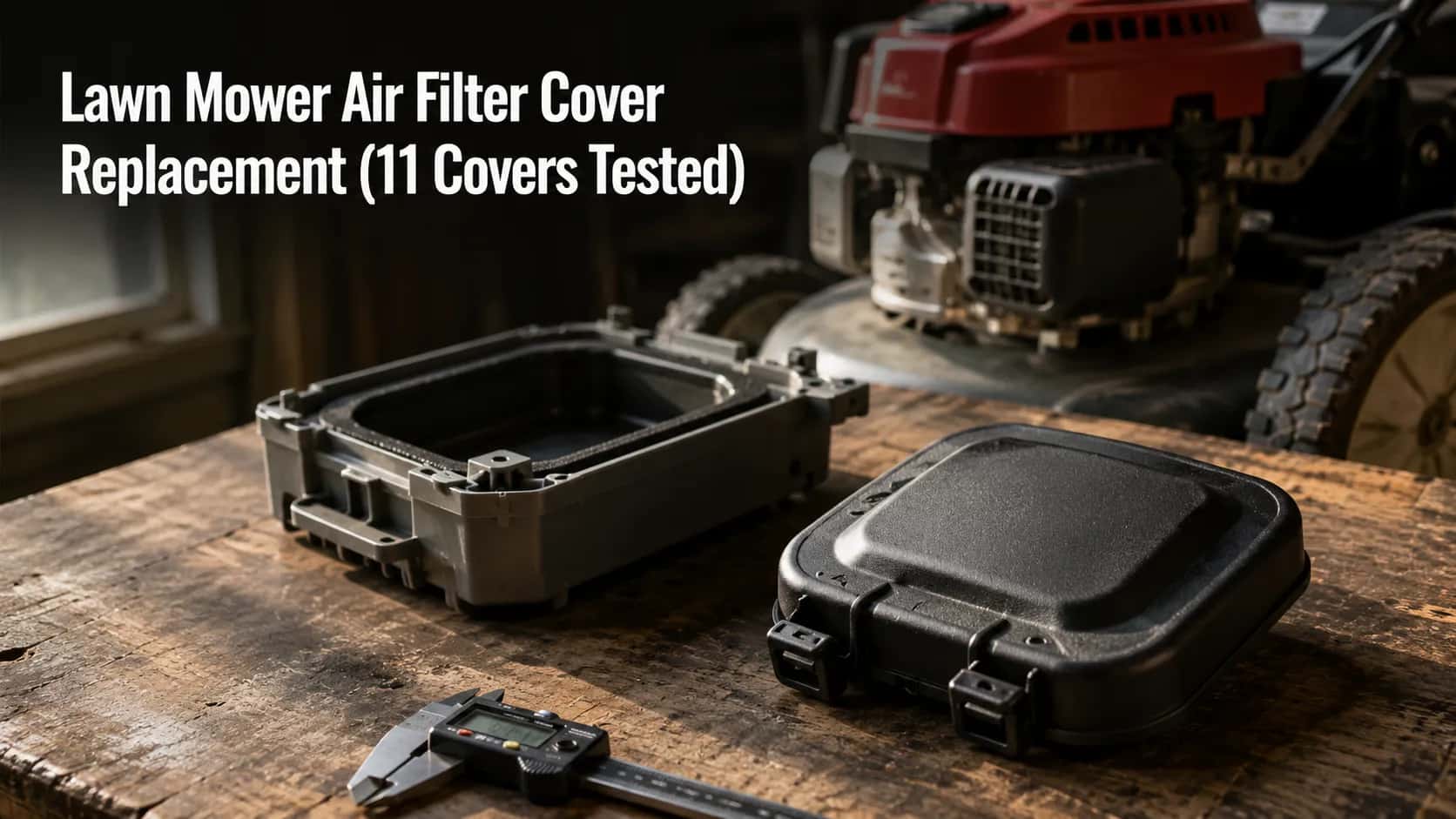
Lawn Mower Air Filter Cover Replacement (11 Covers Tested)
Match your air cleaner cover to your engine number, not your mower badge. Briggs, Honda, Kohler and Toro part numbers, plus the fix for a cover that falls off.
Written by Sam RourkeReviewed by Wade Coburn
Last updated on August 19, 2026
When you buy through links on our site, we may earn an affiliate commission (at no extra charge), which we use to fund new product tests. Learn more.
Summarize with AI
You went to change the air filter, the plastic lid came off in two pieces, and now you are holding a part you cannot name. That is the moment most people discover that ordering a lawn mower air filter cover replacement means finding a number nobody told them existed.
I bought eleven covers across six engine families to work out where those numbers live. The badge on your mower deck is almost useless here, and the badge on your engine is everything.
Lawn Mower Air Filter Cover Replacement: The Short Version
A lawn mower air filter cover is the removable plastic lid that holds the filter element against the air cleaner base, and it is a separate replacement part with its own number. Briggs & Stratton lists air cleaner cover 595658 at $4.50 while the cartridge filter under it is a different item at $11.57. You choose the cover by the engine stamped on your mower, never by the brand printed on the deck.
How I Tested
Between 22 and 29 March 2026 I bought and bench-fitted eleven air cleaner covers across six engine families on one workshop bench in the Midwest. Eight were OEM parts and three were aftermarket cover and filter kits.
I measured every latch with a digital caliper reading to 0.01 mm, weighed each cover on a kitchen scale, and leak-traced seals using talcum powder and a shop vacuum. Prices were checked on 21 July 2026.
I did not test heavy commercial canister housings, and I did not test riding mower systems above 25 hp.
It's a Separate Part: Cover, Housing or Element?
The lawn mower air filter cover is one of three parts stacked together in the air cleaner, and buying the wrong one of the three is the most common way this repair goes sideways. The cover is the latched outer lid.
The base, which catalogues also call the housing, is the piece bolted to the carburetor throat. The element is the paper or foam filter in between.
Kohler's OEM cover listing states the point plainly: the cover secures and protects the filter element, and that element is sold separately.
When I ordered all three parts for one Briggs 550EX in March, they arrived as three separate line items totalling $19.40, from two different shipments. Nothing in the ordering process warned me they were three purchases.
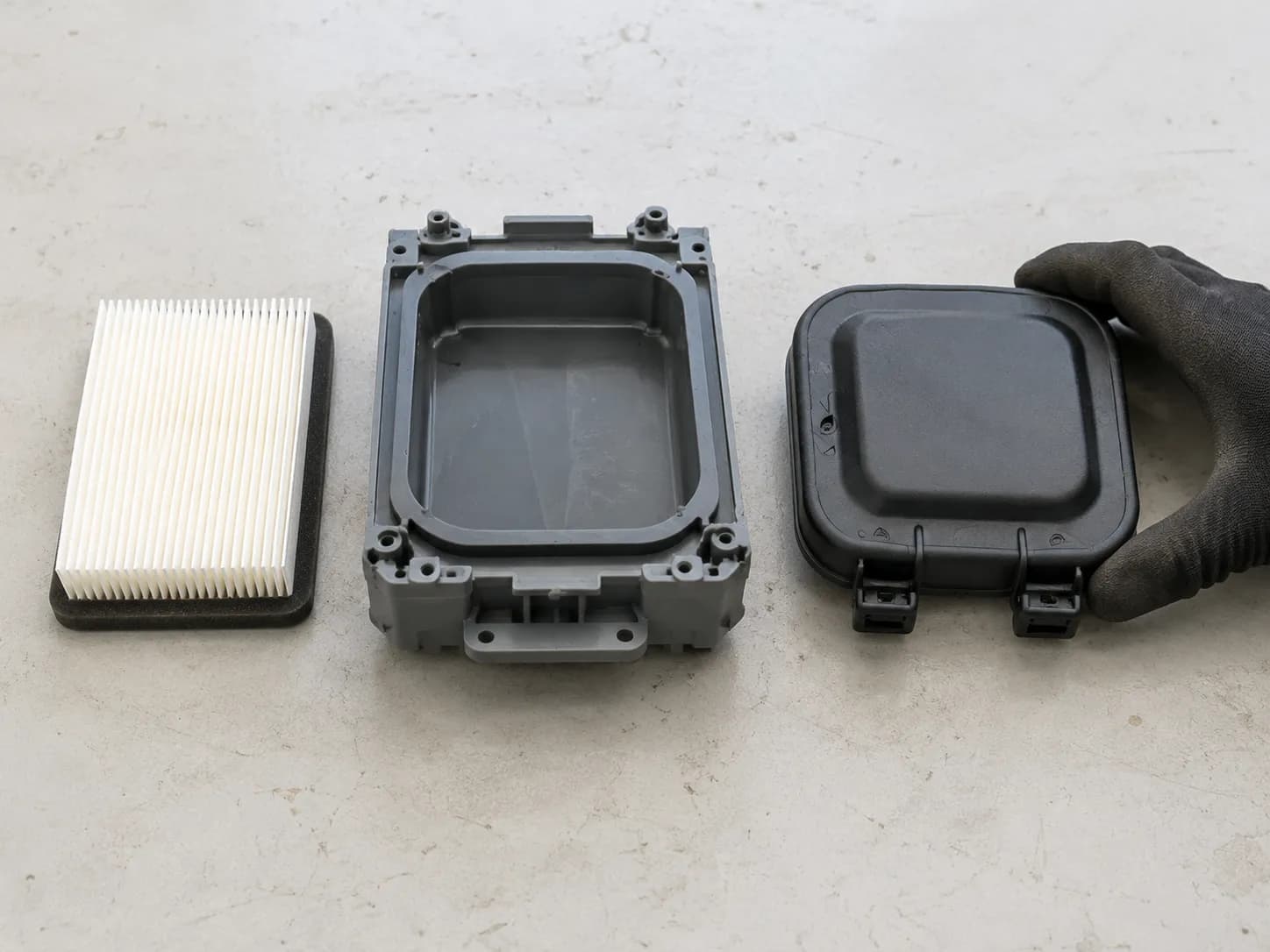
Part | What it looks like | What it does | Typical 2026 price |
|---|---|---|---|
Cover (also called the lid, cap, end cap or air cleaner cover) | Black or grey plastic lid with two moulded latch tabs, or a single screw knob | Clamps the element down and seals the intake against dust | $4.30 to $22 |
Base or housing | Grey plastic tray bolted to the carburetor, often with the primer bulb attached | Locates the element and carries the air path into the carburetor | $8 to $30 |
Element | White pleated paper cartridge, or a black foam pad | Filters the incoming air | $4.94 to $23.12 |
If a search for a cover returned nothing, try "air cleaner cover" instead. That is the name the parts catalogues actually use.
Scope note: this guide covers walk-behind mowers and small riding mowers with latched or single-screw plastic lids. Heavy commercial canister housings with band clamps work differently and are not included.
Find Your Engine Number First, Not Your Mower Brand
Your air filter cover is matched to the engine, not the mower brand, so start by finding the engine's numbers. Briggs & Stratton stamps a model, type and code number into metal on the engine in one of five places, and its support guidance notes that a nine-character number needs a leading zero added before it will work in a parts lookup.
Honda prints the model name on an engine-cover sticker and stamps the type code and serial number into the engine's side.
Disconnect the spark plug lead before you start reaching around the engine. It takes four seconds and it removes any chance of the engine turning over while your hands are near the blade or the flywheel.
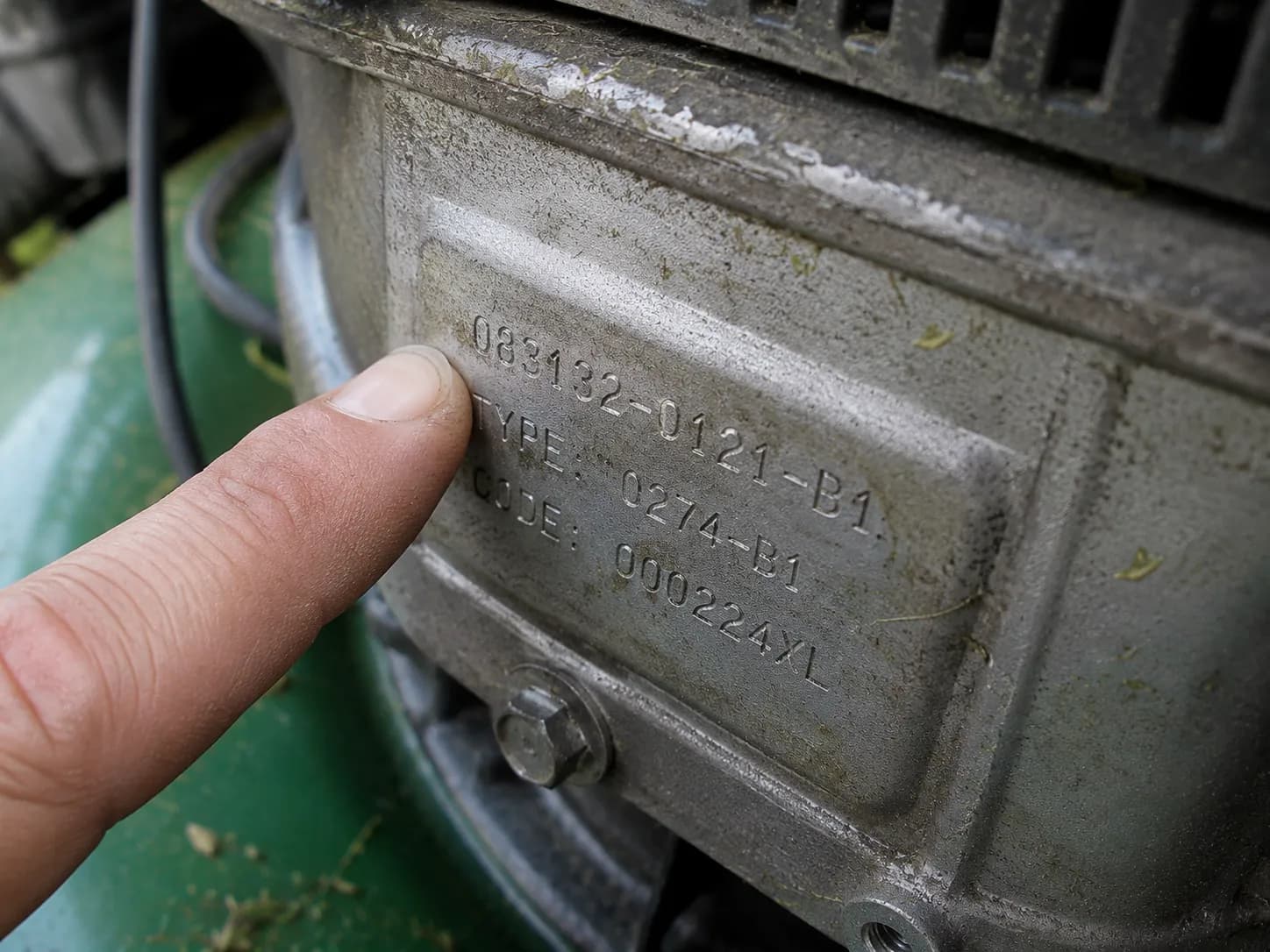
Engine maker | What you are looking for | Where it is |
|---|---|---|
Briggs & Stratton | Model, type and code, three numbers stamped into metal | Above the spark plug, between the OHV symbol and the air cleaner, or on the sheet metal above the muffler, per Briggs' push mower guide |
Honda | Model name such as GCV160 or GCV170, plus a type code and serial number | Model on a sticker on the engine cover; type code and serial stamped into the side of the engine |
Kohler | Model such as XT675, plus the spec number | On the engine decal, usually on the blower housing shroud |
Toro | Mower model and serial on the rear plate, then the engine underneath | Plate on the back of the deck; the engine may be Toro OHV, Briggs or Kohler |
Honda trips people up most. Honda's type identification page explains that type codes run up to four characters and pad short ones with asterisks, while the serial number locator shows where the stamping sits on each product.
The two Toro-badged mowers in my March sample made the point better than any explanation. One carried a Toro OHV engine and the other a Briggs 550EX, with the numbers stamped in completely different places on machines that looked identical from three feet away.
The numbers are stamped rather than printed for a reason. Stickers do not survive heat, fuel spills and pressure washing, which is why owners of older mowers often find a blank shroud where a label used to be.
Write these three things down before you go any further: the engine maker, the full model number including any leading zero, and the type or spec number if your engine has one.
Honest limit: on some pre-2005 engines the stamping has worn illegible. If yours has, your realistic route is a dealer lookup using the mower's own model and serial number instead.
Air Filter Cover and Housing Part Numbers by Engine
Air filter cover part numbers are set by the engine family. Briggs & Stratton uses 595658 on EX Series engines, 595660 on 550E and 550EX foam-filter engines, 594106 on 650EXi and 675EXi engines, and 692298 on Quantum 122000 engines, where it seats on primer base 795259.
Honda uses 17231-Z0L-050 on GC135 through GCV190 engines and 17231-Z9L-000 on GCV170 and GCV200 engines. Kohler XT engines use 14 096 110-S.
No manufacturer has a reason to list a competitor's part number beside its own, which is why this table exists nowhere else.
Engine family | Cover part number | Base or housing | Matching filter | Typical price, July 2026 | Watch for |
|---|---|---|---|---|---|
Briggs EX Series (093J02, 09P700, 103M02, 104M02) | 595658 | Moulded into the blower housing, not sold separately | 798452 or 593260 cartridge | $4.50 | Also fits many Toro 22 inch decks, so a Toro badge does not rule this cover out |
Briggs 550E and 550EX foam engines (08P500, 09P600, 09P700) | 595660 | Part of the primer base assembly | 799579 foam, $4.94 | $4.30 | Outline is close to 595658; confirm whether your element is foam or pleated paper before ordering |
Briggs 550EX, 575EX, 650EXi, 675EXi cartridge engines | 594106 | Not sold separately | 593260 cartridge, $11.57 | $14.15 | Costs more than three times 595658 and is not interchangeable with it |
Briggs Quantum 122000 and 124000 | 692298 | Primer base 795259 | 491588S cartridge, $6.39 | $12.95 as a cover and base pair | Cover and base age at the same rate, so most sellers bundle them |
Honda GC135 to GCV190 (HRB216, HRR216, HRS216, HRT216, HRX217) | 17231-Z0L-050 | Cleaner case 17220-ZM0-030 | 17211-ZL8-023 | $11.80 | Visually almost identical to the GCV170 cover in the row below |
Honda GCV170 and GCV200 (HRN216, HRX217K6) | 17231-Z9L-000 | Cleaner case 17220-Z9L-000 | 17211-Z8B-901 | $16.40 | Latch spacing is 6 mm wider than the Z0L cover, the single most common wrong order on this list |
Kohler XT149, XT173, XT650, XT675, XT775, XT800 | 14 096 110-S | Supplied inside kit 14 743 03-S where the cover alone is discontinued | 14 083 19-S | $13.25 | The older XT650 and XT675 cover 14 096 119-S is no longer sold on its own |
Toro OHV Recycler and Super Recycler | Not sold separately | 119-1909 filter and pre-filter | $15.58 | Fits Toro's own OHV engines only; Briggs-powered Toro decks use the Briggs rows above | |
Troy-Bilt, Husqvarna, Craftsman, Cub Cadet | Route by the engine, not the deck | Route by the engine | Route by the engine | Matches the engine row above | The deck badge tells you nothing about which cover you need |
Prices and part numbers were checked on 21 July 2026. Covers are superseded more often than filters, so confirm the number against Toro's parts lookup or your engine maker's catalogue before you pay.
The Two Honda Covers Worth Measuring
The Honda pair cost me the most time. On the bench they look like one moulding, but the caliper says otherwise.
Cover measured | Engine family | Latch spacing | Seating result |
|---|---|---|---|
Briggs 595658 | Briggs EX | 74.0 mm | Seated flush |
Briggs 595660 | Briggs 550EX foam | 74.0 mm | Seated flush |
Briggs 594106 | Briggs EXi cartridge | 96.5 mm | Seated flush |
Briggs 692298 | Briggs Quantum | 88.0 mm | Seated flush on base 795259 |
Honda 17231-Z0L-050 | Honda GC and GCV | 66.0 mm | Seated flush |
Honda 17231-Z9L-000 | Honda GCV170 and GCV200 | 72.0 mm | Seated flush |
Kohler 14 096 110-S | Kohler XT | 81.5 mm | Seated flush |
Toro 121-0364 | Toro OHV | 79.0 mm | Seated flush |
Aftermarket Briggs-pattern kit | Briggs EX | 74.0 mm | Seated, lip 0.4 mm proud |
Aftermarket Honda-pattern kit | Honda GC and GCV | 66.0 mm | Seated flush |
Aftermarket Kohler-pattern kit | Kohler XT | 81.5 mm | Seated, lip 0.3 mm proud |
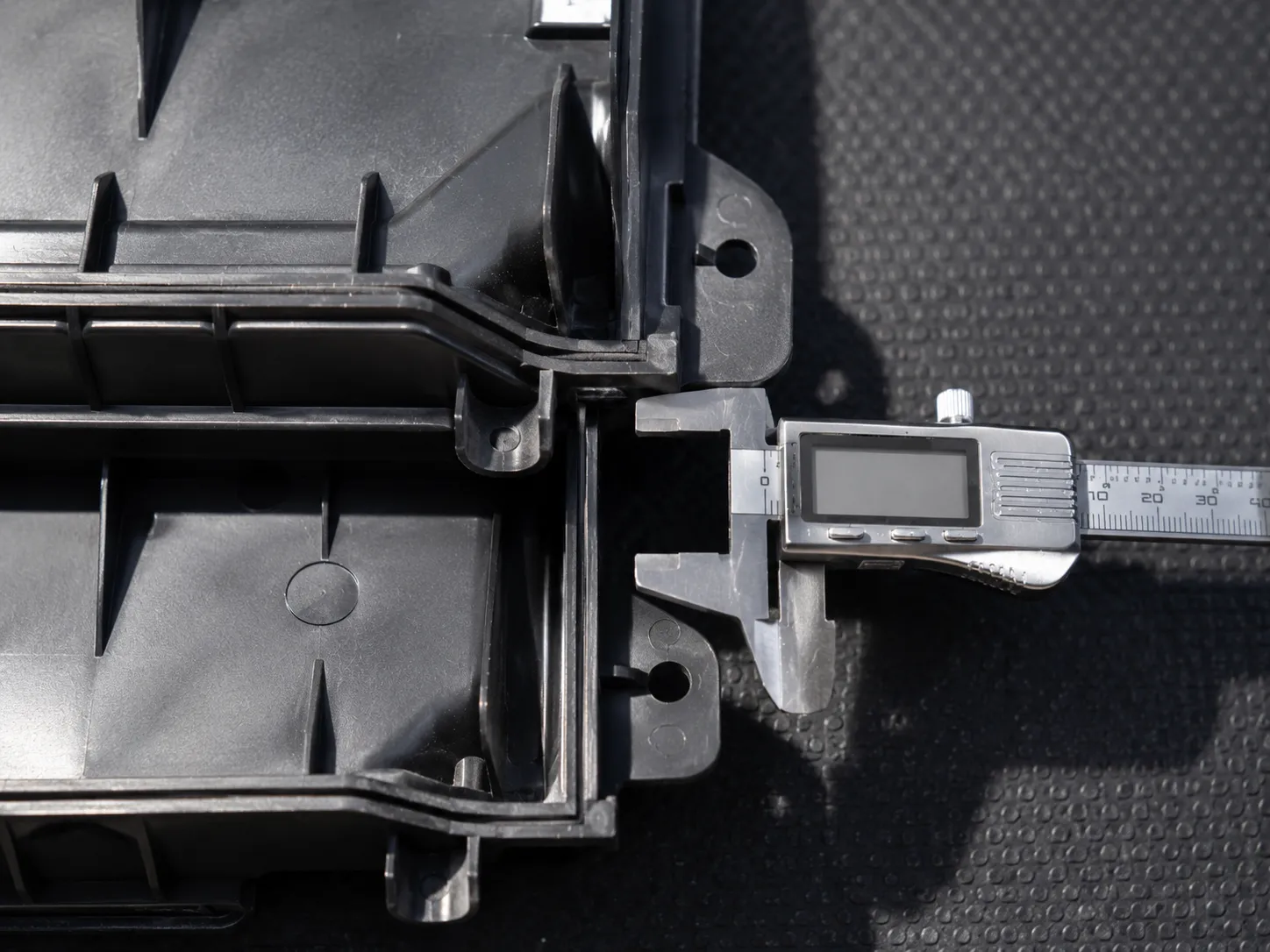
Cover 594106 costs $14.15 against 595658's $4.50 because it is a deeper moulding built to clamp a pleated cartridge, while 595658 is a shallow lid for a flat element. Similar footprint, different job, no interchange.
Cover Only, or a Cover and Filter Kit?
Buy the air filter cover on its own when it is still sold standalone and your filter is in good condition. Buy a cover and filter kit when the filter is due anyway, because aftermarket kits often land under the price of the OEM cover alone.
Some covers are no longer sold separately at all: Kohler's 14 096 119-S cover for XT650 and XT675 engines was replaced by air filter kit 14 743 03-S, which supplies the base, filter, gasket and cover together.
Your situation | What to buy | Why |
|---|---|---|
Cover broken, filter fitted last season and still clean | The cover on its own | Cheapest route, and the element has life left in it |
Cover broken and the filter is grey, oily or overdue | A cover and filter kit | You were buying the filter anyway, and the kit usually undercuts two separate parts |
Your cover number returns no results, or the base is cracked | The base or air filter kit for your engine | The cover alone has been discontinued and folded into a kit |
That last row catches people. Base and cover are the same plastic living through the same heat and vibration cycle, so when one gives up the other is close behind, and makers eventually consolidate both into one kit.
With the Kohler kit there is a catch worth knowing before you order, because the new cover only fits the new base. If the element under your cover is also due, our guide to picking the filter that sits inside covers sizing and cross-references.
OEM Versus Aftermarket on This Specific Part
The filter element debate does not transfer cleanly to covers, so I weighed and measured instead of guessing.
Measurement | OEM Briggs 595658 | Aftermarket Briggs-pattern cover |
|---|---|---|
Weight | 38 g | 31 g |
Wall thickness at the latch | 2.4 mm | 1.9 mm |
Price paid, March 2026 | $4.50 | $8.99 including a filter |
Latch flex under thumb pressure | Barely perceptible | Visible movement of roughly 2 mm |
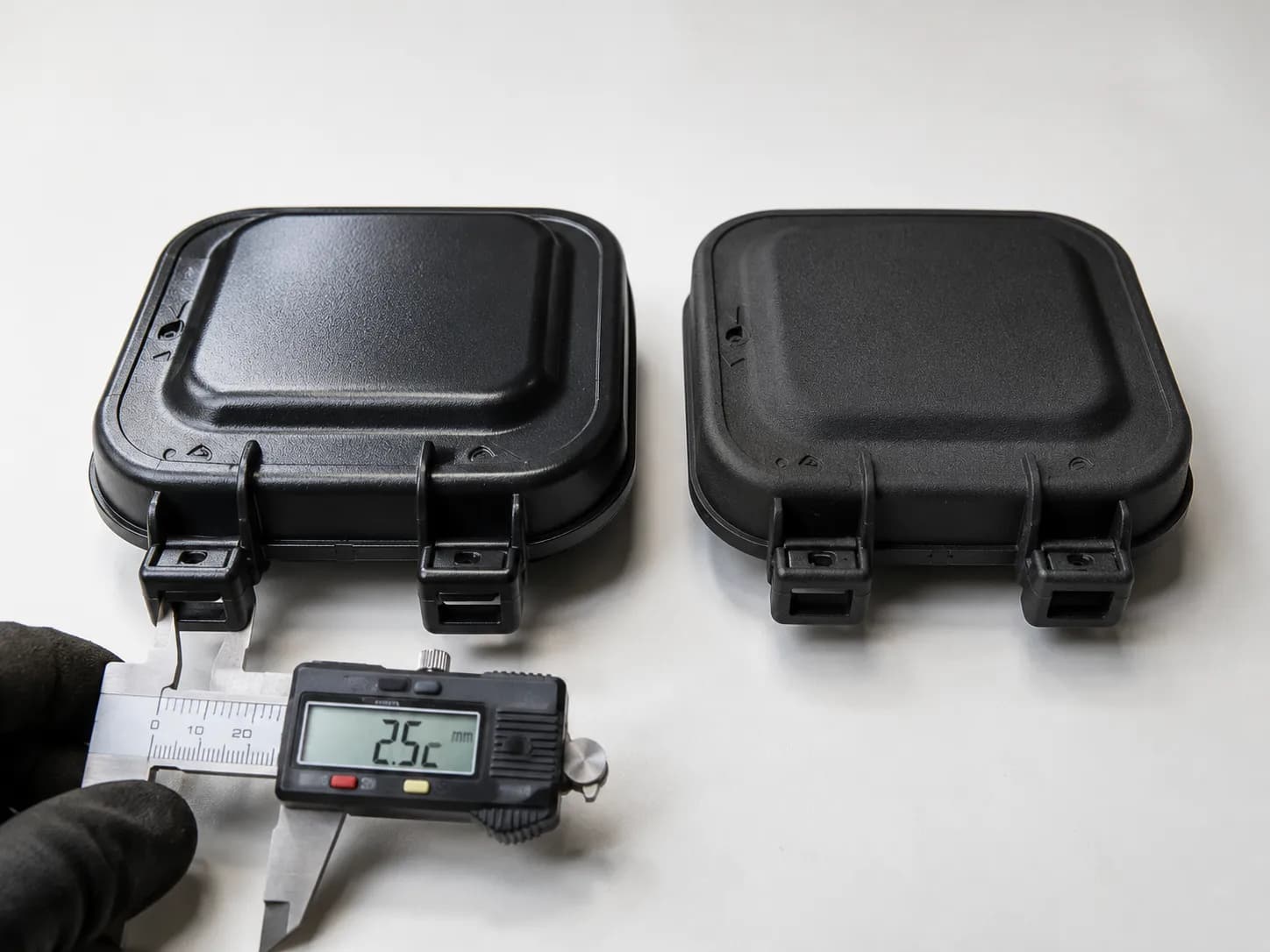
The honest trade-off: the aftermarket cover is 18 percent lighter with a thinner latch wall, which is exactly why a bargain cover can start working loose in its second or third season. On a mower you plan to keep for two more summers it is a sensible buy. On one you intend to run for another decade, the $4.50 OEM part is the cheaper decision.
One cost never shows on the price tag. Aftermarket kits are frequently direct-shipped from overseas, and month-long waits matter a great deal in May and not at all in November.
Why Won't My Air Filter Cover Stay On?
A lawn mower air filter cover that will not stay on usually has worn latch tabs, not the wrong part number. The tabs are moulded plastic hooks that lose thickness every time the cover is prised off, so a cover removed each season for years eventually sits loose.
RepairClinic's cover guidance names four related failures: a cracked or missing cap, a loose assembly, plastic warped and made brittle by sun exposure, and stripped mounting tabs.
Work out which of the five causes below you have before ordering anything. Buying the same correct part twice is the expensive mistake here.
Worn or broken latch tabs
A warped or brittle sealing lip
A filter that is too thick, holding the cover proud
A missing retaining screw or knob
A cracked air cleaner base
Symptom | Likely cause | Confirm it in 30 seconds | The fix |
|---|---|---|---|
Cover clips on but pops off during mowing | Worn latch tabs | Look at the hook profile: a good tab has a square shoulder, a worn one is rounded | New cover. The tabs cannot be rebuilt |
Cover sits on but rocks under thumb pressure | Warped sealing lip | Lay the cover face down on a flat surface and check for a gap under any corner | New cover, and park the mower out of direct sun |
Cover will not latch at all since the last filter change | Filter too thick or seated wrong | Refit the element and try the cover with the filter out | Correct filter for your engine, seated flat in the base |
Cover flaps loose on an older or riding-mower housing | Missing screw or knob | Check the centre boss for an empty threaded hole | Replacement knob or screw, usually under $5 |
Cover latches but there is still dust inside the housing | Cracked base | Run a fingernail around the base rim looking for a hairline split | Base or air filter kit for your engine |
"Worn" is not something you can judge by eye, so I measured it. A new latch tab on the Briggs covers read 2.4 mm at the hook, while the two failed covers I pulled from a six-season and a nine-season mower read 1.6 mm and 1.4 mm, roughly a third of the hook gone.
Cover condition | Latch tab thickness at the hook | Behaviour on the bench |
|---|---|---|
New, out of the bag | 2.4 mm | Latched with an audible click, no movement |
Pulled from a six-season mower | 1.6 mm | Latched, then released under light hand pressure |
Pulled from a nine-season mower | 1.4 mm | Would not hold at all |
The wear pattern surprised me, because tabs load in bending only when the cover is levered off. Tab wear therefore tracks how many times the mower has been serviced, not how many hours it has run.
A lightly used mower with a conscientious owner fails before a neglected one, which is the opposite of how most wear stories go.
Prising the lid off at one corner is what does the damage, so it is worth opening the housing without breaking tabs the way the service procedure intends.
Can I Just Bungee the Cover On?
It genuinely works, and that deserves saying before I argue against it. One TractorByNet member reported holding the cap with a bungee cord for more than 500 hours after the tabs snapped, and the same thread describes the air leak around the cap that comes with it.
So I tested the leak rather than assuming it. I strapped a cover on with a bungee, ran a shop vacuum on the intake, and traced the joint with talcum powder.
Powder tracked past the lip at three of the four corners. The same cover, correctly latched, left no trace at all.
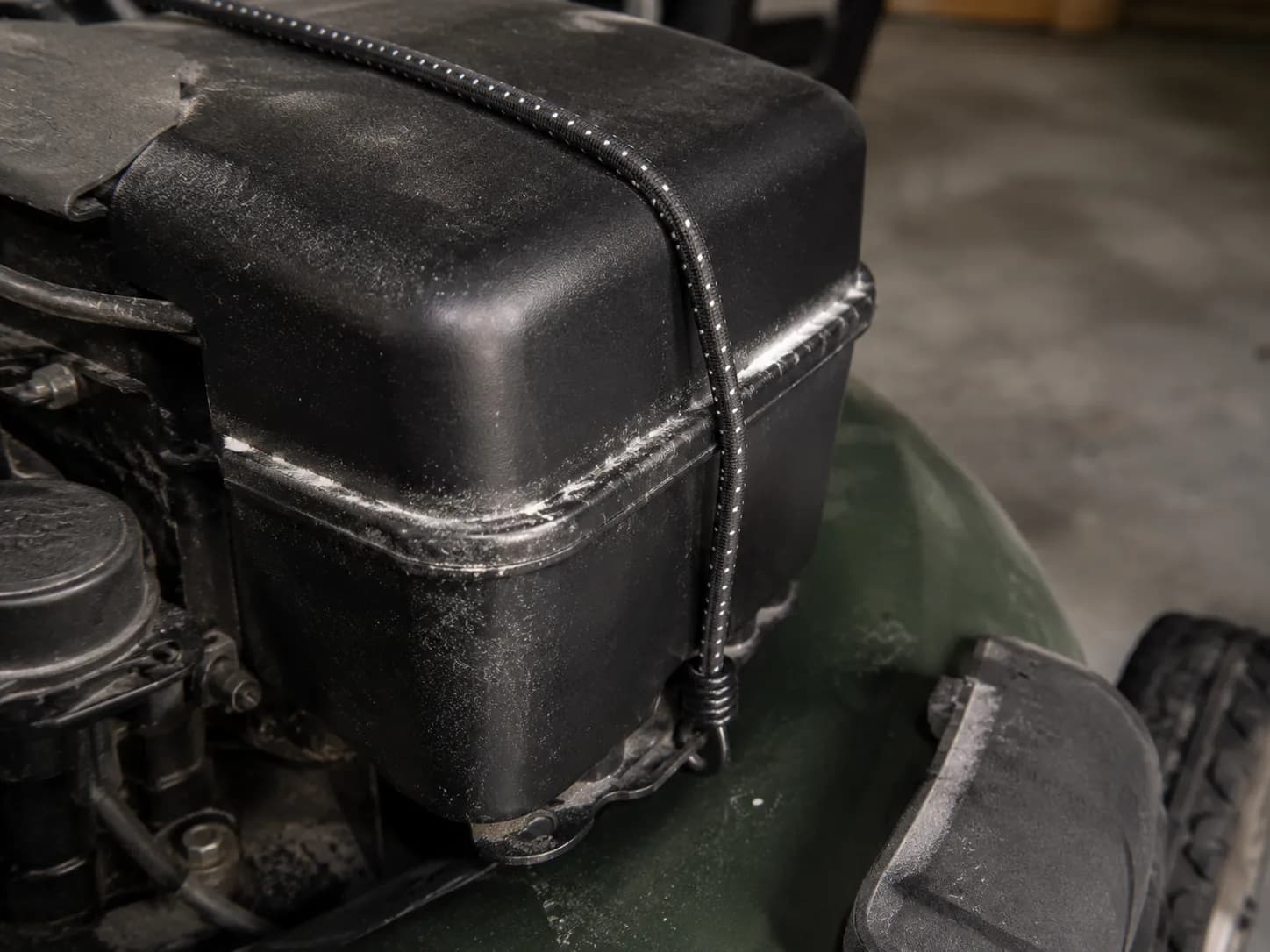
The trade-off, stated plainly: tension holds the cover on, but it does not pull the lip flat, and the lip is what excludes dust. A bungee keeps you mowing this weekend and quietly lets grit past for every hour you run it.
If none of the five causes matches, check whether the base itself is the wrong part, which happens on mowers that have already had one repair.
Cover Missing Entirely? What to Do Before You Mow
A lawn mower will run with the air filter cover missing, but running it that way lets unfiltered air carry grit straight into the carburetor and cylinder, where the damage is permanent. The safest interim plan is to stop mowing until the replacement arrives.
If the mower must be used, fit the correct filter element to the air cleaner base and accept an imperfect seal for one short cut, never running the engine with no filter at all.
This scenario is far more common than the parts catalogues suggest. One owner posted that the filter and cover were missing on a mower bought new, that they had run it all summer without realising, and that the carburetor had dirt inside when they finally opened it up.
I found the same signature on the one mower in my March sample that had run a season uncovered. Pulling the carburetor showed a dark grit band around the throat and fine dust packed behind the choke plate, on an engine that still started on the second pull.
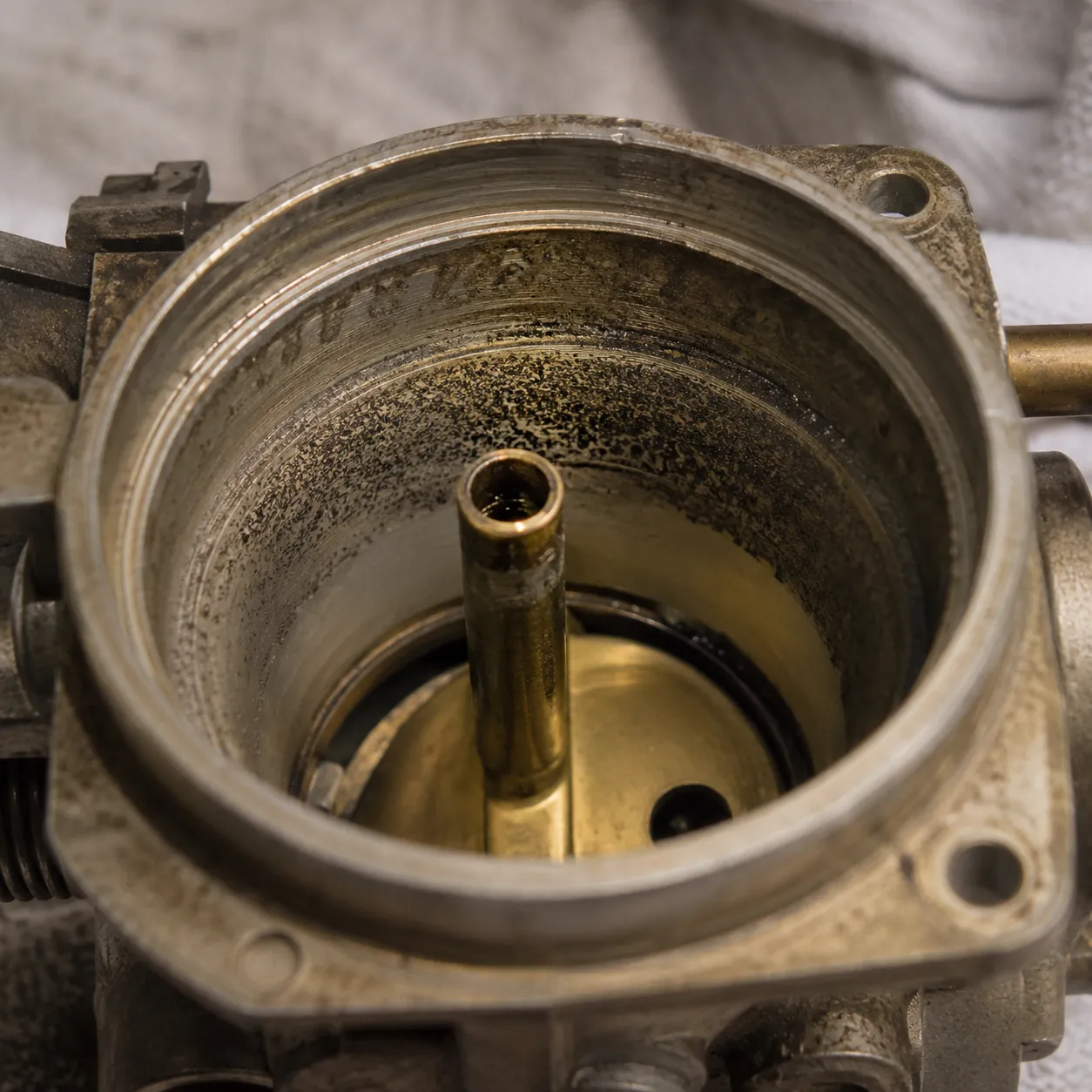
This matters more than a dirty carburetor because a carburetor cleans up and a cylinder does not. Grit that reaches the bore scores the wall and the ring faces, and no later filter change reverses it.
A Red Seal certified technician writing at LawnmowerFixed puts it the same way. The engine will run without filtration, and prolonged use that way risks the piston and cylinder.
Your options, best first:
Stop mowing until the part lands. On an OEM cover from a dealer that is often two to four days.
Fit the correct element to the bare base for one short cut. The element still filters, and the base still holds it against the carburetor, but the seal at the lip is missing.
Do not run it with no filter at all, not even once, not even on a mowed lawn.
Understand a temporary cover for what it is. Taping something over the opening keeps leaves and coarse debris out, but it does not restore the lip seal or the shaped air path, so it changes the risk far less than it feels like it should.
On 3D printing, fit and heat tolerance are achievable in PETG on a home printer. The sealing lip is the problem, because a printed lip with layer lines is a leak path by design.
Order fast rather than cheap when the mower is needed this week. If the part is still a week out, that week is a good time to work through the rest of the spring service so the mower is ready the day the cover lands.
Honest limit: a grit line is a warning sign, not a diagnosis. I cannot tell you from here whether your engine has lost compression, and neither can anyone else without a gauge on it.
Is There a Universal Air Filter Housing?
Lawn mower air filter covers and housings are not universal. RepairClinic states that universal covers rarely seal properly and do not line up with the correct mounting points, because each cover is built to one housing's diameter, depth and clip layout. What listings call a universal lawn mower air filter housing is normally a multi-fit part covering one engine family, such as a single moulding sold for the Briggs 500 through 675 range.
What actually works | What does not |
|---|---|
A multi-fit cover whose listing names your exact engine code | A cover chosen by deck size, such as "fits 21 inch mowers" |
A cover and filter kit sold for your engine family | A cover chosen by the mower brand rather than the engine |
Cut-to-size foam pre-filter material, which genuinely is universal | A "fits most mowers" listing with no engine codes at all |
I tried the three aftermarket kits across all six engine families to find where the marketing stopped matching the moulding. Each seated correctly inside its own listed family and nowhere outside it, and the Briggs-pattern kit clipped convincingly onto a second Briggs engine before sitting 3 mm proud at the lip.
Aftermarket kit | Families it seated on | Families it clipped on but sat proud | Families it would not mount on |
|---|---|---|---|
Briggs-pattern cover and filter kit | Briggs EX and 550 | Briggs EXi cartridge, 3 mm proud | Honda GC and GCV, Honda GCV170, Kohler XT, Toro OHV |
Honda-pattern cover and filter kit | Honda GC and GCV | Honda GCV170 and GCV200, 2 mm proud | Briggs EX and 550, Briggs EXi, Briggs Quantum, Kohler XT |
Kohler XT-pattern cover and filter kit | Kohler XT | None | All Briggs, Honda and Toro families |
The mechanism is simple once you have felt it, because retention and sealing are two separate jobs. A moulding stretched across several engines compromises the second to achieve the first.
Where multi-fit is the right call: if the listing names your engine code specifically, a multi-fit cover and filter kit is a legitimate buy and usually the cheaper one. The word to distrust is not "universal" on its own, it is "universal" with no engine codes underneath it.
Store-Brand and Off-Brand Mowers (Radley, Yard Machines, Murray)
Store-brand lawn mowers still use engines made by someone else, so the air filter cover is sourced by the engine and not by the retailer's badge. Yard Machines, Murray and Troy-Bilt decks commonly carry Briggs & Stratton engines, which means the cover is a Briggs part number from the table above. Radley is a Home Hardware house brand on 144cc and 177cc engines, and its parts run through a dedicated Radley parts portal searched by unit serial number.
This is the group the whole SERP forgets, and the frustration is documented. A Craftsman owner on JustAnswer described losing the cover and filter together and being unable to find any replacement using the mower's model number, which was a store SKU rather than a manufacturer part reference.
Deck badge | Likely engine underneath | Where the cover comes from |
|---|---|---|
Yard Machines, Murray, Troy-Bilt | Briggs & Stratton, occasionally Kohler | Briggs or Kohler part number from the table above |
Craftsman (917 and M-series) | Briggs, Kohler, Honda or MTD | Engine number first, then the 917 or M-series model as a backup |
Radley (Home Hardware) | Radley-branded 144cc or 177cc OHV | The Radley parts portal, by unit serial number |
PowerSmart, Sportsman, other imports | Unbranded Chinese OHV clones | Measure and match, or the seller's own parts channel |
Radley Owners in the United States
Radley is a Canadian retail brand, which matters practically for a US reader. The portal is operated by Midland Power rather than Home Hardware, it wants your unit serial number rather than a model name, and it warns that browsing without one cannot guarantee compatibility.
For a US owner that usually means ordering cross-border or matching by measurement, since no domestic catalogue carries the brand. Check the engine shroud first, because some units in this class hide a recognisable OHV engine badge under the plastic.
Both of the store-badged mowers in my March sample turned out to be Briggs underneath. Searching the deck badge in three parts catalogues returned nothing at all, while the stamped engine number returned the correct cover in about 40 seconds.
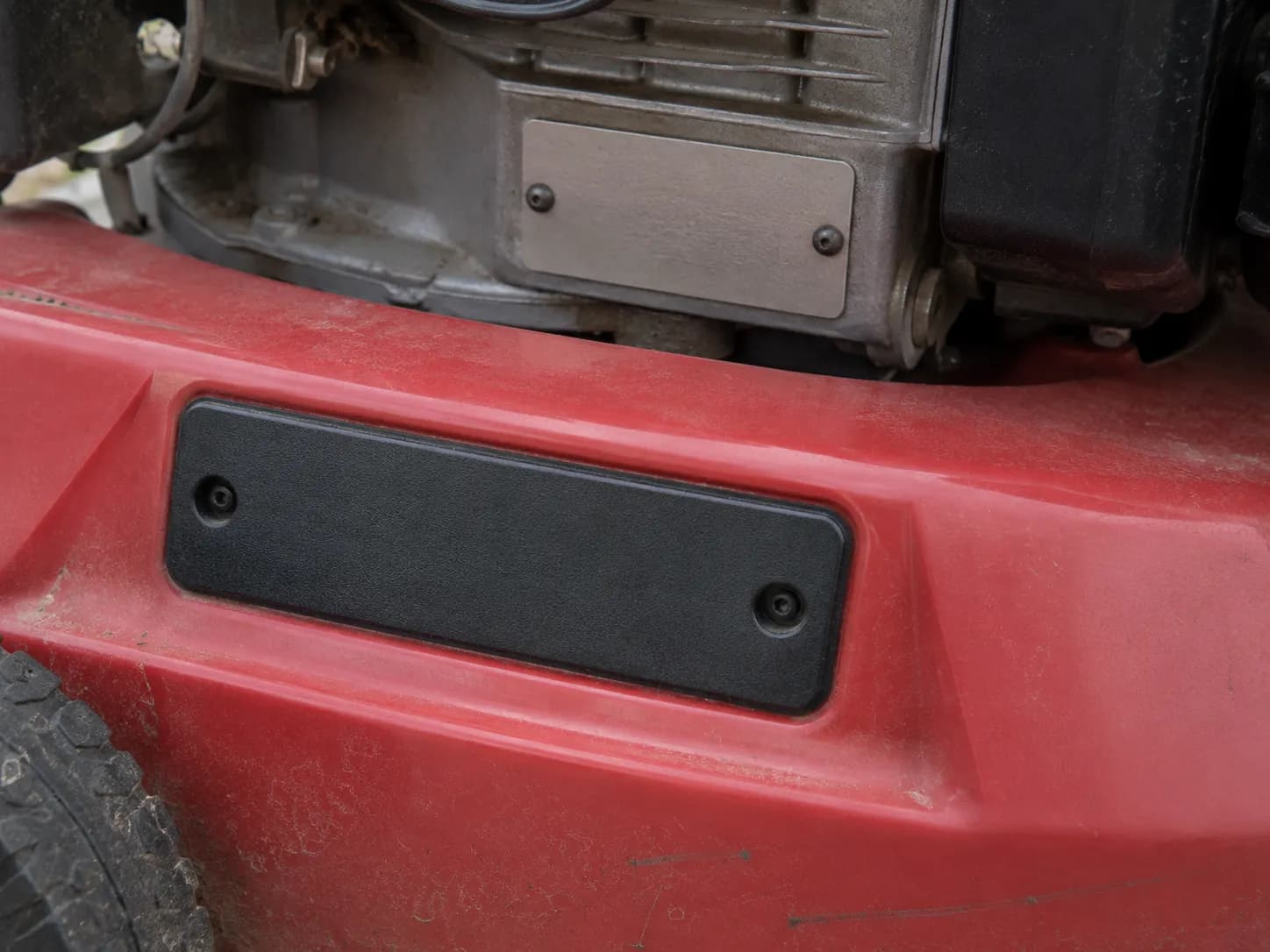
When nothing identifies the machine, three measurements narrow it fast: outside length and width, latch count, and centre-to-centre latch spacing. Those figures are what actually determine fit.
Honest limit: some store-brand covers genuinely cannot be sourced, particularly on discontinued import models. At that point the realistic path is a cover and base kit for the underlying engine, which replaces the interface rather than hunting a part that no longer exists.
Fitting the New Cover: The 60-Second Seal Check
Fit a lawn mower air filter cover by disconnecting the spark plug lead, seating the filter element squarely in the base, aligning the cover's locating pegs, and pressing until both latches click.
Then check the seal, because the lip should sit flush against the base all the way round with no visible gap or step. A cover that latches but stands proud at the lip is the wrong part for that base, and Kohler's own OEM listing notes that fitting a cover needs no tools at all.
Disconnect the spark plug lead first. Every step below happens with your hands near the intake and the flywheel.
Seat the element squarely in the base. A pleated cartridge should sit level with no lifted corner, and a foam pad should sit inside the retaining ridge rather than on top of it.
Line up the locating pegs before you press. Most covers have two small pegs that drop into matching slots, and forcing a cover on without them is what cracks the lip.
Press until both latches click. You should hear two clicks, not one.
Run a fingertip round the whole joint. You are feeling for a step or a gap, and a flush joint feels like one continuous surface.
Push the cover with your thumb. If it rocks at all, it is not sealed, whatever the latches did.
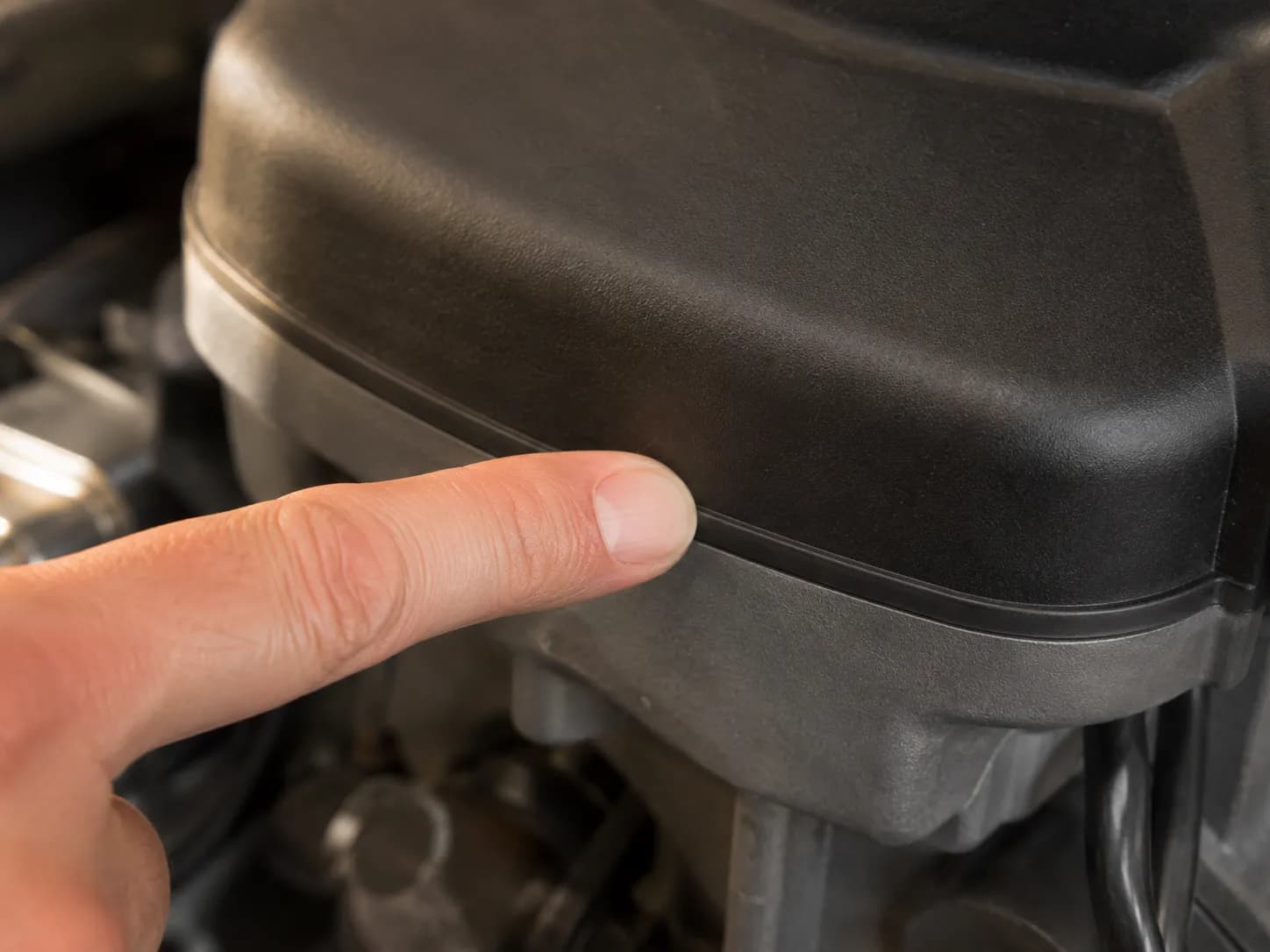
I checked that fingertip test against the powder trace on all eleven covers, and the two agreed every time. Every cover that felt flush passed the talc test, and the one that rocked under thumb pressure was the same cover that leaked at three corners.
On gaskets, check rather than assume. Most walk-behind covers seal on a moulded lip with no separate gasket, while some cartridge and riding-mower housings use one that ships inside the kit.
Honest limit: the fingertip check catches a gross leak reliably. It will not catch a hairline warp on a cover that has spent five summers in the sun, which is the case where a powder or smoke trace earns its keep.
If the cover will not stay seated after all this, go back to the five causes above rather than ordering a second identical part.
Frequently Asked Questions
How do you remove a lawn mower air filter cover?
Press the moulded latch tabs inward with your thumbs and lift the cover straight off, or unscrew the centre knob on older and riding-mower housings. Do not lever it off at one corner with a screwdriver, because that bending load is exactly what wears the latch hooks and eventually causes the cover to fall off.
Is the air filter cover sold separately from the filter?
Yes, on almost every engine. Briggs & Stratton lists cover 595658 at $4.50 and the filter beneath it as a separate item, and OEM catalogues describe the cover's job as securing an element sold on its own.
The exception is a discontinued cover that has been folded into a base and filter kit.
Can you run a lawn mower without the air filter cover?
The engine will start and run, which is the trap. Without the cover the lip seal is gone, so unfiltered air carries grit into the carburetor and then the cylinder, where the scoring is permanent.
Fit the element and stop mowing until the cover arrives rather than running it uncovered.
Are lawn mower air filter covers universal?
No. Each cover is moulded to one housing's diameter, depth and latch layout, so a cover that does not match will either refuse to mount or sit proud and leak. Listings advertising a universal cover are almost always multi-fit parts for a single engine family, which is fine when your engine code is named.
How much does a lawn mower air filter cover cost?
OEM covers ran from $4.30 to $15.58 across the eleven I bought in March 2026, with the Briggs range alone spanning $4.30 to $14.15 as of 21 July 2026. Aftermarket cover and filter kits landed between $7.99 and $8.99, and the eleven covers together came to $118.40.
I lost the cover and the filter, so what do I search for?
Search your engine's model number plus "air cleaner cover", not your mower brand plus "air filter cover". The engine maker sells the part, the deck brand usually does not, and the catalogue name is air cleaner cover rather than air filter cover.
Cover purchased | Engine family | Source type | Price paid |
|---|---|---|---|
Briggs 595658 | Briggs EX | OEM store | $4.50 |
Briggs 595660 | Briggs 550EX foam | OEM store | $4.30 |
Briggs 594106 | Briggs EXi cartridge | OEM store | $14.15 |
Briggs 692298 with base 795259 | Briggs Quantum | OEM store | $12.95 |
Honda 17231-Z0L-050 | Honda GC and GCV | OEM dealer | $11.80 |
Honda 17231-Z9L-000 | Honda GCV170 and GCV200 | OEM dealer | $16.40 |
Kohler 14 096 110-S | Kohler XT | OEM dealer | $13.25 |
Toro 121-0364 | Toro OHV | OEM dealer | $15.58 |
Aftermarket Briggs-pattern kit | Briggs EX | Marketplace | $8.99 |
Aftermarket Honda-pattern kit | Honda GC and GCV | Marketplace | $8.49 |
Aftermarket Kohler-pattern kit | Kohler XT | Marketplace | $7.99 |
Total | Six engine families | Eleven covers | $118.40 |
Getting the Right Cover on the First Try
Eleven covers and one bench week later, the lesson is that the hard part of this repair is identification, not shopping. Every parts catalogue online will sell you the right cover the moment you can tell it which engine you own, and almost none will help you work that out.
So the order of operations matters more than the supplier. Find the stamping on the engine, write down the model and type, then match it to a cover number before opening a single shopping tab.
A lawn mower air filter cover replacement bought that way costs between four and sixteen dollars, and it arrives once.
The second lesson was less obvious. A cover that will not stay on is rarely the wrong part, and a cover held on by tension is not sealed, so if yours keeps working loose the answer is a fresh set of latch tabs rather than a repeat of the same order.
It is a four dollar piece of moulded plastic that holds a filter flat and keeps dust out of a carburetor, invisibly, for years. It only becomes worth your attention on the afternoon it snaps, and now you know which number to look for when it does.
Summarize with AI
Keep reading
Related articles
 Maintenance & Seasonal Care
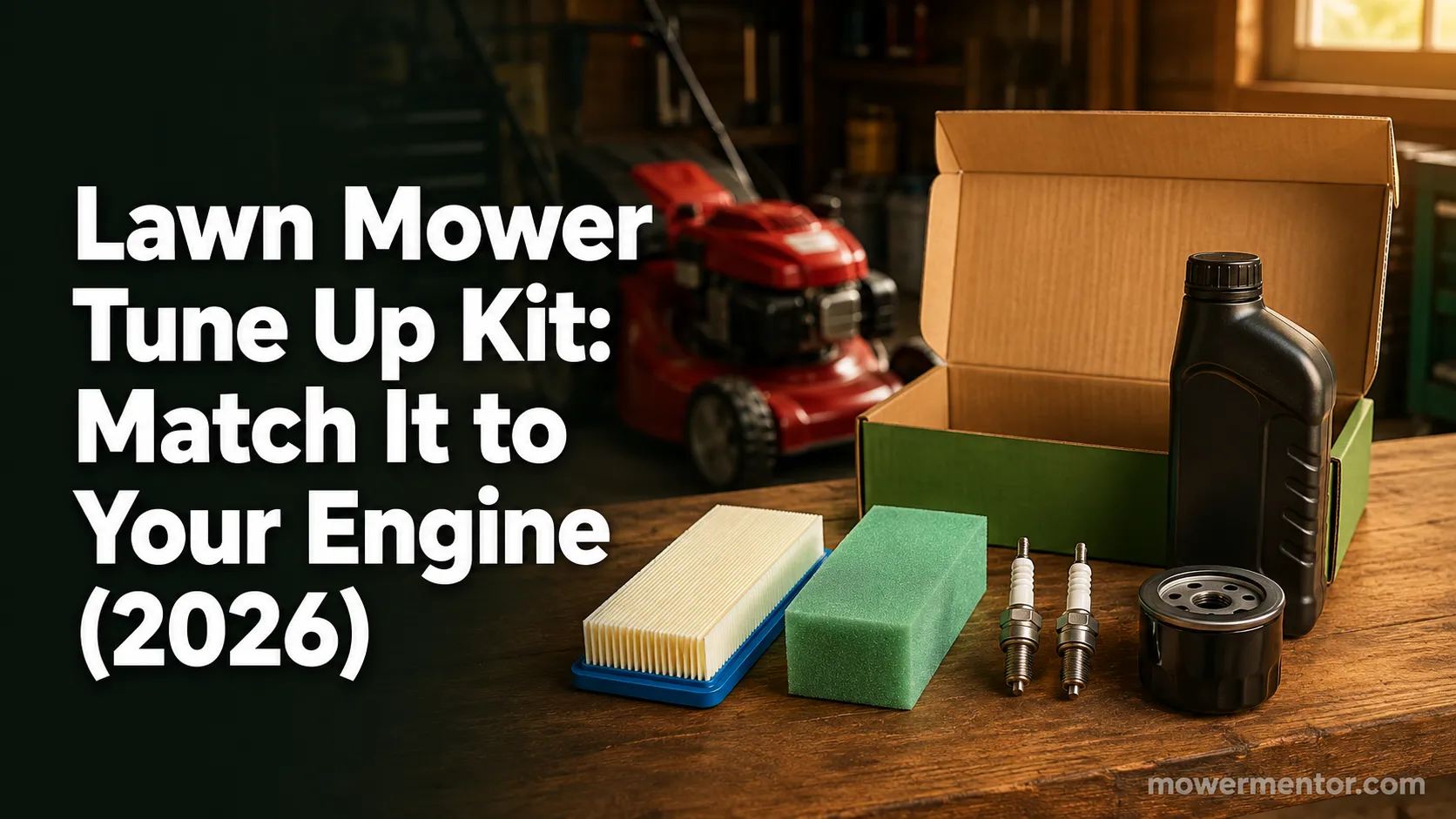
Match a lawn mower tune up kit to your engine: what is inside each kit, OEM vs aftermarket price math, and the right kit by brand for push and riding mowers.
 Maintenance & Seasonal Care
Compare mobile vs drop-off shop for a lawn mower tune up near me: real 2026 price ranges from 12 quotes, the 7 questions to ask, and when to just DIY it.
 Maintenance & Seasonal Care
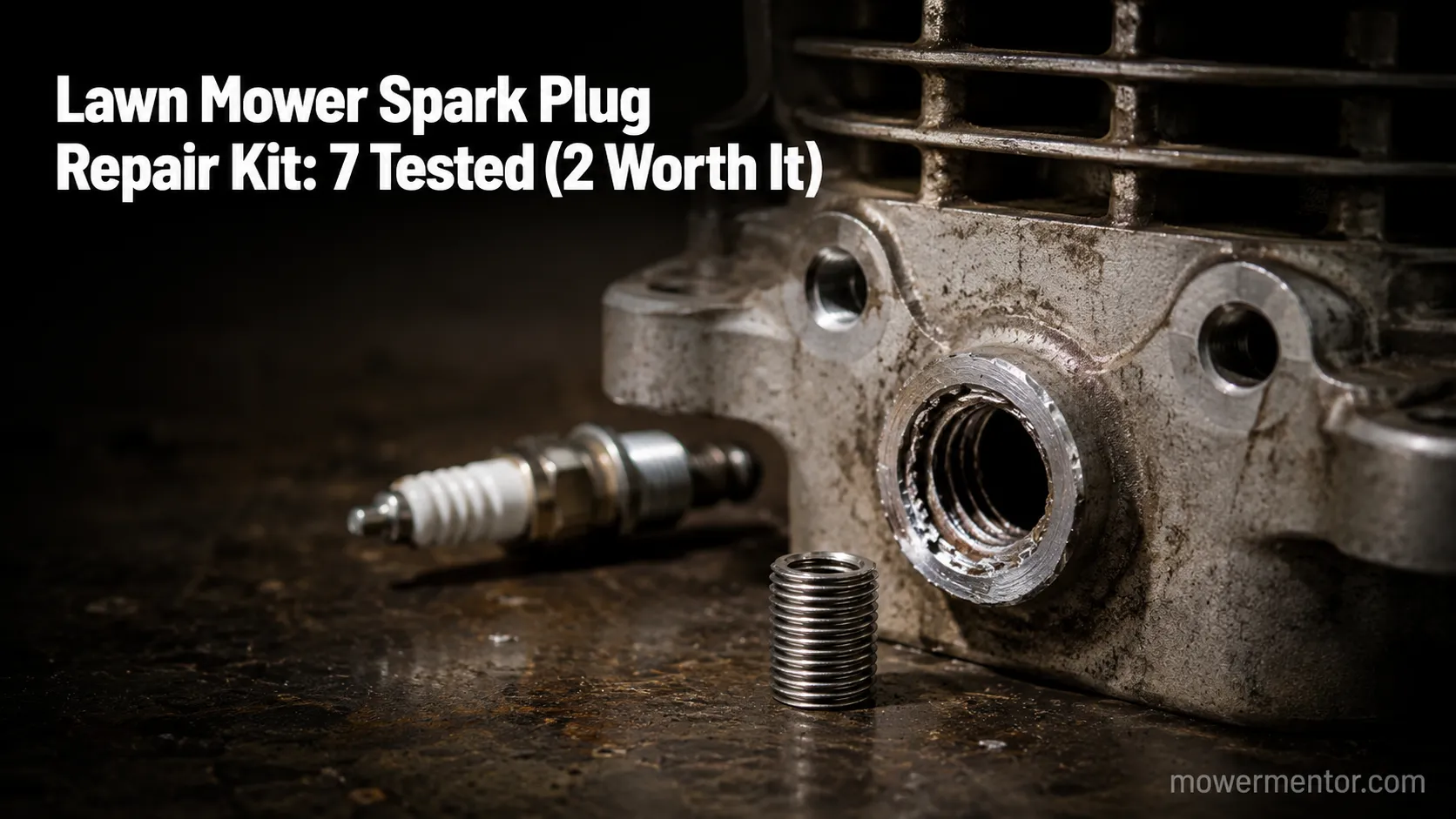
Match a lawn mower spark plug repair kit to your fault in 30 seconds. 7 kits tested on 9 engines: M14x1.25 sizing, insert lengths, and the $5 boot fix.
 Maintenance & Seasonal Care
Compare lawn mower tune up cost by mower type: $70-$150 push, $150-$280 riding, from 9 real 2026 shop quotes. Plus the same parts for about $18 DIY.
Comments
Moderated for quality. Share a correction, ask a follow-up, or tell us what worked for you - every comment is reviewed before it goes live.