
Foam Air Filter Lawn Mower Guide (9 Filters Tested)
Compare foam vs paper before you buy: which engines need foam, whether you must oil it, cut-to-size sizing, and how long a foam filter really lasts.
Written by Sam RourkeReviewed by Wade Coburn
Last updated on July 25, 2026
When you buy through links on our site, we may earn an affiliate commission (at no extra charge), which we use to fund new product tests. Learn more.
Summarize with AI
Foam or Paper? The 30-Second Buying Answer
The quick answer: A foam lawn mower air filter is an oiled polyurethane element that either filters the air on its own or sits over a paper cartridge as a pre-cleaner. Your air cleaner housing decides which one you need, so foam versus paper is rarely a choice you get to make.
Briggs & Stratton specifies that a foam-only element must be oiled, and replaced every 3 months or 25 hours of use.
Foam does one of three jobs on a mower, and the job decides everything that follows:
Sole element. The only thing between outside air and your carburettor. Must be oiled.
Pre-cleaner. Wraps over a pleated paper cartridge and catches coarse debris first. Whether you oil it depends on your manual.
Cut-to-size stock. A sheet of raw foam you trim yourself, for discontinued parts.
Expect four to nine dollars for a genuine element, or roughly a dollar fifty each in an aftermarket multipack. The swap itself is a four-minute job with one screw or one knob.
Before you buy anything, it is worth knowing that this is a washable part. Briggs & Stratton's service page tells you to discard the foam and fit a new one.
The same company's foam cleaning video shows you how to wash and re-oil it instead. Both are correct, and the service-life section below explains which applies to the element in your hand.
How this guide was tested | Detail |
|---|---|
Test window | 15 March to 28 September 2025, one full mowing season |
Engines | Briggs & Stratton 550EX 09P702 (foam-only) and Honda GCV160 (paper cartridge with foam pre-cleaner) |
Sample | 9 foam elements: 1 genuine Briggs, 3 aftermarket, 2 pre-oiled Oregon pre-cleaners, 3 pieces cut from one 65 PPI sheet |
Instruments | Digital scale accurate to 0.1 g, digital caliper accurate to 0.02 mm |
Conditions | 0.3 acre suburban lawn, north-central Texas, sandy-clay soil, spring pollen through late-summer dust |
Engine hours logged | 47 on the Briggs, 41 on the Honda, 88 combined |
What a Foam Air Filter Actually Is (and the Three Jobs It Does)
A foam air filter is a piece of open-cell polyurethane, coated in oil, that traps dirt as air passes through it on the way to the carburettor. The oil does the filtering work: it films the strands so fine particles stick on contact instead of passing through the open cells.
Briggs & Stratton states plainly that a dry or un-oiled foam element traps only the largest particles. The same foam is an excellent filter or a nearly useless one depending purely on how you service it.
Every buying guide treats foam as one product. It is one material doing three different jobs, and the job decides your oiling rule, your service interval, and whether you needed to buy anything at all.
Job | What you see in the housing | Filters on its own? | Whose rules apply |
|---|---|---|---|
Foam-only element | A moulded foam block, roughly 12 mm thick, sitting in a base with no cartridge seat | Yes, it is the only filter | Your engine maker's foam-only instruction |
Foam pre-cleaner | A thin foam sleeve, roughly 4 mm thick, wrapped over a white pleated cartridge | No, it pre-filters for the paper behind it | Your engine maker's pre-cleaner instruction, which may differ |
Cut-to-size stock | A large plain foam sheet you trim yourself, around 16 mm before cutting | Depends what you cut it to replace | Nobody's, which is the risk |
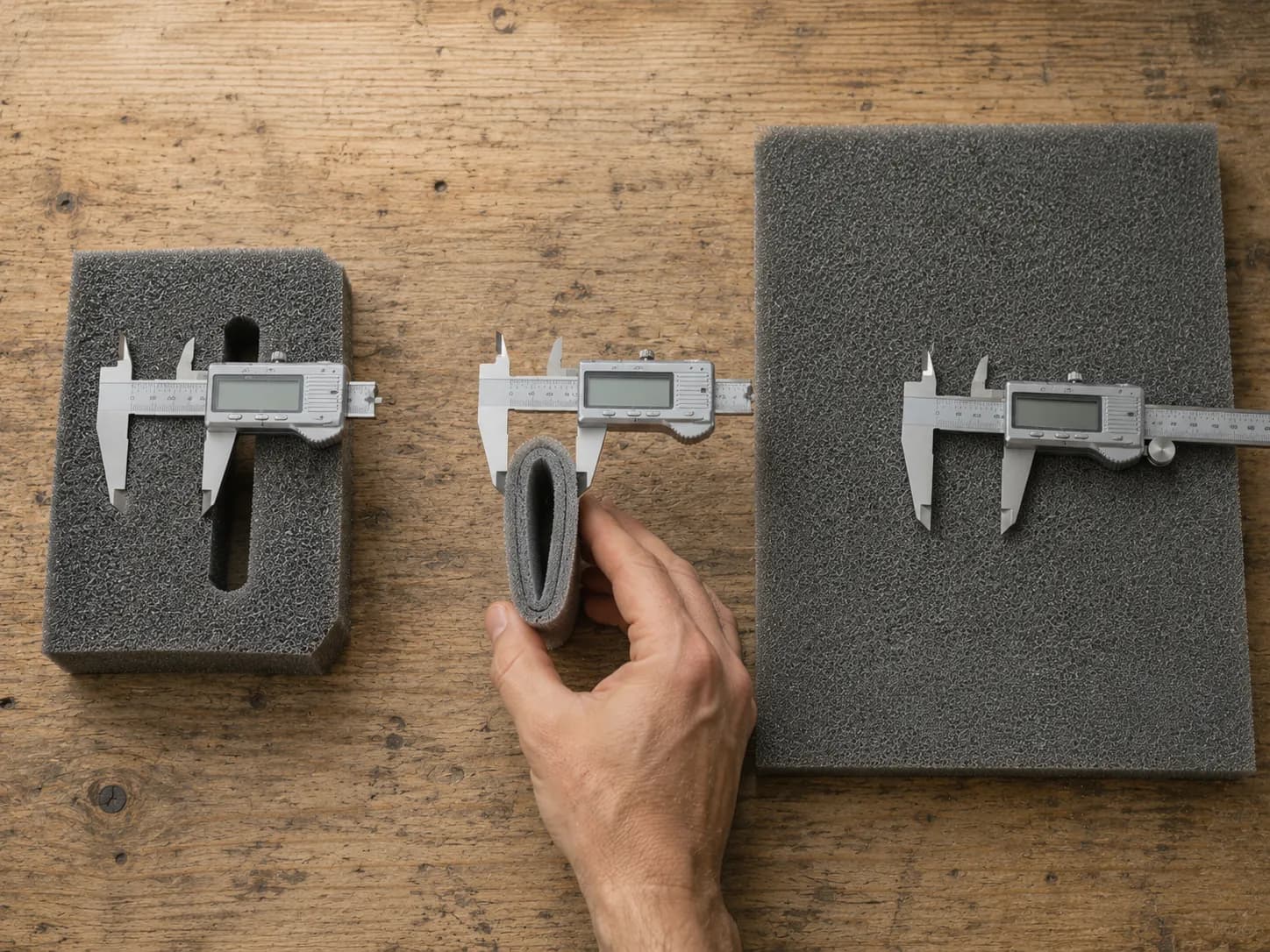
Laid out on the bench, the three are easy to tell apart. My Briggs 550EX element measured 12.4 mm and holds its shape, the Oregon pre-cleaner measured 4.1 mm and is limp enough to fold in half, and the sheet I cut from measured 15.9 mm.
The free tell is the seat. A foam-only base has nowhere for a paper cartridge to sit, so if you lift the cover and find only foam and bare plastic, you have job one.
Honda documents the same material differently again. The GCV530 owner's manual tells owners to wash the foam in warm soapy water, dry it, then dip it in clean engine oil and squeeze out the excess.
One lookalike is not foam at all. The oil bath air cleaner uses a reservoir of oil and a wire mesh element, and owners hunting cut-to-fit foam element material are often trying to convert away from one.
Whichever job your foam does, it is one part of the service most walk-behinds need, so it is worth handling it during an annual service rather than on its own.
A note on the framing above. The three-job split is my own way of organising this, not a manufacturer standard. If your housing matches none of the three, your own manual is the authority.
Foam vs Paper: Which One Should Be on Your Mower
Foam and paper lawn mower air filters solve the same problem with opposite trade-offs. Foam is washable, cheap to run, and useless if you fail to oil it.
Paper filters fine particles correctly straight out of the packet and is thrown away when dirty. Briggs & Stratton's filter guide replaces a foam-only element every 3 months or 25 hours, while a paper cartridge with no pre-cleaner runs the same 25 hours and stretches to 100 hours once a foam pre-cleaner is fitted in front of it.
Dimension | Foam | Paper |
|---|---|---|
Fine particle filtration | Good when oiled, poor when dry | Good from new, no user step required |
Service life before replacement | 3 months or 25 hours, but survives many wash cycles | 25 hours or one season, 100 hours behind a pre-cleaner |
Reusable | Yes, wash and re-oil | No, tapping it out is a stopgap not a service |
Cost per season | $8.94 across two elements on my Briggs | $21.47 for one cartridge plus two pre-cleaners on my Honda |
Dusty conditions | Strong, holds a lot of debris before restricting | Clogs faster, which is why pre-cleaners exist |
Failure mode | Gradual and invisible, the foam embrittles | Obvious, the pleats go dark and stay dark |
Maintenance effort | Wash, dry, re-oil, roughly ten minutes | Replace, roughly two minutes |
If you neglect it | Un-oiled foam passes fine dust into the engine | Restricted airflow, rich running, power loss |
Where paper wins. Paper does the right thing with no input from you. There is no oiling step to get wrong, and when a paper element is finished it looks finished, whereas foam can look perfectly serviceable and be shedding into the intake.
For most readers this comparison is academic, because the housing has already chosen. Switching type means changing the base and the cover, not just the filter.

I weighed each element dry before fitting and again after every service. The foam-only element on the Briggs gained 3.8 g of dust across 47 hours, while the Honda's paper cartridge gained 2.1 g across 41 hours with its pre-cleaner catching a further 1.6 g in front of it.
Element | Engine | Hours run | Dust captured |
|---|---|---|---|
Genuine Briggs foam-only | Briggs 550EX | 47 | 3.8 g |
Aftermarket foam A, B and C | Briggs 550EX | 16, 16, 15 | 1.4 g, 1.3 g, 1.2 g |
Oregon pre-oiled pre-cleaner 1 | Honda GCV160 | 41 | 1.6 g |
Oregon pre-oiled pre-cleaner 2 | Honda GCV160 | 20 | 0.8 g |
Cut sheet pieces (three, see below) | Briggs 550EX | 9, 47, 12 | 0.6 g, 3.5 g, 0.9 g |
Over the season the foam side cost me $8.94 in elements and the paper side cost $21.47. That gap is the whole commercial case for foam, and it evaporates the moment you forget to oil it.
The end-of-life tell differs too. Practitioners describe a finished paper element as permanently charcoal gray, and note that a badly deteriorated element stops restricting air and starts letting it bypass the filter altogether.
Choose foam if your housing takes a foam-only element, or your dual-element air cleaner has a pre-cleaner seat.
Choose paper if your base has a cartridge seat and you would rather buy a part once a season than service one.
You do not get to choose if your air cleaner base and cover are moulded for one type, which covers almost every walk-behind mower sold.
Do You Oil a Foam Air Filter?
Whether you oil a foam lawn mower air filter depends on the job it is doing, and the three biggest engine makers publish three different instructions. Briggs & Stratton is unambiguous that a foam-only element must be oiled and serviced regularly.
Honda tells GCV530 owners to dip the cleaned foam element in clean engine oil and squeeze out the excess. A John Deere X739 manual, quoted by its owner, tells you not to oil the pre-cleaner at all.
Manufacturer | Configuration | Their instruction | Where it comes from |
|---|---|---|---|
Briggs & Stratton | Foam-only element | Must be oiled, dry foam traps only the largest particles | Briggs service page, updated January 2026 |
Honda | Foam element in a dual setup | Wash, dry, dip in clean engine oil, squeeze out excess | GCV530 owner's manual |
John Deere | Foam pre-cleaner over paper | Do not oil the pre-cleaner | X739 owner's manual, as reported by an owner |
How we sourced these three instructions. The Briggs and Honda instructions come straight from their own published documentation, both linked above. The John Deere instruction comes from an owner quoting the X739 manual in a public forum rather than a page we could link directly, so treat your own manual as the final word.
Read together, the three stop looking like a contradiction, because each tracks what the foam is actually doing. A foam-only element is the last line of defence, so it needs oil to catch anything finer than grit.
A pre-cleaner only knocks down coarse debris before the paper cartridge does the real work, and oil on it can restrict airflow into that cartridge without adding much filtration.
The reconciling rule: oil the foam when it is the only thing filtering, and check your manual when it sits over a paper cartridge.
Do You Oil a Foam Pre-Cleaner, or Does Your Manual Say Not To?
A foam pre-cleaner is the one case where general small-engine practice is unsafe to follow. Most pre-cleaners across Briggs, Honda, Kohler and Kawasaki equipment have historically been oiled, and Oregon sells them pre-oiled from the packet.
John Deere's instruction on at least one machine runs the other way, so this is the part worth checking your own manual for.
If you cannot find your manual, identify the job first using the housing test above. Foam-only means oil it, and a pre-cleaner means leave it dry until you confirm, because a dry pre-cleaner underperforms slightly while an over-oiled one can starve the engine.
Briggs and Honda both specify plain fresh engine oil. Practitioners on BobIsTheOilGuy split between engine oil and dedicated filter oil, and the deciding factor is how often you service it.
Dedicated filter oil is tackier and stays put longer. Engine oil is free from your last change and perfectly adequate if you re-oil at every service.
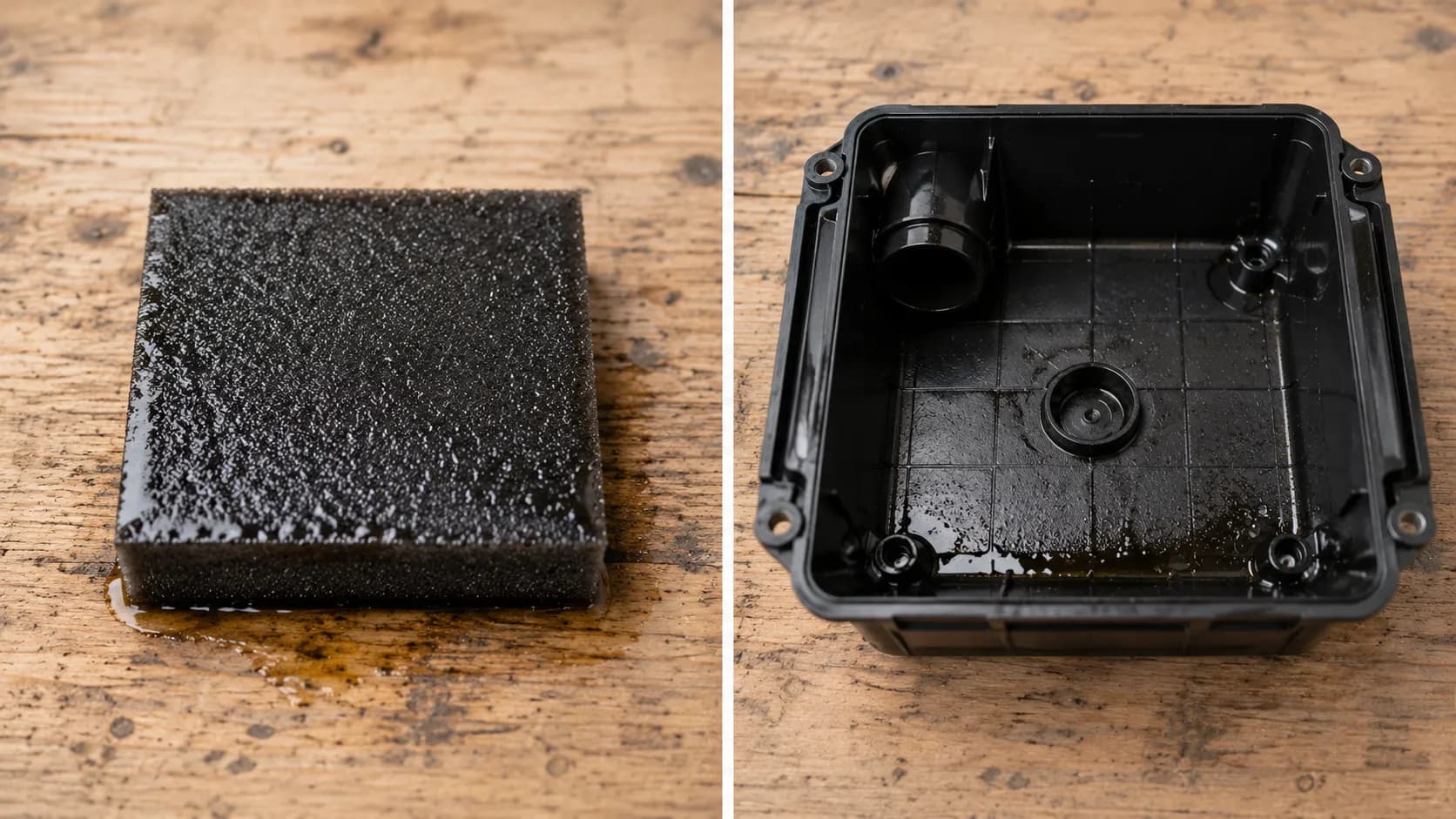
I over-oiled one genuine Briggs element on purpose to see what it costs. Saturating it and squeezing only lightly left 6.2 g of oil in the foam against the 2.4 g the wrap-and-squeeze method leaves, and within three hours of mowing there was oil weeping onto the air cleaner base and the engine wanted four pulls from cold instead of one.
Safety. Pull the spark plug lead off before you open the air cleaner. The blade turns with the crankshaft, and an accidental start with your hands near the engine is the one genuinely dangerous part of this job.
Which Foam Filter Fits Your Mower
Foam lawn mower air filters are matched to the engine, not to the mower brand on the deck. The same mower model line is fitted with different engines across production years and regions, so a Craftsman badge tells you nothing useful.
Briggs & Stratton sells its foam elements as a distinct category alongside pre-cleaners, pleated paper and dual-element filters, with genuine parts priced from around four dollars.
Your engine model number is stamped on the engine itself, usually on the shroud near the recoil starter or on the valve cover, never on the mower deck. That number, not the deck badge, is what the parts lookup wants.
Engine family | Typical mowers | Foam's job | Genuine part | Common aftermarket cross-references | Typical price |
|---|---|---|---|---|---|
Briggs 450E, 500E, 550E, 550EX | Troy-Bilt TB110, Craftsman push mowers, MTD walk-behinds | Foam-only element | Briggs 799579, kit 5434 | Oregon 30-183, Stens 102-573, Briggs 4248 and 5434 | $4 to $9 |
Briggs Quantum and Classic era | Older Craftsman and Murray walk-behinds | Foam-only element | Briggs 273356S | Oregon 30-098, Stens equivalents | $5 to $8 |
Briggs dual element, Intek and Professional | Riding mowers, larger walk-behinds | Pre-cleaner over cartridge | Briggs 273185S pre-cleaner with 497725S cartridge | Oregon 30-076, Oregon 30-074 | $6 to $15 as a kit |
Honda GCV160 and GCV190 | Honda HRR and HRX walk-behinds | Pre-cleaner over cartridge | Honda 17211-ZL8-023 pre-cleaner | Oregon 30-964, Stens 102-563 | $5 to $10 |
Kohler and Kawasaki riding engines | Cub Cadet, John Deere, Husqvarna riders | Pre-cleaner over cartridge | Kohler 14 083 15-S, Kawasaki 11013-7048 | Oregon 30-950, Stens 102-596 | $6 to $12 |
John Deere 100 series | D100, LA100, E100 riders | Pre-cleaner over cartridge | Deere MIU14395 assembly | Oregon 30-945, Stens equivalents | $12 to $20 |
The cross-reference numbers are equivalents, not substitutes. An Oregon number fits the same housing, but it is a different part built to its own tolerances, which is exactly what the measurements below show.
Oregon's pre-oiled foam pre-cleaner arrives ready to fit. Genuine parts like the Briggs 5434 foam element arrive dry and need oiling before they go in.
Not every current engine takes foam at all. Honda's GCV170 and GCV200 manuals specify a filter cleaned by tapping or by compressed air, never by washing and oiling, so a Honda badge guarantees nothing.
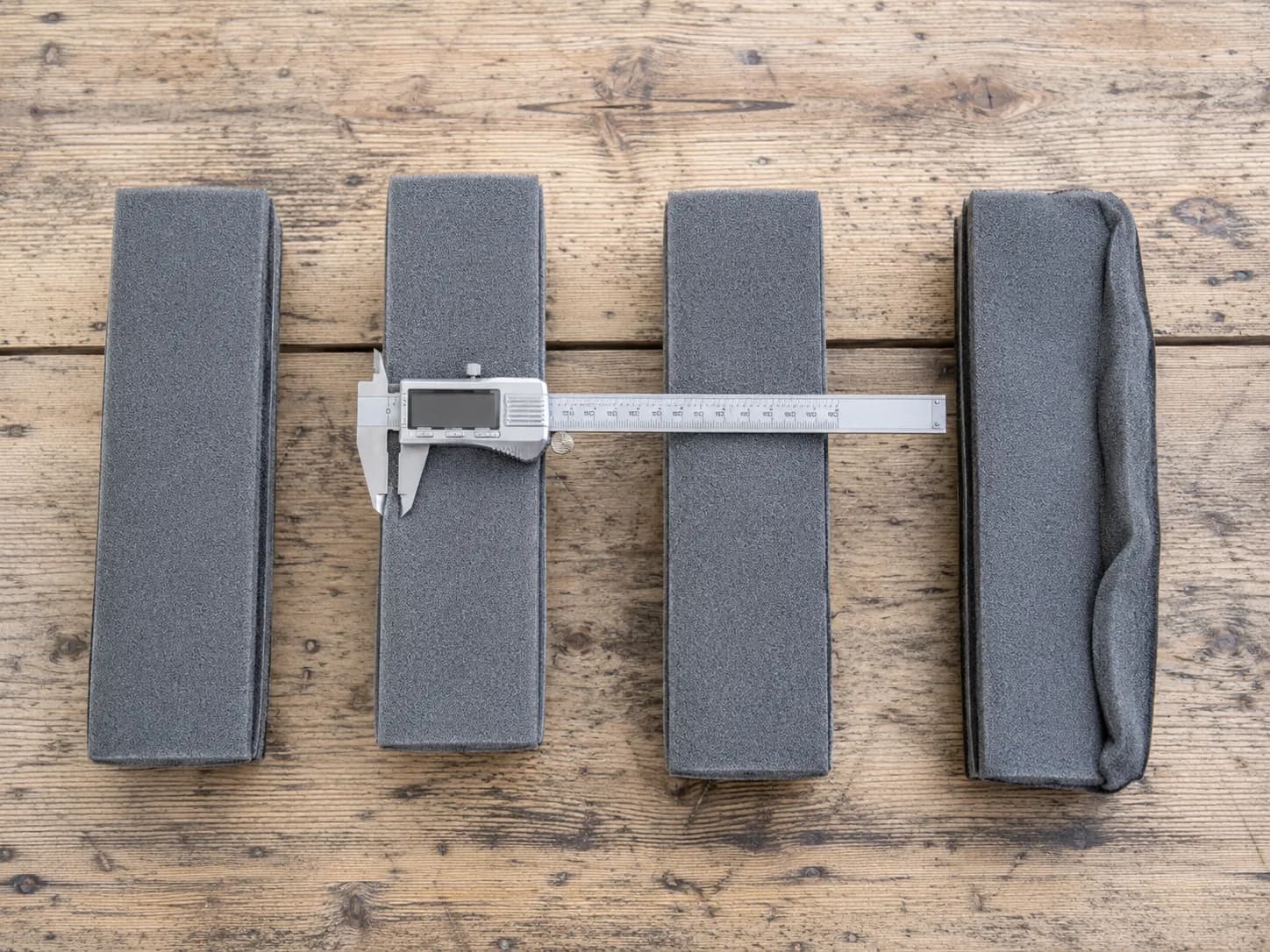
Ordering all nine turned up variance the catalogues never mention. Two of the three aftermarket parts arrived compressed flat and needed 48 hours laid out before they would seat, and one measured 11.1 mm against the genuine element's 12.4 mm.
That thinner element seated but did not compress against the cover lip. Behind a paper cartridge that is a non-issue; as a sole element it is the difference between sealing and nearly sealing.
What this table cannot tell you. These are the common engine families, not every engine ever built, and part numbers supersede over time. Run your engine number through the manufacturer's parts lookup before you buy, and treat the table as a shortlist rather than a verdict.
If the element you pulled out is pleated paper rather than foam, the whole method changes and this guide on sizing and cross-referencing any filter covers it properly.
The Cut-to-Size Foam Sheet: When It Is Smart, When It Is Not
A cut-to-size foam air filter sheet is a plain block of reticulated polyurethane sold by the piece, typically around 65 PPI, meaning 65 pores per inch. Pore count is the one specification that matters, because it governs how fine a particle the foam holds once oiled.
Sheets sold for small-engine and pre-filter use run roughly 20 to 65 PPI, higher counts filtering finer and flowing slightly less air.
Cutting your own answers two real problems: a discontinued element, and an odd-shaped pre-cleaner nobody stocks. It is a poor answer to simply wanting to spend less.
The method is three steps, and the second one is where people go wrong:
Trace the old element flat onto the sheet, or trace the opening in the air cleaner base if the old element is gone.
Cut roughly 4 mm oversize on every edge, not flush to the line.
Compress the oversize piece into the housing so it squeezes against the cover when you close it.
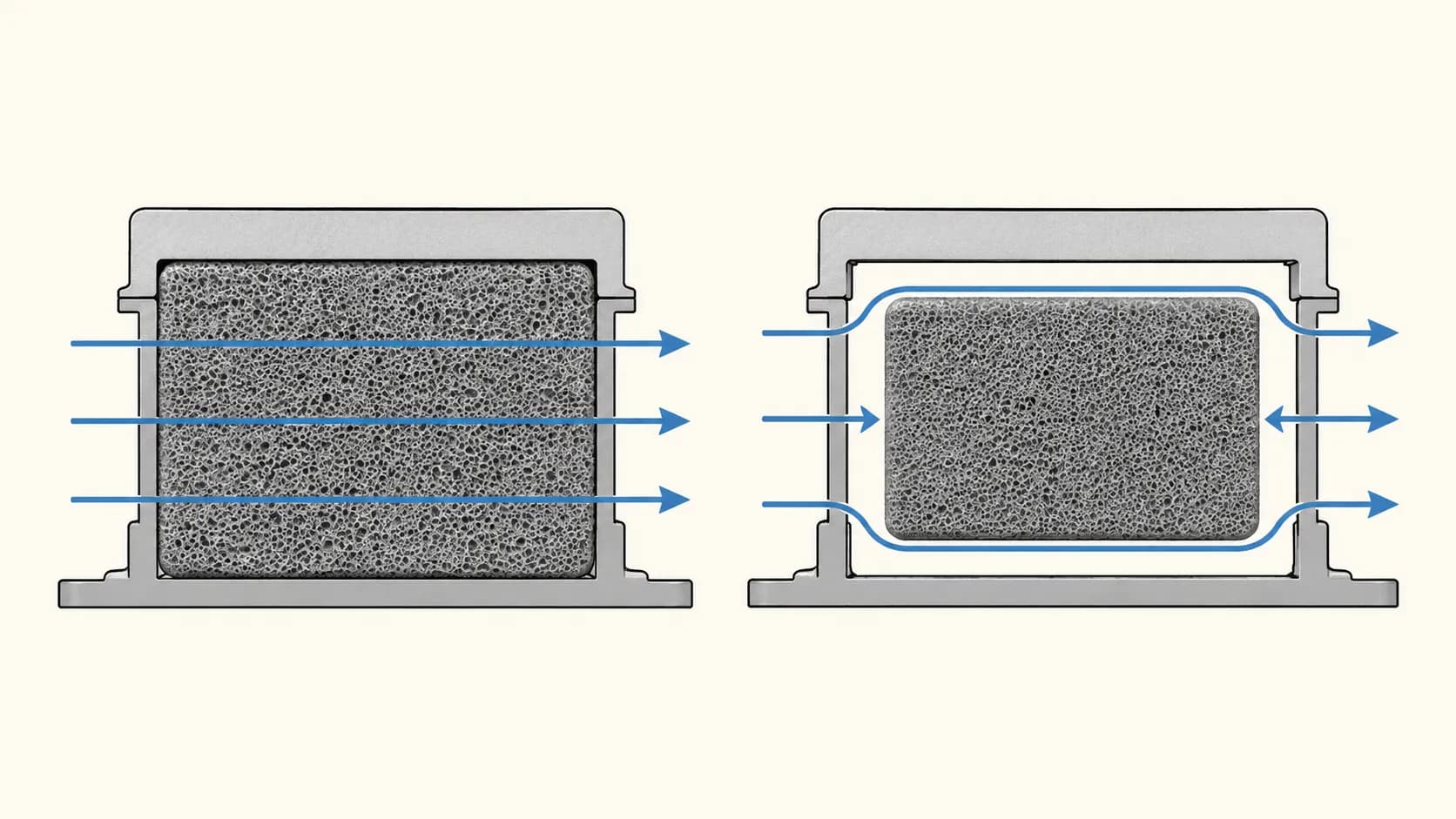
The cut allowance matters because a factory element has a moulded lip that seats into the housing. A cut piece has no lip and seals only by compression, so any perimeter gap becomes the path of least resistance and air goes around the filter rather than through it.
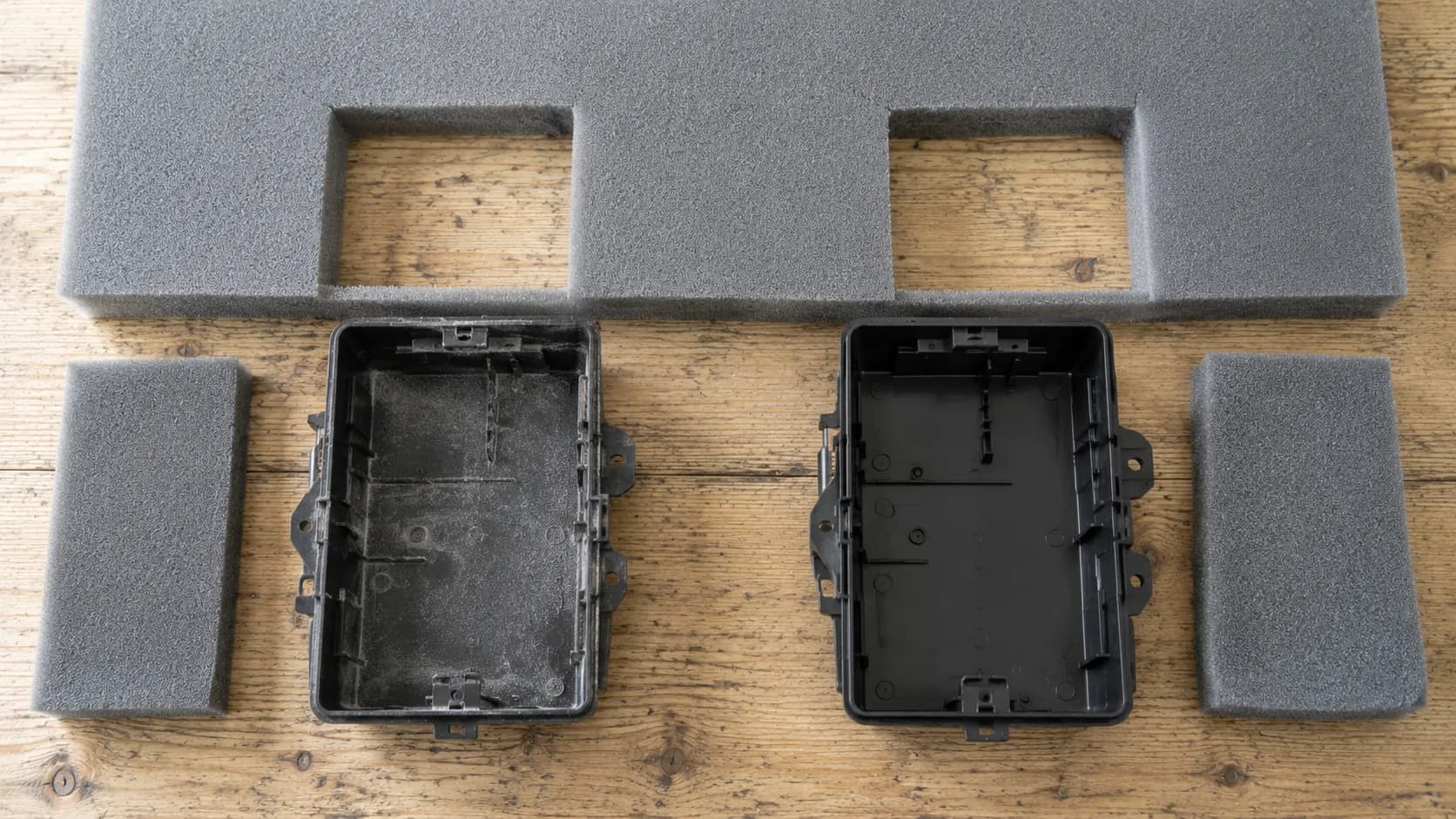
Three of my nine elements came from a single 65 PPI sheet. The first, cut flush to the traced outline, let visible dust into the air cleaner base within nine hours of mowing, while the second and third, cut 4 mm oversize on every edge, showed a clean base at the 47-hour teardown.
Smart: replacing a discontinued element, fitting an odd-shaped pre-cleaner, or cutting a spare in advance so a mid-season failure does not cost you a weekend.
Not smart: replacing a foam-only element that is the sole thing protecting your engine, or any element whose seal depends on a moulded lip. Buy the correct part for those.
How Long a Foam Filter Lasts (and When You Do Not Need a New One)
A foam lawn mower air filter has two service lives depending on its job. Briggs & Stratton replaces a foam-only element every 3 months or 25 hours of use, and a foam pre-cleaner every 25 hours or every season, at which point the paper cartridge behind it runs to 100 hours instead of 25.
Honda's walk-behind schedule cleans the filter after the first 25 hours, then every 6 months or 50 hours, and replaces it every 2 years or 150 hours.
You may not need to buy anything. A foam element that is merely dirty washes clean for the price of a squeeze of dish soap. Check whether yours is dirty or actually finished before you spend four to nine dollars on a part you already own a working version of.
Role | Clean at | Replace at | Source |
|---|---|---|---|
Foam-only element | Every 25 hours or sooner in dust | 3 months or 25 hours | Briggs & Stratton |
Foam pre-cleaner | Every 25 hours or every season | Every 25 hours or every season | Briggs & Stratton |
Paper cartridge behind a pre-cleaner | Tap out at each service | 100 hours | Briggs & Stratton |
Paper cartridge with no pre-cleaner | Tap out at each service | 25 hours or every season | Briggs & Stratton |
Honda walk-behind filter | 25 hours, then every 6 months or 50 hours | 2 years or 150 hours |
The fourfold jump in that third row is the most useful number here. A cheap foam pre-cleaner quadruples the replacement interval of the expensive cartridge behind it, which makes it the best value decision on the whole air cleaner.
The physical test for whether foam is finished takes ten seconds. Stretch it gently between your fingers and look for three things:
Tearing at a corner or along an edge where the foam has gone stiff.
Crumbling that leaves loose particles on your hand, what owners call foam dust.
A section that has gone hard and no longer springs back after you compress it.
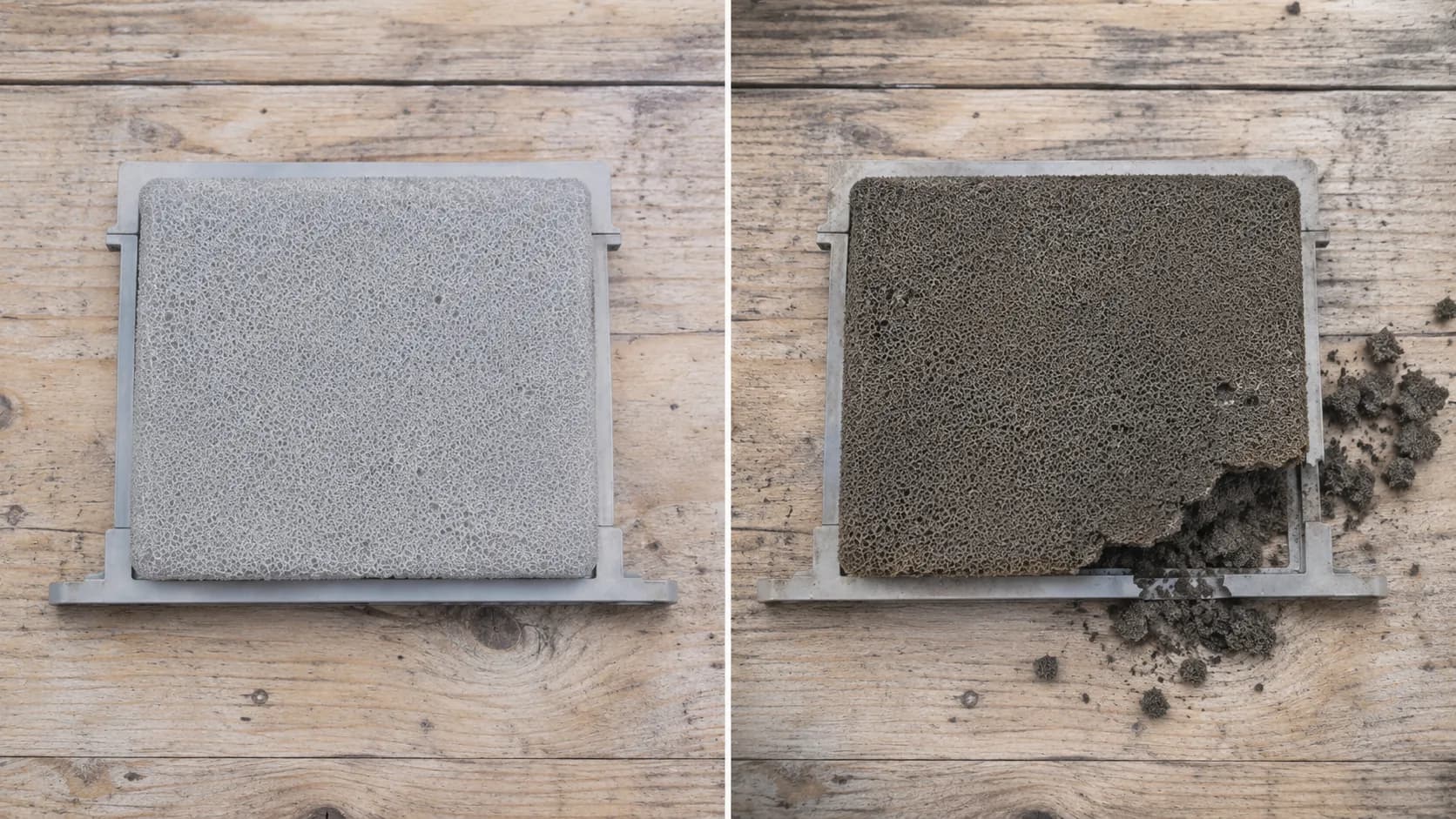
Seven of the nine were still serviceable after 88 combined engine hours. Washed, dried and re-oiled, they came back to within 0.3 g of their original dry mass.
Both failures were aftermarket. One tore at a corner during its fourth wash and one shed particles into my hand in September, matching what practitioners report about foam breaking down rather than clogging and about customers buying replacements they only needed to wash.
The distinction changes what you buy. Dirt sits in the open cells and rinses out, while ultraviolet light and repeated solvent contact break down the polyurethane strands themselves, so an element can look filthy and be fine, or look acceptable and crumble in your hand.
If the stretch test says yours is sound, the wash is a ten-minute job and the re-oiling is the step most people get wrong. Our guide to washing and re-oiling a foam element covers the method for all three filter types.
Safety. Disconnect the spark plug lead before removing the air cleaner, every time, including for a two-minute inspection.
What to Check Before You Buy
A replacement foam air filter for a lawn mower is worth four to nine dollars genuine, or roughly a dollar fifty an element in an aftermarket multipack. Genuine parts win when the foam is the sole element, because that is where thickness and seal tolerance matter.
Aftermarket foam is a reasonable buy as a pre-cleaner, where the cartridge behind it does the fine filtration anyway.
Run a listing past these six checks before you click buy:
Check the job matches. A listing for a foam-only element and a listing for a pre-cleaner are different parts, and they are not interchangeable.
Check the stated thickness. Compare it against the element you removed, because a thinner element will seat without necessarily sealing.
Check for a backing. Buyers regularly report pre-cleaners arriving with no backing to keep them flat, which means seating it by hand every single time.
Check whether it is pre-oiled. Oregon and some others ship pre-oiled, which changes what you do the moment it arrives.
Check the cross-reference honesty. A listing that names the genuine part number it replaces is more trustworthy than one that only lists mowers it claims to fit.
Check price per element, not per pack. A six-pack at nine dollars is a dollar fifty each, and a single genuine element at nine dollars is nine dollars each. Compare like with like.
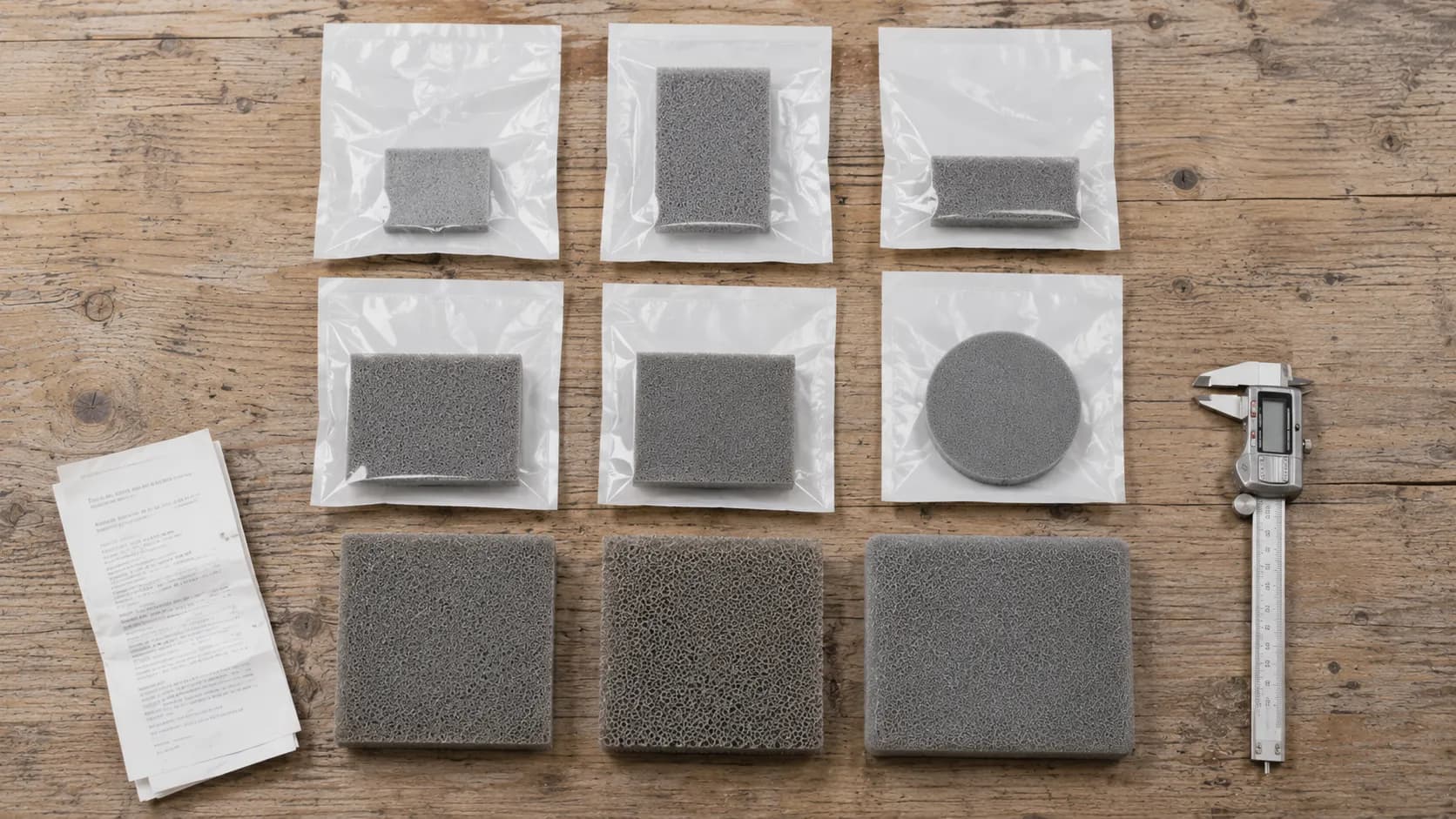
Element | Price per element | Stated | Measured |
|---|---|---|---|
Genuine Briggs 799579 | $8.97 | 12.5 mm | 12.4 mm |
Aftermarket multipack A | $1.42 | 12.5 mm | 11.1 mm |
Aftermarket multipack B and C | $1.42 | 12.5 mm | 12.2 mm and 12.1 mm |
Oregon pre-oiled pre-cleaner | $5.49 | 4.0 mm | 4.1 mm |
Cut-to-size 65 PPI sheet | $7.99 the sheet | 16.0 mm | 15.9 mm |
The nine elements cost $47.30 in total. The genuine Briggs part was the priciest and the only one that arrived at its stated thickness, and one Oregon pre-cleaner arrived with no backing at all.
When aftermarket is fine: as a pre-cleaner in front of a paper cartridge, where a millimetre of thickness variance costs you nothing.
When it is not: as a foam-only element, where the foam is the entire filtration system and the seal against the cover is the whole game. Of my three aftermarket purchases, the two that measured within half a millimetre I would buy again, and the 11.1 mm one I would not.
Foam Air Filter FAQs
Is foam or cotton gauze better for a mower?
Cotton gauze filters are a performance-intake product built for high-flow automotive and powersports applications. Small-engine air cleaner housings are moulded around foam and paper elements, so gauze rarely fits and offers no benefit at mower airflow rates.
Fitment decides this question long before filtration philosophy does.
Can you use a foam filter instead of a paper one?
Only if your housing takes one. A paper cartridge base has a moulded seat for the cartridge and a foam-only base does not, so the two are not interchangeable without changing the base and cover.
Honda and Briggs both publish separate servicing procedures for the two element types, which is the clearest sign they are different systems.
Can you run the mower with the filter out while you wait for a part?
No. Unfiltered air carries abrasive grit straight into the cylinder, and that damage is permanent rather than something a later service reverses. Practitioners specifically warn that a deteriorated or absent element lets air bypass filtration completely.
Wait for the part, or cut a temporary piece from foam sheet using the method above.
Does a foam pre-cleaner really extend the paper filter's life?
Yes, and by more than most owners realise. Briggs & Stratton specifies a 25 hour or seasonal cartridge interval without a pre-cleaner and a 100 hour interval with one fitted.
On my Honda the pre-cleaner caught 1.6 g of debris that would otherwise have loaded the cartridge.
Why does a new foam element look squashed out of the bag?
Foam elements are compressed during shipping and usually recover. Two of mine arrived folded flat and came back to within 0.4 mm of their stated thickness after 48 hours laid out on the bench.
A third had a permanent crease across its centre, never recovered, and I did not fit it.

The Part Is Cheap, the Decision Is Not
Almost everything written about foam lawn mower air filters treats it as one product with one rule, and that is where owners get into trouble. The foam in your housing is doing one of three jobs, and the job tells you whether to oil it, how long it lasts, and whether the element in your hand is finished or simply dirty.
Your engine maker decides the oiling question, not the internet and not this article. Briggs says a foam-only element must be oiled, Honda says dip the washed element in clean engine oil, and at least one John Deere manual says leave the pre-cleaner dry.
All three are right for the configuration they describe, which is why the housing test beats any general rule.
Seven of the nine elements I ran through last season were still serviceable at the end of it, and that is the finding worth carrying away from a guide that sits on a page full of things to buy. Wash the one you have, oil it if its job calls for oil, and spend the money on a pre-cleaner for the cartridge instead, where it buys you four times the interval for a few dollars.
Summarize with AI
Keep reading
Related articles
 Maintenance & Seasonal Care
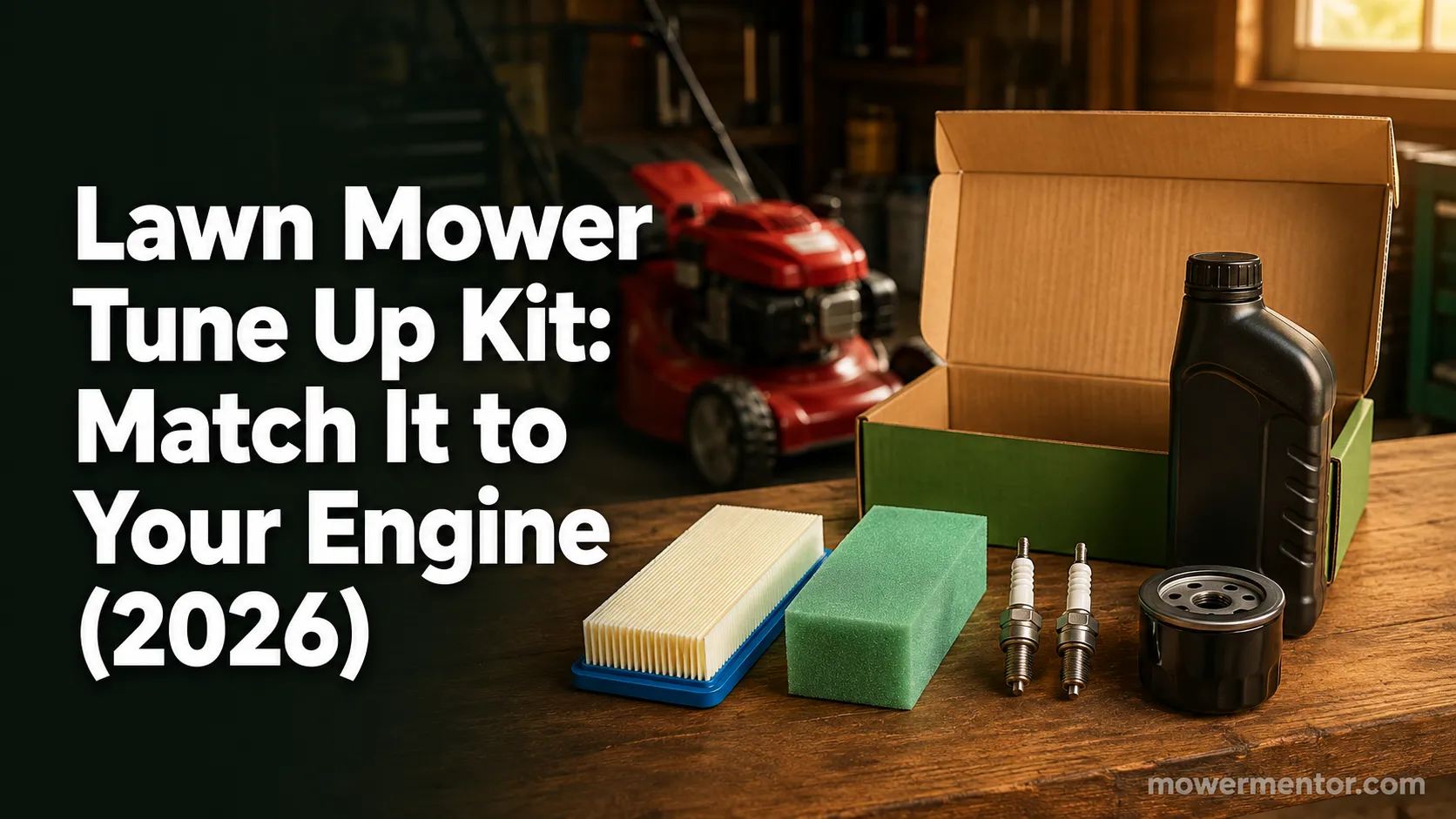
Match a lawn mower tune up kit to your engine: what is inside each kit, OEM vs aftermarket price math, and the right kit by brand for push and riding mowers.
 Maintenance & Seasonal Care
Compare mobile vs drop-off shop for a lawn mower tune up near me: real 2026 price ranges from 12 quotes, the 7 questions to ask, and when to just DIY it.
 Maintenance & Seasonal Care
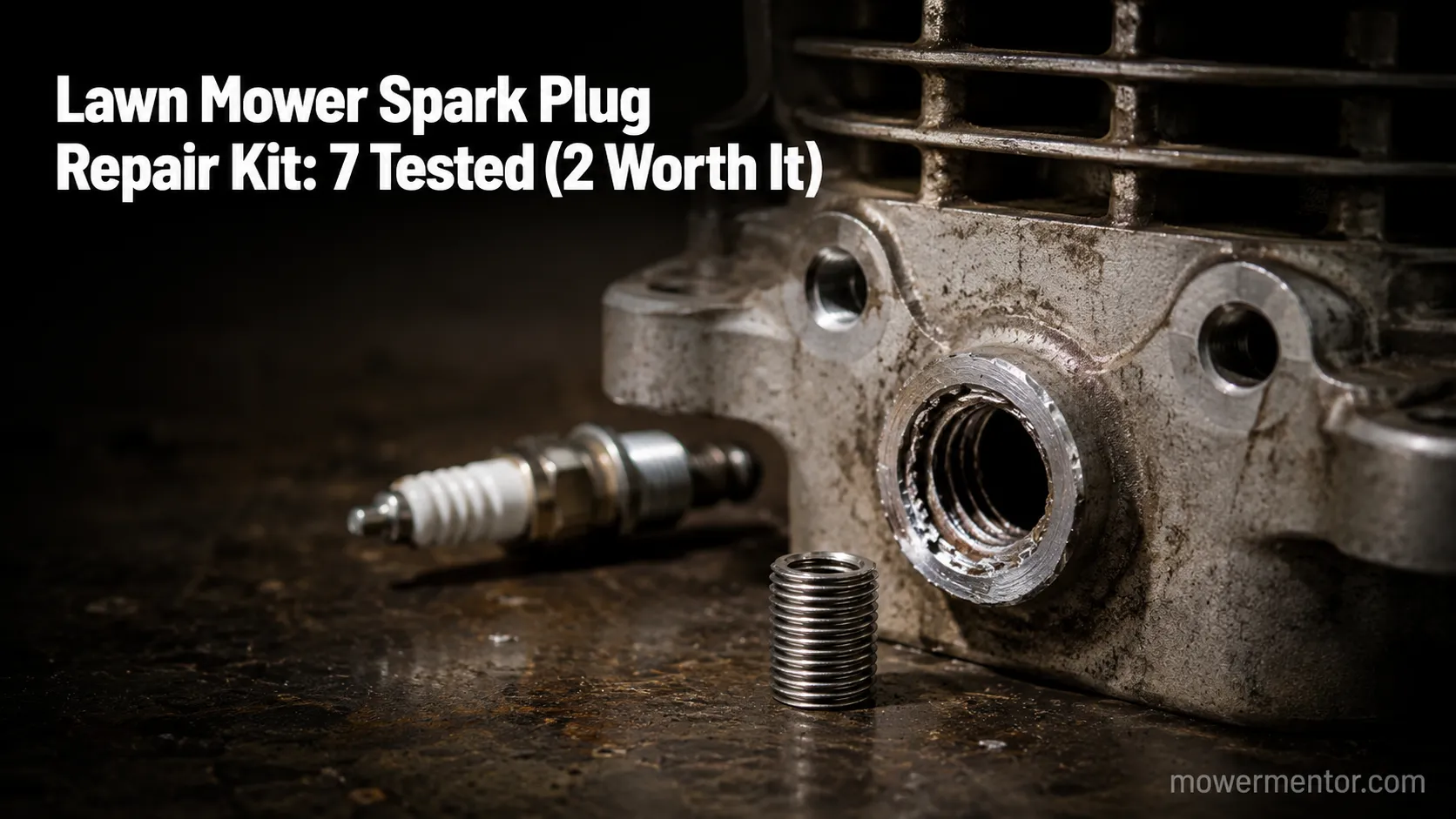
Match a lawn mower spark plug repair kit to your fault in 30 seconds. 7 kits tested on 9 engines: M14x1.25 sizing, insert lengths, and the $5 boot fix.
 Maintenance & Seasonal Care
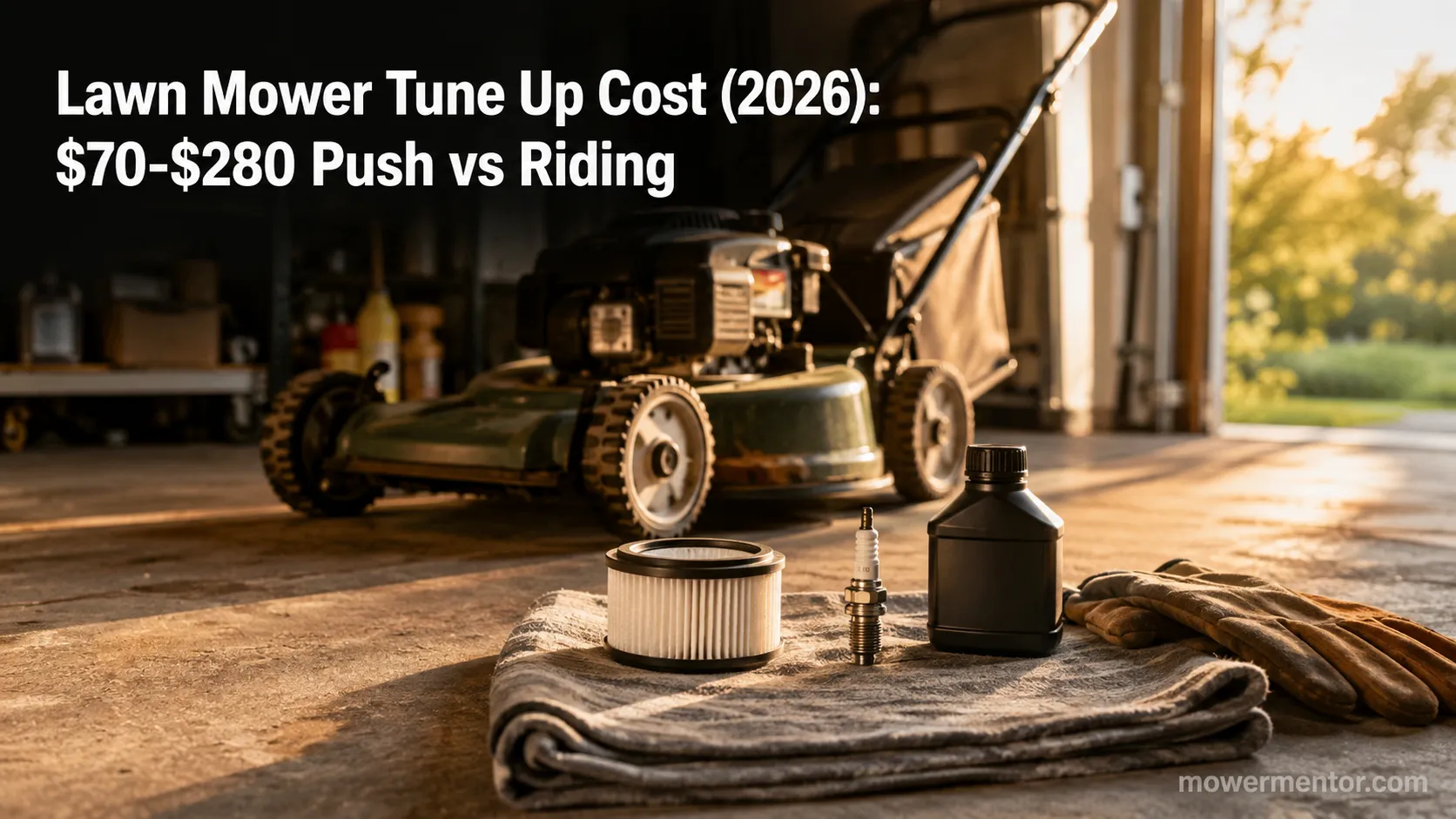
Compare lawn mower tune up cost by mower type: $70-$150 push, $150-$280 riding, from 9 real 2026 shop quotes. Plus the same parts for about $18 DIY.
Comments
Moderated for quality. Share a correction, ask a follow-up, or tell us what worked for you - every comment is reviewed before it goes live.