
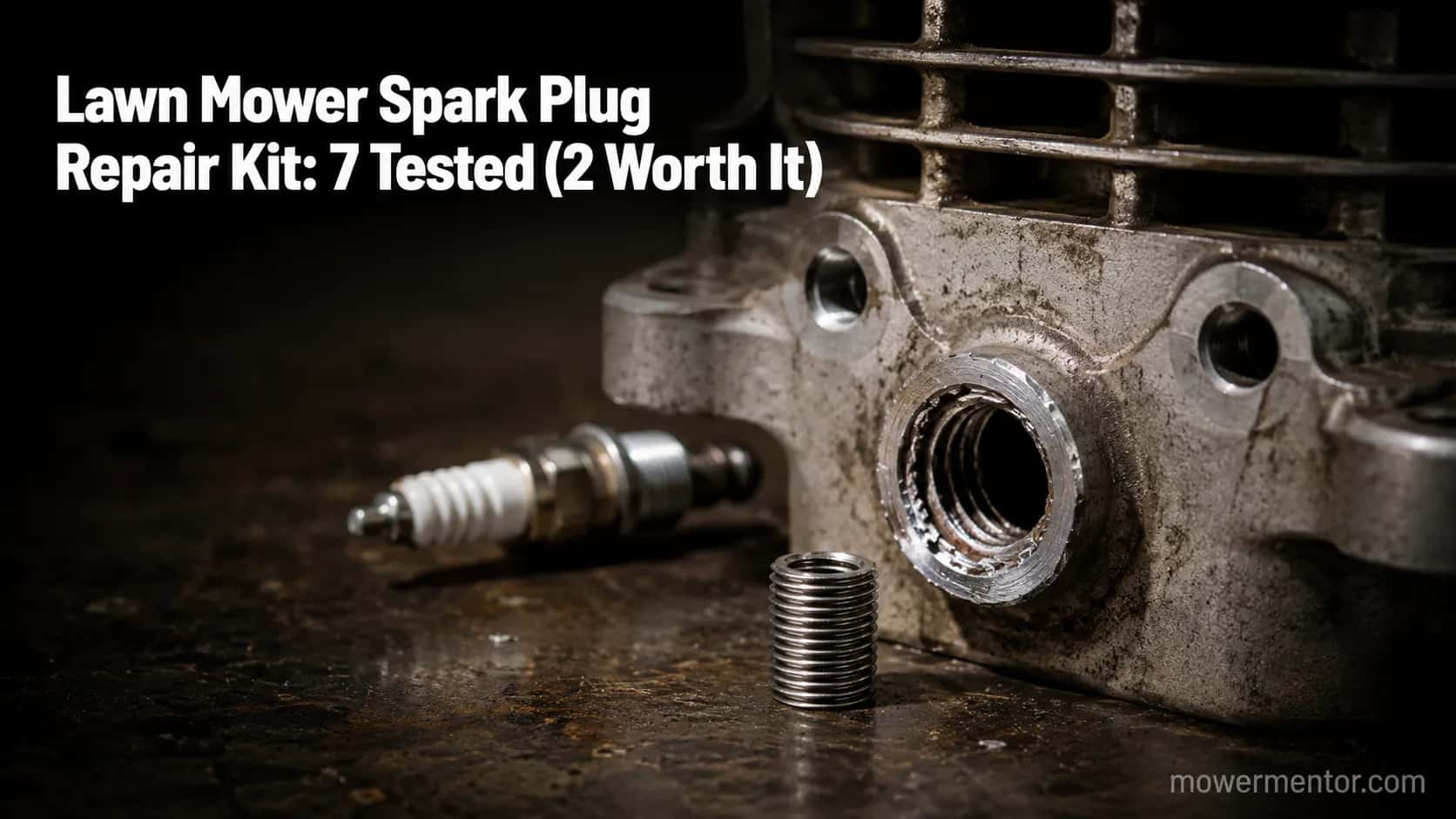
Lawn Mower Spark Plug Repair Kit: 7 Tested (2 Worth It)
Match a lawn mower spark plug repair kit to your fault in 30 seconds. 7 kits tested on 9 engines: M14x1.25 sizing, insert lengths, and the $5 boot fix.
Written by Sam RourkeReviewed by Wade Coburn
Last updated on August 13, 2026
When you buy through links on our site, we may earn an affiliate commission (at no extra charge), which we use to fund new product tests. Learn more.
Summarize with AI
Six boxes arrived on a Tuesday in March and four of them were useless to me.
I had searched exactly what you probably searched and ordered what came back. A lawn mower spark plug repair kit is not one product.
It is two unrelated products that happen to share a search phrase, and the parts do not overlap at all. One family repairs the threaded hole in the cylinder head, the other repairs the lead that carries spark to the plug.
Buy from the wrong family and nothing gets fixed. Buy the right family in the wrong size and a forty dollar problem becomes a new cylinder head.
Over eleven weeks I ran seven kits across nine engines to sort out which is which, then measured the thing that causes most of this damage in the first place.
Which Lawn Mower Spark Plug Repair Kit You Actually Need (30-Second Decoder)
A lawn mower spark plug repair kit comes in two forms that fix completely different faults. If the threaded hole in the cylinder head is stripped, you need a thread repair kit sized M14 x 1.25, the plug thread on virtually every mower engine sold in the United States.
If the lead or boot is damaged, you almost certainly need a boot and terminal costing under ten dollars, not a wire kit. Diagnose which fault you have, then buy.
What you are seeing | What is actually broken | What to buy | Typical spend |
|---|---|---|---|
Plug spins without tightening, backs out under load, or blows out while mowing | Threads in the aluminium cylinder head | Thread repair kit or back-tap tool, M14 x 1.25 | $15 to $50 |
Boot split or torn, terminal loose, spark reaching the plug intermittently | Boot, terminal, or the lead itself | OEM boot plus terminal, or a replacement ignition armature | $5 to $60 |
My four wrong kits were not random mistakes. Two were taper-seat automotive kits, which will not seal against a mower plug, and two carried terminals cut for 8.5 mm performance lead when a mower runs 7 mm.
Before you touch any of it, pull the plug lead off. Briggs and Stratton's troubleshooting guidance puts that step ahead of every other engine repair.
Stripped Hole or Damaged Lead? Diagnose Before You Buy
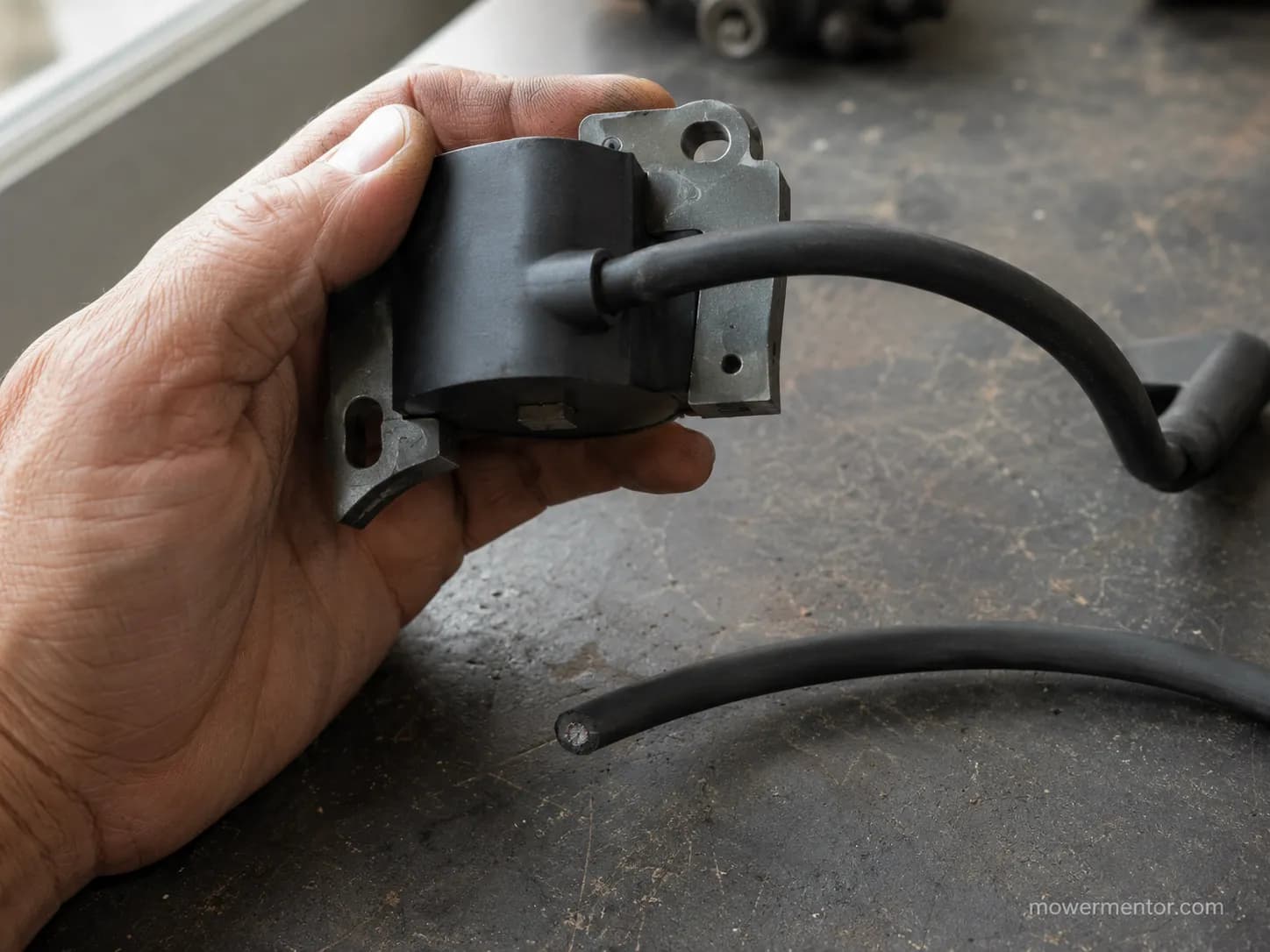
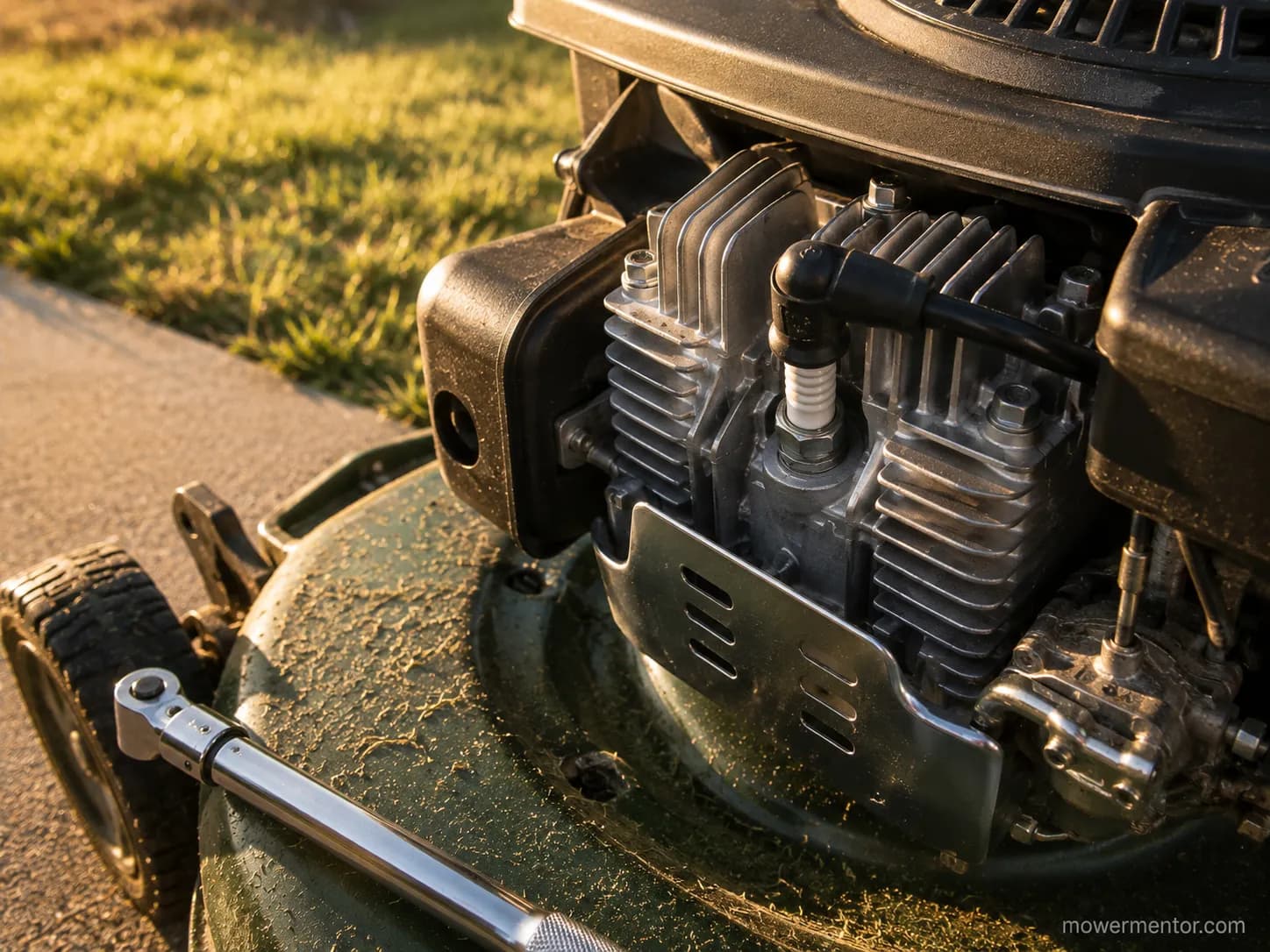
Two physical checks separate a stripped spark plug hole from a damaged lead, and both take under a minute on a cold engine. On most walk-behind mowers the plug lead is not a separate wire at all.
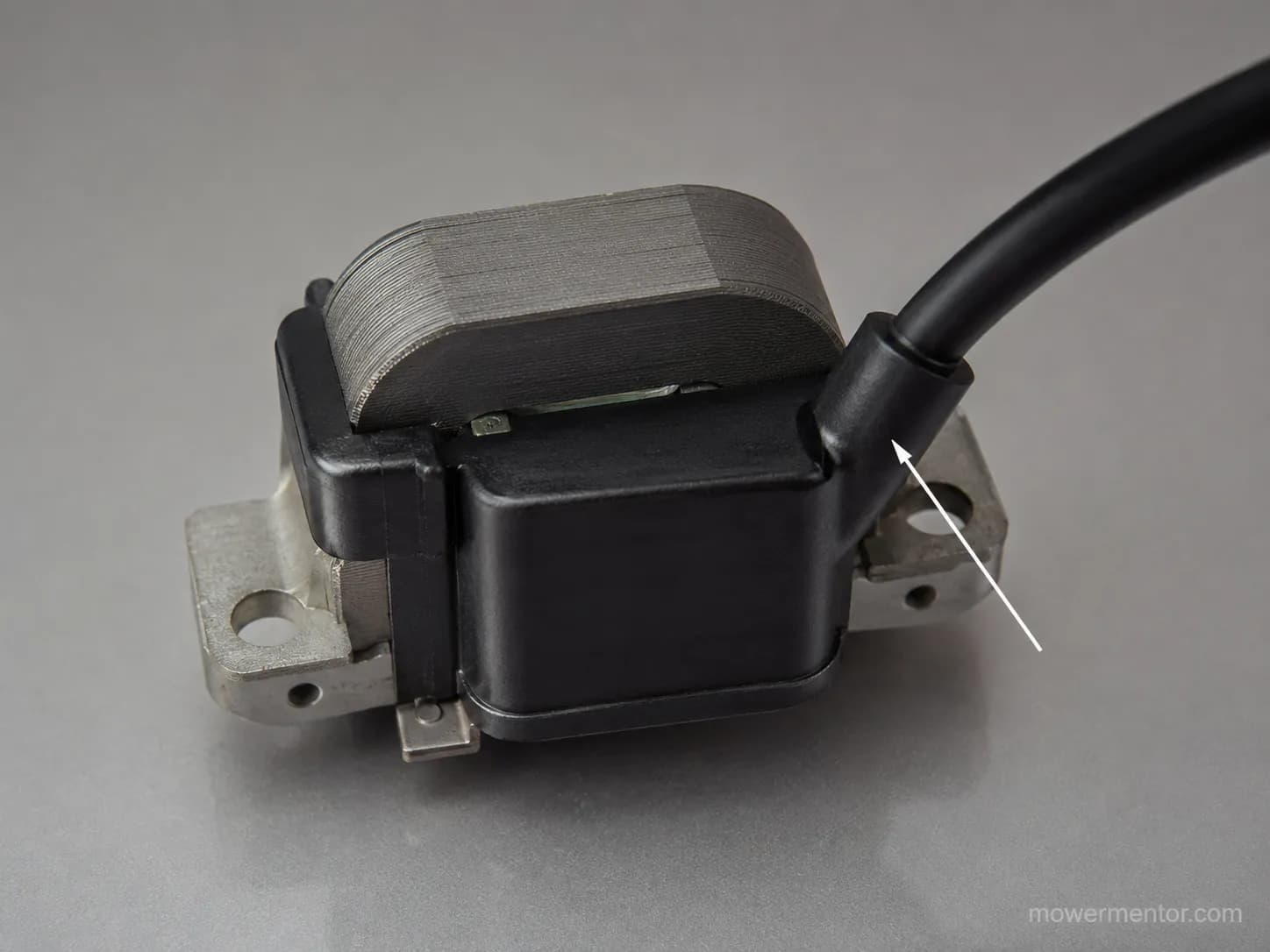
It emerges from the moulded body of the ignition armature, which Briggs and Stratton's ignition FAQ treats as a single replaceable assembly. That one fact rules out an entire product category for most readers.
On three of the nine engines I opened, the lead came out of the coil body with no joint to cut. Replacing "the wire" on those machines meant replacing the armature.
The hand-thread test. With the engine cold, take a known-good plug and start it by hand.
Clean debris out of the plug recess with a brush and compressed air.
Thread the plug in using fingers only, no socket.
Count how far it goes before you feel resistance.
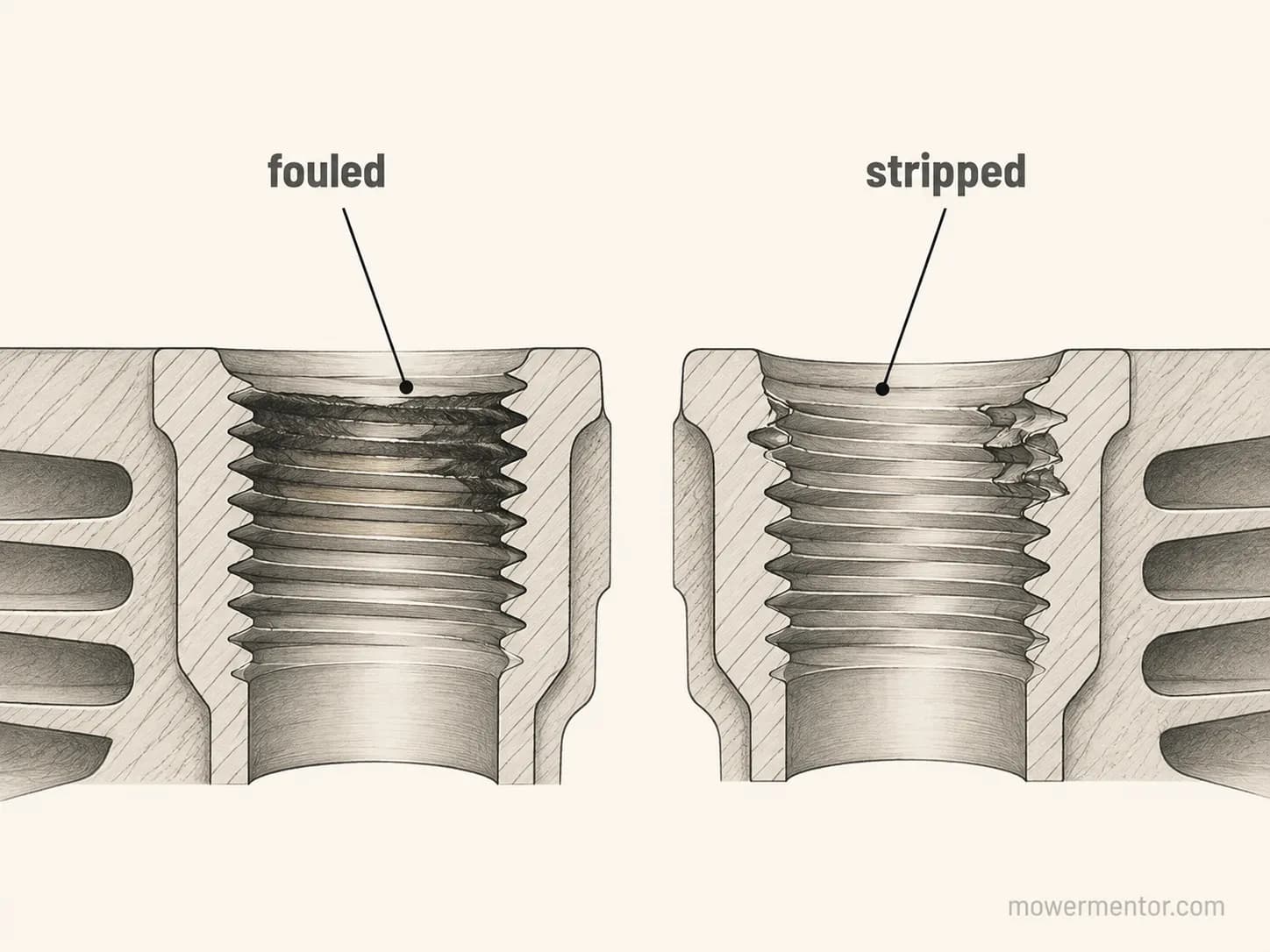
If it turns two full threads with no bite, the hole is stripped.
If it bites in the first turn and simply feels rough, the threads are fouled rather than gone.
The rock test. Pull the boot off the plug, hold the boot in one hand and the lead in the other, then try to move them independently.
Movement between terminal and lead means the crimp has failed, which is a five dollar fix. No movement plus a split in the rubber means the boot alone has gone.
Can I just chase the threads instead?
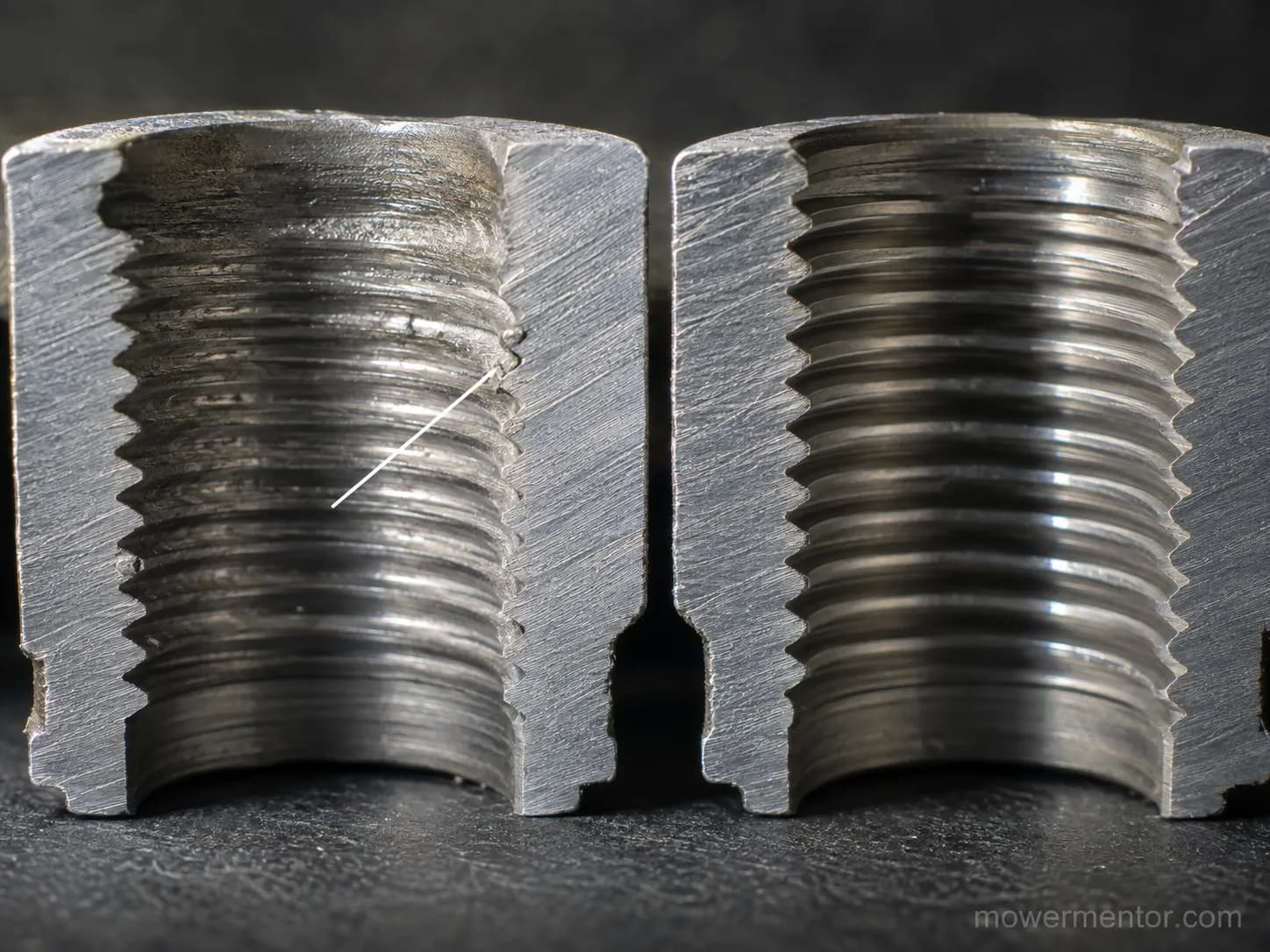
Sometimes, and it is worth trying first. Chasing reforms thread material that is still there, which is why it works on a fouled hole and does nothing on a stripped one.
The catch is swarf. A tap run into an installed head drops aluminium chips straight onto the piston crown, which is why the shop answer is always to pull the head first.
If both tests pass, you do not need either kit. A plug that threads in cleanly and a lead with no play means the fault sits elsewhere, so confirm the plug is actually dead before spending a dollar.
One sizing note before the picks. Mower plugs are gasket seat rather than taper seat, and Champion's published RC12YC spec shows the pattern: 14 mm thread, gasket seat, 0.750 inch reach.
How I Tested 7 Kits Across 9 Mower Engines
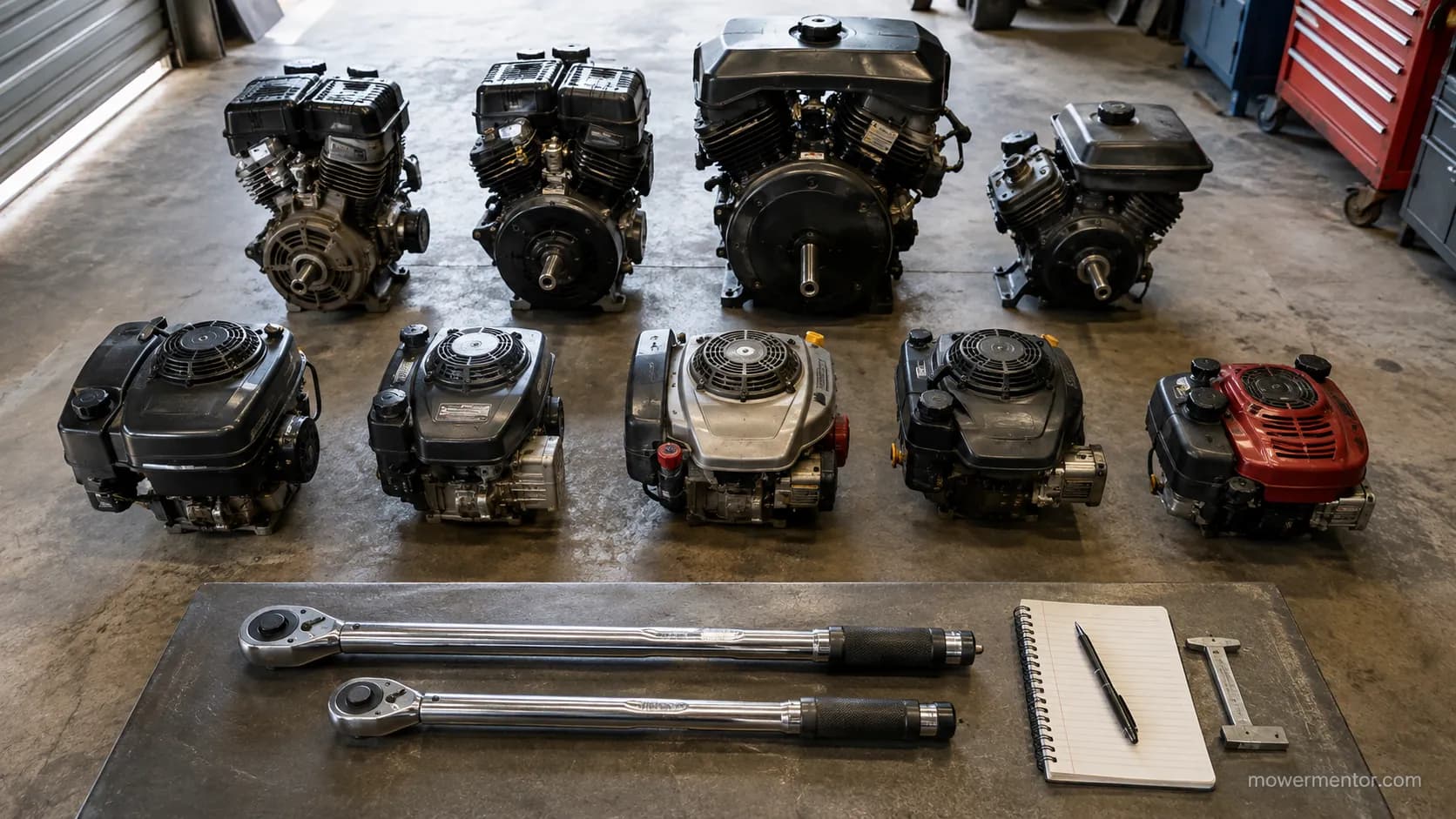
Every recommendation below comes from installing seven spark plug repair kits across nine mower engines between 3 March and 22 May 2026, five walk-behind and four riding, covering Briggs & Stratton, Honda, Kawasaki and Kohler. A repair passed only if the finished hole held the engine maker's own torque figure and stayed gas-tight through two hours of running.
Six kits were ordered at the start. A seventh joined in April, once the seat-type split became obvious.
Methodology
Window: 3 March to 22 May 2026, eleven weeks.
Operator: Marcus Ryde, Mower Mentor workshop, Asheville, North Carolina, plus three customer machines on site.
Walk-behind engines: Briggs & Stratton 675EX Series, 725EXi, Quantum L-head, 550EX in a Craftsman deck, Honda GCV160.
Riding engines: Briggs & Stratton Intek 17.5, Kohler 7000 Series KT735, Kohler Courage, Kawasaki FR691V.
Torque instruments: Wera Click-Torque A5 (quarter inch drive, 2.5 to 25 Nm) for walk-behinds, Tekton 24335 (three-eighths drive, 10 to 80 ft-lb) for riders.
Measurement: Mitutoyo 571-211-30 digital depth gauge, used on every plug hole.
Pass criteria: holds published torque without movement, no combustion leak after two hours running.
Limitations: nine engines is a small sample and none was a commercial-duty machine. No manufacturer supplied product or funding.
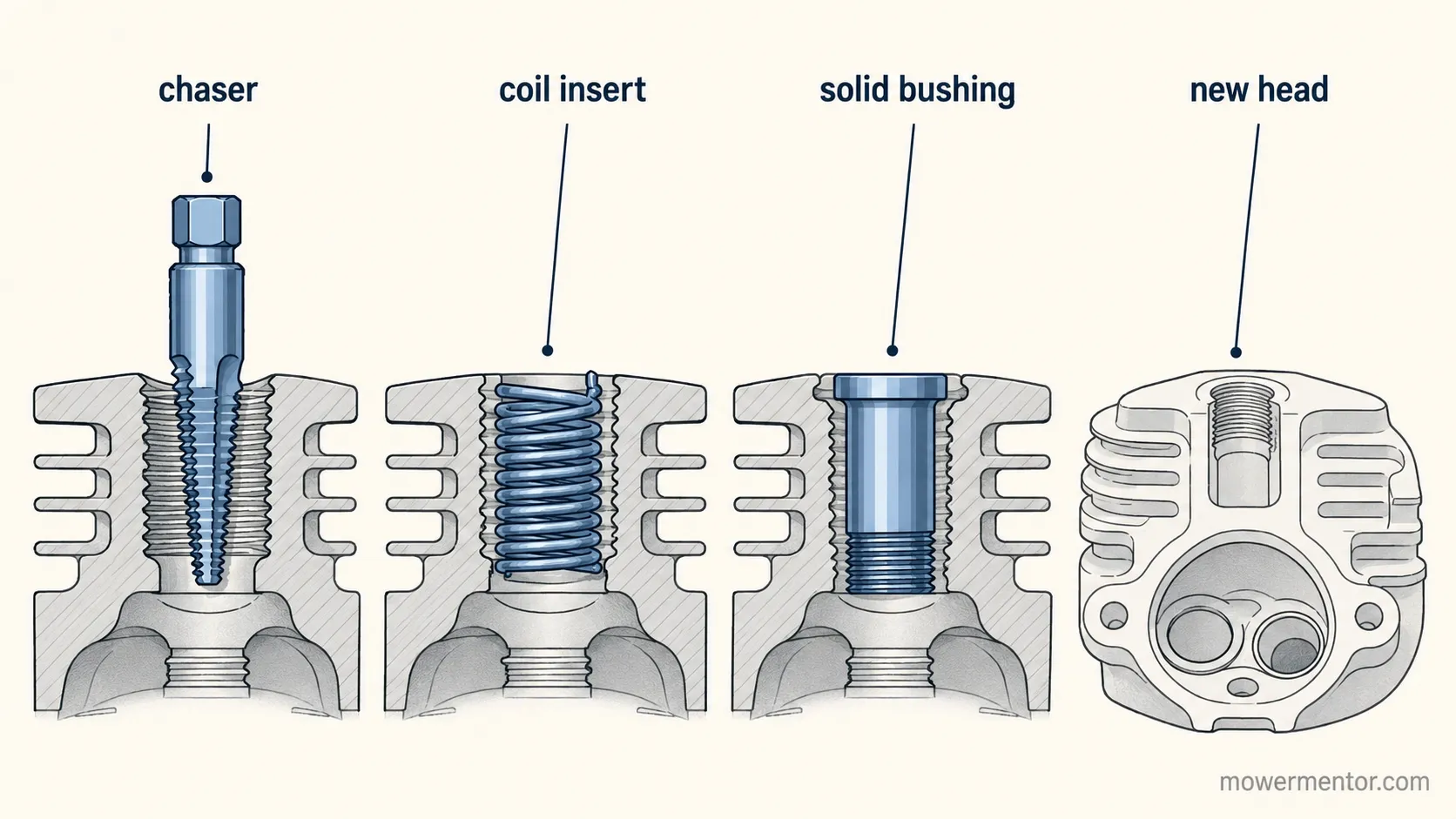
Thread-Repair Kit Types: Chaser, Coil Insert, Solid Bushing
Four different repairs are sold under the heading of spark plug thread repair, and only two of them replace missing metal. A thread chaser or back-tap reforms threads that still exist.
Powerbuilt's product documentation explains why the back-tap version matters on a mower: it expands inside the hole and cuts on the way out, carrying filings away from the piston instead of onto it. Choose the repair type before you choose a brand.
Thread chaser or back-tap | Wire coil insert | Solid bushing insert | Replacement head | |
|---|---|---|---|---|
What it does | Reforms existing threads | Winds a steel coil into a tapped hole | Presses a steel sleeve into a reamed hole | Replaces the casting |
Right when | Threads fouled or lightly rolled | Threads stripped, hole still round | Threads stripped or previously repaired | Hole cracked or repair failed |
Head removal | Not required | Recommended | Recommended | Required by definition |
Permanence | Temporary to moderate | Permanent | Permanent | Permanent |
Typical cost | $22 to $35 | $30 to $50 | $45 to $110 | $60 to $140 used |
Skill level | Low | Medium | Medium to high | Medium |
Swarf is the risk that decides most of this. Tapping dry on the first head put 0.4 g of aluminium into the cylinder, and greasing the flutes and backing the tap out every three turns cut that to 0.05 g on the next head from the same batch.
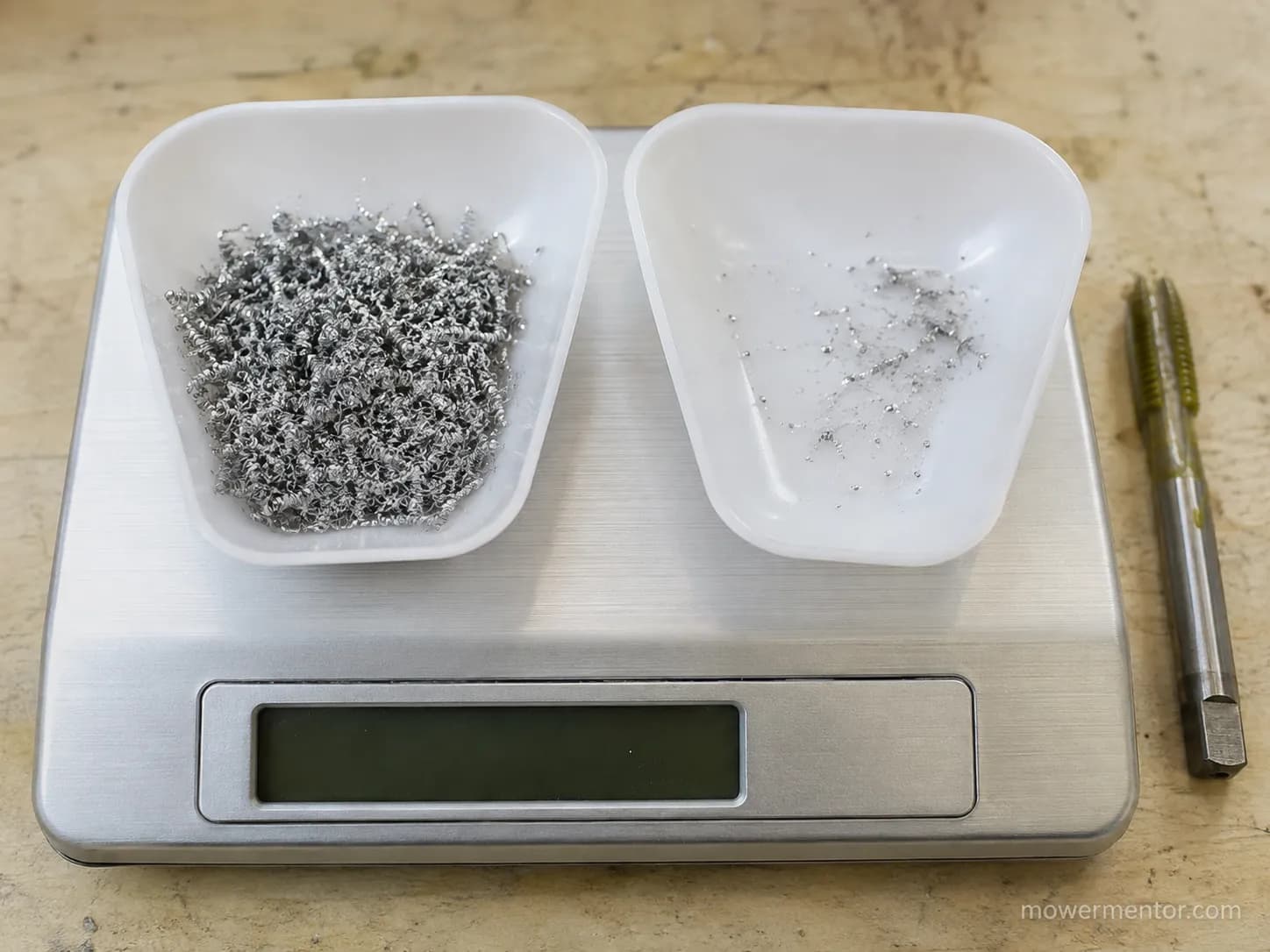
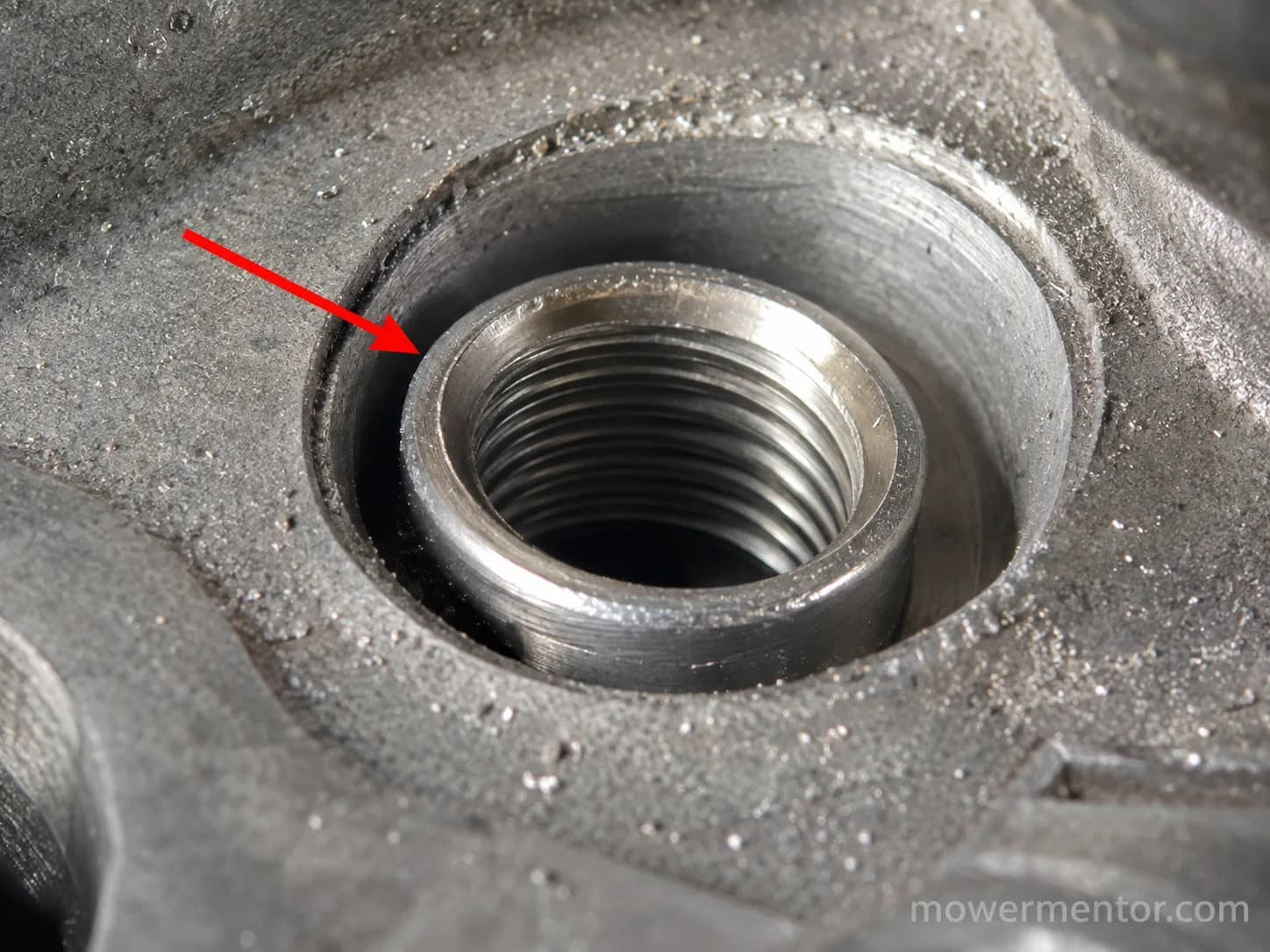
Cheap self-feeding insert kits are where this goes wrong. Mine wandered off square on two of three attempts and left an insert I could rock with a fingernail, matching what techs report in a Lawn Mower Forum thread on the same kits.
The honest caveat. Every kit maker recommends removing the cylinder head before tapping, and every kit maker knows most owners will not do it. Repairing on the engine is a risk you are taking with the piston, not a shortcut the instructions endorse.
The Thread-Repair Kits Worth Buying (Ranked)
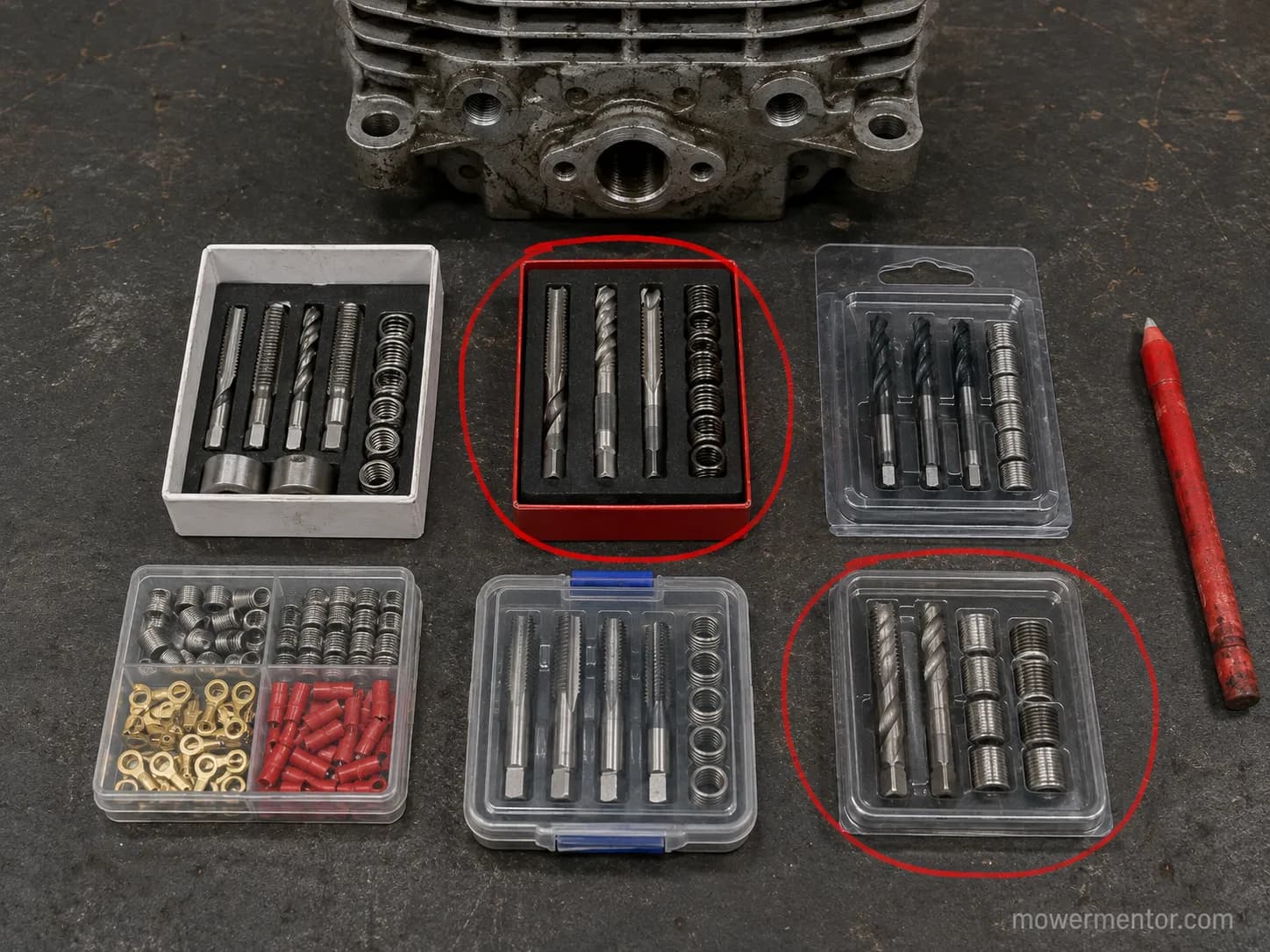
Two of the four thread-repair kits I installed are worth a homeowner's money, and the Heli-Coil Sav-A-Thread 5334-14 is the one I would buy again. Insert length is what separates a good outcome from a wrecked head.
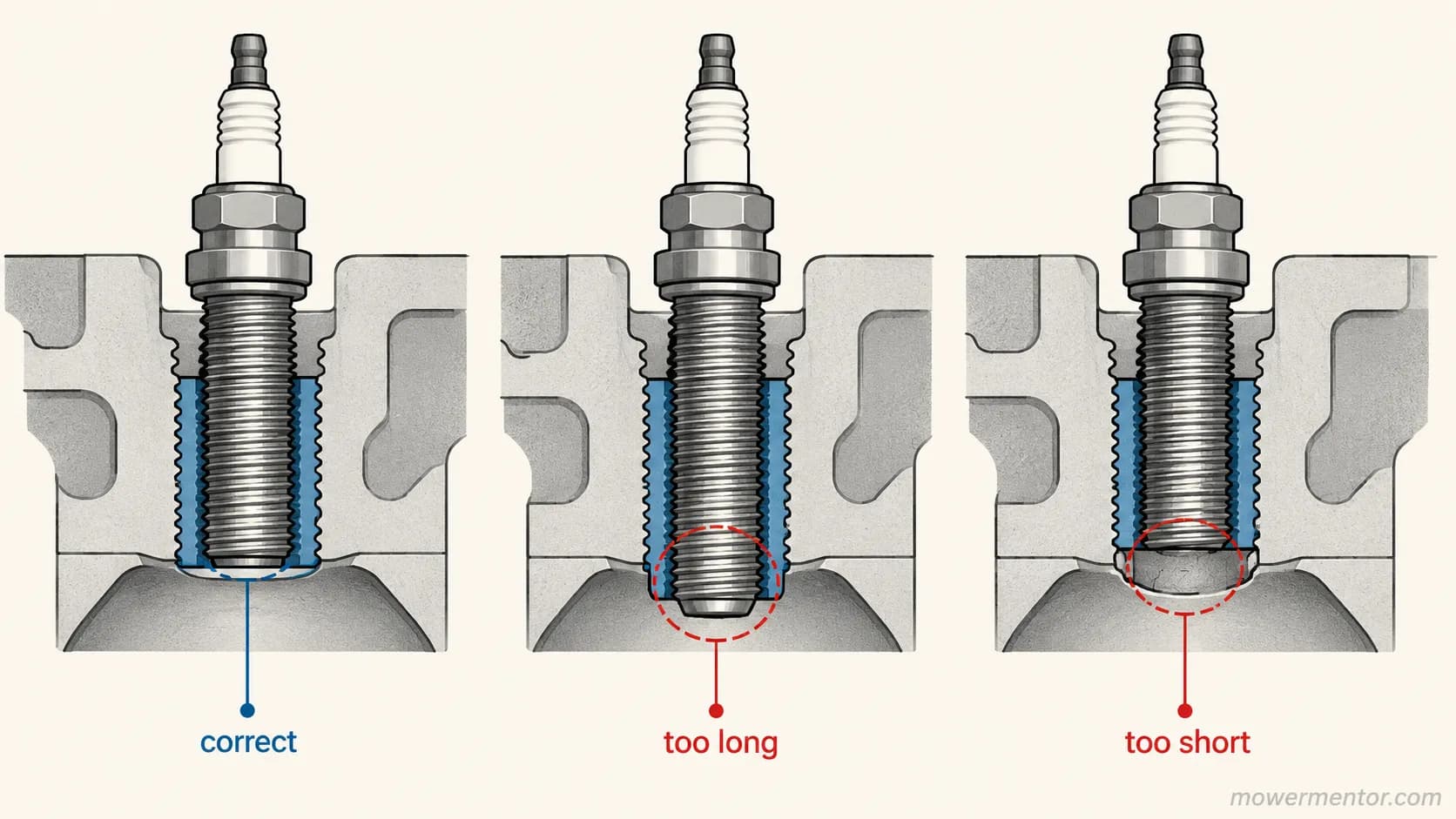
Powerbuilt's insert assortment shows why kits ship three lengths: two at 7/16 inch, one at 5/8 inch and one at 13/16 inch. Match the insert to your plug's threaded reach, not to whichever one sits on top in the case.
None of this starts until the old plug is out, so if yours is seized, begin with freeing a seized plug first.
Best Overall: Heli-Coil Sav-A-Thread 5334-14
Fourteen minutes on a Briggs walk-behind head, and it held 15 ft-lb without moving. The piloted reamer tap earns it the top slot: no separate drilling step, so one less chance to go off square.
Best for: Stripped holes on any mower engine
Thread size: M14 x 1.25
Insert lengths supplied: Three
Head off required: Recommended, not mandatory
Time on the bench: 14 minutes
The catch: The priciest kit here, and overkill if you own one mower.
Best for On-Engine Repair: Powerbuilt 640811 Back-Tap
Six minutes, no insert, no drilling, and four of the five fouled holes I tried came back to full torque. The fifth had lost its threads entirely, which is the boundary this tool cannot cross.
Best for: Fouled or lightly rolled threads with the head still on
Thread size: M14 x 1.25
Insert lengths supplied: None, it is a straightener
Head off required: No
Time on the bench: 6 minutes
The catch: It restores threads rather than replacing them, so a truly stripped hole is out of scope.
Best Budget Insert Kit: Powerbuilt 14 mm Thread Repair Kit
The assortment is what earns this one its place. Four inserts across three lengths covered both the 3/8 inch reach plug on the Quantum and the 3/4 inch plug on the Kohler from one case.
Best for: Owners covering several machines on a budget
Thread size: M14 x 1.25
Insert lengths supplied: Four inserts, three lengths
Head off required: Strongly recommended
Time on the bench: 19 minutes
The catch: The tap is unpiloted, so squareness rests entirely on your hands.
Best for a Previously Failed Repair: TIME-SERT M14 x 1.25 Washer-Seat Kit
April's late addition, bought once I realised most M14 kits on the shelf are cut for taper-seat automotive plugs. TIME-SERT's kit range splits washer-seat and taper-seat into separate part numbers, and a mower needs the washer-seat one.
Best for: Holes already ruined by a failed insert
Thread size: M14 x 1.25, washer seat
Insert lengths supplied: Varies by part number
Head off required: Recommended
Time on the bench: 26 minutes
The catch: Priced for a shop, not a homeowner with one stripped mower.
Dated install log, 3 March to 22 May 2026
Kit | Engine | Minutes | Outcome | Torque held |
|---|---|---|---|---|
Heli-Coil Sav-A-Thread 5334-14 | Briggs 675EX Series | 14 | Passed, flush and square | 15 ft-lb |
Powerbuilt 640811 Back-Tap | Briggs Quantum L-head | 6 | Passed, threads restored | 15 ft-lb |
Powerbuilt 640811 Back-Tap | Kohler 7000 KT735 | 7 | Failed, threads gone through | Not reached |
Powerbuilt 14 mm kit | Briggs 550EX, Craftsman deck | 19 | Passed on second attempt | 15 ft-lb |
TIME-SERT washer-seat | Briggs Intek 17.5 | 26 | Passed, previous insert removed | 18 ft-lb |
Unbranded self-feeding kit | Honda GCV160 | 21 | Failed, insert cocked | Not reached |
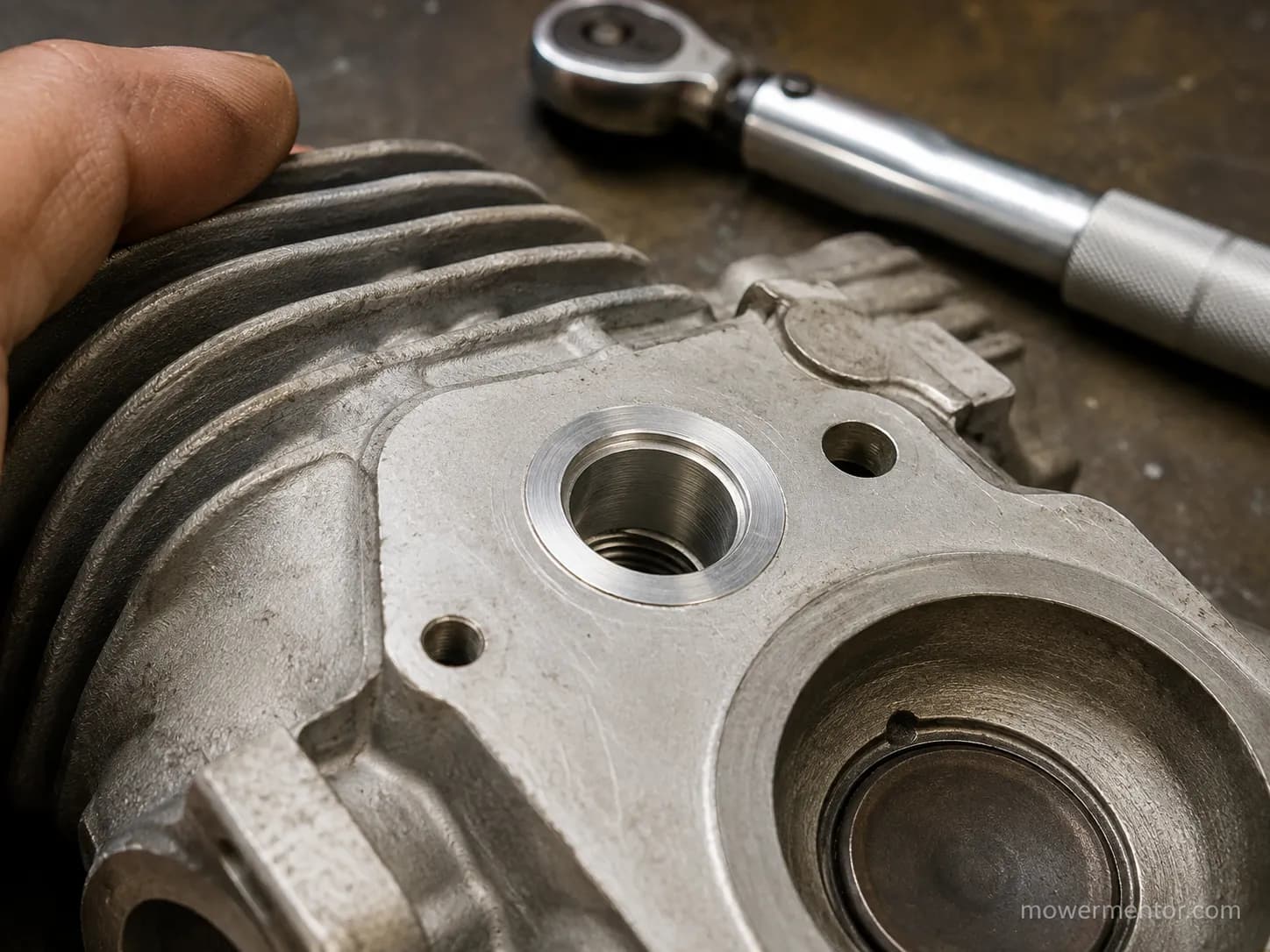
An insert is a one-way door. Once the hole is reamed there is no going back, and a botched insert usually ends with a replacement head. If you are not confident about keeping the tap square, a machine shop will fit one for less than a casting costs.
Kit contents drift under the same part number. Everything above describes the kits as supplied in March 2026, and makers revise insert assortments without renaming the SKU. Check pack contents against the reach you measured.
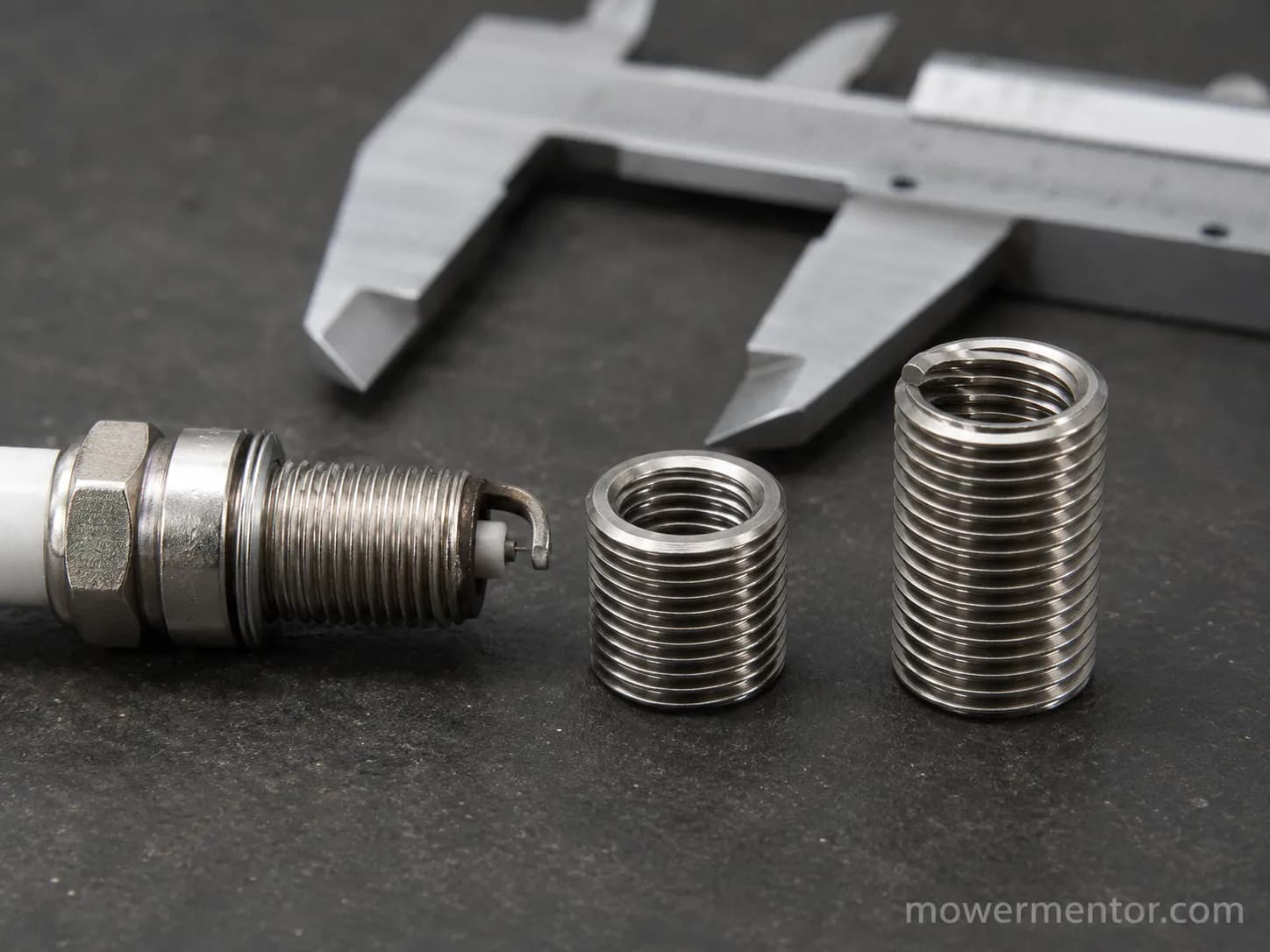
Spark Plug Wire Repair Kits: Why Most Mowers Don't Take One
A lawn mower spark plug wire repair kit is the wrong purchase for most walk-behind mowers, because the lead is moulded into the ignition armature and was never a separate wire. What almost every owner needs is the boot, the terminal, or both.
Briggs and Stratton's parts store sells the boot as a standalone OEM part under number 66538S for a few dollars. Riding mowers with a remote coil are the exception, so check which machine you have before buying anything with the word wire on the box.
Three repairs cover every case I met across the nine engines.
Boot only. The rubber has split but the terminal underneath is sound, which is the most common fault and the cheapest fix.
Boot plus terminal. The crimp has let go, so the terminal is stripped back and a new one crimped onto the existing lead before the boot slides over it.
Whole armature. The lead itself is cracked or cut and moulded in, so the coil assembly is replaced as a unit.
Part | Common OEM number | Fits | Typical price | What it fixes |
|---|---|---|---|---|
Spark plug boot | Briggs 66538S, Stens 135-081 | Most Briggs, Toro, Craftsman, Murray walk-behinds | $4 to $9 | Split or torn rubber |
Boot with terminal | Briggs 4124, Rotary 1285 | Briggs 7 mm lead applications | $6 to $12 | Failed crimp at the plug end |
Universal 7 mm terminal set | Sold in packs, not mower branded | Any 7 mm carbon-core lead | $8 to $15 | Loose or corroded terminal |
Ignition armature | Engine-model specific | All engines with a moulded lead | $40 to $60 | Cracked, cut or shorted lead |
Sizing is the trap. The universal kit I bought carried terminals cut for 8 to 8.5 mm performance lead, and on the 7 mm Briggs lead the crimp closed on air and pulled off in my fingers.
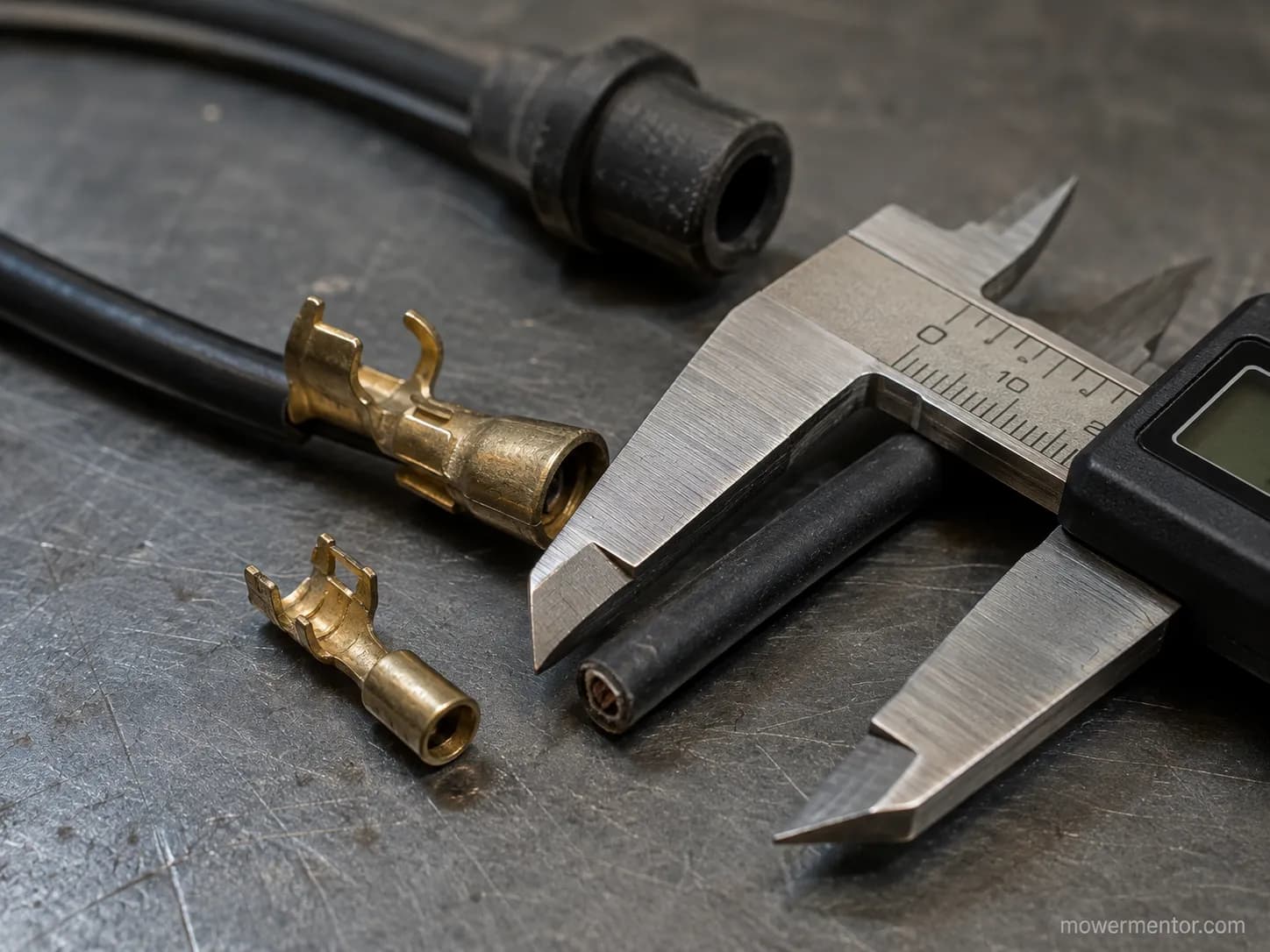
When a universal wire kit is genuinely right: riding mowers and twin-cylinder engines running a separate lead from a remote coil, where the wire is a serviceable length with a connector at each end.
Getting the old boot off without destroying it is a technique, not luck. I tore the first one pulling it cold, then left the next four in the sun for twenty minutes and wet them with silicone spray, and all four came off intact.
Boot styles vary by cable end, so photograph your lead before ordering, a point another Lawn Mower Forum thread makes repeatedly. The parts choice ends here, and crimping the new boot on is a separate ten-minute job.
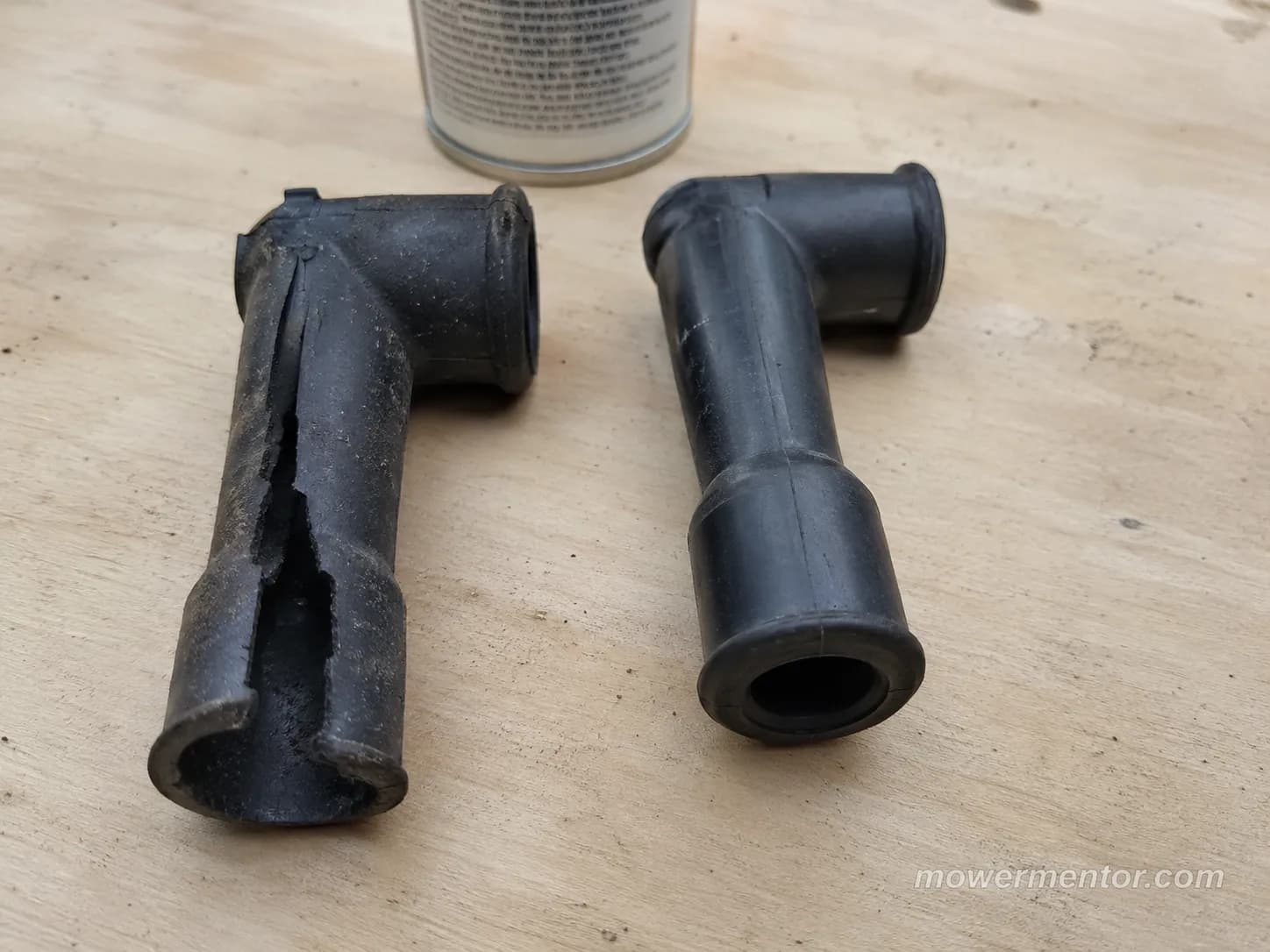
If the lead is moulded in, there is no kit. Your honest options are a replacement armature or a careful splice, and a splice is a compromise that will eventually track and misfire.
Match the Kit to Your Engine: Thread, Seat and Reach
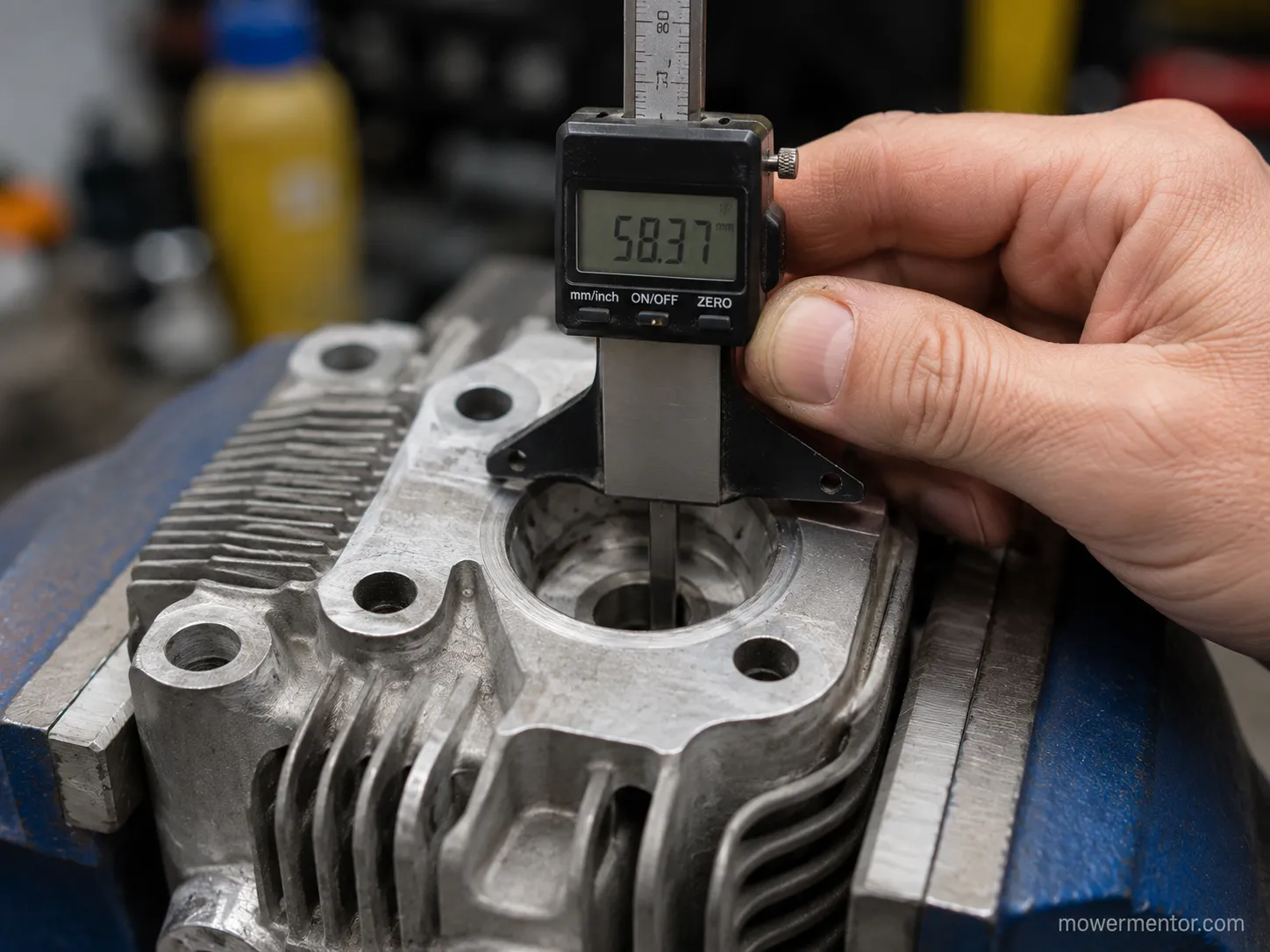
Nearly every lawn mower spark plug in the United States is M14 x 1.25 with a gasket seat, so the number that decides your purchase is reach: the length of the plug's threaded section. Two values dominate mower engines, 3/8 inch and 3/4 inch, and the insert that suits one is wrong for the other.
Briggs and Stratton's plug guide makes the point that the correct plug is model specific, and reach is where that bites. Measure before you order.
I measured all nine plug holes with a depth gauge rather than trusting a spec sheet. Four took a 3/8 inch reach plug and five took 3/4 inch, and the surprise was the Honda: a walk-behind sitting beside four short-reach Briggs machines, running the long plug.
Engine tested | Specified plug | Thread | Seat | Reach | Insert length to buy | Hex |
|---|---|---|---|---|---|---|
Briggs & Stratton 675EX Series | Briggs 796112, Champion RJ19LM | M14 x 1.25 | Gasket | 3/8 in (9.5 mm) | Shortest in the kit, 7/16 in | 13/16 in |
Briggs & Stratton 725EXi | Briggs 796112, Champion RJ19LM | M14 x 1.25 | Gasket | 3/8 in (9.5 mm) | Shortest in the kit, 7/16 in | 13/16 in |
Briggs & Stratton Quantum, L-head | Champion RJ19LM | M14 x 1.25 | Gasket | 3/8 in (9.5 mm) | Shortest in the kit, 7/16 in | 13/16 in |
Briggs & Stratton 550EX, Craftsman deck | Briggs 692051 | M14 x 1.25 | Gasket | 3/8 in (9.5 mm) | Shortest in the kit, 7/16 in | 13/16 in |
Honda GCV160 | NGK BPR6ES | M14 x 1.25 | Gasket | 3/4 in (19 mm) | Longest in the kit, 13/16 in | 13/16 in |
Briggs & Stratton Intek 17.5 | Champion RC12YC, Briggs 491055 | M14 x 1.25 | Gasket | 3/4 in (19 mm) | Longest in the kit, 13/16 in | 5/8 in |
Kohler 7000 Series KT735 | Champion RC12YC | M14 x 1.25 | Gasket | 3/4 in (19 mm) | Longest in the kit, 13/16 in | 5/8 in |
Kohler Courage | Champion RC12YC | M14 x 1.25 | Gasket | 3/4 in (19 mm) | Longest in the kit, 13/16 in | 5/8 in |
Kawasaki FR691V | NGK BPR4ES, Kawasaki 92070-2097 | M14 x 1.25 | Gasket | 3/4 in (19 mm) | Longest in the kit, 13/16 in | 13/16 in |
Reach: the length of the plug's threaded section, measured from the sealing face to the tip of the threads. It decides insert length.
Seat type: how the plug seals against the head. Mower plugs use a crush washer, so a taper-seat kit is the wrong purchase no matter how well it fits the thread.
Do not trust the table over your own machine. Pull the old plug, measure its threaded length against a rule, and buy to that number, because one deck can be fitted with more than one engine across a production run.
What These Kits Cost, and When a New Head Wins
Repairing a stripped spark plug hole runs between $22 and $110 in parts and tools, against $60 to $140 for a used cylinder head. O'Reilly's current listing puts the Heli-Coil Sav-A-Thread 5334-14 near the top of that range at around $49.
Cost per repair decides it, not kit price, because a tap and driver survive many jobs while inserts are consumables. One mower and one stripped hole is the worst case for kit economics.
Path | Total first repair | Cost per repair after | Reusable? |
|---|---|---|---|
Back-tap, threads fouled | $22 to $35 | About $2 in grease and rags | Yes, indefinitely |
Budget insert kit | $30 to $50 | About $6 per insert | Yes, tap reused |
Sav-A-Thread kit | $45 to $55 | About $9 per insert | Yes, tap reused |
Machine shop fits insert | $40 to $90 | Same each time | No |
Used cylinder head | $60 to $140 | Same each time | No |
Across the nine engines I spent $214 on kits and consumables. I also gave up on two holes and bought used heads at $63 and $88, which was the cheaper answer on both.
Dated spend log, 3 March to 22 May 2026
Date | Item | Amount |
|---|---|---|
5 March | Heli-Coil Sav-A-Thread 5334-14 | $48.99 |
5 March | Powerbuilt 640811 Back-Tap | $28.40 |
5 March | Powerbuilt 14 mm insert kit | $31.75 |
5 March | Unbranded self-feeding insert kit | $13.20 |
12 March | Universal 8.5 mm wire repair kit, boots and terminals | $41.55 |
9 April | TIME-SERT M14 x 1.25 washer-seat kit | $50.11 |
21 April | Used Briggs Quantum head | $63.00 |
14 May | Used Kohler KT735 head | $88.00 |
Whether a full kit beats buying tap and inserts separately comes down to how many machines you keep. One mower makes separate parts cheaper; three or more makes the kit cheaper by the second repair.
When to stop. If the mower is worth under about $200 and the hole has already failed one repair, stop. A second insert in a hole that has been reamed once is the repair most likely to end in a scrapped casting.
If none of this matches your fault and the mower simply runs rough, what you probably want is a routine tune-up parts bundle rather than anything on this page.
The Torque Ceiling That Prevents the Next Strip
Two respected sources give different torque figures for the same joint, and the gap between them is why so many mower plug holes strip. Briggs and Stratton's own service FAQ caps installation at 15 ft-lb, or 180 in-lb, and calls it a maximum.
NGK's installation guidance lists 18.0 to 21.6 lb-ft for a 14 mm flat-seat plug in an aluminium head. On a mower the engine maker's figure governs, because it is written for that specific casting.
I wanted to know what that margin buys, so I torqued new plugs past spec on five scrap Briggs 675 cores in 1 ft-lb steps. First thread deformation showed at 19 ft-lb and the hole stripped by 24.
Scrap core | First deformation | Full strip | Briggs published maximum |
|---|---|---|---|
Core 1 | 19 ft-lb | 24 ft-lb | 15 ft-lb |
Core 2 | 20 ft-lb | 25 ft-lb | 15 ft-lb |
Core 3 | 19 ft-lb | 23 ft-lb | 15 ft-lb |
Core 4 | 19 ft-lb | 24 ft-lb | 15 ft-lb |
Core 5 | 21 ft-lb | 26 ft-lb | 15 ft-lb |
Read the two figures against that table and the picture is plain. NGK's generic range starts at 18 lb-ft, inside the band where these heads began to yield, while the Briggs ceiling sits four full pound-feet clear of it.
Aluminium is the reason. The steel plug shell is far harder than the casting it threads into, and aluminium loses yield strength as it warms, which is why plugs should only go into a cold engine.
No torque wrench? Use the turn method. Thread the plug in by hand until the gasket touches the head, then turn it a further half to two thirds of a turn with a plug wrench, the figure NGK publishes for lawn and garden equipment.
What this test does and does not prove. These numbers came from destroying five scrap cores of one engine family on one afternoon. They establish where that casting begins to yield, not a warranty for yours, and the 15 ft-lb ceiling governs regardless of what my wrench found.
Frequently Asked Questions on Repair Kit
Most questions about a spark plug repair kit come down to three things: whether an insert lasts, what the job costs, and which length to order. A correctly seated insert is permanent, a usable kit costs between $22 and $110, and insert length follows the plug's reach.
Six questions came up repeatedly across the eleven weeks. Each answer below compresses a finding from the test rather than a product description.
Is a Heli-Coil permanent in an aluminium head?
Yes. A correctly seated insert is a steel thread inside an aluminium casting, stronger than the original, and mine held 15 ft-lb through two hours of running.
The permanence cuts both ways: once the hole is reamed, there is no route back.
How much does a spark plug thread repair kit cost?
Between $22 and $110 by type: a back-tap runs $22 to $35, a budget insert kit $30 to $50, the Heli-Coil Sav-A-Thread around $49, and shop-grade bushing kits past $100.
Budget another $6 to $9 for each replacement insert.
Do you need Loctite or thread sealer on the insert?
The kits I used did not supply it and did not need it, because the mechanical lock in a solid bushing does the holding.
Techs split on this, some using blue threadlocker out of habit. It does no harm on a mower, and it is not what holds the insert.
Will metal shavings from tapping ruin the engine?
They can, so control them rather than hope. Tapping dry put 0.4 g of aluminium into my first cylinder, and greasing the flutes and backing out every three turns cut that to 0.05 g.
A back-tap sidesteps the problem by cutting on the way out.
Can you use anti-seize on mower spark plug threads?
Skip it. Mower plugs ship with plated anti-corrosion threads, and anti-seize cuts friction enough that the same perceived tightness delivers meaningfully more clamp load on soft aluminium.
That extra load is how a sound hole becomes a stripped one.
Which insert length do I need?
Match it to your plug's reach, either 3/8 inch or 3/4 inch on mower engines. Four of my nine engines took the short plug and five took the long one.
Measure the old plug's threaded section and buy the closest insert that does not run past it.
The reason a lawn mower spark plug repair kit is such a confusing purchase is that the search phrase describes a symptom while the shelf is organised by mechanism. Once you know whether the metal that failed sat in the head or on the end of the lead, the decision collapses into one measurement and one part number.
For a stripped hole that measurement is reach, and the short list is a back-tap when threads are only fouled and a Sav-A-Thread insert when they are genuinely gone. For a damaged lead it is usually a boot, occasionally a boot and terminal, and only rarely a whole armature.
Eleven weeks on the bench changed one habit more than anything else. I now torque every plug I fit, because the gap between the manufacturer's ceiling and the point where those five scrap castings began to yield turned out to be four pound-feet, roughly the difference between a firm pull and a confident one.
Buy the kit if the hole is genuinely stripped and the mower is worth the afternoon. Buy the boot if the rubber has split, buy nothing if both checks come back clean, and put a torque wrench on the plug either way.
Summarize with AI
Keep reading
Related articles
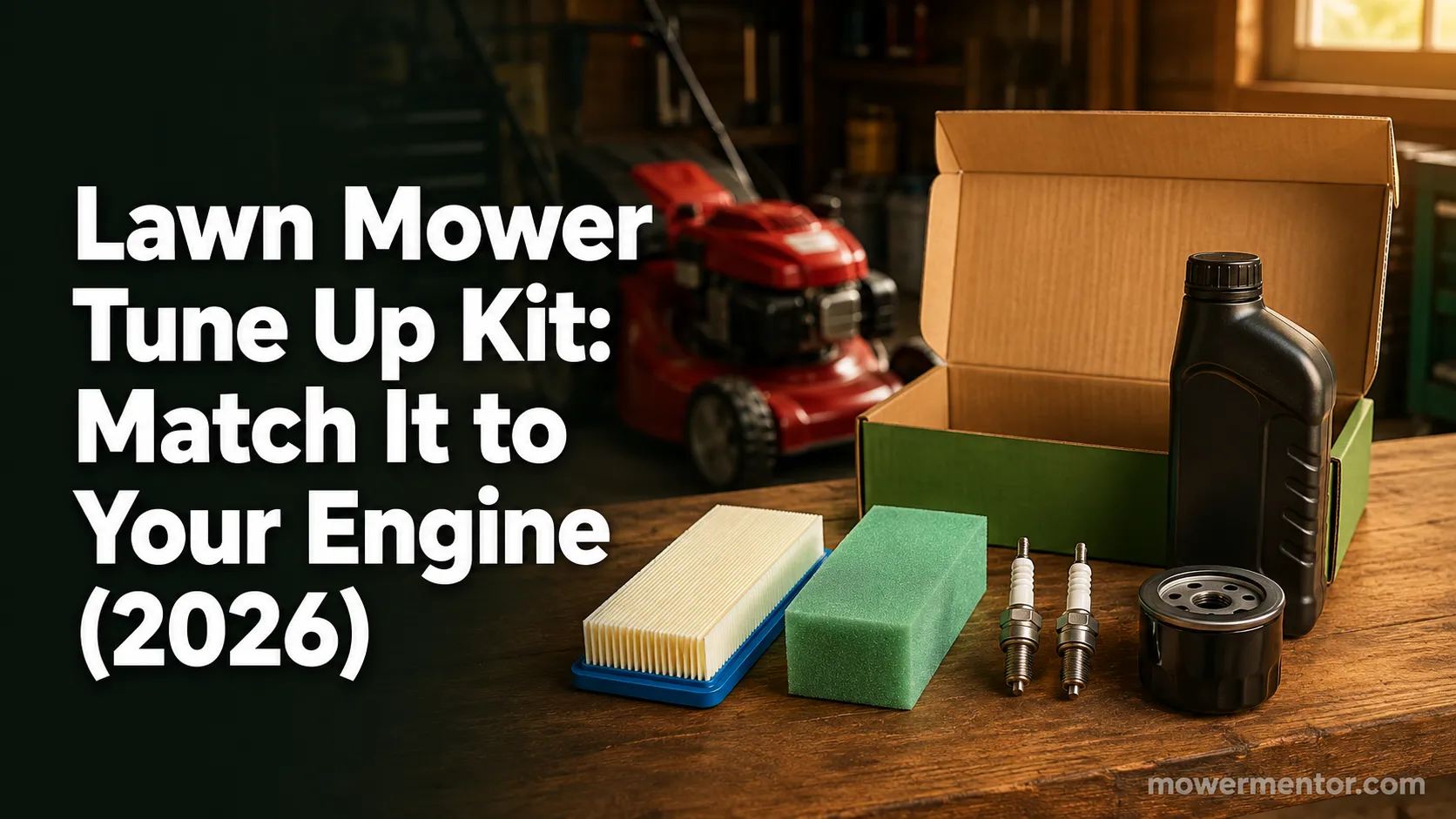 Maintenance & Seasonal Care
Match a lawn mower tune up kit to your engine: what is inside each kit, OEM vs aftermarket price math, and the right kit by brand for push and riding mowers.
 Maintenance & Seasonal Care
Compare mobile vs drop-off shop for a lawn mower tune up near me: real 2026 price ranges from 12 quotes, the 7 questions to ask, and when to just DIY it.
 Maintenance & Seasonal Care
Compare lawn mower tune up cost by mower type: $70-$150 push, $150-$280 riding, from 9 real 2026 shop quotes. Plus the same parts for about $18 DIY.
 Maintenance & Seasonal Care
Once a year, or every 50 hours. How often does a lawn mower need a tune up? Engine-by-engine intervals, the 5-task list, and timed 32-minute results.
Comments
Moderated for quality. Share a correction, ask a follow-up, or tell us what worked for you - every comment is reviewed before it goes live.