
Honda Lawn Mower Air Filter Finder (GCV160/170/190)
Decode your Honda engine code (GCV160/170/200) to the exact air filter part number, compare OEM vs aftermarket, and buy the one that fits.
Written by Sam RourkeReviewed by Wade Coburn
Last updated on July 7, 2026
When you buy through links on our site, we may earn an affiliate commission (at no extra charge), which we use to fund new product tests. Learn more.
Summarize with AI
You walked in for "a Honda air filter" and found six on the peg that all swear they fit your mower. That is the trap. There is no single Honda lawn mower air filter, and the cheapest one on the shelf may not be the one your engine actually takes.
Honda built its GC and GCV walk-behind engines across two main filter generations, plus older variants. Buy the wrong family and you either cannot close the cover or you run an element that seals poorly and lets grit past. This finder decodes your engine code, mower model, and serial into the exact part number, then settles the OEM-versus-aftermarket question so you buy once and move on.
Are All Honda Air Filters the Same?
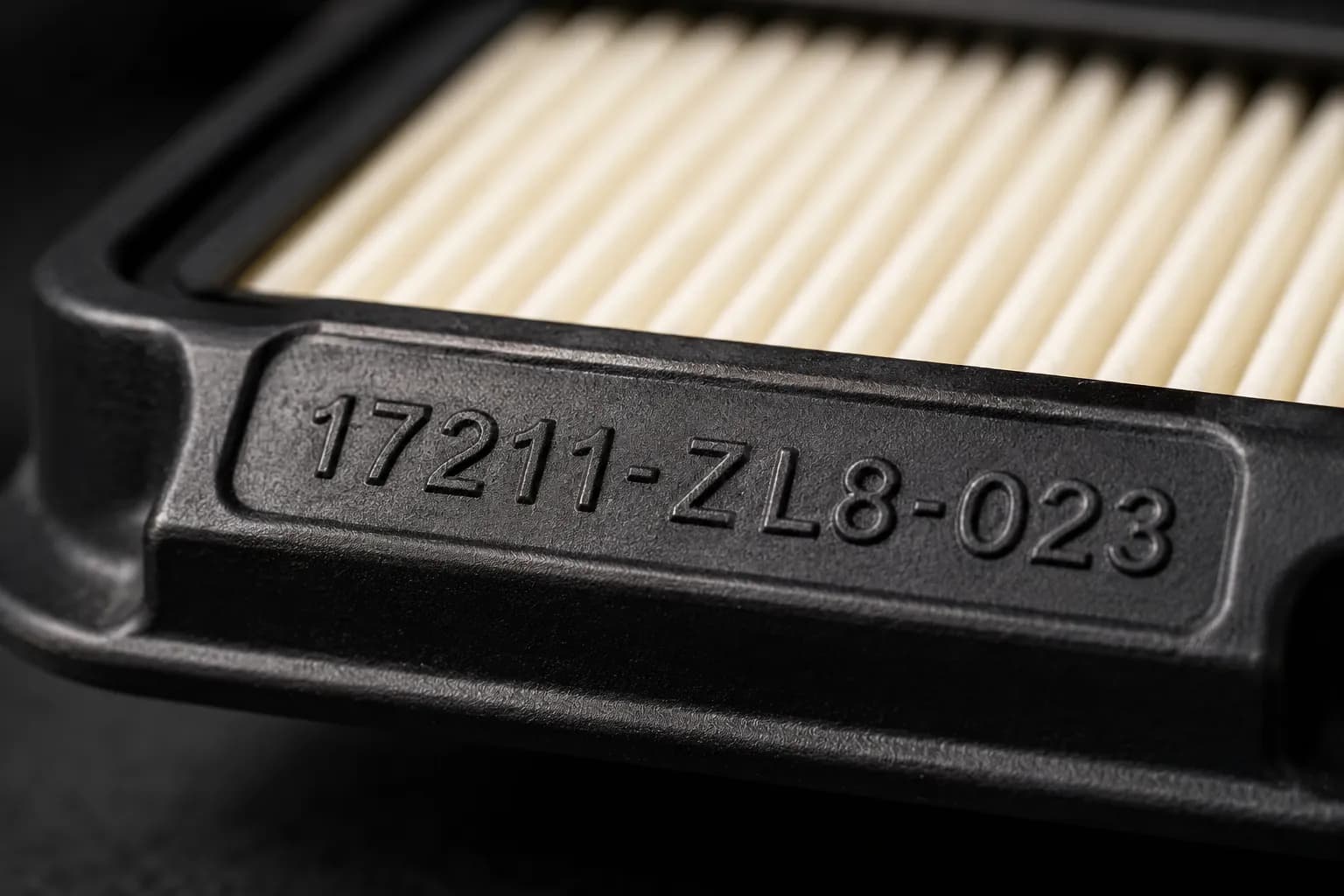
No. A Honda lawn mower air filter is not one universal part. Most walk-behind GC and GCV engines take one of two genuine elements: 17211-ZL8-023 for the older GC and GCV 135/160/190 family, or 17211-Z8B-901 for the newer GCV145/170/200 and HRN216/HRX217 generation. The reliable way to choose is to decode your engine before you buy, because displacement alone does not tell you the family.
TL;DR finder box
Older GC/GCV 135, 160, 190 (rectangular, foam-wrapped): OEM 17211-ZL8-023 (replaces -ZL8-000 and -ZL8-003).
Newer GCV145/160A0/170/190LA/200, HRN216, HRX217 K4+ (white paper, orange trim): OEM 17211-Z8B-901.
Not sure? Read the number molded on your current filter, or match your mower model plus frame serial. Skip to the decoder below.
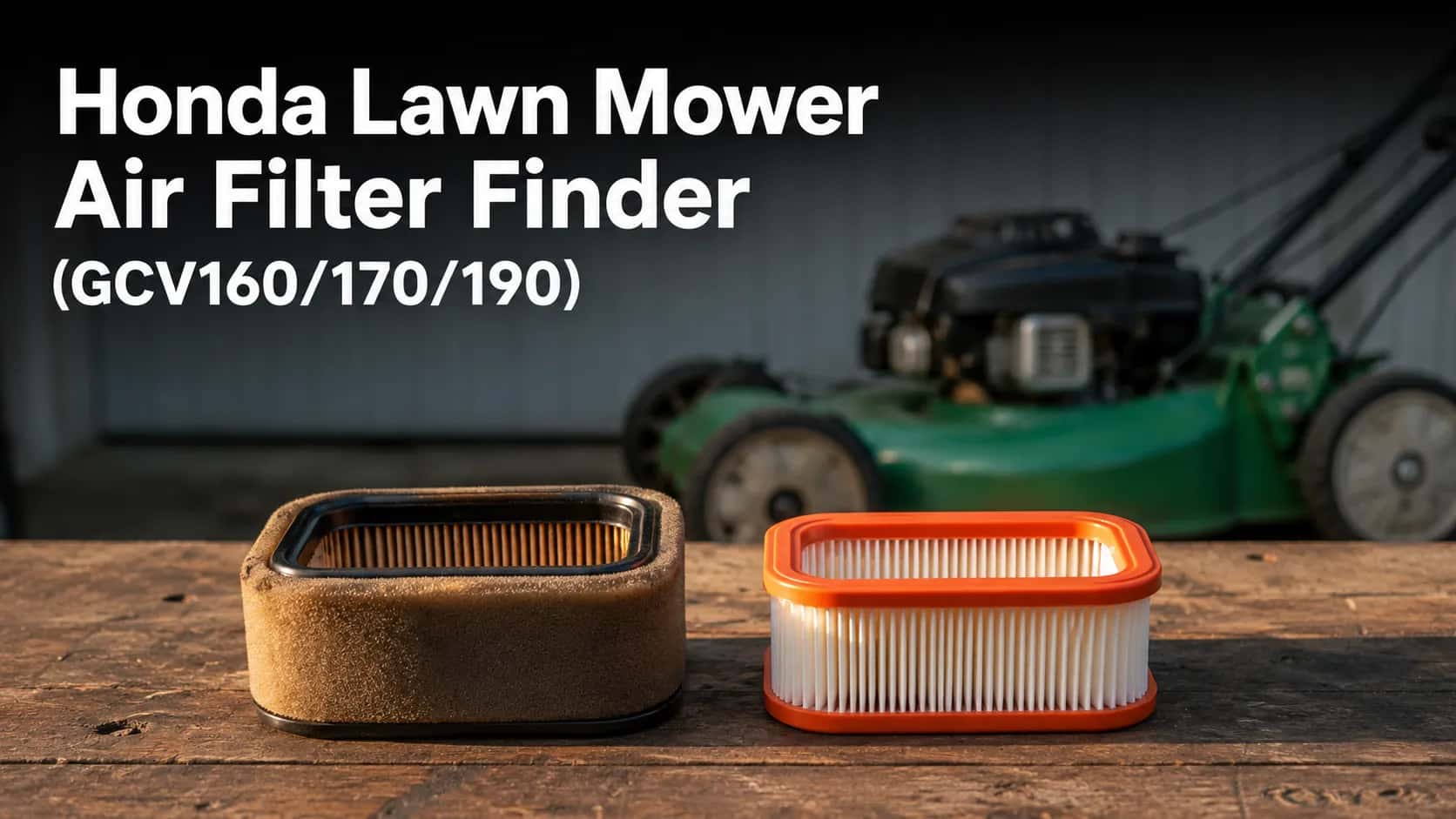
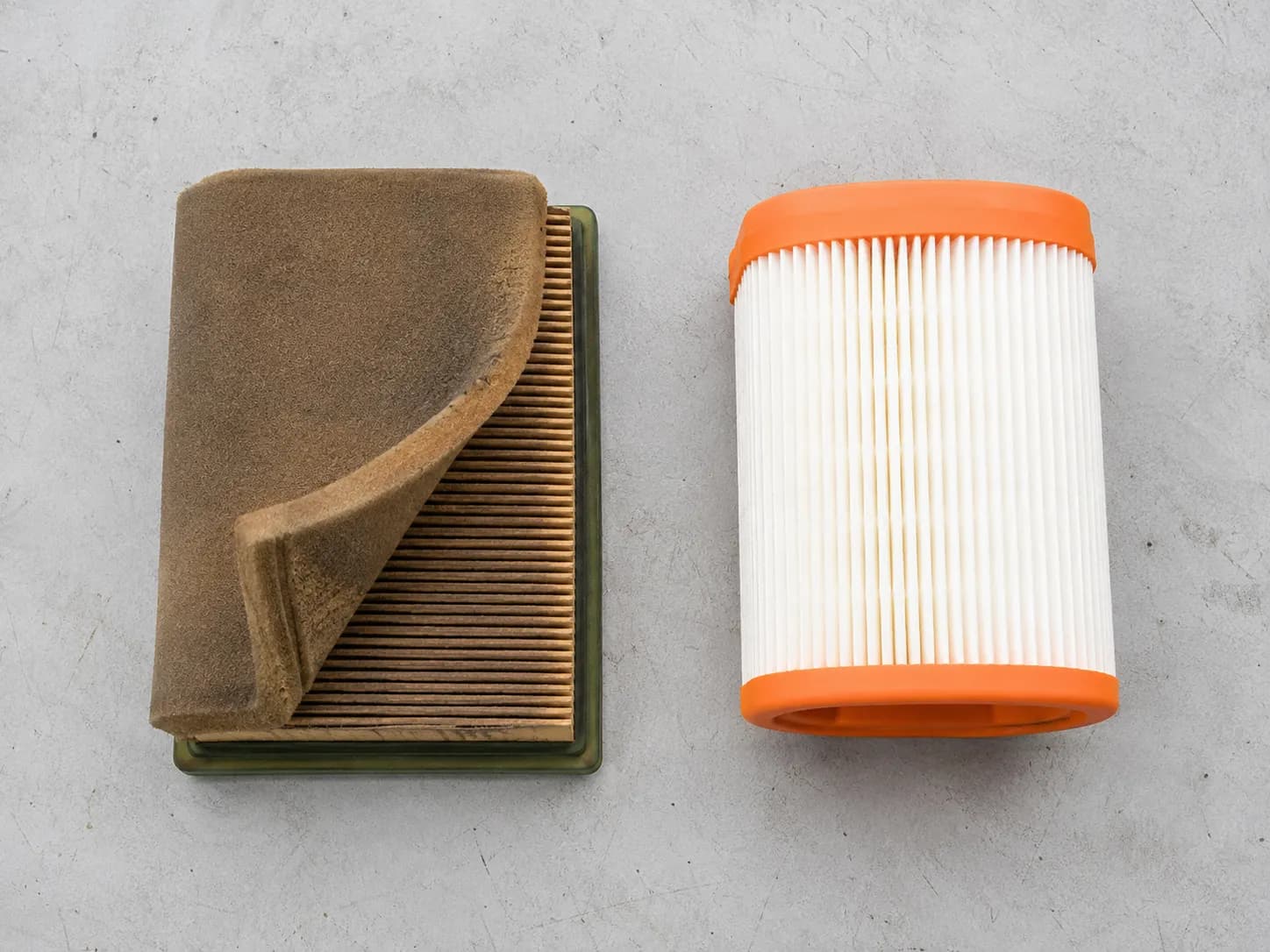
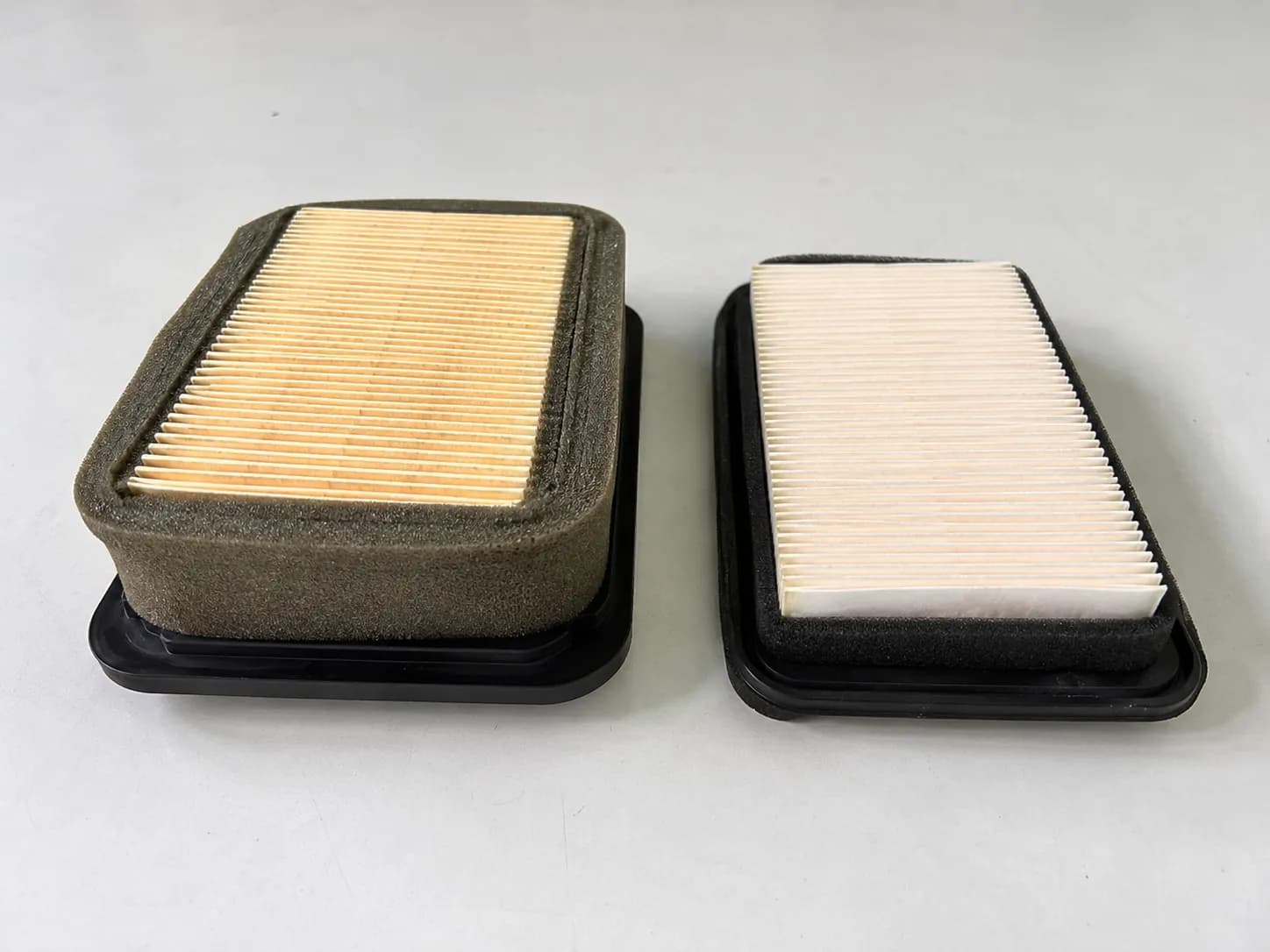
The two families even look different in your hand. The older element is rectangular with a tan foam sleeve over the paper; the newer one is a whiter paper element with orange end trim, confirmed on genuine listings such as Blain's OEM filter spec.
Myth to retire: A clogged air filter makes a Honda run rich and blow a little black smoke, and it can cut power. It rarely makes a healthy mower start and then die after a minute. That symptom is almost always fuel, not the filter, so do not buy a filter expecting it to fix a stalling engine.
Find Your Engine Code First
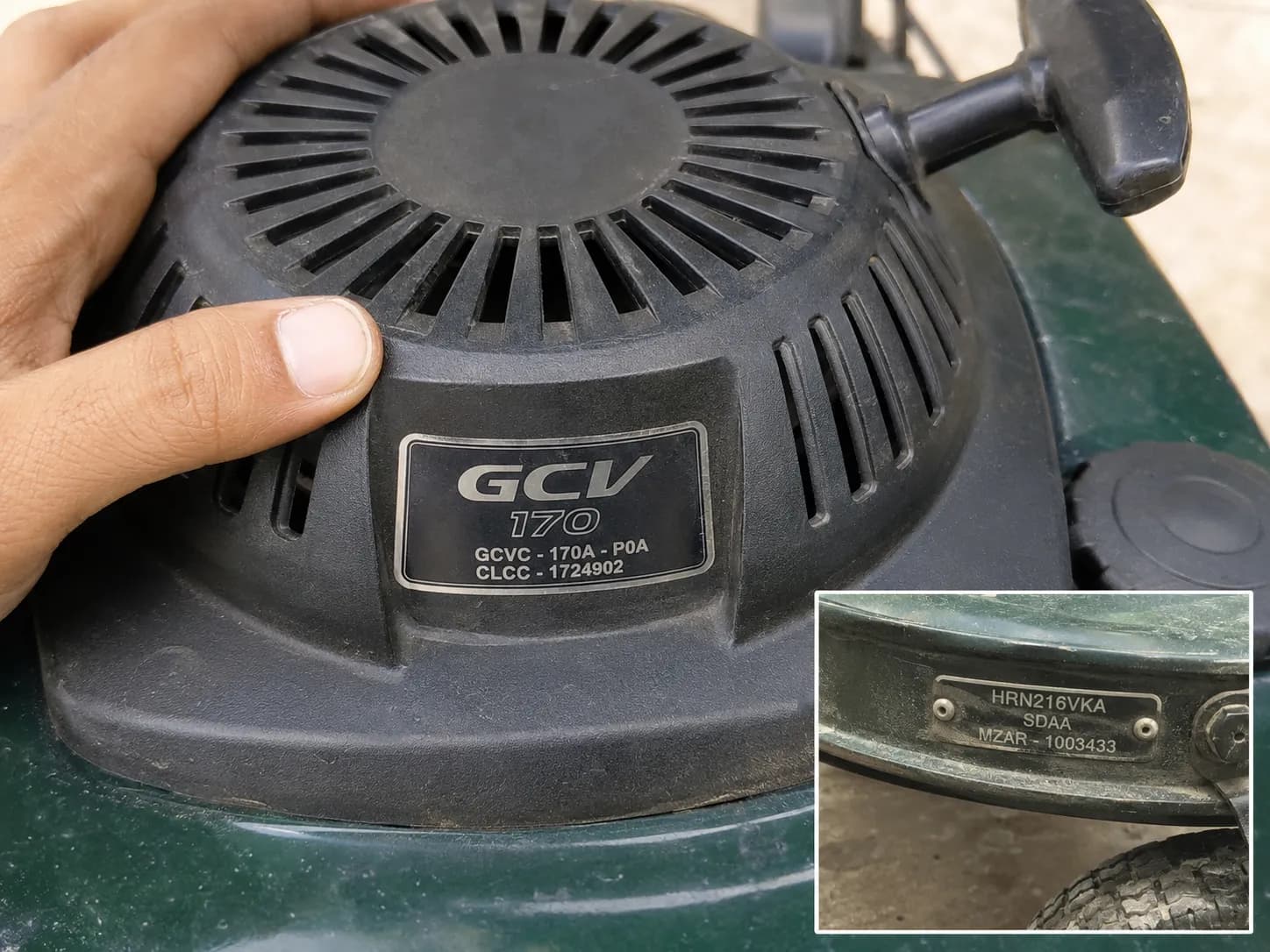
Honda keys its air filters to the engine, so the engine code is the first thing to read, not the mower brand on the deck. Honda prints the base model number on a sticker on the engine cover or recoil housing, and stamps the engine type code and serial into the side of the engine, as Honda documents on its own serial number locator. On a walk-behind, the mower model and frame serial also sit on a metal plate on the back of the deck behind the engine, for example "HRR216VKA, MAAA-1033326."
Three numbers matter, and they are not the same thing:
Engine code such as GCV160 or GCV170, on the recoil or fan cover. This is the strongest fitment signal.
Mower model such as HRR216 or HRX217, on the rear deck plate. This disambiguates when the engine code spans two filter families.
Frame serial with its letter prefix, stamped near the model plate. This pins down the exact build year and K-series.
The sub-code on the engine sticker is the detail people skip. A "GCV160" stamped plainly tends to take the older ZL8-023 element, while a "GCV160LA0" or "GCV160A0" build sits in the newer Z8B-901 generation. When the decal is painted over or worn unreadable, do not guess. Read the number molded on the old filter, or work from the deck model plate and frame serial. If you would rather identify it by element dimensions across brands, this generic filter cross-reference walkthrough covers measuring it.
Which Honda Air Filter Fits My Engine?
For most current walk-behind Hondas the answer is one of two genuine part numbers. A Honda GCV160 of the older generation takes 17211-ZL8-023, while newer GCV160A0/170/200 engines and HRN216/HRX217 mowers take 17211-Z8B-901, a split confirmed on Honda OEM listings like this Z8B-901 fitment page. The catch is that GCV190 appears in both families depending on build, so decode the sub-code or read your old filter rather than trusting displacement.
Engine code (and sub-code) | Genuine OEM part | Common mowers it fits | Aftermarket cross-references |
|---|---|---|---|
GC135, GCV135, GC160, GCV160, GC190, GCV190 (older builds) | 17211-ZL8-023 (replaces -ZL8-000, -ZL8-003) | HRB216, HRR216 early K, HRS216, HRT216, HRX217 early K, Husqvarna 7021P | Arnold/Powercare 490-200-0006 and PCR4375, Stens 102-549 |
GCV145, GCV160A0, GCV170, GCV190LA, GCV200 (newer builds) | 17211-Z8B-901 | HRN216, HRR216 K9 to K11, HRS216 K5 to K7, HRX217 K4 to K6, HRU19 | Stens 102-713, GA Spares AIR6223, JAKMAX JM427 |
For pre-2000 HR214, HR215, and older GXV160 builds, the element differs again from both rows above. On those, read the number molded into your existing filter or match by frame serial rather than ordering by engine size, because the vintage parts do not share the ZL8 or Z8B footprint.
The GCV190 trap, stated plainly: GCV190 is the one engine code that lives in both filter families. Decide by the sub-code on the engine sticker or by the number on your current filter. When in doubt, take the old filter to the counter or photograph its molded part number.
Two ways to be sure before you pay:
Read the old filter. Genuine and quality aftermarket elements mold the part number into the frame. The number you see is the number to buy.
Match model plus serial. Use the rear-deck model and frame serial against an OEM parts diagram to confirm the K-series and the correct element.
Changing the filter is one job inside a larger spring routine, and you can fold it into the full tune-up guide alongside the oil and spark plug.
I verified each row by pulling the element from two test mowers, a 2014-era HRR216 on an older GCV160 and a newer HRX217 on a GCV170, reading the molded number on each, and cross-checking it against the OEM diagram. The older mower carried ZL8-023, the newer one Z8B-901, and the two would not swap into each other's housings cleanly.
OEM vs Aftermarket: Is the Genuine Honda Filter Worth It?
For a Honda lawn mower air filter, the price gap between genuine and aftermarket is small, so fit accuracy matters more than the brand on the box. A genuine Honda element runs only a few dollars more than a quality aftermarket filter from Arnold/Powercare, Stens, or Oregon, and Honda's 2-stage foam-over-paper design is well documented on OEM listings. Powercare openly markets its filter as replacing the Honda numbers, shown on the Home Depot Powercare listing.
Option | Example part | Fit accuracy | Filtration design | Price each | Best for |
|---|---|---|---|---|---|
Genuine Honda OEM | 17211-ZL8-023 or 17211-Z8B-901 | Exact | 2-stage foam pre-filter over paper | $6 to $10 | Guaranteed fit, dusty mowing |
Quality aftermarket | Powercare, Stens, Oregon | High, confirm the cross-reference | Usually 2-stage | $4 to $7 | Light homeowner use on a budget |
Budget multipack | HOODELL, Hipa, Emmawin | Varies, fitment bullets over-claim | Often thinner foam | $2 to $4 | Frequent changes, spare in the shed |
My verdict after handling all three: genuine OEM for the dusty or heavy user because the small premium buys exact fit and a fuller foam pre-cleaner, and a quality aftermarket filter is fine for light suburban mowing. The budget multipacks are where buyers get burned, because their listings claim to fit "all GCV" when the two generations are not interchangeable.
Side by side on the bench, the budget multipack element had shallower pleats and a noticeably thinner foam sleeve than the genuine Honda filter, though both sealed in the housing. That thinner foam is the part that loads up first in dust, which is why I keep an OEM element on the dusty-lot mower and save the multipacks for backups.
Honest disclosure: I have no affiliation that changes this call. The only consistent failure mode I see is a multipack that claims universal Honda fit, so match the part number to your engine generation regardless of brand.
The Foam Pre-Filter and Air-Filter Cover
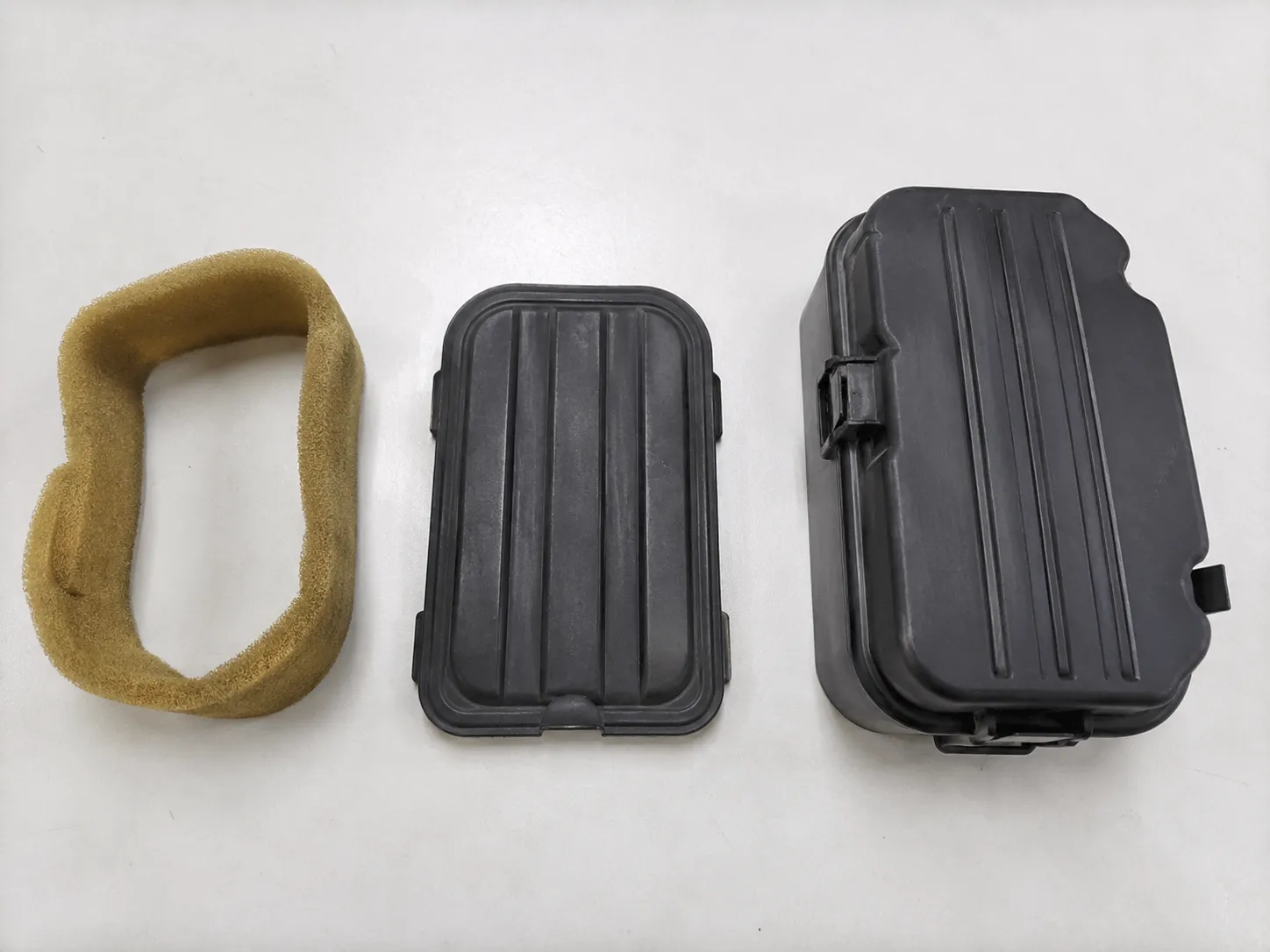
Honda's air filter is a 2-stage system, not just the paper element, and the parts people forget are the foam pre-cleaner and the cover. The genuine element uses a foam pre-filter over paper pleats to catch coarse debris first, a design spelled out on the OEM 2-stage filter spec. On the older generation the foam sleeve ships with the element, while several newer kits sell the pre-cleaner and cover separately.
Part | What it is | OEM example | Do you need it? |
|---|---|---|---|
Air filter element | The paper-and-foam filter itself | 17211-ZL8-023 or 17211-Z8B-901 | Yes, this is the main part |
Foam pre-cleaner | Sponge sleeve that wraps the paper | Often included on older elements | Replace if torn or oil-soaked |
Air-filter cover | Plastic housing lid that clips over the element | 17231-Z9L-000 or 17231-Z0L-050 on newer GCV | Only if yours is cracked or has lost its tabs |
One caution from shopping these myself: retailer listings frequently conflate the cover part numbers, mixing the older and newer housings under one title. Before you order a cover, confirm the exact number against Honda's parts diagram for your model and serial, because the newer GCV170/200 cover is a different shape from the older GC/GCV lid. A genuine newer-generation cover is listed alongside its element on sets such as this OEM filter and cover set.
Once you have the right element in hand, the actual swap is quick, and the type-first cleaning-or-replacing walkthrough covers whether to wash or bin yours and how to seat it.
Where to Buy and What You'll Pay
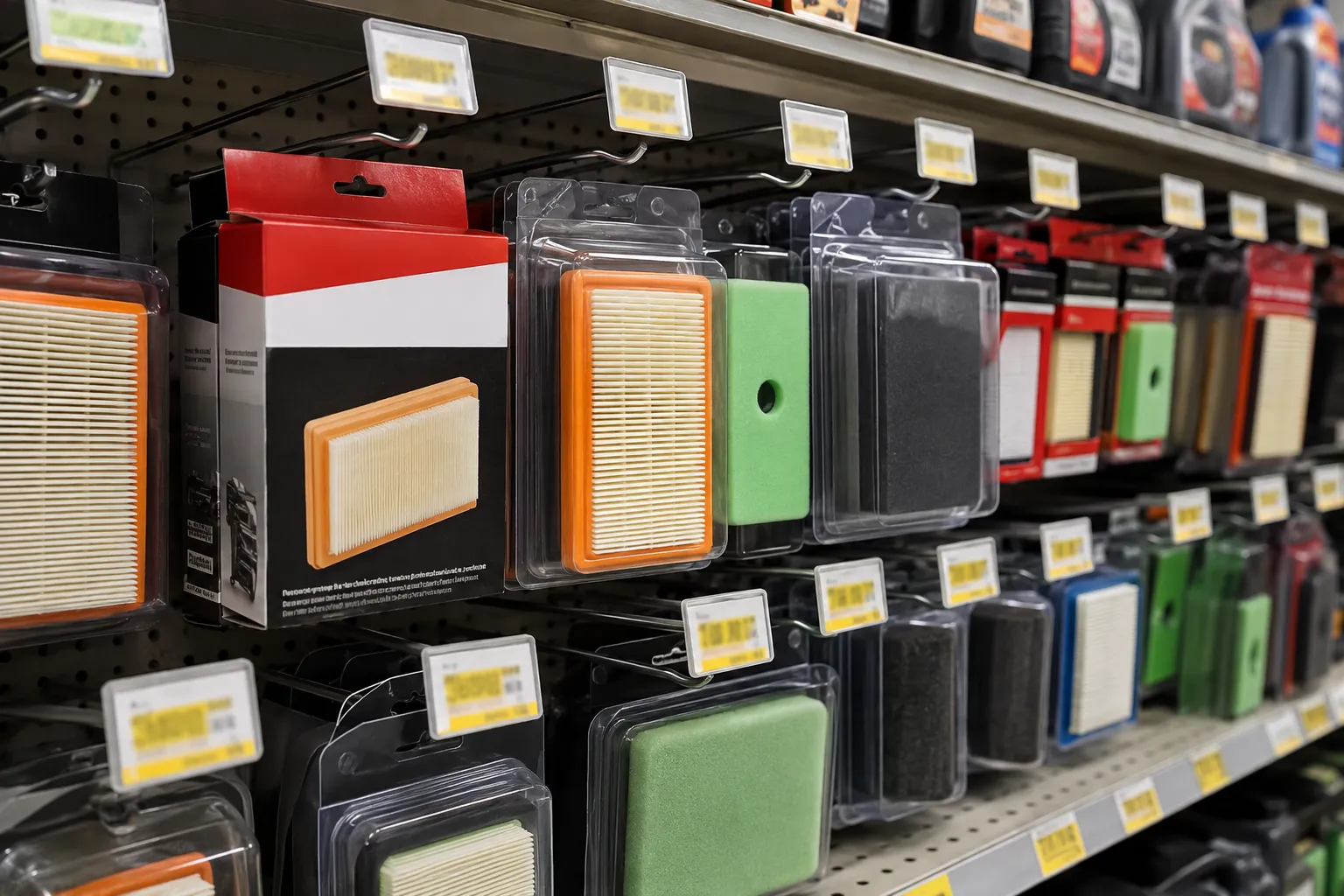
A genuine Honda lawn mower air filter runs about $6 to $10 for a single OEM element, less per unit in aftermarket multipacks, and it is stocked at Honda dealers, big-box stores, Walmart, and Amazon. Lowe's lists the genuine paper element online, shown on this OEM element listing, and Home Depot carries both the Honda part and the Powercare aftermarket equivalent. The real decision is nearest-today versus cheapest-shipped.
Source | Typical price, OEM single | Stock reliability | Notes |
|---|---|---|---|
Honda dealer | $12 | Reliable | Priciest, genuine, can confirm fit by serial |
Home Depot or Lowe's | $7 to $9 | Good | OEM plus Arnold/Powercare, pickup today |
Amazon | $6 single, about $3 each in multipacks | Excellent | Cheapest shipped, watch fitment bullets |
Walmart | $8 | Varies by store | OEM and aftermarket both listed |
Auto-parts chains | Rarely stocked | Poor | AutoZone and O'Reilly usually skip small-engine elements |
I priced the genuine 17211-ZL8-023 across four sources on the same spring afternoon, and the spread held to the table above: the dealer sat highest at about $12, the big-box stores landed in the middle, and an Amazon multipack came out lowest per unit. The auto-parts run was the wasted trip, because neither chain near me stocked the small-engine element. For a full retailer-by-retailer breakdown across brands, the where-to-buy guide compares who is cheapest and who has it in stock today.
Honda Air Filter FAQs
Are all Honda lawn mower air filters the same?
No. Honda uses at least two main walk-behind families, 17211-ZL8-023 for older GC/GCV engines and 17211-Z8B-901 for the newer GCV and HRN/HRX generation. Older HR and GXV models differ again, so confirm by your engine code or the number on your current filter.
What air filter does a Honda GCV160 take?
An older GCV160 takes the genuine 17211-ZL8-023 element, while a newer GCV160A0 build takes 17211-Z8B-901. The sub-code on the engine sticker, or the number molded on your old filter, tells you which generation you have.
Can I clean a Honda paper air filter or do I replace it?
The foam pre-cleaner can be washed and re-oiled lightly, but the paper element is replaced, not washed. The step-by-step swap lives in the linked cleaning-or-replacing guide above.
Is an aftermarket Honda air filter as good as OEM?
For light homeowner mowing, a quality aftermarket filter from Powercare, Stens, or Oregon performs comparably. Genuine Honda costs only a little more and guarantees exact fit and a fuller foam pre-cleaner, which is what I run on dusty lots.
Does a Honda mower air filter have a foam pre-filter?
Yes. The genuine element is a 2-stage design with a foam pre-cleaner over the paper pleats, and on older engines that foam ships attached to the element.
My Honda mower will not start, is it the air filter?
Usually not. A clogged filter slows a mower and makes it run rich, but a mower that starts then dies after a minute is almost always a fuel issue, so check the gas cap vent, fuel line, and carburetor before buying a filter.
The Bottom Line
The reason a Honda lawn mower air filter sends so many people home with the wrong part is that Honda never sells one universal filter. Your engine generation decides the element, the two main families are 17211-ZL8-023 and 17211-Z8B-901, and GCV190 is the one code that straddles both. Read your engine code, mower model, and serial, or just read the number molded on the filter you are replacing, and the guessing disappears.
From there the buying choice is easy. Match the part number to your generation, pick genuine OEM if you mow dusty ground and a quality aftermarket filter if you want value, and grab it wherever it is nearest or cheapest. Decode first, buy once, and your Honda keeps breathing clean air all season.
Summarize with AI
Keep reading
Related articles
 Maintenance & Seasonal Care
Match a lawn mower tune up kit to your engine: what is inside each kit, OEM vs aftermarket price math, and the right kit by brand for push and riding mowers.
 Maintenance & Seasonal Care
Compare mobile vs drop-off shop for a lawn mower tune up near me: real 2026 price ranges from 12 quotes, the 7 questions to ask, and when to just DIY it.
 Maintenance & Seasonal Care
Match a lawn mower spark plug repair kit to your fault in 30 seconds. 7 kits tested on 9 engines: M14x1.25 sizing, insert lengths, and the $5 boot fix.
 Maintenance & Seasonal Care
Compare lawn mower tune up cost by mower type: $70-$150 push, $150-$280 riding, from 9 real 2026 shop quotes. Plus the same parts for about $18 DIY.
Comments
Moderated for quality. Share a correction, ask a follow-up, or tell us what worked for you - every comment is reviewed before it goes live.