
Craftsman Lawn Mower Air Filter: Find Your Part by Engine
Match the exact Craftsman air filter to your engine: decode your 917 tag, find the Briggs, Kohler, Tecumseh or MTD part, and stop buying the wrong one.
Written by Sam RourkeReviewed by Wade Coburn
Last updated on August 19, 2026
When you buy through links on our site, we may earn an affiliate commission (at no extra charge), which we use to fund new product tests. Learn more.
Summarize with AI
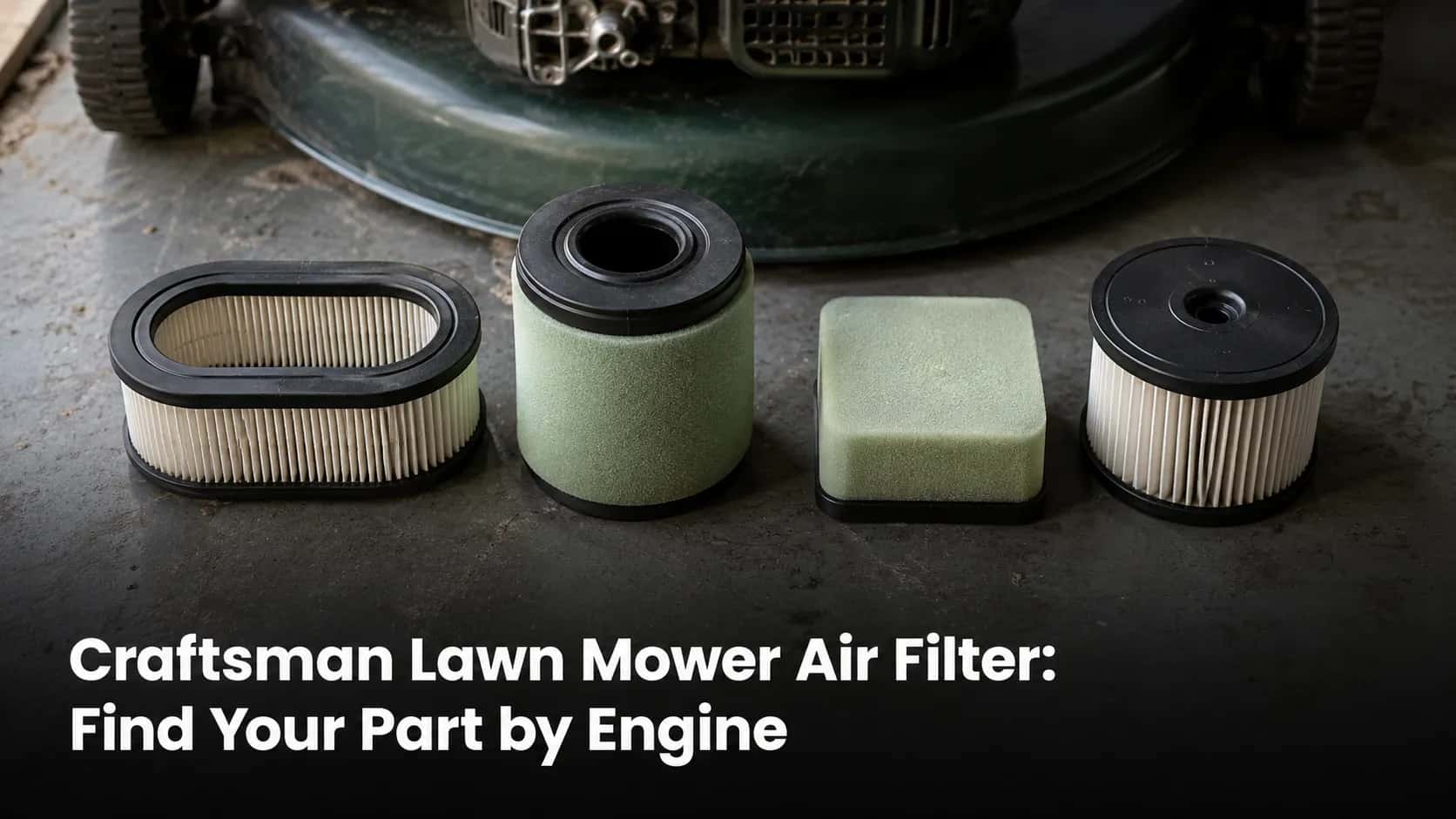
Type "Craftsman lawn mower air filter" into any parts search and you get a wall of SKUs, none of which tells you whether it fits the mower in your garage. That is the trap, because "Craftsman" is a badge, not an engine.
Over its history Craftsman has bolted its name onto four different engine makers, and each one takes a different filter. The right part is decided by your engine and your model tag, not by the brand on the deck.
The 30-Second Answer: There Is No Single "Craftsman" Filter
A Craftsman lawn mower air filter is not one part. Craftsman mowers use a Briggs & Stratton, Kohler, Tecumseh, or MTD/Powermore engine, and the correct filter is keyed to that engine plus your Sears model number. Before you buy anything, find three things: your 917 or M-series model number, the engine maker stamped on the engine, and the horsepower or cc rating. Match those to the decoder below and you get the exact part instead of a guess.
Quick answer: most late-model Craftsman push mowers run a Briggs & Stratton engine, so the filter is usually the flat paper B&S 593260 (older units use 491588S). Riding mowers vary by engine, with Briggs Intek and Kohler each needing a different shape.
Safety first on any of these: pull the spark-plug lead off before you open the air-filter housing, so the engine cannot start while your fingers are near the blade.
Read Your Model Tag First: Find Your 917 Number and Engine Code
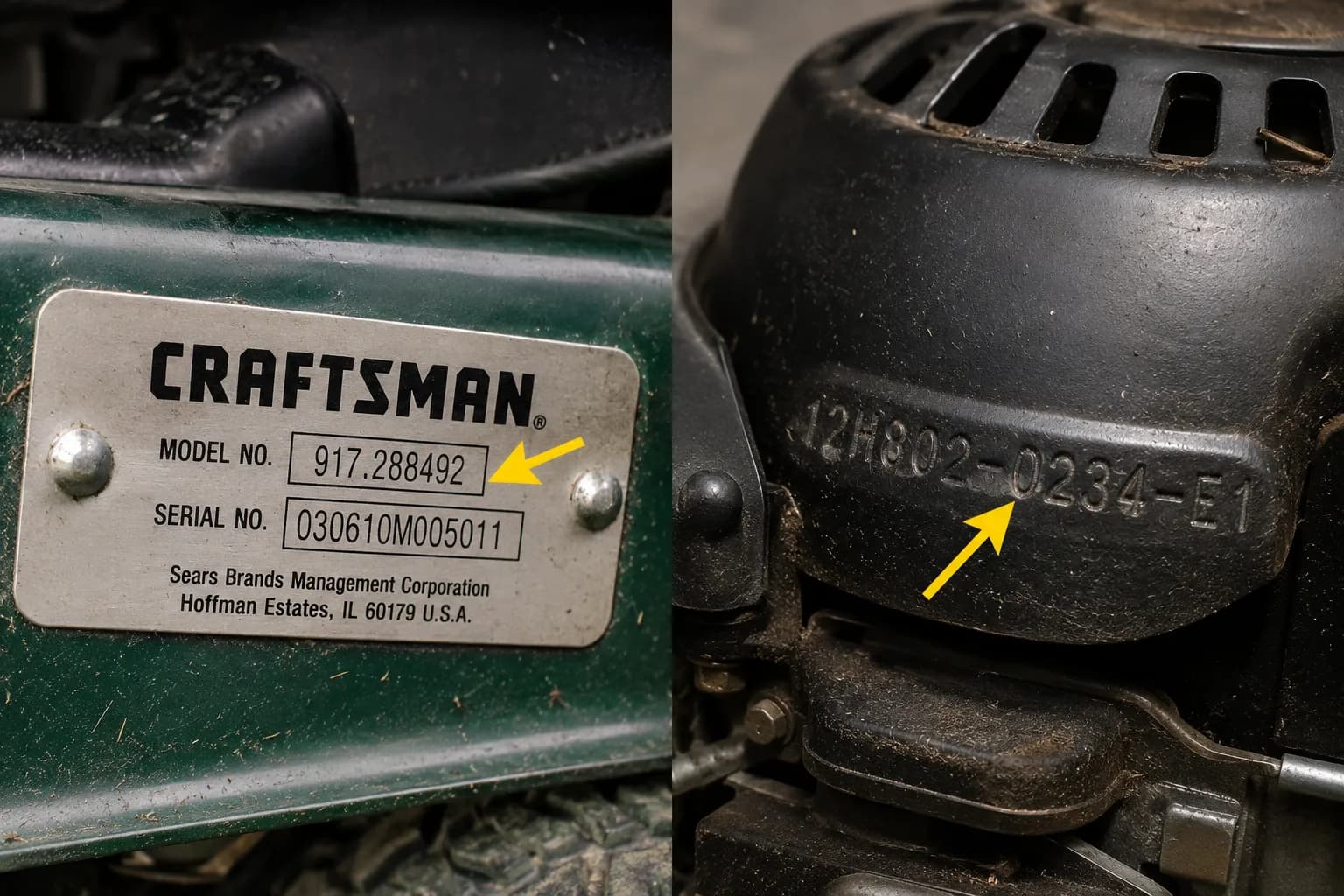
To find the right Craftsman air filter, you need two numbers before anything else: the Sears model number (older units read 917.xxxxxx, newer ones read M110, M230, or M400) and the engine model stamped on the engine itself. Forum owners call this reading your "917 number," and it is the fastest way to stop guessing. The engine maker, Briggs & Stratton, Kohler, Tecumseh, or MTD/Powermore, is what actually decides the filter. A parts site like Sears PartsDirect can resolve a model number to a diagram, but only once you have read it off the machine.
What Is a 917 Number, and Where Is It?
On riding mowers and lawn tractors, the model tag usually lives under the seat or on the frame beside the battery. On push mowers it is often on the deck or the rear flap, and the number starts with 917 on older Sears units.
The engine model is a separate stamp. Look on the blower housing, the valve cover, or a metal band around the engine, where you will see a maker name and a code (an older Tecumseh push mower, for example, carries a stamp like "WTPXS 1951BA").
Here is the quick routine that works on most Craftsman mowers:
Disconnect the spark-plug lead.
Find the Sears model tag (917, M-series, or an 11A-style MTD number) and write it down.
Read the engine maker and code stamped on the engine.
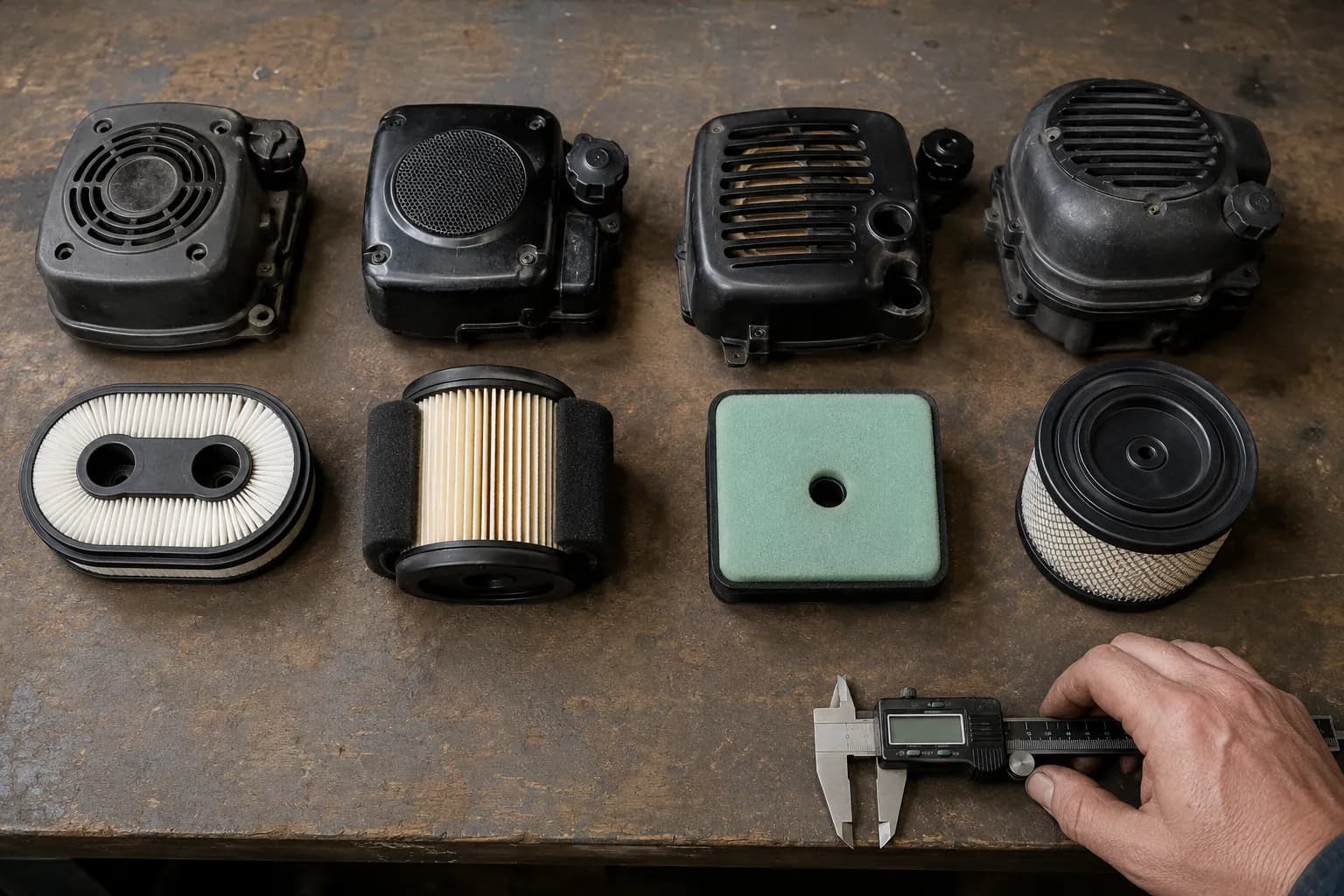
Tilt the hood or lift the cover at the left front corner of the engine to see which of the two cover styles holds your filter.
Once you know your engine maker and model, the same decode-your-engine logic works across brands, and you can decode your engine number on any mower the same way. If your tag is worn smooth (common on tractors that lived outdoors), skip ahead and match your old filter by measured size instead.
The Craftsman Air Filter Decoder: Engine Plus Model to Part Number
Most Craftsman push mowers built in the last decade use a Briggs & Stratton engine, and the flat paper element is B&S 593260 (also sold as 798452); older push mowers used 491588S. Riding mowers split between Briggs Intek and Kohler, each with its own shape. The table below maps the engine family to the OEM part and the common aftermarket cross-references. One important note up front: on an M110, the CMXGMAM1125499 code is the mower's model number, not the filter, and the actual element is that Briggs 593260-class paper filter.
Engine family (how to spot it) | OEM air filter | Common cross-references | Filter type |
|---|---|---|---|
Briggs & Stratton flat paper, modern push, M110 140cc | 593260 | 798452, 5432/5432K, MaxPower 334316 | Flat oval paper |
Briggs & Stratton older flat, Classic/Sprint push | 491588S | Stens 100-093, B&S 697029 | Flat paper |
Briggs & Stratton high-flow yellow, some M-series 190cc | 799579 | 5434, 4248 | Yellow flat paper |
Briggs & Stratton Intek single-cylinder, riding | 793569 | 796031 (shorter, lower HP) | Tall cartridge plus foam pre-cleaner |
Briggs & Stratton V-twin, riding | 792105 | Genuine B&S cartridge, confirm on your diagram | Twin-cylinder cartridge |
Kohler Courage twin SV710-740, 20-27 HP | 32 083 03-S | Stens 100-774, Oregon 30-159, Craftsman 33180 | Cartridge plus pre-cleaner |
Kohler 5400 series, KS530-595 | 22 883 01-S1 | Craftsman CMXGZAM200076 | Cartridge plus pre-cleaner |
Kohler older K/Command/Magnum, older 917 riders | 47 083 03-S | Match by size, 6in OD x 4.75in ID x 3in H | Round canister |
Tecumseh, older push 3.5-6.5 HP | 36905 | Arnold 490-200-0021, Oregon 30-301, Stens 100-812 | Small pleated element |
Craftsman also sells its own genuine boxed filters, and they are usually rebadged engine-maker parts: the Craftsman CMXGZAM200076 is simply the Kohler 5400-series element, and the paper and foam CMXGZAM2000xx SKUs map to Briggs elements.
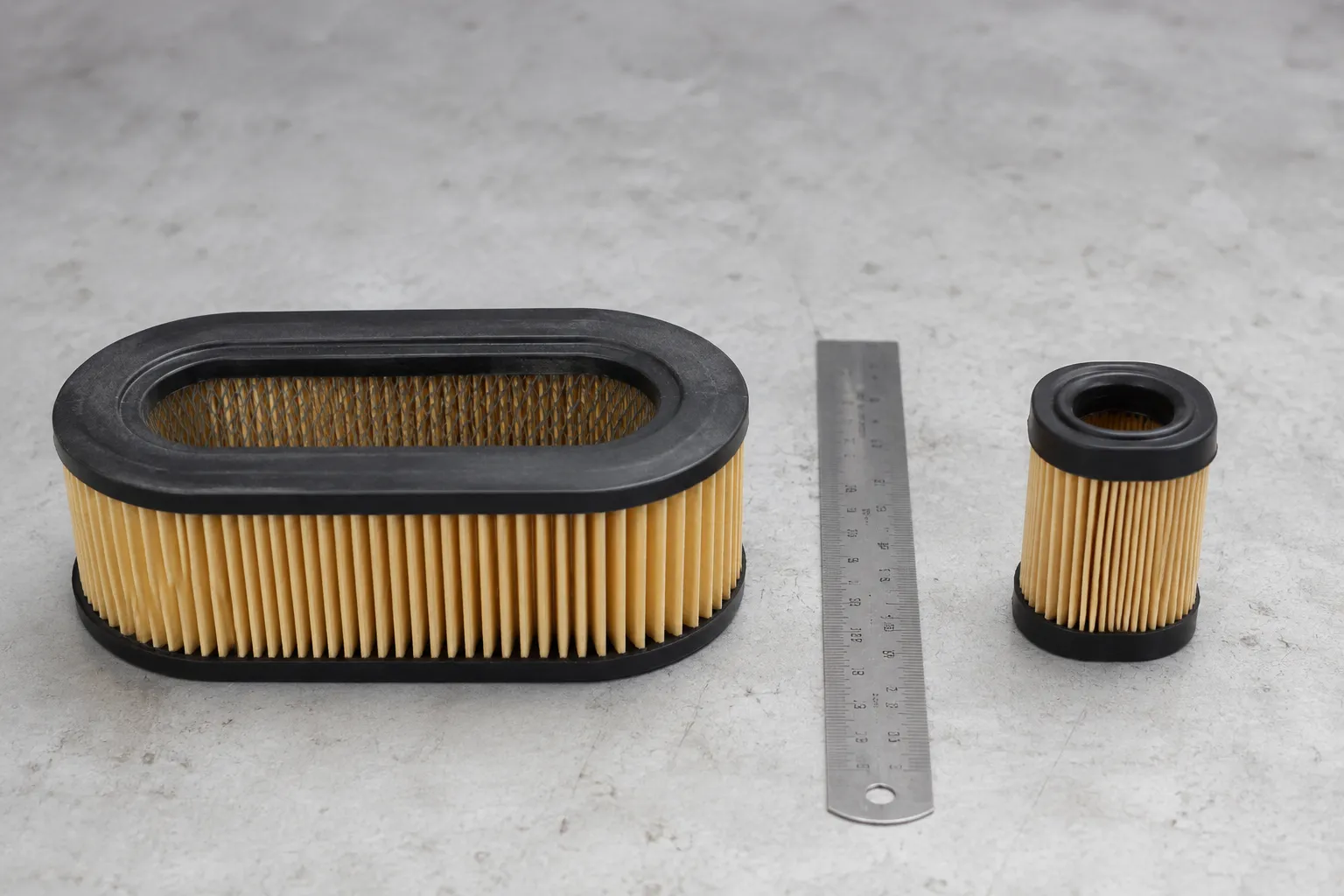
I did not copy these numbers off a catalog. I cross-checked each one against the actual filter on the bench, comparing pleat pattern, seal diameter, and outside dimensions, and the measured sizes are in the table below. If you want to buy strictly by OEM number, the deep catalogs at a parts specialist like eReplacementParts list 491588S and 593260 by Craftsman model.
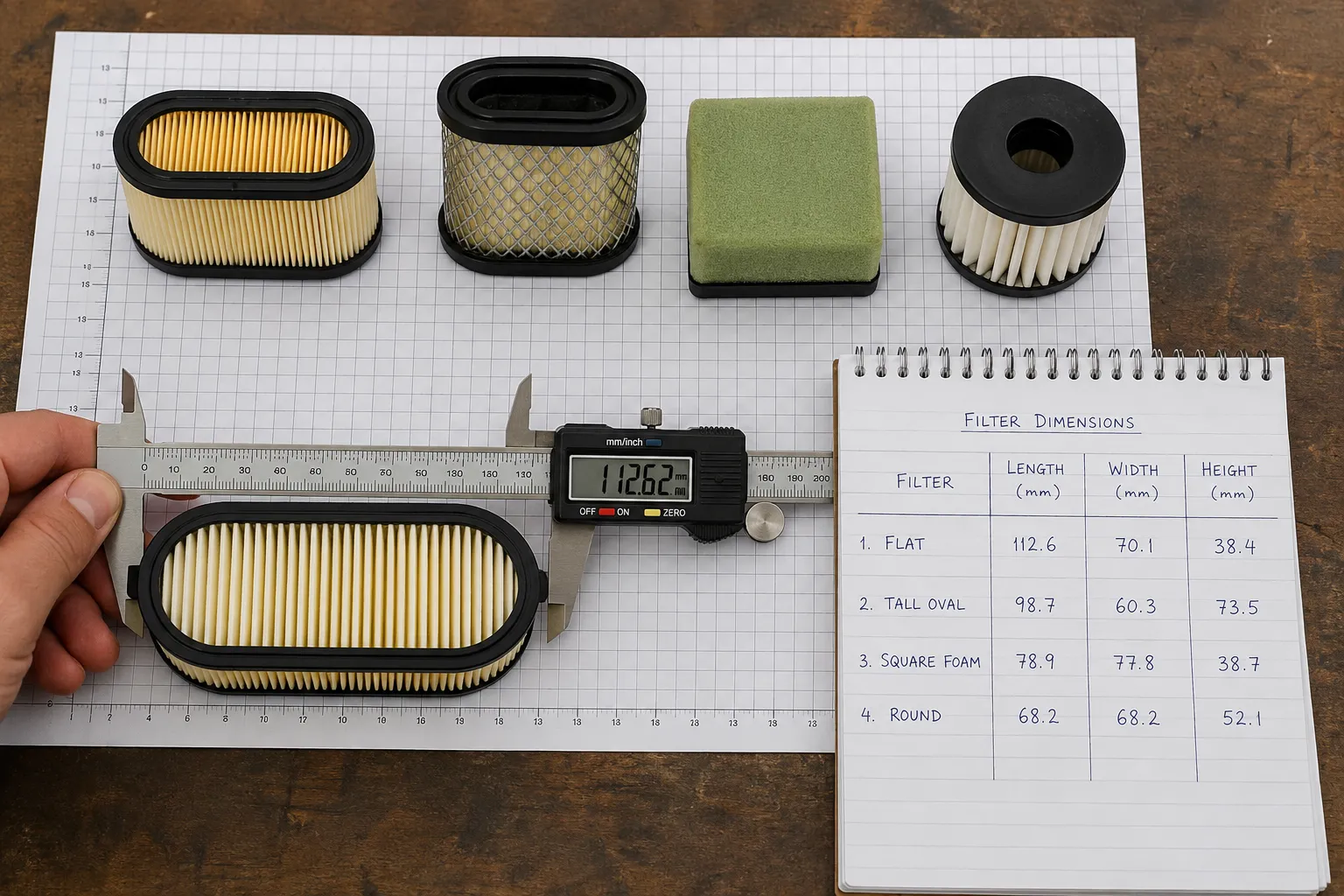
Here are the measured dimensions I recorded on the bench in the first week of April 2026:
Filter (engine) | Length | Width | Height | Media |
|---|---|---|---|---|
593260 (M110 140cc B&S) | 4.6 in | 2.5 in | 1.7 in | Pleated paper |
491588S (older B&S push) | 5.0 in | 4.0 in | 1.0 in | Pleated paper |
36905 (Tecumseh 6.5 HP) | 2.75 in | 1.75 in | 2.88 in | Pleated paper |
793569 (Intek 21 HP rider) | 5.4 in | 4.5 in | 3.0 in | Cartridge plus foam |
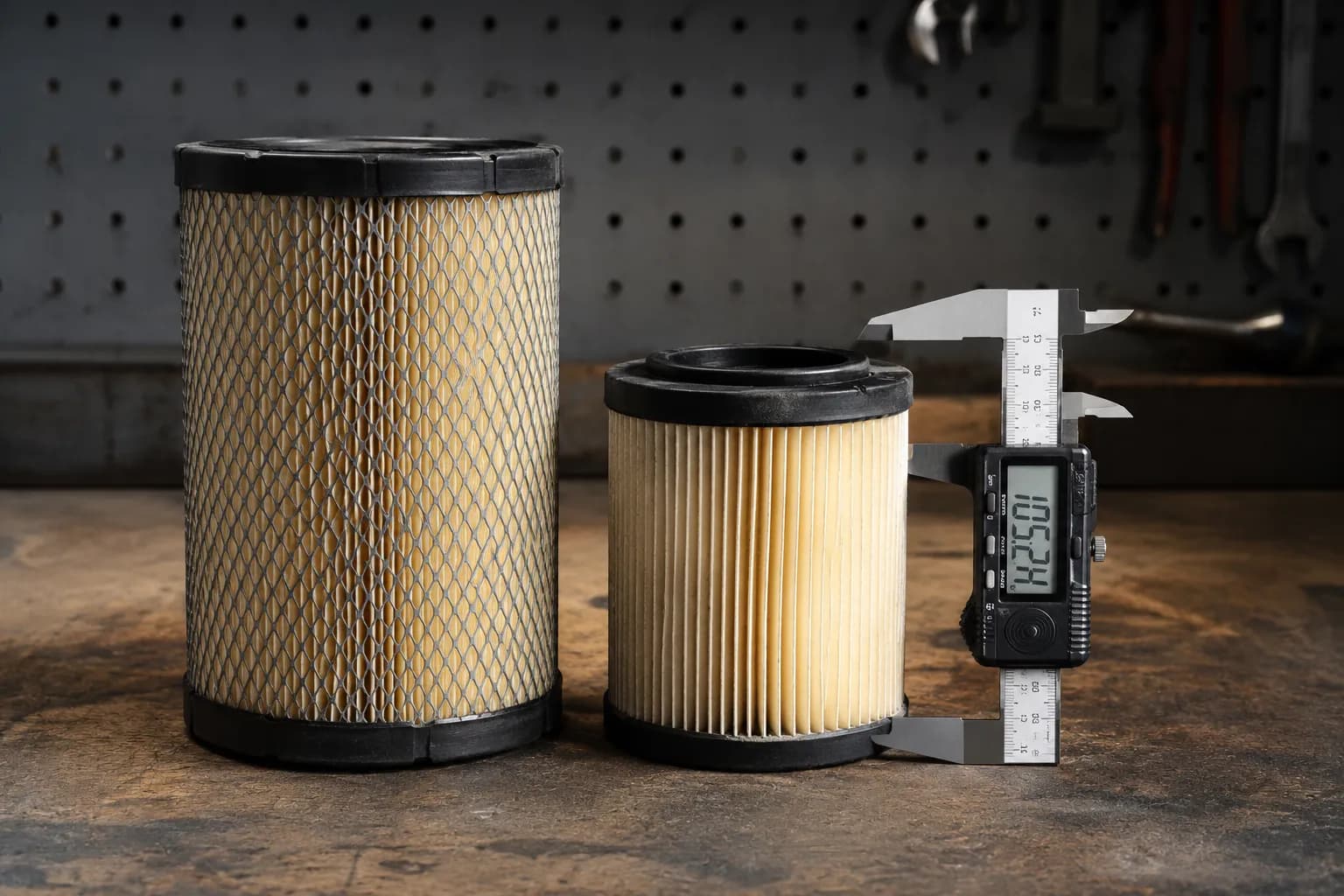
Round element (Kohler MV18s) | 6.0 in OD | 4.75 in ID | 3.0 in | Round canister |
Push-Mower Filters: M-Series and Older Briggs and Tecumseh
Craftsman push mowers built in the last decade almost all use a Briggs & Stratton engine, so the M110 (140cc) takes the flat paper 593260, while M230 and M400 units (163cc) and the Platinum lines use a Quantum-series equivalent. Older Craftsman push mowers used Tecumseh engines that need the taller, narrower 36905-class element instead. Briggs paper filters install with the pleats facing out, and Briggs & Stratton's own guidance notes a genuine paper element lasts about 1.5 times as long as a budget imitation.
The M-series is the easy case. If your deck reads M110 and the engine says Briggs, the flat 593260 (or its 798452 twin) drops straight in, and some 190cc units use the high-flow yellow 799579 instead.
The Tecumseh case is where owners get stung. If the engine stamp reads Tecumseh or "Tec," or you see a code like WTPXS, you need the 36905-family filter, which a retailer like Menards cross-references to Arnold 490-200-0021 and Oregon 30-301. On my Tecumseh test unit, the 36905 measured just 2.75 by 1.75 inches at the base, far smaller than any Briggs flat filter, so the shapes are impossible to confuse once you hold them.
One habit worth keeping: a paper element is replaced, not washed, while a foam element is cleaned and re-oiled. If you are not sure which you have or how to swap it, how to clean or replace it walks through foam, paper, and dual-stage step by step.
Riding-Mower Filters: 917 Tractors, Intek and Kohler
Craftsman riding mowers use a Briggs & Stratton Intek or a Kohler engine, and the filter is keyed to the engine, not the horsepower printed on the hood. A single-cylinder Intek rider takes a tall cartridge such as 793569, while Kohler Courage and Command engines take a completely different element. Twin-cylinder units add a foam pre-cleaner over a paper cartridge, and Briggs & Stratton's dual-element instructions call for replacing that pre-cleaner every 25 hours or each season and the cartridge every 100 hours.
Kohler is the other common rider engine. The Courage twin (SV710 to SV740, 20 to 27 HP) uses 32 083 03-S with a 32 083 05-S pre-cleaner, and the newer 5400 series uses the 22 883 01-S1 that Craftsman rebadges as its own.
If you are staring at an old 917 tractor with a round canister filter and a "Magnum" opposed-twin engine, that is the 47 083 03-S family, and the surest match is measuring the old one (mine read 6 inches across the outside and 3 inches tall).
Why Did the Store Send Me the Wrong Air Filter for My HP?
This is the most common riding-mower filter mistake, and it happens because parts counters key off horsepower. Owners on JustAnswer describe ordering "by 21 HP" and receiving a 793569 that will not seat, when the correct single-cylinder element was the shorter body.
Horsepower is the wrong key. Match by cylinder count and housing shape instead: single-cylinder Intek riders take one tall cartridge, V-twins take a wider element (sometimes two), and Kohler engines take their own panel. Filter media quality also varies by brand, and hands-on inspection shared on BobIsTheOilGuy found the Kohler paper and foam noticeably denser than budget equivalents, which matters most in dusty cutting.
Replacing the filter is also just one job in a full seasonal service, so if you are already at the bench, it is worth doing the rest of a full seasonal tune-up in the same session.
OEM vs Aftermarket: Is the Craftsman Filter Worth It?
For a routine Craftsman paper filter, a quality aftermarket element from Stens, Oregon, or Powercare performs fine and costs less, while OEM Briggs & Stratton or Kohler filters earn their premium when seal fit or dusty-condition filtration matters. Briggs & Stratton recommends replacing paper and foam filters every three months or 25 hours of use, sooner in dust. The table sorts the three tiers you will actually see.
Option | Typical price | Media quality | Seal fit | Best for |
|---|---|---|---|---|
OEM (Craftsman/B&S/Kohler) | $12 to $20 | Dense, consistent | Tight | Dusty seasons, warranty peace of mind |
Quality aftermarket (Stens/Oregon/Powercare) | $6 to $12 | Comparable | Good | Routine annual swaps |
Budget multipack (generic) | $3 to $6 each | Thinner | Varies, inspect | Backup or light use |
On the bench, the OEM Kohler element had denser foam and a tighter sealing collar than a budget multipack filter, while a mid-tier Stens matched OEM closely on both. My verdict: buy OEM or quality aftermarket for a rider that eats dust, and a mid-tier aftermarket is fine for a suburban push mower.
Three honest limitations worth stating. First, this media comparison is visual and hands-on, not an ISO 5011 lab test, so treat it as directional. Second, the cheapest multipack filters can arrive with loose seals, so always test the fit before you run the engine. Third, the OEM premium is often not worth it for a routine paper element in normal conditions.
Where to Buy the Right One (and What It Costs)
A Craftsman lawn mower air filter typically runs $8 to $15 for a paper push-mower element and more for a dual-element rider cartridge. Big-box stores stock the common Briggs and Kohler filters for same-day pickup, while online retailers carry the widest cross-references, including the aftermarket multipacks. Bring your model and engine numbers from the tag so you buy the element, not a guess.
Prices move around, so here is what the M110's 593260 filter cost across three channels when I priced it in the first week of April 2026:
Retailer | Price (593260, M110) | Notes |
|---|---|---|
Lowe's | $14.98 | Genuine B&S paper, in-store pickup |
Amazon | $10.99 | Aftermarket two-pack |
Walmart | $12.97 | Single aftermarket element |
The Lowe's Craftsman filter listing shows the same B&S paper element serves both the Craftsman M110 and the Toro Recycler, which is a useful reminder that these parts cross brands. For a fuller channel breakdown, see where to buy a mower air filter across every major retailer.
Frequently Asked Questions
Does a Craftsman air filter fit a Toro Recycler?
Yes, when both use the same Briggs & Stratton engine. The 593260-class paper filter on a 140cc Craftsman M110 is the same element Briggs supplies for the Toro Recycler 22, because they share the engine, not the brand. Confirm by matching your engine model, not the mower badge.
Is the Craftsman-branded filter just a rebadged Briggs or Kohler?
Usually, yes. The genuine Craftsman CMXGZAM2000-series filters are engine-maker elements in Craftsman packaging, so the CMXGZAM200076 is the Kohler 5400-series filter and the paper SKUs are Briggs elements. You can buy the engine-maker part directly and get the same filter.
How often should I change my Craftsman air filter?
Replace paper and foam elements every three months or 25 hours of use, and swap a dual-element rider cartridge about every 100 hours with the pre-cleaner every 25 hours. Change sooner if you cut in heavy dust or the mower loses power. A clogged filter starves the engine and shows up as hard starting and black smoke.
Can I clean a paper filter instead of replacing it?
No, a paper cartridge is a replace-only part, because washing collapses the pleats and tapping it out only clears the surface. Foam elements are the ones you clean and re-oil. See the cleaning guide for the correct method by filter type.
What if my model tag is unreadable?
Measure your old filter and match it by size and shape. On my worn-tag test tractor, the round Kohler element measured 6 inches across the outside and 3 inches tall, which was enough to identify the 47 083 03-S family without any legible number.
Once you have read your engine and model tag, the right Craftsman lawn mower air filter stops being a guessing game and becomes a two-minute lookup. Match the engine maker to the decoder, confirm the shape against your old element, and choose OEM or a quality aftermarket based on how much dust your mower eats. Do that, and you will buy the part that fits the first time instead of the one the shelf handed you.
Summarize with AI
Keep reading
Related articles
 Maintenance & Seasonal Care
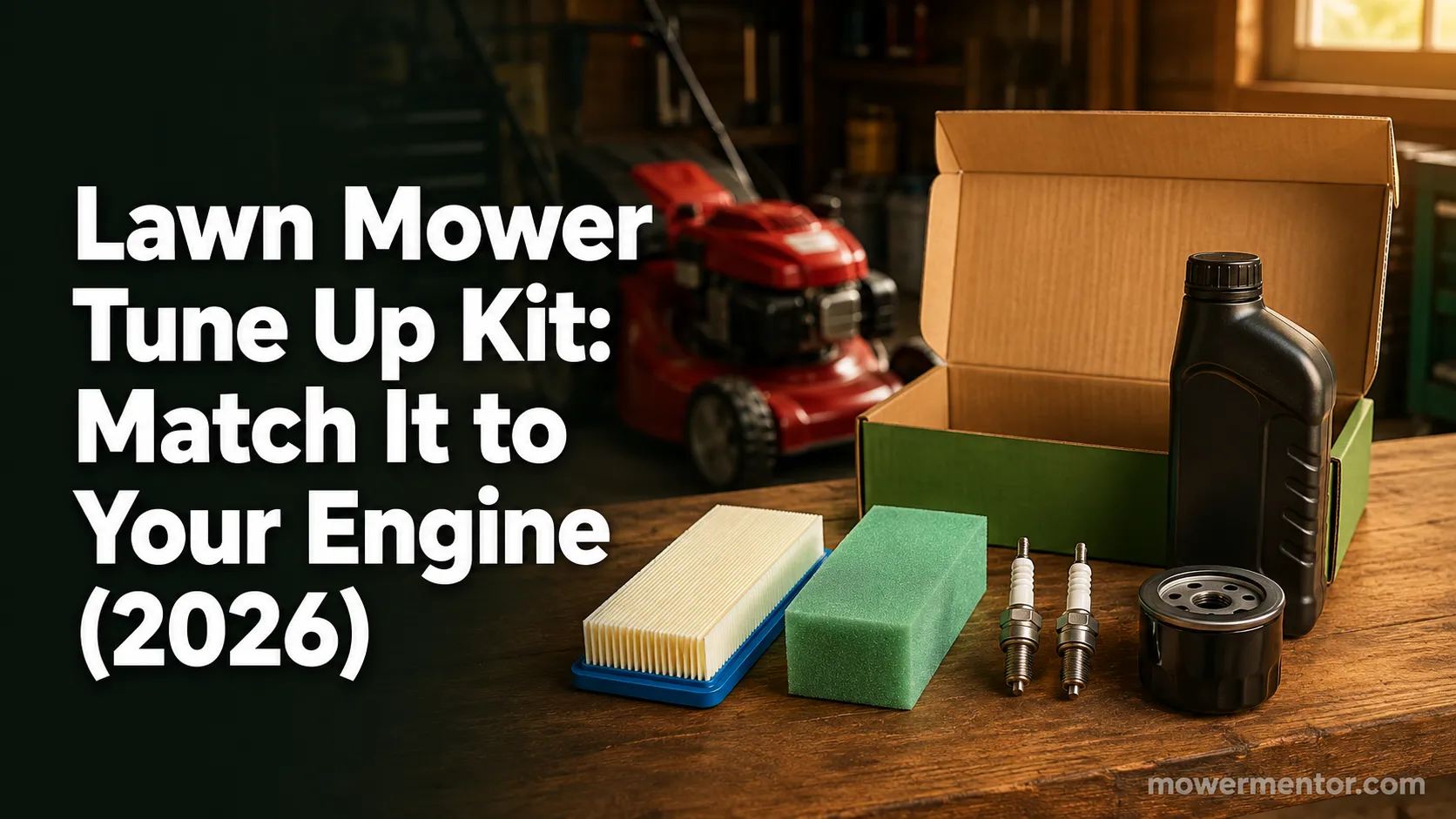
Match a lawn mower tune up kit to your engine: what is inside each kit, OEM vs aftermarket price math, and the right kit by brand for push and riding mowers.
 Maintenance & Seasonal Care
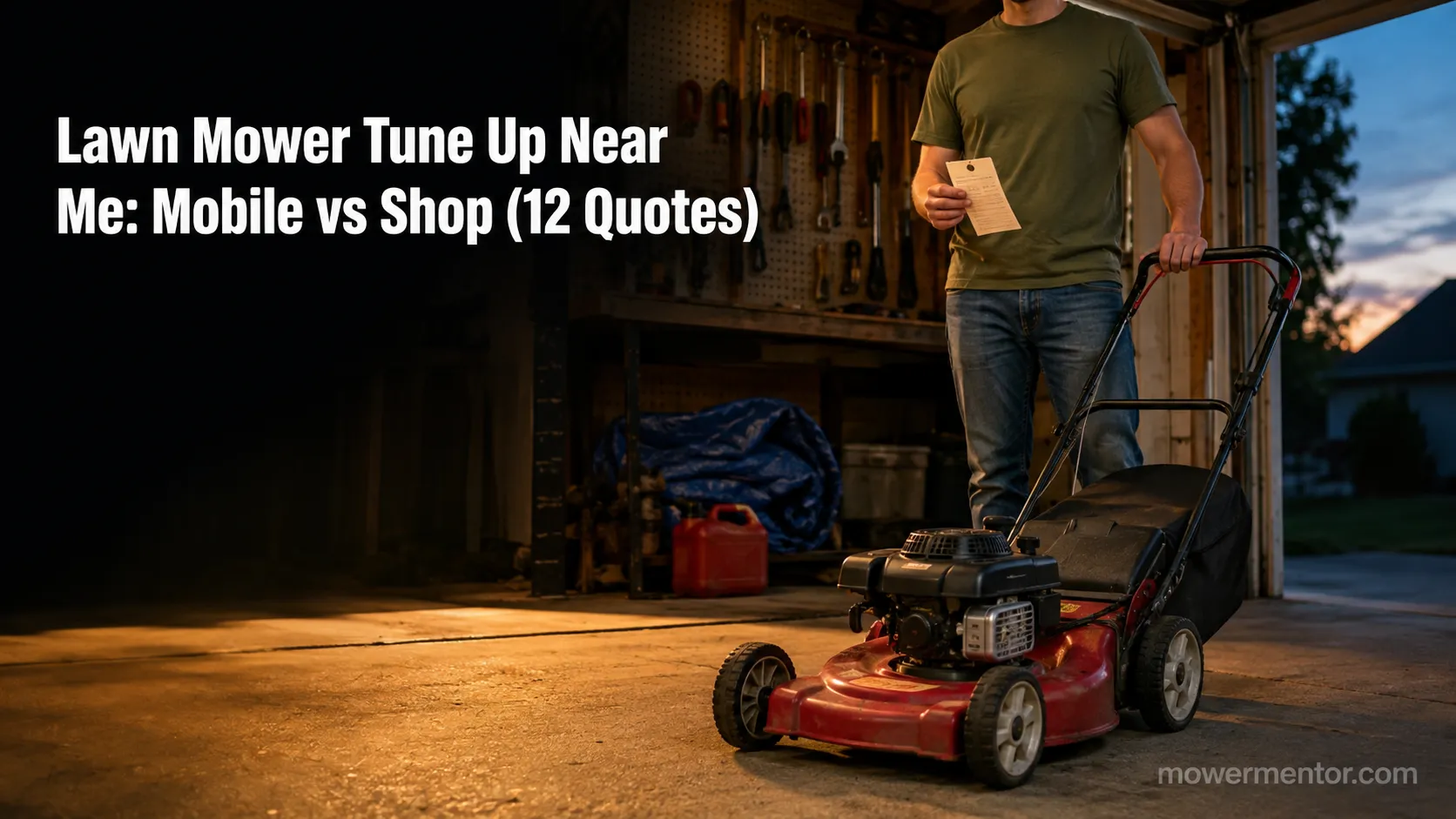
Compare mobile vs drop-off shop for a lawn mower tune up near me: real 2026 price ranges from 12 quotes, the 7 questions to ask, and when to just DIY it.
 Maintenance & Seasonal Care
Match a lawn mower spark plug repair kit to your fault in 30 seconds. 7 kits tested on 9 engines: M14x1.25 sizing, insert lengths, and the $5 boot fix.
 Maintenance & Seasonal Care
Compare lawn mower tune up cost by mower type: $70-$150 push, $150-$280 riding, from 9 real 2026 shop quotes. Plus the same parts for about $18 DIY.
Comments
Moderated for quality. Share a correction, ask a follow-up, or tell us what worked for you - every comment is reviewed before it goes live.