
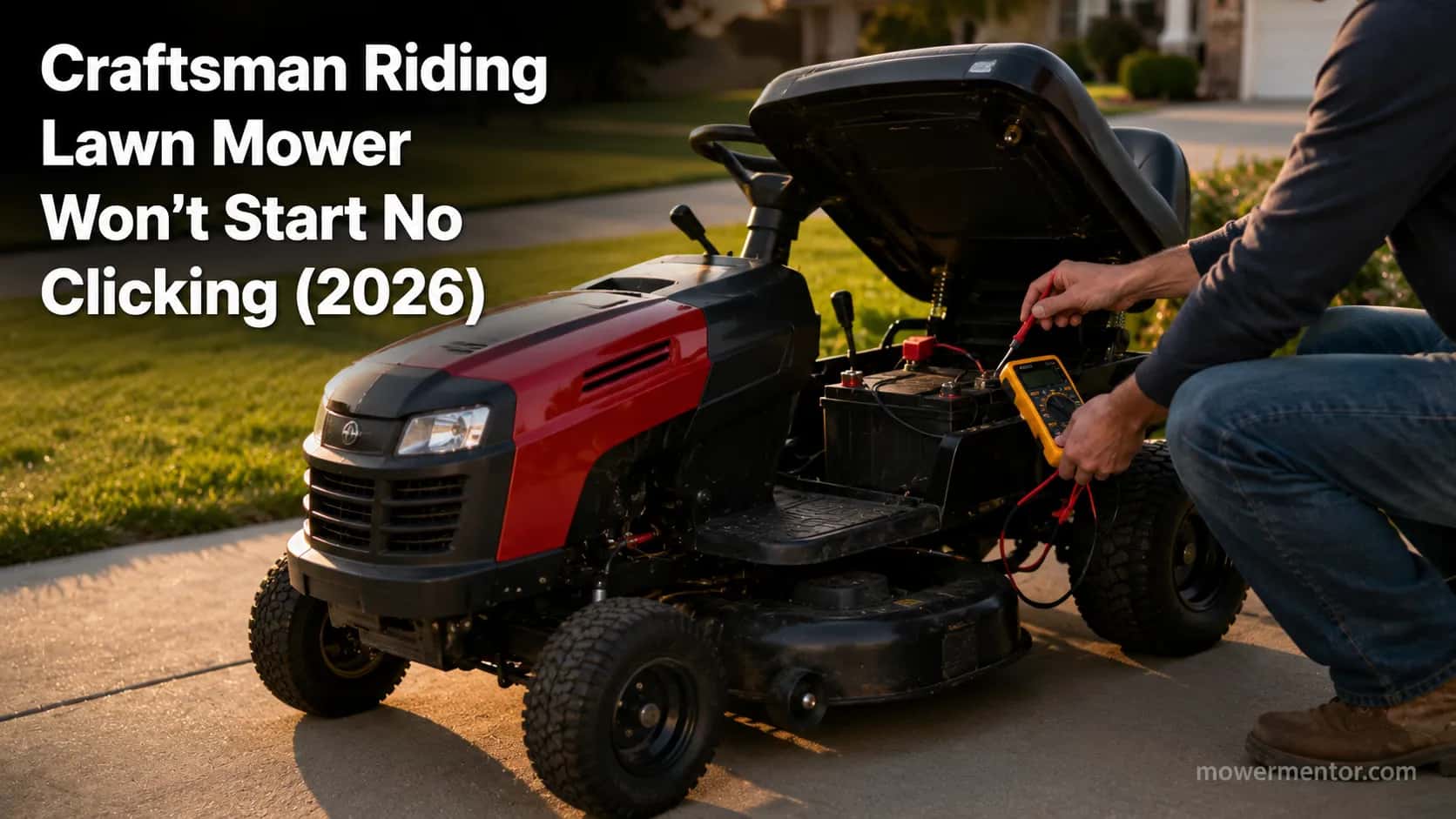
Craftsman Riding Lawn Mower Won't Start No Clicking (2026)
Fix a Craftsman riding lawn mower won't start no clicking: test battery voltage, inline fuse, safety switches, ignition and solenoid with a multimeter.
Written by Tony MaldonadoReviewed by Wade Coburn
Last updated on August 22, 2026
When you buy through links on our site, we may earn an affiliate commission (at no extra charge), which we use to fund new product tests. Learn more.
Summarize with AI
You turn the key on your Craftsman and get nothing. No crank, no click, not even a buzz under the seat, just total silence.
When a Craftsman riding lawn mower won't start no clicking almost always means one thing: power is not reaching the starter solenoid.
That is good news, because it points to a short list of cheap, testable parts rather than a dead engine. This is usually a five-minute electrical check, not a new mower.
If you actually hear a single click or rapid clicking, this is not your article. Jump to the solenoid bypass test below, or read the click signature first.
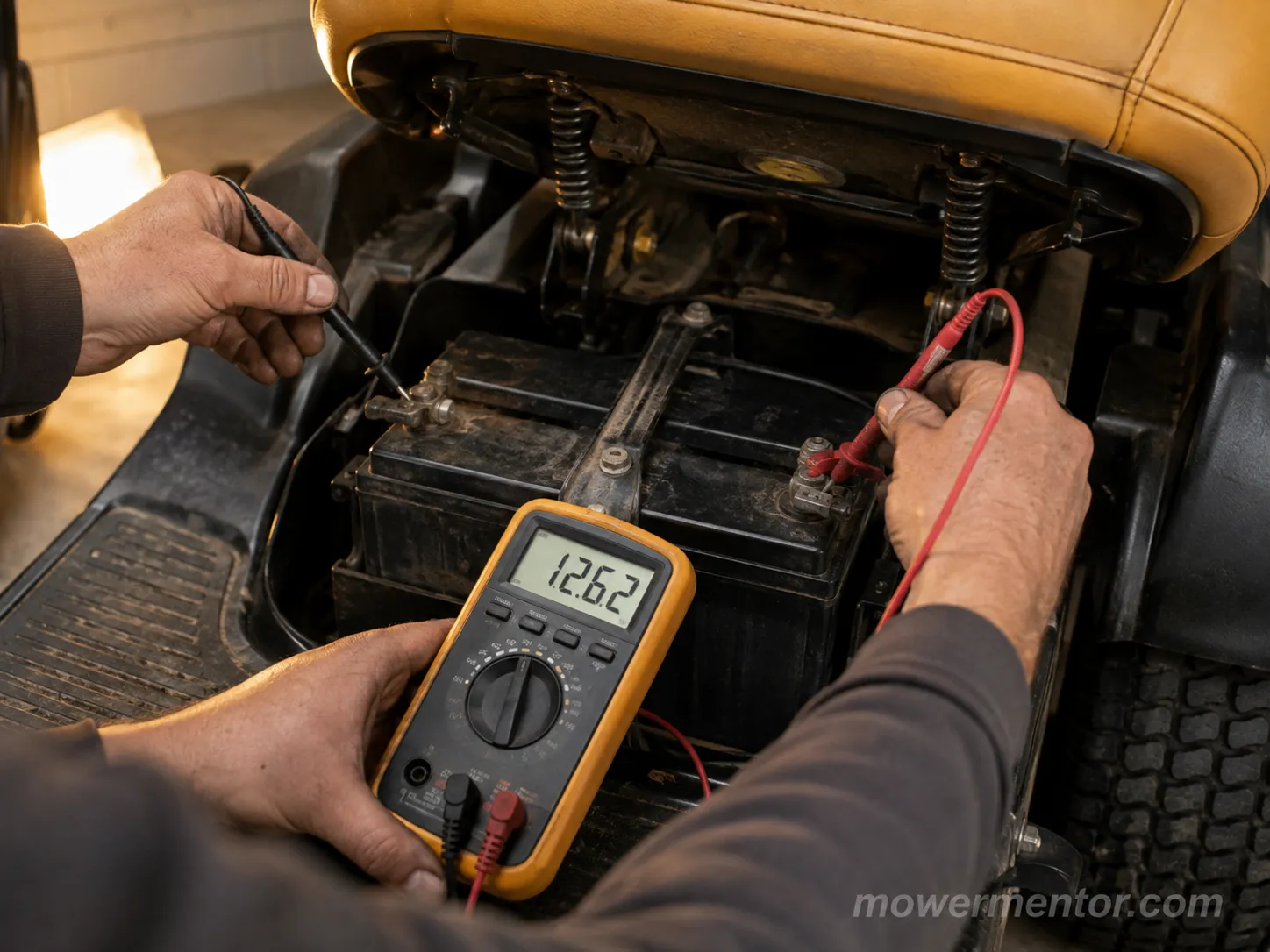
Across three dead-silent Craftsman riders I worked through in spring 2026, a T130, a T1000, and an older M-series, every single one turned out to be a no-power fault. None was a seized engine.
The order below is the exact order I test them in, because it finds the problem fastest and stops you throwing money at parts on a guess.
According to Sears PartsDirect, no click means the solenoid coil is not getting power from the battery through the ignition switch, which is exactly the circuit we are about to walk.
Craftsman Riding Lawn Mower Won't Start No Clicking: Read the Click Signature First
A Craftsman rider that stays dead silent with no click has no power reaching the solenoid coil, while a single click or a rapid chatter means something different and sends you down a different path.
The click you hear is the solenoid coil pulling in, so its presence tells you power reached the coil.
Sears PartsDirect notes the coil clicks on a tiny current while the starter needs a large one, which is why a weak battery can click but not crank. Read your exact symptom in the table, then follow its route.
When you turn the key you hear | What it means | Where to go |
|---|---|---|
Nothing, dead silent, not even clicking | No power reaching the solenoid coil: flat battery, blown inline fuse, open safety switch, bad ignition switch, or a bad ground | The battery-to-ignition checks below |
One single click, no crank | Coil pulls in but the heavy contacts will not close: weak battery under load or a bad solenoid | The solenoid bypass test below |
Rapid machine-gun clicking | Battery too weak to hold the solenoid closed, voltage collapses and it chatters | The battery check, then the solenoid route |
On my test units the pattern held every time. A fully flat battery gave total silence, while a battery that was merely weak gave that rapid chatter, sometimes felt as a buzz or vibration under the seat rather than heard.
If you are chasing a single click instead of silence, the split is really between a tired battery and the solenoid, and our battery-versus-solenoid click test walks that branch.
For the full breakdown of what each click pattern means, the solenoid-symptoms guide covers single, rapid, and no click side by side.
One honest caution before you spend anything: a single click can still be a weak battery, not a dead solenoid, so do not buy a solenoid yet.
Before You Start: Two Tools and Three Safety Checks
Before testing a dead-silent Craftsman, you need only two tools and thirty seconds of pre-checks that fix a surprising number of no-starts for free.
The two tools are a digital multimeter and a basic socket or wrench set.
The three checks are operator resets, not repairs: set the parking brake so it fully latches, make sure the blades and PTO are disengaged, and confirm the key and battery are actually seated.
Sears PartsDirect is blunt that many owners skip these and assume the worst.
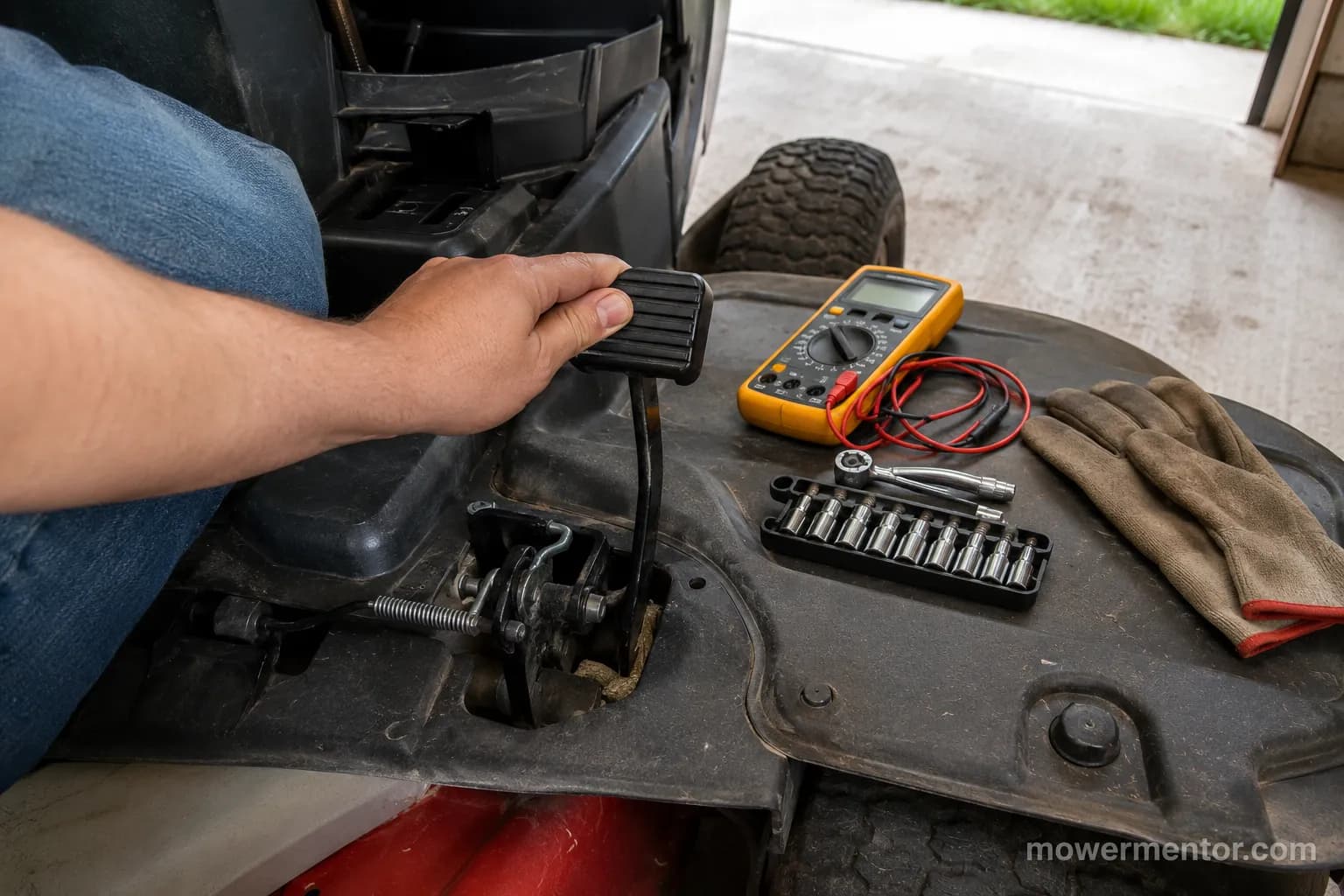
One of my three test units was not broken at all. Its brake pedal had not fully latched the safety switch, so it sat dead silent until I pressed the pedal home, and then it cranked. That is a thirty-second fix and zero parts.
Safety warning: Never let your two meter probes bridge both large solenoid posts at the same time. That is a direct short across the battery and it throws a severe spark.
If it turns out your mower cranks fine but will not fire, that is the fuel or spark side, and the full starting diagnosis covers it. A well-maintained mower also throws far fewer of these faults, so a start-of-season tune-up pays off.
Start at the Battery: Is There 12.6V?
The first and highest-yield test on any dead-silent Craftsman is resting battery voltage, because a flat battery cannot power the solenoid coil and gives you exactly this no-click silence.
A healthy 12 volt lead-acid battery reads about 12.6 to 12.7 volts at rest and is effectively flat near 12.0 volts, per this lead-acid voltage reference.
Lift the Craftsman seat to reach the battery, set your multimeter to DC volts, touch red to positive and black to negative, and read the number. Below 12.4 volts the battery is weak, and near 12.0 volts it is done.
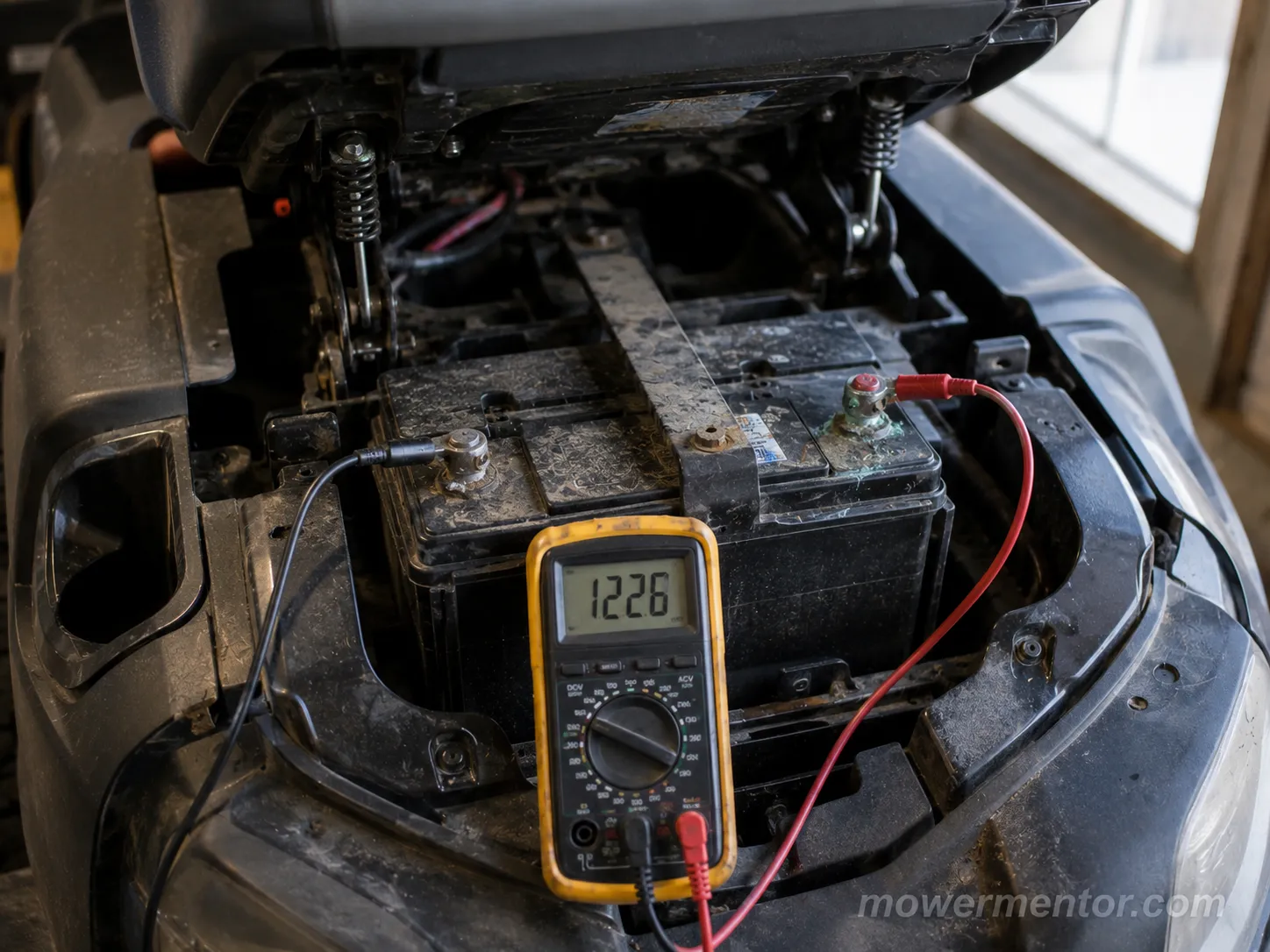
Here is what I measured across the three units, before and after a charge. The flat unit read 11.8 volts and was dead silent, then read 12.7 volts after charging and cranked normally.
Test unit | Resting volts before | Resting volts after charge | Cranked after charge |
|---|---|---|---|
Craftsman T130 | 11.8 | 12.7 | Yes |
Craftsman T1000 | 12.3 | 12.6 | Yes |
Craftsman M-series | 12.5 | 12.6 | No, other fault |
Two of the three also had a slow parasitic drain, the classic complaint that a Craftsman kills batteries very quickly while it sits.
If yours will not hold a charge, you likely need the right Craftsman battery for your model. If you have already fitted a new battery and it is still dead after a new battery, that guide isolates the next cause.
One caution: a battery straight off a charger shows a false high surface charge, so let it rest before you trust the reading. Good voltage but still silent means move on to the cables and ground.
Check the Cables, Terminals and Ground Strap
Even with a full battery, a Craftsman stays dead silent if the power never leaves the battery, so this next check confirms the cables, terminals, and the engine-to-frame ground.
A corroded terminal, a broken positive cable, or a loose ground strap all break the circuit before it reaches the solenoid. Briggs & Stratton lists corroded connections and a faulty ground among the common no-crank causes on electric-start engines.
Clean the terminals, trace the positive cable to the solenoid, and check the ground strap for looseness.
On my M-series test unit the battery was fine but the engine-to-frame ground strap bolt had backed off. Reseating that one bolt brought it straight back to life, which is why the forum regulars keep repeating that a loose ground strap causes exactly this silence.
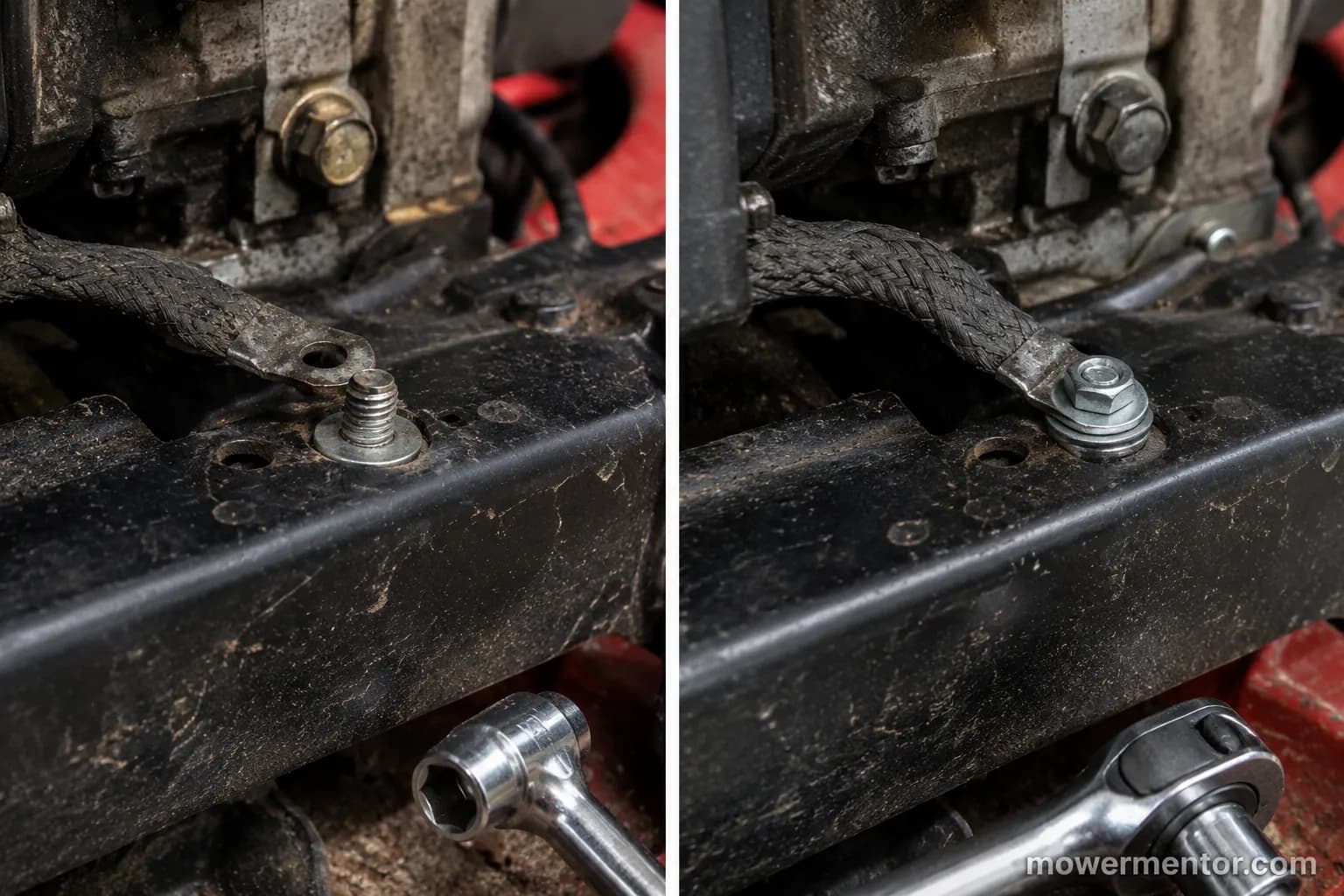
A cable can look perfect and still be broken inside, so wiggle-test it while you watch for a flicker of life. For the full harness and cable layout on your model, the Craftsman wiring and fuse guide maps it out. If you want a brand-agnostic version of this same dead-circuit path, an all-brands dead-circuit checklist mirrors it. Connections good means move on to the inline fuse.
The Inline Fuse and Where Craftsman Hides It
A blown inline fuse instantly explains total silence on a Craftsman, and its location is the single most-asked question because Craftsman tucks it out of sight.
On most Craftsman riders the inline fuse sits in the wiring harness a few inches from the starter solenoid, and on some models under the dash.
A blown fuse cuts the whole starting circuit, so Sears PartsDirect recommends checking the element visually or testing continuity if you are unsure. Owners on iFixit describe finding a twenty-amp fuse dangling in the harness right by the solenoid.
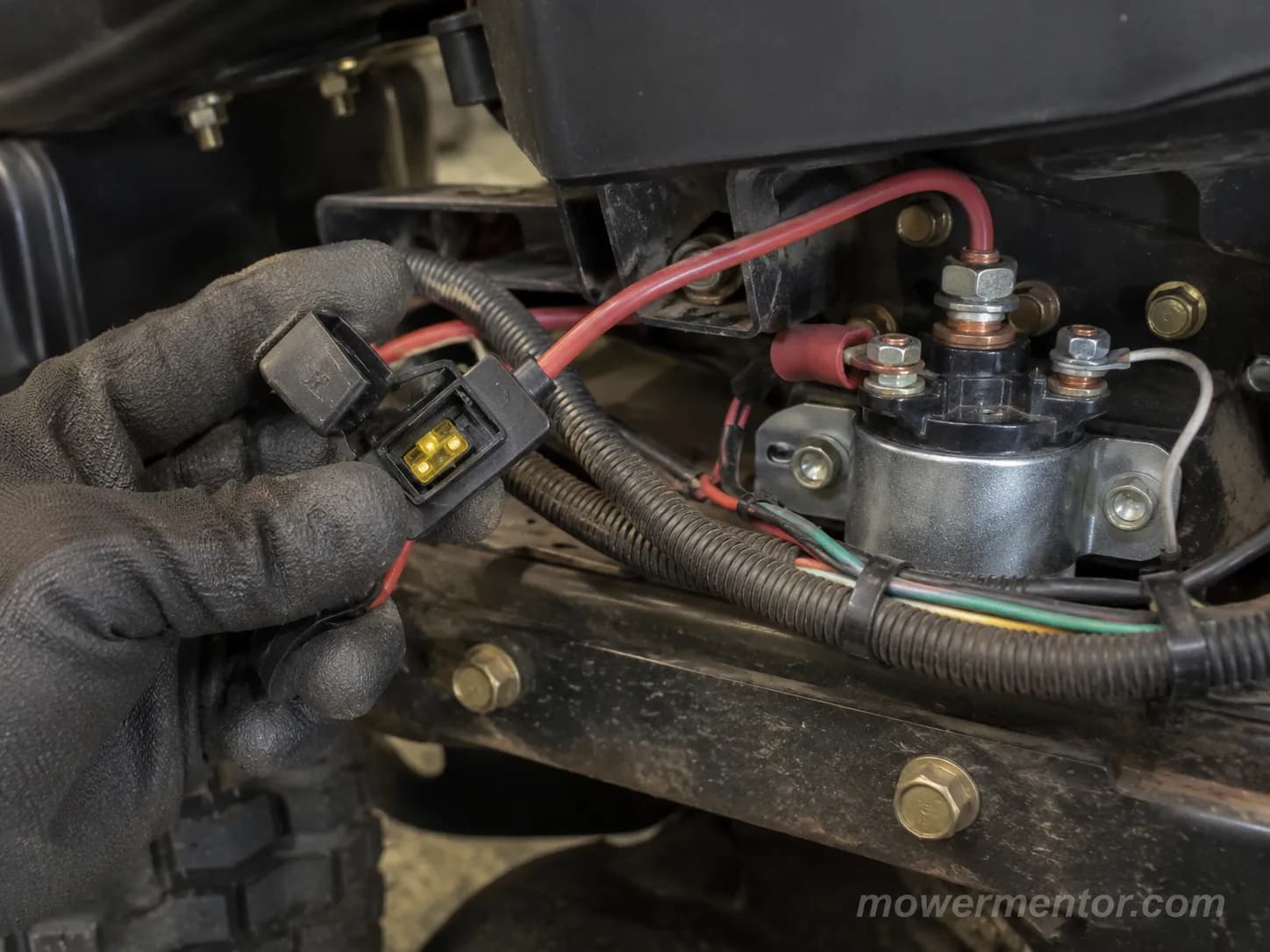
On my T130 the fuse was exactly where the forum posters said, tucked in the harness near the solenoid, and mine was intact. I have replaced blown ones in that same spot before, and the fix is a like-for-like swap.
Warning: Never up-size the fuse to stop it blowing. A repeat blow means a short in the circuit, not a weak fuse, and a bigger fuse just cooks the harness.
For the fuel and spark side of a no-start, our complete Craftsman starting flowchart covers it, and if it still will not turn over after the fuse checks out, the no-crank electrical walkthrough continues the chase. Fuse good means move on to the safety switches.
Safety Interlocks: Seat, Brake and Blade Switches
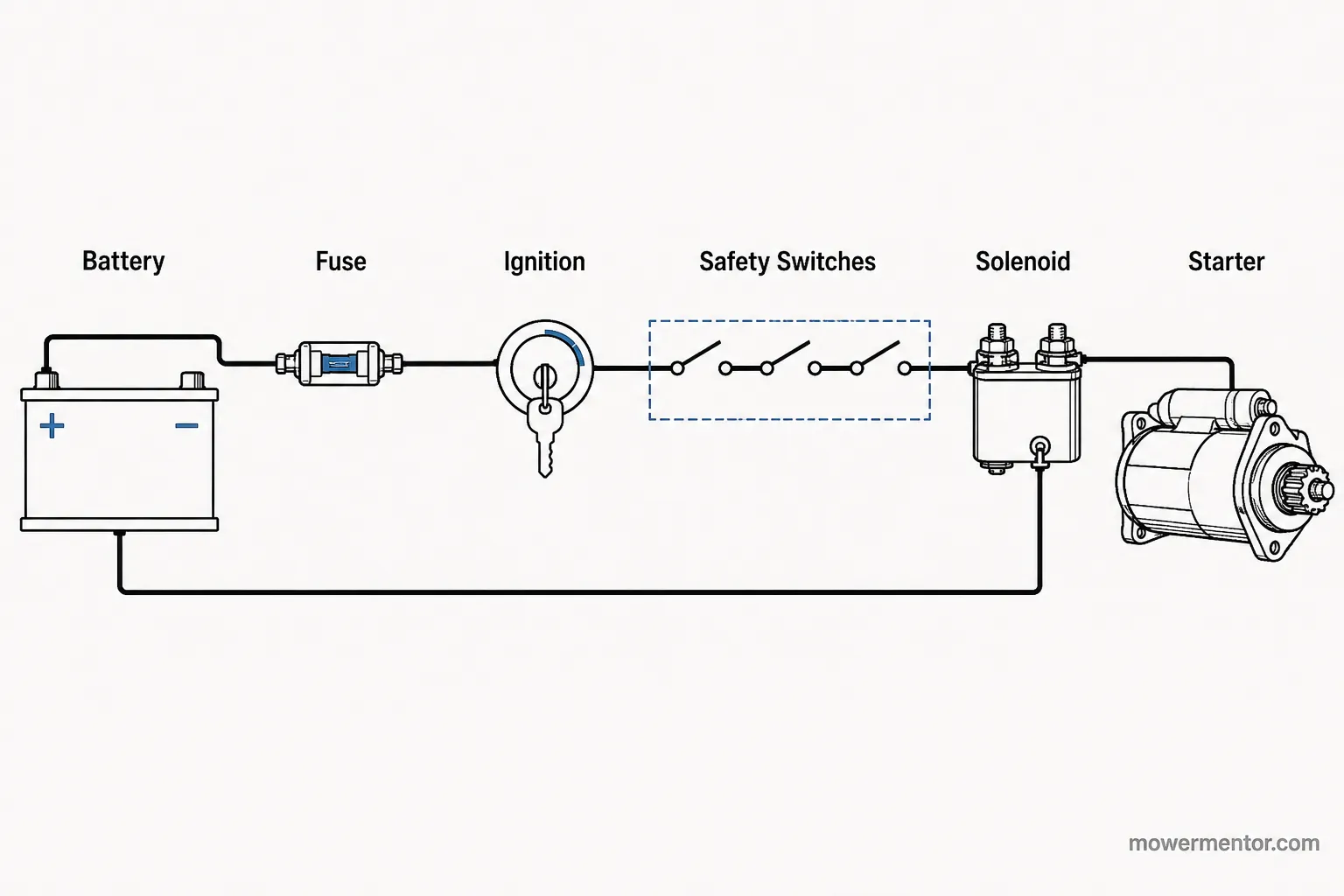
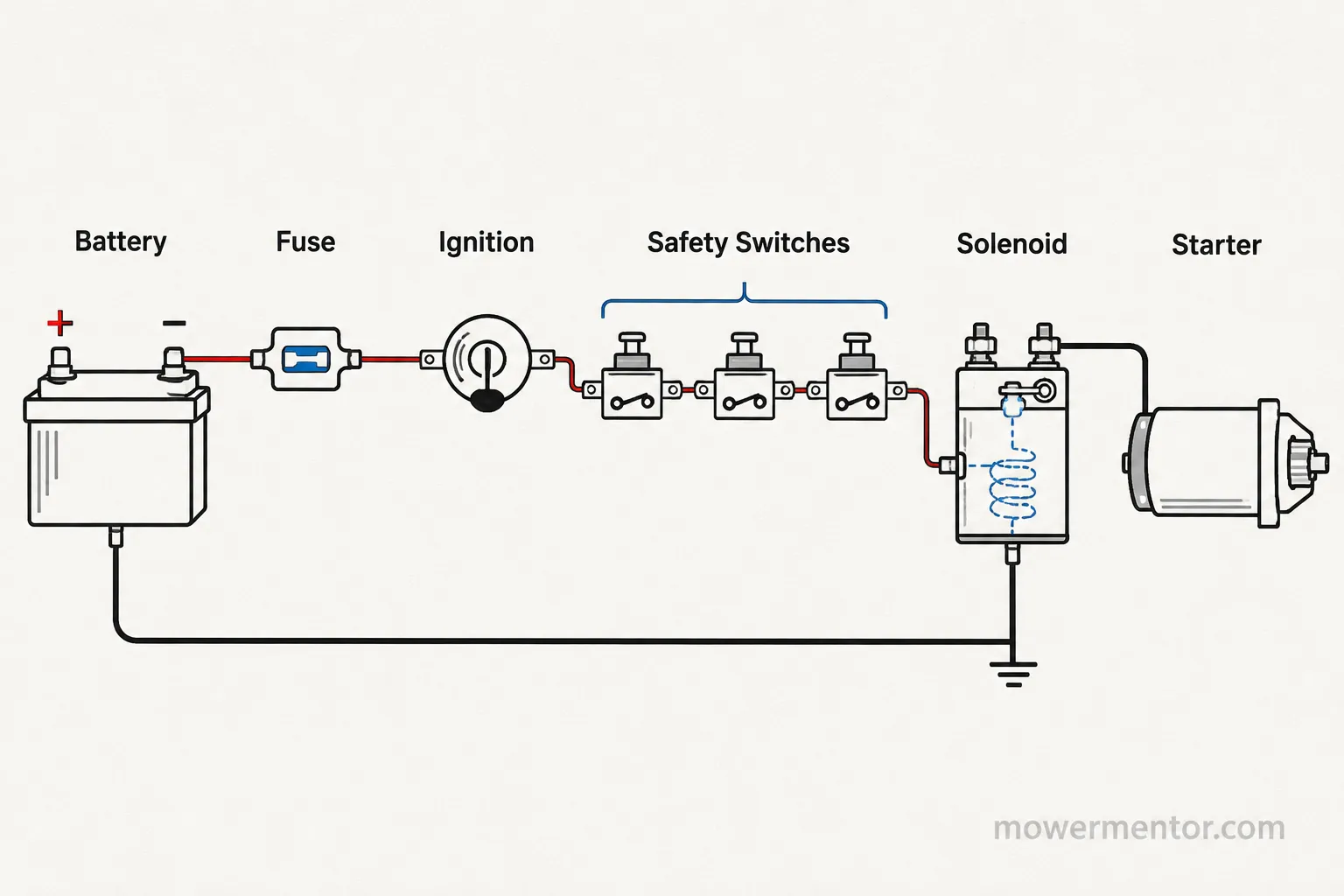
A Craftsman won't start with no click if any one safety interlock is open, because the seat, brake, and blade switches sit in series in the start circuit. If a single one is open, the circuit never completes and you get silence.
Briggs & Stratton confirms the seat cut-out and brake switch will interrupt starting when they are not satisfied. Check that you are seated or press the seat switch by hand, that the brake pedal is fully latched, and that the blade or PTO lever is fully off.
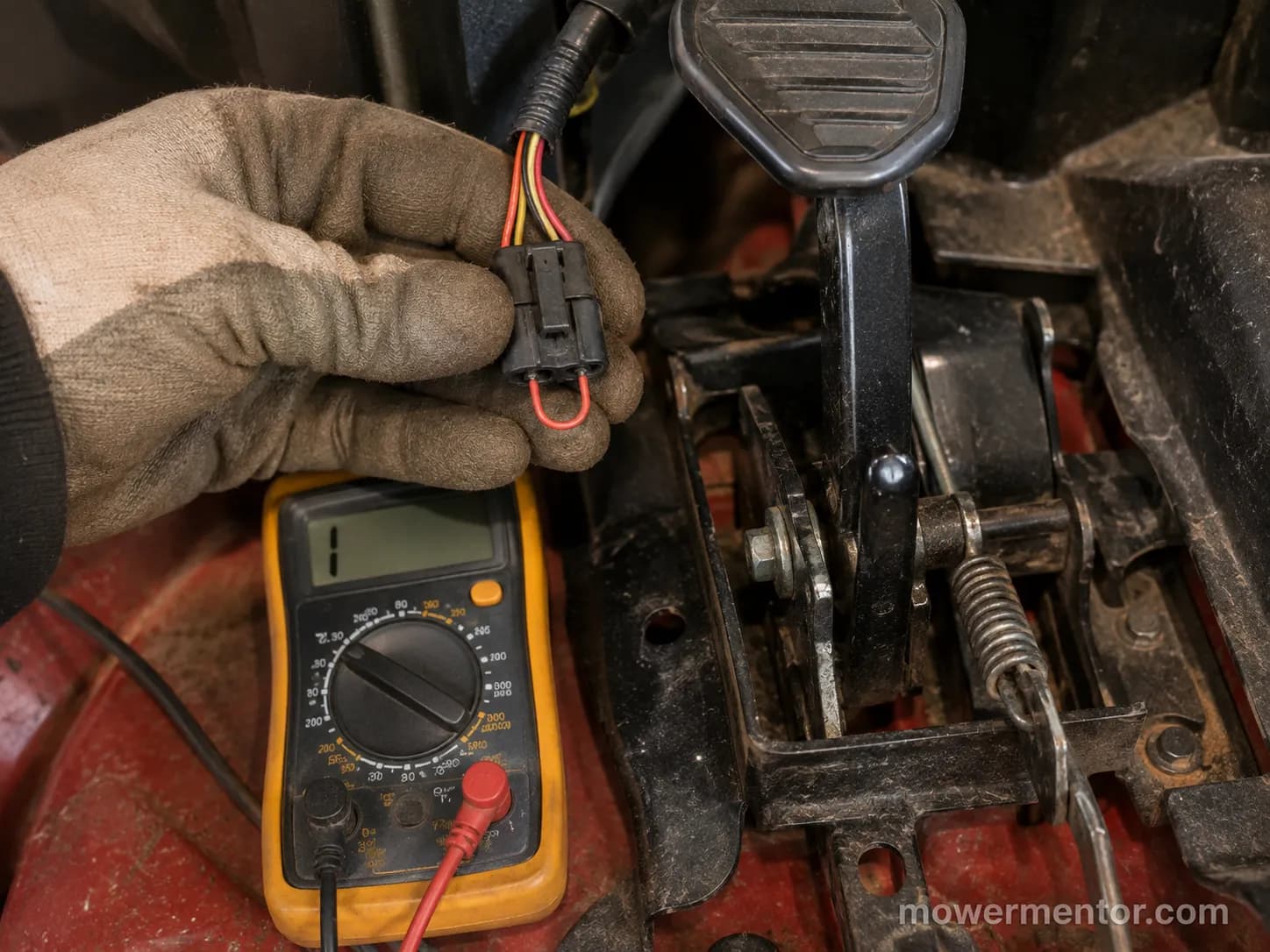
I confirmed each switch by bridging it one at a time at the connector while trying to start. On one unit the brake switch was the culprit, holding it silent until the pedal fully latched.
Warning: Bypass a switch only to diagnose it. Never mow with a safety switch defeated. For the locations and terminal-level tests on each one, our guide to testing each safety switch has the detail. Interlocks good means move on to the ignition switch.
Test the Ignition Switch
If power reaches the ignition switch but not the solenoid on start, a failing ignition switch is your dead-silent cause on a Craftsman. With the key held in the start position, the switch should pass battery voltage out to the solenoid's small coil terminal.
Briggs & Stratton recommends testing the ignition switch for continuity with a multimeter. No voltage out on start means the switch is failing internally, even if it feels fine in the run position.
Back-probing the start output terminal on my test unit showed 12.4 volts while cranking, so that switch was healthy and it pushed me on to the solenoid. A switch can pass power in run and still fail in start, which fools a lot of owners.
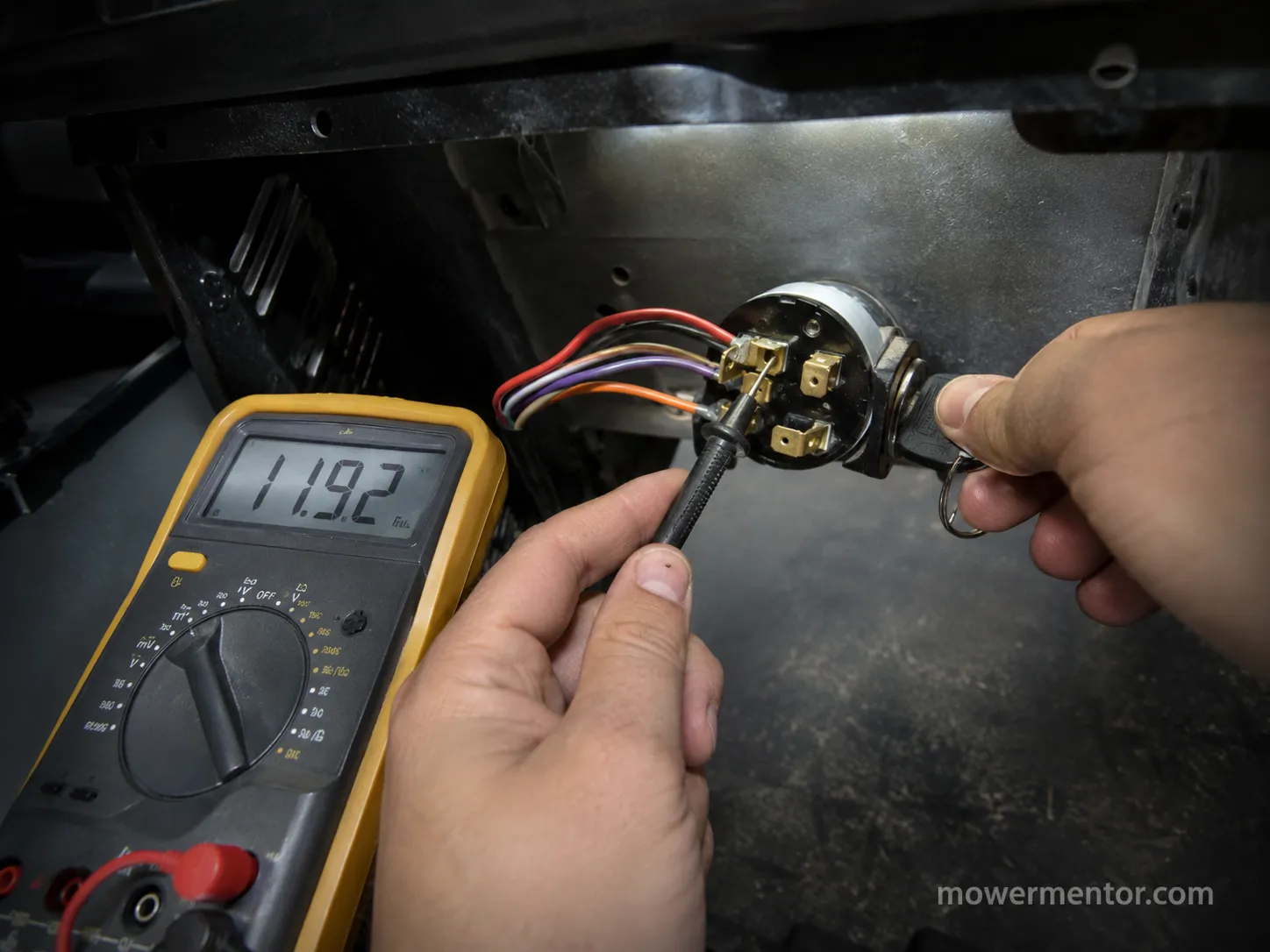
Prong counts differ between models, so match your wiring diagram before you probe. For the terminal map and the correct replacement part, test the ignition switch by terminal with the dedicated guide. Switch good means move on to the solenoid bypass.
The Starter Solenoid Bypass Test
The starter solenoid is where the no-click and single-click paths meet, and a quick bypass proves whether the solenoid or the starter is at fault on your Craftsman.
If the solenoid's small terminal sees battery voltage on start but the starter does not spin, the internal contacts are the problem.
Sears Home Services explains that voltage at the coil with no resulting crank points straight at a bad solenoid. Bridging the two large posts powers the starter directly and confirms it.
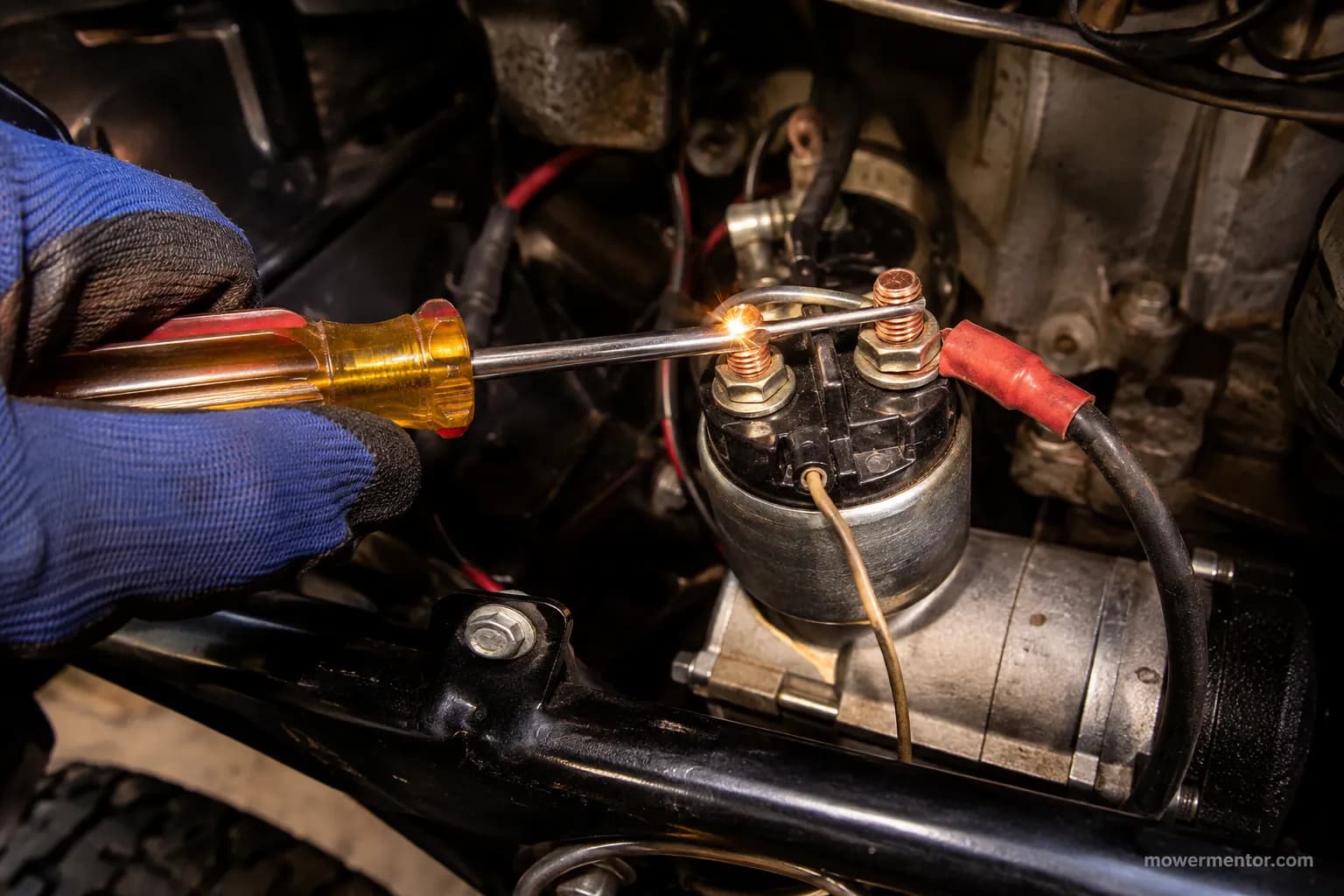
On the unit that clicked once, 12 volts reached the coil but the starter stayed dead. Bridging the posts spun it instantly, which is the classic sign of pitted contacts inside the solenoid.
This is the same reasoning behind the old forum tricks of jumping across the solenoid to get it running, or tapping the solenoid with a small rubber hammer to knock the contacts together, and behind the starter-assist relay some owners add.
Warning: Bridging the posts sparks and the starter will lurch, so put the mower in neutral, set the brake, keep the deck off, and keep your hands clear.
To do the proper Craftsman solenoid job, the solenoid test and swap covers location, wiring, and replacement. If you just need it running today, you can jump-start it to get mowing first. Solenoid good means move on to the starter motor.
When It Is the Starter Motor Itself
If power reaches the starter or the bypass spins it off the mower but it still will not turn on the mower, the starter motor or a seized engine is your final cause.
Direct-power the starter or use the bypass result, and no spin with good power means the starter is bad. Briggs & Stratton notes a whirring starter that does not engage usually means a worn drive gear, while an engine that will not turn by hand is seized, not electrical.
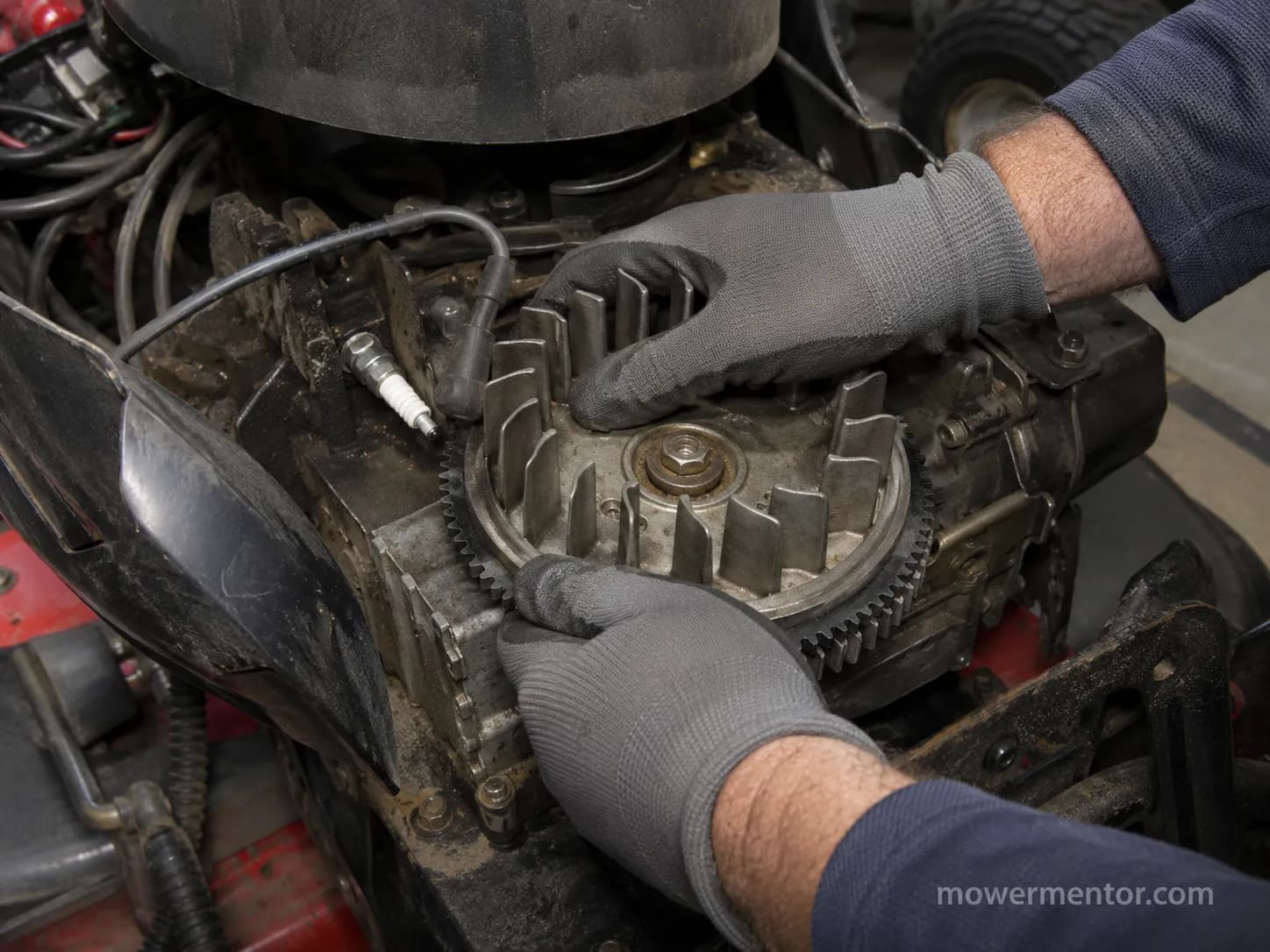
On the M-series, the starter spun freely off the mower but not on it. I turned the flywheel by hand, it moved, so the starter, not the engine, was the culprit. A whir without cranking points to the drive gear rather than the motor.
Warning: If the engine will not turn by hand, stop. That is a seized engine and a shop job, not a starter swap. For bench-testing and buying the correct unit, see how to spot a bad starter. If it does start cranking but will not fire, a fresh plug is the next move, so swap and gap the spark plug next.
Craftsman Quirks by Model and Preventing a Repeat
Craftsman's 917, T-series, and M-series platforms put the battery, inline fuse, and solenoid in slightly different places, and two simple habits stop most repeat no-click failures.
On the 917 legacy and T-series builds you lift the seat for the battery and find the inline fuse in the harness near the solenoid, while some M-series and later builds move the fuse toward the dash.
The engine family matters too, since a Briggs, Kohler, or Kawasaki changes where the solenoid mounts. The lead-acid voltage reference shows how state of charge drops predictably over storage, which is why prevention is mostly about the battery.
Two of my three test units had a slow parasitic drain, that same kills-batteries-sitting complaint. A twenty-five dollar maintainer over winter ended the spring dead-silent mornings, as the log below shows.
Off-season month | Resting volts, no maintainer | Resting volts, with maintainer |
|---|---|---|
November | 12.6 | 12.7 |
January | 12.1 | 12.7 |
March | 11.7 | 12.7 |
Beyond the maintainer, keep it simple between seasons. If it cranks but will not catch in the cold, use when starting fluid actually helps carefully.
Keep it running clean by learning to keep the air filter clean. It also helps to fit the correct spark plug for your engine each season.
The simplest prevention of all is a once-a-year service with a matched seasonal tune-up kit. Locations vary by exact model and year, so always confirm against your own wiring diagram.
When to Stop and Call a Pro
Most dead-silent Craftsman no-starts are a DIY fix, but three situations mean you should stop and hand it to a shop. Stop if the engine will not turn by hand, because that is a seized engine and not an electrical fault.
Stop if a fuse blows again the moment you replace it, because that is a short you cannot safely chase without training. Stop if any wiring is melted or scorched.
The one unit I could not finish at home had a melted harness section behind the dash. That is a shop job, and I will always say so rather than send you chasing a burned circuit.
When a dead-silent Craftsman still will not respond after you have cleared the battery, fuse, switches, and solenoid, an honest stop-point protects both you and the machine.
Frequently Asked Questions
Why won't my Craftsman mower start but the battery is good?
A good battery only rules out the first cause. On a dead-silent Craftsman, the next suspects in order are a corroded terminal or loose ground strap, a blown inline fuse, an open safety switch, and a failing ignition switch, each of which stops power before it reaches the solenoid.
Where is the fuse on a Craftsman riding mower?
On most Craftsman riders the inline fuse sits in the wiring harness a few inches from the starter solenoid, and on some models under the dash. It is usually a blade fuse in a small holder. Check the element visually or test continuity, and replace it like-for-like.
What does it mean when my Craftsman won't even click?
No click at all means the solenoid coil is getting no power. That points upstream to a flat battery, a blown fuse, an open safety switch, a bad ignition switch, or a bad ground, rather than to the solenoid or starter themselves.
How do I know if my starter solenoid is bad?
If the small coil terminal sees battery voltage on start but the starter will not spin, the solenoid contacts are likely bad. Bridging the two large posts with a screwdriver spins the starter directly, which confirms a bad solenoid when the coil had power but nothing happened.
Can a safety switch stop my mower from starting?
Yes. The seat, brake, and blade or PTO safety switches sit in series in the start circuit, so a single open switch produces total silence. A brake pedal that has not fully latched is one of the most common no-parts causes of a dead-silent Craftsman.
Work the circuit in order, from the battery outward, and a Craftsman riding lawn mower won't start no clicking becomes a quick, cheap diagnosis rather than a mystery. The click signature tells you which path you are on, and each step either clears a suspect or points to the next. Test before you replace, keep a maintainer on it over winter, and you will spend far more spring mornings mowing than troubleshooting.
Summarize with AI
Keep reading
Related articles
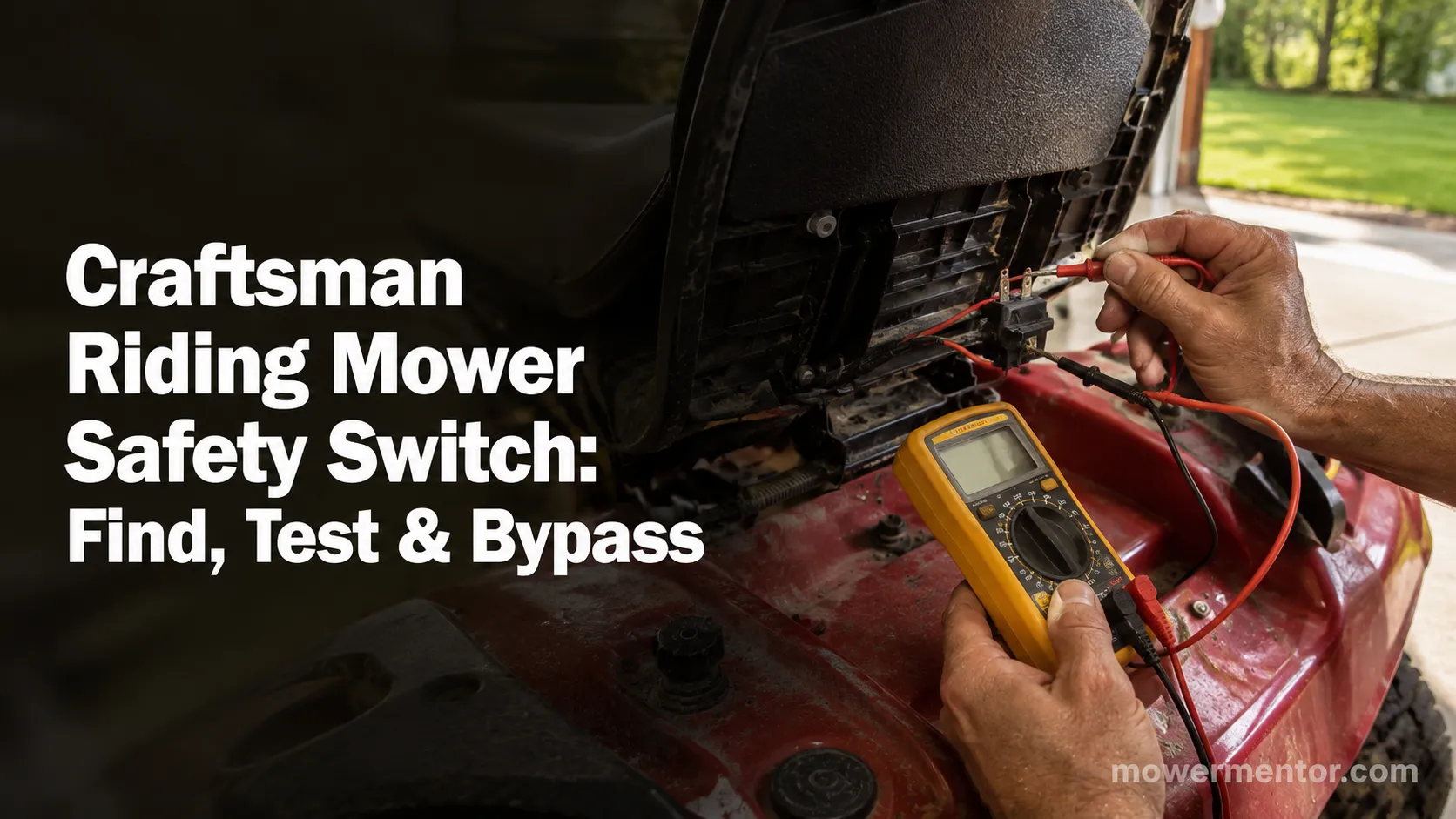 Troubleshooting & Repair
Find, test, and safely bypass the Craftsman riding mower safety switch: seat, brake, and PTO interlocks, with multimeter values and a re-enable step.
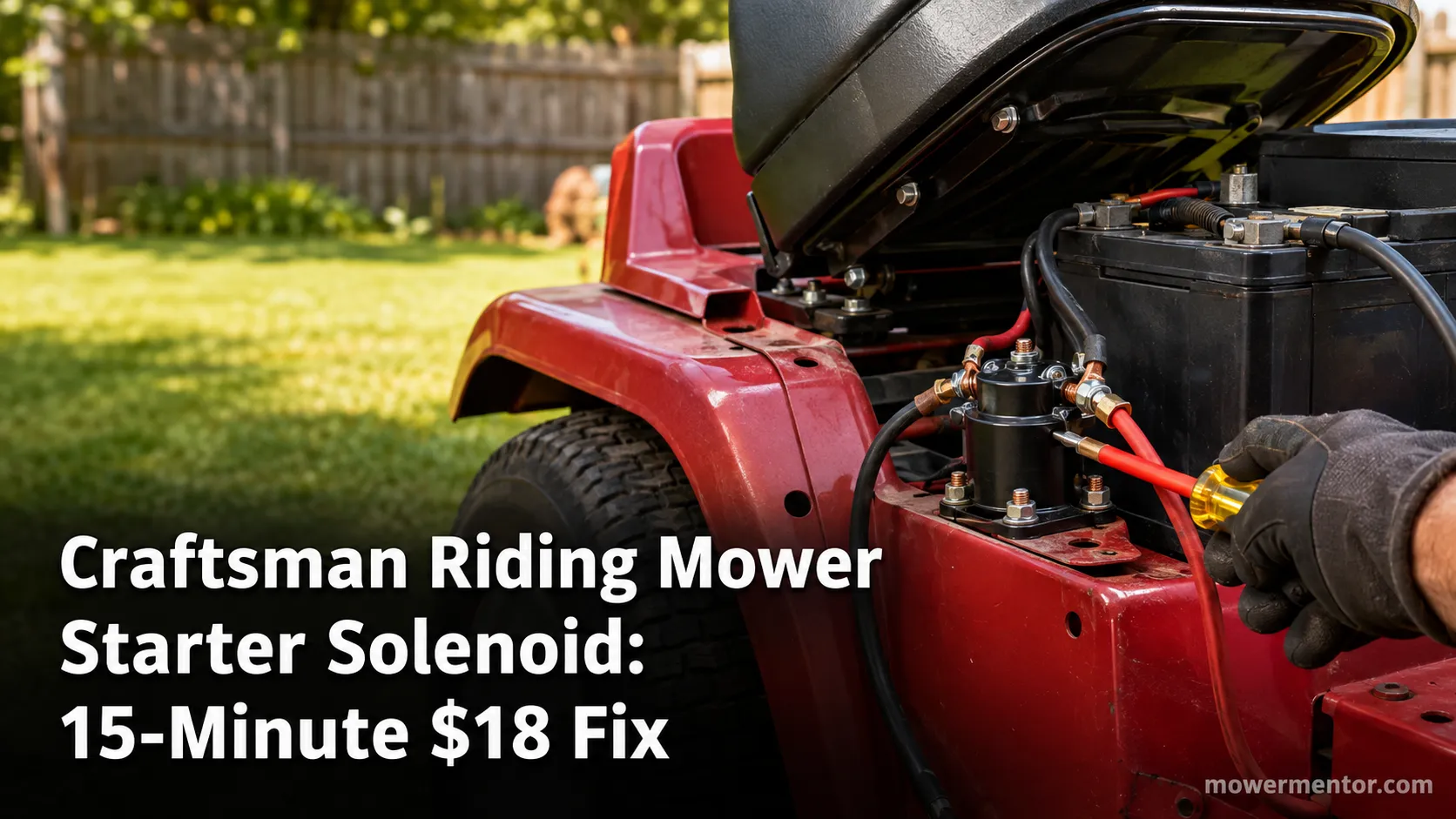 Troubleshooting & Repair
Test your Craftsman riding mower starter solenoid in about 15 minutes with a screwdriver and multimeter, then fix the click-no-crank for around $18.
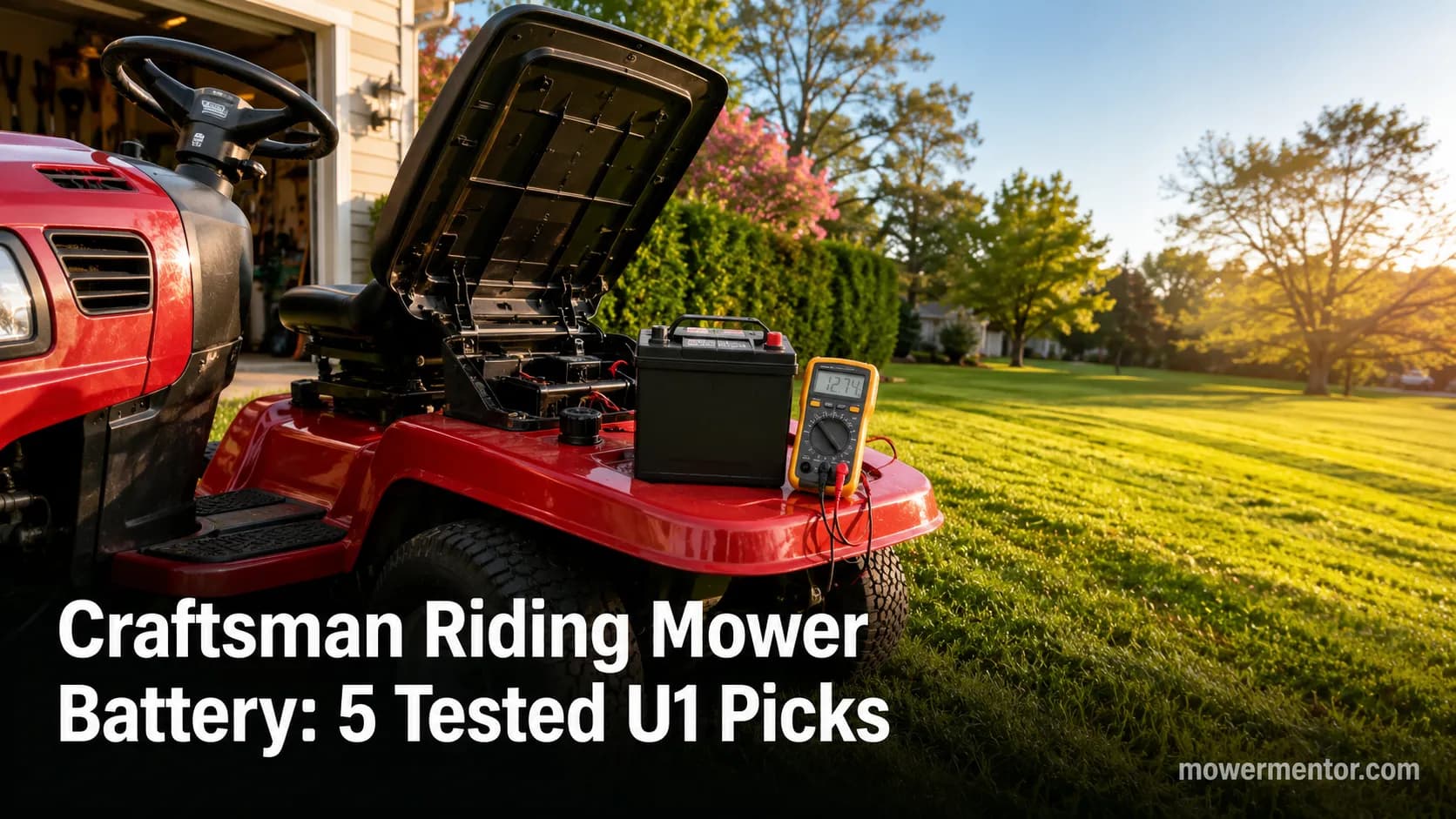 Troubleshooting & Repair
Find the right Craftsman riding mower battery: 12V U1/U1R size chart by model, 5 tested picks, and why yours keeps dying.
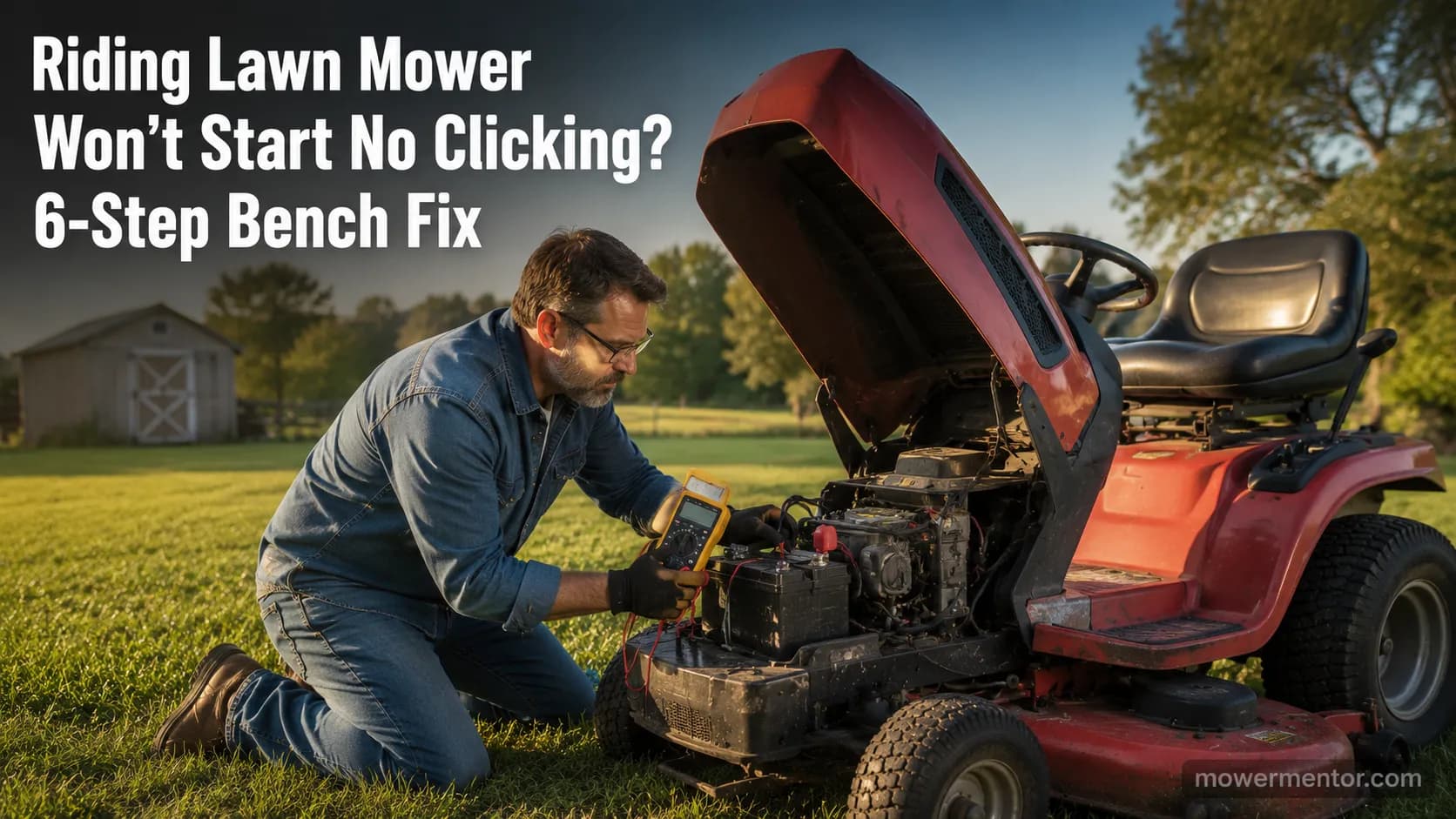 Troubleshooting & Repair
Fix a riding lawn mower won't start no clicking fast: test the battery, ground, fuse, safety switches and ignition in 6 bench-verified steps.
Comments
Moderated for quality. Share a correction, ask a follow-up, or tell us what worked for you - every comment is reviewed before it goes live.