
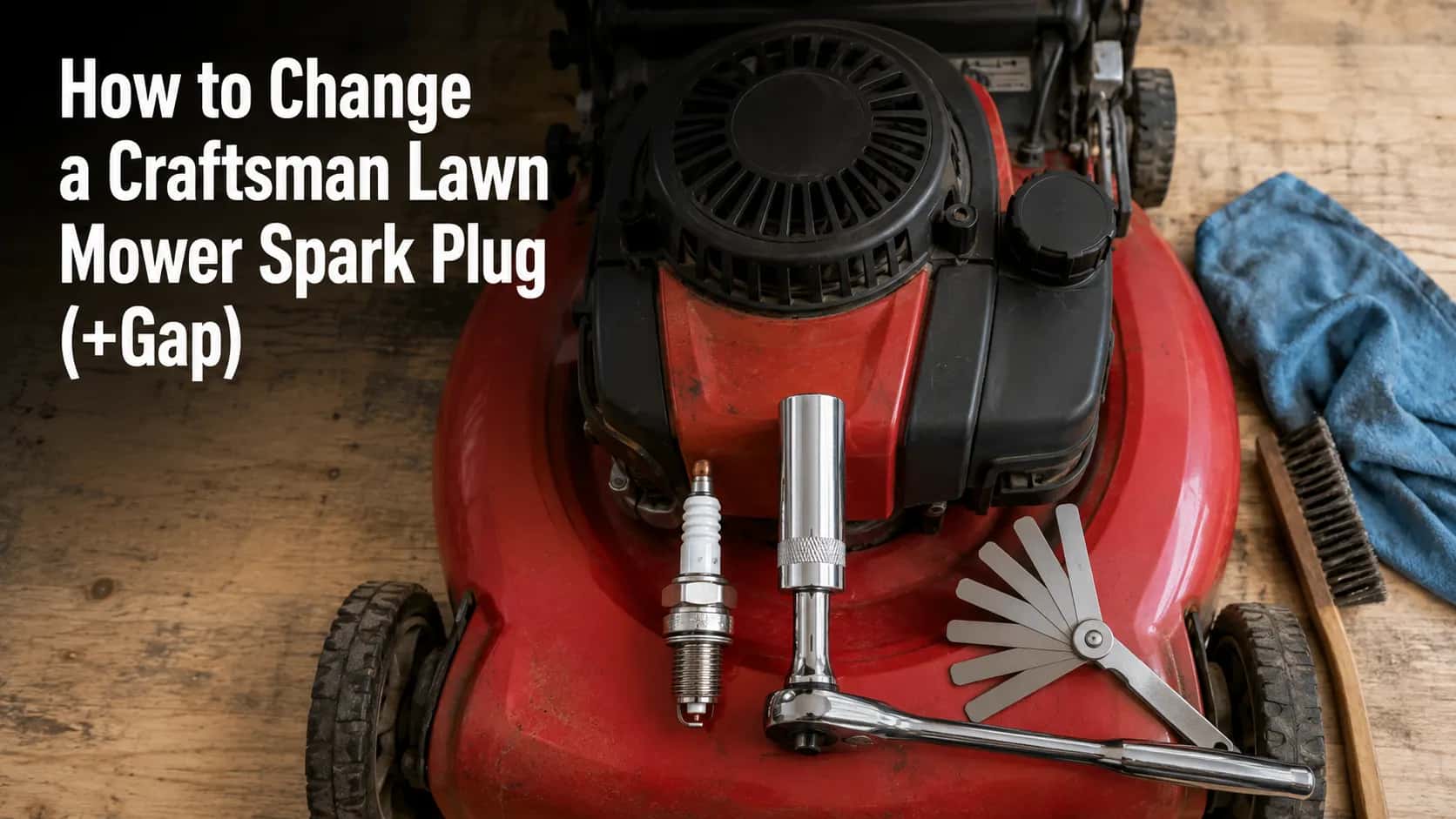
How to Change a Craftsman Lawn Mower Spark Plug (+Gap)
Change your Craftsman mower spark plug in 6 steps: find it by body style, use a 5/8 or 13/16 socket, gap to .030, and reinstall without cross-threading.
Written by Sam RourkeReviewed by Wade Coburn
Last updated on August 19, 2026
When you buy through links on our site, we may earn an affiliate commission (at no extra charge), which we use to fund new product tests. Learn more.
Summarize with AI
Most Craftsman owners get stuck on the same thing, and it is not turning the wrench. It is finding the plug and knowing which one their mower takes.
Learning how to change a spark plug on a Craftsman lawn mower is a five-minute job once you know where the plug hides on your body style and which socket your engine era needs. This guide finds the plug first, matches the plug and socket to your 917-era engine, then walks the six steps with a check after each one.
The 50-Second Spark-Plug Change (Quick Start)
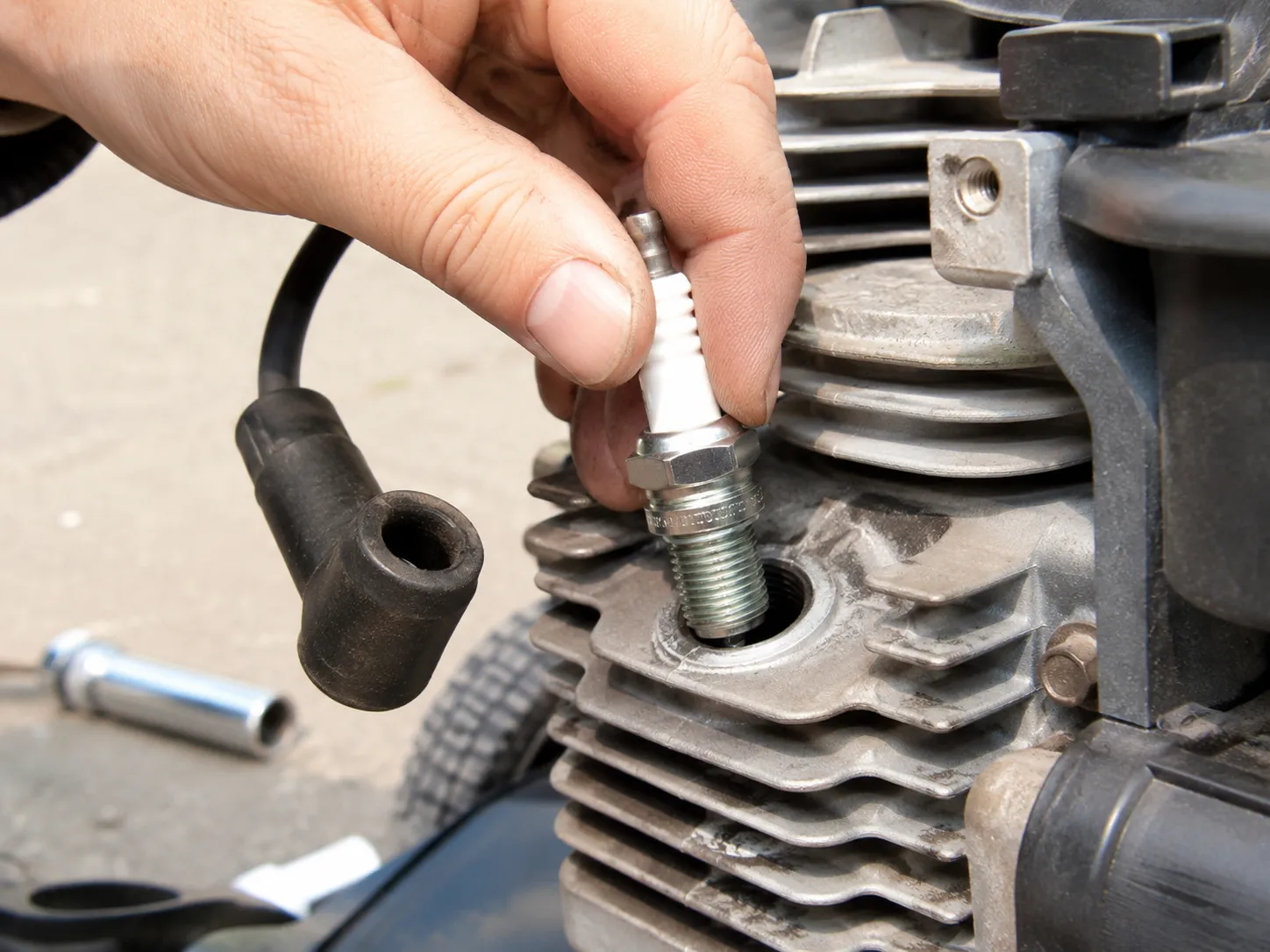
Changing a spark plug on a Craftsman lawn mower takes about 50 seconds once the plug is exposed. Pull the spark-plug lead off the plug, brush the area clean, then turn the plug counterclockwise with a 5/8-inch socket (older L-head engines use 13/16-inch).
Set the new plug to a .030-inch gap, thread it in by hand, and snug it a quarter turn past finger-tight. Craftsman engines built by Briggs and Stratton take a Champion RC12YC (overhead-valve) or an RJ19LM (older L-head), both gapped to .030 inches.
Quick answer done. If your plug is buried, recessed under a shroud, or you are not sure which plug is yours, keep reading.
Tools and Parts: Socket Size, Gapper, and the Right Plug
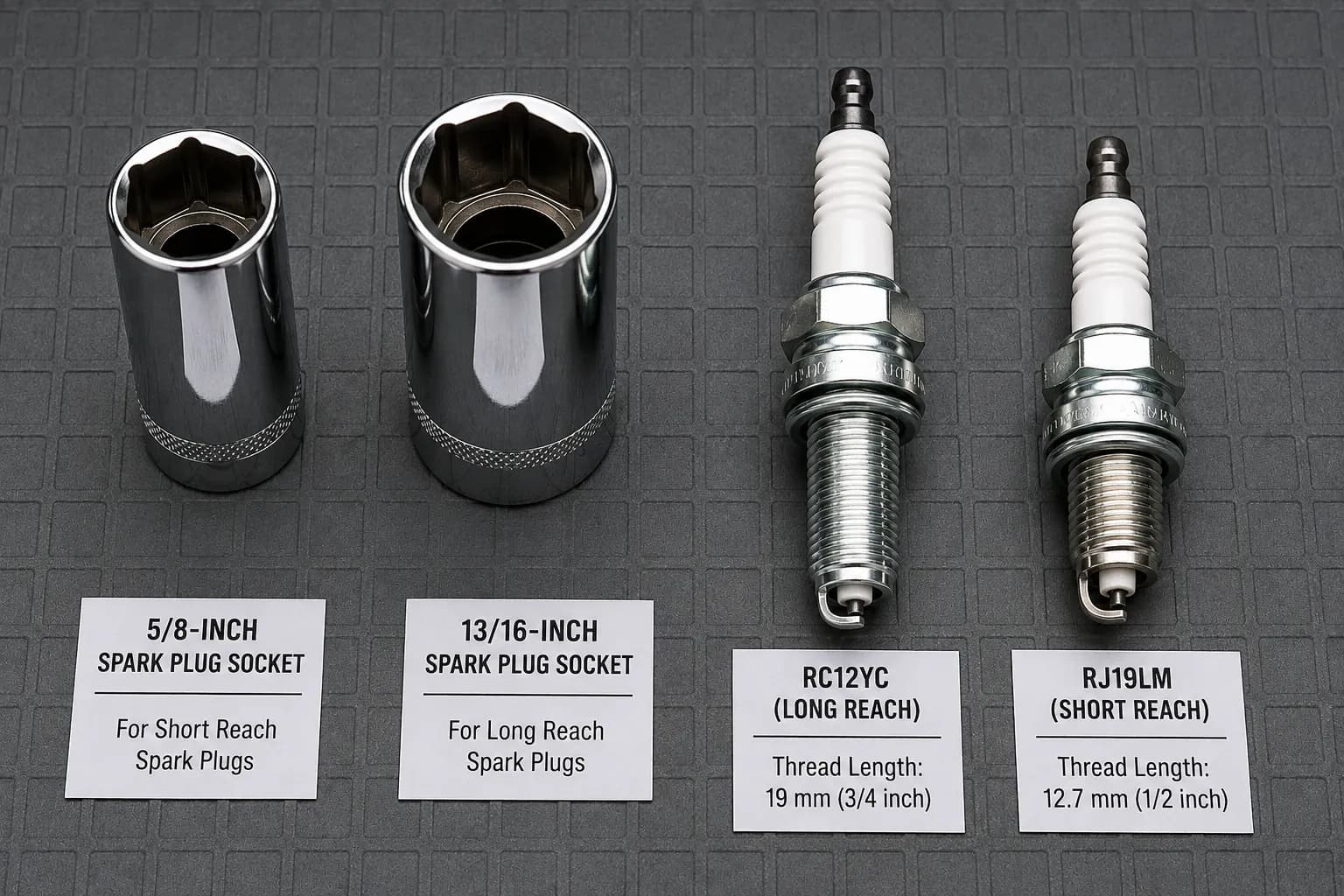
A Craftsman spark-plug change needs only a spark-plug socket, a ratchet, and a wire gap gauge, plus the correct plug for your engine. Per the Briggs & Stratton spark-plug and gap chart, overhead-valve engines take a Champion RC12YC (Briggs part 491055S) and older L-head engines take an RJ19LM, both set to a .030-inch gap.
Most overhead-valve Craftsman engines use a 5/8-inch (16 mm) plug socket, while older L-head engines use a 13/16-inch (20.6 mm) socket. Grab the full kit below before you touch the mower.
A deep six-point socket grips the plug best, and even Craftsman's own plug socket ships in that style.
Spark-plug socket: 5/8-inch for most overhead-valve engines, 13/16-inch for older L-head engines
A 3/8-inch drive ratchet, plus a 3-inch extension and a swivel (universal) joint for recessed plugs
A wire-style spark-plug gap gauge
A new plug (RC12YC or RJ19LM, matched to your engine)
A wire brush and a shop rag, plus gloves
Socket size, by engine era:
Your Craftsman engine | Plug socket | Common plug | Gap |
|---|---|---|---|
Overhead-valve Briggs / Kohler (newer) | 5/8-inch (16 mm) | Champion RC12YC | .030 inch |
Older L-head / flathead Briggs | 13/16-inch (20.6 mm) | Champion RJ19LM | .030 inch |
Craftsman Smooth Start (MRS) push mowers | 5/8-inch (16 mm) | Briggs 591040 (RJ2YXLE) | .030 inch |
A quick note from the bench. On our shop Craftsman rider, the 5/8-inch deep socket dropped cleanly over the RC12YC, but a 1990s L-head push mower only gave up its plug to the 13/16-inch.
Forum regulars call these long-thread versus short-thread plugs, and it matters. Forcing a short-plug engine with the wrong plug will cross-thread the head, which is the expensive mistake, so match the plug before you shop.
If your mower wears a "6.25" badge, that is a Briggs 6.25 gross-torque overhead-valve engine, so it takes the RC12YC and the 5/8-inch socket. Choosing between an RC12YC, an RJ19LM, and the NGK crosses is a whole topic on its own, so for the deep decode see our guide to picking the right Craftsman plug.
Where's the Spark Plug on Your Craftsman?
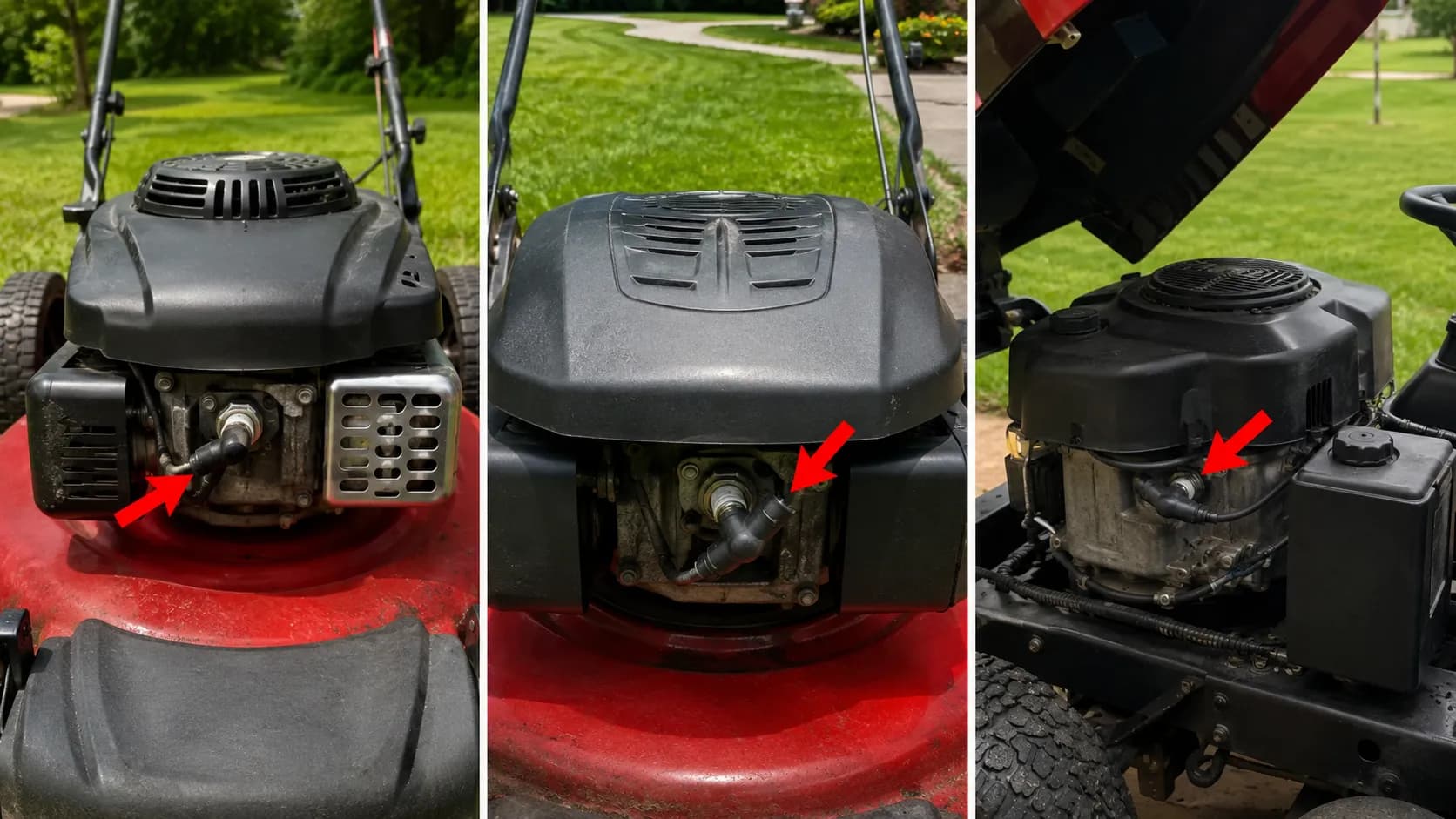
On a Craftsman lawn mower, the spark plug sits on the engine with a thick rubber-booted wire clipped to its tip, but its exact spot changes with the body style. On a push mower it faces out from the front or side of the engine block, while on an M-Series walk-behind it hides under the front shroud lip.
On a riding mower it sits on the side of the engine block under the hood, and V-twin riders carry two plugs. Reddit's most common Craftsman question is simply "where's my spark plug," so this section maps it by body.
Plug location, by Craftsman body style:
Body style | Where the plug sits | Access tip |
|---|---|---|
Push mower | Front or side of the engine, boot on the tip | Usually reachable by hand |
M-Series walk-behind | Under the front shroud lip | Use a 3-inch extension and a swivel joint |
Riding mower (single) | Side of the block, under the hood | Lift the hood or side panel first |
Riding mower (V-twin) | Two plugs, one per cylinder | Do both at once, same spec |
Which era is your Craftsman? Read the 917 tag
Craftsman model numbers start with a 917 prefix, and that tag is how you tell which era of engine you have. A newer overhead-valve engine takes the RC12YC on a 5/8-inch socket, while an older L-head engine takes the RJ19LM on a 13/16-inch socket.
The Sears 917 owner's manual opens with the same caution every mechanic repeats: always disconnect the spark-plug wire before you service the plug. Read the 917 tag under the deck or on the rear panel, then match the socket and plug from the table above.
Once you have found the plug and matched the part, the mechanics are identical to the universal plug-change steps for any mower. One honest heads-up: some riders bury the plug behind the muffler heat shield, so budget an extra few minutes and a swivel joint for those.
How to Change and Gap the Plug (6 Steps)
Changing and gapping a Craftsman spark plug follows six ordered steps, each with a quick check before you move on. The Briggs & Stratton service standard is a .030-inch gap and a hand-start before final tightening, and University of Illinois Extension guidance, summarized by Lawn Love, stresses hand-threading first to avoid cross-threading the aluminum head.
Work on a cool engine, on flat ground, with the plug lead already off. Do not skip the verification line under each step, because it is what tells you the step actually worked.
Disconnect the lead and cool the engine. Pull the rubber boot straight off the plug, twisting gently if it sticks, and on a riding mower also disconnect the battery. You should see the bare plug tip with no wire attached.
Clean, then break the plug loose. Brush dirt away from the base so nothing falls into the cylinder, then turn counterclockwise, slipping a length of pipe over the ratchet handle for leverage if a factory-tight plug will not move. You should feel the plug crack loose, then spin freely.
Remove and read the old plug. Unthread it the rest of the way by hand and look at the tip, using the reading guide in the next section. You should be holding the old plug with its threads intact.
Gap the new plug to .030 inches. Slide a wire gauge between the electrodes so that at .030 it passes with a slight drag, bending only the side electrode to adjust, and never gap a platinum or iridium plug. You should get light, even resistance on the gauge.
Hand-thread, then snug a quarter turn. Start the new plug by hand to avoid cross-threading, then seat it and add a quarter to half turn with the socket. You should feel firm resistance, not crunch.
Reconnect the boot and test-start. Push the boot on until it clicks, give it a light tug to confirm, then start the mower. You should hear a smooth, steady idle.
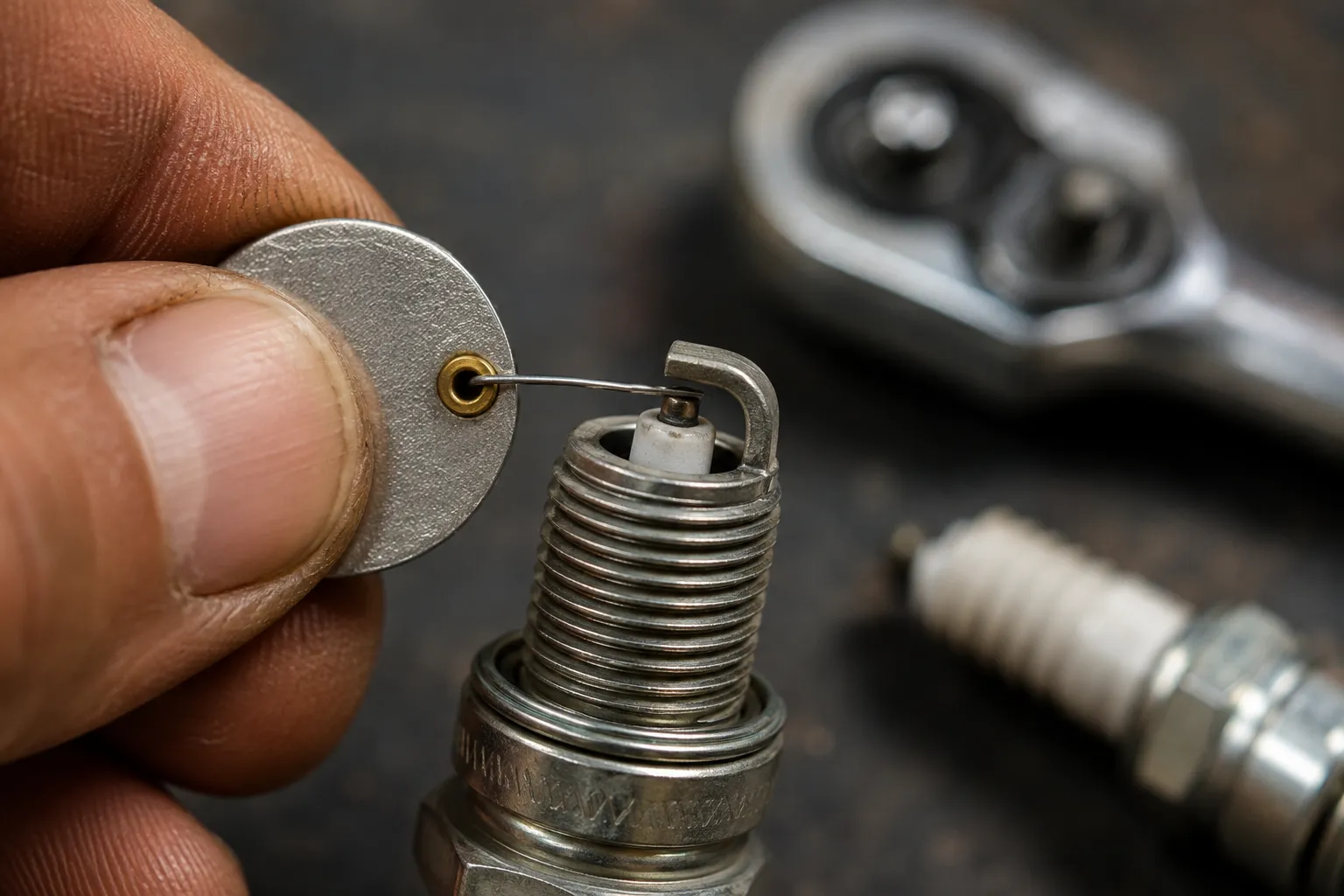
Snug, not tight. The single most common Craftsman head damage we see is a plug torqued down like a lug nut.
Hand-tight plus a quarter turn seats the crush washer and seals the plug, while anything harder risks the threads. This swap is also just one piece of the complete lawn-mower tune-up, so if you are here for spring prep, the filter and oil come next.
Reading a Fouled or Oily Plug
A Craftsman spark plug reads like a gauge, because its color tells you why the mower runs rough. A dry black, sooty tip means a rich mixture or a clogged air filter, a wet gassy tip means flooding, an oily tip points to oil reaching the combustion chamber, and a chalky white tip suggests running lean.
Briggs and Stratton warns that the wrong plug alone can cause performance problems, so read the tip before you assume the worst. If a plug fouls again fast, the plug is the symptom, not the disease.
Plug-reading decoder:
What you see | Likely cause | First action |
|---|---|---|
Dry black, sooty | Rich mixture or clogged air filter | Replace plug, check the filter |
Wet, smells of gas | Flooded engine | Dry it, ease off the choke |
Oily, black sheen | Oil in the combustion chamber | Replace plug, watch for repeat fouling |
Chalky white | Running lean | Check for air leaks, confirm the right plug |
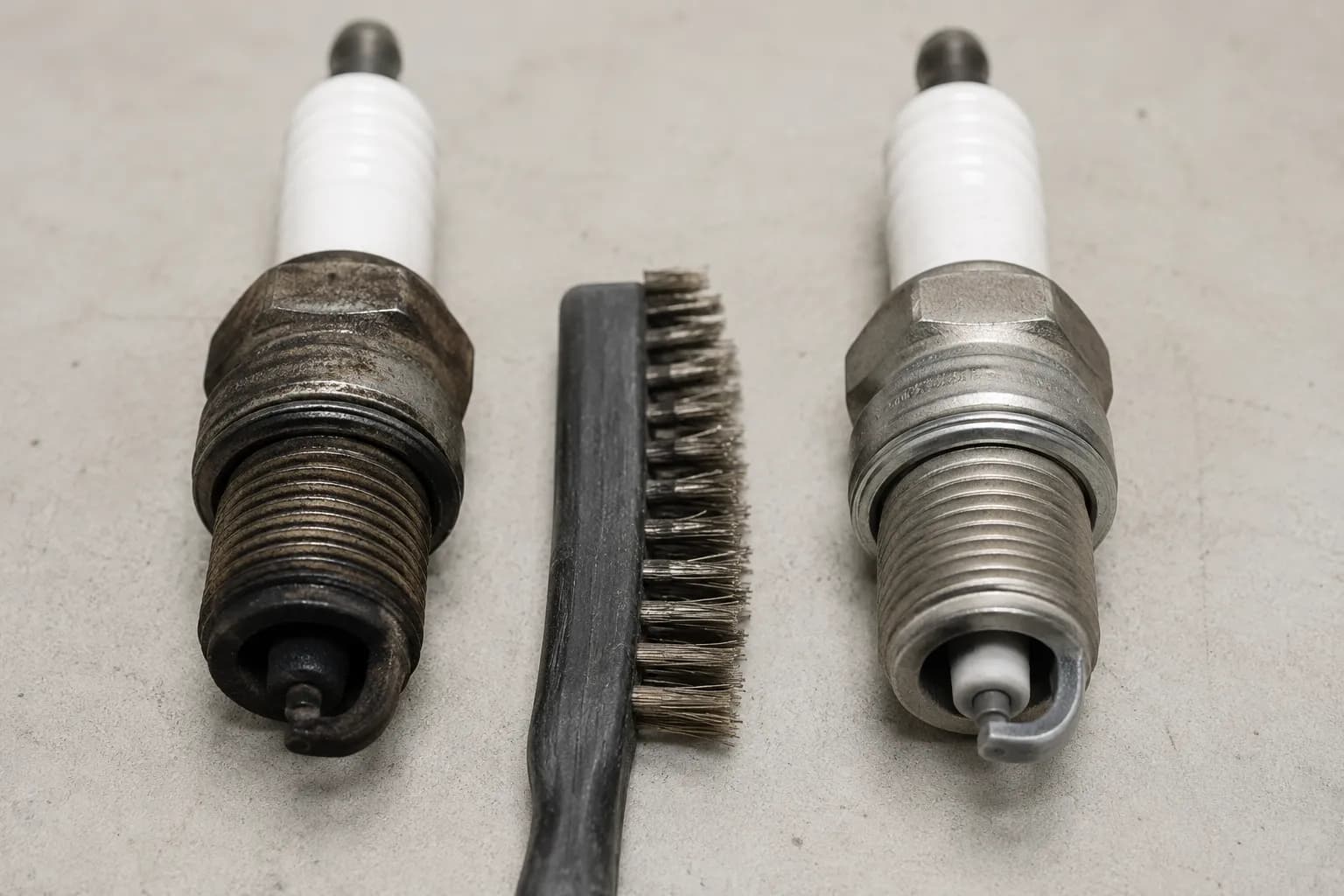
Here is the observation that changed how we handle this. A carbon-black plug pulled from our push mower cleaned up fine with a wire brush, but it fouled right back within two mows because the real cause was a rich idle.
Cleaning buys a mow or two, it does not fix the cause. If yours keeps fouling despite a good filter, choosing a better plug brand can help, though the underlying tune is what needs attention.
Still Won't Start After the Swap?
If a Craftsman mower will not start right after a plug change, the cause is almost always simple. The top four are a boot that looks seated but has not clicked on, a wrong gap, the wrong plug entirely, or a cracked spark-plug wire arcing to ground.
Older Craftsman and Briggs engines cross-reference to the RJ19LM, and iFixit's Craftsman answers confirm the Briggs 591868 plug cross-reference for many 917 models. Rule these out in order before you assume a deeper fault.
No-start after a plug swap:
Symptom | Likely cause | Quick check |
|---|---|---|
No pop at all | Boot not fully seated | Push the boot until it clicks |
Fires then dies | Wrong gap | Re-gap to .030 inch |
Cranks, no spark | Wrong or dead plug | Confirm RC12YC or RJ19LM |
Intermittent spark | Cracked wire or boot | Inspect the wire, replace if split |
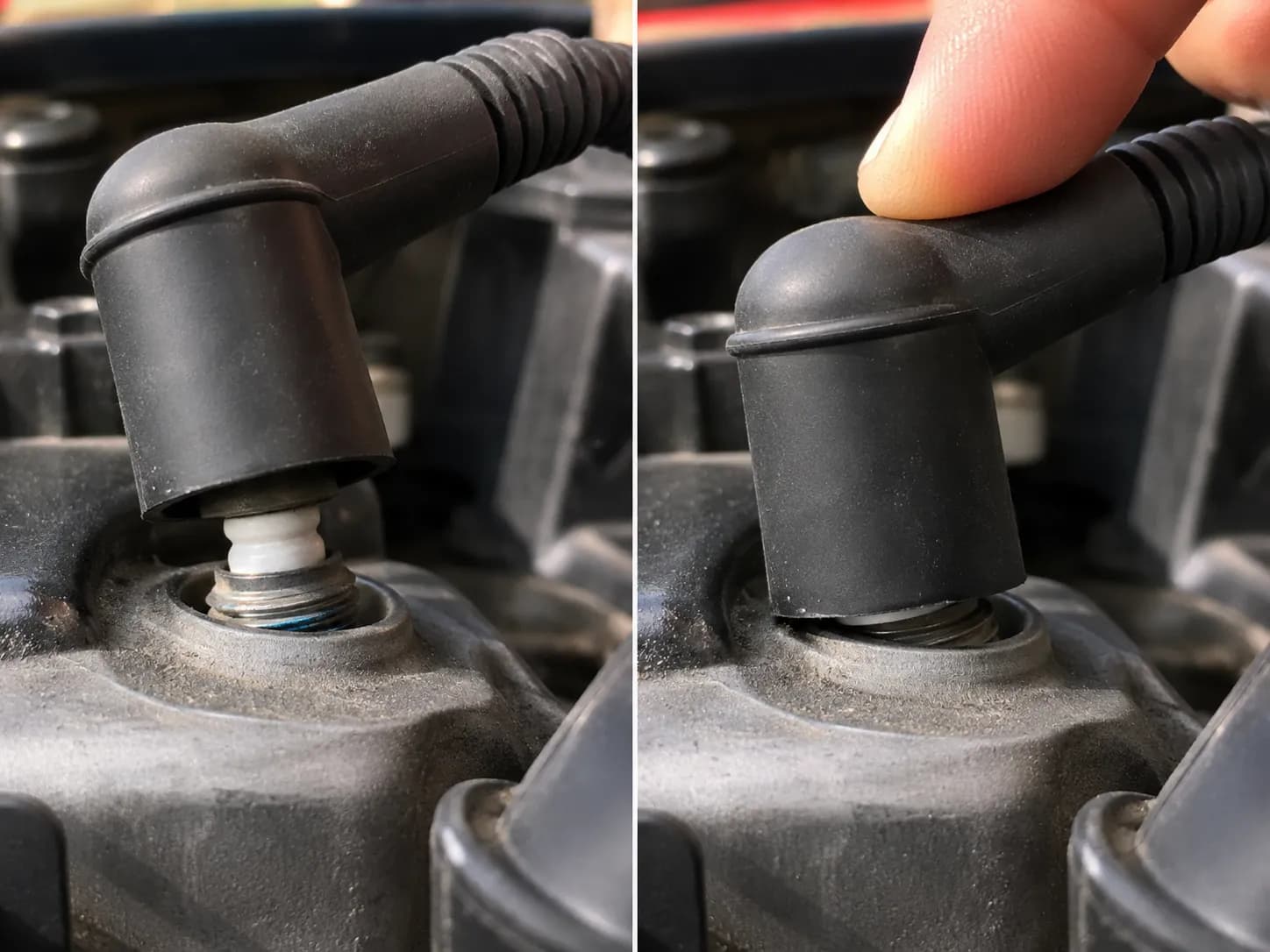
The spark-plug wire itself fails more often than people expect. A hairline-cracked boot arcs to the engine block instead of the plug, which kills spark and mimics a dead plug.
If the wire is split, a crimp-on boot and wire kit restores it. When spark, fuel, and air all check out and it still will not start, you are past a plug swap, so run a full Craftsman tune-up and work the fuel and filter side.
Craftsman Spark-Plug FAQ
How often should I change a Craftsman spark plug?
Change it once a year, ideally each spring, or about every 100 hours of run time. A plug is cheap insurance against a hard-starting mower, and a worn gap makes the ignition coil work harder than it should.
We keep a spare RC12YC on the shelf and swap it every spring on our rider whether the old one looks done or not.
Can I clean a fouled plug instead of replacing it?
You can, but treat it as a temporary fix. A wire brush knocks off carbon and gets you through a mow, yet a plug that is cracked, corroded, or heavily worn should be replaced.
If it fouls again quickly, the real cause is the mixture, the filter, or oil reaching the cylinder, not the plug.
What size socket does a Craftsman plug need?
Most overhead-valve Craftsman engines use a 5/8-inch (16 mm) spark-plug socket, and older L-head engines use a 13/16-inch (20.6 mm) socket. A deep six-point socket with a rubber insert grips the plug best and protects the ceramic.
What is the gap on a Craftsman spark plug?
The standard gap for Briggs-powered Craftsman engines is .030 inches, for both RC12YC and RJ19LM plugs. A few models specify tighter figures in the .020–.030 range, so confirm the 917 tag if in doubt.
The Bottom Line
Changing a spark plug on a Craftsman lawn mower is genuinely a five-minute job. The part that trips people up is never the wrench, it is finding the plug on their body style and matching the plug and socket to their engine era.
Read the 917 tag, pick the 5/8 or 13/16 socket, set the .030 gap, hand-thread the new plug, and snug it a quarter turn past finger-tight. Do that and your Craftsman should fire on the first pull.
If it still fights you after a clean swap, the plug has done its job as a diagnostic and pointed you toward the fuel, filter, or wire. Keep a spare plug on the shelf, make the swap part of your spring routine, and you will spend far more Saturdays mowing than wrenching.
Summarize with AI
Keep reading
Related articles
 Maintenance & Seasonal Care
Match a lawn mower tune up kit to your engine: what is inside each kit, OEM vs aftermarket price math, and the right kit by brand for push and riding mowers.
 Maintenance & Seasonal Care
Compare mobile vs drop-off shop for a lawn mower tune up near me: real 2026 price ranges from 12 quotes, the 7 questions to ask, and when to just DIY it.
 Maintenance & Seasonal Care
Match a lawn mower spark plug repair kit to your fault in 30 seconds. 7 kits tested on 9 engines: M14x1.25 sizing, insert lengths, and the $5 boot fix.
 Maintenance & Seasonal Care
Compare lawn mower tune up cost by mower type: $70-$150 push, $150-$280 riding, from 9 real 2026 shop quotes. Plus the same parts for about $18 DIY.
Comments
Moderated for quality. Share a correction, ask a follow-up, or tell us what worked for you - every comment is reviewed before it goes live.