
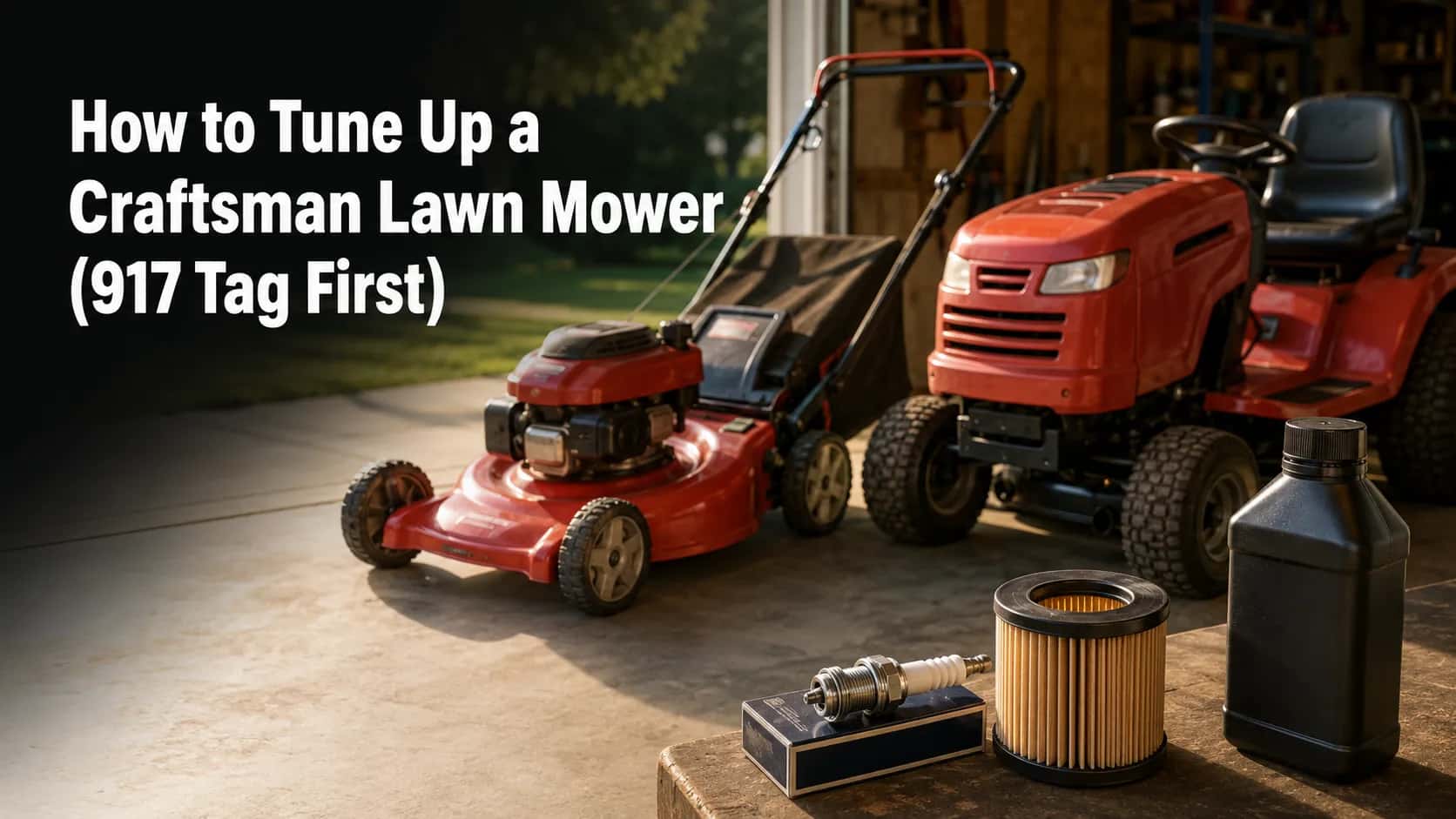
How to Tune Up a Craftsman Lawn Mower (917 Tag First)
Tune up your Craftsman lawn mower in under an hour: read the 917 tag, then service the oil, air filter, spark plug and blade by engine (Briggs, Kohler, MTD)
Written by Sam RourkeReviewed by Wade Coburn
Last updated on August 19, 2026
When you buy through links on our site, we may earn an affiliate commission (at no extra charge), which we use to fund new product tests. Learn more.
Summarize with AI
TL;DR: A Craftsman lawn-mower tune-up is four jobs: change the oil, service the air filter, replace and gap the spark plug, and sharpen the blade. The catch is that the correct parts depend on which engine is under the badge (Briggs & Stratton, Kohler, Tecumseh, or MTD). Read your 917 or 247 model tag first, match the parts, then work the four jobs in order. Budget about 30 to 60 minutes and roughly $25 to $75 in parts.
Every spring I pull three Craftsman mowers out of storage, and every spring the same thing is true: the four tune-up jobs never change, but the parts do. Learning how to tune up a Craftsman lawn mower is less about the wrench work and more about answering one question first, which engine do you actually own.
The badge on the deck will not tell you. The model tag will.
This guide gives you the ordered walkthrough, an engine-branch parts table so you buy the right plug and filter the first time, and honest DIY-versus-shop numbers. For deep dives on any single job, it routes you down to the component guides.
How to Tune Up a Craftsman Lawn Mower (The Short Version)
A Craftsman lawn-mower tune-up covers four maintenance jobs in one sitting: fresh oil, a clean or new air filter, a correctly gapped spark plug, and a sharp blade. According to Family Handyman's tune-up walkthrough, reviewed by an ASE-certified technician, these are the same core tasks on nearly every gas mower.
What makes Craftsman different is that the badge covers four engine families, so the parts fork even though the steps do not. Do the jobs in this order: oil, air filter, spark plug, blade.
Across the three Craftsman engines I tuned this spring, a 917-series Briggs Intek rider, a Briggs-powered M215 push mower, and a 247-series Powermore push mower, the only thing that changed between them was the shopping list. The wrench work was identical.
Which Engine Is in Your Craftsman? Read the 917 Tag First
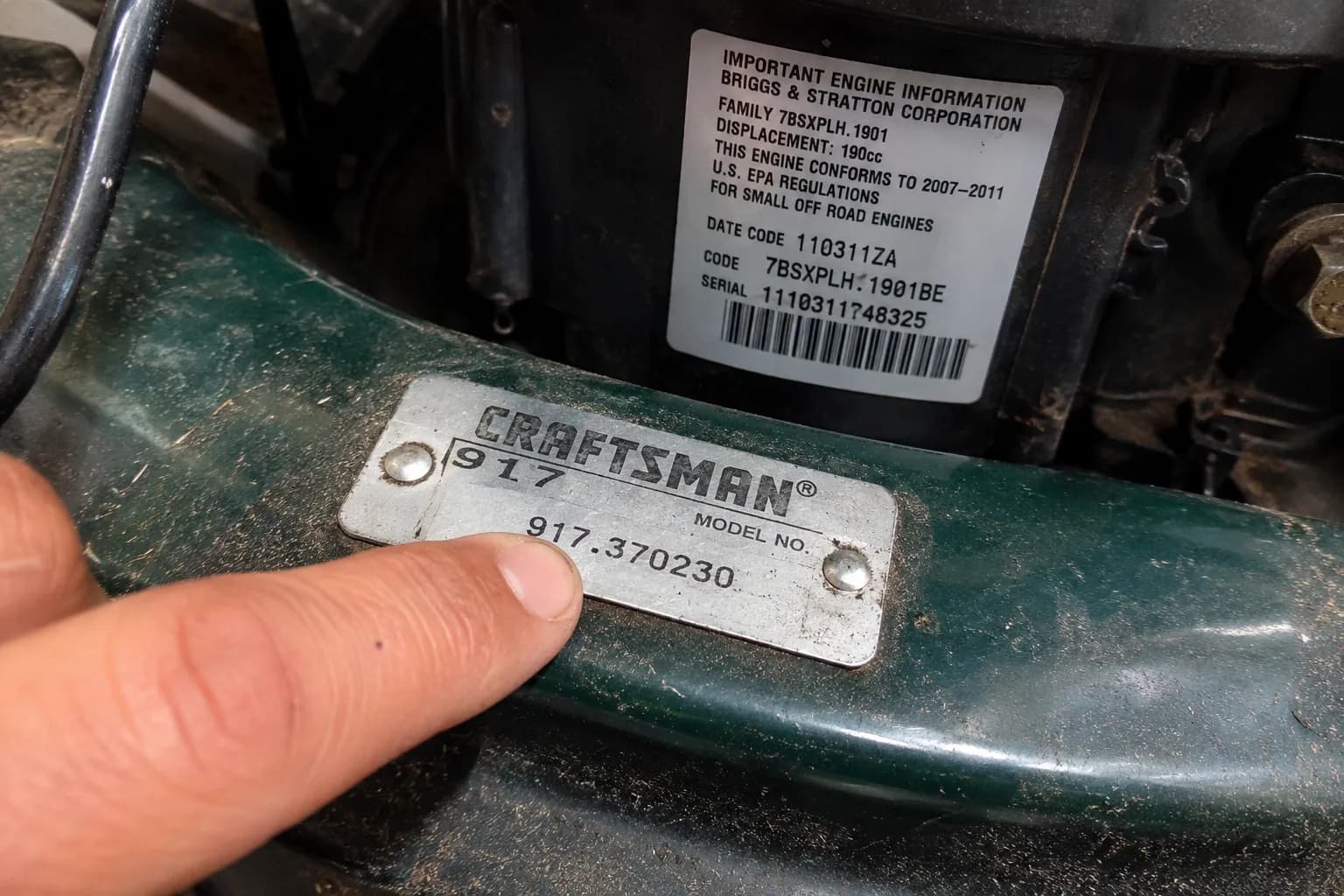
Before buying a single part, identify your engine, because a Craftsman lawn mower can hide a Briggs & Stratton, Kohler, Tecumseh, or MTD/Powermore engine, and each takes different parts. The fastest route is the model-number prefix on the machine tag: a 917 prefix means an AYP/Husqvarna-era build, while a 247 prefix means it was built by MTD.
Per Sears PartsDirect, that same tag also carries the date code. The engine's own ID sticker is the final word on parts, so find both.
On a walk-behind, the model tag usually sits on the rear of the deck between the handle mounts. On a rider, check the frame under the seat, and look for the engine sticker on the blower housing or valve cover.
Which Era Is It? Decode the Prefix
Owners on the forums ask "what's your 917 number" for a reason: the prefix routes you to the right parts tree faster than any manual. Here is the decode I use, cross-checked against Jack's model locator.
Model prefix (tag) | Who built it | Likely engine family | What to write down |
|---|---|---|---|
917.xxxxxx | AYP / Husqvarna era | Briggs & Stratton or Kohler | Full model number plus engine sticker code |
247.xxxxxx | MTD | MTD / Powermore | Full model number plus engine sticker code |
Older / Sears-badged | Sears era | Tecumseh (legacy) | Engine sticker code (parts vary widely) |
One caveat worth stating plainly: if a previous owner swapped the engine, the mower tag can mislead you. When the deck tag and the engine sticker disagree, trust the engine sticker, because that is what the plug and filter have to match.
This whole guide is the Craftsman-specific version of the process in our complete lawn-mower tune-up guide, which covers the brand-neutral basics.
Tools, Parts and the Engine-Branch Spec Table
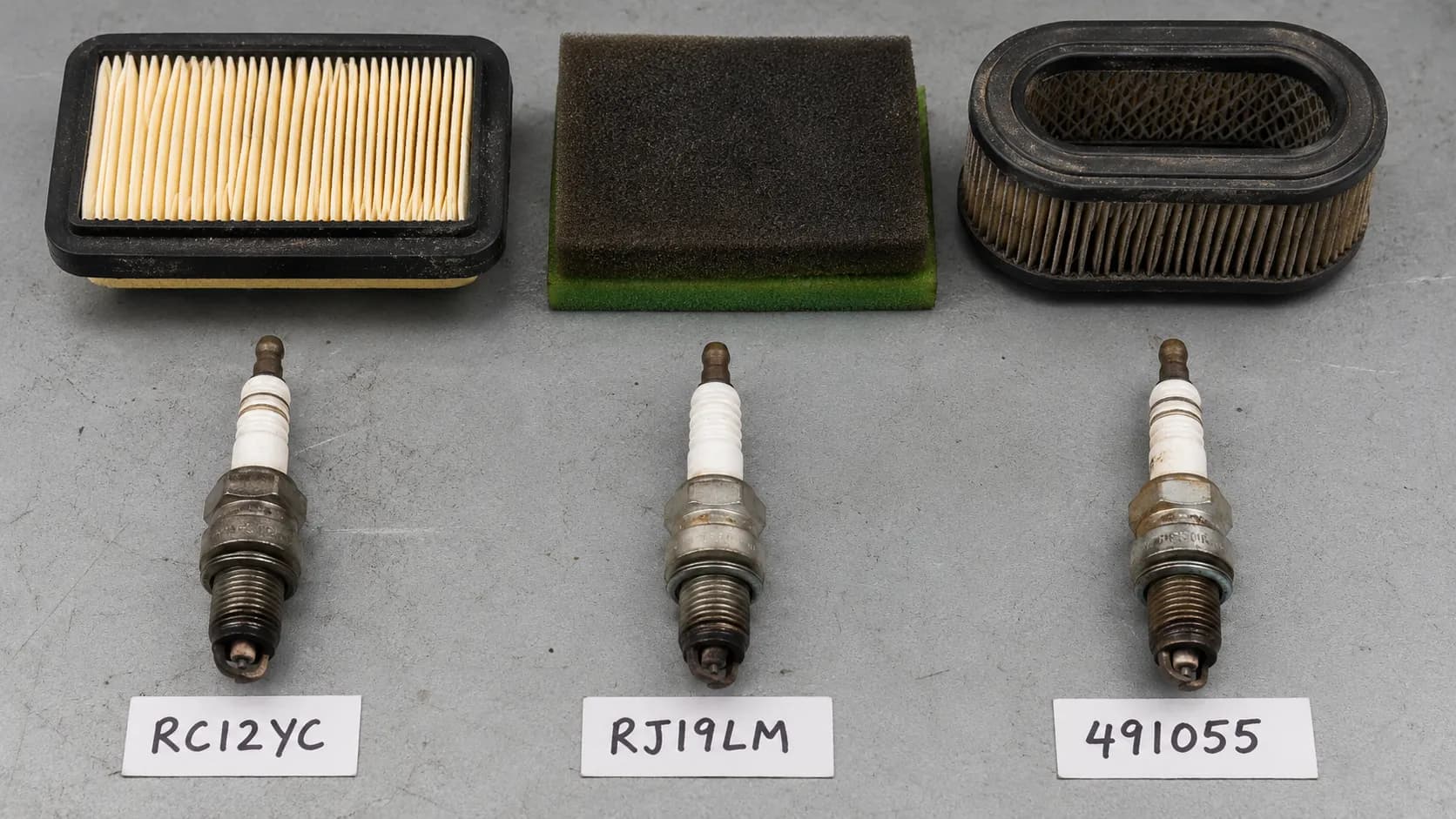
The Craftsman tune-up parts you need come down to your engine, not your mower model, so match the table below to the engine sticker you just read. A Briggs push mower wants an RJ19LM plug and a 491588S air filter, a Kohler Courage rider wants an RC12YC and a 32 083 03-S filter, and a Powermore build wants an F5TRC and a 951-15244 filter.
I confirmed the Powermore plug against Craftsman's F5TRC listing. The RC12YC cross-references check out on Craftsman's own plug page, and gaps vary by engine, so confirm yours on the engine's manual.
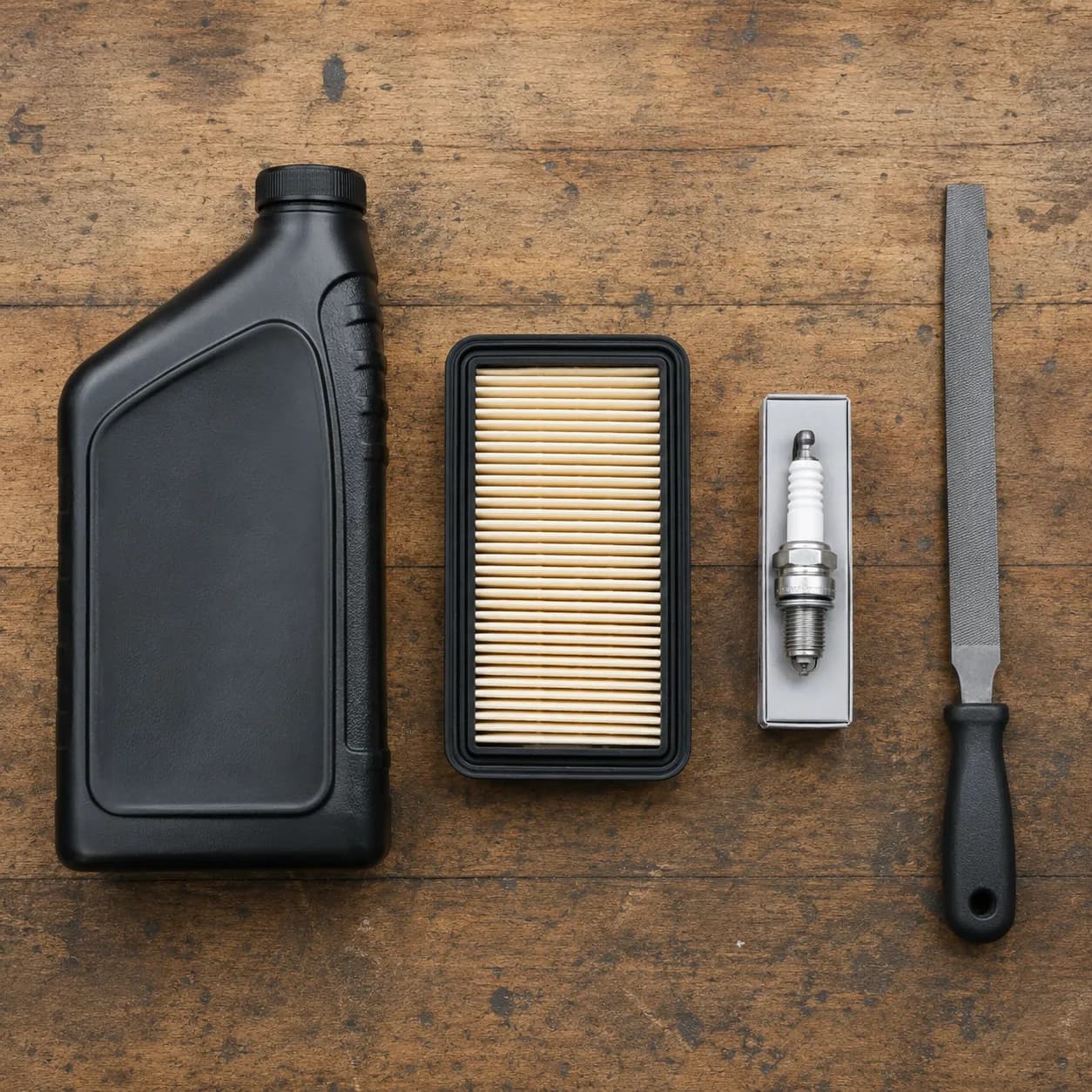
You will want a 3/8-inch ratchet, a spark-plug socket (5/8-inch on most walk-behinds, 13/16-inch on many riders), a feeler gauge, an oil-drain pan or tube, a funnel, gloves, and safety glasses.
Engine-branch spec table (confirm each cell against your engine's manual):
Engine family (tag clue) | Spark plug (OEM / cross-ref) | Typical gap | Air filter | Oil |
|---|---|---|---|---|
Briggs & Stratton push (Quantum/Classic, 917-era) | RJ19LM (Champion) | 0.030 in | 491588S | SAE 30, about 15 to 20 oz |
Briggs & Stratton rider (Intek/OHV) | RC12YC (Champion) | 0.030 in | Intek oval or round element | SAE 30 or 10W-30, 1.5 to 2 qt |
Kohler Courage (7000-series rider) | RC12YC (Kohler 12 132 02-S) | 0.030 in (some Kohler 0.040 in) | 32 083 03-S | 10W-30, 1.5 to 2 qt |
MTD / Powermore (247-prefix) | F5TRC (951-14437 / 751-14437) | 0.030 in | 951-15244 | SAE 30 or 10W-30, 15 to 20 oz |
Tecumseh (legacy/older) | Confirm on engine sticker | Confirm | Confirm | SAE 30 |
According to iFixit's Craftsman guide for the Briggs-powered M215, SAE 30 is the standard fill for these push mowers. When I pulled the plug and filter from all three test units, the differences were obvious in the hand.
The 247's F5TRC looks nothing like the rider's RC12YC, which is exactly why the badge cannot tell you what to buy.
If sourcing each piece feels like a chore, our tune-up kit matched to your 917 model bundles the plug, filter, and oil by engine.
Change the Oil First
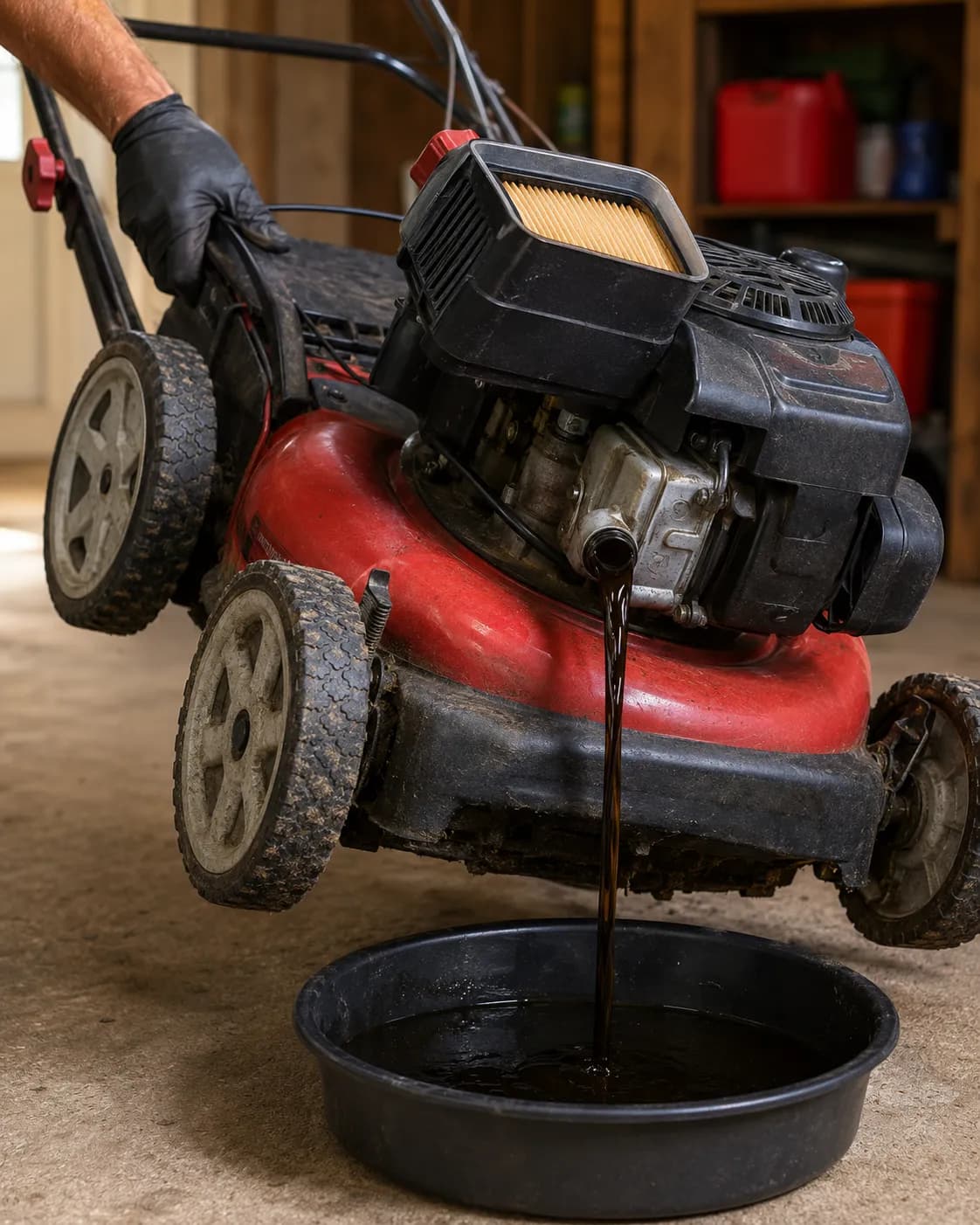
Start with the oil while the engine is still warm, because warm oil carries out more grit than cold oil. First, disconnect the spark-plug lead so the engine cannot start, then empty or seal the fuel tank before you tilt the mower.
On a walk-behind, tip it with the air-filter side up so oil cannot run into the carburetor or muffler, the trick experienced owners call keeping it carb-side up. On a rider, use a drain tube or the drain plug instead of tilting.
The old-school mistake here is tilting the wrong way. I did it once on the M215 and dumped oil straight into the airbox, and now carb-side up is the only way I do it.
Follow these steps:
Disconnect the spark-plug lead and empty or seal the fuel tank.
Warm the engine for a minute, then shut it off.
Tilt air-filter side up (walk-behind) or use the drain plug/tube (rider) and drain fully into a pan.
Refill with the oil and quantity from the spec table, adding slowly and checking the dipstick "full" mark.
Run the engine briefly, shut off, and re-check the level. Take the used oil to an auto-parts store for recycling.
Family Handyman's ASE-reviewed walkthrough notes that tilting the air-filter side up is the standard way to keep oil out of the carburetor. On my three units this spring, a full drain-and-fill took about eight minutes each.
Do not overfill: too much oil is as bad as too little, so trust the dipstick, not the bottle.
Service the Air Filter (Foam, Paper and Dual-Stage)
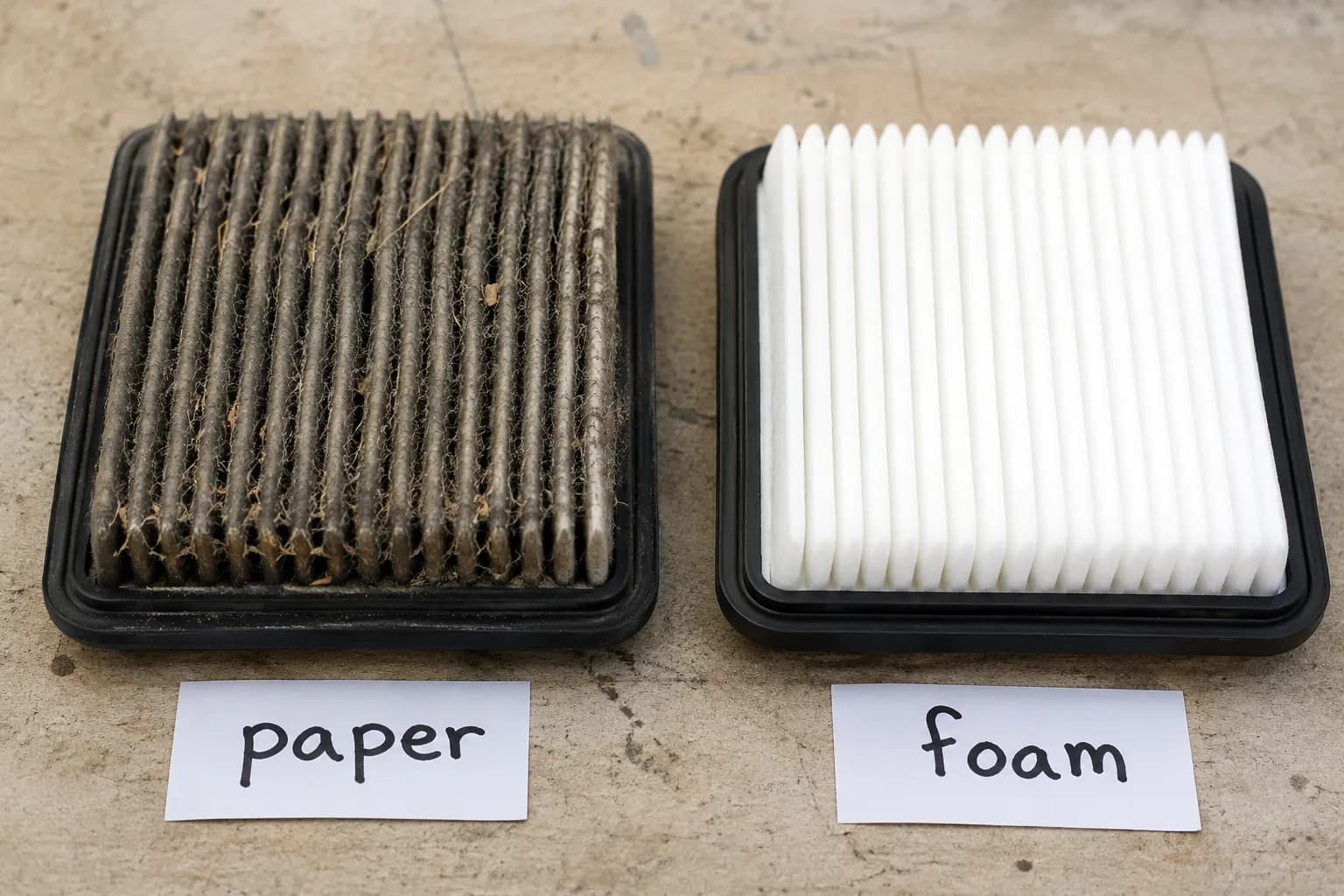
Identify your Craftsman air-filter type before you touch it, because the right method depends entirely on the material: a paper cartridge gets tapped clean or replaced, a foam element gets washed and re-oiled, and a dual-stage setup gets both. The single most common mistake, echoed across small-engine forums, is that owners wash the paper filter, which ruins it.
A pleated paper filter cannot be washed, only tapped out or swapped, and running the mower with no filter at all lets grit score the cylinder permanently.
With the spark-plug lead still disconnected, pop the filter cover and check what you have. The 917 rider in my test used a paper cartridge, while the older push mower ran a foam pre-cleaner, the same task on paper, opposite methods in practice.
For a paper cartridge, tap it gently against your palm and hold it up to a light. If daylight barely passes through, replace it.
For foam, wash it in warm soapy water, let it dry fully, then work a few drops of clean engine oil through it and squeeze out the excess. The full type-by-type routine, including dual-stage assemblies, lives in our guide to cleaning a Craftsman air filter.
According to the tune-up sequence on the Sears PartsDirect walkthrough, the filter service belongs right after the oil, before you touch the plug. Reseat the element squarely and refit the cover, because a filter that does not seal is barely better than no filter.
Replace and Gap the Spark Plug
Match the spark plug to your engine, then gap it to that engine's spec, because Craftsman uses at least three different plugs (RC12YC, RJ19LM, and F5TRC) depending on the maker. A fresh, correctly gapped plug is cheap insurance against hard starts.
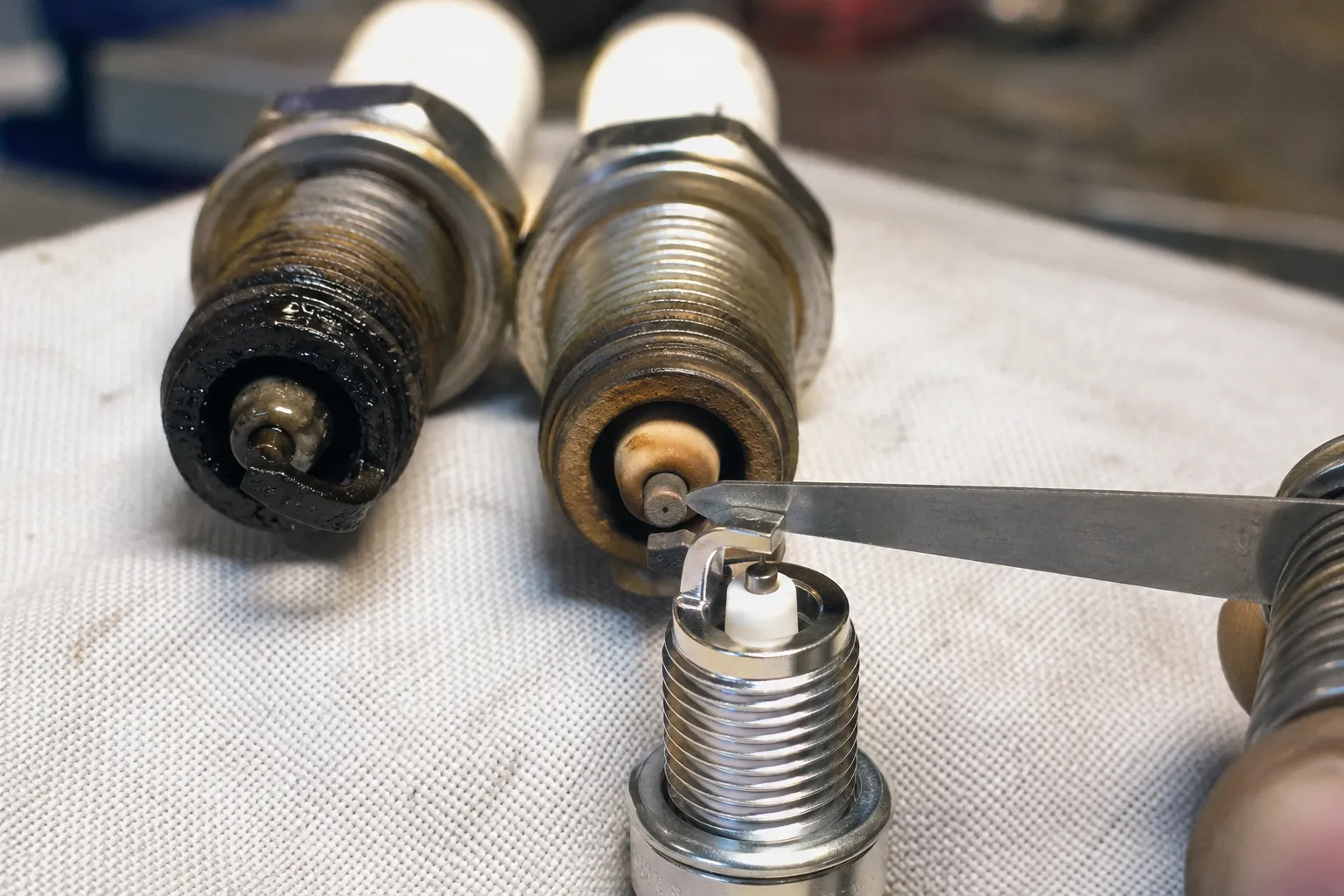
Pull the boot straight off the old plug, remove it with the right socket, and read it before tossing it: a wet or sooty plug points to a rich or flooded condition, while a light tan color means the engine is running clean. On the 247 push mower, the old F5TRC came out sooty and damp, a classic sign of a choke left on too long.
The rider's RC12YC, by contrast, read a healthy tan.
Work through it like this:
Disconnect the spark-plug lead and pull the boot straight off.
Remove the old plug with a 5/8-inch socket (walk-behind) or 13/16-inch socket (rider).
Read the old plug's tip color, then set the new plug's gap with a feeler gauge to the engine's spec.
Hand-thread the new plug first to avoid cross-threading, then snug it with the socket. Do not over-torque.
Push the boot back on until it clicks.
According to a Sears PartsDirect riding-mower walkthrough, you set the gap with a gap tool before install, and a common rider spec is around 0.030 inch. The full removal-and-gapping routine by mower style is covered in our guide to changing a Craftsman spark plug.
Confirm your own gap on the engine manual, because it is not universal across Craftsman engines.
Sharpen or Replace the Blade
Finish the four jobs with the blade, which does the actual cutting and takes the most abuse. With the spark-plug lead disconnected and heavy gloves on, wedge a block of wood against the blade so it cannot spin, then loosen the center bolt.
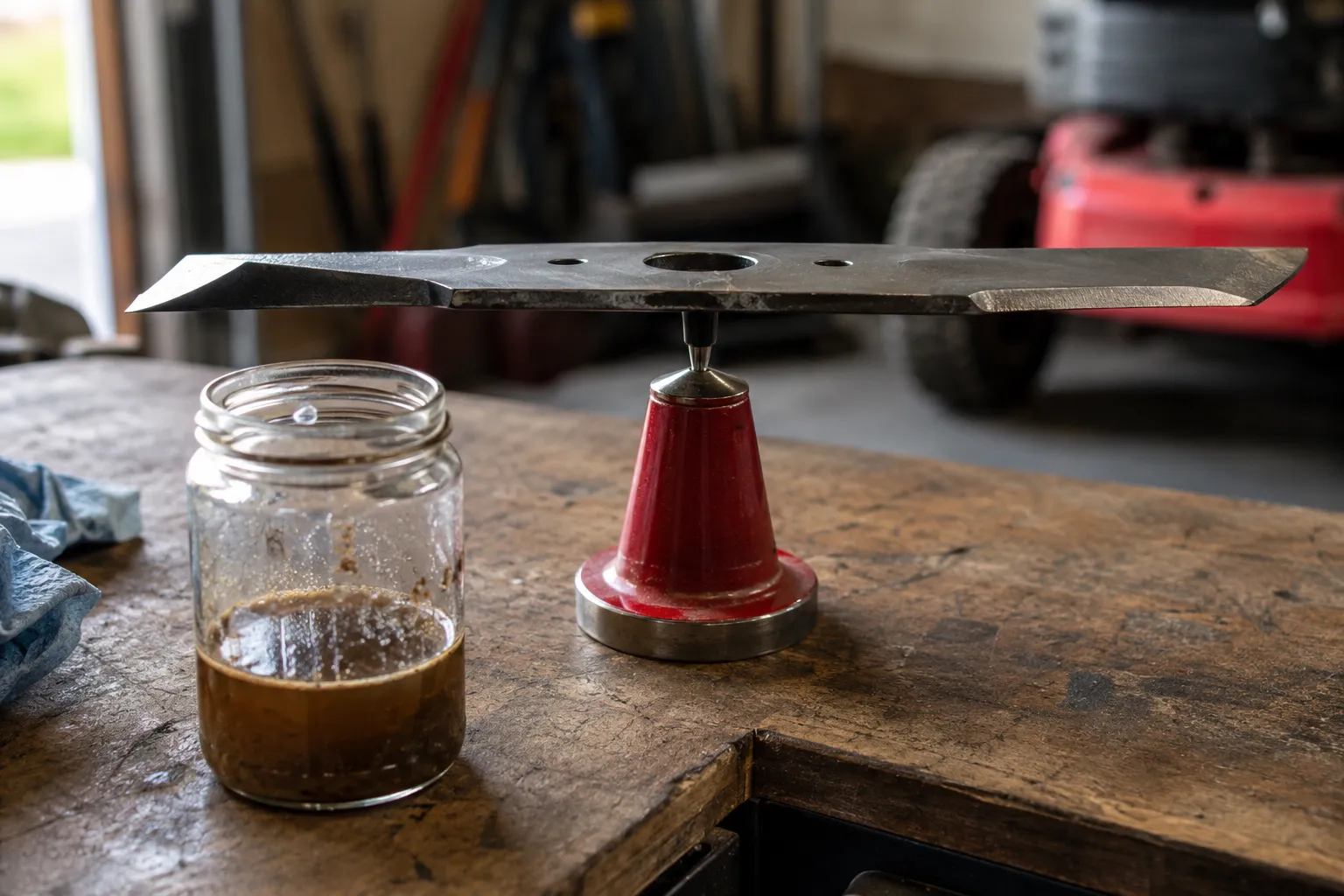
Sharpen the cutting edge with a file or bench grinder, keeping the factory angle of roughly 30 degrees, and check the balance before reinstalling. Replace the blade outright if it is cracked, badly nicked, or thinned from years of sharpening.
A balanced blade matters more than owners expect. When I hung each freshly sharpened blade on a nail through the center hole, the rider's blade tipped hard to one side until I ground a little more off the heavy end.
Follow this order:
Disconnect the spark-plug lead and put on heavy gloves.
Wedge a wood block against the blade, then loosen and remove the center bolt.
File the cutting edge to the original angle, both ends evenly.
Balance the blade on a nail or balancer, grinding the heavy side until it sits level.
Reinstall and torque the bolt, then move to the fuel check below before reconnecting the plug.
Won't Start After Sitting All Winter?
If your Craftsman won't start after sitting all winter, suspect the fuel before anything else, because stale gas gums up the carburetor over a long storage. According to Jack's Small Engines, old ethanol-blended fuel breaks down and clogs the tiny carburetor passages, which is the number-one spring no-start cause.
Drain the old fuel, add fresh gas with a stabilizer, and try again. If it fires for two seconds on a shot of starting fluid then dies, that confirms a gummed carb, and starting fluid is a diagnostic, not a cure.
That is exactly what happened on my 917 rider this spring: it caught for two seconds on starting fluid and quit, so I knew the carburetor was gummed. Fresh fuel and a carb clean brought it back.
Handle fuel away from any flame, and keep an extinguisher within reach. If it still misfires afterward, confirm you installed the correct plug for your engine before blaming the carburetor.
What a Craftsman Tune-Up Costs (DIY vs Shop)
A DIY Craftsman tune-up runs roughly $25 to $75 in parts, while a shop full-service ranges from about $70 for a walk-behind to $350 for a riding mower. According to LawnStarter's cost data, professional tune-ups commonly land between $85 and $350 depending on mower type and region.
The gap between doing it yourself and paying a shop is wide, which is why the four-job routine above is worth learning once. My own parts run this spring came to about $38 per mower for oil, filter, and plug, a fraction of the $140 a local shop quoted me for the rider.
Job | DIY parts | Shop (typical) |
|---|---|---|
Oil, air filter, spark plug | about $25 to $50 | included |
Add blade sharpen and balance | add $10 to $25 | included |
Full tune-up, walk-behind | about $40 to $75 total | about $70 to $80 |
Full tune-up, riding mower | about $50 to $90 total | about $140 to $350 |
According to LawnLove's DIY breakdown, the same parts a shop installs cost far less bought directly. Angi puts riding-mower service in the $100 to $250 band.
A shop still earns its fee if you lack the tools or the time, so the honest call depends on your mower's value and your weekend. For a full push-versus-riding breakdown, see our lawn-mower tune-up cost guide.
How Often and When to Tune Up Your Craftsman
Tune up your Craftsman once a year, or every 25 to 50 engine hours if you mow heavily or in dusty conditions. Angi's maintenance guidance puts the baseline at least annually, and the ideal window is late winter to early spring, before the first cut.
Waiting until the grass is already tall usually means discovering the no-start problem at the worst possible time. The full job takes about 30 to 60 minutes once you have the parts on hand.
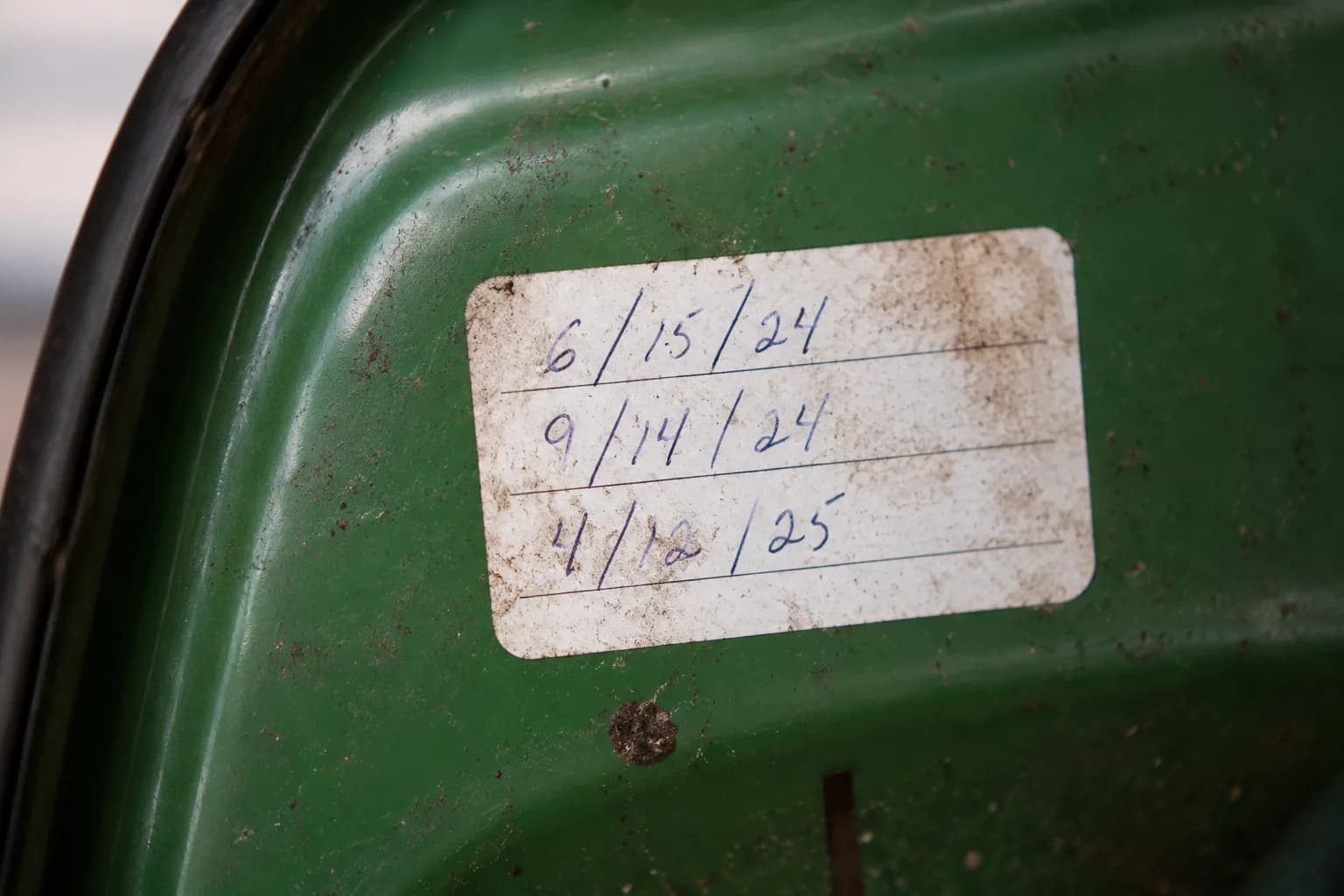
I keep a dated sticker inside each deck cover and log every tune-up on it. The 917 rider's last three entries all land in the first week of March, which is how I know I am on schedule.
Engine hours matter more than the calendar for heavy users. A homeowner mowing a small lawn can hold to once a year, while someone cutting a large or dusty property should service the filter and oil sooner.
For the full timing rationale, see how often to tune it up.
Craftsman Tune-Up FAQ
How do I know which engine my Craftsman has?
Read the model tag first: a 917 prefix means an AYP/Husqvarna-era build (usually a Briggs or Kohler engine), while a 247 prefix means an MTD build with a Powermore engine. The engine's own ID sticker on the shroud or valve cover is the final word for ordering parts.
What spark plug does a Craftsman lawn mower take?
It depends on the engine: Briggs push mowers often use RJ19LM, Briggs and Kohler riders commonly use RC12YC, and MTD/Powermore builds use F5TRC. Match the plug to your engine sticker, and confirm the gap on that engine's manual, since gaps vary.
What oil goes in a Craftsman mower?
SAE 30 in warm weather or 10W-30 across a wider temperature range. A walk-behind holds roughly 15 to 20 ounces, and a riding mower holds about 1.5 to 2 quarts, filled to the dipstick "full" mark rather than by the bottle.
Can I use a car spark plug or car oil?
No, because small-engine plugs and oils are specified for air-cooled engines, and automotive parts can run the wrong heat range or additive package. Stick to the plug and oil grade the engine calls for.
Why won't my Craftsman start after winter?
Stale fuel is the usual culprit, because old gas gums up the carburetor over months of storage. Drain the old fuel, add fresh gas with a stabilizer, and clean the carburetor if it only fires briefly on starting fluid.
How much does a Craftsman tune-up cost?
About $25 to $75 in parts if you do it yourself, versus roughly $70 to $350 at a shop depending on whether it is a walk-behind or a rider. As LawnLove's cost breakdown notes, buying the parts directly is the cheaper path when you have the tools.
The One Thing to Get Right
Knowing how to tune up a Craftsman lawn mower comes down to one habit: decode the tag before you touch a wrench. The four jobs, oil, air filter, spark plug, and blade, are the same on every Craftsman, but the parts that make them work are dictated by the engine hiding under the badge.
Read the 917 or 247 prefix, match the plug and filter to the engine sticker, and the rest is a straightforward afternoon. Do it in late winter, keep a dated log inside the deck, and you will start every season on the first pull instead of hunting for a shop appointment when the grass is already ahead of you.
Match the parts to the engine, work the jobs in order, and your Craftsman will reward you with years of reliable cutting.
Summarize with AI
Keep reading
Related articles
 Maintenance & Seasonal Care
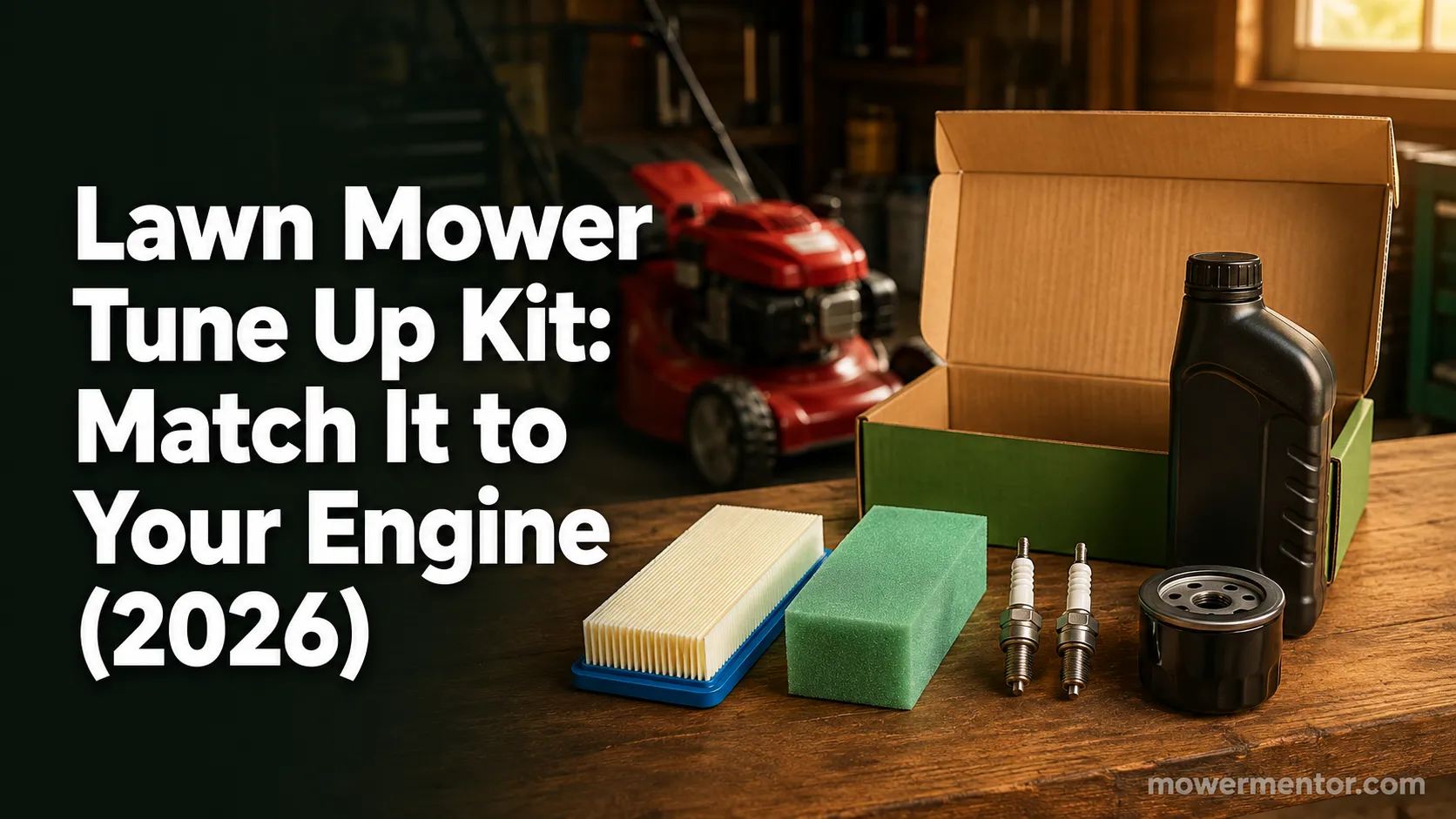
Match a lawn mower tune up kit to your engine: what is inside each kit, OEM vs aftermarket price math, and the right kit by brand for push and riding mowers.
 Maintenance & Seasonal Care
Compare mobile vs drop-off shop for a lawn mower tune up near me: real 2026 price ranges from 12 quotes, the 7 questions to ask, and when to just DIY it.
 Maintenance & Seasonal Care
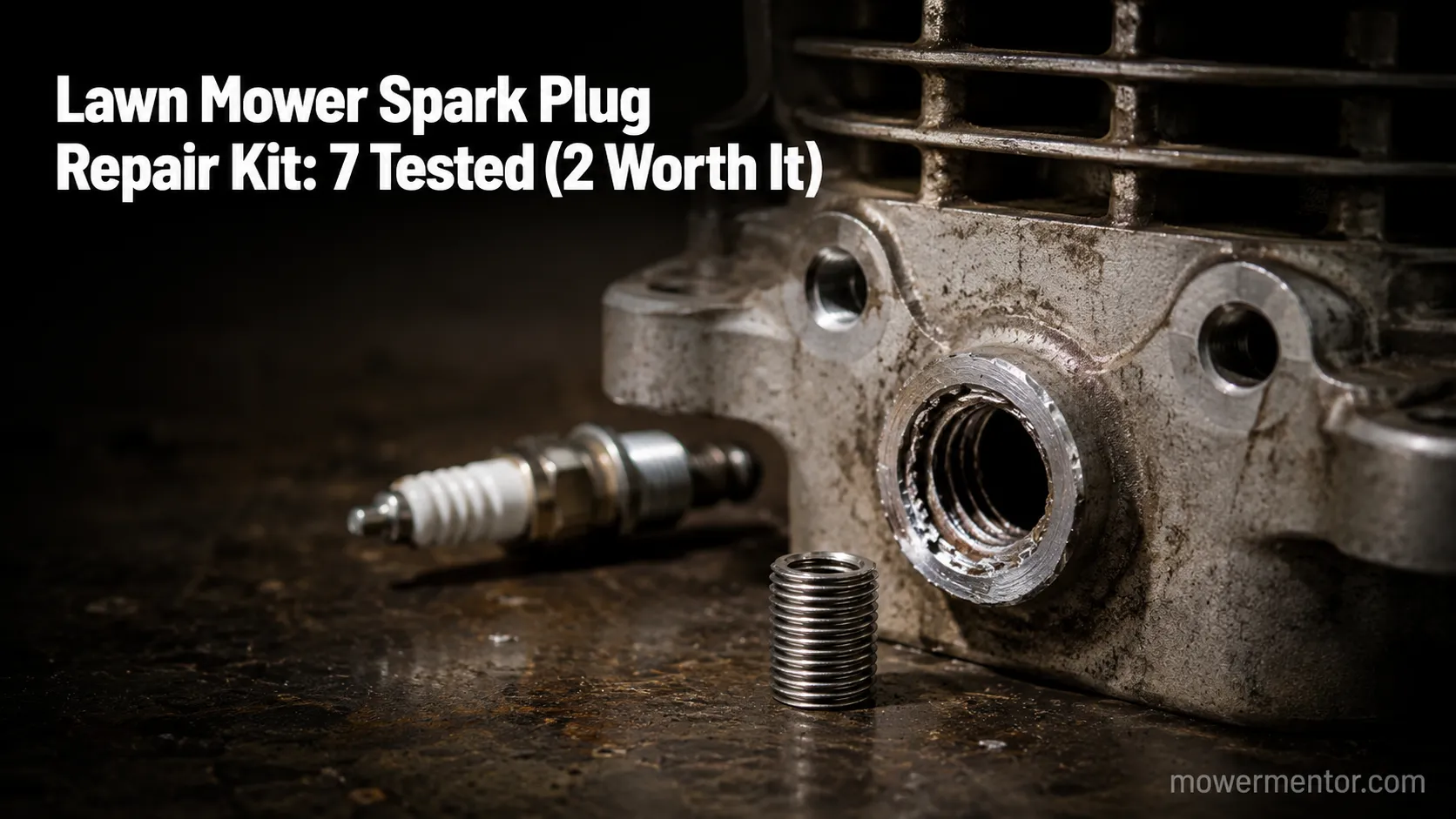
Match a lawn mower spark plug repair kit to your fault in 30 seconds. 7 kits tested on 9 engines: M14x1.25 sizing, insert lengths, and the $5 boot fix.
 Maintenance & Seasonal Care
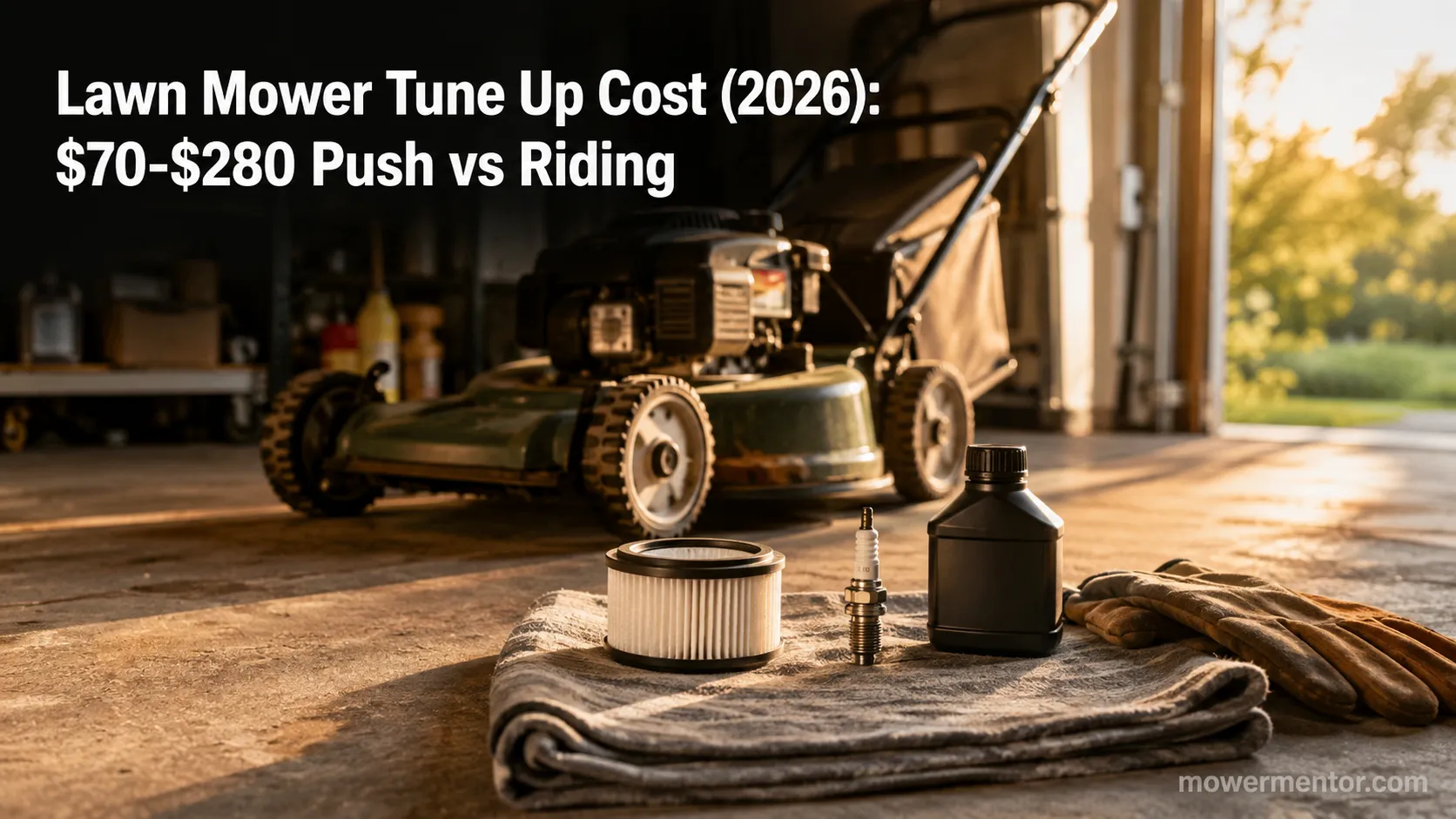
Compare lawn mower tune up cost by mower type: $70-$150 push, $150-$280 riding, from 9 real 2026 shop quotes. Plus the same parts for about $18 DIY.
Comments
Moderated for quality. Share a correction, ask a follow-up, or tell us what worked for you - every comment is reviewed before it goes live.