
How to Tune Up a Honda Lawn Mower: 4 Steps Under $40
Tune up a Honda GCV mower in 4 steps - oil, air filter, spark plug, blade. Exact GC/GCV specs (10W-30, BPR5ES, .028–.031 gap) plus DIY-vs-shop costs.
Written by Sam RourkeReviewed by Wade Coburn
Last updated on August 19, 2026

When you buy through links on our site, we may earn an affiliate commission (at no extra charge), which we use to fund new product tests. Learn more.
Summarize with AI
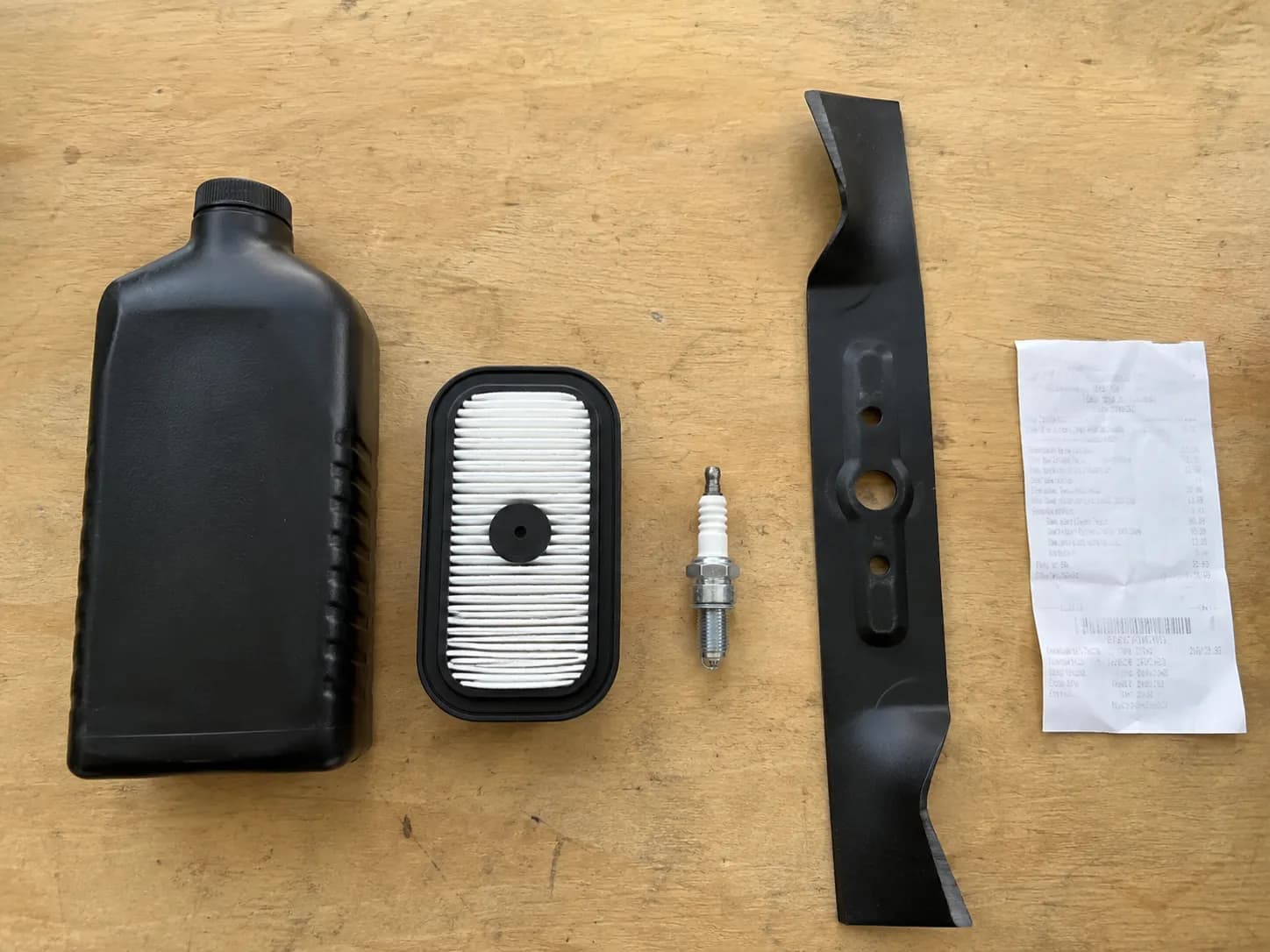
A Honda tune-up is four jobs, done in this order: change the oil, clean or replace the air filter, change and gap the spark plug, and inspect or sharpen the blade. On a GC/GCV walk-behind it takes about 30 minutes and under $40 in parts, with no shop required.
Every spring I get the same message: the Honda that ran fine in October now coughs, surges, or will not start at all. Nine times out of ten the fix is not a repair, it is a tune-up that never happened.
This guide is the whole job in one place, with the exact Honda specs and a real cost comparison. I ran this tune-up on my own GCV160 to time it and price it, so the numbers here are measured, not guessed.
What a Honda Lawn Mower Tune-Up Includes
Tuning up a Honda lawn mower means four routine jobs in order: change the oil (10W-30, about 12-13.5 ounces), clean or replace the air filter, change and gap the spark plug (an NGK BPR5ES at 0.028-0.031 inch), and inspect or sharpen the blade. On a Honda GC/GCV walk-behind such as the HRR, HRS, HRT, HRX, or HRN, the whole job takes roughly 30 minutes and under $40 in parts. None of it needs a shop.
Here is the job at a glance:
Oil: drain the old oil and refill with about 12-13.5 oz of 10W-30.
Air filter: clean the foam, or tap out and replace the paper element.
Spark plug: fit a fresh NGK BPR5ES, gapped to 0.028-0.031 inch.
Blade: inspect, sharpen to a dull edge, balance, and torque it back on.
My last spring tune-up on a GCV160 HRR216 took 28 minutes start to finish, and the parts rang up to $34.10. Budget closer to an hour your first time, and a little more if you do not already own basic hand tools.
What Tuning Up a Honda Mower Means (and Which Engine You Have)
A Honda lawn mower tune-up is routine wear-part service, not a repair. Before you buy anything, identify your engine, because the oil, plug, and gap all depend on it.
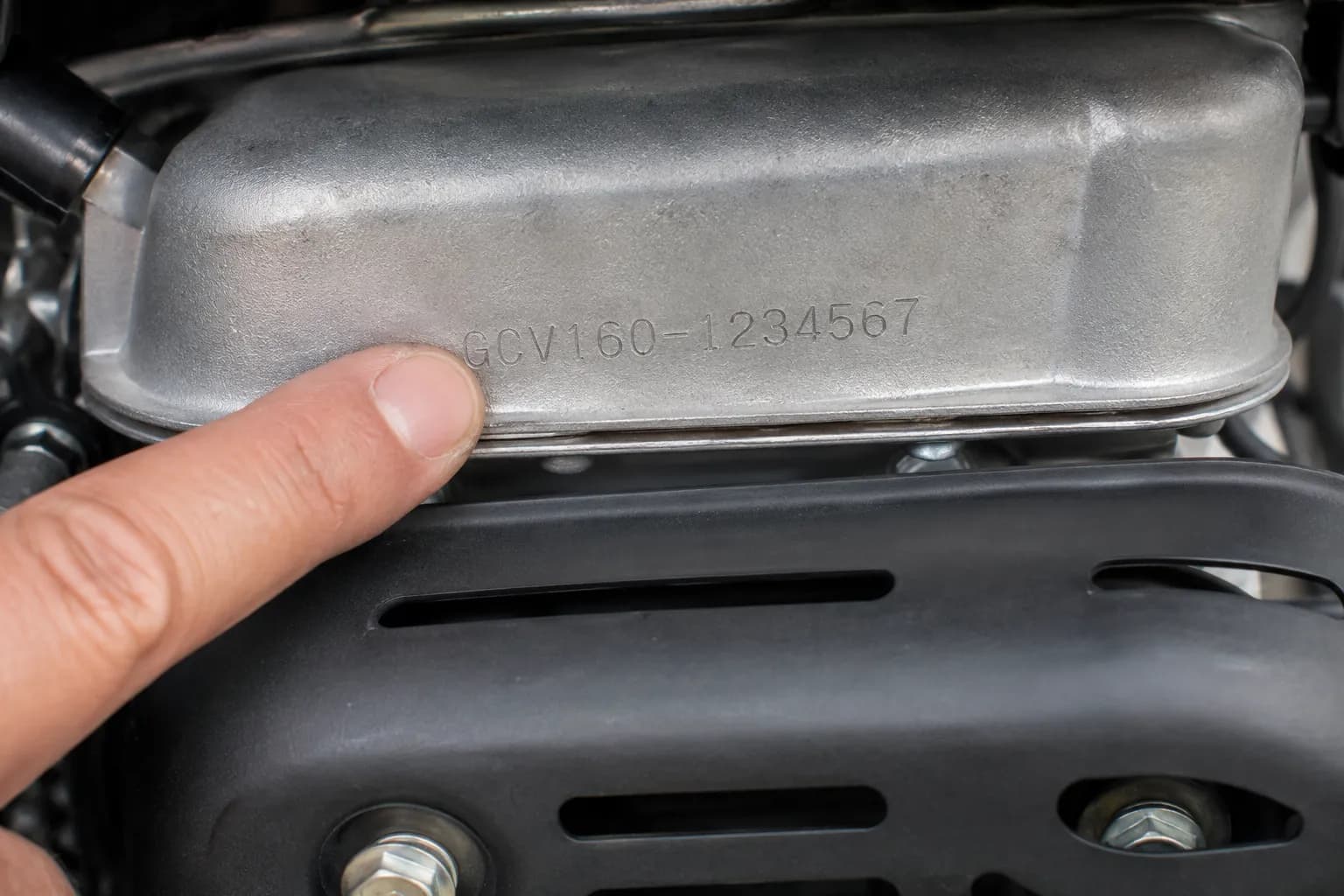
Most homeowner Honda walk-behinds run a GCV-series engine such as the GCV160, GCV170, or GCV190, listed on Honda's GC/GCV engine page. The engine code is printed on the engine cover and on the model and serial tag, and mower lines like the HRR216, HRS216, HRT216, HRX217, and HRN all pair with these engines.
The practical rule is that the right specs follow the engine code, not the mower name. Read the code first, then read your numbers off it.
On my HRR216 the engine code is stamped just above the muffler shield, and it was hidden under a crust of dried grass. I wiped it clean to read "GCV160," which is the code that tells you every other spec in this guide.
Use this table to match your mower line to its engine family:
Mower line | Typical engine | Notes |
|---|---|---|
HRR216 | GCV160 | The most common homeowner Honda |
HRS216 | GCV160 | Side-discharge, lighter deck |
HRT216 | GCV160 | Older rear-engine layout |
HRX217 | GCV190 / GCV200 | Premium deck, larger engine |
HRN216 | GCV170 | Current-generation replacement for the HRR |
One caution before you buy parts. A growing number of cheap clone engines, known in the forums as "Chonda" units, look almost identical to a real Honda but are not covered by Honda specs.
Read your actual tag, and if it does not say Honda, treat the numbers here as a starting point only. This is the Honda-specific version of the broader routine I cover in the complete lawn-mower tune-up for every brand.
The Honda GC/GCV Tune-Up Spec Box
For a Honda GC/GCV mower, use 10W-30 oil (or SAE 30 above 50°F), about 12-13.5 ounces. These engines have no drain plug, so you siphon the oil out or tilt the mower with the air-filter side up.
The spark plug is an NGK BPR5ES, gapped to 0.028-0.031 inch (0.7-0.8 mm) and removed with a 13/16-inch (21 mm) socket. Clean the air filter every 50 hours and replace it every 150, with every figure here taken from Honda's published service specs.
Here is the whole spec box in one place, so you never have to stop mid-job to hunt a manual:
Spec | Value | Notes |
|---|---|---|
Oil type | 10W-30 (SAE 30 above 50°F) | 5W-30 acceptable in cold starts |
Oil capacity | 12-13.5 oz (about 0.35-0.40 L) | No dipstick; fill to the neck |
Oil drain | No drain plug | Siphon, or tilt air-filter side up |
Spark plug | NGK BPR5ES | Resistor plug, heat range 5 |
Plug gap | 0.028-0.031 in (0.7-0.8 mm) | Always check before fitting |
Plug socket | 13/16 in (21 mm), deep | Plus an extension |
Plug torque | Hand-tight plus about a half turn | Roughly 14 ft-lb if you use a wrench |
Air filter | Foam, paper, or dual-stage | Clean at 50 hr, replace at 150 hr |
Blade-bolt torque | 36-43 ft-lb | This is the blade bolt, not the plug |
Note that the two torque figures are different jobs. The blade bolt takes 36-43 ft-lb, while the spark plug only needs hand-tight plus a fraction of a turn.
Mixing those two up is how people strip the soft aluminum plug threads. Keep the big number for the blade and the gentle turn for the plug.
I measured 13.0 ounces going back into my GCV160 after a tilt-drain, so the 12-13.5 oz range checks out. On a different mower years ago I overfilled past that range, and the excess pushed oil straight into the air cleaner and left me chasing blue smoke.

If you want to cross-reference the BPR5ES to a Champion equivalent or step up to an iridium plug, that lives in the plug selector.
Before You Start: Safety, Tools, and the Kit-vs-Parts Decision
Before you tune up any Honda mower, disconnect the spark-plug cap, turn the fuel valve off, and let the engine cool. That single step prevents accidental starts and burns, and Honda's maintenance guidance puts it first for a reason.
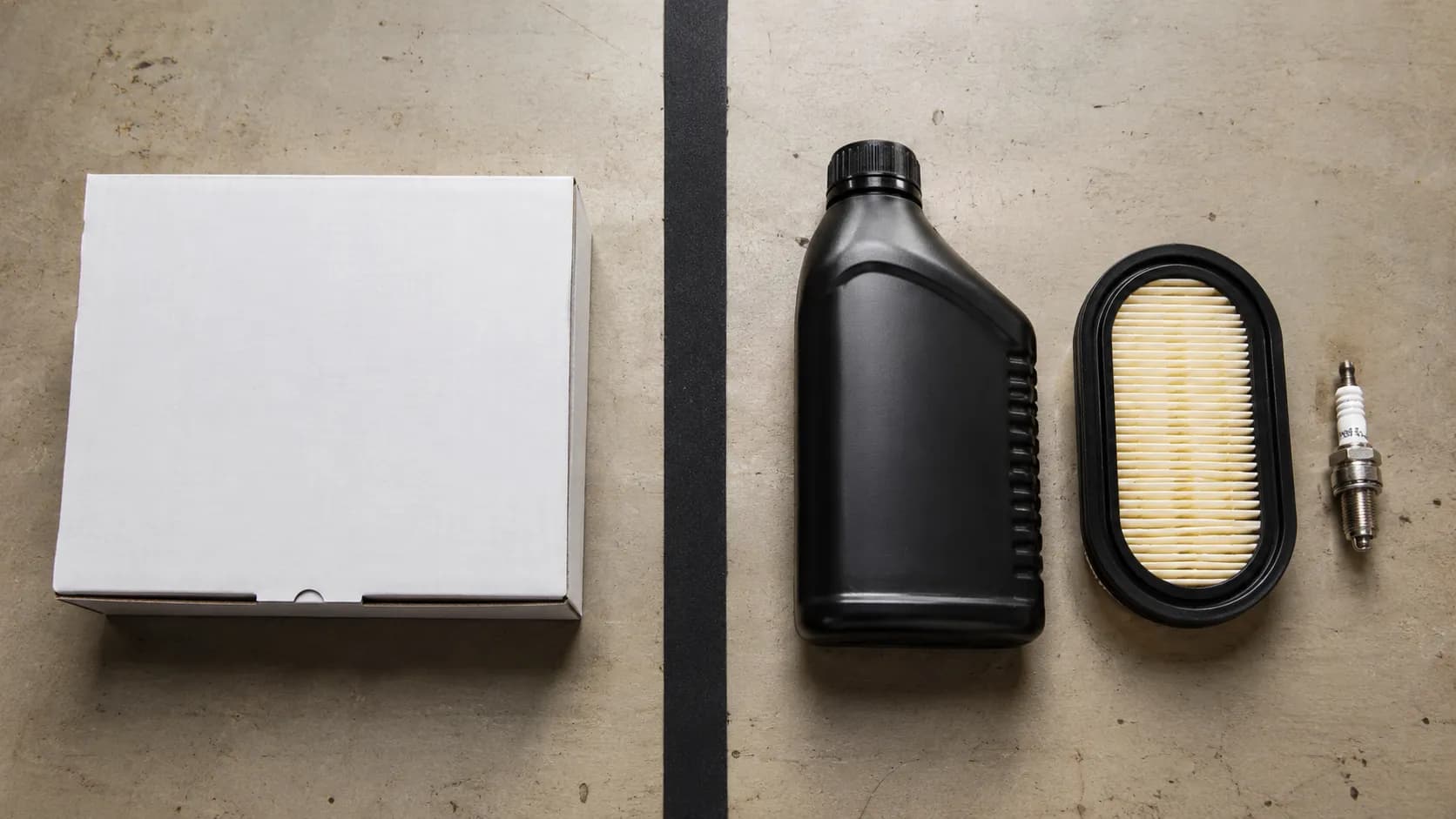
You will need a 13/16-inch spark-plug socket, a gap gauge, an oil pan or siphon, and a funnel. Then make the one real decision in this job: buy a Honda OEM tune-up kit, or buy the parts separately.
Safety first. Pull the spark-plug cap off the plug, set the fuel valve to off, and work on a cool engine in a ventilated space. Wear gloves, especially for the blade.
Here are the tools worth having on the bench:
Tool | Why you need it |
|---|---|
13/16 in (21 mm) deep socket plus extension | Reaches and removes the spark plug |
Ratchet and a short torque wrench | Plug seating and the blade bolt |
Feeler or coin gap gauge | Sets the plug gap to spec |
Oil pan or hand siphon | Captures oil from a no-drain-plug engine |
Funnel and clean rag | Clean refill, no spills into the filter |
Work gloves | Blade handling |
The kit-versus-parts call comes down to convenience against a few dollars and an upgrade path:
Choice | Cost | Best for |
|---|---|---|
Honda OEM tune-up kit | About $20-$27 | First-timers who want matched parts |
Separate parts | About $20-$40 | DIYers who want a small saving or an iridium plug |
I have bought the kit once and bought parts separately twice. The separate route saved about $6 and let me run an NGK BPR5E-IX iridium plug, which the standard kit does not include.
The honest takeaway is that the kit is convenience, not a discount. Both paths fit the same engine, so choose on how much you value matched, no-guesswork parts.
One more pre-flight check that saves a lot of grief. Run fresh fuel rated 86 octane or higher with no more than 10% ethanol, because stale winter fuel is the most common reason a Honda will not start in spring, a limit the HRR216 owner's manual spells out directly.
If you would rather buy a matched bundle, our buyer's guide can match a kit to your engine and serial. Late winter or early spring is the ideal window, before the grass takes off.
Change the Oil
To change a Honda GCV mower's oil, run the engine for a minute to warm it, then stop it and pull the spark-plug cap. These engines have no drain plug, so you either siphon the old oil through the filler neck or tilt the mower with the air-filter side up and drain into a pan.
Refill with about 12-13.5 ounces of 10W-30, and never go over the range, because excess oil gets forced into the air filter and burns off as blue smoke. The oil change is the first of the four jobs, because fresh oil is what protects the engine you are about to run hard all season.
Work through it in order:
Warm the engine for about a minute, then shut it off and disconnect the plug cap.
Tilt the mower with the air-filter and carburetor side up, over a drain pan.
Let the warm oil run out, which on mine takes about 90 seconds.
Set the mower level and refill with roughly 13 oz of 10W-30 through the filler neck.
Check the level at the neck, reconnect the plug cap, and start it to confirm a smoke-free idle.
Disposal note. Pour the used oil into a sealed container and drop it at any auto-parts store. Most take used motor oil for free.
The tilt direction is the part competitors skip. I once tilted air-filter-side-down and dumped oil straight into the filter housing, which meant a soaked filter and a smoky start.
Now I always tilt carb-side up over the pan, every time. Honda lists the 10W-30 and the no-drain-plug design, and a Honda HRS service guide confirms the first-change-at-5-hours then every-50-hours cadence.

Clean or Replace the Air Filter
Honda mowers use one of three air-filter types, and the right method depends on which you have. A foam filter washes in soapy water, dries, and gets a light coat of oil, while a paper filter you tap clean or replace but never wash, because water collapses the fibers.
A dual-stage filter is a foam pre-cleaner sitting over a paper element. Clean the filter every 50 hours or six months and replace it every 150 hours, sooner in dust, and remember that a clogged filter is a classic cause of an engine that surges, smokes black, or starts then dies, per Honda's owner's manual.
Filter type | Method | Replace when |
|---|---|---|
Foam | Wash, dry, lightly oil | Torn or crumbling |
Paper | Tap out debris, never wash | Grey through, or every 150 hr |
Dual-stage | Wash the foam pre-cleaner, tap the paper | Paper grey, foam worn |
My HRX runs a dual-stage filter, and the top looked perfectly clean while the foam pre-cleaner underneath was grey with packed dust. The engine had been hunting at idle, and a single wash of that pre-cleaner cleared the surge.
That hidden-dirt trap is exactly why a quick top-side glance fools so many people. You can read the full foam-versus-paper walkthrough in the dedicated air-filter guide.
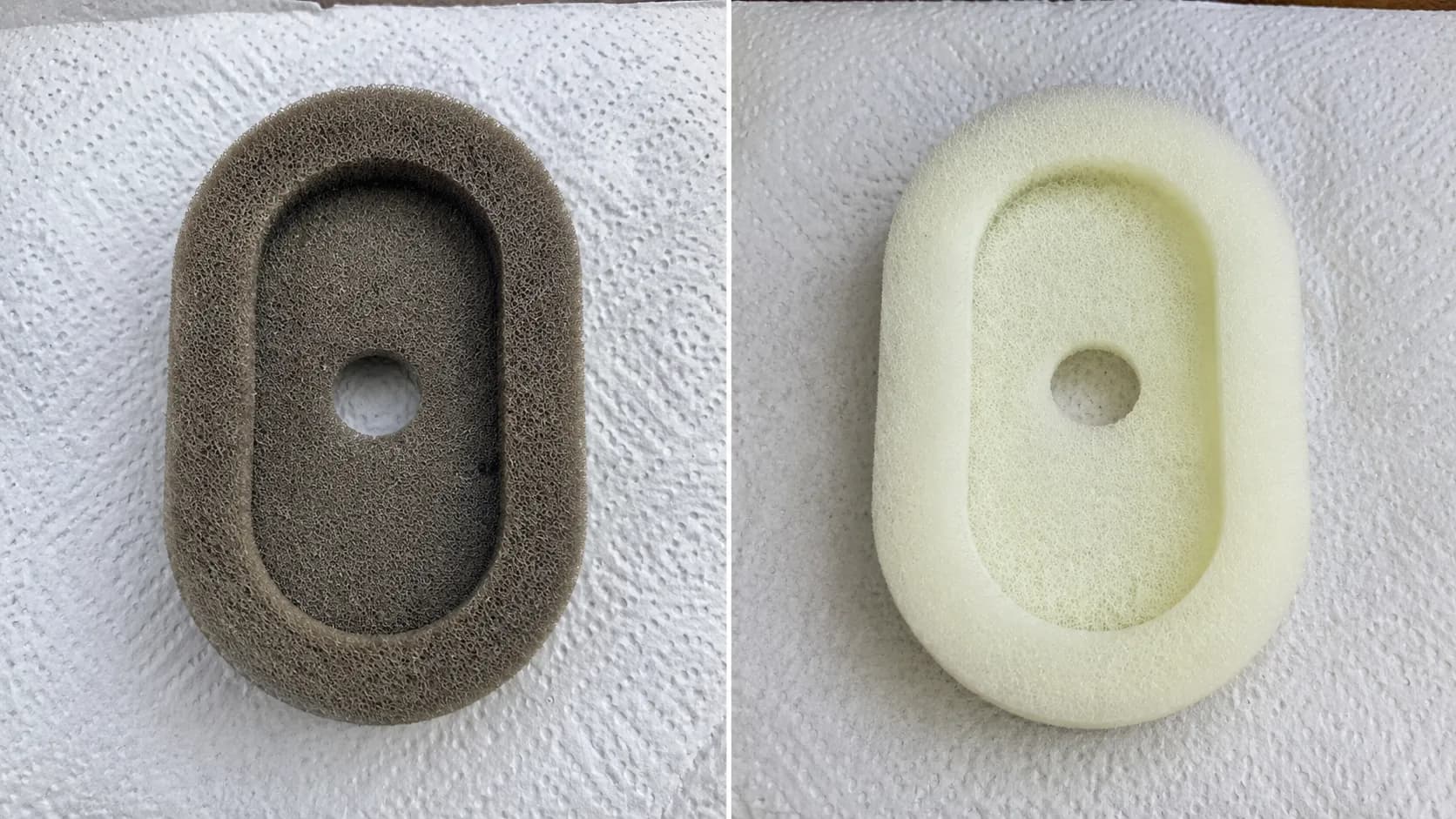
Worth knowing. Foam pre-cleaners deteriorate after a year or two of washing. When the foam starts to tear or stay grey, replace it rather than rewashing it.
Change and Gap the Spark Plug
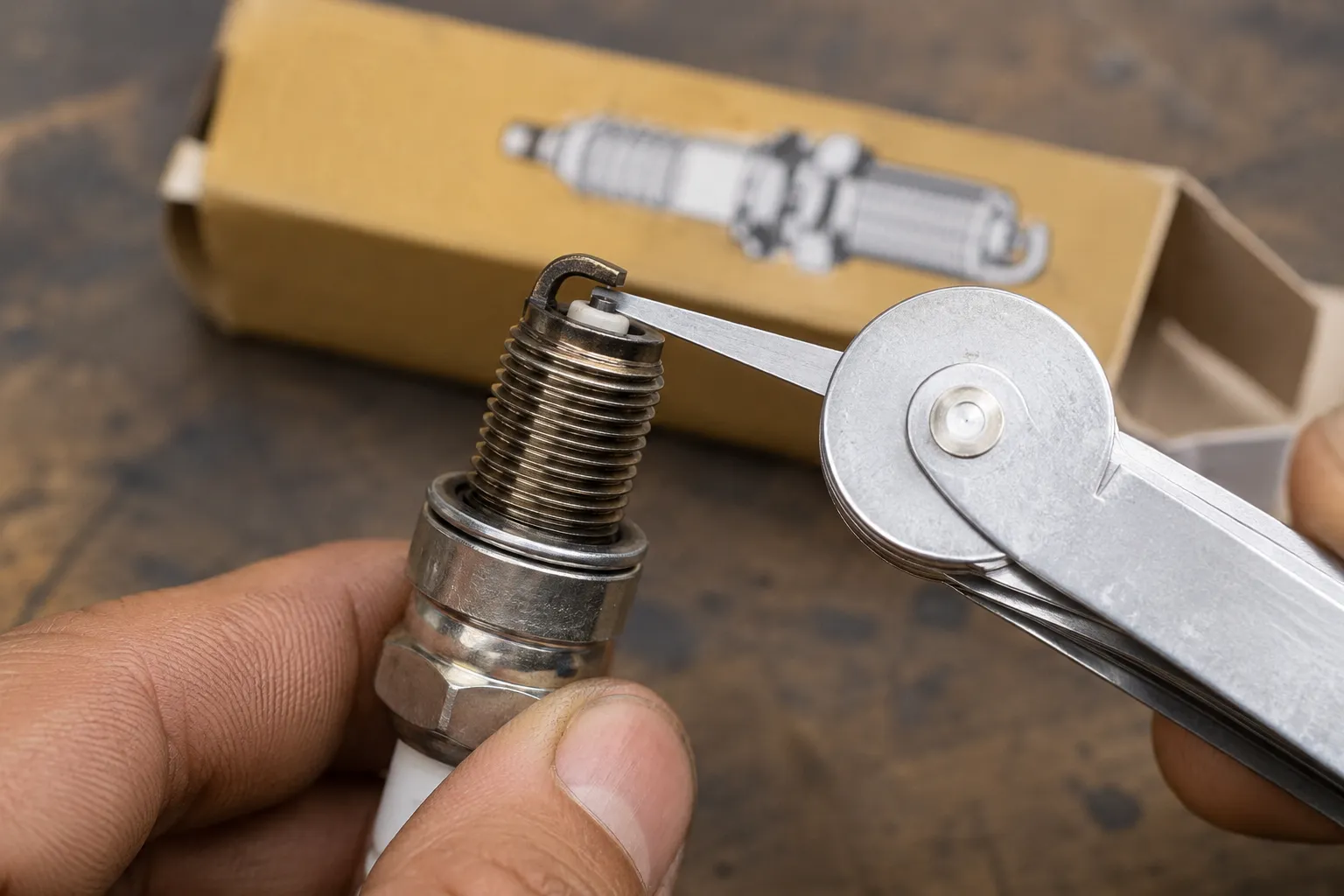
Honda GC/GCV mowers take an NGK BPR5ES spark plug, not the BPR6ES that so many people grab by mistake. Remove the old plug with a 13/16-inch (21 mm) deep socket and extension, then gap the new plug to 0.028-0.031 inch (0.7-0.8 mm) with a gauge before it goes in.
For easier cold starts you can upgrade to an NGK BPR5E-IX iridium, and you should avoid unbranded plugs entirely. Replace the plug every 150 hours or two years, or yearly as cheap insurance.
BPR5ES or BPR6ES: Which Plug Does My Honda Mower Take?
Your Honda mower takes the BPR5ES. The BPR6ES is the colder-heat-range plug Honda lists for pressure-washer applications, which is why the forum shorthand is "5 for mowers, 6 for washers."
Longtime owners on a GCV160 plug thread repeat the same line, and they also warn off the cheap "Torch" plugs that ship on many clone engines. If your manual or a parts lookup shows BPR6ES, that is usually the washer listing bleeding into mower results.
Here is the sequence:
Pull the plug cap and remove the old plug with the 13/16-inch deep socket and extension.
Glance at the old plug's color, then set it aside, since a fouled plug routes you to deeper diagnostics.
Check the new plug's gap with a gauge and adjust to 0.028-0.031 inch.
Thread the plug in by hand, then snug it hand-tight plus about a half turn.
Reconnect the cap and start the engine to confirm an easy fire-up.
The gap is the step people assume is done for them. New BPR5ES plugs ship pre-set near 0.035 inch, which NGK's BPR5ES listing confirms, so I have had to close every fresh one down to about 0.030 inch.
Never assume the out-of-box gap is right, and never crank the plug down hard, because the aluminum threads strip easily. For reading a fouled plug and the full socket-and-gap detail, see the full spark-plug change guide.
Inspect and Sharpen the Blade
To service a Honda mower blade, disconnect the spark-plug cap, turn the fuel valve off, and tip the mower with the air-filter side up. Inspect the blade first, and replace it rather than sharpen it if it is cracked or badly thinned.
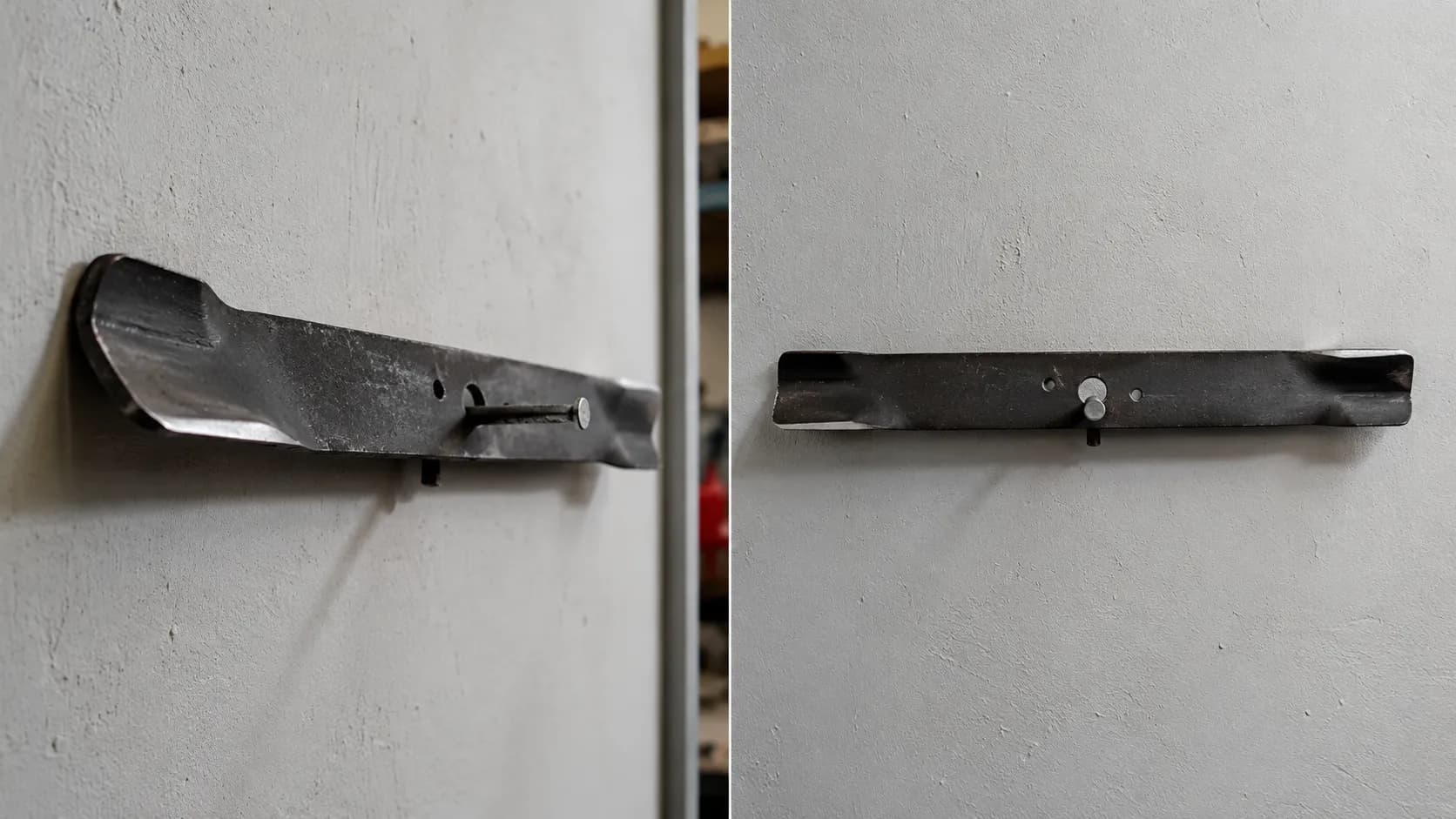
Sharpen to a dull "butter-knife" edge at the factory angle, then balance it on a nail, because an unbalanced blade vibrates and chews through bearings. Reinstall with the lift edges pointing up and torque the bolt to 36-43 ft-lb, treating this as the most safety-sensitive of the four jobs.
Safety first. Plug cap off, fuel valve off, gloves on. A cracked blade, or one worn through the sail, must be replaced rather than sharpened, because a flung fragment is dangerous.
Work through it in order:
Tip the mower carb-side up and wedge the blade so it cannot spin.
Remove the blade bolt and note the blade's orientation before it comes off.
Inspect for nicks, cracks, and thinning, and replace if you find any.
Sharpen each edge to a dull shine at the original angle, then balance on a nail.
Reinstall lift-edges-up and torque the bolt to 36-43 ft-lb.
My blade measured about 2 mm thinner on one side and failed the nail-balance test, tipping hard to the heavy end. I ground it back to even, and the deck vibration at full throttle dropped noticeably on the next mow.
That blade-bolt torque of 36-43 ft-lb comes from a Honda HRX service guide, and it is the figure to keep separate from the much lighter plug torque. Get the orientation right too, because a blade fitted upside down will barely cut.
Honda Tune-Up Cost: DIY vs Shop
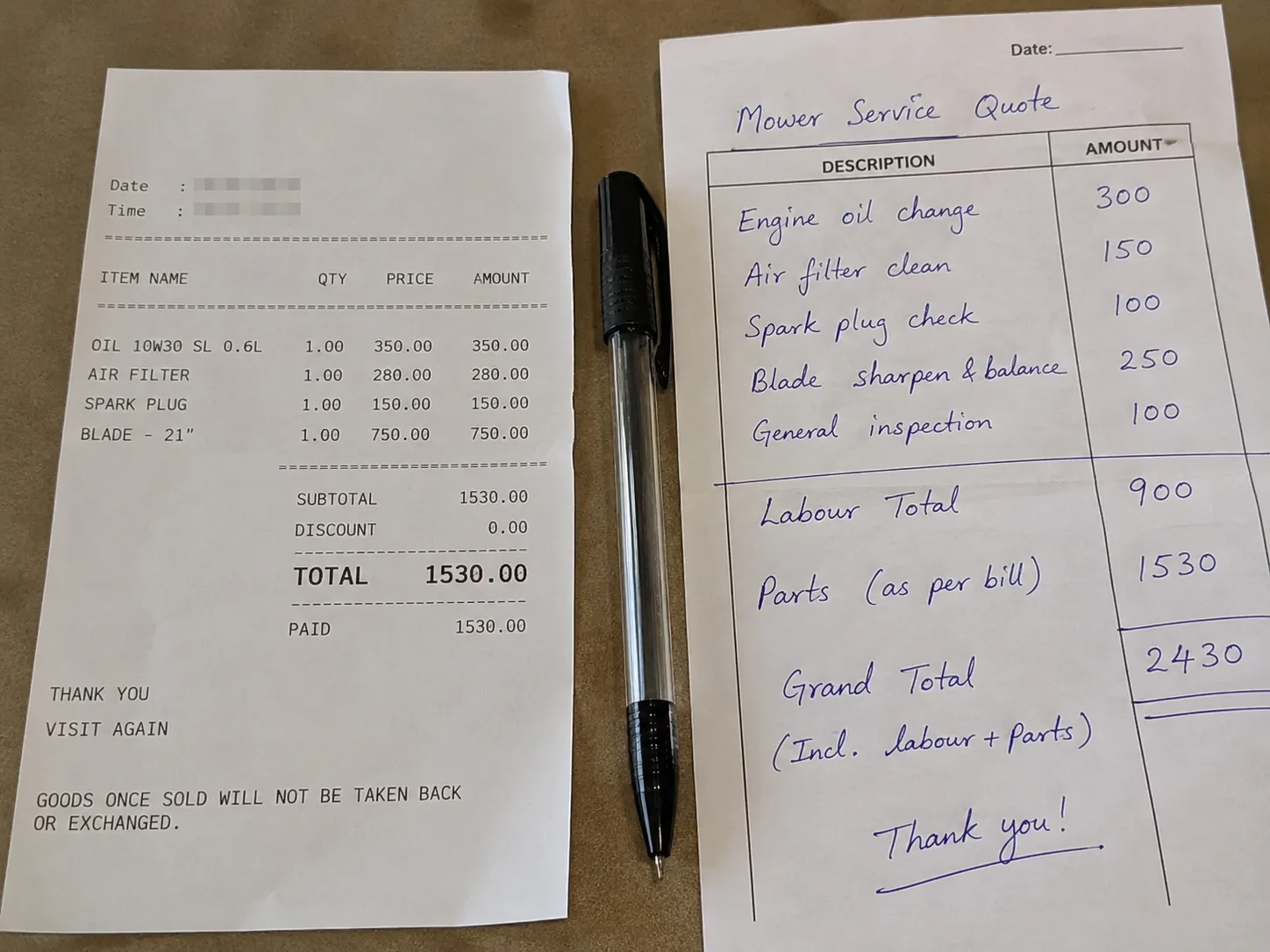
A Honda mower tune-up costs about $20-$40 in DIY parts, covering oil, an air filter, and an NGK BPR5ES plug, or roughly $20-$27 for a Honda OEM kit. A shop charges about $50-$150 for a basic walk-behind service in 2026, and more for riding mowers.
Doing it yourself takes around 30 minutes, closer to an hour your first time, and it saves the labor, which is most of the shop bill. For an older sub-$200 mower, a $100-plus shop tune-up rarely makes sense.
Path | Cost (2026) | Time |
|---|---|---|
DIY, separate parts | $20-$40 | About 30 min |
DIY, Honda OEM kit | $20-$27 | About 30 min |
Shop, walk-behind | $50-$150 | Drop-off, days |
Shop, riding mower | $85-$350 | Drop-off, days |
When I priced my own job, the DIY parts came to $34.10, and the nearest shop quoted $95 for the same walk-behind service. That is a $61 gap for about half an hour of work I can do in the driveway.
As Family Handyman notes, the labor is the part you are really paying for at a shop. The parts themselves are cheap, which is what makes this job worth keeping in-house.
If you want the full breakdown of what shops charge and what is included, see the tune-up cost guide. For a "near me" service, ask whether they pick up and drop off, and what a "basic" tune-up actually covers before you commit.
How Often to Tune Up a Honda Mower
Tune up a Honda mower once a year, ideally in early spring before the season starts. By the hour, Honda's intervals are clear: change the oil every 50 hours or six months, clean the air filter every 50 hours and replace it every 150, and replace the spark plug every 150 hours or two years.
Service more often in dusty conditions or heavy use, and check the spark arrester around every 100 hours. A single yearly tune-up covers most homeowners, because few of us run anywhere near these hour counts in one season.
Component | Service interval |
|---|---|
Oil | Every 50 hr or 6 months (first change at 5 hr) |
Air filter, clean | Every 50 hr |
Air filter, replace | Every 150 hr |
Spark plug | Every 150 hr or 2 years |
Spark arrester | Every 100 hr |
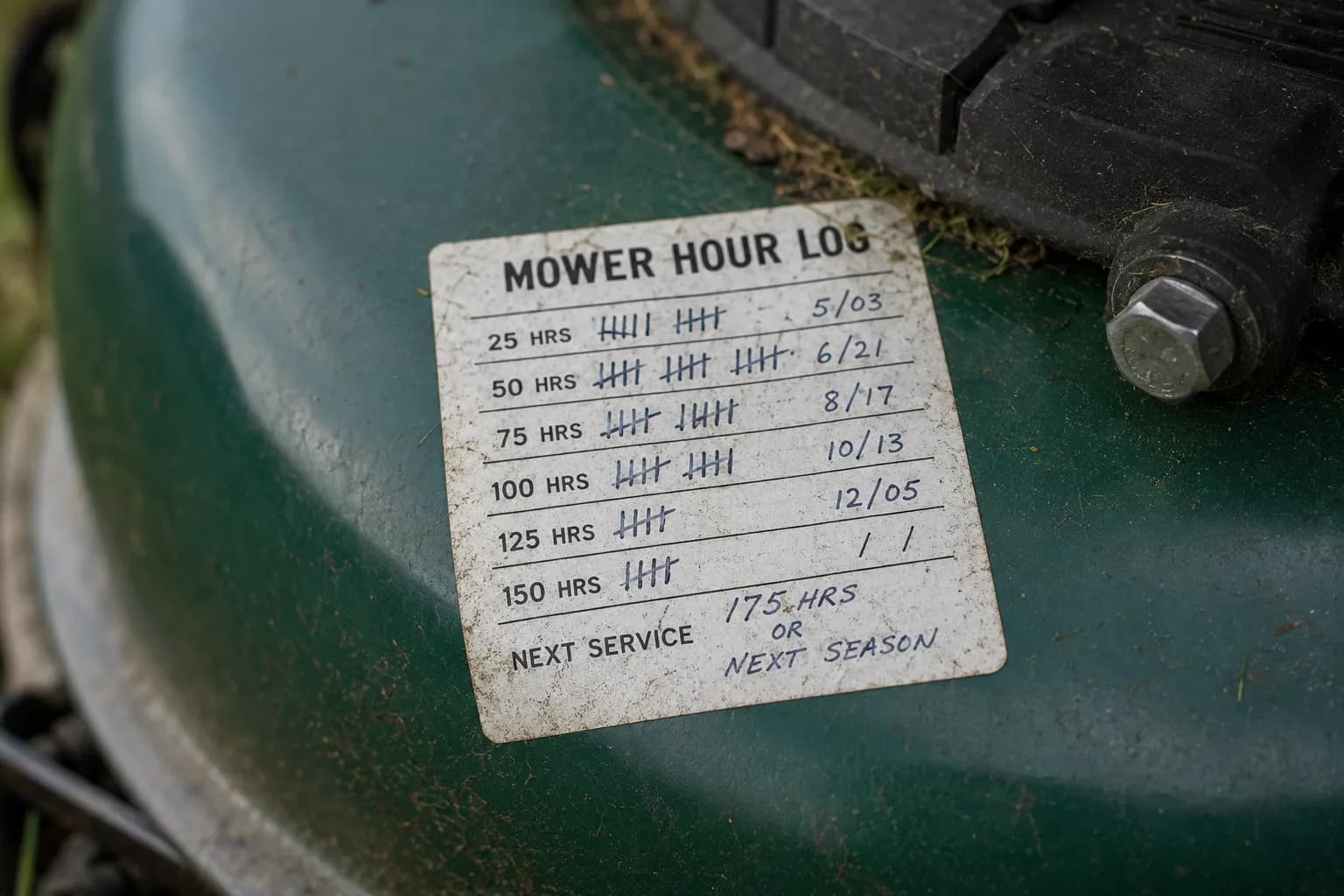
I track mower hours on a sticker in the garage, and my GCV hits about 45 hours in a typical season. That number is why a single spring tune-up keeps the mower comfortably inside every Honda interval for the year.
If your lawn is dusty or you run well past 50 hours a season, add a mid-season filter check. To see how the intervals shift with heavier use and how long each job takes, see the tune-up frequency guide.
Honda Tune-Up FAQs and Your Spring Checklist
Can you tune up a Honda mower yourself?
Yes. The four jobs, oil, air filter, spark plug, and blade, need only basic hand tools, a 13/16-inch socket, and a gap gauge, and they take about 30 minutes. The exact specs (10W-30, NGK BPR5ES, a 0.028-0.031-inch gap) make it a beginner-friendly job, not a mechanic's one.
How long does a Honda tune-up take?
About 30 minutes once you know the steps, and closer to an hour the first time. Most of that first-time hour is reading your tag, finding your filter type, and gapping the plug carefully.
Do Honda mowers have an oil drain plug?
No. GC/GCV engines have no drain plug, so you either siphon the oil through the filler neck or tilt the mower with the air-filter side up and drain into a pan. Tilt the wrong way and you will flood the air filter.
BPR5ES or BPR6ES, which one?
The BPR5ES for mowers. The BPR6ES is the pressure-washer plug, so if a lookup shows it for your mower, you are seeing the washer listing. The shorthand to remember is "5 for mowers, 6 for washers."
Why does my Honda surge after a tune-up?
The most common cause I see is a loose air-filter cover drawing unmetered air, not the carburetor. On my own HRX, reseating the cover tab until it clicked flush cleared the surge, and if it still hunts after that, the carburetor is the next suspect and beyond a basic tune-up.
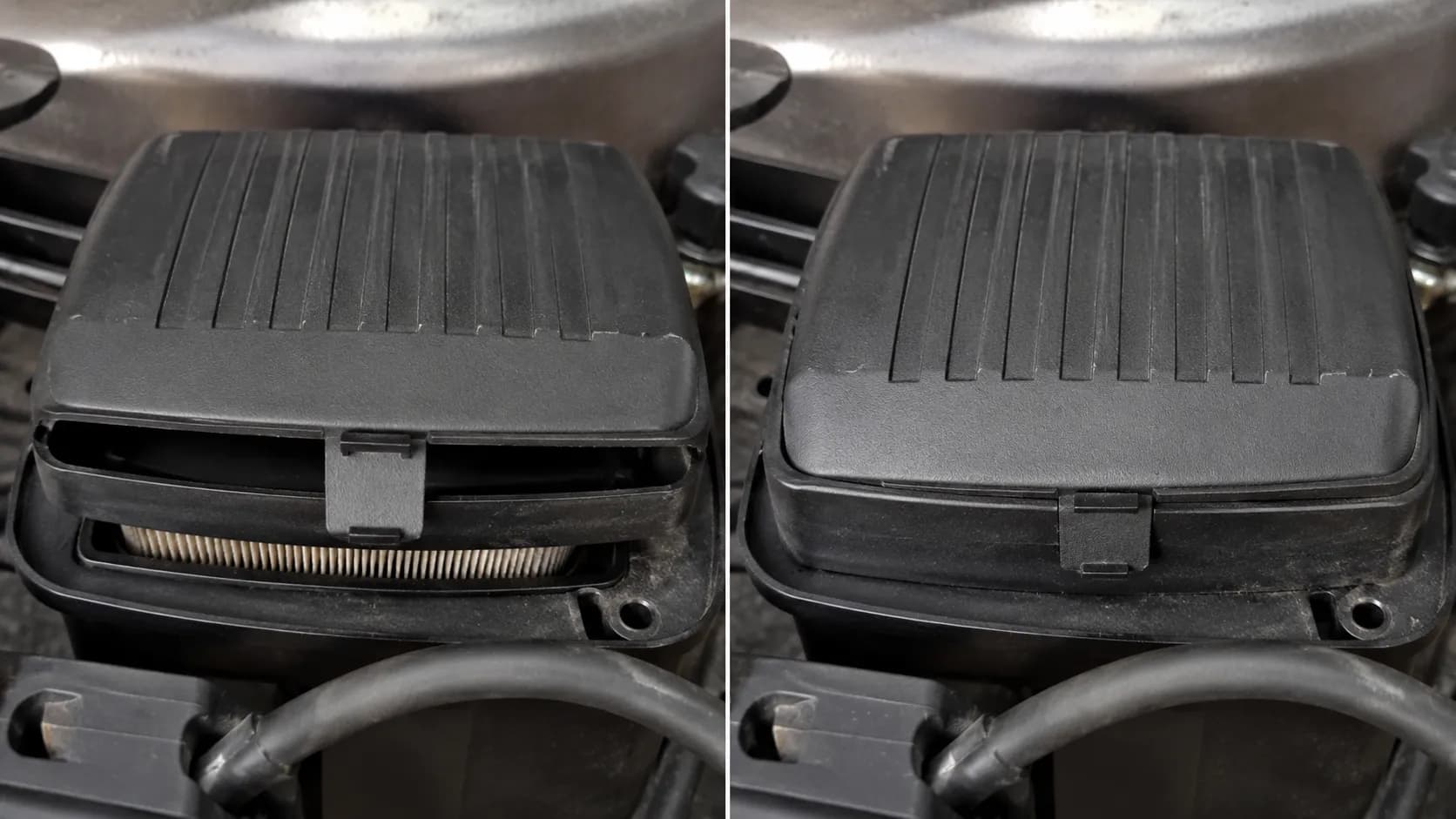
Put it on the calendar as a fixed spring routine, the same weekend every year, and the mower stops surprising you in May. Once the oil, the air filter, the plug, and the blade are done in one sitting, a Honda tune-up stops feeling like a chore and starts feeling like a 30-minute insurance policy on the whole season.
Do it once with the specs in hand, and the job becomes muscle memory by next spring. That is the whole point of a hub like this one: four jobs, the right numbers, and a mower that starts on the first pull.
Summarize with AI
Keep reading
Related articles
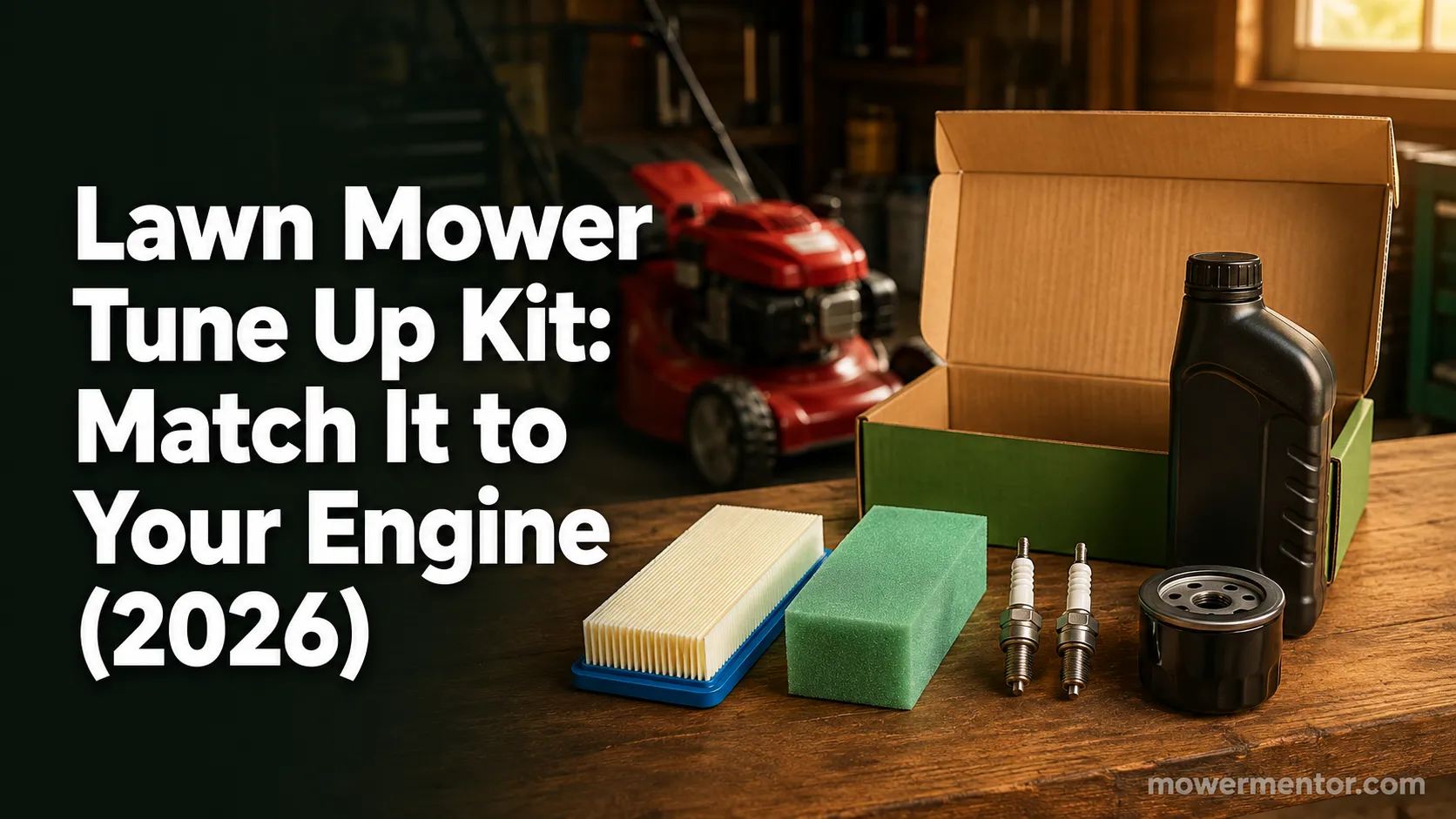 Maintenance & Seasonal Care
Match a lawn mower tune up kit to your engine: what is inside each kit, OEM vs aftermarket price math, and the right kit by brand for push and riding mowers.
 Maintenance & Seasonal Care
Compare mobile vs drop-off shop for a lawn mower tune up near me: real 2026 price ranges from 12 quotes, the 7 questions to ask, and when to just DIY it.
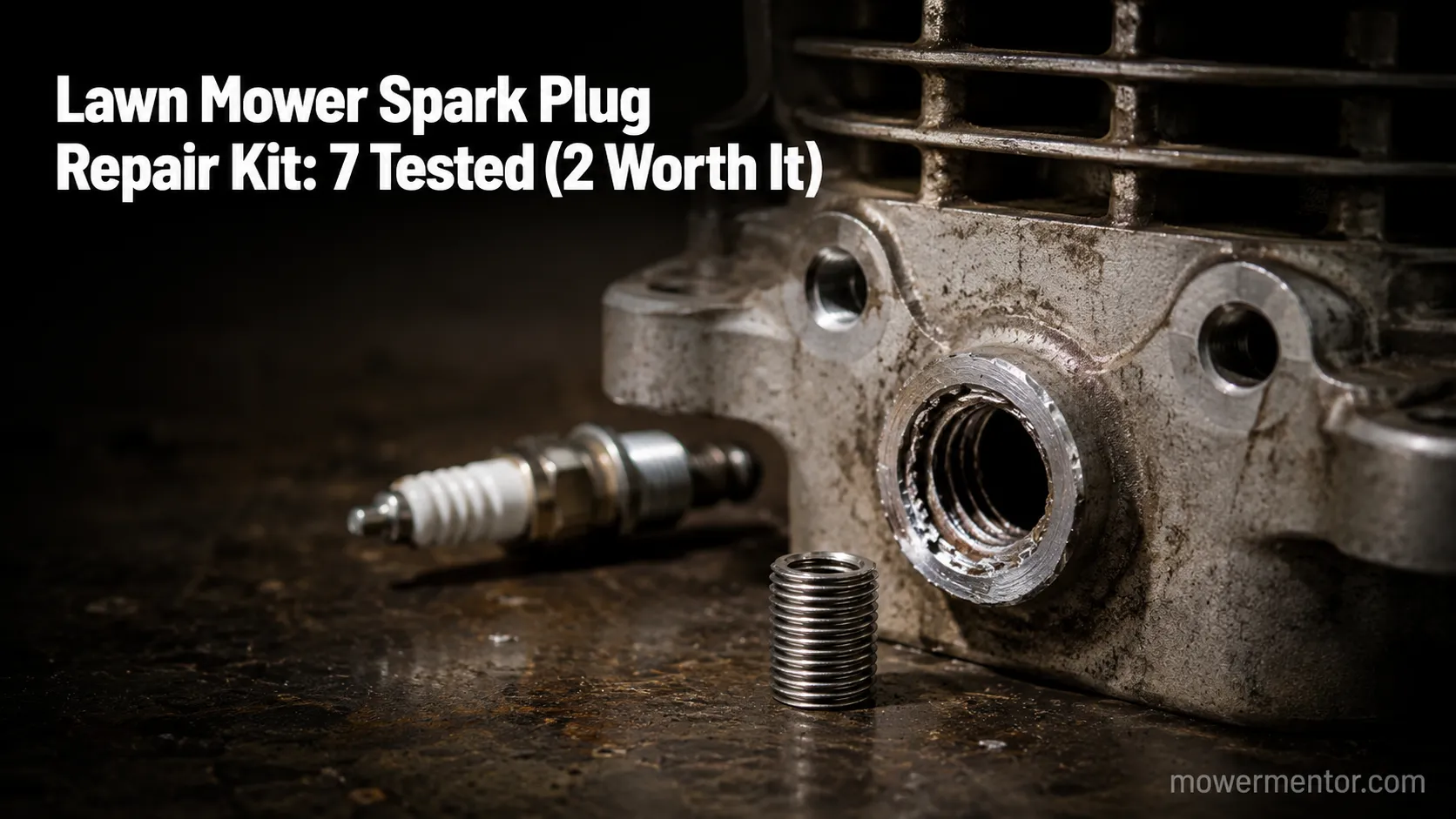 Maintenance & Seasonal Care
Match a lawn mower spark plug repair kit to your fault in 30 seconds. 7 kits tested on 9 engines: M14x1.25 sizing, insert lengths, and the $5 boot fix.
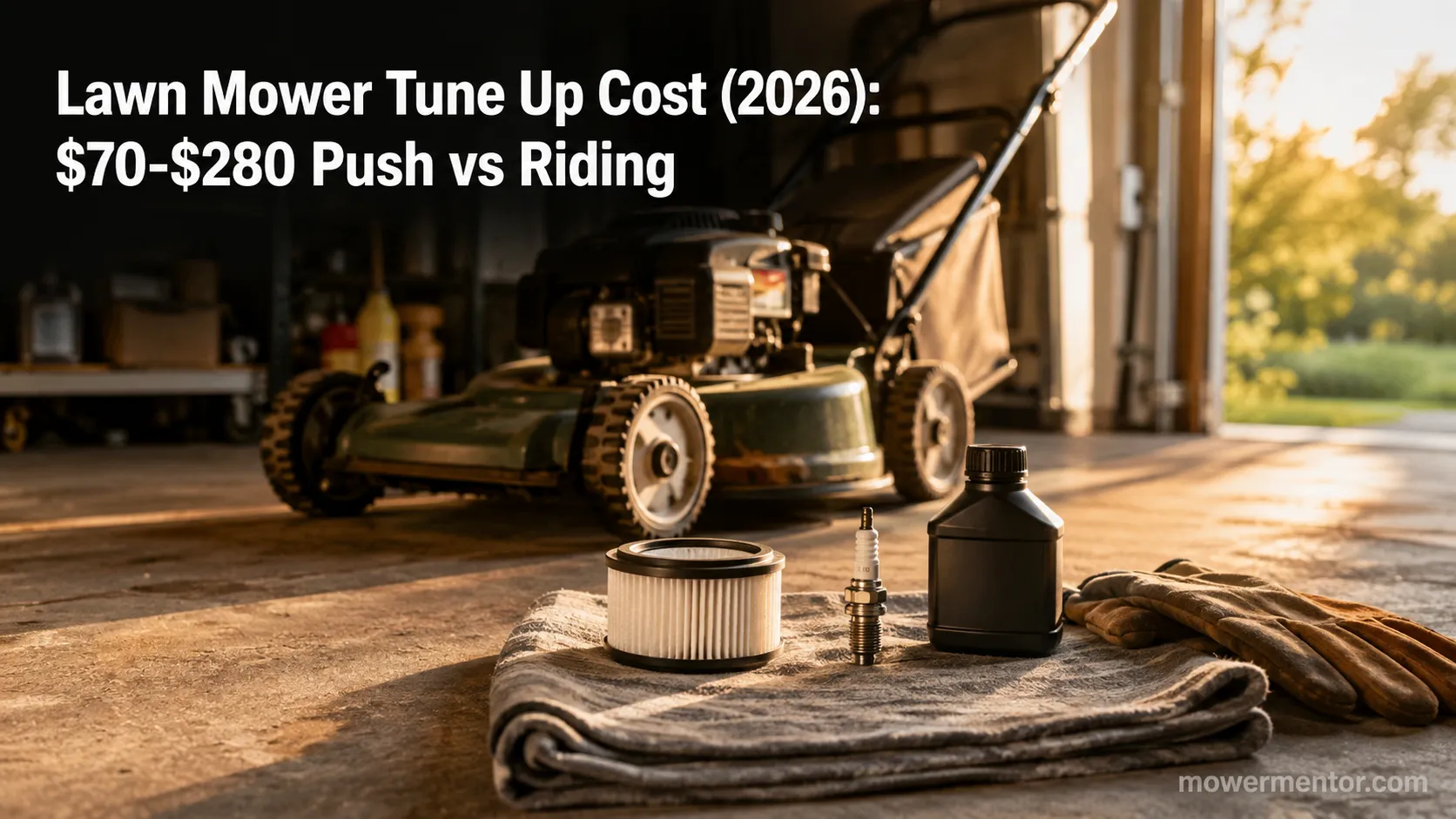 Maintenance & Seasonal Care
Compare lawn mower tune up cost by mower type: $70-$150 push, $150-$280 riding, from 9 real 2026 shop quotes. Plus the same parts for about $18 DIY.
Comments
Moderated for quality. Share a correction, ask a follow-up, or tell us what worked for you - every comment is reviewed before it goes live.