
How to Change a Honda Lawn Mower Spark Plug in 6 Steps
Change your Honda lawn mower spark plug in 6 steps: 13/16″ socket, .028–.031″ gap, 14 ft-lb torque, plus how to read a fouled plug. HRR, HRX & GCV.
Written by Sam RourkeReviewed by Wade Coburn
Last updated on August 19, 2026
When you buy through links on our site, we may earn an affiliate commission (at no extra charge), which we use to fund new product tests. Learn more.
Summarize with AI
Most guides make changing a Honda mower plug sound like a single move: pull the wire, swap the plug, done. That skips the three numbers that actually decide whether the job holds, and it ignores the most useful thing in your hand, the old plug you just pulled. Learning how to change the spark plug on a Honda lawn mower really comes down to a 13/16 inch socket, a 0.028 to 0.031 inch gap, and 14 ft-lb of torque, plus knowing how to read the plug that comes out. Get those right and you have turned a $75 shop visit into a five-minute job that costs the price of a plug.
The Quick Answer: Plug, Socket, Gap and Torque
To change the spark plug on a Honda lawn mower with a GCV160, GCV170, or GCV190 engine, you need four things: an NGK BPR5ES plug, a 13/16 inch (21 mm) socket, a gap of 0.028 to 0.031 inch, and a final torque of 14 ft-lb. Pressure washers are the one exception; they take the slightly cooler BPR6ES. Always disconnect the spark plug lead before you touch anything.
The whole job in one box. Plug: NGK BPR5ES (standard) or BPR6ES for pressure washers. Socket: 13/16 inch (21 mm) deep socket plus a short extension. Gap: 0.028 to 0.031 inch (0.7 to 0.8 mm), check it even if the plug says pre-gapped. Torque: 14 ft-lb, or finger-tight then about half a turn more.
Those gap and torque figures come straight from Honda's engine specifications for the GC and GCV family. Your exact model may differ, so check the engine plate before you buy.
Where the Spark Plug Is (and the Tools You Need)
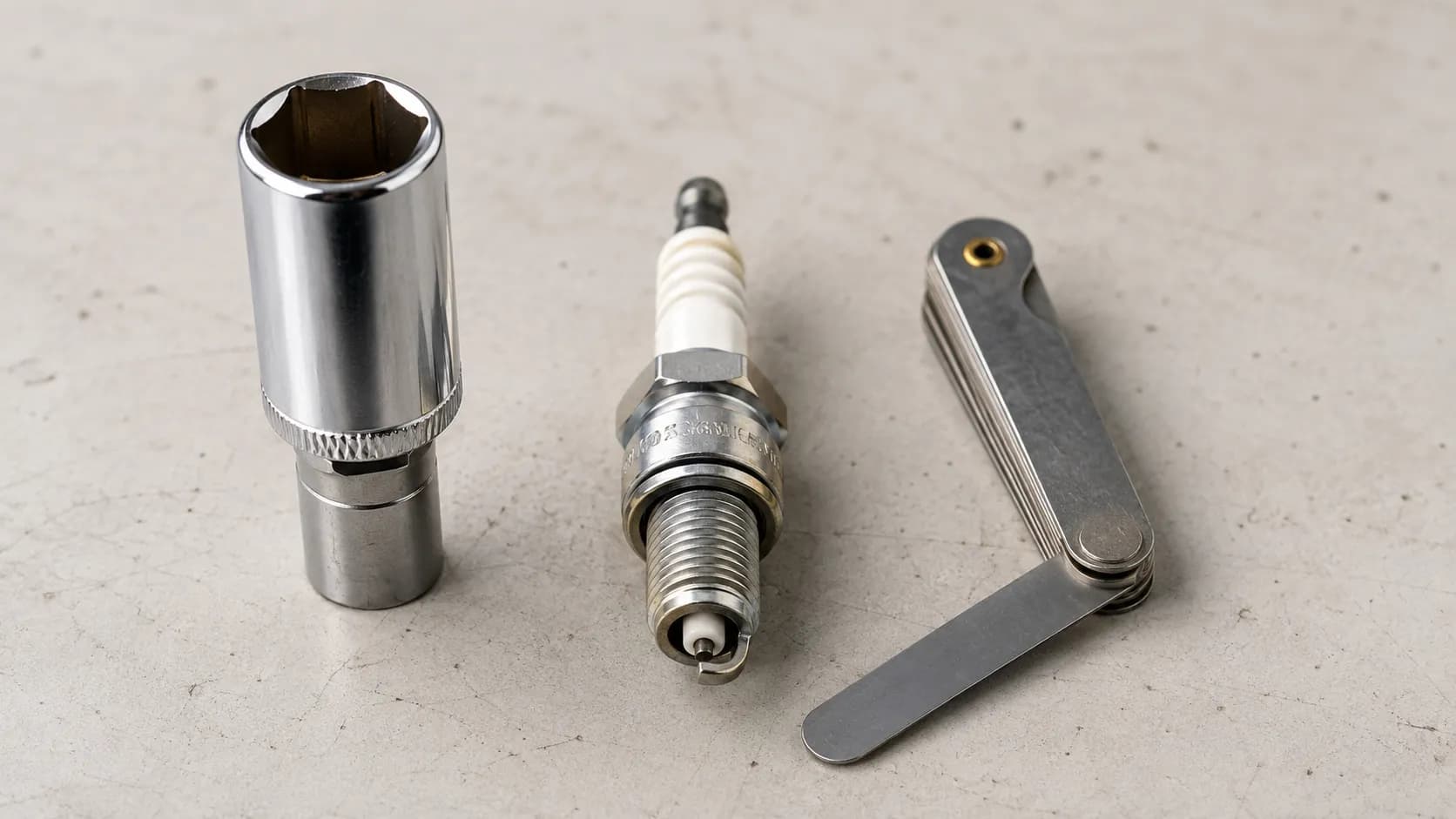
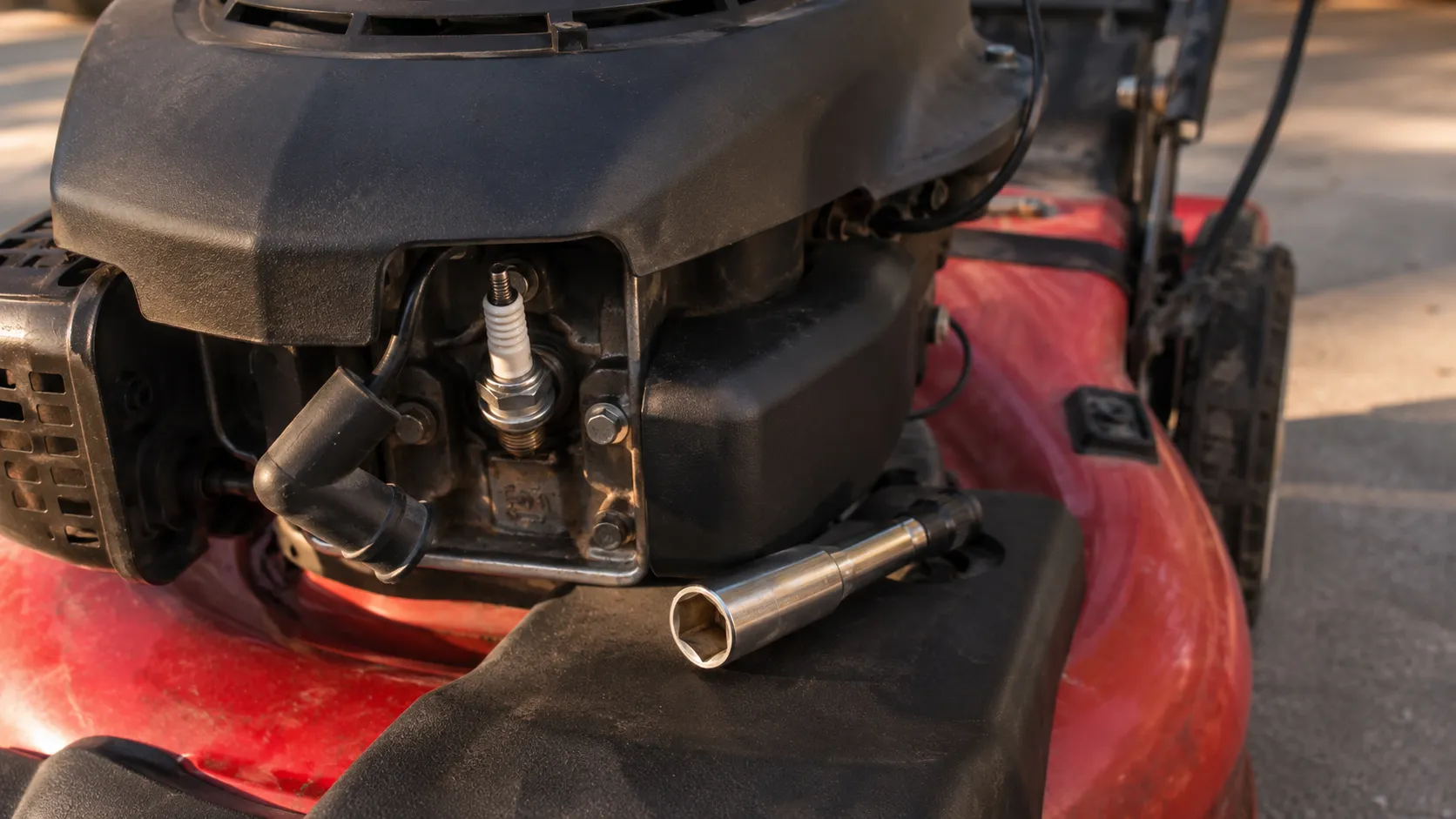
The spark plug on a Honda lawn mower sits at the front of the engine, under a single rubber boot on the ignition lead, usually just left of center on a GCV deck. You reach it with a 13/16 inch spark plug socket and a short extension, because the plug sits slightly recessed. According to Jack's Small Engines, Honda specifies the NGK BPR5ES for HRX and HRR mowers, and the boot usually pulls off by hand.
Here is the catch that trips people up. A worn old plug can back out on a 5/8 inch socket, while the new BPR5ES needs the 13/16 inch. Owners on the small-engine forums put it bluntly: the old plug took a 5/8, the new one needs the 13/16, so have both sizes on hand.
On heat range, the shorthand from the forums is "5 for mowers, 6 for washers." The BPR5ES runs one step hotter than the BPR6ES, which is why a mower gets the 5 and a pressure washer gets the 6. If you want the reasoning behind which Honda plug and gap your machine needs, the plug picker covers the heat-range choice in full.
One more caution for the aftermarket crowd. On the cheaper Honda-clone engines people call "Chonda," and on anything wearing a factory "Torch" plug, confirm you are actually installing a genuine NGK before you blame the plug for a rough run.
Tool | Size or spec | Why you need it |
|---|---|---|
Spark plug socket | 13/16 inch (21 mm), deep | Fits the new BPR5ES; old plug may want a 5/8 |
Ratchet plus short extension | 1/4 or 3/8 inch drive | The plug sits recessed and slightly off-center |
Feeler or coin gap gauge | Reads 0.028 to 0.031 inch | Set and confirm the gap |
Torque wrench | Reads to 14 ft-lb | Optional but the surest way to avoid stripping |
Clean rag | n/a | Wipe debris from the plug base first |
How to Change the Spark Plug on a Honda Lawn Mower (6 Steps)
Changing the spark plug on a Honda lawn mower takes about five minutes: disconnect the lead, clean around the plug, unscrew it, gap the new plug, hand-thread it, then torque to 14 ft-lb. Honda's specification is 20 N·m, which works out to roughly 14 ft-lb. If you do not own a torque wrench, NGK's installation guide says to seat the gasket finger-tight, then turn about half a turn more.
The whole procedure is the same on any brand once the plug is exposed, so if you are working on a different machine, the generic plug-change steps cover non-Honda decks too. On a Honda, follow these six in order.
Stop and disconnect. Shut the engine off, let it cool, then pull the spark plug lead off the plug. Keep your hands clear of the blade, because a plug that fires unexpectedly can turn it.
Clean the base. Wipe grass and grit from around the plug with a rag. You should see bare metal around the plug hex so nothing drops into the cylinder when the plug comes out.
Remove the plug. Fit the 13/16 inch socket and extension, then turn counterclockwise. If the socket feels loose on a worn plug, switch to a 5/8 inch; the plug should back out smoothly, not grind.
Inspect and gap. Look at the plug you pulled, then gap the new BPR5ES to 0.028 to 0.031 inch. A feeler gauge should drag lightly between the electrodes.
Hand-thread, then torque. Screw the new plug in by hand for several full turns first, which is what keeps you from cross-threading the soft aluminum head. Then torque to 14 ft-lb, or snug it and give it a half turn after the gasket seats.
Reconnect and test. Push the boot back on until it clicks, then start the engine. You should get a smooth idle on the first or second pull.
Two failure points are worth calling out. Never force the plug into the aluminum head, because a cross-threaded head is a repair, not a plug swap. And do not chase a torque number you cannot feel: an under-tight plug that you snug by hand beats a stripped thread every time.
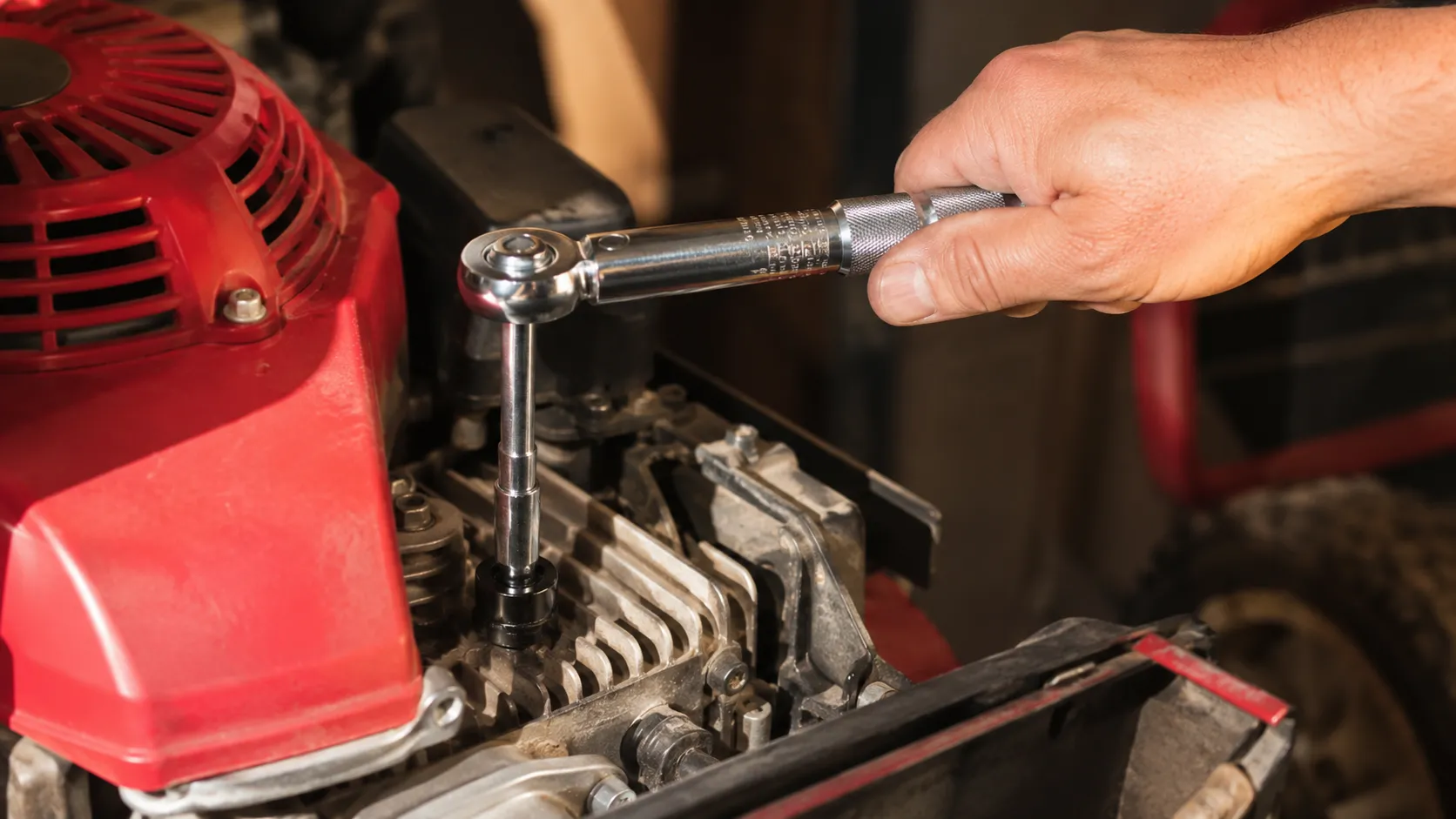
No torque wrench? Seat the plug finger-tight until the gasket touches the head, then turn it about half a turn more. That is the field method the forums call "half a turn after the gasket seats," and it lands close to 14 ft-lb on a new plug.
Setting the Gap: 0.028 to 0.031 Inch (and the Pre-Gapped Myth)
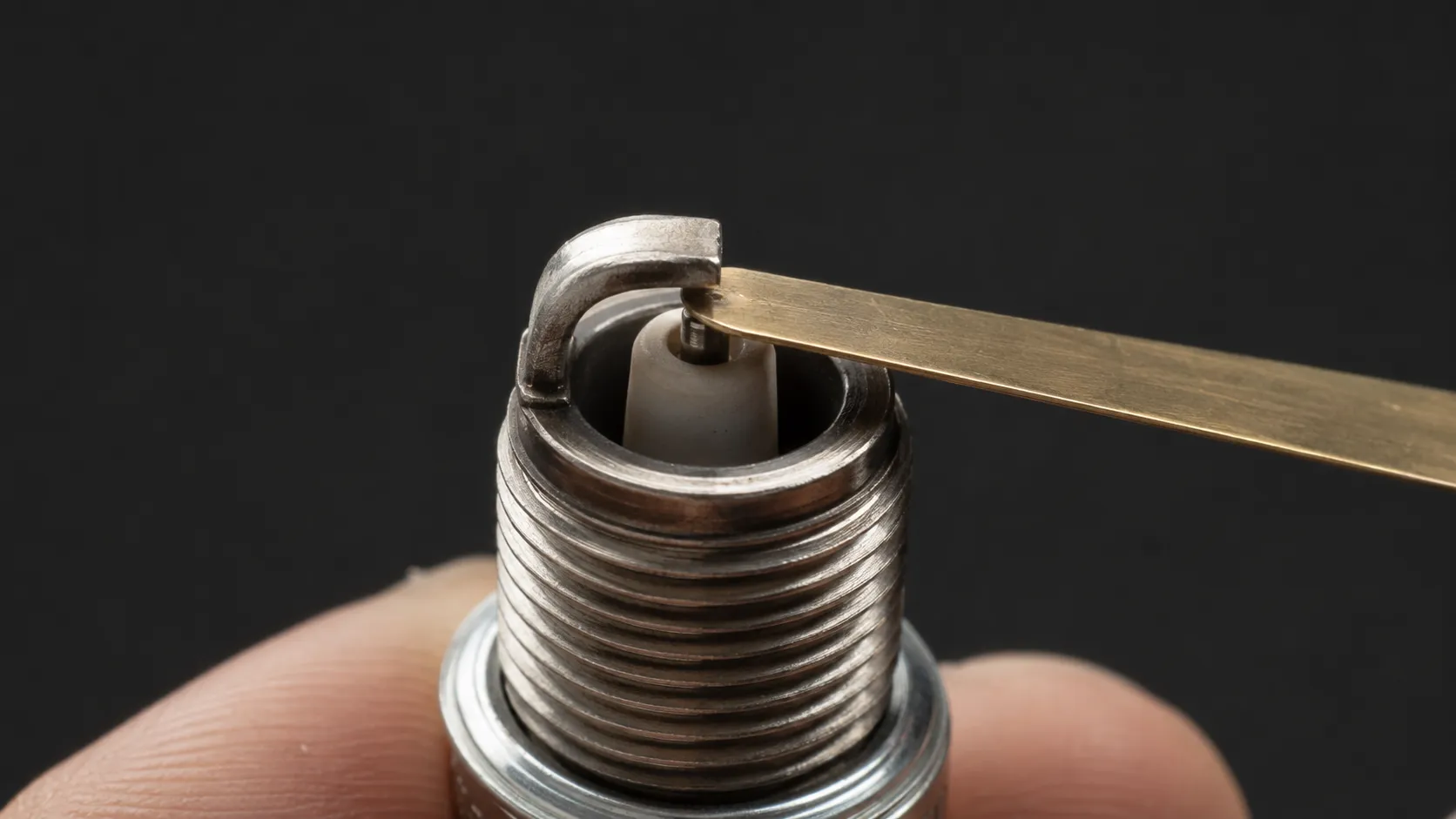
A Honda lawn mower spark plug is gapped to 0.028 to 0.031 inch (0.7 to 0.8 mm) in Honda's service specifications, and you should check that gap even on a plug sold as pre-gapped. NGK states plainly that factory pre-gapping is a misconception, and the gap has to be set for your specific engine. A gap that drifts too wide or too narrow shows up as a misfire, a hard start, or a soft loss of power under load.
Checking it takes seconds. Slide a feeler or coin-style gauge between the center and side electrodes; the correct blade should pass with light drag, not fall through and not jam.
If it reads off, adjust gently, and only ever bend the side (ground) electrode. Prying against the center electrode cracks the insulator, which is one of the most common ways a brand-new plug gets ruined before it is even installed.
The pre-gapped label is exactly why I check every plug now. A new BPR5ES I pulled from the box last spring measured 0.034 inch, well outside spec, and the feeler gauge caught it before it went anywhere near the engine. If you are weighing an upgrade or a cross-brand option, this comparison of plug brands lays out the trade-offs.
Why Won't My Honda Mower Fire After a New Plug? Read and Test It
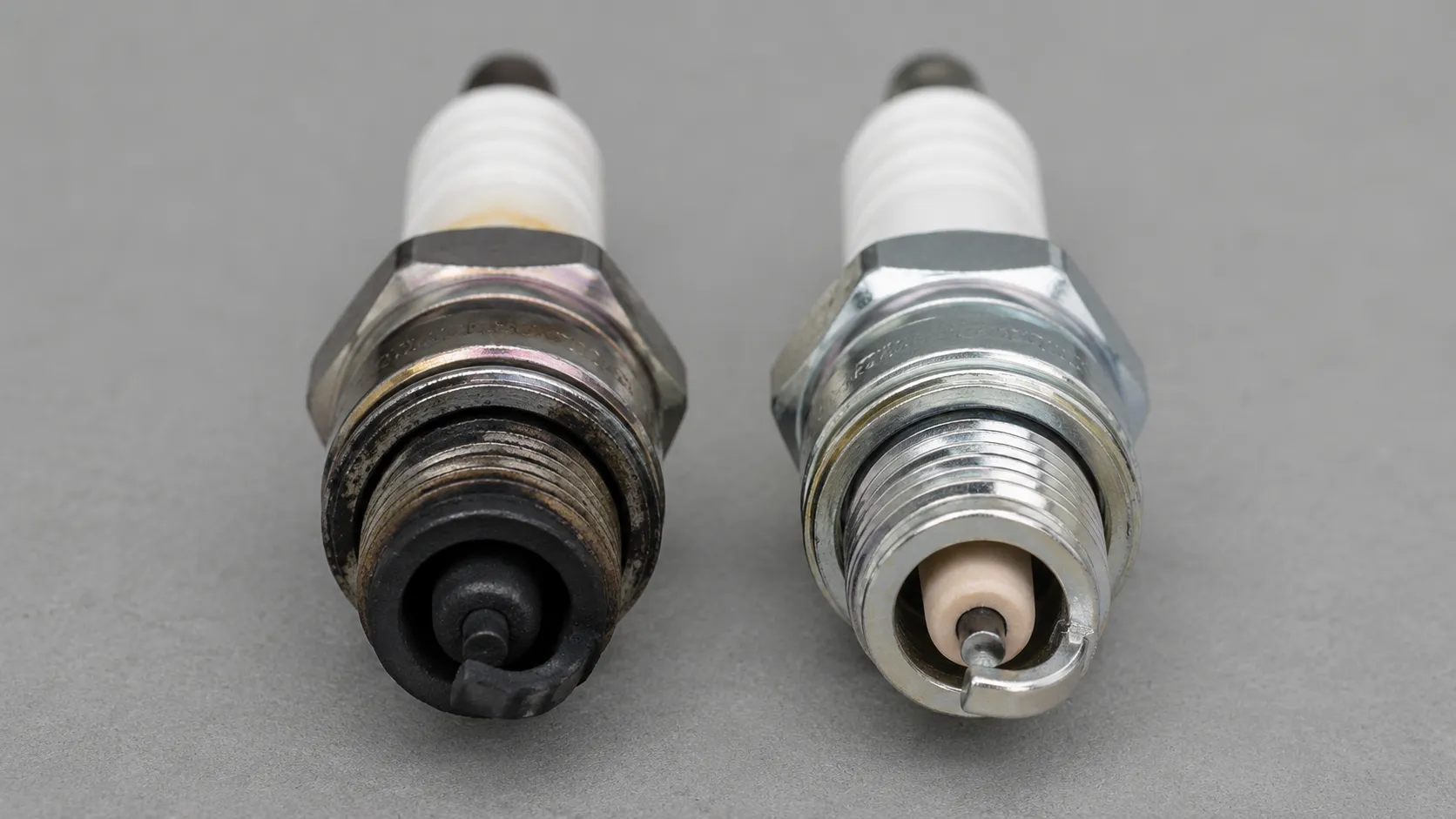
If your Honda lawn mower will not fire after a new plug, the plug is often innocent, and the color of the old one plus a two-minute spark test point to the real cause. A black, sooty plug means the engine is running rich, usually a clogged air filter or a carburetor issue; a wet, oily plug means it flooded or took on oil, often from a mower that got tipped the wrong way. A healthy plug reads light tan, a pattern the Honda Lawn Parts guide ties back to fuel mixture.
Start by asking the forum question every small-engine tech asks first: is the plug wet or dry? That one read splits a flooding problem from an ignition problem before you spend another dollar.
What the plug looks like | What it usually means | Where to look next |
|---|---|---|
Light tan or gray | Healthy, burning clean | Nothing; reinstall or replace on schedule |
Black and sooty (dry) | Running rich, "black smoke," fouling | Air filter, then carburetor |
Wet or oily | Flooded or oil carryover | Choke, fuel level, or a tipped mower |
White or blistered | Running lean or wrong heat range | Confirm you have the BPR5ES, check for air leaks |
To confirm spark directly, pull the plug, reconnect the boot, hold the plug's metal body against a bare metal part of the engine, and pull the starter cord. You are looking for a crisp blue spark across the gap. A weak yellow spark or none at all points at the plug, the lead, or a cracked boot rather than the fuel side.
Here is the honest part most how-tos skip. On a GCV engine, a fresh plug that still will not fire frequently traces to a sticky intake valve gummed with brown varnish, not to ignition at all. On our own GCV160, a new plug still popped back through the carburetor until we freed a varnished valve; the plug was never the problem. When the plug and spark both check out, the fouling is almost always upstream, and a full Honda tune-up walks the oil, filter, and carburetor in order.
A new plug cannot fix a carburetor. If a fresh, correctly gapped plug does not solve a no-start, stop buying plugs. The money belongs in the fuel system or a stuck valve, not a third spark plug.
How Often to Change It (and What It Costs)
Honda's owner's manual says to check a Honda lawn mower spark plug every season or 50 hours and replace it every two years or 150 hours, while many owners simply swap it each spring as cheap insurance. The Honda GCV maintenance schedule frames replacement in the same seasonal terms, and on a low-hours homeowner mower an annual change comfortably beats waiting to reach an hour count you may never track.
The cost math is what makes the choice easy. A genuine NGK BPR5ES runs only a few dollars, so a yearly swap is close to the cheapest starting-reliability insurance you can buy.
Option | What you pay | What you get |
|---|---|---|
DIY plug change | About $4 to $8 for the plug | Five minutes, no labor, and a look at the old plug |
Shop plug change or tune-up | Roughly $50 to $100 | The plug plus labor, often bundled into a broader service |
Since a mower's plug lives right at the front of its spring pre-season routine, that is the natural time to do it. I log our HRR216's plug swap every April, and a $6 plug has meant zero no-start weekends across three seasons.
The plug is only one line item in a full service, so if you are already in there, the complete DIY tune-up guide bundles oil, filter, and plug with total costs. Just keep the framing honest: 150 hours or two years is Honda's number, and an annual change is a choice, not a requirement.
Our dated April plug-change log across three seasons.
Date | Engine hours (approx.) | Plug installed | Result next start |
|---|---|---|---|
April 2024 | 42 | NGK BPR5ES | First-pull start |
April 2025 | 88 | NGK BPR5ES | First-pull start |
April 2026 | 131 | NGK BPR5ES | First-pull start |
Frequently Asked Questions
What spark plug does a Honda lawn mower take?
Most Honda walk-behind mowers with a GCV160, GCV170, or GCV190 engine take the NGK BPR5ES. The BPR6ES, one heat range cooler, is for pressure washer engines, which is the forum shorthand "5 for mowers, 6 for washers." Always confirm against your engine plate.
What size socket do I need for a Honda mower spark plug?
The new plug uses a 13/16 inch (21 mm) deep socket. A worn old plug sometimes backs out on a 5/8 inch socket, so it helps to have both sizes and a short extension, since the plug sits slightly recessed.
Do you need to gap a Honda mower spark plug?
Yes. Set it to 0.028 to 0.031 inch and check it with a feeler gauge even if the box says pre-gapped, because plugs shift in shipping. Bend only the side electrode when you adjust, never the center one.
How tight should a Honda mower spark plug be?
Honda specifies 14 ft-lb (20 N·m). Without a torque wrench, thread the plug in by hand, seat the gasket, then turn about half a turn more. Under-tight is safer than stripping the aluminum head.
How often should you change a Honda mower spark plug?
Honda's manual says check it every season or 50 hours and replace it every two years or 150 hours. Many owners just replace it every spring, which costs a few dollars and rules out the plug as a starting problem.
Do you need anti-seize on a Honda mower spark plug?
Honda and NGK do not call for it on these engines, and the plugs back out clean each spring without it. If you do use anti-seize, apply it sparingly and cut your torque by about 30 percent per NGK's torque guidance, since the lubricant makes a given torque tighten the plug more.
The Bottom Line
Changing the spark plug on a Honda lawn mower is genuinely a five-minute job once you hold onto three numbers: a 13/16 inch socket, a 0.028 to 0.031 inch gap, and 14 ft-lb of torque. Hand-thread first, respect the soft aluminum head, and the plug goes in clean every time.
The part worth remembering is that the old plug is a diagnostic, not just trash. Its color tells you whether the engine is running rich, flooding, or burning clean, and a fresh plug that still will not fire is pointing you at the fuel system or a sticky valve rather than the ignition.
Do it as part of your spring prep, keep a spare BPR5ES on the shelf, and you will start most seasons on the first pull. That is the whole return on a plug that costs about the same as a coffee.
Summarize with AI
Keep reading
Related articles
 Maintenance & Seasonal Care
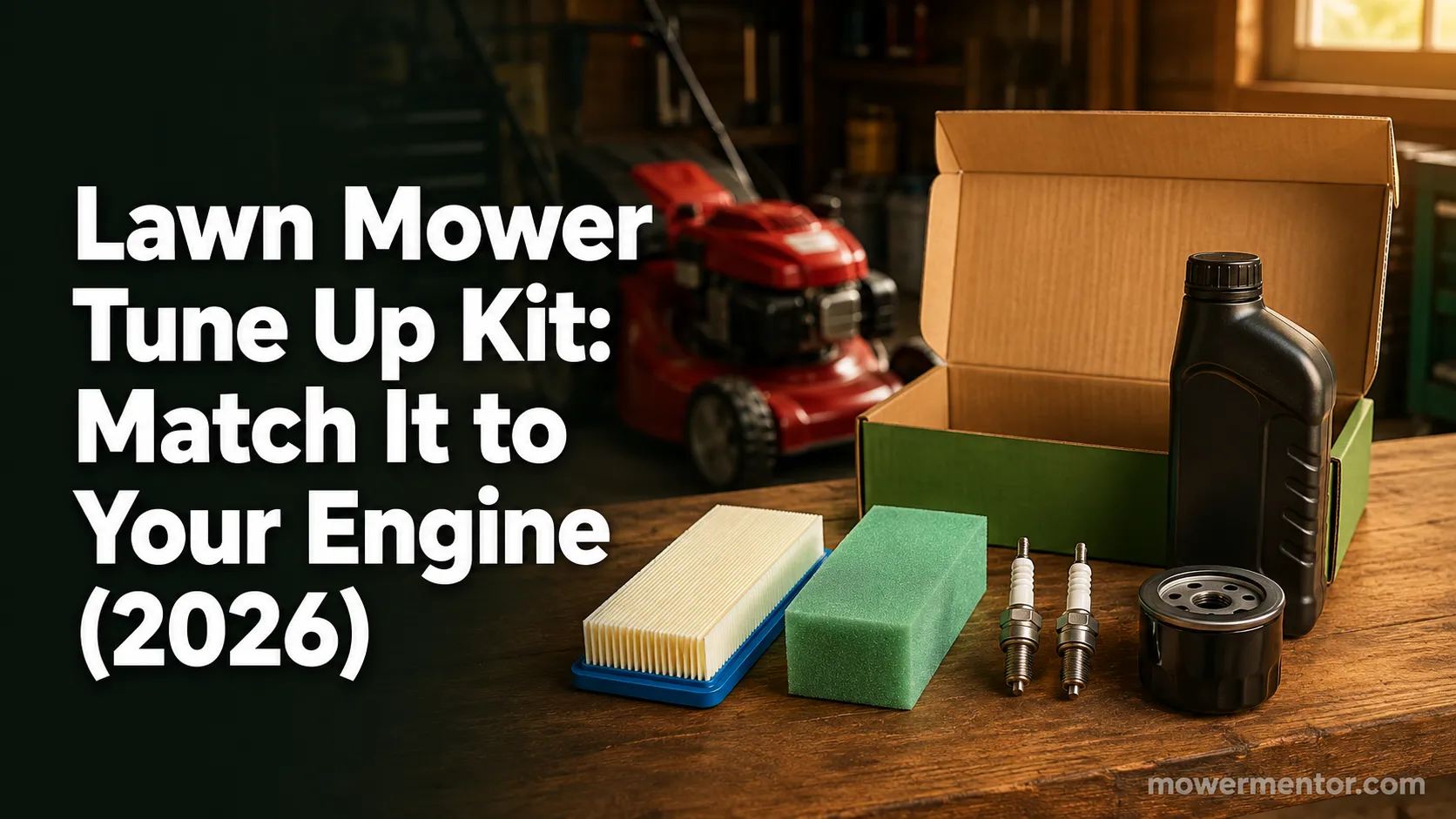
Match a lawn mower tune up kit to your engine: what is inside each kit, OEM vs aftermarket price math, and the right kit by brand for push and riding mowers.
 Maintenance & Seasonal Care
Compare mobile vs drop-off shop for a lawn mower tune up near me: real 2026 price ranges from 12 quotes, the 7 questions to ask, and when to just DIY it.
 Maintenance & Seasonal Care
Match a lawn mower spark plug repair kit to your fault in 30 seconds. 7 kits tested on 9 engines: M14x1.25 sizing, insert lengths, and the $5 boot fix.
 Maintenance & Seasonal Care
Compare lawn mower tune up cost by mower type: $70-$150 push, $150-$280 riding, from 9 real 2026 shop quotes. Plus the same parts for about $18 DIY.
Comments
Moderated for quality. Share a correction, ask a follow-up, or tell us what worked for you - every comment is reviewed before it goes live.