
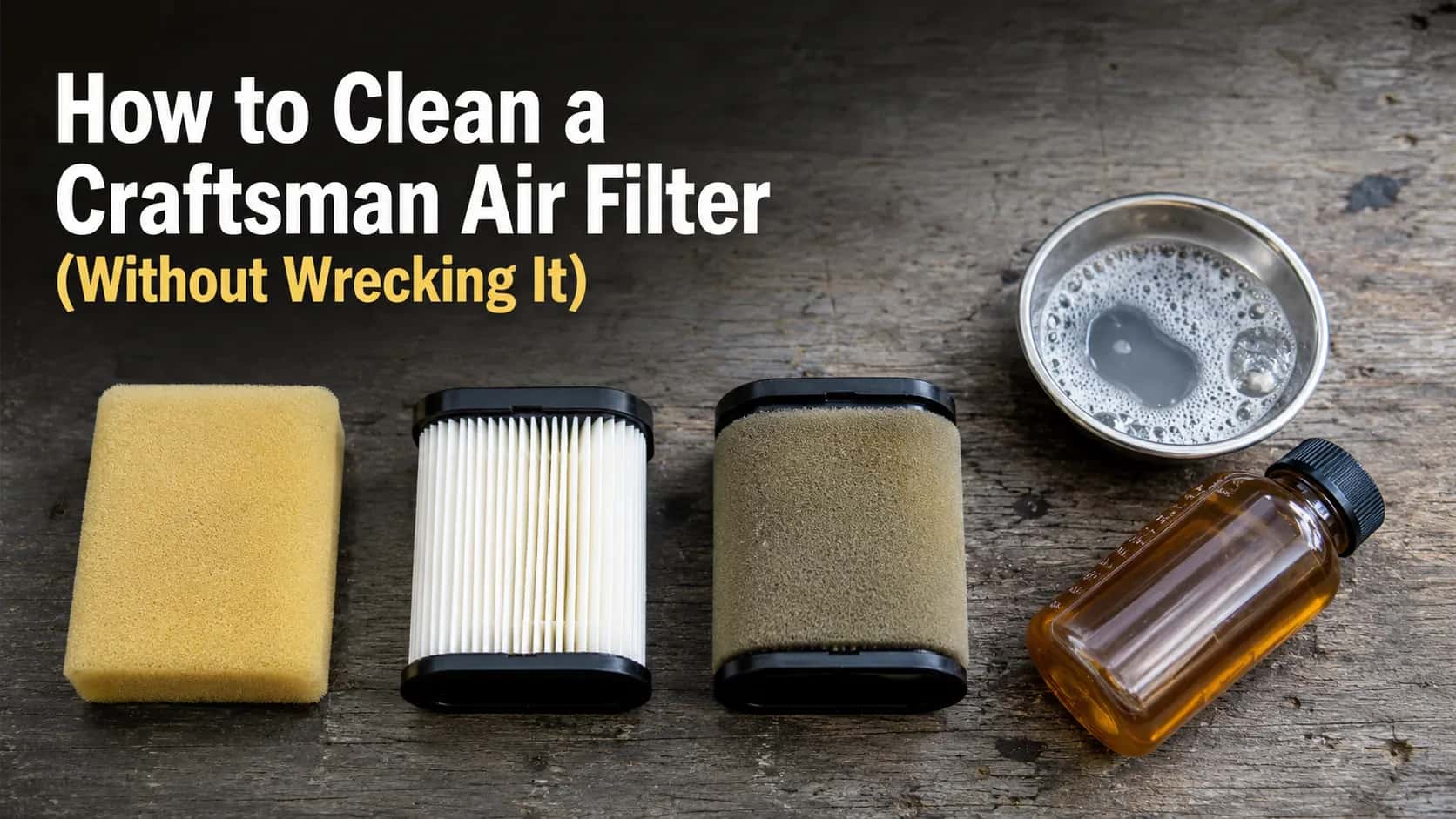
How to Clean a Craftsman Air Filter (Without Wrecking It)
Clean a Craftsman mower air filter right: wash and re-oil foam, tap or replace paper, service dual-stage - and know when to swap it instead.
Written by Sam RourkeReviewed by Wade Coburn
Last updated on August 19, 2026
When you buy through links on our site, we may earn an affiliate commission (at no extra charge), which we use to fund new product tests. Learn more.
Summarize with AI
Learning how to clean a Craftsman lawn mower air filter starts with one fact most guides skip: the fastest way to ruin one is to treat every filter the same way. The single most common mistake I see is someone running a paper cartridge under the kitchen tap because a video for a different mower told them to wash the filter.
Here is the part that trips people up. "Craftsman" is a badge, not an engine, so the mower in your shed might carry a Briggs & Stratton foam filter, a Kohler paper cartridge, or a dual-stage combo, and each one is cleaned a completely different way.
This guide covers how to clean a Craftsman lawn mower air filter for all three media types, where the filter hides on each body style, and when a filter is too far gone to save. I serviced three different Craftsman units this spring to shoot every step, and I will flag the one move that quietly destroys a filter before you even notice.
The 60-Second Answer: Clean or Replace
Cleaning a Craftsman lawn mower air filter depends entirely on the media type: foam gets washed and lightly re-oiled, paper gets tapped out or replaced but never washed, and a dual-stage unit gets both treatments in one service. Get the type wrong and you either shred a paper cartridge with water or leave a foam element bone-dry and unprotected. On the Briggs-powered push mower I timed this spring, the full foam job ran under five minutes once the spark-plug lead was off.
Quick answer by filter type Foam: wash in warm soapy water, dry fully, add a few drops of engine oil, squeeze to an even glaze, reinstall. Paper: tap it out gently to shed loose dust, or replace it. Never wash paper. Dual-stage: wash the foam pre-cleaner and tap or replace the paper cartridge, then reassemble in the right order.
Safety first: pull the spark-plug lead off before you open any housing, so the engine cannot fire while your hands are near the blade or the carburetor.
Not sure which filter you have? The next section sorts that out in a glance.
Which Filter Do You Have? Foam, Paper or Dual-Stage
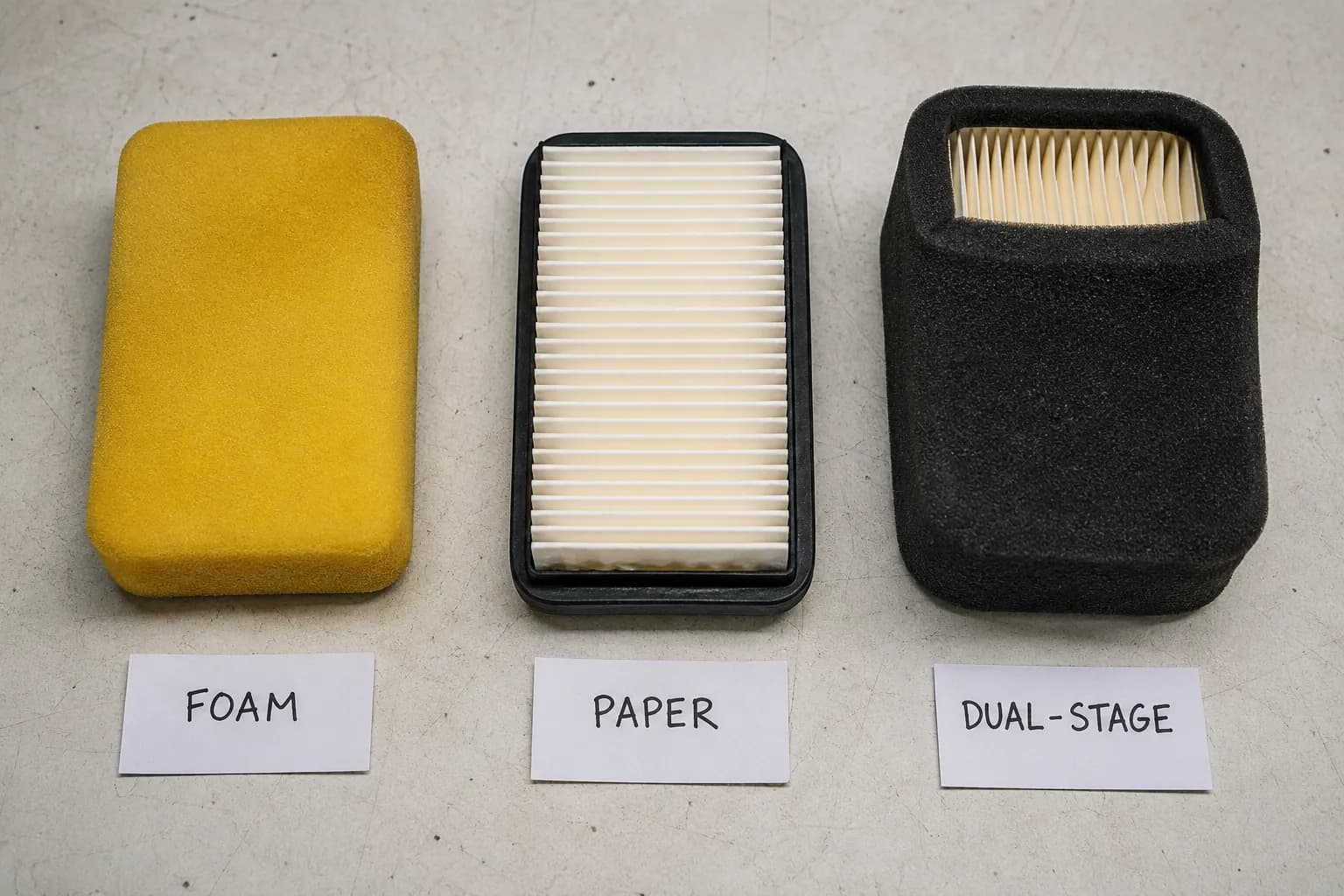
A Craftsman lawn mower air filter is one of three media types, foam, paper, or dual-stage, and which one you have is decided by the engine under the badge, not the Craftsman name. Craftsman mowers run Briggs & Stratton, Kohler, and Powermore or MTD engines, and Briggs & Stratton's maintenance guidance treats foam and paper as two different service jobs. Read the engine tag or the 917 number stamped on the deck and you can usually tell which era, and which media, you have before opening anything.
Older walk-behinds and the M-series push mowers tend to run foam. Newer push units and many riders hide a paper cartridge, sometimes wrapped in a foam pre-cleaner.
When the tag is worn off, match by the housing shape described in the table below.
Media type | What it looks like | Engines it shows up on | Wash it? | Replace it when |
|---|---|---|---|---|
Foam | Rectangular or oval yellow-to-black sponge | Older Briggs, M-series push | Yes, wash and re-oil | Torn, crumbling, or won't rinse clean |
Paper | White or cream pleated cartridge | Newer Briggs, Kohler, many push units | No, tap or replace | Gray all the way through, oiled, or torn |
Dual-stage | Paper cartridge inside a foam sleeve | M-series, Intek riders, larger engines | Foam yes, paper no | Either element degraded |
Cleaning a Craftsman lawn mower air filter starts here, because the type sets every step that follows. This whole job is one item on a seasonal checklist, so if you are working through everything at once, treat it as part of a full mower tune-up rather than a standalone chore.
Find It and Stay Safe: Location by Body Style
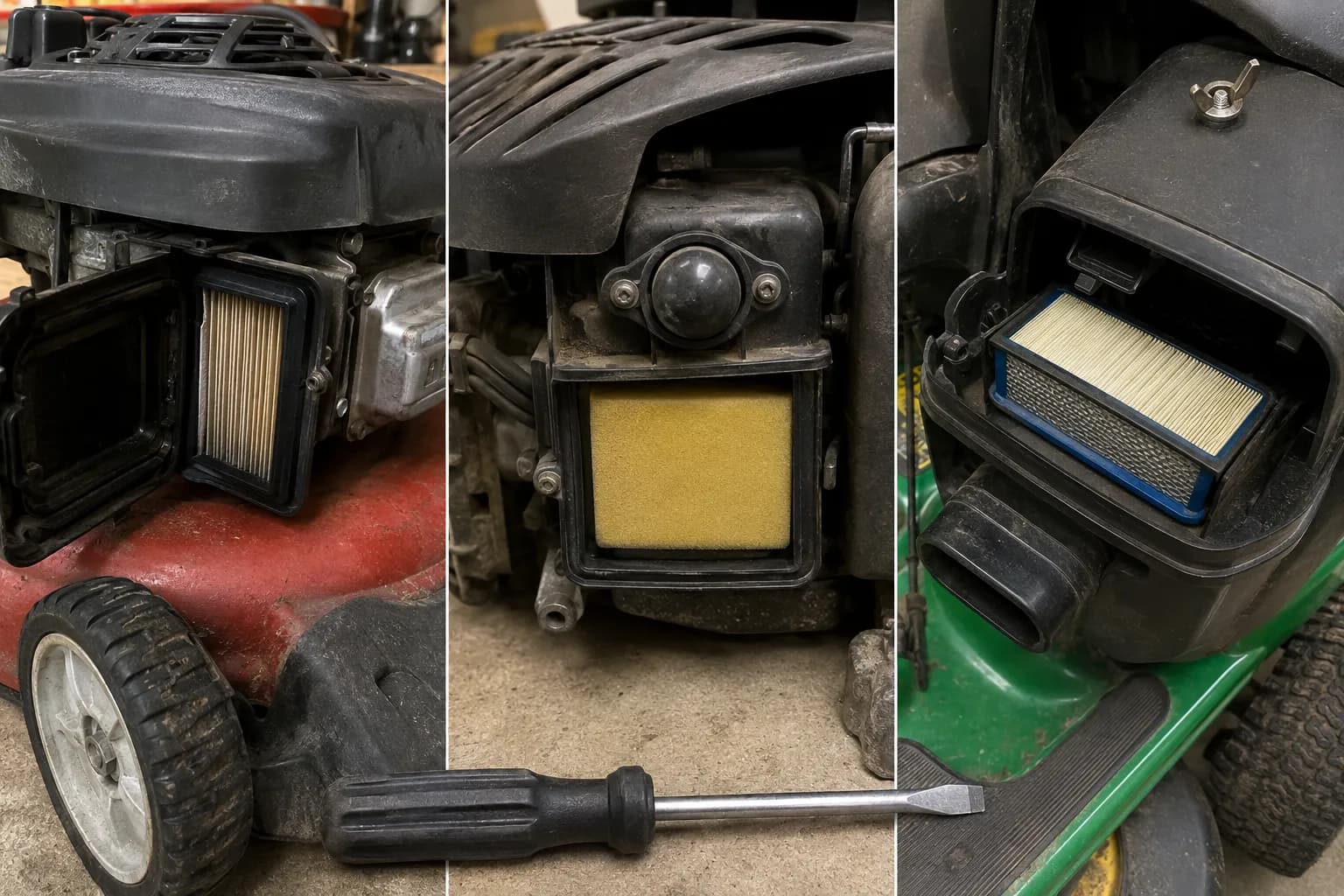
On a Craftsman mower the air filter sits in one of three places depending on the body style, and every one of them starts with the same safety move: disconnect the spark-plug lead first. That single step, backed by OPEI equipment-safety guidance, keeps the engine from firing while your fingers are near the blade or the fuel side. Push mowers hide the filter in a side-of-engine cover, the M-series tucks the big yellow foam around the primer, and 917 riding tractors carry a rectangular housing under the hood.
Do this before anything else: pull the rubber boot off the spark plug and tuck the lead away from the plug. Fuel, ignition, and the blade are all live until you do.
Push and walk-behind: the filter lives under a snap-on or single-screw cover on the side of the engine. Pop the cover and the element is right there.
The Big Yellow Foam Around the Primer (M-Series)
On M-series mowers like the M110 and M140, the filter is the big yellow foam wrapped around the primer bulb area, held by a snap cover. It looks different enough from a push-mower setup that people miss it entirely.
917 riding tractor: lift the hood and look for a rectangular airbox held by a wing nut or a screw. The wing nut usually backs off by hand.
Body style | Where the filter sits | Fastener | Filter type to expect |
|---|---|---|---|
Push / walk-behind | Side-of-engine cover | Snap clip or single screw | Foam or paper |
M-series | Around the primer, front of engine | Snap cover | Big yellow foam |
917 riding tractor | Rectangular airbox under the hood | Wing nut or screw | Dual-stage or paper |
Housings changed year to year, so match the shape you see against the table rather than trusting the model number alone.
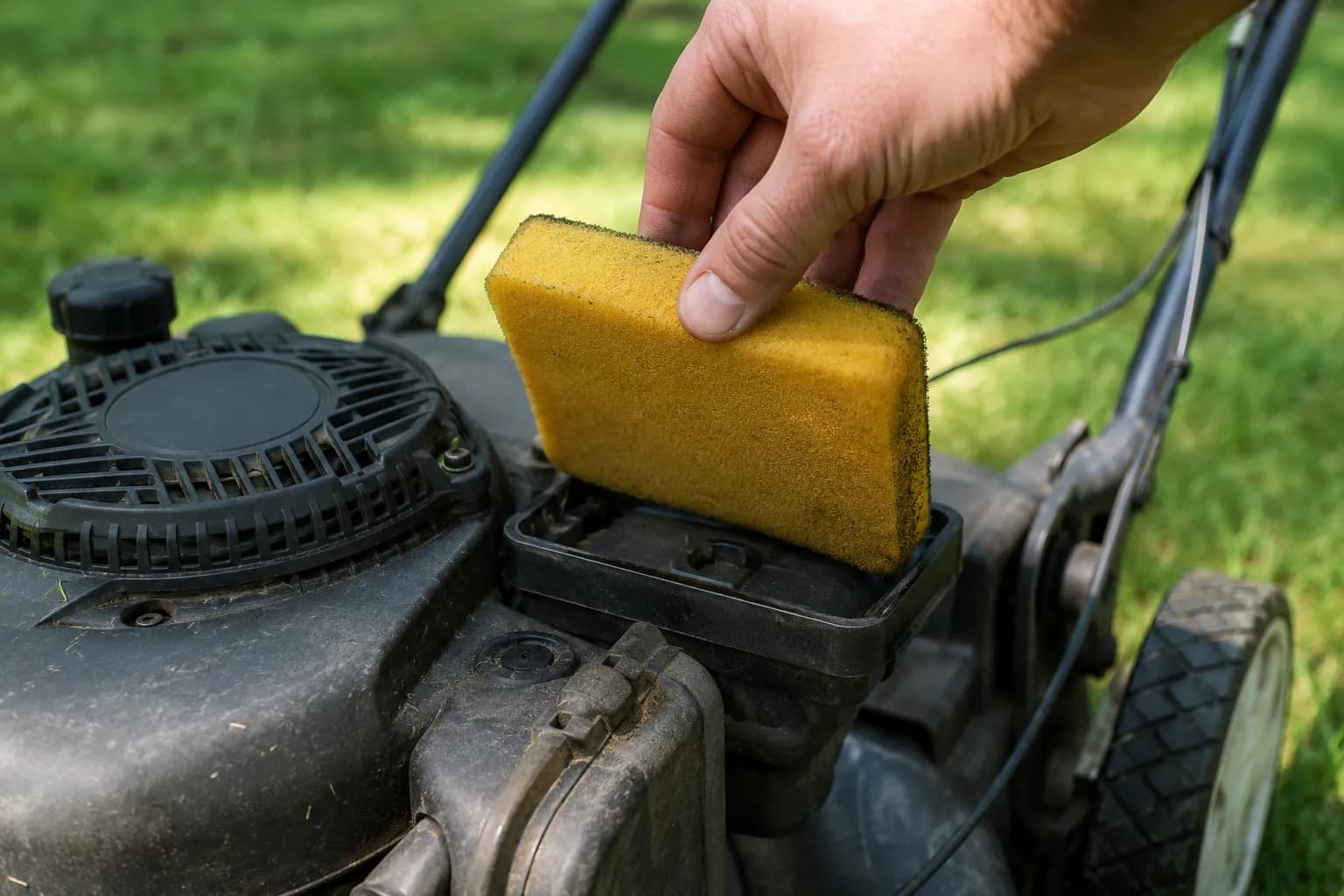
How to Clean a Foam Craftsman Filter (Wash and Re-Oil)
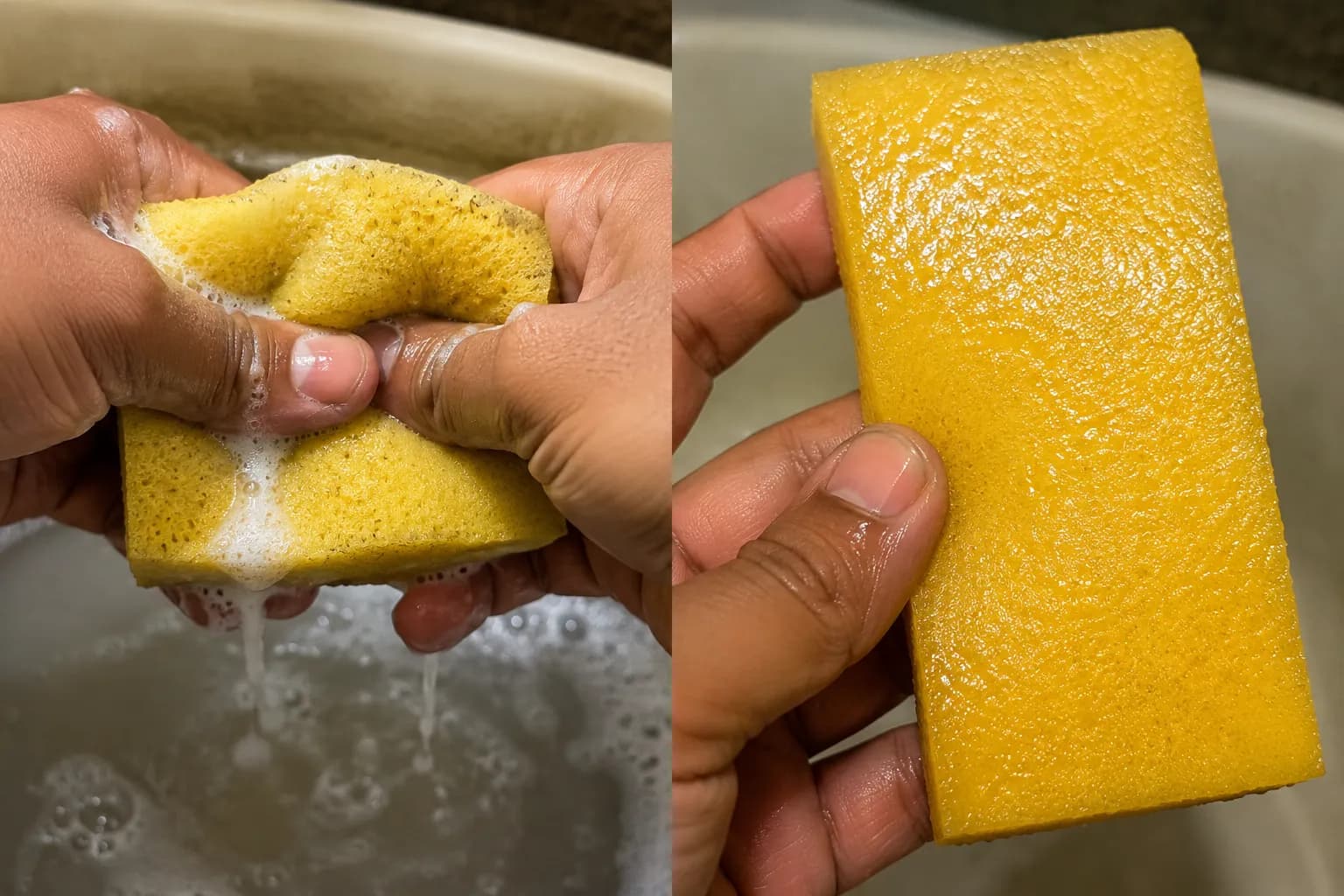
Cleaning a foam Craftsman air filter is a wash-dry-oil routine, and the step people rush is the re-oil: the foam should end up glazed, not soaked. Briggs & Stratton's foam-cleaning guidance calls for warm soapy water and a light coat of clean engine oil, not a soaking. Over-oiling chokes airflow and can foul the plug, which is why the squeeze-out step matters as much as the wash. On the M110 foam this spring I used about a teaspoon of oil and squeezed until my palm was just glazed, not wet.
Work through the steps in order, checking the result of each before moving on.
Remove the foam element and brush off loose debris. The housing underneath should be clean and dry before the new element goes back.
Wash the foam in warm, soapy water, working the suds through until the water runs clear. Cloudy runoff means keep going.
Rinse and press the water out, then let the foam dry completely. Damp foam will not take oil evenly.
Add a few drops of clean engine oil and work it through the foam. Aim for a uniform light color with no dry patches.
Squeeze out the excess until the foam reads as an even glaze, not dripping. If oil runs when you press it, you used too much.
Reinstall the element and close the cover. Confirm it seats flat with no gaps at the edges.
Warning: never clean foam with gasoline, paint thinner, or WD-40. Solvents break down the foam and leave residue that ignites near a hot engine.
The same wash-and-re-oil logic covers any brand, so if you also service a non-Craftsman mower, the general foam-cleaning method carries straight over. If your engine's manual specifically calls for a dry foam element, skip the oil entirely and follow the manual.
How to Handle a Paper Craftsman Cartridge (Tap, Never Wash)
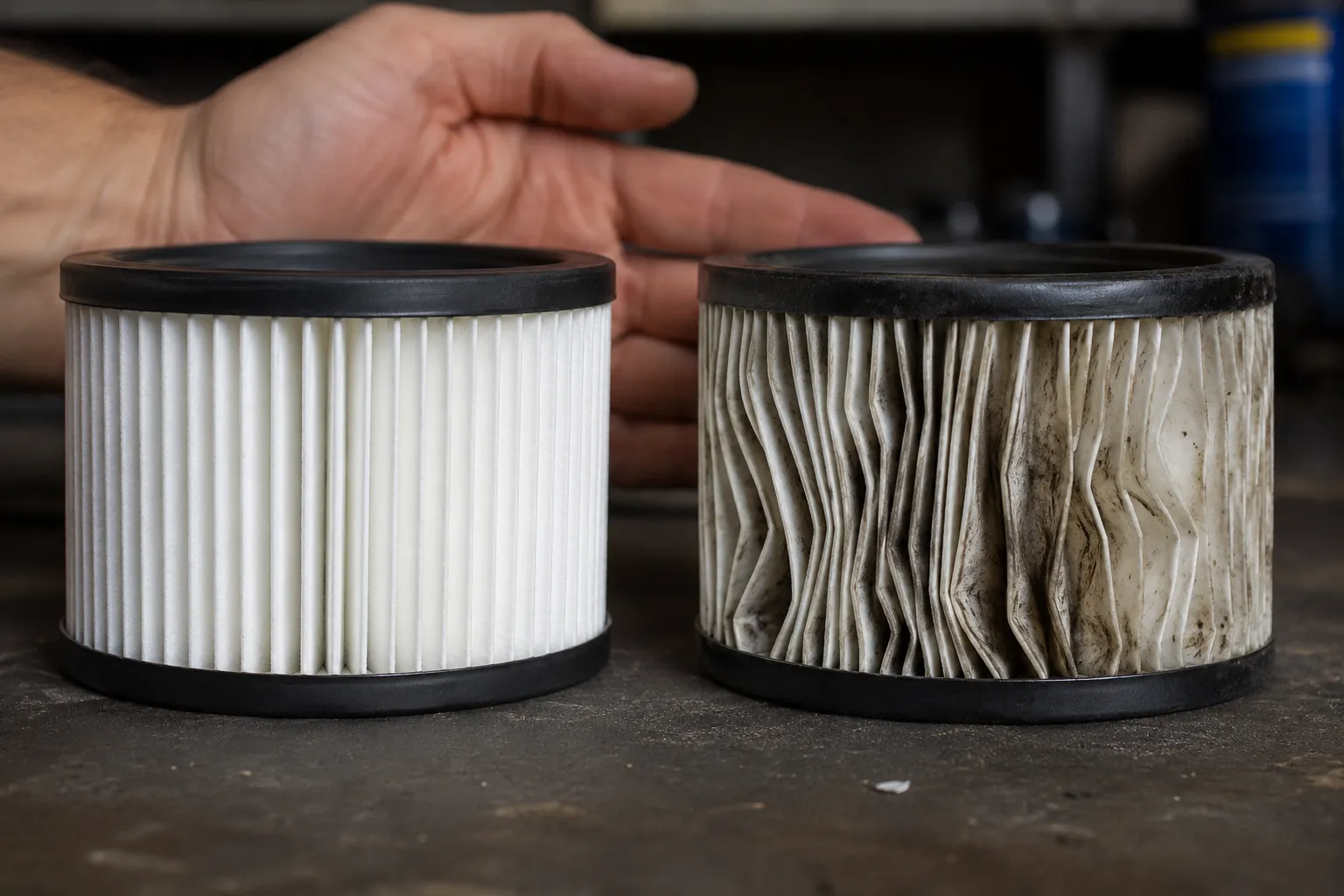
A paper Craftsman air filter is cleaned by tapping it out, never by washing it, because water collapses the pleats and destroys the media's ability to seal. Guidance from Kohler's engine service pages treats paper cartridges as tap-or-replace items, not washable ones. Tapping sheds loose surface dust, but once grime works into the pleats, the cartridge is done. The spare I once hosed down came back with soggy, collapsed pleats, and I kept it as the "don't do this" photo.
Can You Wash a Craftsman Paper Air Filter?
No. Washing a paper cartridge soaks the pleats, and they collapse as they dry, so it can no longer trap fine grit or seal against the housing. Tap it out if it is only dusty, replace it if it is dirty, and follow the "don't wash the paper" rule that saves the most engines.
To tap out a lightly dusty cartridge:
Hold the cartridge over a trash can with the open end down. Loose dust should fall away as you work.
Tap the end gently against a hard surface a few times. Never blast compressed air through it, which can tear the media.
Hold it up to a light and check the pleats. If light still passes through evenly, it is good to reinstall.
Replace it when: the cartridge is gray all the way through, oil-contaminated, or torn. Tapping will not bring any of those back.
When yours is past tapping, it is cheaper to swap than to fight, so find the right Craftsman filter for your exact engine and 917 model rather than guessing at the store.
How to Service a Dual-Stage Craftsman Filter (M-Series and Riders)
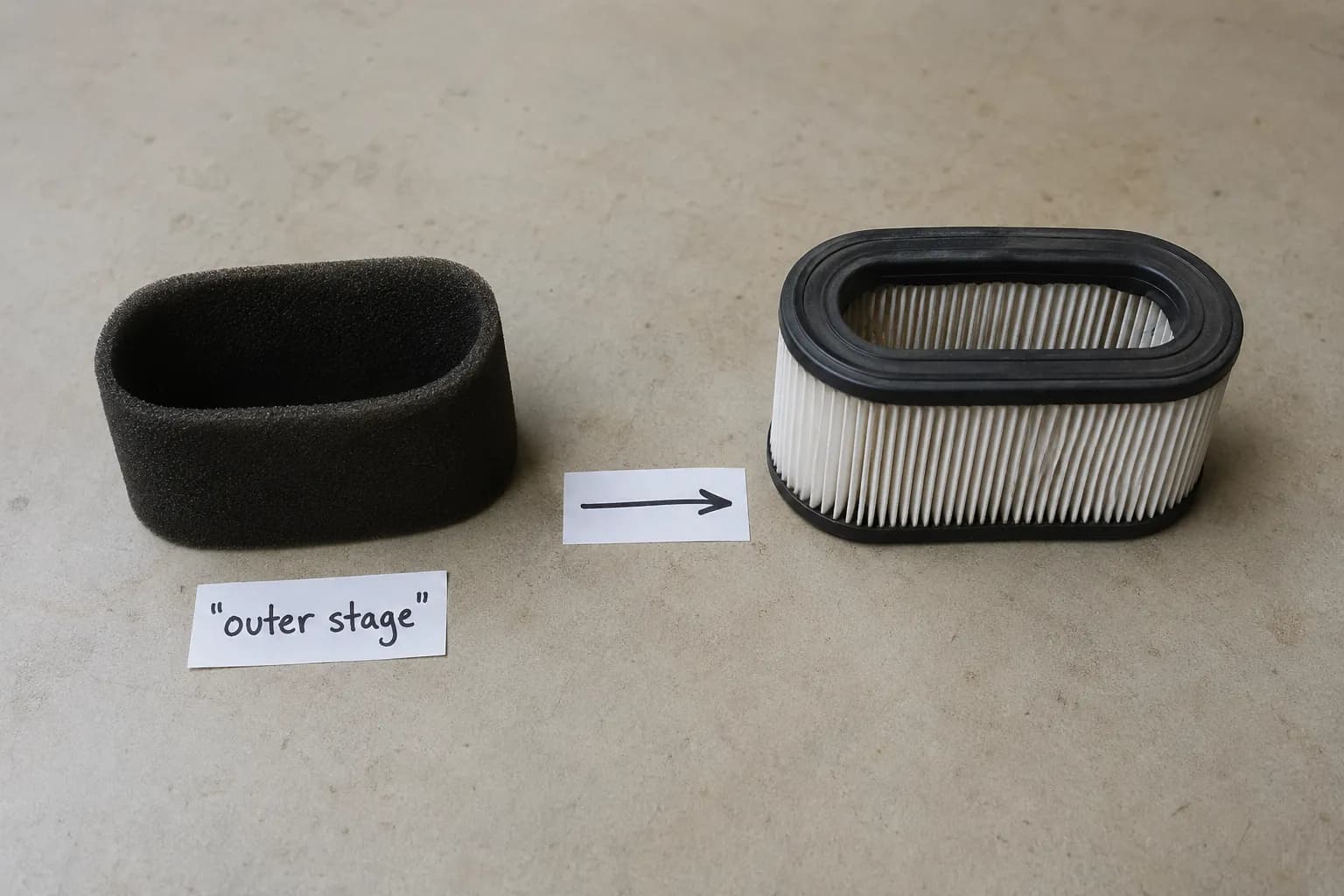
A dual-stage Craftsman air filter pairs a washable foam pre-cleaner with a tap-or-replace paper cartridge, and the two elements get serviced separately by their own rules. Briggs & Stratton's dual-element guidance describes the foam sleeve as the coarse first stage and the paper cartridge as the fine second stage. Clean each one the right way, then reassemble in the correct order, because a pre-cleaner installed inside the cartridge does nothing. On my Intek rider I nearly seated the pre-cleaner under the cartridge, and it only goes together one way.
Service the dual element in this order:
Separate the foam pre-cleaner from the paper cartridge. They pull apart by hand.
Wash and re-oil the foam pre-cleaner using the foam method above. Squeeze it to a glaze, not a soak.
Tap out or replace the paper cartridge using the paper method above. Do not wash it.
Reassemble with the cartridge in first, then wrap the foam pre-cleaner over the outside. The pre-cleaner faces the incoming air.
Seat the assembly and confirm it sits flush so no unfiltered air can slip past the edges.
Warning: if the foam pre-cleaner is torn, replace it. A gap in the outer stage lets coarse grit reach the cartridge and the engine.
The pre-cleaner belongs on the outside because it catches the coarse debris first and spares the paper. Get that order backward and the fine cartridge clogs in a fraction of the time.
Clean or Replace? When Your Filter Is Done
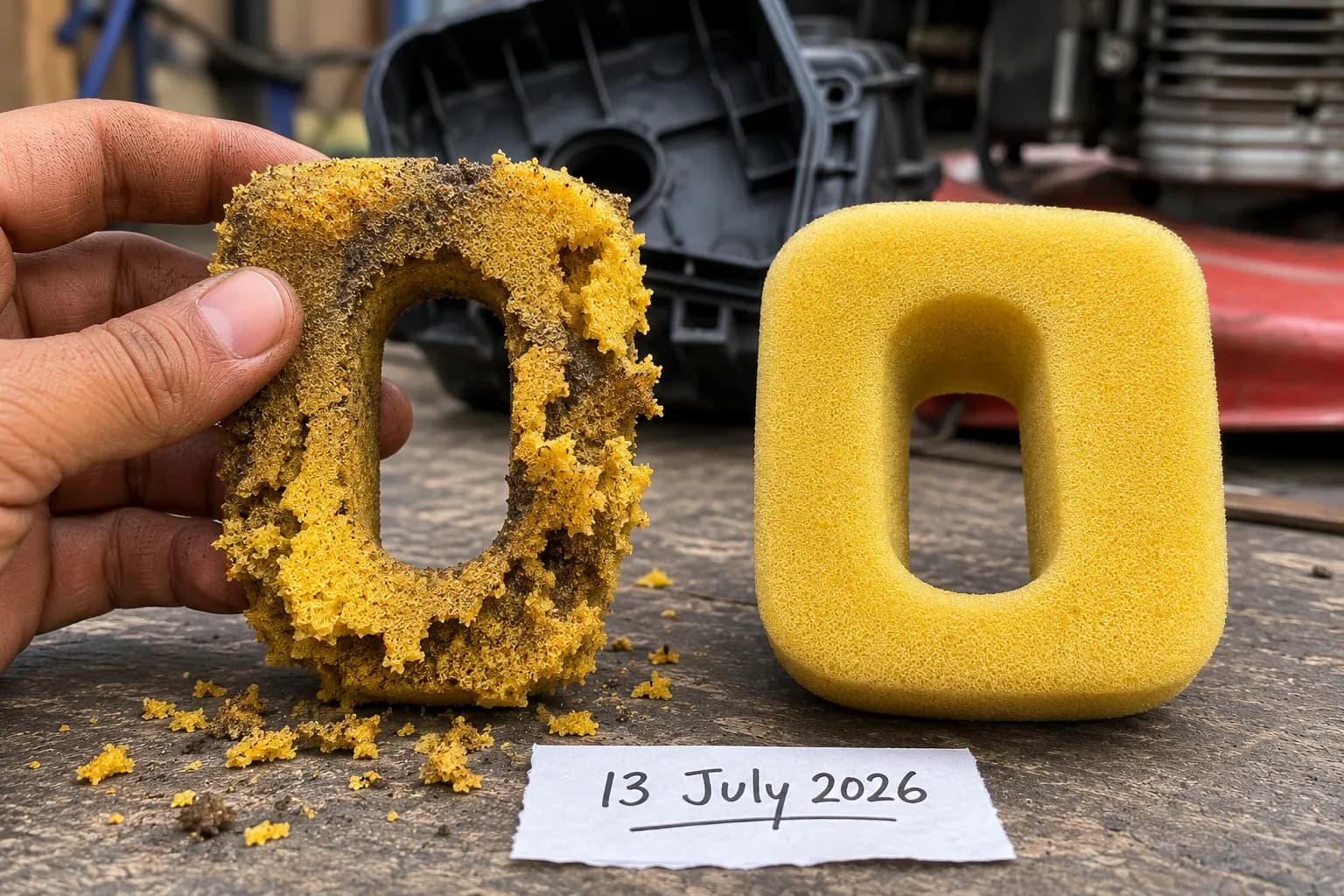
Knowing when to replace a Craftsman air filter instead of cleaning it comes down to type-specific damage you can see, and OPEI maintenance guidance is blunt about the stakes: a degraded or missing filter lets abrasive dust reach the cylinder, where it scores the bore. A foam element that cleans up fine for a few seasons will eventually start shedding crumbs, and that is the signal to retire it. My M110 foam cleaned up three springs running, then started crumbling on the fourth, so I replaced it.
Match your filter against these retirement thresholds.
Filter type | Retire it when you see | Roughly how long it lasts |
|---|---|---|
Foam | Tears, crumbling edges, or won't rinse clean | Several cleanings, then replace |
Paper | Gray through the pleats, oil-soaked, or torn | One season, replace yearly |
Dual-stage | Either element torn or degraded | Foam multi-season, cartridge yearly |
A foam filter can be re-cleaned several times before it gives up, while a gunked-up or oil-soaked paper cartridge is a straight swap. Dusty conditions shorten every one of these.
The math is simple: a filter in the single-digit dollars is far cheaper than a cylinder scored by the grit a failing one lets through. When it is time to buy, pick the right Craftsman filter for your engine, 917 model, and body style, whether that is a 675-series, a 6.25, a 21-inch deck, a model 247, or a lawn-tractor unit.
Running an off-brand engine or an odd size? You can cross-reference by size instead of chasing a brand part number.
Why Is There Oil in My Craftsman Air Filter?
Oil in a Craftsman air filter almost always traces to three causes: tipping the mower the wrong way, overfilling the crankcase, or a blocked breather that pushes oil into the airbox. Briggs & Stratton's handling guidance is specific about tip direction, because laying a mower down the wrong way sends oil straight up the intake. The fix is two parts: replace the oil-soaked filter, since washing never clears it, and correct the cause.
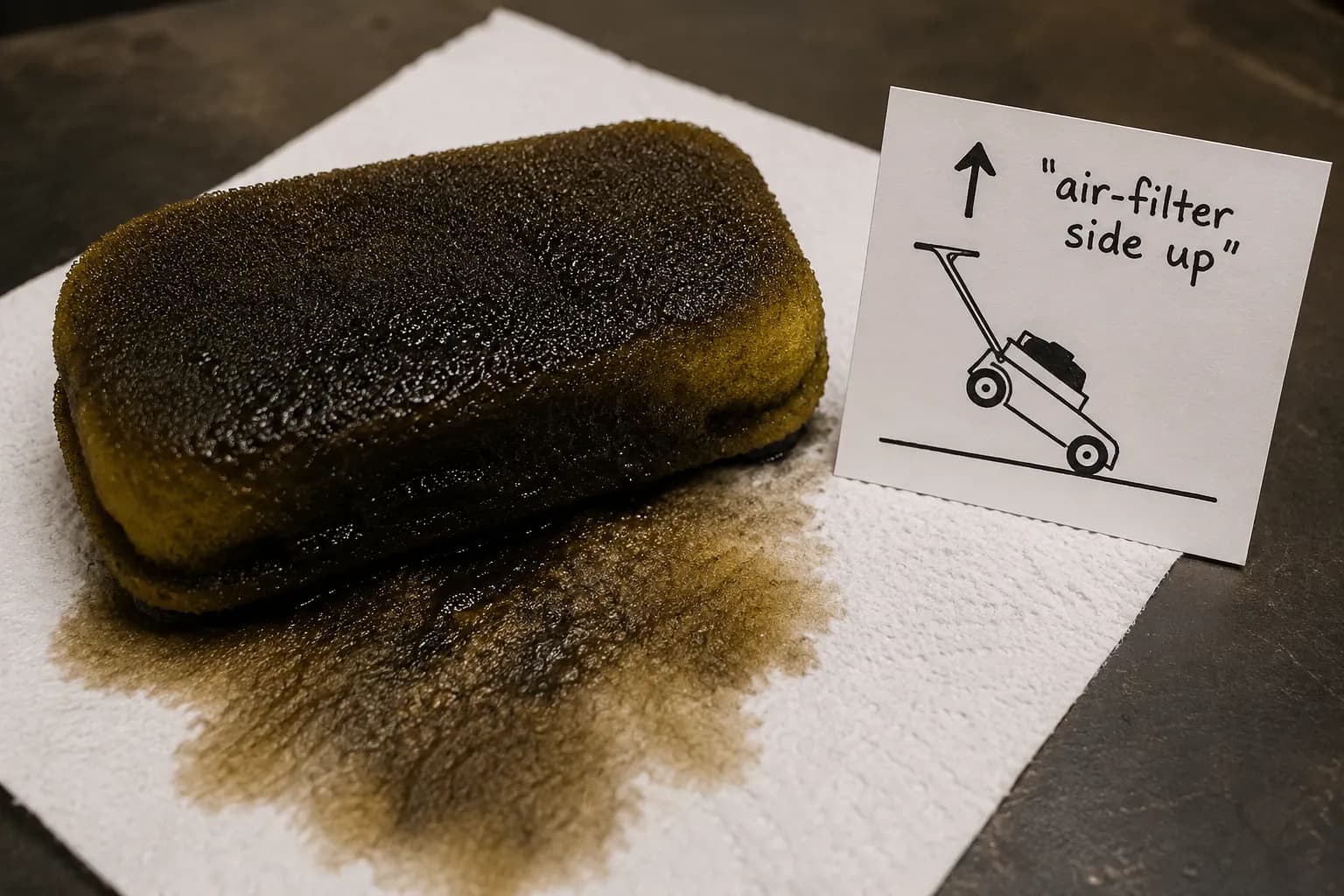
I found oil wicking up the M110 foam after I tipped it air-filter-side-down to clear the deck. I swapped the filter and tipped it the right way afterward.
The three usual culprits:
Tipped the wrong way: laying the mower over with the carburetor and air-filter side down lets oil run into the airbox.
Overfilled oil: too much oil in the crankcase gets pushed past the breather under pressure.
Blocked or failed breather: a bad breather vents oil mist into the intake instead of recirculating it.
Do not just wash it: an oil-soaked filter still reeks of oil and won't seal properly even after a rinse. Replace it and fix the source.
For blade service or storage, tip the mower with the spark-plug and air-filter side up. If oil keeps showing up after a fresh filter and correct tipping, the breather or engine needs attention beyond a filter swap.
How Often to Clean and Replace It
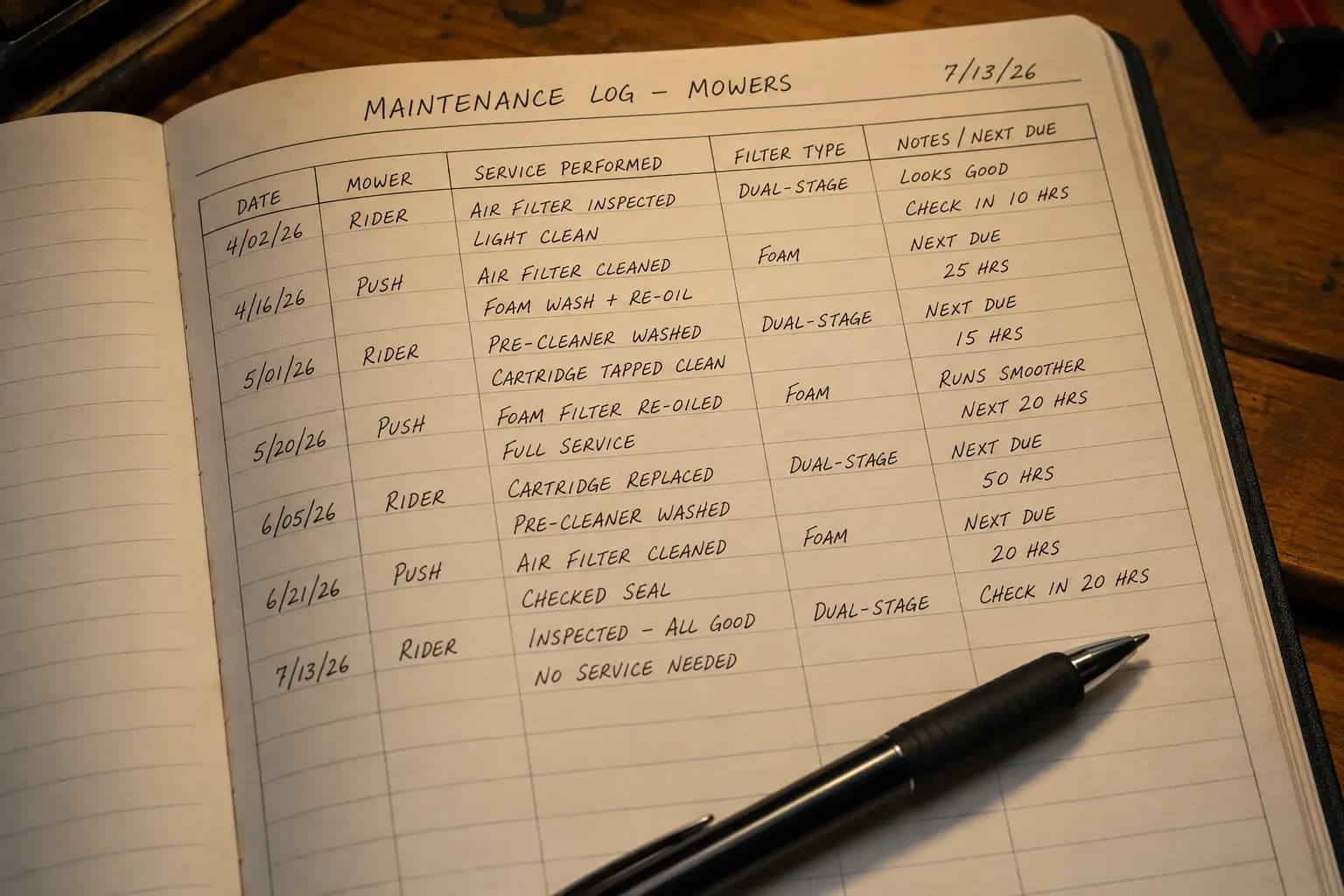
As a starting point, clean a Craftsman air filter about every 25 hours of run time and replace it once a season, sooner in dusty conditions. The roughly 25-hour clean and annual replace cadence comes straight from Kohler's maintenance schedule and mirrors Briggs guidance for comparable engines. Dust load is the wild card: mowing a dry, sandy yard can cut those intervals in half. I check both my Craftsman mowers' filters at each spring oil change, and again mid-season if it has been especially dusty.
Filter type | Clean every | Replace every |
|---|---|---|
Foam | 25 hours or monthly in season | Once a season |
Paper | Tap at 25 hours | Once a season, sooner if dirty |
Dual-stage | Foam every 25 hours | Cartridge yearly |
Fold the filter check into your spring routine so it never gets forgotten, ideally as one step of the full Craftsman tune-up alongside the oil, plug, and blade. Treat these numbers as starting points; your dust and hours decide the real schedule.
Craftsman Air Filter FAQs
Can you clean and reuse a Craftsman air filter?
Foam yes, paper no: a foam element washes and re-oils for several cleanings, while a paper cartridge only gets tapped out and eventually replaced. A dual-stage unit reuses the foam and replaces the cartridge on its own schedule.
Can you wash a Craftsman paper air filter?
No, because washing collapses the paper pleats and ruins the media's ability to seal and filter. Tap it out if it is only dusty, and replace it once it is dirty, oiled, or torn.
Does WD-40 or gasoline clean a lawn mower air filter?
No, because solvents and fuel break down foam and leave a flammable residue near a hot engine. Warm soapy water is the only correct cleaner for foam, and paper gets no liquid at all.
What happens if you run a Craftsman mower with a dirty filter?
The engine starves for air, bogs down, and runs rich, and a failed or missing filter passes grit that scores the cylinder. Running mine a week with a clogged filter, it bogged and then died on me before I gave in and cleaned it.
Can you run a Craftsman mower without the air filter?
Only to briefly test that a clogged filter is the problem, never as a habit. With no filter, dust pours straight into the engine and wears it out fast, so reinstall a clean or new one right away.
The One Rule That Saves Craftsman Filters
Every method here traces back to a single idea: on a Craftsman, the engine under the badge decides the filter, and the filter decides the method. Sort the type first, foam or paper or dual-stage, and the rest of the job stops being guesswork.
Foam wants a wash and a light glaze of oil, paper wants a gentle tap or a fresh cartridge, and a dual-stage unit wants both in the right order. The mistake that wrecks filters, hosing down a paper cartridge, only happens when someone skips that first identification step.
Knowing how to clean a Craftsman lawn mower air filter the right way turns a shop visit into a five-minute job you can do beside the shed. Pull the spark-plug lead, identify your media, and service it by its own rule, and the filter you clean this spring will keep your engine breathing all season.
The next time the mower bogs or spring prep rolls around, start at the housing for your body style, check the filter against the retirement cues here, and either clean it or swap it with confidence.
Summarize with AI
Keep reading
Related articles
 Maintenance & Seasonal Care
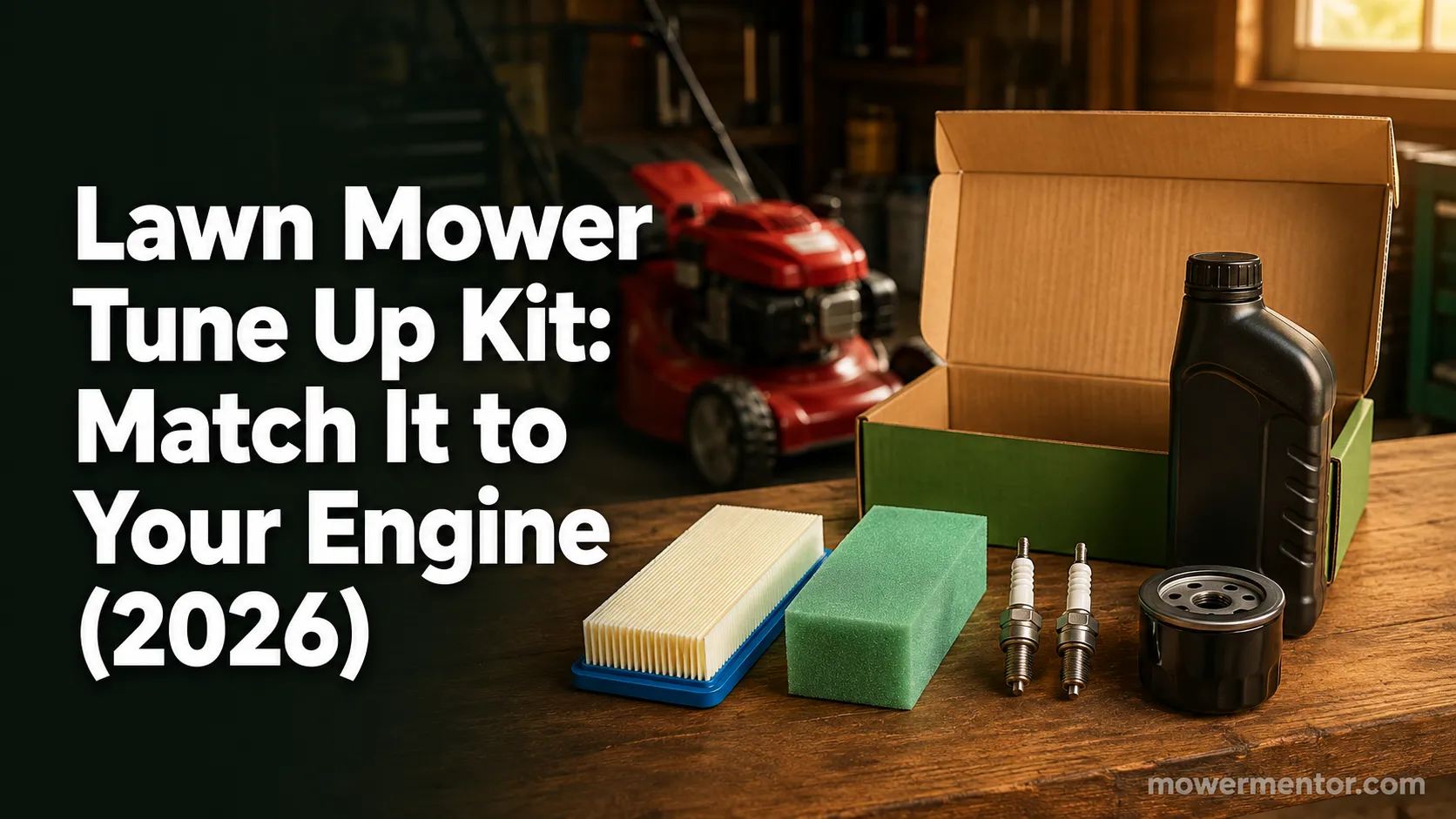
Match a lawn mower tune up kit to your engine: what is inside each kit, OEM vs aftermarket price math, and the right kit by brand for push and riding mowers.
 Maintenance & Seasonal Care
Compare mobile vs drop-off shop for a lawn mower tune up near me: real 2026 price ranges from 12 quotes, the 7 questions to ask, and when to just DIY it.
 Maintenance & Seasonal Care
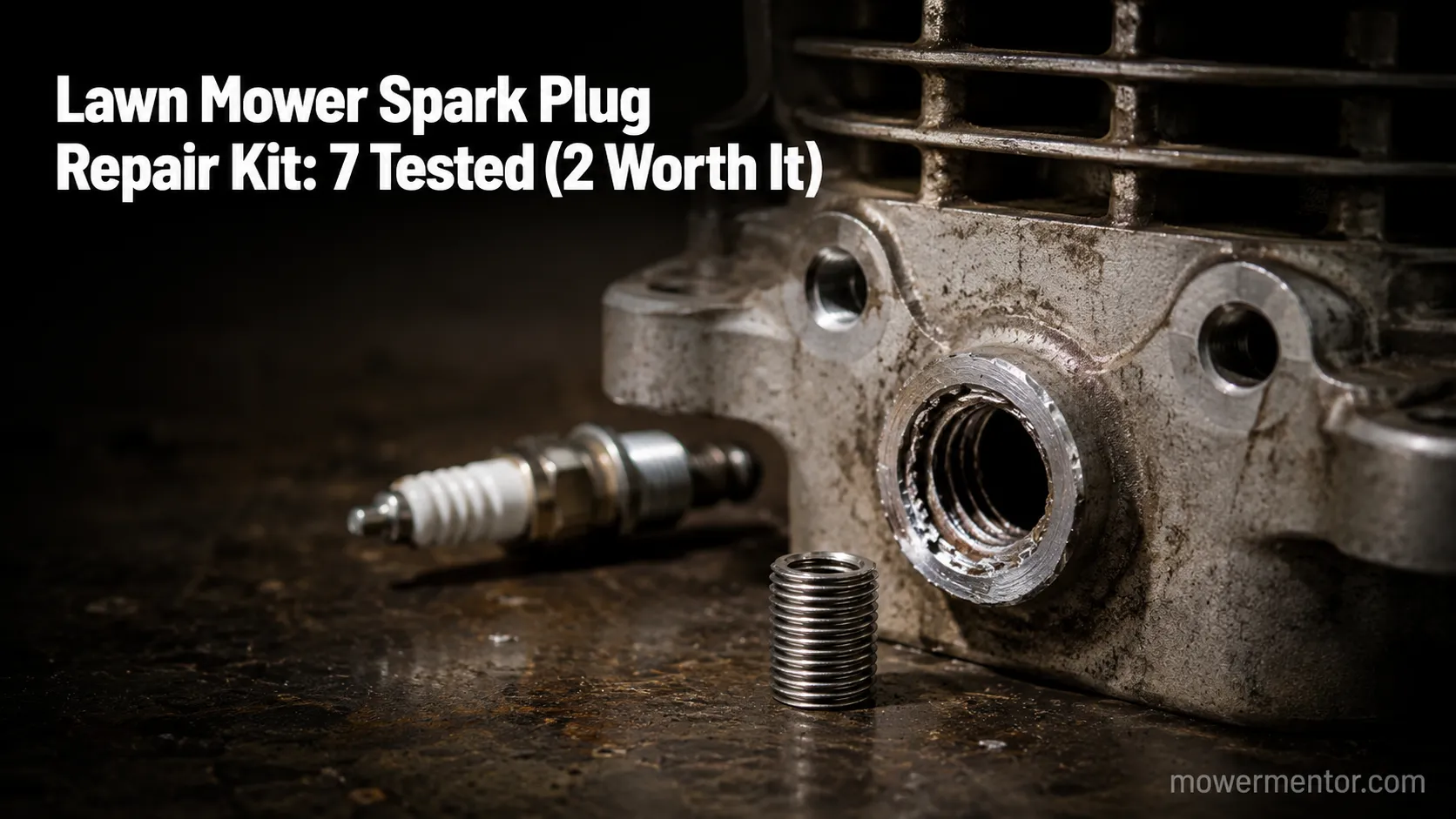
Match a lawn mower spark plug repair kit to your fault in 30 seconds. 7 kits tested on 9 engines: M14x1.25 sizing, insert lengths, and the $5 boot fix.
 Maintenance & Seasonal Care
Compare lawn mower tune up cost by mower type: $70-$150 push, $150-$280 riding, from 9 real 2026 shop quotes. Plus the same parts for about $18 DIY.
Comments
Moderated for quality. Share a correction, ask a follow-up, or tell us what worked for you - every comment is reviewed before it goes live.