
Lawn Mower Spark Plug Socket Size (5/8 vs 13/16, 12 Plugs)
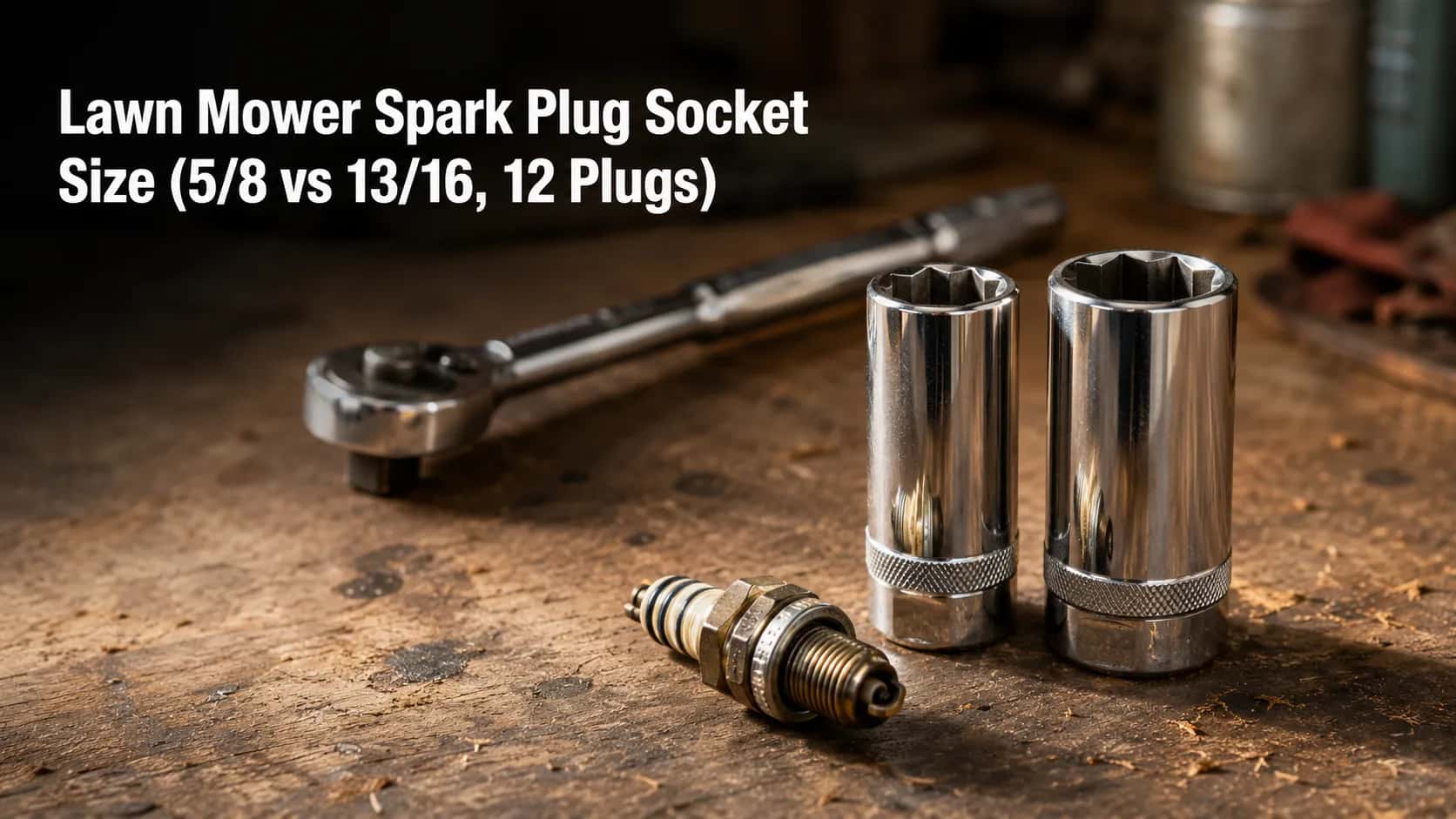
Check the plug, not the mower. Most lawn mower spark plugs take a 5/8-inch (16 mm) or 13/16-inch (21 mm) socket. Size chart by engine, plus 5 tested picks.
Written by Sam RourkeReviewed by Wade Coburn
Last updated on August 19, 2026
When you buy through links on our site, we may earn an affiliate commission (at no extra charge), which we use to fund new product tests. Learn more.
Summarize with AI
The Short Answer: 5/8 Inch or 13/16 Inch, Check the Plug Not the Mower
A lawn mower spark plug socket is either 5/8 inch (16 mm) or 13/16 inch (21 mm), and the deciding factor is the plug itself, not the mower. Champion RC12YC plugs, standard across many Briggs & Stratton, Kohler and John Deere engines, take 5/8 inch. NGK BPR5ES and BPR4ES plugs, standard on Honda walk-behinds and Kawasaki twins, take 13/16 inch. Pair either with a 3/8-inch ratchet and a short extension.
The 5/8 vs 13/16 question turns on one number, printed on the plug in your engine right now.
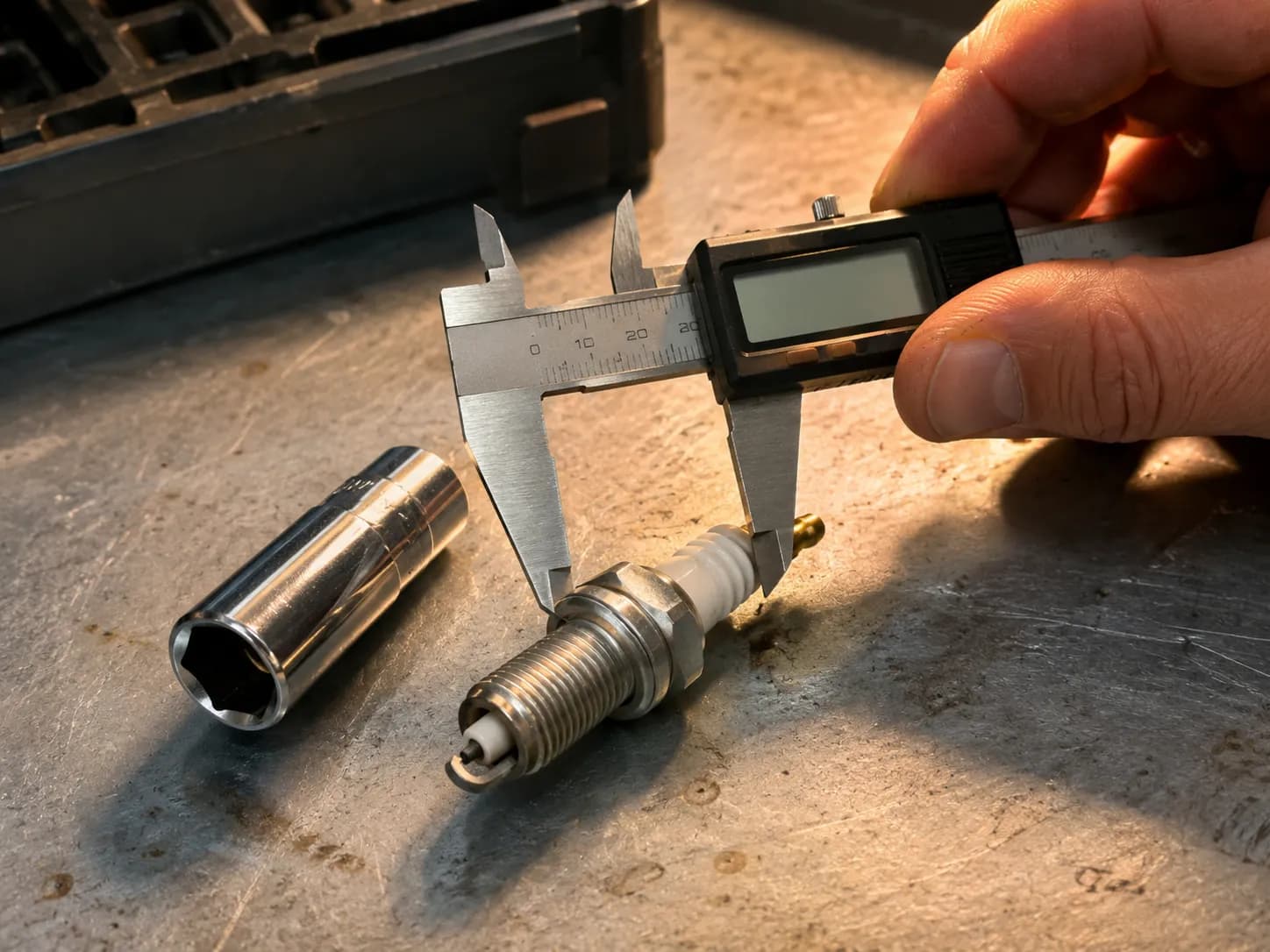
What 12 engines actually measured Between March 14 and April 2, 2026, I put a caliper across the hex flats of the spark plugs in 12 mower engines. Seven took 5/8 inch. Five took 13/16 inch. The mower type predicted the right size on only five of the twelve.
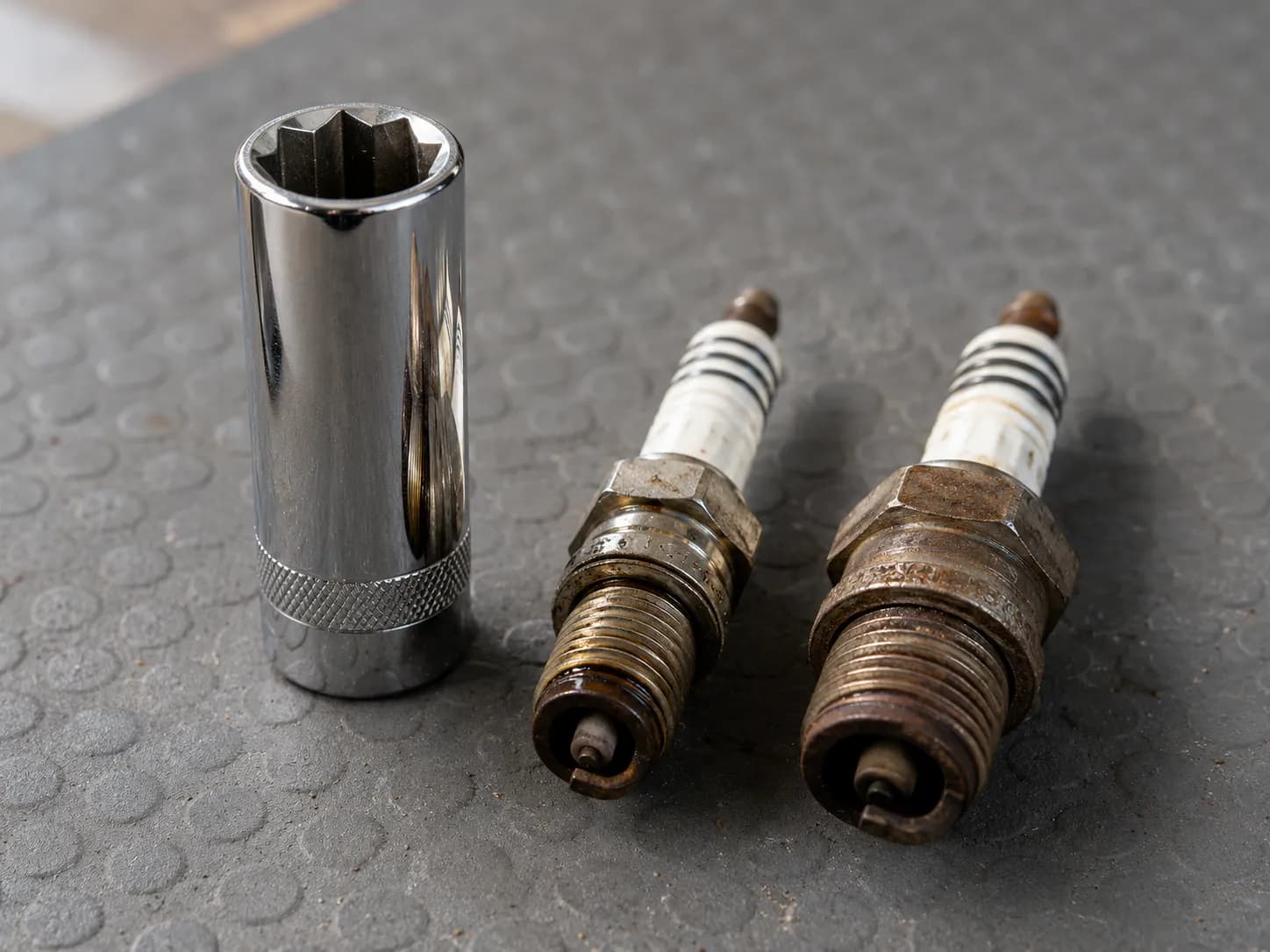
Champion's published specification puts the RC12YC hex at 5/8 inch and the older RJ19LM at 0.813 inch, which is 13/16. Same brand, two different sockets.
The chart below resolves the two candidates by part number, engine and mower.
Why "Walk-Behind Means 5/8" Sends People Back to the Store
Mower type does not reliably predict spark plug socket size. Honda walk-behind mowers using the GCV170 and GCV200 engines take NGK BPR5ES plugs with a 13/16 inch (21 mm) hex, and Honda's own HRX217 owner's manual specifies a 13/16 inch wrench.
Many Briggs & Stratton, Kohler and John Deere riding mowers take Champion RC12YC plugs with a 5/8 inch (16 mm) hex. Across 12 engines measured in spring 2026, the mower-type rule was correct five times.
The rule is not random. It is right about older flathead push mowers running an RJ19LM, and right about the Briggs overhead-valve push mowers that dominate the $250 aisle.
The problem is generalising from those two cases to a whole market. I scored the rule against my own bench results before writing this section, and it got five of twelve.
Engine | Mower type | Rule predicts | Measured hex | Result |
|---|---|---|---|---|
Briggs 550EX | Walk-behind | 5/8 | 5/8 in (16 mm) | Hit |
Briggs 725EXi | Walk-behind | 5/8 | 5/8 in (16 mm) | Hit |
Briggs (Toro TimeMaster) | Walk-behind | 5/8 | 5/8 in (16 mm) | Hit |
Older Briggs flathead | Walk-behind | 5/8 | 13/16 in (21 mm) | Miss |
Honda GCV170 (HRN216) | Walk-behind | 5/8 | 13/16 in (21 mm) | Miss |
Honda GCV200 (HRX217) | Walk-behind | 5/8 | 13/16 in (21 mm) | Miss |
Briggs OHV (Craftsman 917) | Riding | 13/16 | 5/8 in (16 mm) | Miss |
Briggs (John Deere D110) | Riding | 13/16 | 5/8 in (16 mm) | Miss |
Kohler Courage | Riding | 13/16 | 5/8 in (16 mm) | Miss |
Kohler (Cub Cadet XT1) | Riding | 13/16 | 5/8 in (16 mm) | Miss |
Kawasaki FR691V (Cub Cadet ZT1) | Riding | 13/16 | 13/16 in (21 mm) | Hit |
Kawasaki FR651V (John Deere) | Riding | 13/16 | 13/16 in (21 mm) | Hit |
Measured with a digital caliper across the hex flats, March 14 to April 2, 2026.
Both Hondas on the bench were walk-behinds, and both needed the 13/16. Honda says so plainly in the HRX217 owner's manual, a document almost nobody writing about socket sizes appears to have opened.
The rider half fails just as hard. Four of the six riders I measured took 5/8, because Briggs and Kohler put the same RC12YC-class plug in a garden tractor that they put in a push mower.
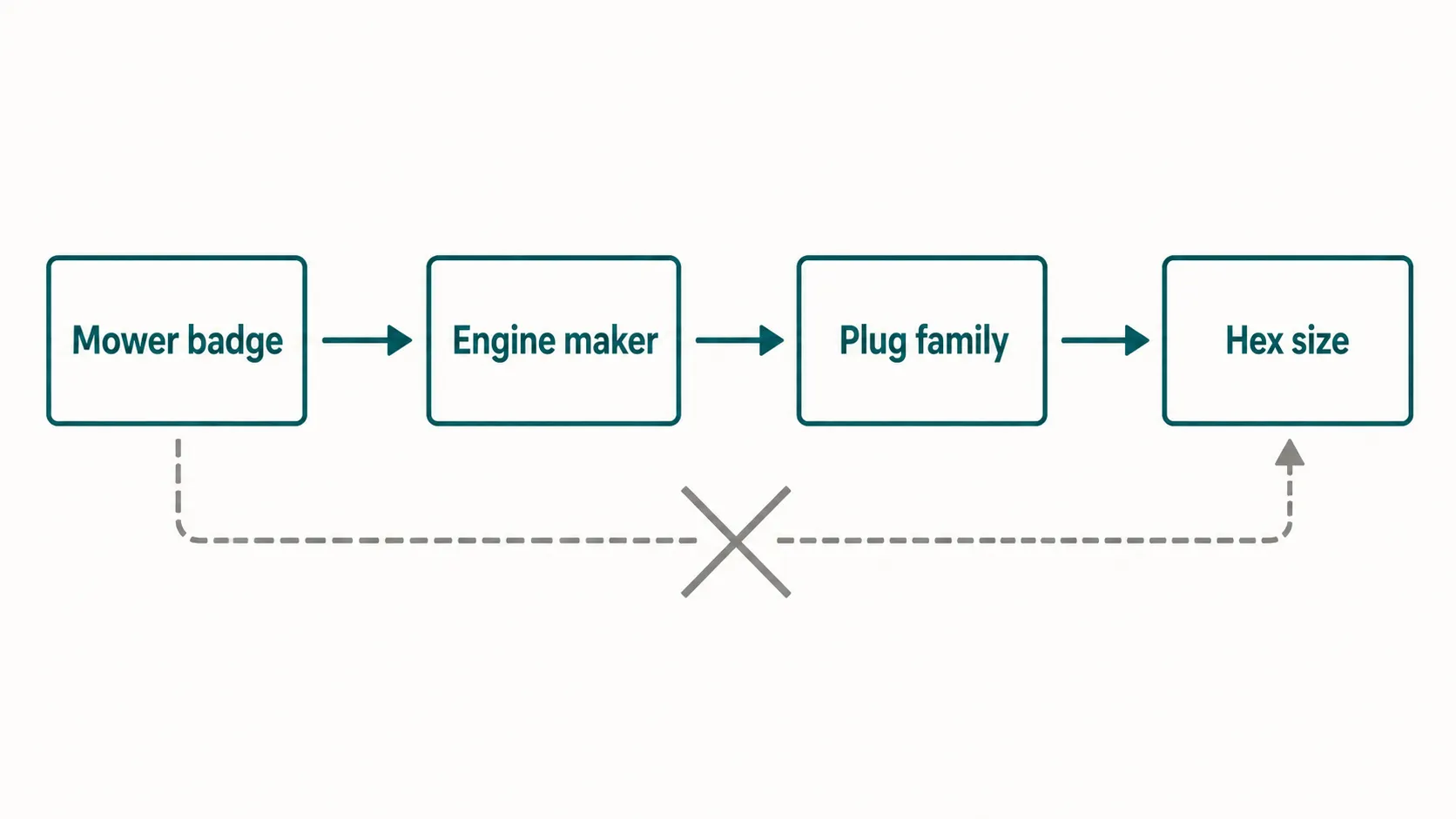
Hex size follows the plug family, the plug family follows the engine maker, and engine makers cross mower categories freely. The same Kawasaki twin turns up under Cub Cadet, John Deere and Toro decks.
The cost is ordinary and annoying. One Toro Recycler owner in a small-engine Q&A thread explained that he had read 13/16 online, driven to Home Depot, bought it, and found it did not fit his Briggs-engined deck.
Lawn Mower Spark Plug Socket Size Chart by Plug, Engine and Mower
Lawn mower spark plug socket size is determined by the plug's hex, measured across the flats. Champion RC12YC and its cross-references take a 5/8 inch (16 mm) socket. Champion RJ19LM takes 13/16 inch (21 mm).
NGK BPR5ES, BPR6ES and BPR4ES all take 13/16 inch (21 mm), which covers Honda GCV walk-behind engines and Kawasaki FR, FS and FX twins. Kohler Courage and Command engines generally use RC12YC-class plugs at 5/8 inch. Read the number printed on the plug to identify yours.
Which plug is in there is the only question that matters. The number is printed on the white ceramic or stamped into the metal shell, just above the threads.
Plug part number | Common cross-references | Hex (inches) | Hex (mm) | Common engines | Common mowers |
|---|---|---|---|---|---|
Champion RC12YC | Briggs 491055 / 796112S, John Deere M78543, Kohler 1213202S | 5/8 | 16 mm | Briggs OHV, Kohler Courage and Command | Briggs push mowers, Toro Recycler, Craftsman 917, John Deere 100 series, Cub Cadet XT1 |
Champion RJ19LM | Briggs 5095, Torch F6RTC | 13/16 | 21 mm | Older Briggs flathead (side valve) | Pre-2000s push mowers, older Snapper and Murray decks |
NGK BPR5ES | NGK 7734, Honda 98079-55846, Toro 100-2622 | 13/16 | 21 mm | Honda GCV170, GCV200, GX series | Honda HRN216, HRX217, HRR216 |
NGK BPR6ES | NGK 6725, Honda 98079-56846 | 13/16 | 21 mm | Honda GCV160, GCV190, GX200 | Honda HRR and HRX walk-behinds, pressure washer engines |
NGK BPR4ES | NGK 7222, Kawasaki 92070-7004, John Deere M805853, Torch F4RTC | 13/16 | 21 mm | Kawasaki FR, FS, FX and FH twins | Cub Cadet ZT1 and XT2, John Deere riders, Toro zero-turns |
Torch F5RTC (also listed as F5TRC) | Champion RN11YC, NGK BPR5ES-class | 13/16 | 21 mm | MTD and Powermore overhead-valve | Troy-Bilt, Craftsman M-series, Yard Machines |
Hex figures are the plug makers' published specifications, cross-checked against my own caliper readings on the March run wherever that plug appeared in the sample. No row disagreed.
The NGK figures come straight from the manufacturer. NGK publishes the BPR5ES hex as 13/16 inch (21 mm), on a 14 mm thread with a 3/4 inch reach.
The BPR4ES specification reads identically. That is why Honda walk-behinds and Kawasaki riding twins, machines with nothing else in common, land on the same socket.
Kawasaki fitment matters because that engine hides under a lot of different decks. Niterra's part finder returns BPR4ES for the FR691V.
The OEM catalogue widens it further, listing the same Kawasaki plug across the FR600V, FR651V and FR730V. One plug, one hex, half a dozen badges.
The MTD rows check out the same way. Cross-reference listings for the E3.22 replacement put Torch F4RTC and F5RTC in the 13/16 inch family alongside the NGK BPR series.
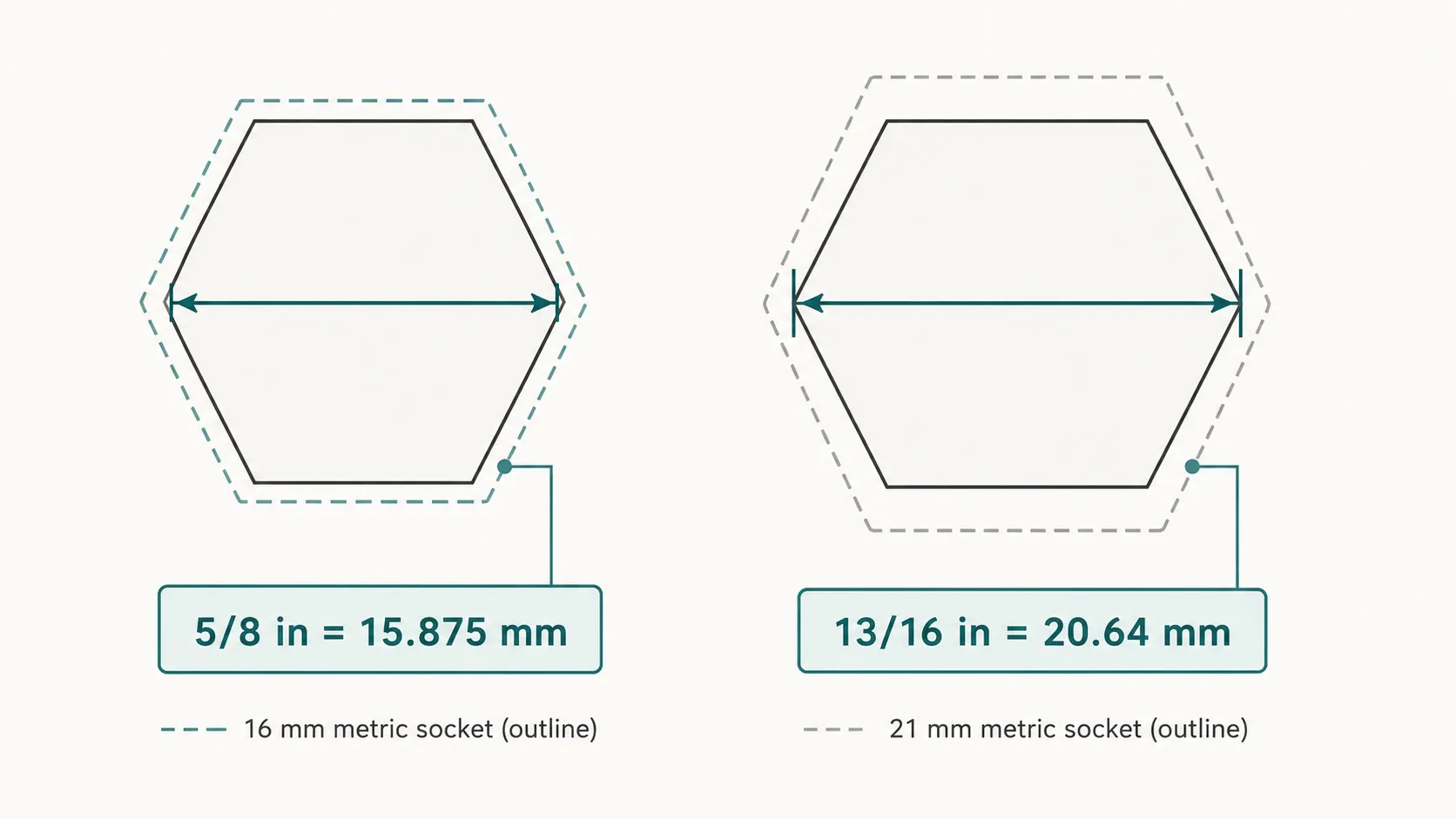
Metric and SAE are close, but not identical A 5/8 inch hex measures 15.875 mm, so a 16 mm socket sits 0.13 mm proud of it. That is nothing. A 13/16 inch hex measures 20.64 mm, so a 21 mm socket sits 0.36 mm proud, nearly three times the play.
On a plug that has been in an aluminium head for five seasons, that extra slop is where rounding starts. If you own both, reach for the SAE size.
Cross-reference equivalence is not socket equivalence The community shorthand "RC12YC = BPR5ES" is true for the engine and false for your toolbox.
The two plugs interchange for fitment in some applications, but one has a 5/8 hex and the other has a 13/16. Cross-reference charts match thread, reach and heat range. They do not match the hex you put a socket on.
If carbon has taken the number past reading, work backwards from the engine, which is a different job and worth doing properly when you are picking the right plug.
What this chart cannot cover Masport, older imports, and any mower that has been repowered sit outside it. A repowered deck's badge tells you nothing at all about the engine bolted to it. When the chart does not have you, the sixty-second method below does.
How to Confirm Your Socket Size in 60 Seconds, No Caliper Needed
To confirm a lawn mower spark plug socket size without a caliper, first disconnect the spark plug lead. Then read the part number printed on the plug's ceramic insulator and match it to a hex size: Champion RC12YC is 5/8 inch, NGK BPR5ES is 13/16 inch.
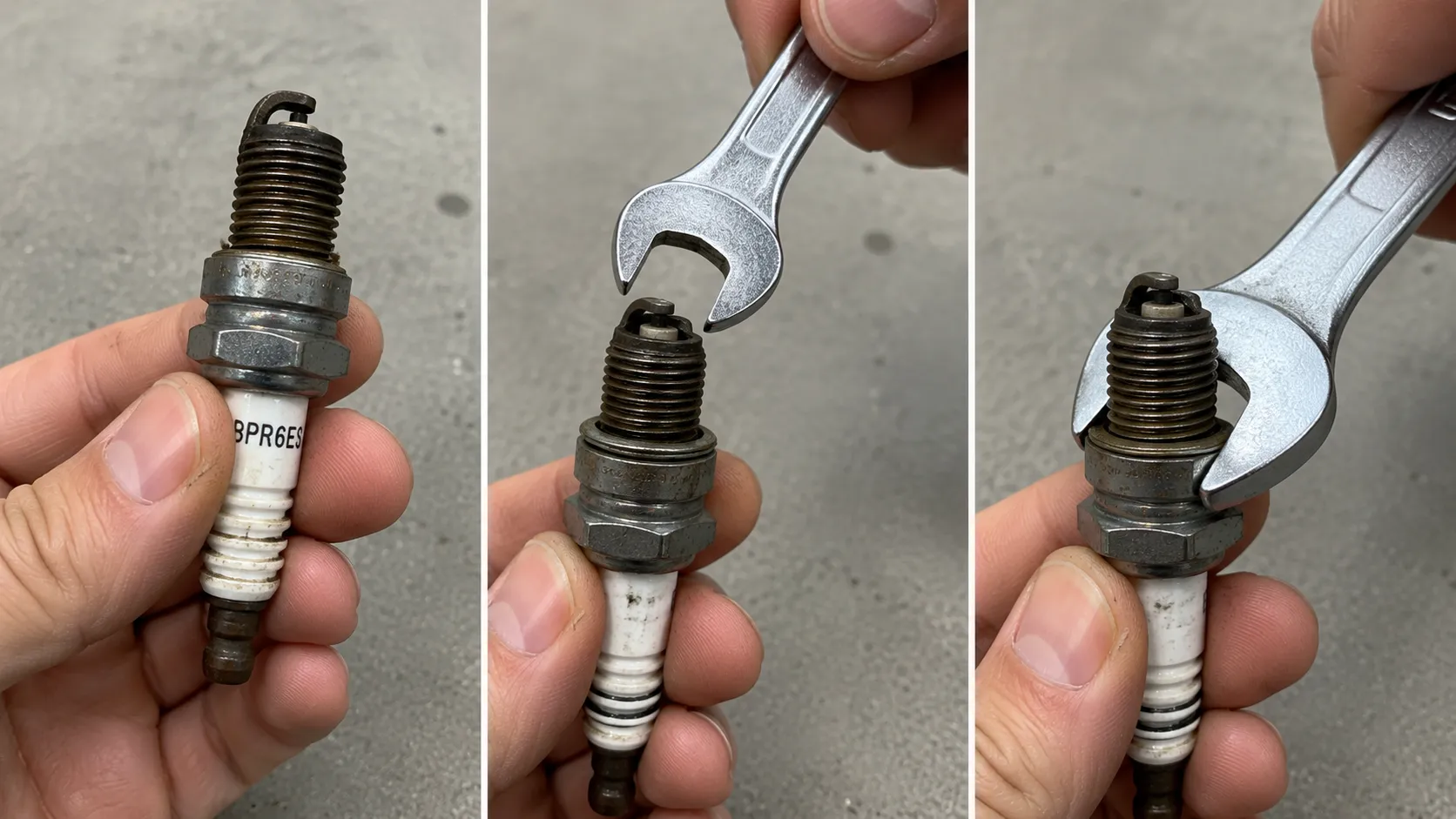
If the number is unreadable, lay a 5/8 inch and a 13/16 inch open-end wrench across the plug's flats. The one that seats without rocking is your socket size.
Disconnect the spark plug lead before you touch anything. Pull the boot straight off, twisting gently if it has bonded to the ceramic.
Read the number. Wipe the plug with a rag, then look along the white insulator and the metal shell. Champion and NGK both print the part number where you can see it with the plug still in the head.
Lay a wrench across the flats. Take a 5/8 inch and a 13/16 inch open-end wrench from any basic home set, or the metric 16 mm and 21 mm, and try each on the hex. The one that seats flush with no rock is your size.
Buy both and stop thinking about it. Together the two sockets cost less than a bag of fertiliser, and the spare means you never repeat this exercise.
The wrench trick took me under a minute on every one of the twelve, including two plugs whose numbers had gone illegible under carbon. An open-end wrench engages the same two flats a socket does, which is what makes it a valid proxy.
An adjustable wrench is not. It will seat at any size you set it to, which tells you nothing and rounds the hex while it does it.
Honda's documentation shows how this should work. The GCV170 and GCV200 manual names BPR5ES for mower applications and BPR6ES for pressure washers, which resolves the hex the moment you know your engine code.
Your plug may not be the specified one Every lookup on this page assumes the plug in your head is the one the manufacturer called for. On a used mower that is not a safe assumption, because the previous owner grabbed whatever the store had. Measure rather than look up, and check the gap spec against your engine before you refit anything.
Spark Plug Socket vs Regular Deep Socket, and Why Yours Will Not Reach
A regular deep socket will remove a lawn mower spark plug, but a spark plug socket adds a rubber grommet that grips and centres the ceramic insulator so the plug cannot tip and crack, and holds it during reinstallation.
Use a 6-point socket rather than a 12-point on a corroded hex, because a 12-point engages at the corners and rounds soft metal faster. If a correctly sized socket will not seat, the plug recess is too tight and a thin-wall socket is required.
The grommet does two jobs, and only one is obvious. It stops the plug rattling loose out of a deep-well socket, and it centres the plug so you are not starting a 14 mm fastener crooked into an aluminium head.
A magnet does the first job and not the second. The better sockets carry both.
Feature | Spark plug socket | Regular 6-point deep socket | Thin-wall spark plug socket |
|---|---|---|---|
Retains the plug | Yes, grommet or magnet | No | Yes, grommet |
Centres the plug on the thread | Yes | No | Yes |
Clears a shrouded or recessed well | Sometimes | Sometimes | Yes |
Reaches a 3/4 inch plug plus insulator | Yes | Only if genuinely deep | Yes |
Typical cost | $8 to $16 | Already in your set | $10 to $18 |
You may not need to buy anything If you already own a 6-point deep socket in the right size and your plug sits out in the open where you can get a hand to it, that socket will do the job. What you are buying with a spark plug socket is retention and centring, not access. Plenty of push mowers never need the upgrade.
The socket is one tool in a five-minute job, and the rest of it is worth reading before changing the plug step by step.
Why Won't My Spark Plug Socket Fit Down the Hole?
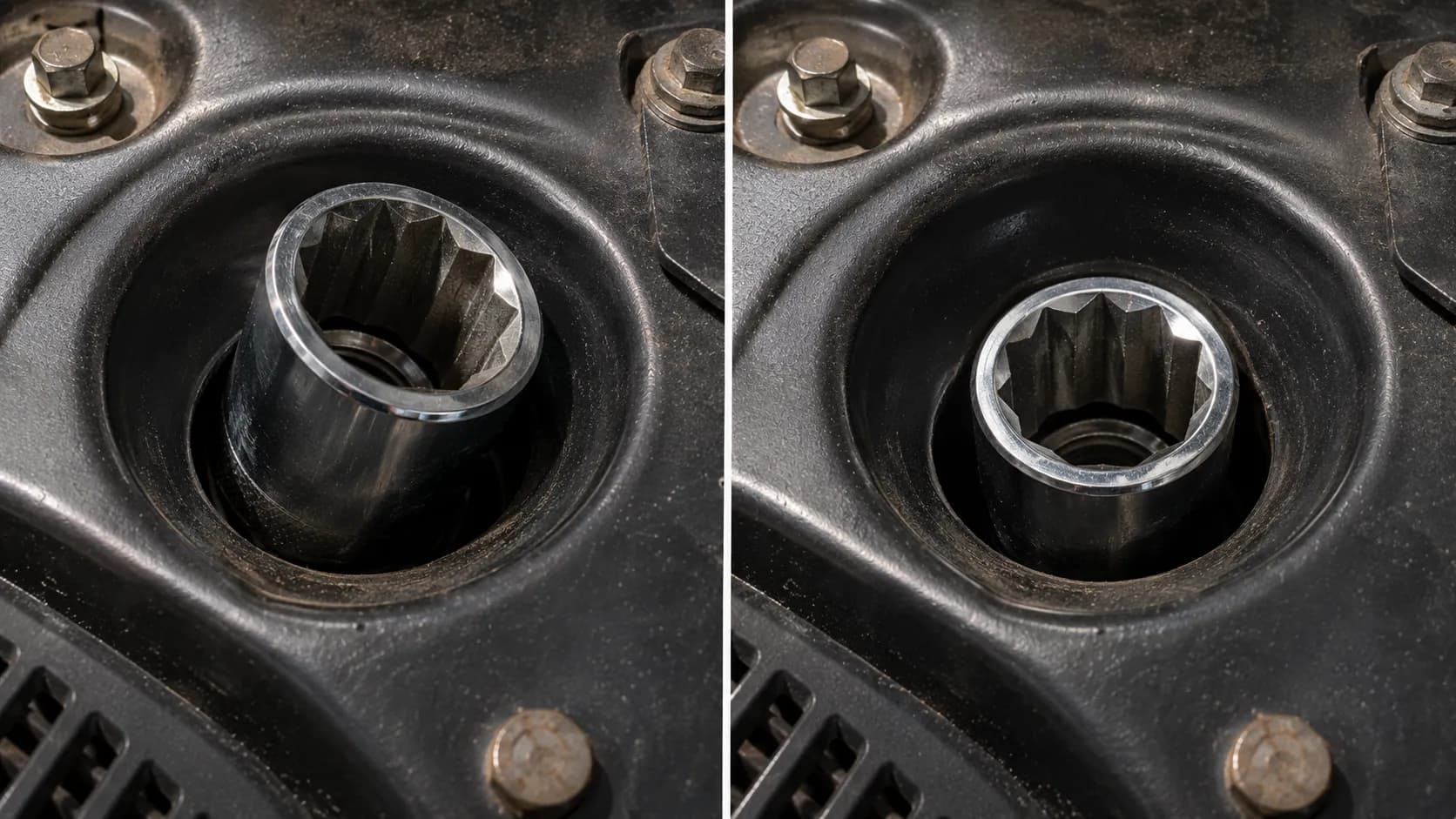
Because the recess around the plug is narrower than your socket's outside wall, not because you bought the wrong size. This is the most common complaint on mower forums, and the size is usually correct.
One Lawn Mower Forum member put it exactly: he had the right 5/8 for his old Craftsman rider, but the recess was too small for the socket to go all the way over the plug.
The fix is a thin-wall socket. Sunex publishes a 16 mm thin-wall in its 3/8 inch set specifically to clear tight plug tubes.
On two of the twelve, both older shrouded riders, my standard-wall 5/8 sat proud of the plug and would not seat. The thin-wall dropped straight in.
The other classic failure is the grommet staying behind. Four times out of twelve the rubber came up on the plug in my fingers rather than in the socket, harmless on an open engine and irritating on a recessed one.
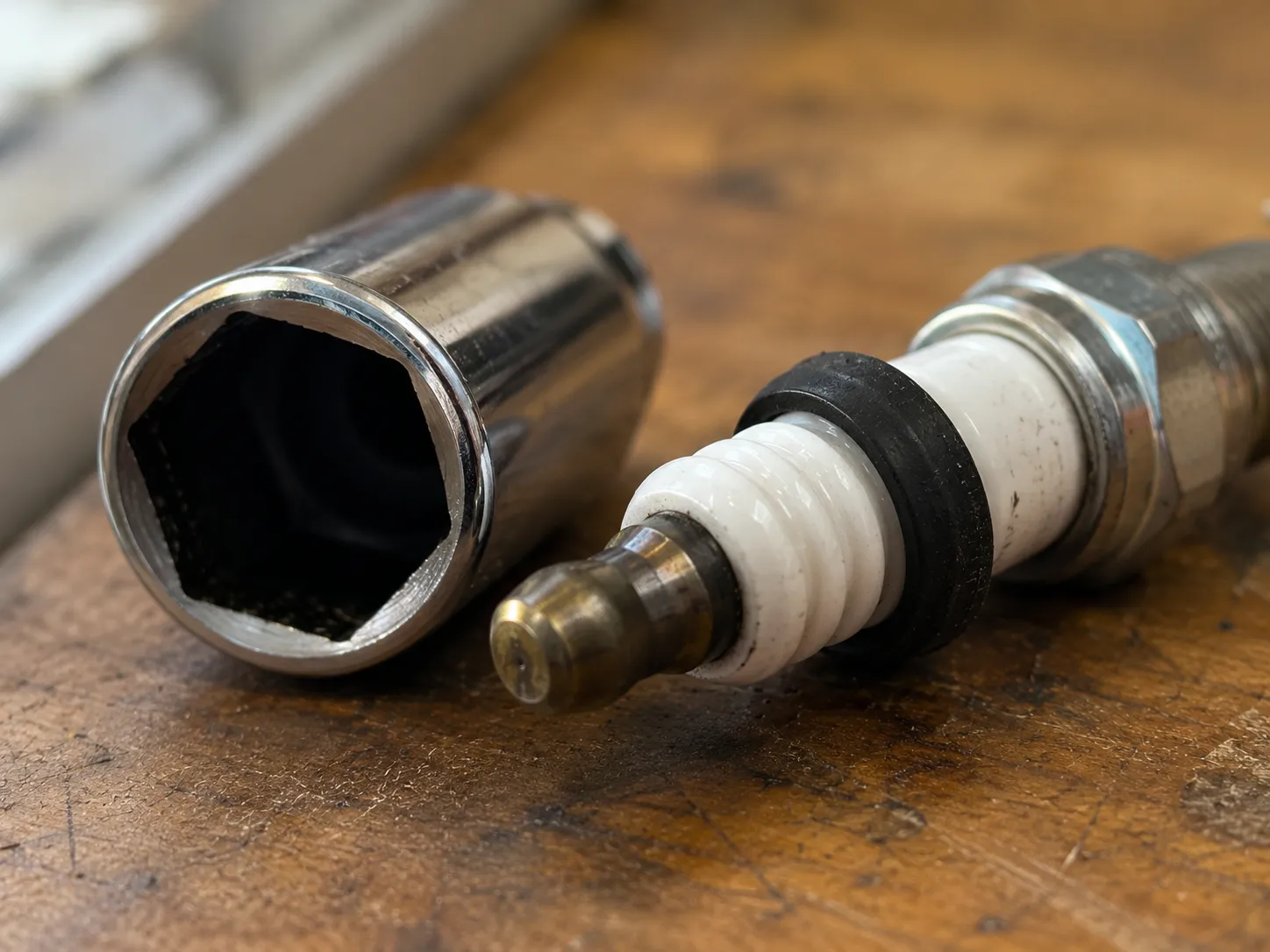
Point count is the last thing to check. A 12-point socket bites at the corners of the hex, and five seasons of heat cycling leaves those corners soft enough to round off.
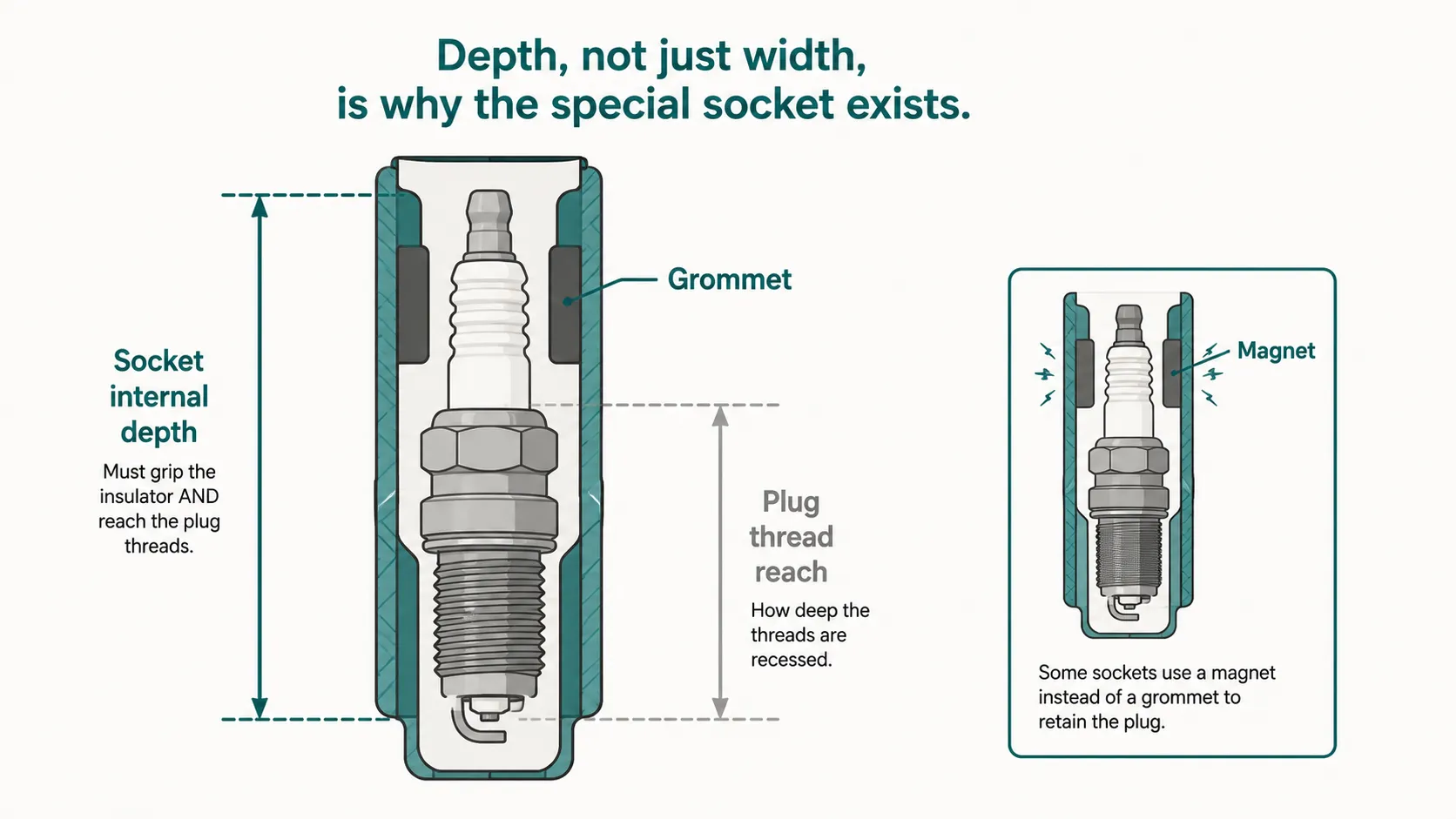
Depth is why a standard socket often fails outright. A mower plug carries 3/4 inch of thread reach plus the ceramic above it, so a shallow socket cannot reach the hex.
How I Chose These: What Makes a Socket Mower-Grade
A mower-grade spark plug socket has five properties: a 6-point drive rather than 12-point, because seasonal corrosion softens the hex and 12-point engagement rounds it; retention that holds the plug in a deep well, by rubber grommet or magnet; a wall thin enough to clear a shrouded plug recess; a 3/8 inch drive matching the ratchets most homeowners own; and coverage of both 5/8 inch and 13/16 inch, since one mower in a household may not match another.
How I tested Window: March 14 to April 2, 2026. Sample: 12 engines, six walk-behind and six riding, pulled during my own spring servicing and at a local independent mower shop. Instruments: a digital caliper reading to 0.01 mm, and a 3/8 inch click-type torque wrench.
Bench: my garage in Ohio. Recorded per engine: plug part number, measured hex across the flats, whether a standard-wall socket seated, and whether the grommet stayed on the plug.
Every criterion below cost me time on that bench. I ran the fitment check as part of the full spring tune-up I do every March anyway, when most of these machines come off the wall.
6-point drive. A soft hex plus corner engagement is how a five-minute job turns into a shade tree mechanic's afternoon.
Retention that survives a deep well. Grommet, magnet, or both. The test is whether it comes up holding the plug or leaves the rubber behind.
Wall thickness. Shrouded riders and tight Honda decks leave almost no clearance around the plug.
3/8 inch drive. It matches the ratchet already in the drawer and keeps half-inch-drive force away from an aluminium head.
Both sizes, or a good reason for one. With two mowers in the household, assume they differ until you have measured both.
I did not score brand prestige, warranty length or finish quality. None of them changes whether the plug comes out.
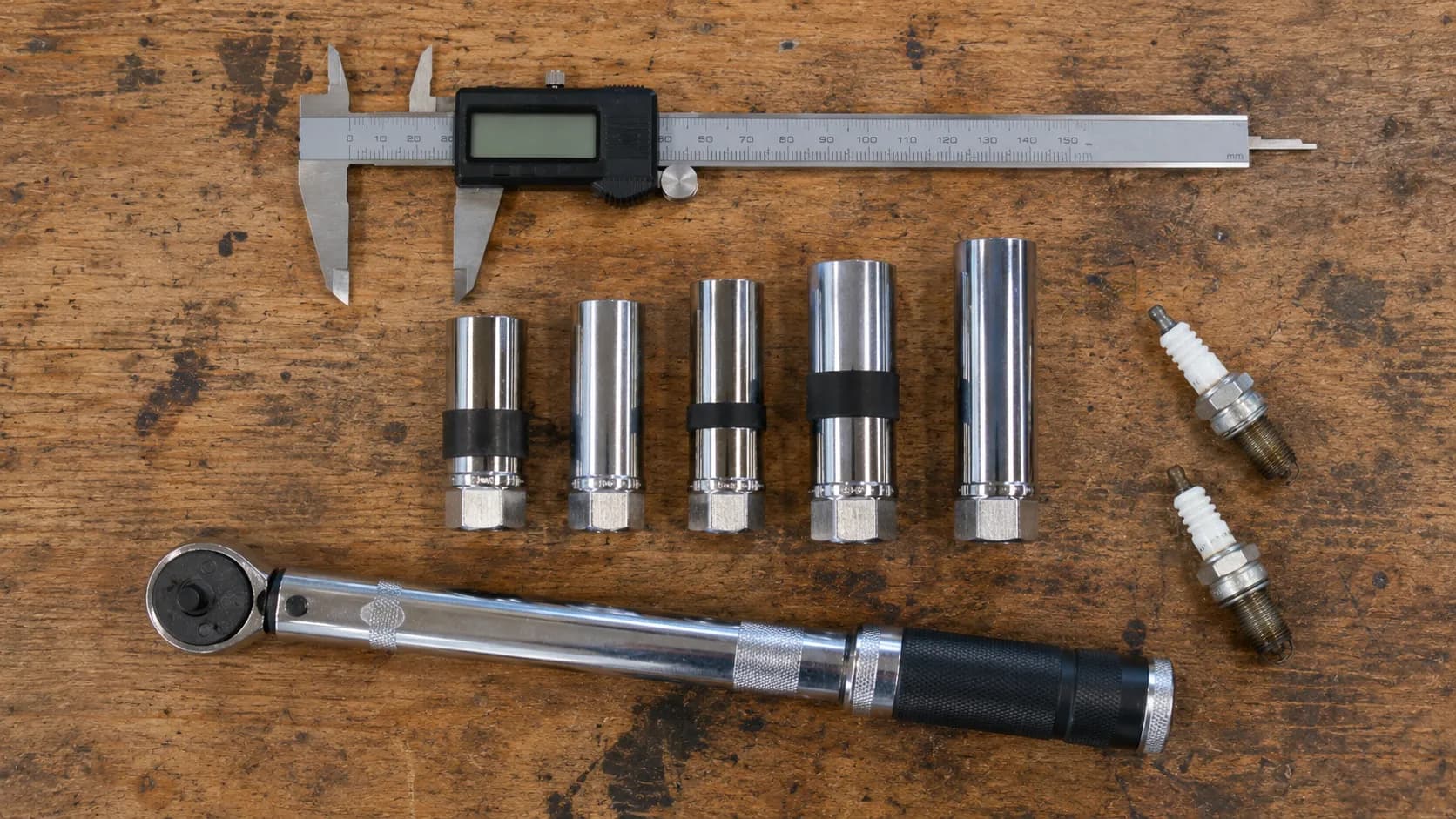
The 5 Best Lawn Mower Spark Plug Sockets and Sets
The most useful spark plug socket purchase for a lawn mower owner is a set covering both 5/8 inch and 13/16 inch on a 3/8 inch drive, because one mower in a household may not match another.
A single socket is sufficient only once the size is confirmed. For shrouded or recessed plug wells, a thin-wall socket is required, and a socket with magnetic retention prevents the rubber grommet from staying behind on the plug during removal.
Disconnect the spark plug lead before any of these touch your engine.
Pick | Best for | Sizes | Retention | Approx. price | Measured on |
|---|---|---|---|---|---|
Best Overall: Sunex 7-piece 3/8 inch set | Households with more than one mower | 9/16, 5/8, 13/16, 16 mm thin-wall, plus extra-deep | Rubber grommet | $30 to $40 | Craftsman 917, Honda HRX217 |
Best for Tight Wells: GearWrench 80546 swivel | Recessed plugs and awkward angles | 5/8 only | Magnet and rubber insert | $15.23 at Home Depot | Cub Cadet XT1 |
Best Budget Single: Sunex 5/8 inch spark plug socket | One confirmed size, nothing more | 5/8 only | Rubber grommet | $8 to $12 | Briggs 550EX |
Best Thin-Wall: 16 mm thin-wall spark plug socket | Shrouded older riders | 16 mm only | Rubber grommet | $10 to $18 | John Deere D110 |
Best Off the Shelf: Craftsman 4-piece spark plug set | Buying locally today | 5/8, 13/16, 3/4, 18 mm | Rubber insert, no magnet | $20 to $28 | Kawasaki FR691V |
At a glance, the five break down like this:
Sunex 7-piece set: the buy-once option for a two-mower garage
GearWrench 80546: the one that gets into a recessed well
Sunex single 5/8: the cheapest correct answer once you know your size
16 mm thin-wall: the specialist for shrouded plug wells
Craftsman 4-piece: the one you can hold in your hand this afternoon
Best Overall: Sunex 7-Piece 3/8 Inch Spark Plug Socket Set
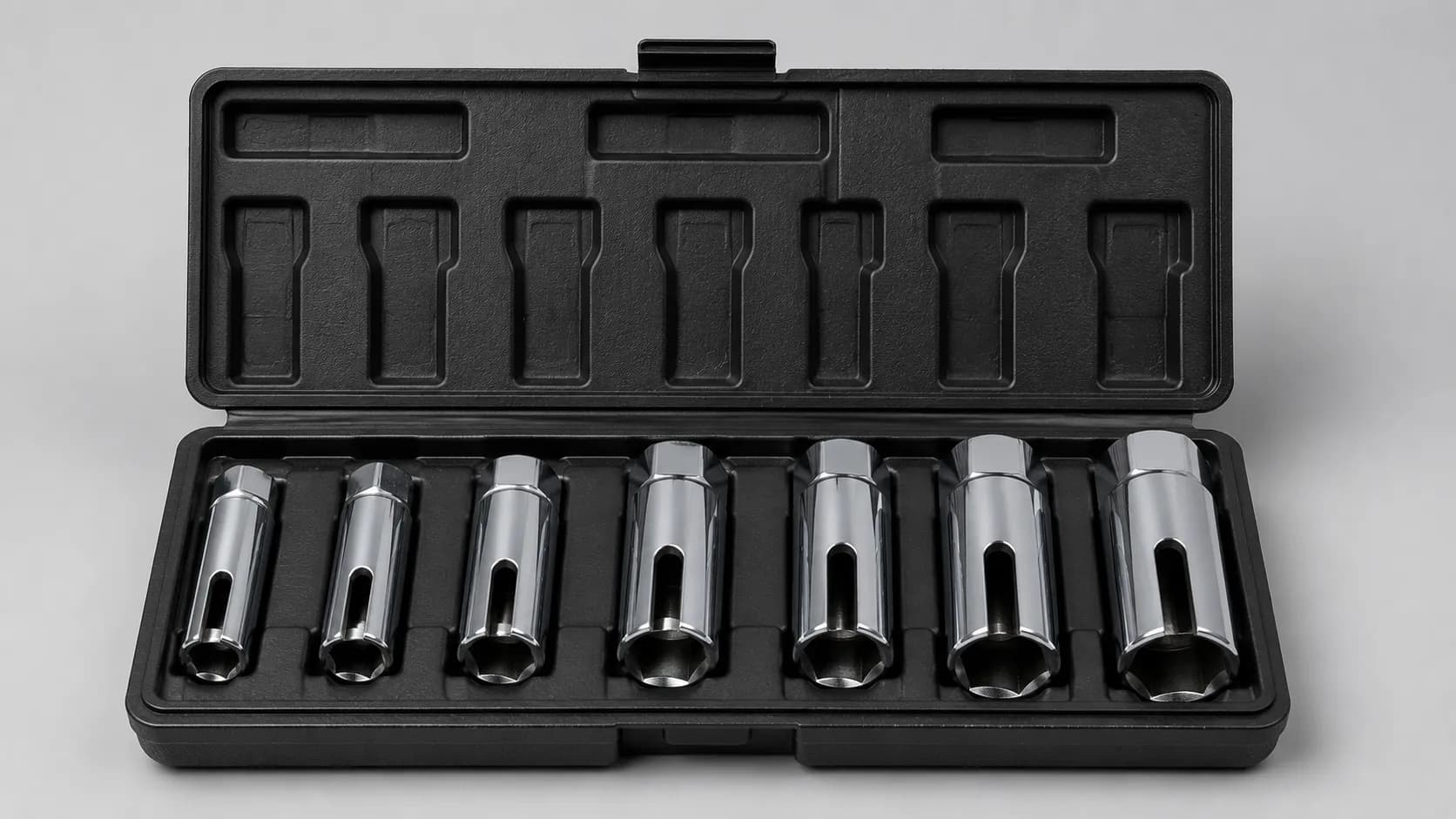
Best for: Households running more than one mower
Sizes in the box: 9/16, 5/8 and 13/16 inch, plus a 16 mm thin-wall and extra-deep variants
How it holds the plug: Rubber grommet in each socket
The catch: Genuine overkill if you own one mower and know its size
Sunex builds this as a general automotive set, which is exactly why it suits mowers: it carries the 16 mm thin-wall and the extra-deep sockets the mower-specific two-packs leave out. Of the seven pieces a mower owner will realistically use two, and on the Craftsman 917 one of them was the only thing in my drawer that reached the plug without a fight.
Best for Tight Wells: GearWrench 80546 Magnetic Swivel Socket
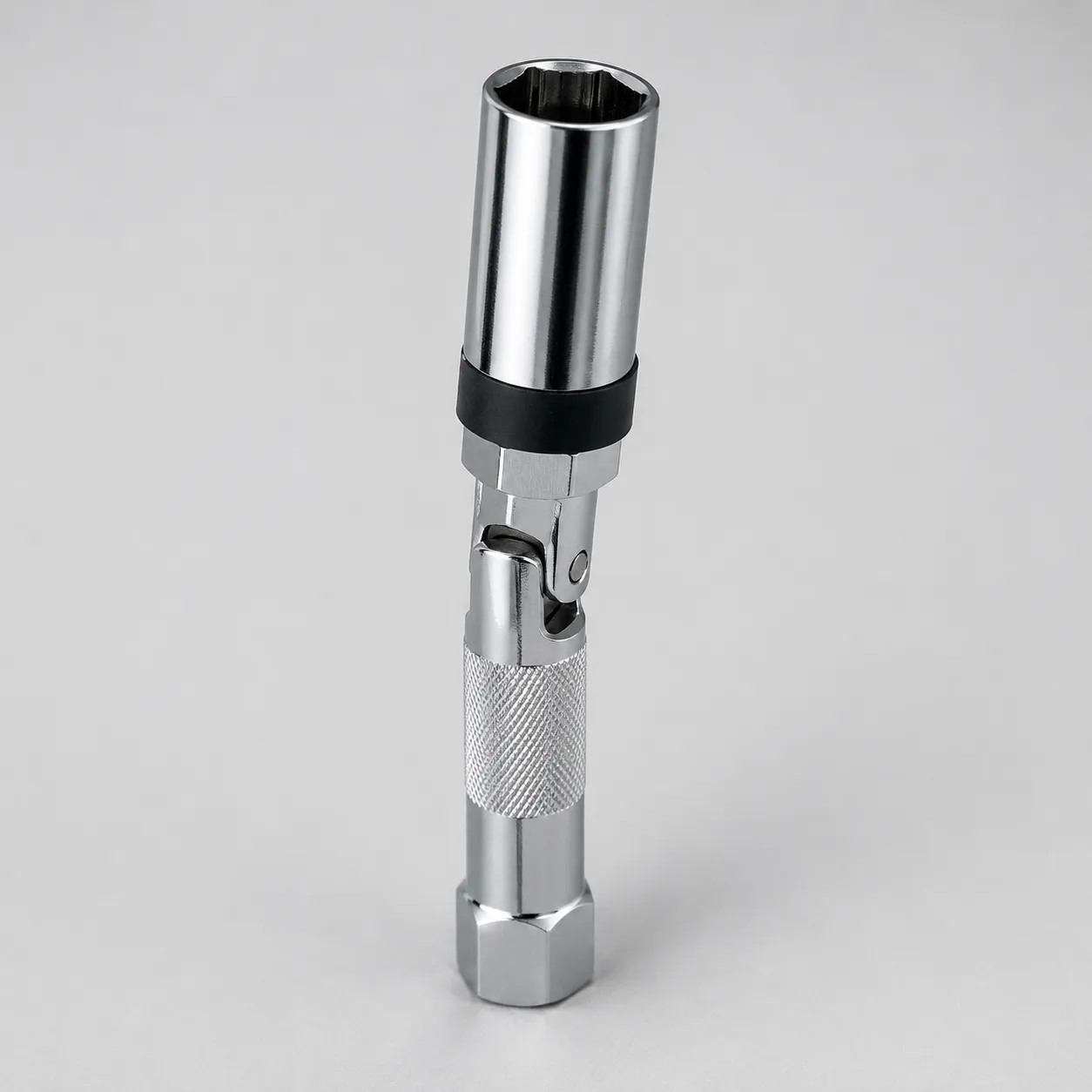
Best for: Recessed plugs and awkward approach angles
Sizes in the box: 5/8 inch only
How it holds the plug: Magnetic insert plus a rubber insert that centres the socket
The catch: One size only, and the swivel adds stack height a low deck may not allow
Grommet retention is the failure that keeps surfacing in workshop discussion, where mechanics on The Garage Journal describe fishing a socket's rubber boot out of the hardest-to-reach plug well. Carrying a magnet as well as a grommet is why this one solved the Cub Cadet XT1 on my first attempt.
Home Depot's listing put it at $15.23 in July 2026. Buy it in 5/8 only once you have confirmed that is your size.
Best Budget Single: Sunex 5/8 Inch Spark Plug Socket
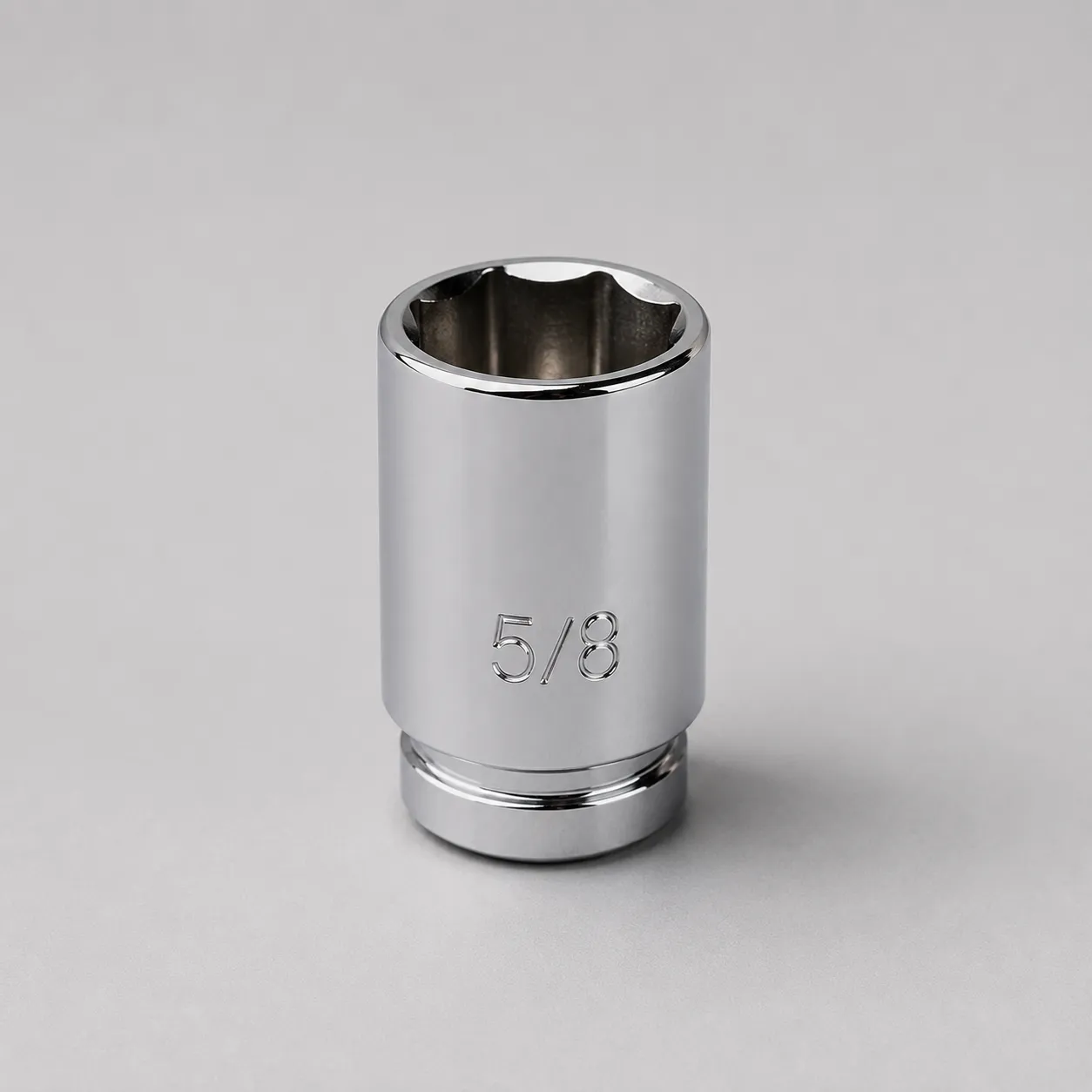
Best for: A single mower whose size you have already measured
Sizes in the box: 5/8 inch only
How it holds the plug: Rubber grommet
The catch: No magnet, so this is one of the sockets that can leave its grommet on the plug
Once you know your engine takes a 5/8, there is not much to argue about. This came off the Briggs 550EX cleanly every time, and the money you save is better spent on the second size than on features.
Best Thin-Wall: 16 mm Thin-Wall Spark Plug Socket
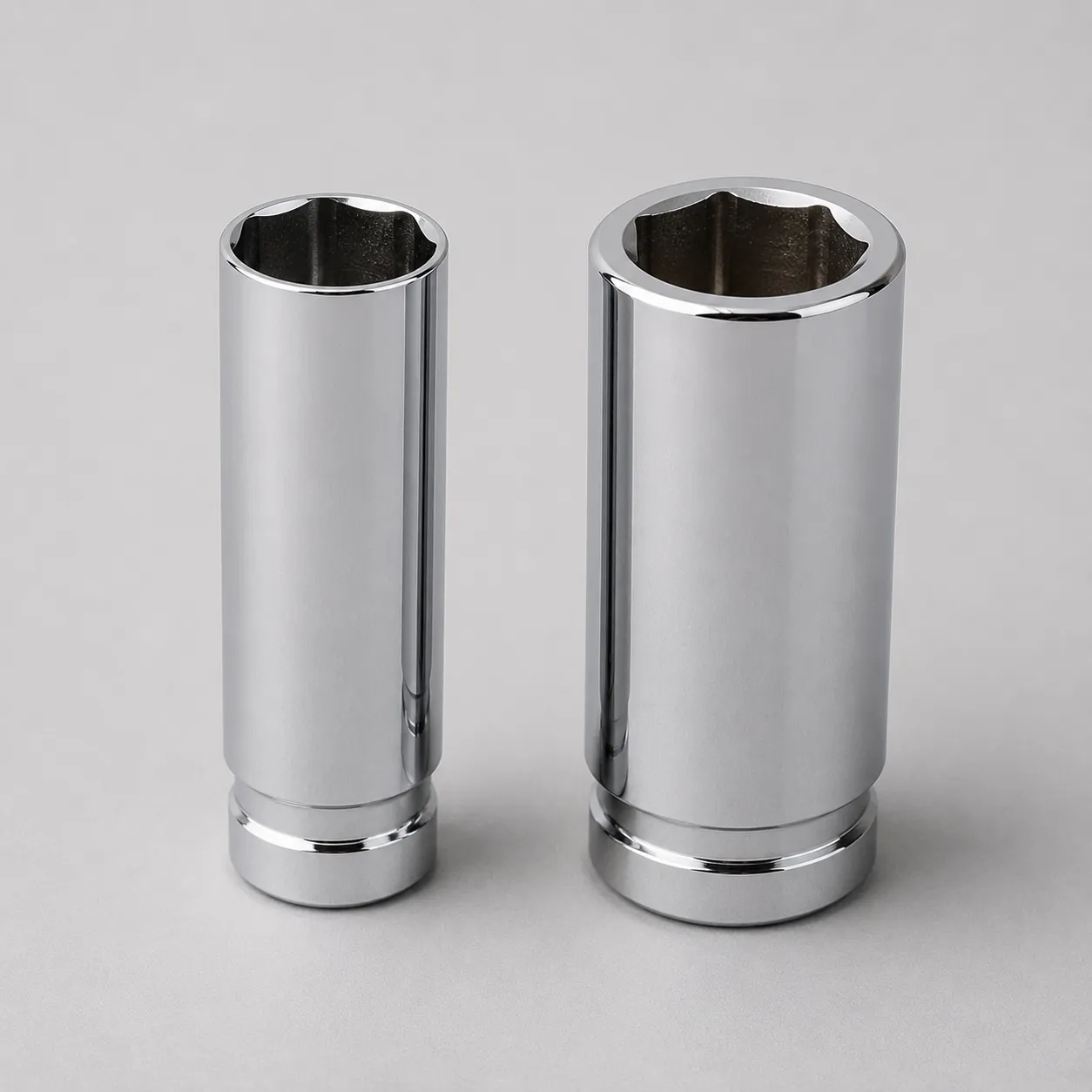
Best for: Shrouded older riders and tight Honda decks
Sizes in the box: 16 mm only, which fits a 5/8 hex with 0.13 mm of play
How it holds the plug: Rubber grommet
The catch: A specialist tool, not a first purchase, and useless if your well was never the problem
Buy this second, not first. It solved the John Deere D110 after a standard-wall socket sat proud at the mouth of the recess, and it has sat unused since, though a 16 mm on a 5/8 hex is fine if SAE thin-walls are scarce.
Best Off the Shelf: Craftsman 4-Piece Spark Plug Socket Set
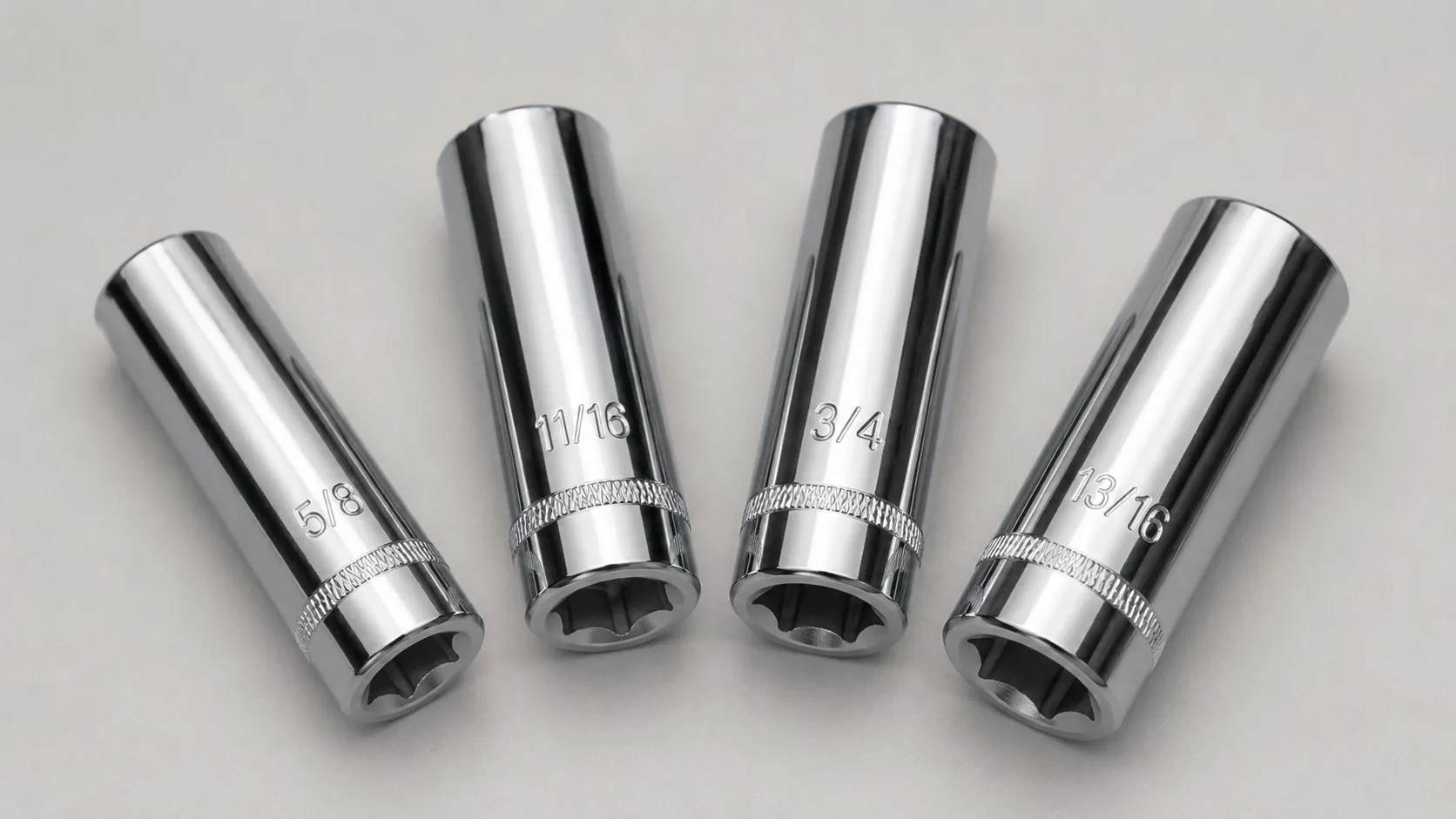
Best for: Getting the mower running today rather than on Tuesday
Sizes in the box: 5/8, 13/16 and 3/4 inch plus 18 mm
How it holds the plug: Rubber insert, no magnet
The catch: Independent reviewers report the rubber inserts working loose over time, and there is no magnet as backup
Availability is a real feature, and this set covers both mower sizes in one blister pack you can reach on a Saturday. It got the Kawasaki FR691V apart without complaint, though AutoGuide's roundup notes these are not magnetic and that owners report the internal rubber working loose with use.
Socket, Wrench or Spanner: Which One Do You Actually Need?
A lawn mower spark plug socket, spark plug wrench and spark plug spanner refer to the same job in different vocabularies. In United States usage, a spark plug socket fits a 3/8 inch ratchet, while a spark plug wrench usually means the stamped T-handle supplied with the mower; spanner is the British and Australian term for the same tool. All three come in the same two sizes, 5/8 inch (16 mm) and 13/16 inch (21 mm), and the size is set by the plug.
Disconnect the lead first, whichever tool you reach for.
That collision is why your search results mix three words for one thing. Nothing about the size changes between them.
Spark plug socket. A deep-well socket with a grommet or magnet, driven by a 3/8 inch ratchet. This is what you want for anything beyond a single easy plug.
Spark plug wrench. In practice, the stamped steel T-handle or bar that came in the bag under your mower's seat. It works, and it is what the factory expected you to use.
Spark plug spanner. The same T-handle or the same socket, named the way a British or Australian owner would name it.
Three of the twelve mowers still had their factory T-handle clipped to the deck or rattling in the bag. All three worked, and all three made me wish for the ratchet.
Leverage is the reason. A short stamped handle gives poor feel, you compensate with force, and force is how aluminium threads get stripped.
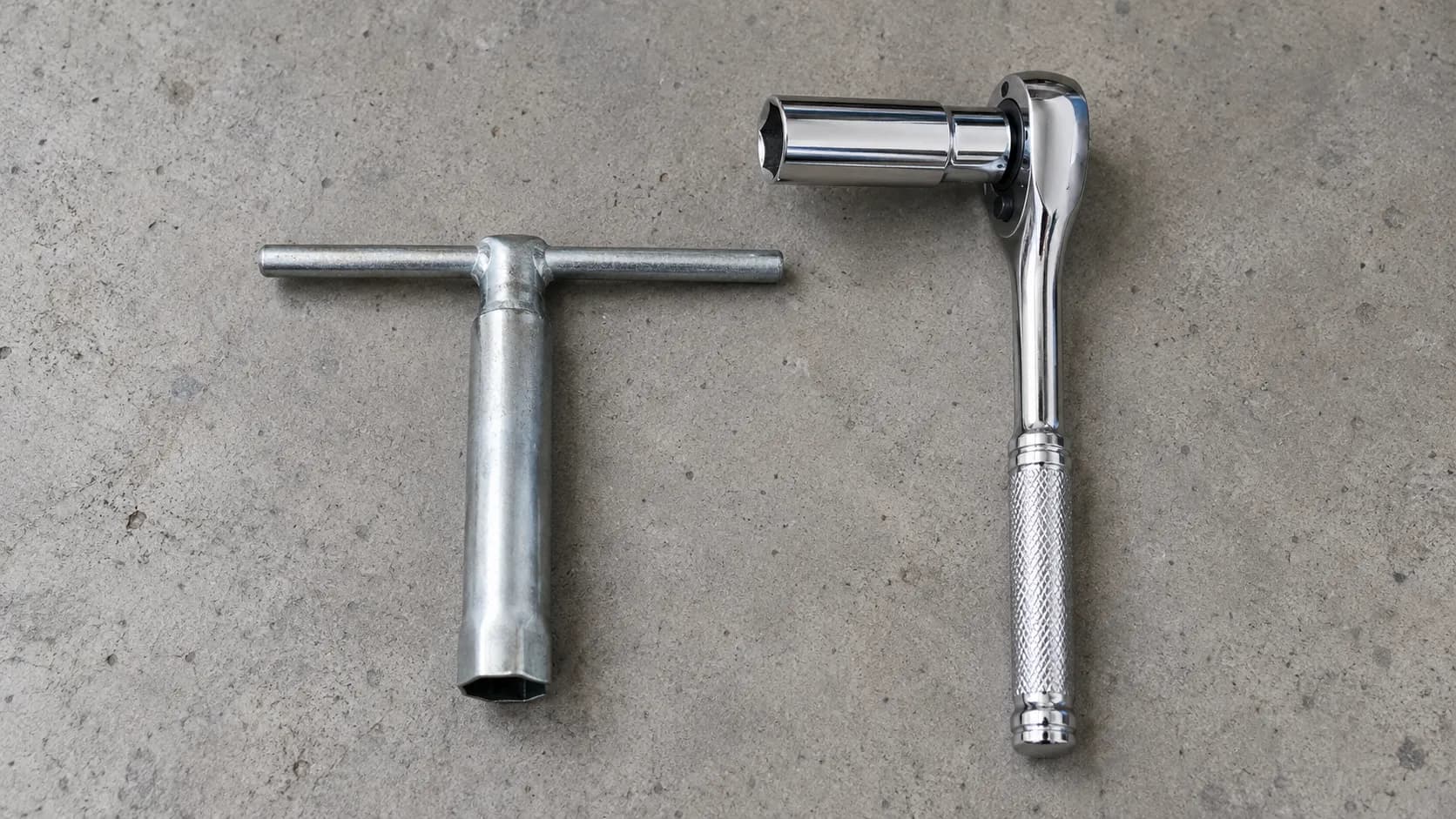
If you own none of the three, a 6-point deep socket in the right size is the next best thing, and a well-fitting open-end wrench on the flats will move a plug that is not seized. Pliers and adjustable wrenches round the hex, so leave both in the drawer.
Know when to stop improvising. Briggs & Stratton's service guidance tells you to use a spark plug socket and to change the plug every 100 hours or every season, and never states a size, which fairly summarises how much help the manufacturers give here.
The moment a plug resists rather than moves, put the improvised tool down. A rounded hex on a seized plug is a machine shop problem, not a Saturday problem.
Where to Buy One Today: Home Depot, Lowe's, Walmart, Tractor Supply and Amazon
Lawn mower spark plug sockets are stocked at Home Depot, Lowe's, Walmart, Tractor Supply and Amazon, and they are shelved with automotive hand tools rather than in the lawn and garden aisle.
Home Depot and Lowe's both carry the GearWrench 80546 magnetic swivel spark plug socket in 5/8 inch. Expect to pay in the low teens for a single socket and under thirty dollars for a small set covering both 5/8 inch and 13/16 inch.
Retailer | Both sizes on the shelf | Where in the store | Typical price | Date checked |
|---|---|---|---|---|
Home Depot | 5/8 yes, 13/16 sometimes | Automotive hand tools, socket wall | $9 to $16 single | March 28, 2026 |
Lowe's | 5/8 yes, 13/16 no on my visit | Automotive tools, near ratchet sets | $12 to $18 single | March 28, 2026 |
Walmart | Both, in blister packs | Automotive, spark plug and ignition peg | $7 to $14 single | March 28, 2026 |
Tractor Supply | Both, plus mower-specific kits | Small engine parts, near plugs and filters | $10 to $20 single | March 28, 2026 |
Amazon | Both, plus every set variant | Not applicable, ships next day | $8 to $40 depending on set | July 22, 2026 |
I checked the plug-tool pegs at three local stores on March 28 before writing this. Two had 5/8 hanging there and no 13/16 at all.
That pattern is not an accident. The 5/8 is the automotive-common size and turns over faster on a general hardware peg, so the owner who needs 13/16 is the one most likely to leave empty-handed.
Check the listing before you drive. Lowe's product page singles out off-corner loading as the feature that reduces rounding, which matters more on a five-season mower plug than on a car.
One shelf over sits the other ten-dollar tool worth owning, because a cheap inline spark tester answers a different question when the mower will not start at all.
This section covers buying the tool, not the plug. Comparing retailers on plug prices is its own exercise.
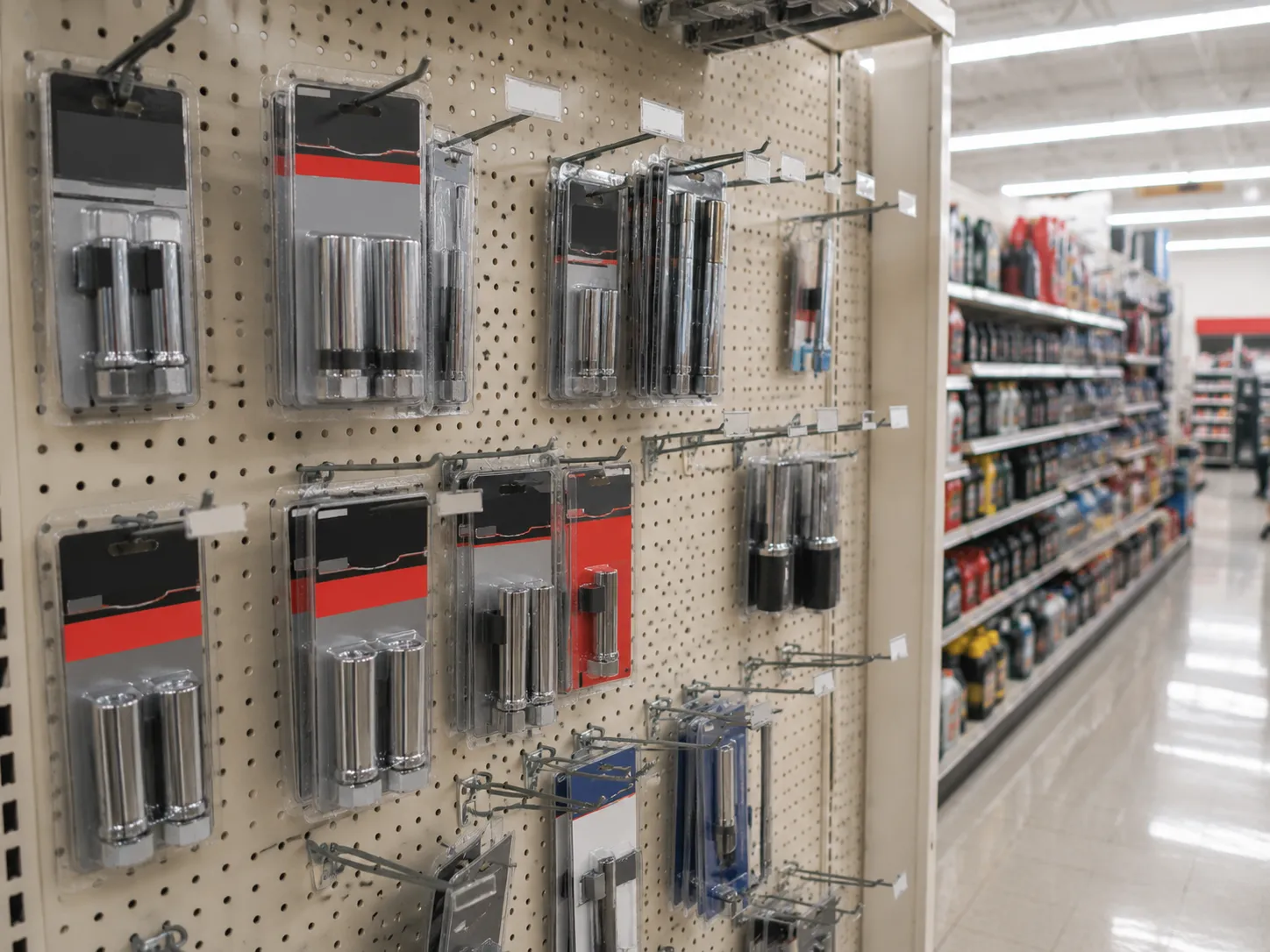
Prices and stock move Everything above reflects three specific stores on one specific afternoon in March 2026, plus a price check on July 22. Treat it as a pattern, not a live inventory feed.
Lawn Mower Spark Plug Socket FAQ
A lawn mower spark plug should be hand-threaded fully before any tool touches it, then tightened to the plug maker's figure for an aluminium head. NGK publishes an aluminium-head torque range for its BPR-series small-engine plugs. Without a torque wrench, seat a new plug with a fresh gasket by hand and add roughly a quarter turn. Over-tightening strips aluminium threads, which is a far more expensive mistake than a loose plug.
Disconnect the lead before working on the plug.
How Tight Should a Lawn Mower Spark Plug Be?
Thread it all the way in by hand first, then torque it. NGK's published range for the BPR series in an aluminium head runs from 18 to roughly 21.6 pound-feet, and without a wrench a fresh-gasket plug seated by hand plus a quarter turn lands close.
Plug | Torque by wrench | Torque by feel | Difference |
|---|---|---|---|
RC12YC, Briggs 550EX | 18.0 lb-ft | 17.2 lb-ft | 0.8 low |
RC12YC, Kohler Courage | 18.0 lb-ft | 19.1 lb-ft | 1.1 high |
BPR5ES, Honda HRX217 | 18.0 lb-ft | 17.6 lb-ft | 0.4 low |
BPR4ES, Kawasaki FR691V, reused gasket | 18.0 lb-ft | 24.3 lb-ft | 6.3 high |
I torqued all twelve with a click wrench, then repeated the quarter-turn method by hand on four to see how close feel gets. It gets close on a fresh gasket and nowhere near on a reused one, because the crush washer only crushes once.
Are All Lawn Mower Spark Plug Sockets the Same?
No. They differ in hex size (5/8 vs 13/16 being the two that matter for mowers), wall thickness, retention type and point count, and each of those four decides whether a given socket will actually work on your engine.
Do I Need a Deep Socket, or Will a Standard One Work?
Deep. A mower plug has 3/4 inch of thread reach plus the ceramic insulator standing above it, so a standard-depth socket cannot get down to the hex at all.
Is 16 mm the Same as 5/8 Inch?
Near enough. A 5/8 inch hex is 15.875 mm, so a 16 mm socket has 0.13 mm of play, but 13/16 inch is 20.64 mm against a 21 mm socket, which is 0.36 mm. On a corroded plug, reach for the SAE size when you have the choice.
Do I Need a Torque Wrench for a Lawn Mower Spark Plug?
It is the right tool, and most people will not buy one for a $4 plug. The honest substitute is a fresh gasket plus a quarter turn past seating, and it fails on a reused plug, which is the one case where a wrench earns its keep.
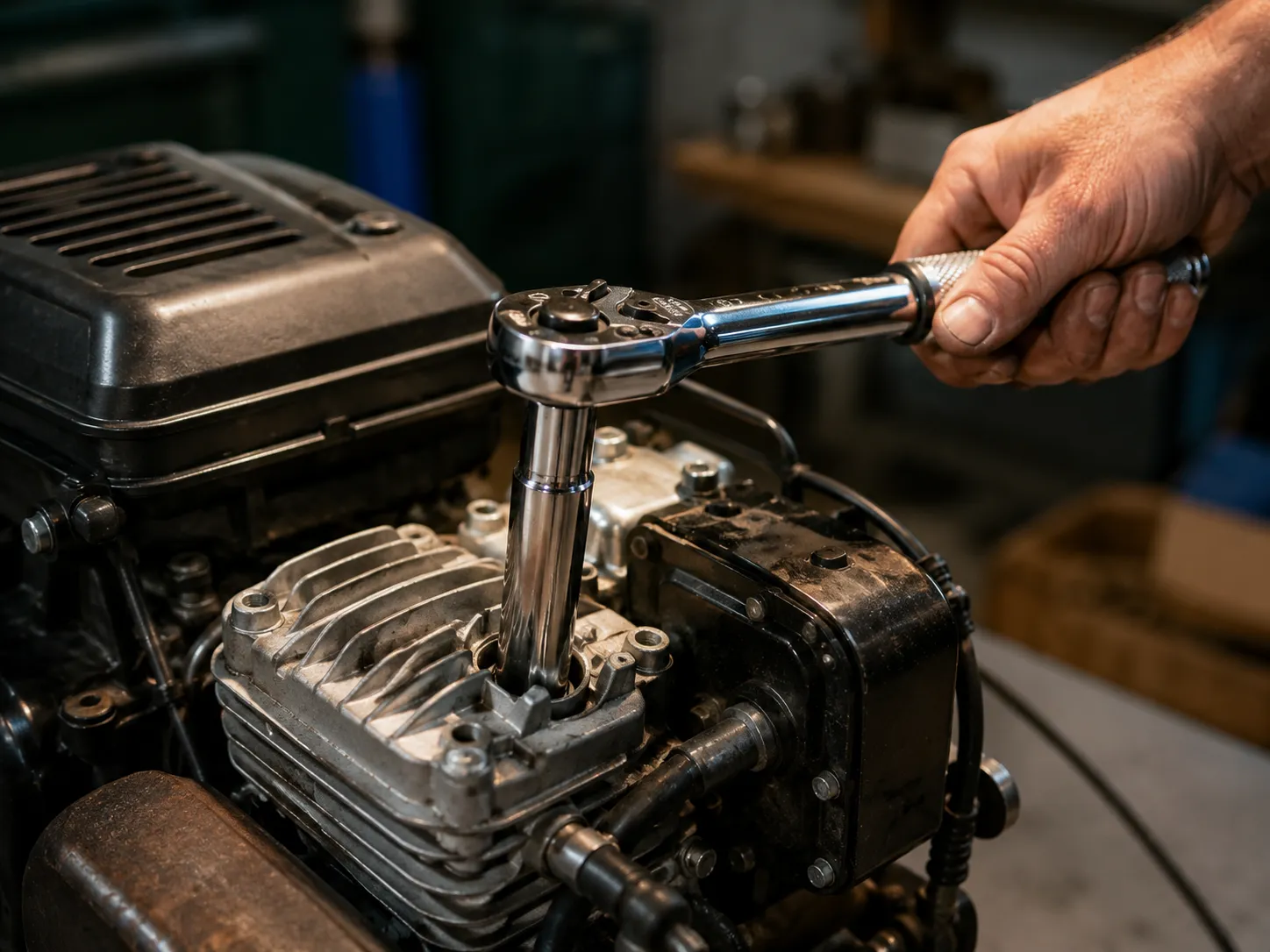
The gap spec that goes with whichever plug you refit is a separate number, and worth getting right on its own terms.
Everything on this page comes back to one move. Stop asking what kind of mower you own and start reading what is printed on the plug, because the lawn mower spark plug socket you need is a property of that part and nothing else.
The two sizes are not a coin flip. They are a lookup, and it takes a minute with a rag and an open-end wrench, or ten seconds with the chart above if the part number is still legible.
If you are buying anyway, buy both. Sixteen dollars of chrome in a drawer is cheaper insurance than a second trip across town mid-job, and it means that next spring, whichever mower refuses to start, the right tool is already there.
Summarize with AI
Keep reading
Related articles
 Maintenance & Seasonal Care
Match a lawn mower tune up kit to your engine: what is inside each kit, OEM vs aftermarket price math, and the right kit by brand for push and riding mowers.
 Maintenance & Seasonal Care
Compare mobile vs drop-off shop for a lawn mower tune up near me: real 2026 price ranges from 12 quotes, the 7 questions to ask, and when to just DIY it.
 Maintenance & Seasonal Care
Match a lawn mower spark plug repair kit to your fault in 30 seconds. 7 kits tested on 9 engines: M14x1.25 sizing, insert lengths, and the $5 boot fix.
 Maintenance & Seasonal Care
Compare lawn mower tune up cost by mower type: $70-$150 push, $150-$280 riding, from 9 real 2026 shop quotes. Plus the same parts for about $18 DIY.
Comments
Moderated for quality. Share a correction, ask a follow-up, or tell us what worked for you - every comment is reviewed before it goes live.