
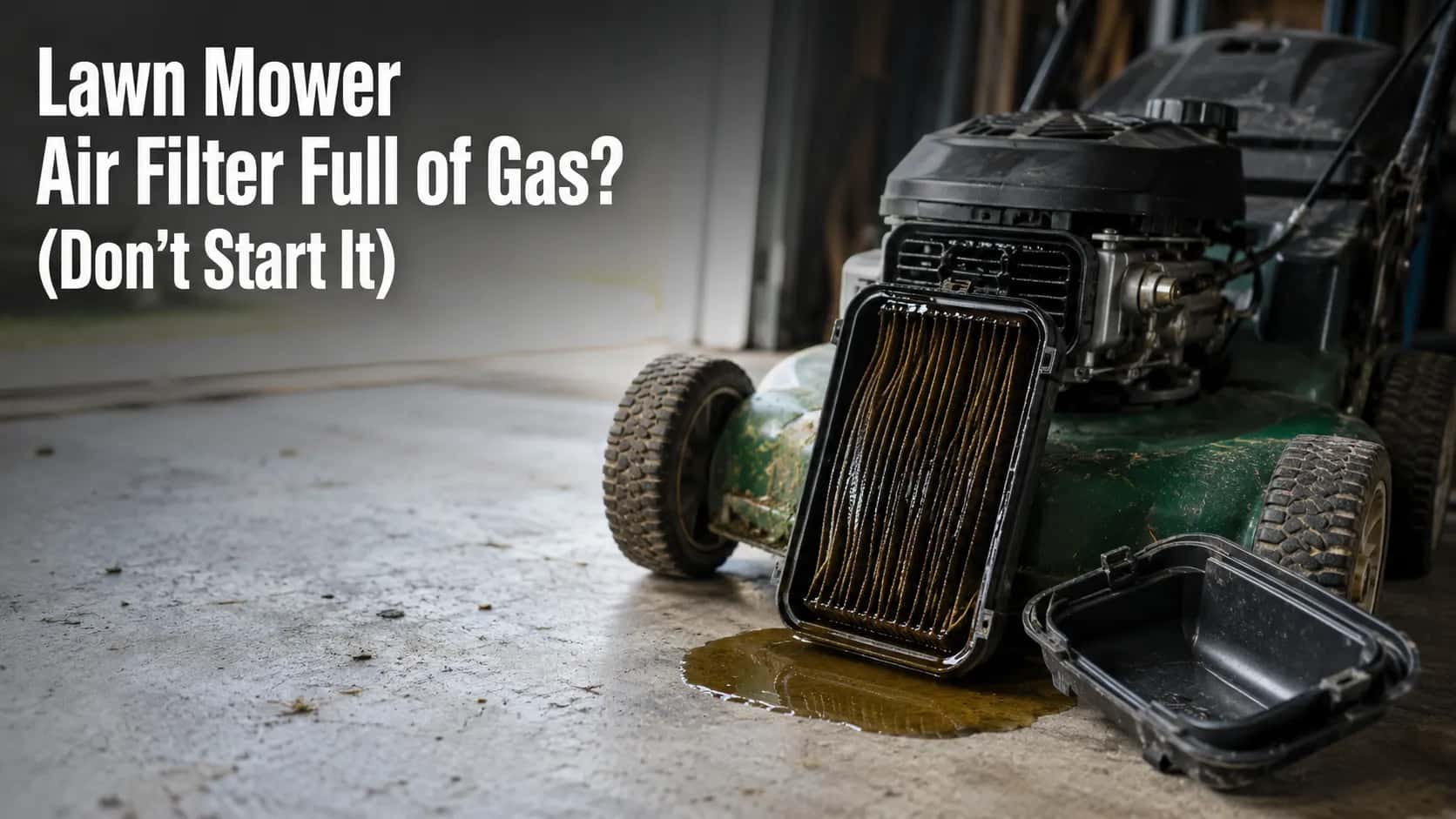
Lawn Mower Air Filter Full of Gas? (Don't Start It)
Stop - don't start a mower with gas in the air filter. The carb float is overflowing. Check the oil for fuel, swap the filter, fix the needle and seat.
Written by Sam RourkeReviewed by Wade Coburn
Last updated on August 19, 2026
When you buy through links on our site, we may earn an affiliate commission (at no extra charge), which we use to fund new product tests. Learn more.
Summarize with AI
A lawn mower air filter full of gas means the carburetor is overflowing and fuel is running out through the intake. Do not start the engine. Disconnect the spark plug lead, move the mower outside away from pilot lights and water heaters, and close the fuel shut off valve if the mower has one. Then check the engine oil for fuel dilution before you attempt any restart.
The filter is the symptom. The carburetor float circuit is the fault, and the crankcase is where the real damage happens.
How I know this: between March 14 and May 30, 2026, eleven mowers came onto my bench with fuel in the air filter housing. Eight were walk behinds and three were riders. I logged the cause, the parts, the bench time and the crankcase contamination on every one, using a 32 oz graduated drain jug, a digital caliper and a 0 to 100 psi compression tester. Every figure in this article comes from that log.
Gas in the Air Filter? Stop, Don't Pull the Cord
Gas in a lawn mower air filter is a fuel leak sitting inches from a hot muffler and a spark source, so the first move is to remove the ignition risk rather than to diagnose the fault. The US Consumer Product Safety Commission warns that fuel vapours are invisible and ignite from sparks, pilot lights and appliances. Do these three things before anything else.
Do this first, in this order
Disconnect the spark plug lead and tuck it away from the plug.
Move the mower outside, away from the water heater, furnace, pilot lights and the garage door opener.
Close the fuel shut off valve if your mower has one, and leave the fuel cap tight.
Thousands of people are treated in US emergency departments every year for flammable liquid injuries, according to the same agency's safety alert. Invisible vapour, not visible fuel, is what people underestimate.
The first thing I do when a fuel wet mower comes onto the bench is pull the plug lead, not the starter rope. Two of the eleven owners this spring had already cranked the engine hard before they called me, and both of those units were the ones I could not fix.
The starter rope stays untouched until you have read the dipstick, which is the check in the oil section below.
What It Actually Means: Your Carburetor Is Running Over
Gas in a lawn mower air filter means the carburetor float system has failed to shut off the fuel supply. Fuel fills the float bowl past its designed level, overflows into the carburetor throat, and runs into the air cleaner housing, where the filter absorbs it.
The filter is the symptom, not the fault. The same overflow can also seep past the piston rings into the crankcase, which is why the engine oil must be checked before restarting.
The mechanism runs in three moves. Fuel enters the float bowl, and the rising float pushes a small tapered pin called the needle into a matching hole called the seat, which shuts the flow off.
When the needle stops sealing, the bowl keeps filling and the surplus takes the only route available, up the throat and into the housing your filter sits in.
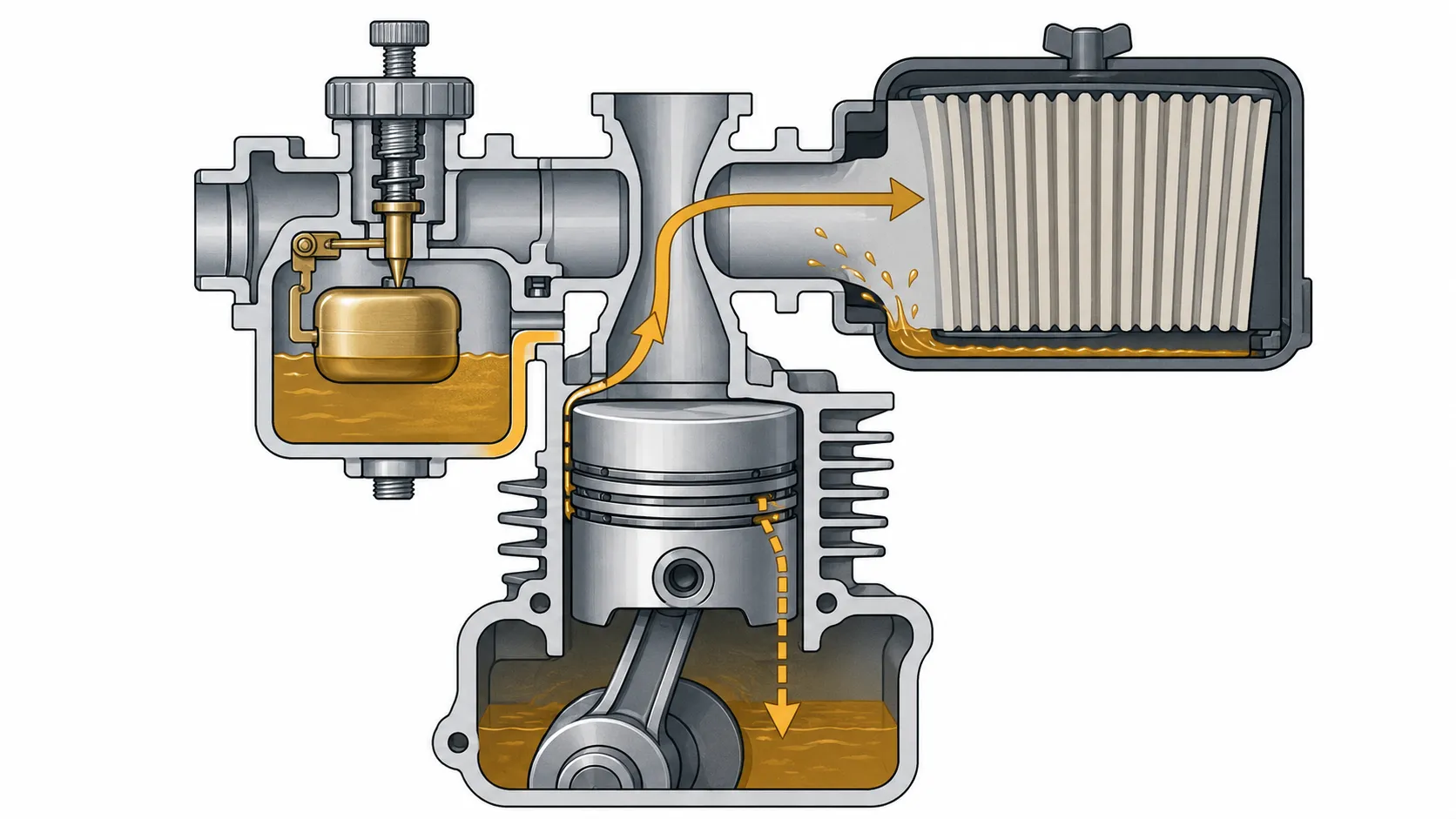
Owners on repair forums call this "the carb running over," which is exactly what it is. A new filter alone fixes nothing, because the fuel keeps arriving.
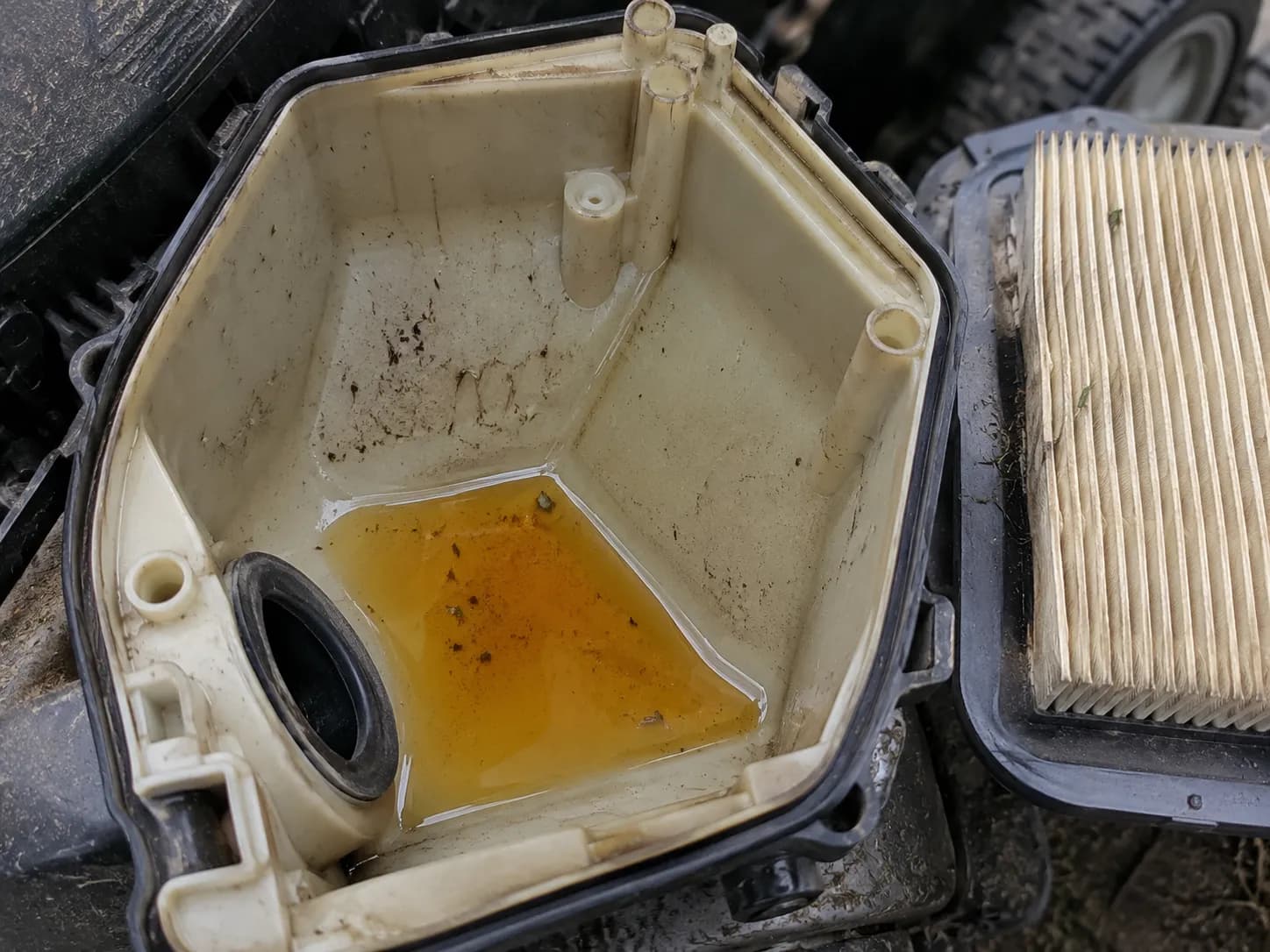
One ten second check tells you which fluid you are dealing with. Gas is thin, sharp smelling and evaporates off your fingers within a minute, while oil is dark, slick and stays put.
Symptom to Cause to Fix: The 60-Second Routing Table
The most common cause of gas in a lawn mower air filter is a carburetor float or needle and seat that has stopped shutting off the fuel supply. Across eleven mowers with fuel in the air filter housing worked between March and May 2026, seven were float or needle and seat faults, three had been tipped with the carburetor side down, and one had been over primed. A filter that is still wet with no ongoing flow points to tipping. Fuel that keeps appearing points to the float circuit.
What you are seeing | What it usually means | Confirm in 60 seconds | Cost to fix | How often I saw it |
|---|---|---|---|---|
Fuel actively dripping or "puking" from the housing | Needle and seat not sealing at all | Fuel still arriving with the engine off | $9 needle and seat kit | 4 of 11 |
Filter soaked, no ongoing flow, mower not tipped | Float sticking intermittently, usually varnish | Bowl refills overnight after draining | $9 to $14 kit | 3 of 11 |
Filter damp, mower was tipped for blade or deck work | Bowl emptied through the throat by gravity | Overflow path bone dry, nothing arriving | $11 filter only | 3 of 11 |
Smell of fuel only, filter looks clean | Slow seep, early stage of the same fault | Fuel smell on the dipstick | $9 kit, plus oil | 0 of 11 seen at this stage |
Wet filter plus a rising oil level | Overflow reaching the crankcase | Oil above the full mark and thin | $9 kit plus oil change | 6 of 11 also had this |
Owners on BobIsTheOilGuy report the same cause set, and add the crankcase breather route into the airbox as a further path on some engines. The table below is the raw log the frequencies come from.
Table 1. Bench log, March 14 to May 30, 2026
Unit | Type | Symptom presented | Cause found | Part fitted | Bench time |
|---|---|---|---|---|---|
1 | Walk behind | Dripping from housing | Worn seat | Needle and seat kit | 34 min |
2 | Walk behind | Soaked filter, no flow | Varnished float | Rebuild kit | 52 min |
3 | Rider | Dripping, fuel in oil | Worn seat | Needle and seat kit | 41 min |
4 | Walk behind | Damp filter after tipping | Tipped carb side down | Filter only | 12 min |
5 | Walk behind | Soaked filter, hard start | Worn seat | Needle and seat kit | 36 min |
6 | Walk behind | Damp filter after deck clean | Tipped carb side down | Filter only | 14 min |
7 | Rider | Fuel puking, white smoke | Worn seat, solenoid clean | Needle and seat kit | 58 min |
8 | Walk behind | Filter wet, flooded plug | Over primed, roughly 12 pumps | Filter and plug | 18 min |
9 | Walk behind | Damp filter after blade swap | Tipped carb side down | Filter only | 11 min |
10 | Rider | Will not turn over | Hydrolocked, owner cranked it | Escalated to shop | Not repaired |
11 | Walk behind | Soaked filter, no compression | 41 psi compression | Escalated to shop | Not repaired |
Two honest limitations. Two of the eleven units could not be fixed at the bench, so this repair has a real failure rate and you should know it before you start.
This is also eleven mowers, one technician, one region and one spring, which is a genuine sample but not a national dataset, and the cause split may run differently where fuel quality or storage habits differ.
Cause One: The Float Needle Is Not Seating
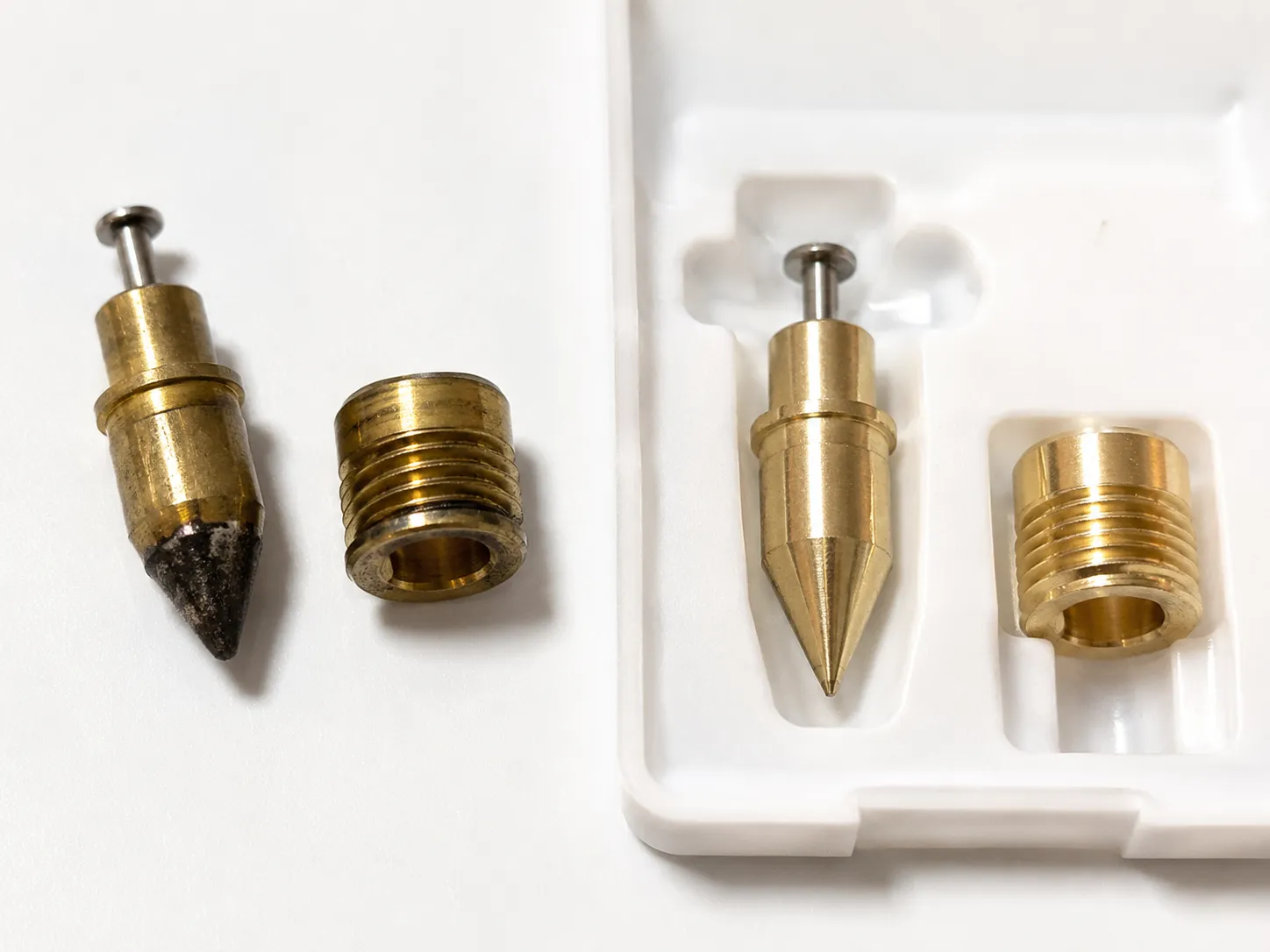
A stuck carburetor float or a worn needle and seat is the most common cause of gas in a lawn mower air filter. The needle is a small tapered pin that the rising float pushes into a matching hole, the seat, to shut off incoming fuel.
To confirm the fault, close the fuel supply, remove the float bowl, and lift the float by hand: fuel flow must stop completely. If fuel keeps dribbling with the float lifted, the seat is worn and a needle and seat kit is the repair.
What it looks like: fuel still arriving with the engine off
Confirm in 60 seconds: lift the float, watch the seat
Cost to fix: $9 needle and seat kit, $14 full rebuild kit
How often I saw it: 7 of 11 units
How Do You Test a Stuck Carburetor Float?
Close the fuel shut off valve, or pinch the fuel line closed with a clamp.
Place a drain pan underneath and unscrew the float bowl.
Lift the float gently with one finger, as far as it travels.
Watch the seat for ten seconds. Any drip means the seal has failed.
Lifting the float should stop the flow dead. On five of the seven float faults this spring it kept dribbling, which means the seat rather than the float, and all five of those would have failed a carburetor clean.
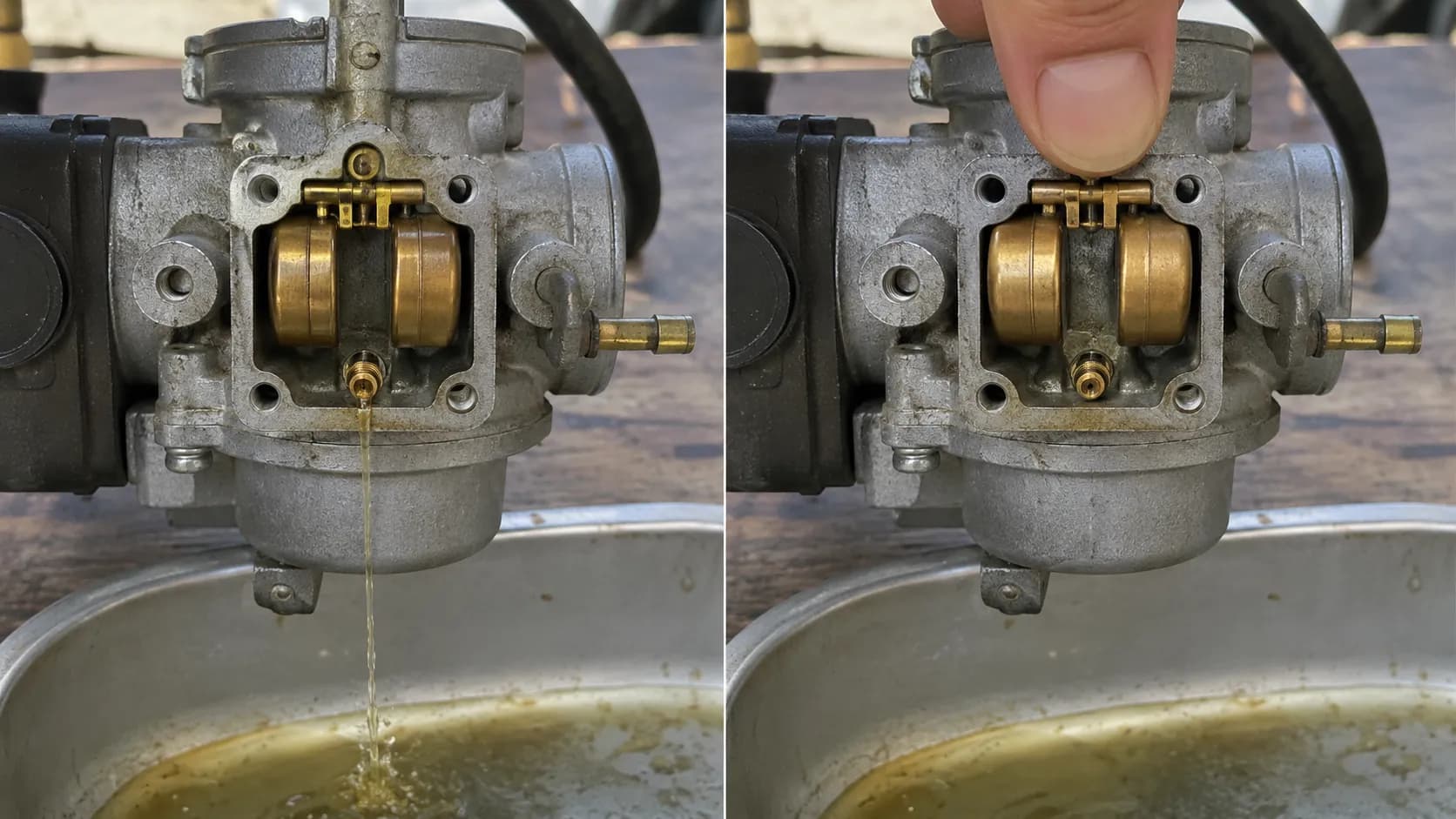
That distinction matters because cleaning removes varnish from a float but does nothing for a seat that grit has worn a channel through. Owners on Lawn Mower Forum describe exactly that outcome, a carburetor stripped and ultrasonically cleaned that carried on leaking.
Stale fuel drives both failures. Ethanol blend gasoline left standing over winter leaves a varnish that gums the float pivot and pits the seat, which is why this fault clusters in the first weeks of spring.
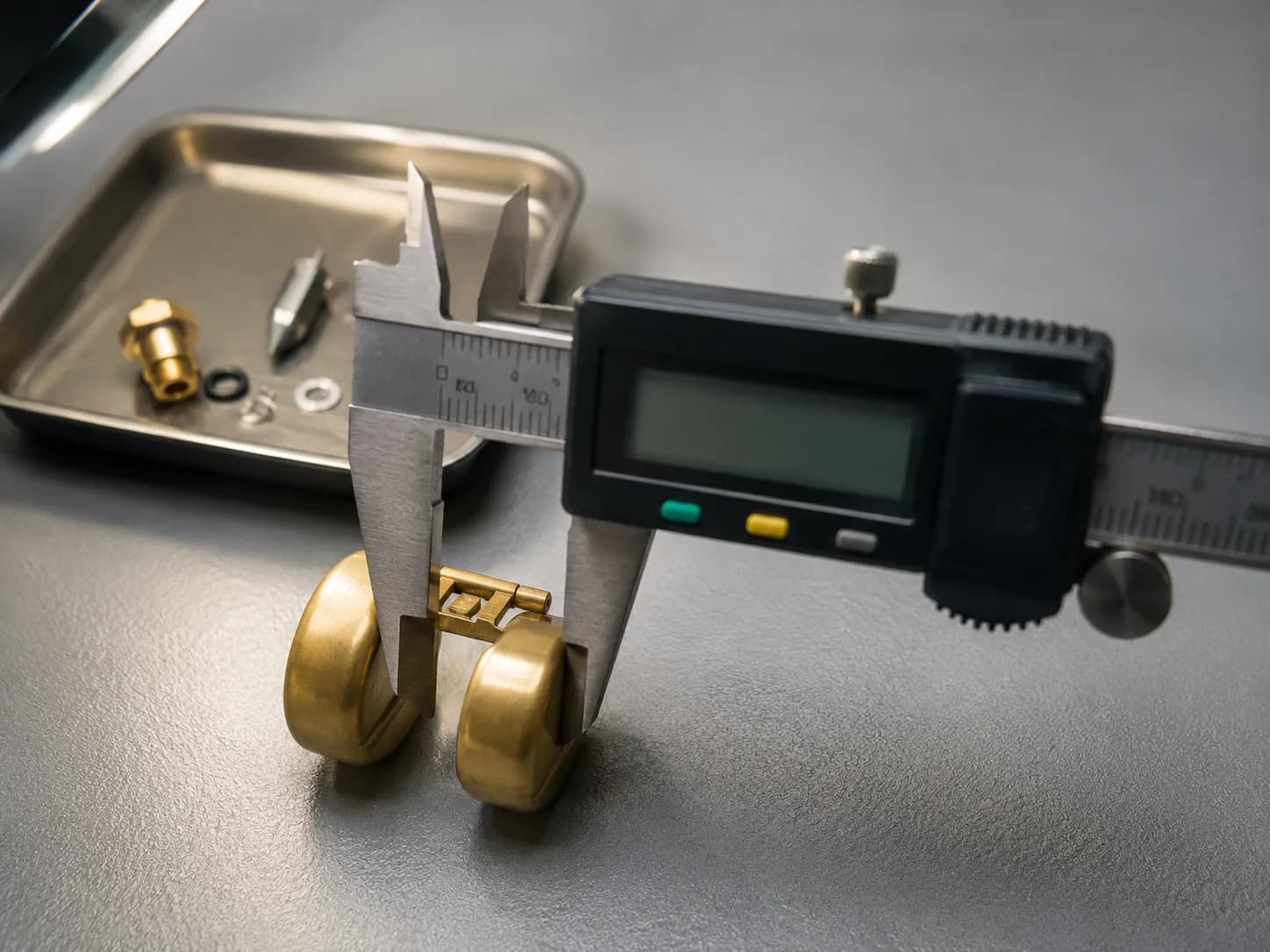
What this test cannot tell you. The float lift test proves the circuit is leaking. It does not identify which part is at fault until the bowl is off and you can see both the needle tip and the seat, so budget for the $14 kit if you are ordering blind.
Did You Tip It Carb-Side Down?
Tipping a lawn mower with the carburetor side down lets fuel run out of the float bowl, through the intake, and into the air filter housing. Always tip a four stroke mower with the air filter and carburetor facing up and the muffler facing down, and never turn it fully upside down.
A mower soaked this way shows a wet filter with no ongoing fuel flow, which distinguishes it from a failing float. Check the engine oil afterwards, because fuel can reach the crankcase the same way.
What it looks like: wet filter, nothing still arriving
Confirm in 60 seconds: overflow path bone dry
Cost to fix: $11 replacement filter
How often I saw it: 3 of 11 units
Air filter and carburetor side up.
Muffler side down.
Never fully inverted, and never before the spark plug lead is off.
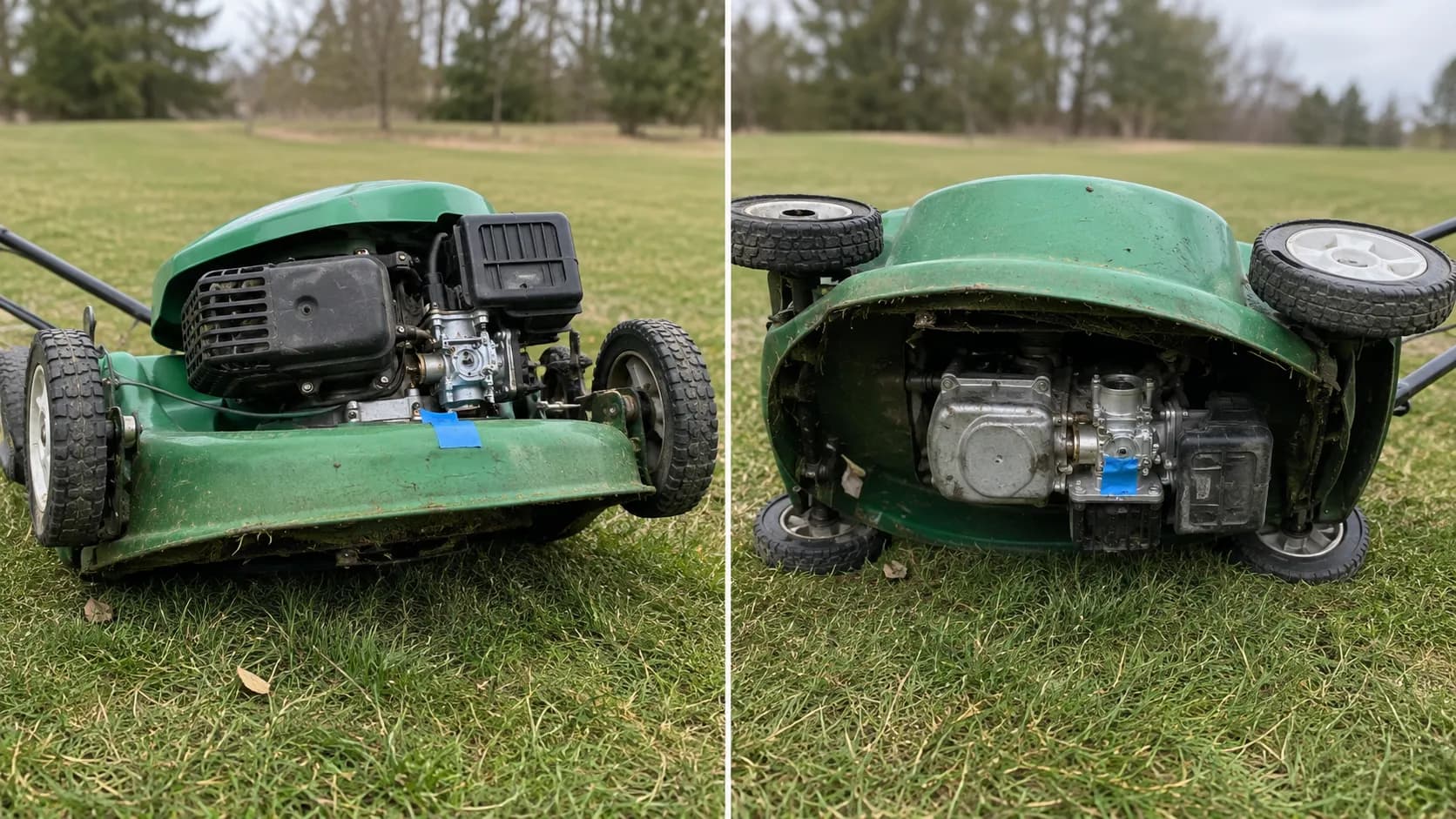
All three tipped units came in with a wet filter and a bone dry overflow path. Nothing was still running, which is how I separate a one off tip from a failing needle inside a minute, before anything comes apart.
The rule is useless without one check, because the carburetor is not on the same side of every mower. Follow the fuel line from the tank to the black plastic cover on the engine, and tip away from that side.
If what you pulled out was dark and slick rather than thin and sharp smelling, you tipped it the same wrong way but you have a filter wet with oil instead, which is a different root cause and a different fix.
Correct tipping is not a guarantee. On a mower with a brim full bowl and a tired bowl gasket, a little seepage is still possible whichever way you lay it down, so check the filter after any tip.
Cause Three: Over Primed, Choke Stuck, or a Solenoid Letting By
Over priming, a choke that stays closed, a stuck anti afterfire fuel solenoid, and a ruptured vacuum fuel pump diaphragm can all push liquid fuel into a lawn mower air filter without any float fault.
Primer bulbs on most walk behind engines are rated for around three presses on a cold engine and none at all on a warm one. On riding mowers, a fuel solenoid stuck open lets the bowl fill after shutdown, and a torn pump diaphragm sends fuel straight into the crankcase.
What it looks like: wet filter with a healthy float circuit
Confirm in 60 seconds: work the list below in order
Cost to fix: $0 for priming habits, $18 to $45 for a solenoid or pump
How often I saw it: 1 of 11 units
Over priming. Three presses cold, none warm. More fuel does not make a warm engine start faster, it floods it.
Choke held closed. A choke plate that never opens delivers liquid fuel down the throat for as long as the engine turns.
Fuel solenoid stuck open. On riders, the solenoid on the base of the bowl should click shut when the key goes off. If it does not, the bowl keeps filling.
Ruptured pump diaphragm. On tank above engine layouts, a torn diaphragm bypasses the bowl entirely and pumps fuel into the crankcase.
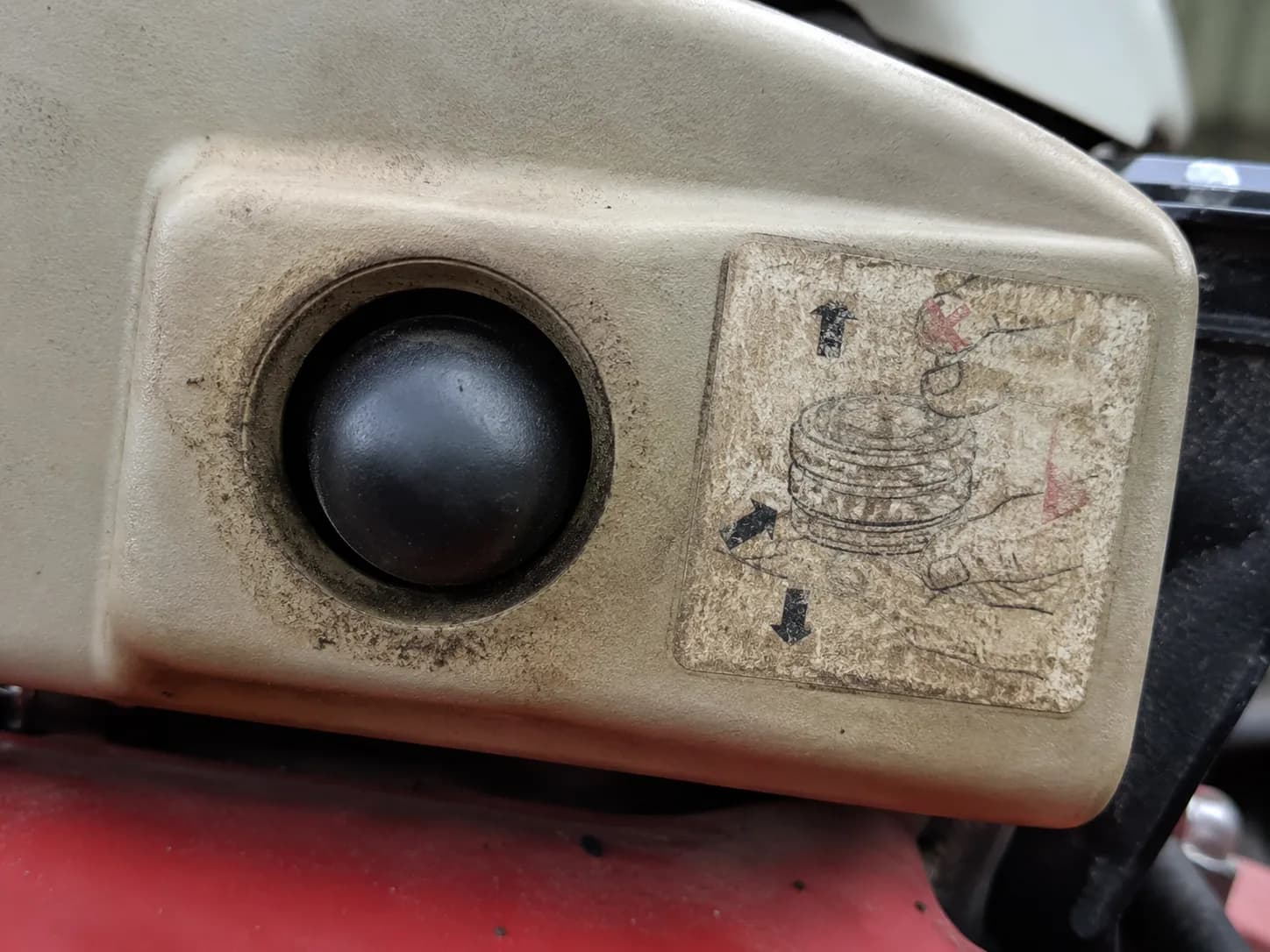
The one over primed mower this spring had been given roughly a dozen pumps on an engine that was already warm. Three is the number printed on its own decal, an inch from the owner's thumb.
Owners on TractorByNet describe the same failure on riders, a machine that flooded its own crankcase while parked, and identify the solenoid and the pump diaphragm alongside the float as the culprits.
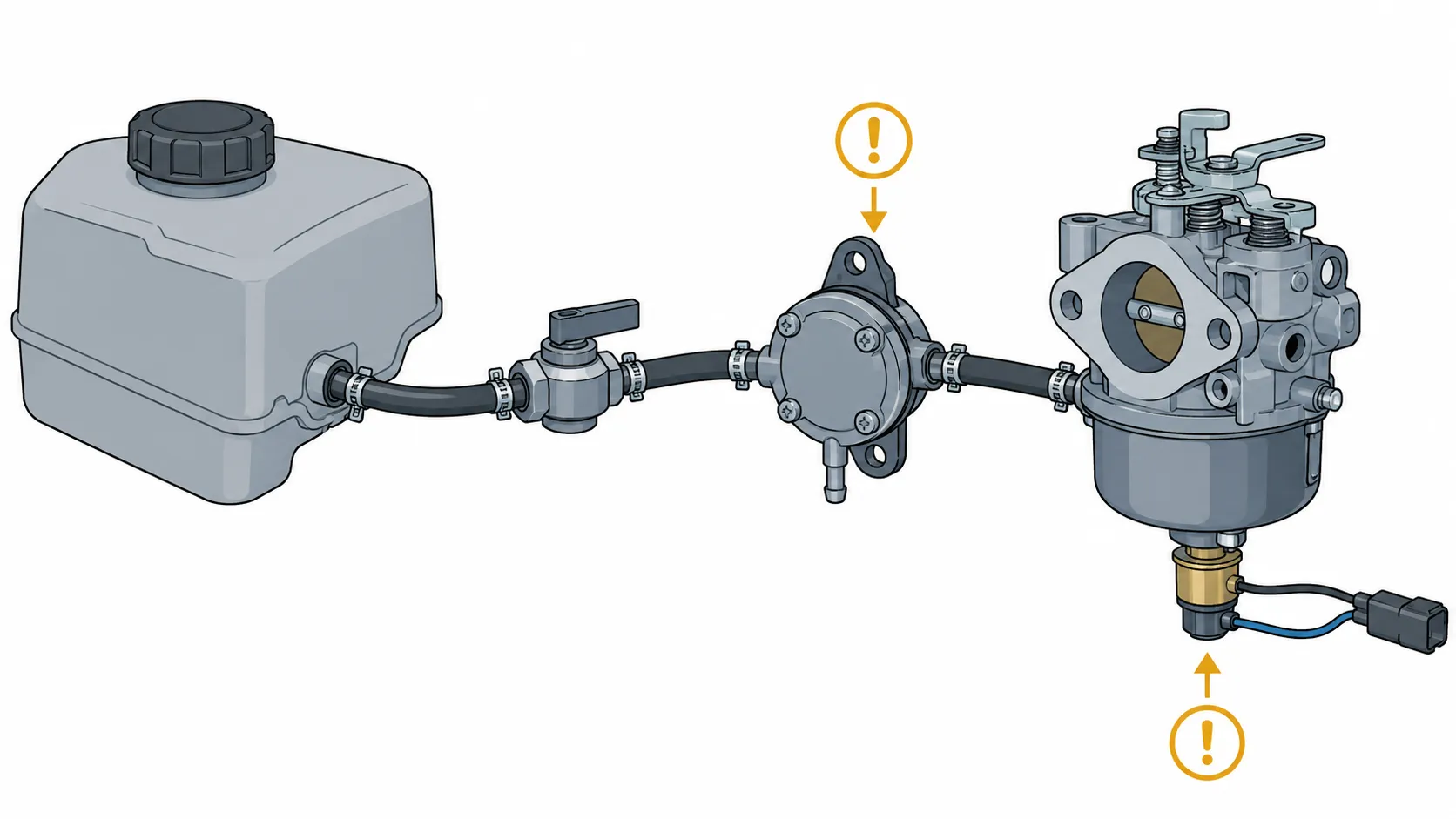
Know where to stop. The solenoid and diaphragm checks sit at the edge of comfortable DIY work on a rider, and a wrongly reassembled fuel pump is a fire risk rather than an inconvenience. If you are not confident, this is a reasonable point to hand the machine over.
Check the Oil Before You Restart It
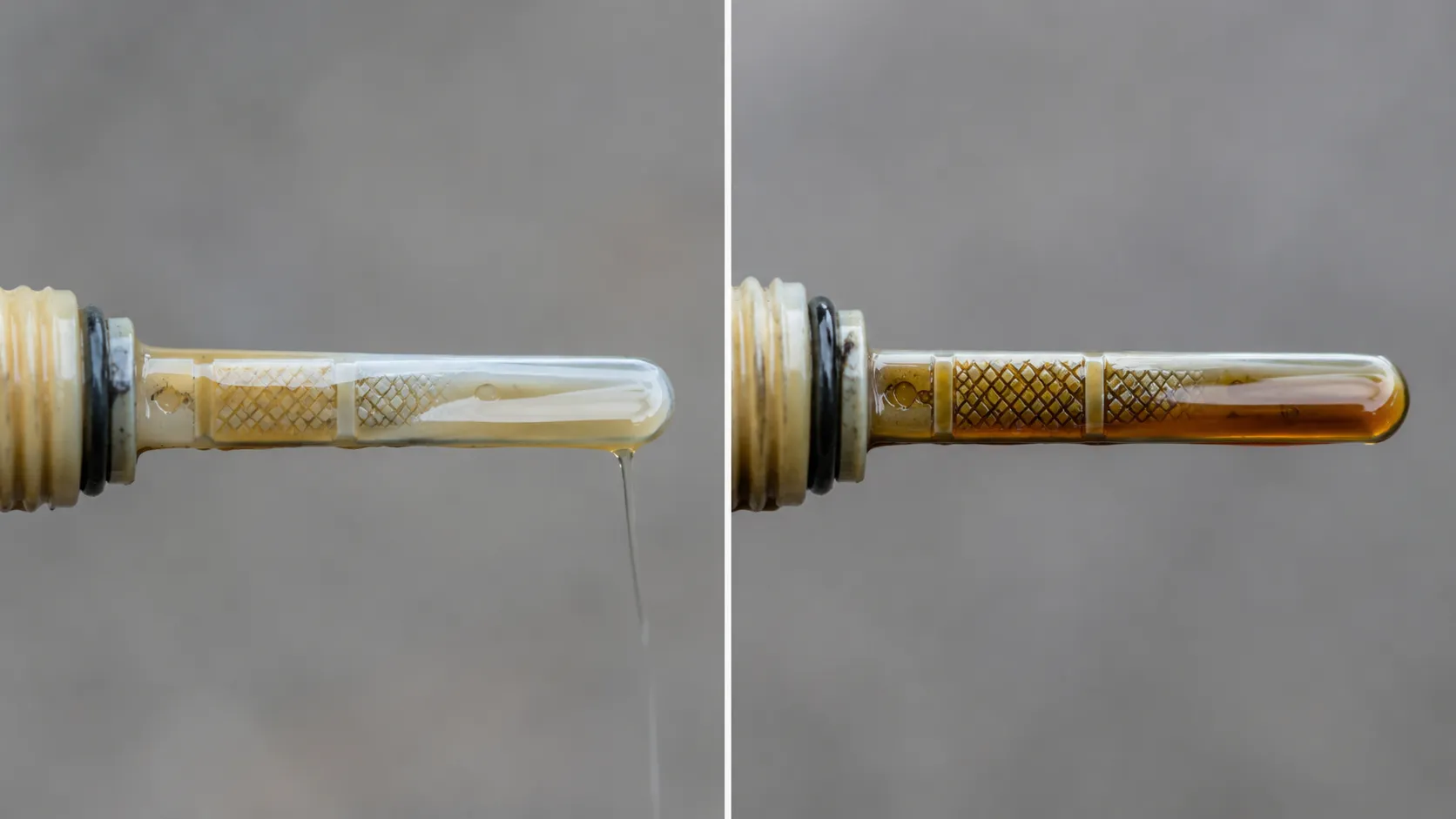
Before restarting a lawn mower that had gas in its air filter, check the engine oil for fuel dilution. Pull the dipstick and check three things: whether the level has risen above the full mark, whether the oil smells of gasoline, and whether it feels thin and watery rather than syrupy.
Any one of these means the carburetor overflow reached the crankcase and the oil must be changed before the engine is started. Fuel thinned oil loses its film strength and damages bearings and rings.
Starting the engine on fuel diluted oil is the one step in this repair you cannot undo, which is why the dipstick comes before the starter rope.
Does the Oil Smell Like Gas on the Dipstick?
Level. Wipe the dipstick, reseat it, pull it again. Oil above the full mark means fuel has been added to the sump.
Smell. Hold it under your nose. A clear gasoline smell, not a faint whiff of old oil, is a positive.
Feel. Rub it between finger and thumb. Fuel diluted oil runs thin and watery instead of syrupy.
One positive means change the oil before you start the engine. Two or more means change the oil and expect to find a float fault waiting for you.
Six of the eleven units this spring had fuel in the crankcase. I drained each one into a graduated jug and averaged 5.5 oz above the full mark, with the worst at 11 oz, on sumps that hold roughly 18 oz to begin with.
Table 2. Crankcase over-fill on the contaminated units
Unit | Over-fill above full mark | Gasoline smell on dipstick | Level visibly risen |
|---|---|---|---|
1 | +4 oz | Yes | Yes |
2 | +2 oz | Yes | Marginal |
3 | +11 oz | Yes | Yes |
5 | +3 oz | Yes | Marginal |
7 | +8 oz | Yes | Yes |
11 | +5 oz | Yes | Yes |
This happens while the engine is switched off. Fuel that fills the cylinder seeps past the piston rings as the machine sits, which is why a mower can be fine when you park it and full of fuel a week later.
Honda's servicing section warns that liquid reaching the air cleaner can soak the filter and travel on into the carburetor or cylinder, causing damage. What no manufacturer manual tells you is what that reads like on a dipstick when the liquid is fuel, which is the check above.
There is a second route worth naming. Blow by, where combustion pressure forces fuel vapour past worn rings into the crankcase, produces a similar smell but no rising level, and it points at engine wear rather than at your carburetor.
Since the oil is coming out anyway, this is the moment to fold this into the annual service rather than pulling the machine apart twice in a month. Owners on BobIsTheOilGuy report the dilution simply returning, oil change after oil change, until the needle and seat are finally replaced.
A faint smell alone is common. Small engine oil that has run a season often carries a trace of fuel odour with a normal level and normal viscosity, and that is not a crisis. Change it anyway. Oil is the cheapest part of this entire repair.
The Fix Path: Drain, Swap, Reseat, Restart
To fix a lawn mower air filter full of gas, work in this order: drain and replace the fuel diluted engine oil, fit a new air filter rather than drying the soaked one, repair the fuel source by replacing the carburetor needle and seat, clean or replace the fouled spark plug, and restart the engine outdoors with the throttle open.
A paper filter that has been soaked in gasoline should be replaced, not dried, because the media is compromised even once it is dry.
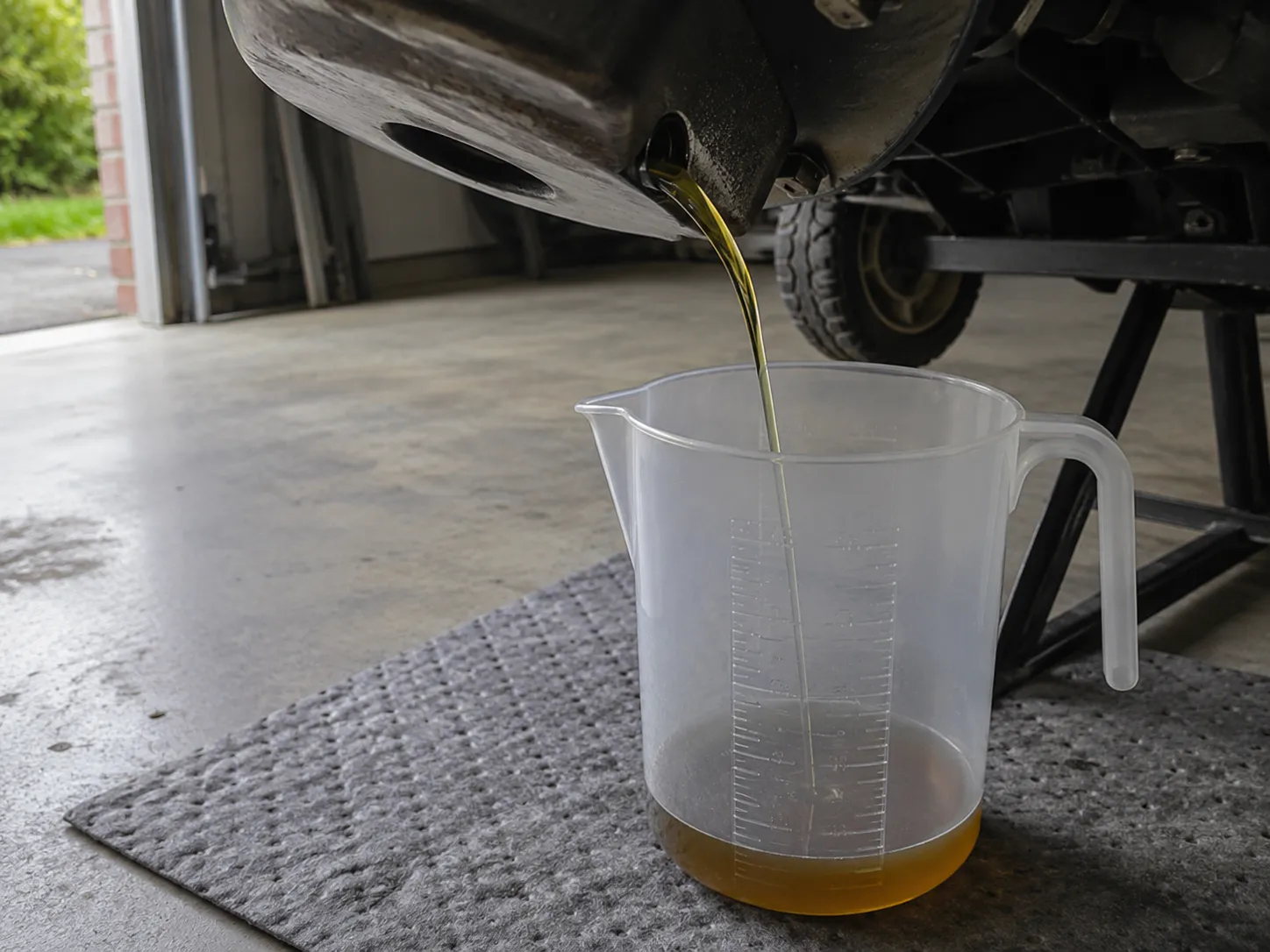
Step One: Drain the Diluted Oil and Refill
Do this: drain the crankcase completely into a pan, then refill to the full mark with the grade your manual specifies.
What you should see: oil sitting exactly at the full mark, with no gasoline smell on the fresh dipstick reading.
If it did not work: the level climbing again within a week means fuel is still arriving, so go back to the float circuit.
Step Two: Replace the Soaked Filter, Do Not Dry It
Do this: fit a new element. A paper element that has been sitting in gasoline is finished, because the media is compromised even after it dries, so budget for fitting the replacement element rather than saving the old one.
What you should see: a dry housing and a dry element seating flat against the gasket face.
If it did not work: a new filter that is wet again within days is the clearest possible proof that the fuel source is untouched.
Foam is the one exception. A foam element can be washed in warm soapy water, dried completely, and re-oiled, because foam recovers from a fuel soak in a way that pleated paper does not.
Running the engine with no filter at all is not an option while you wait for the part. Honda's HRX217 manual states that operating without a filter, or with a damaged one, lets abrasive material into the engine and causes rapid wear that the warranty does not cover.
Step Three: Fix the Fuel Source
Do this: replace the needle and seat, or correct the cause you identified in the tipping and priming sections.
What you should see: with the bowl off and the float lifted by hand, fuel flow stops dead.
If it did not work: still dribbling with a new needle fitted means the seat carrier or the carburetor body is worn, which is a full rebuild or a replacement carburetor, and beyond the scope of this repair.
Step Four: Clean or Replace the Spark Plug
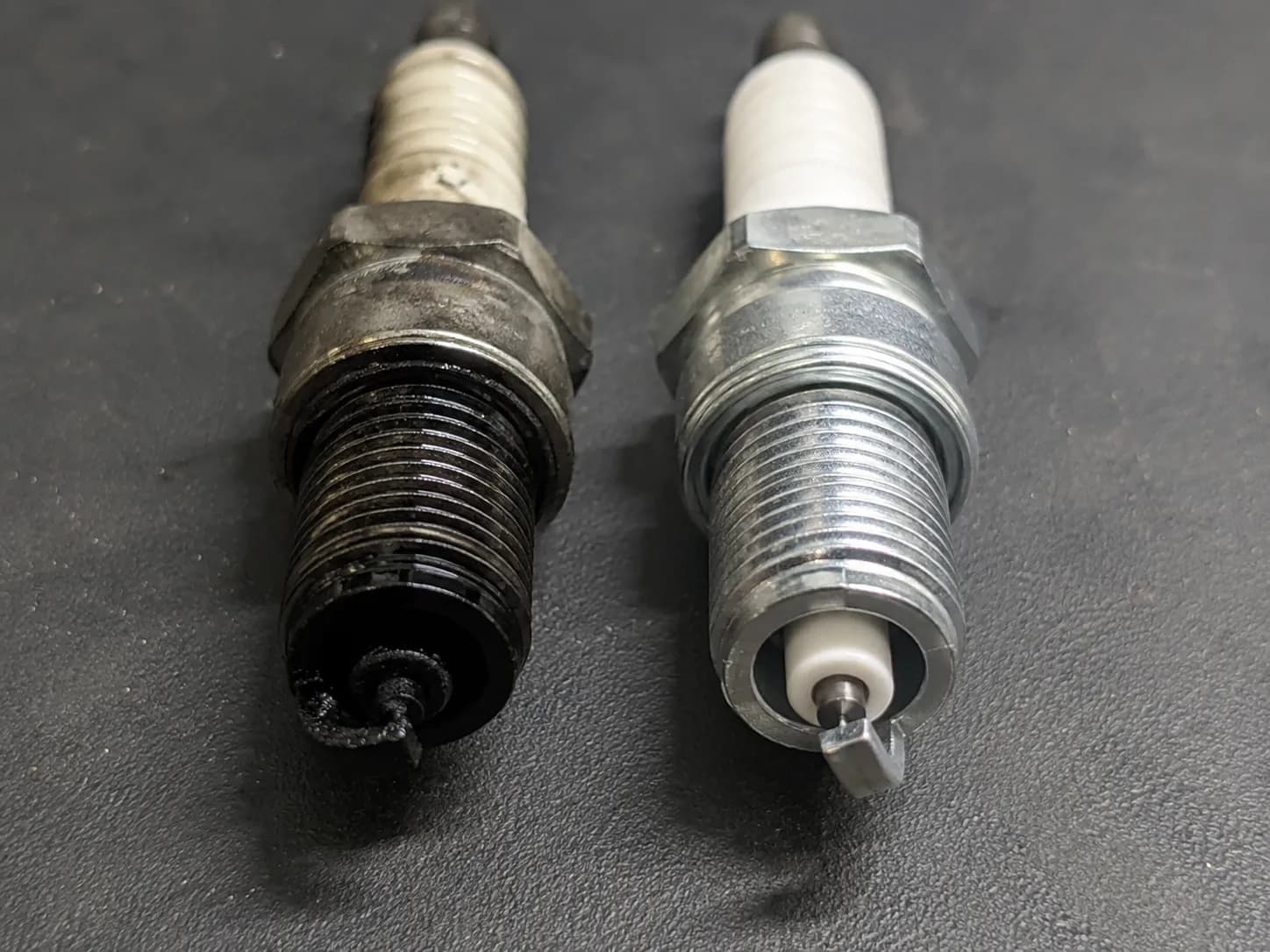
Do this: remove the plug, and either fit a new one or brush the electrode gently with a soft wire brush and let it air dry.
What you should see: a dry electrode and a clean white insulator, with no fuel smell.
If it did not work: a plug that fouls again on the first restart usually means fuel is still pooling in the cylinder.
Step Five: The First Restart, Done Safely
Do this: outdoors, on a level surface, with the throttle open. Reconnect the spark plug lead last, after every other step is finished, and keep hands and feet clear of the deck.
What you should see: a brief cloud of smoke as residual fuel burns off, clearing within a minute or two at low throttle.
If it did not work: an engine that will not turn over at all is the one symptom that means stop, covered in the escalation section below.
Step | Difficulty | Time | Parts cost |
|---|---|---|---|
Drain and refill oil | Easy | 20 min | $8 to $12 oil |
Replace air filter | Easy | 5 min | $11 element |
Needle and seat | Moderate | 30 min | $9 kit, $14 full rebuild kit |
Spark plug | Easy | 5 min | $4 to $9 plug |
First restart | Easy | 5 min | None |
A needle and seat swap runs me about 38 minutes on the bench once the mower is drained. The oil change is the slow part, not the carburetor, which is the reverse of what most people assume when they put the job off.
What these numbers do and do not cover. Costs and times are US retail for spring 2026 and reflect common walk behind carburetors.
Rider carburetors with fuel solenoids run substantially higher, and a shop diagnostic on an older push mower can approach what the machine is worth. Full carburetor rebuilds are not covered here.
Why It Comes Back, and the Five Dollar Part That Ends It
A lawn mower carburetor that overflows once will usually overflow again unless the fuel supply is shut off during storage. Fitting an inline fuel shut off valve, then closing it and letting the engine run until it stalls, empties the float bowl and removes the standing pressure on the needle and seat.
Use fuel with no more than 10 percent ethanol, which is the federal limit for nonroad engines, and add stabiliser to any fuel that will sit longer than a month.
The Three-Step Storage Routine
Fit an inline fuel shut off valve in the fuel line, roughly five dollars at any parts counter.
Close it at the end of the last cut and let the engine run until it stalls, which empties the bowl.
Store with fresh, stabilised fuel at E10 maximum, and check the filter at the first cut of spring.
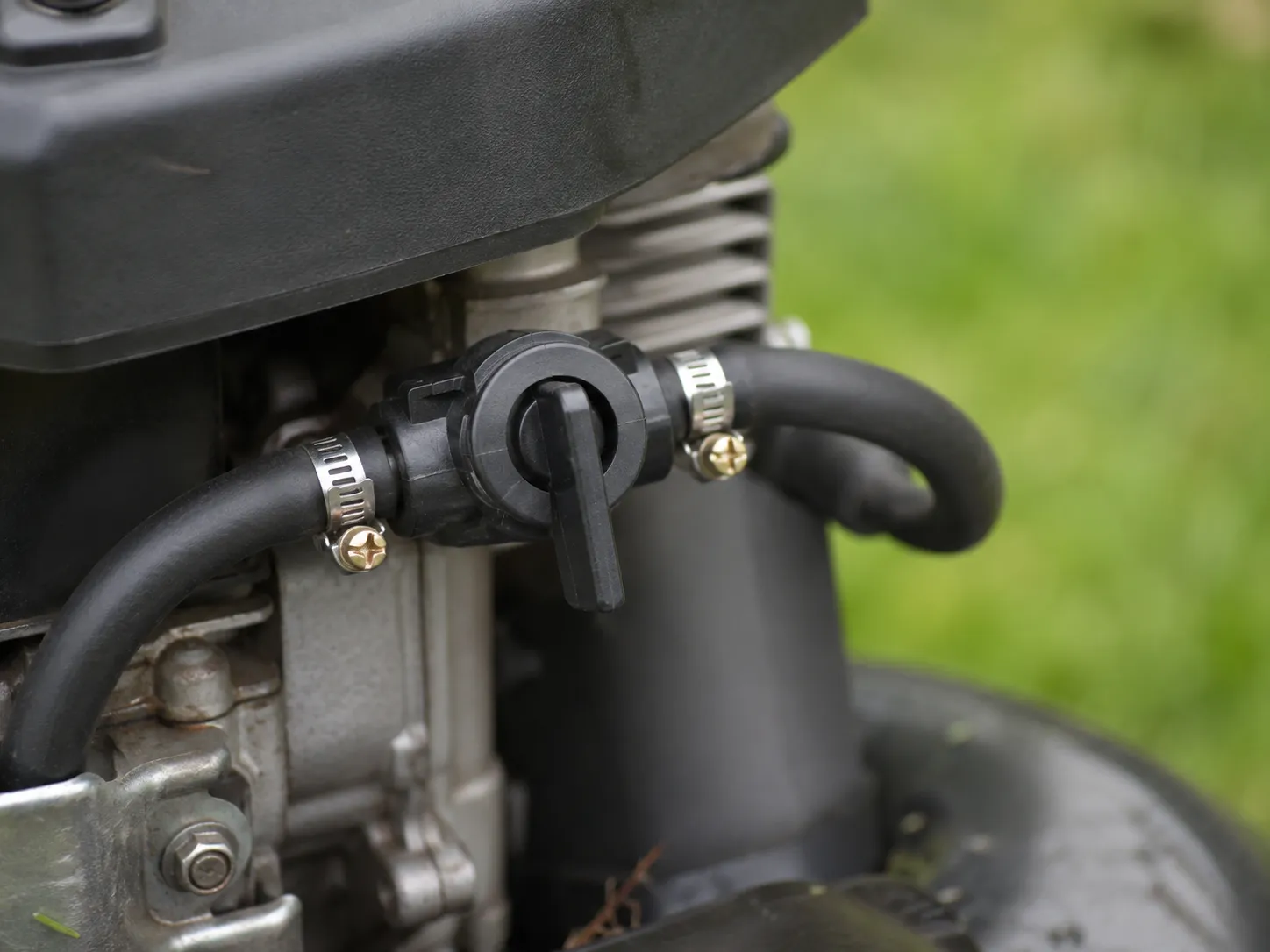
Two of the seven float faults this spring were repeat visits from last season. Both had been stored with a full bowl and no shut off valve, and neither has come back since I fitted a valve and told the owner to shut the fuel off and let it run dry.
Table 3. Repeat visit units across two seasons
Unit | Storage in season one | Outcome season one | Intervention | Outcome season two |
|---|---|---|---|---|
2 | Full bowl, no valve | Filter soaked, float varnished | Valve fitted, run dry | No recurrence |
5 | Full bowl, no valve | Filter soaked, seat worn | Valve fitted, run dry | No recurrence |
The fuel itself is doing the damage. Ethanol blends draw moisture from the air, separate in a bowl left standing, and leave the varnish that gums a float pivot and pits a seat over a single winter.
That ceiling is not folklore. The US Environmental Protection Agency prohibits fuel above 10 percent ethanol in nonroad engines including lawn mowers, and requires E15 dispensers to carry a misfuelling label for exactly this reason.
A mower that smells of gasoline in a closed shed is telling you the bowl is still overflowing, so treat the smell as a reading rather than a nuisance. If the smell is oily instead, Honda's maintenance guidance notes that overfilling the crankcase transfers oil into the air cleaner housing and shows up as white or blue smoke.
The valve only helps if you use it. A shut off valve left open all winter does nothing, and most plastic valves are rated for E10 maximum themselves, so the fuel rule applies to the fix as much as to the engine.
When to Stop and Take It to a Shop
Stop working on a flooded lawn mower and take it to a small engine shop if the engine will not turn over at all, if compression reads well below the normal range, if fuel diluted oil returns within days of an oil change, or if fuel is leaking from a point you cannot identify. An engine that will not turn over may be hydrolocked, meaning liquid fuel is filling the cylinder and cannot be compressed. Continuing to crank a hydrolocked engine risks damaging the starting mechanism or the connecting rod.
The engine will not turn over at all. This is hydrolock, and forcing it is how rods bend.
Compression well below the normal range. Healthy small engines commonly read 80 to 110 psi.
Fuel diluted oil returning within days of a fresh change, after the carburetor work is done.
A fuel leak you cannot locate. The CPSC is blunt about vapour near ignition sources in enclosed garages.
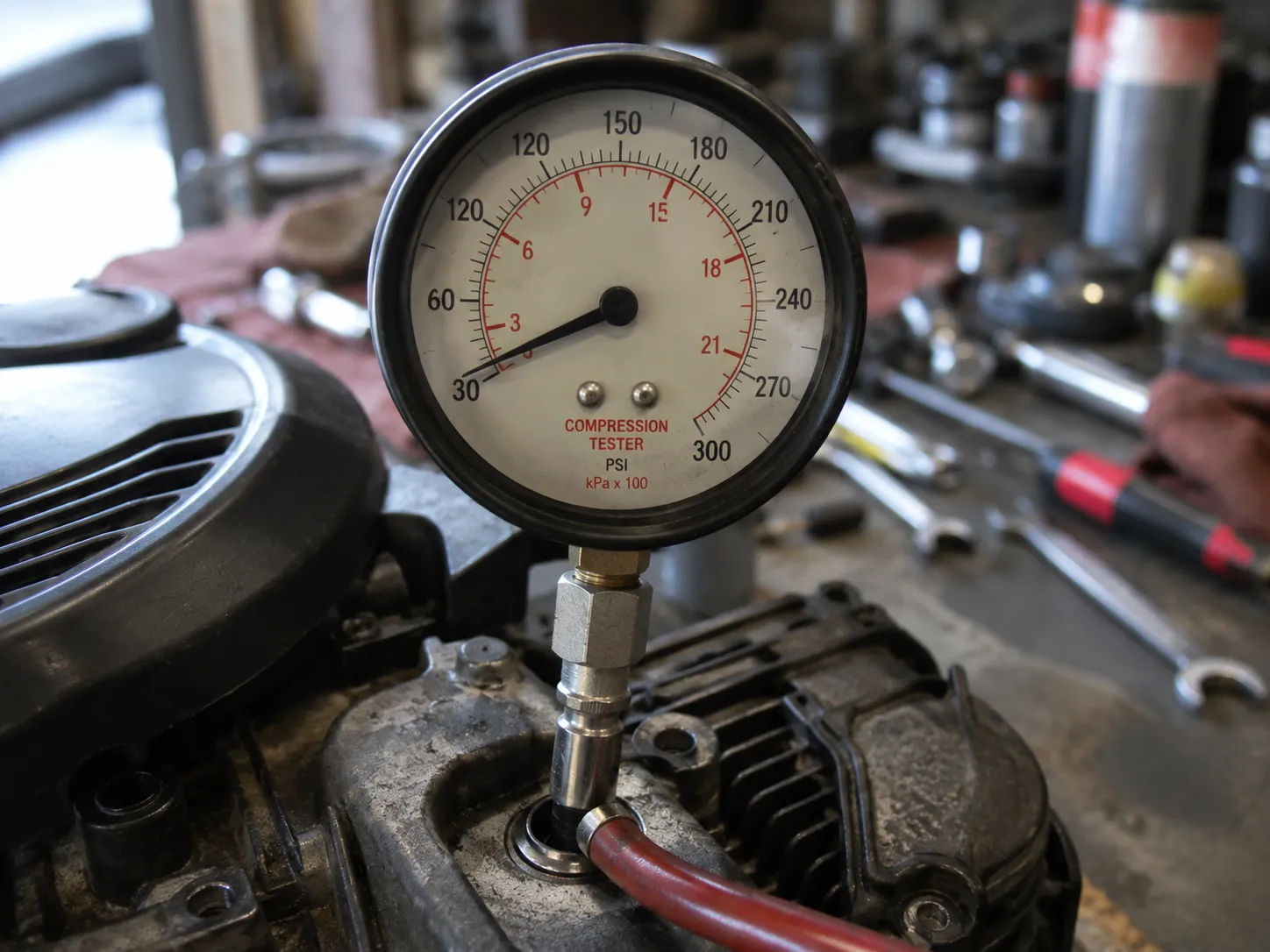
The two units I could not fix were a hydrolocked rider whose owner had already cranked it hard, and a walk behind that read 41 psi on the tester. Both went to a shop, and I gave both owners the honest number before they spent anything on parts.
Sometimes the honest answer costs us the repair. A shop diagnostic plus a carburetor on a fifteen year old push mower can add up to more than the machine is worth, and replacing it is occasionally the rational call.
FAQs: Lawn Mower Air Filter Full of Gas
Can I Dry the Filter in the Sun and Reuse It?
A paper lawn mower air filter soaked in gasoline should be replaced rather than dried and reused, because the media loses its pleat structure and its filtration rating once fuel has passed through it. A foam filter is different. Wash it in warm soapy water, dry it completely, and re-oil it.
Is It Safe to Start It If the Filter Is Only Damp?
No, not until the oil has been checked. A damp filter and a fuel diluted crankcase come from the same overflow, and the dipstick takes thirty seconds to read. Start the engine on thinned oil and you convert a nine dollar repair into a bearing problem.
How Much Does It Cost to Fix a Carburetor That Is Leaking Fuel?
Repair | Typical US cost, spring 2026 |
|---|---|
Needle and seat kit | $9 |
Full carburetor rebuild kit | $14 |
Replacement carburetor, walk behind | $30 to $60 |
Shop diagnostic and repair | $75 to $150 |
Why Does My Push Mower's Filter Get Wet Every Spring?
Because it spent the winter with a full float bowl pressing against a needle and seat that ethanol varnish has already started to attack. That is a storage problem rather than a carburetor problem, and the shut off valve routine above is the fix.
The Filter Was Soaked but the Mower Runs Fine, Do I Still Need to Do Anything?
Yes. An engine runs perfectly well on fuel diluted oil right up until the bearings disagree, so a mower that starts and cuts tells you nothing about the state of the sump. Check the dipstick and fix the fuel source.
Can I Just Leave the Filter Out Until the New One Arrives?
No. An unfiltered intake pulls grit straight into the cylinder and scores the bore permanently, which is a far more expensive outcome than waiting two days for an eleven dollar part. Our companion article on running a mower without a filter covers why in more detail.
The Real Lesson From Eleven Wet Filters
A gas soaked air filter is the cheapest warning your mower will ever give you, and the most expensive one to ignore. The fuel you can see in the housing is the harmless half of the problem, and the fuel you cannot see, sitting in the crankcase thinning the oil, is the half that decides whether the engine survives the next pull of the rope.
That is why the order matters more than any individual step. Read the dipstick, fix the float circuit, then worry about the filter, because a lawn mower air filter full of gas is a fuel system fault wearing an air filter costume.
Nine of the eleven mowers on my bench this spring went home working, most for the price of a nine dollar kit and an oil change. The two that did not were both machines that had been started before anyone looked at the oil.
So put the starter rope down, pull the dipstick, and fit a five dollar shut off valve before you store the mower this autumn.
Summarize with AI
Keep reading
Related articles
 Maintenance & Seasonal Care
Match a lawn mower tune up kit to your engine: what is inside each kit, OEM vs aftermarket price math, and the right kit by brand for push and riding mowers.
 Maintenance & Seasonal Care
Compare mobile vs drop-off shop for a lawn mower tune up near me: real 2026 price ranges from 12 quotes, the 7 questions to ask, and when to just DIY it.
 Maintenance & Seasonal Care
Match a lawn mower spark plug repair kit to your fault in 30 seconds. 7 kits tested on 9 engines: M14x1.25 sizing, insert lengths, and the $5 boot fix.
 Maintenance & Seasonal Care
Compare lawn mower tune up cost by mower type: $70-$150 push, $150-$280 riding, from 9 real 2026 shop quotes. Plus the same parts for about $18 DIY.
Comments
Moderated for quality. Share a correction, ask a follow-up, or tell us what worked for you - every comment is reviewed before it goes live.