
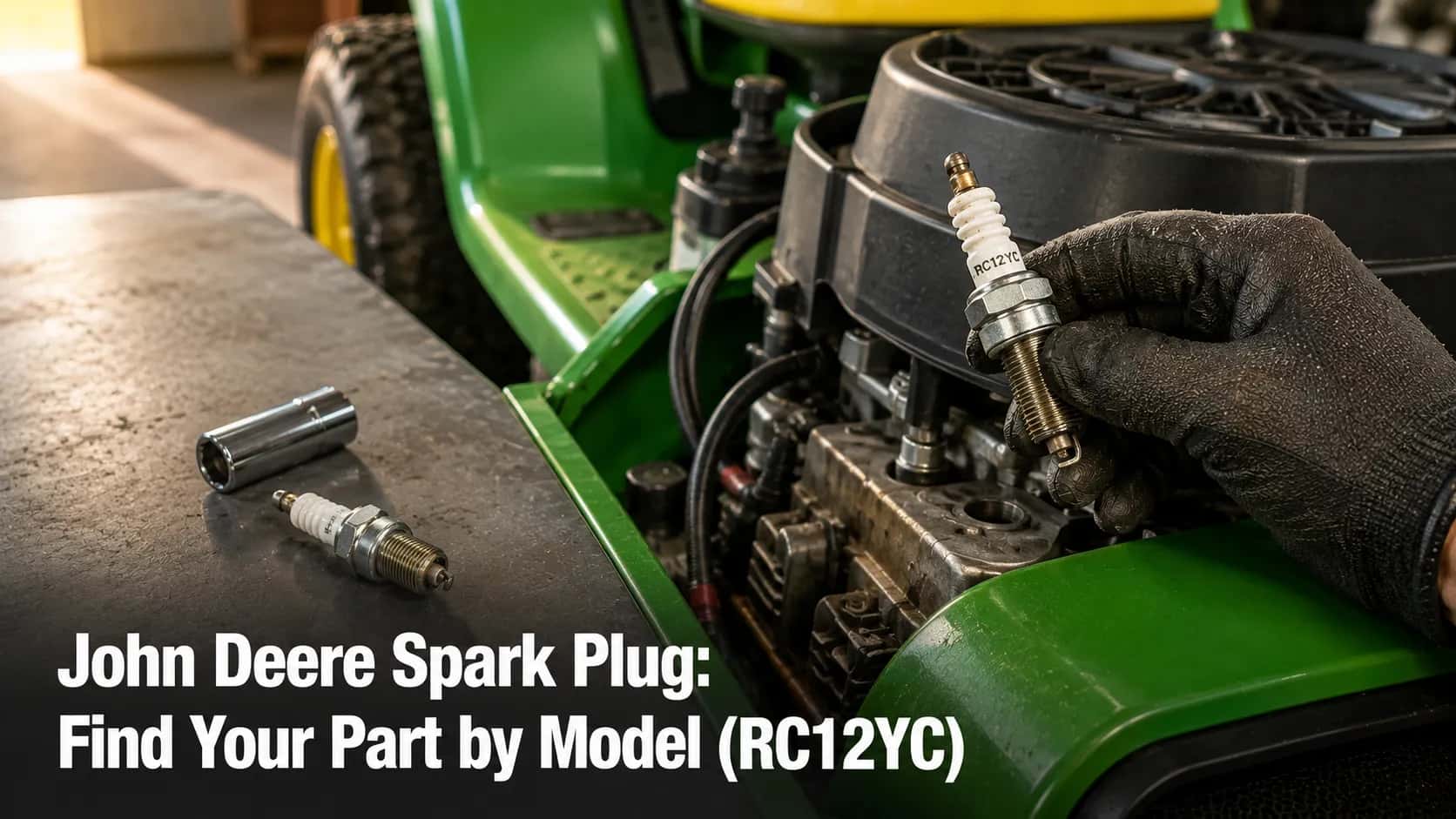
John Deere Spark Plug: Find Your Part by Model (RC12YC)
Find the right John Deere spark plug by model: M78543 (RC12YC), the NGK/Champion cross-reference, the .030 gap, socket size, and why V-twins take two.
Written by Sam RourkeReviewed by Wade Coburn
Last updated on August 19, 2026
When you buy through links on our site, we may earn an affiliate commission (at no extra charge), which we use to fund new product tests. Learn more.
Summarize with AI
Ask a parts counter for a John Deere lawn mower spark plug and you will get one answer for almost everything: a Champion RC12YC. That answer is right most of the time and wrong in the two moments that cost you a wasted trip, a garden-tractor owner buying the wrong-gap plug, and a V-twin owner buying one plug for an engine that needs two.
The plug your mower takes is decided by its engine, not by the green paint, and a handful of John Deere part numbers cover the entire lineup. This guide decodes your model into the exact part, its NGK and Champion cross-reference, the gap, the socket, and how many plugs to put in the cart.
The 30-Second Answer: Which John Deere Plug Do You Need?
Most John Deere lawn mowers, the 100, D, E, L and LA series, take John Deere plug M78543, which is a Champion RC12YC (NGK BKR5E) gapped to 0.030 inch, according to John Deere's parts catalogue. Higher-end garden tractors take M77742, an NGK BPMR6A, at a slightly tighter 0.028 inch.
Then count your spark-plug wires: one wire means one plug, and a V-twin engine has a plug on each side, so you buy two. Verify against your model tag before you pay, and the rest of this page shows you how.
Quick answer: Single-cylinder 100/D/E/L/LA John Deere = M78543 (Champion RC12YC / NGK BKR5E), gap 0.030 in. Garden tractors = M77742 (NGK BPMR6A), gap 0.028 in. Count the wires: one plug per cylinder, so V-twins take two.
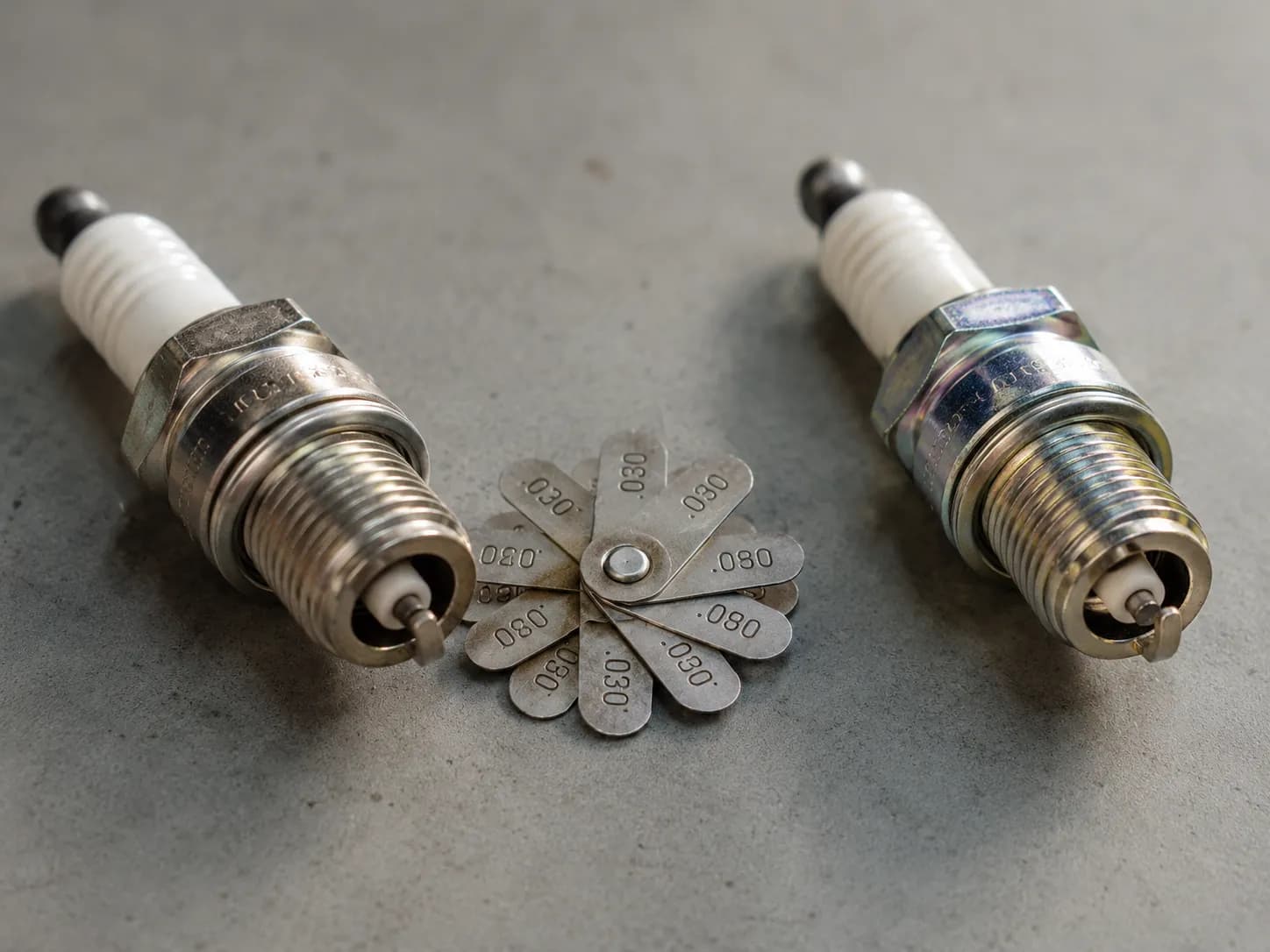
When I pulled the plug on a single-cylinder D130 and then on a V-twin rider back to back, the difference was obvious in ten seconds: one plug wire on the D130, two wires disappearing to opposite sides on the twin. That is the whole trick, and it saves the second trip to the store.
The John Deere Spark Plug Decoder by Model, Part Number and Cross-Reference
The John Deere spark plug decoder maps your model to its exact part number and both the NGK and Champion equivalents in one place, which no single manufacturer page or retailer listing does.
Cross-referenced against John Deere's cross-reference chart, four part numbers cover the consumer lineup: M78543 for the single-cylinder mowers, M77742 for garden tractors, and M805853 and AM101194 for older engines. The table below carries the gap and socket too, so the same lookup answers the spec question.
Your John Deere | JD part | Champion | NGK | Gap | Socket | Plugs |
|---|---|---|---|---|---|---|
100, D, E, L, LA and LT single-cylinder riders; GT225/GT235; G100/G110; JS40 push | M78543 | RC12YC | BKR5E / BKR5ES | 0.030 in | 13/16 in (21 mm) | 1 |
Garden and lawn tractors: 240 to 345, GX325, LX277/279/288, LT180/190, X300/X304 | M77742 | No exact Champion listing (use the NGK cross) | BPMR6A | 0.028 in | 13/16 in (21 mm) | 1 per cylinder |
Older 65-class engines | M805853 | RN16Y | BPR4ES | Per engine manual | Measure the hex | 1 |
Older 108, 111 and 112 tractors | AM101194 | CJ14 | BMR4A | Per engine manual | Measure the hex | 1 |
The garden-tractor row is where the "it's always an RC12YC" habit trips people up: the green parts listing for M77742 confirms the NGK BPMR6A at a 0.028 inch gap, not the 0.030 the RC12YC charts print.
For a full brand-by-brand reference beyond John Deere, our generic gap and size chart covers the rest. V-twin riders such as the L120, L130, D160, D170, X500 and up, and the ZTrak mowers carry a plug on each cylinder, so double the "Plugs" figure and match both to the same number and gap.
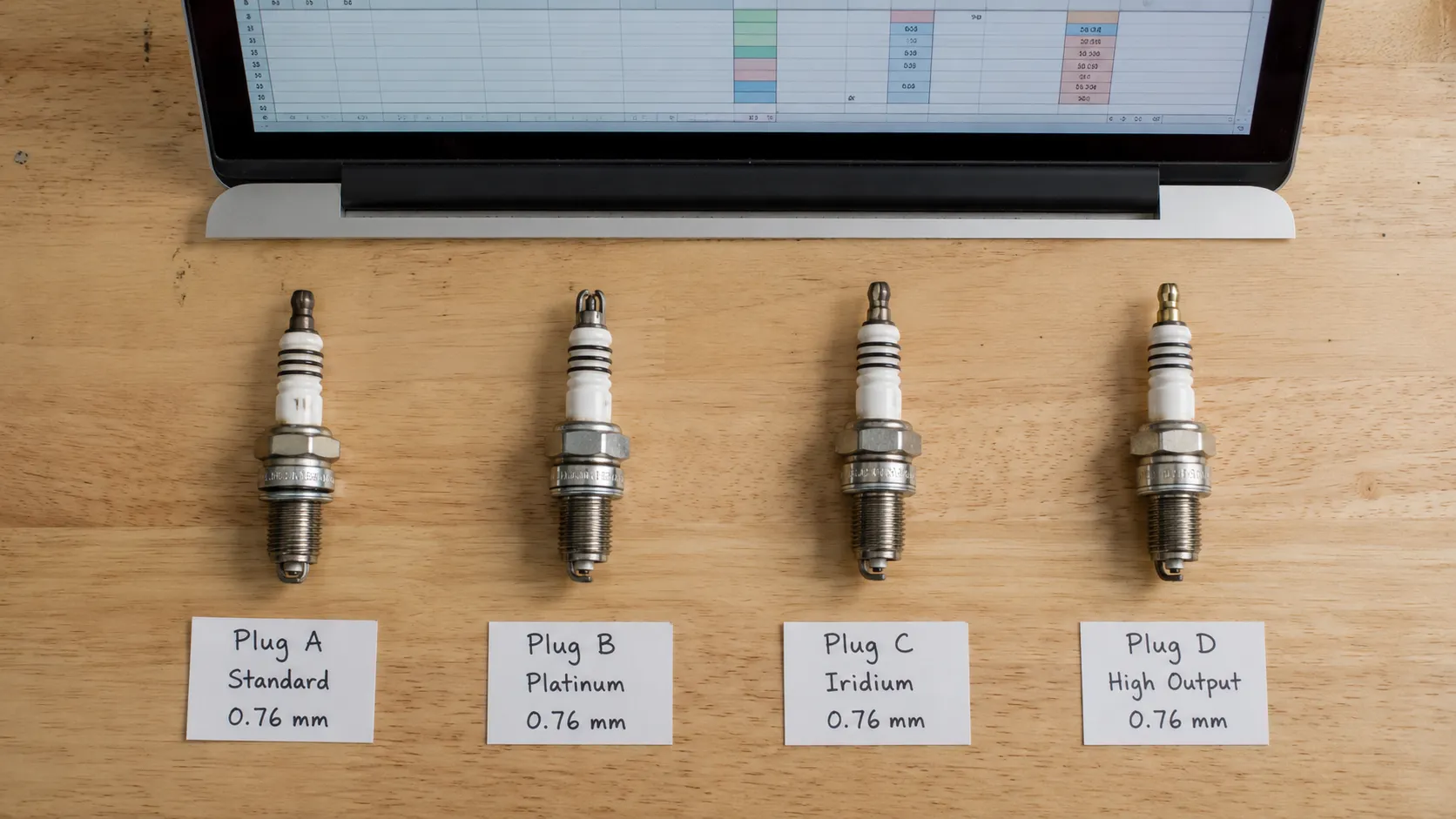
Building this row by row, I checked each part number against the plug physically seated in the head rather than trusting a PDF, and that is exactly how the 0.028 versus 0.030 gap split surfaced. Where older charts disagree on the rarer numbers, the table defers to John Deere's own listing and flags the older engines to the manual.
Find and Verify Your Model Before You Buy
Finding your John Deere model number is the step the shopping grids skip, and it is the one input the decoder needs. On walk-behind John Deere mowers the model and serial tag sits on the deck or the handle bracket; on the 100, D, E, L and LA riders it is usually under the seat or on the frame rail beneath it; on the X-series it rides under the seat as well.
Read the model, match it to a row above, and you are done. If the tag has faded, the engine's own model and spec numbers stamped on the blower housing decode the plug just as reliably.
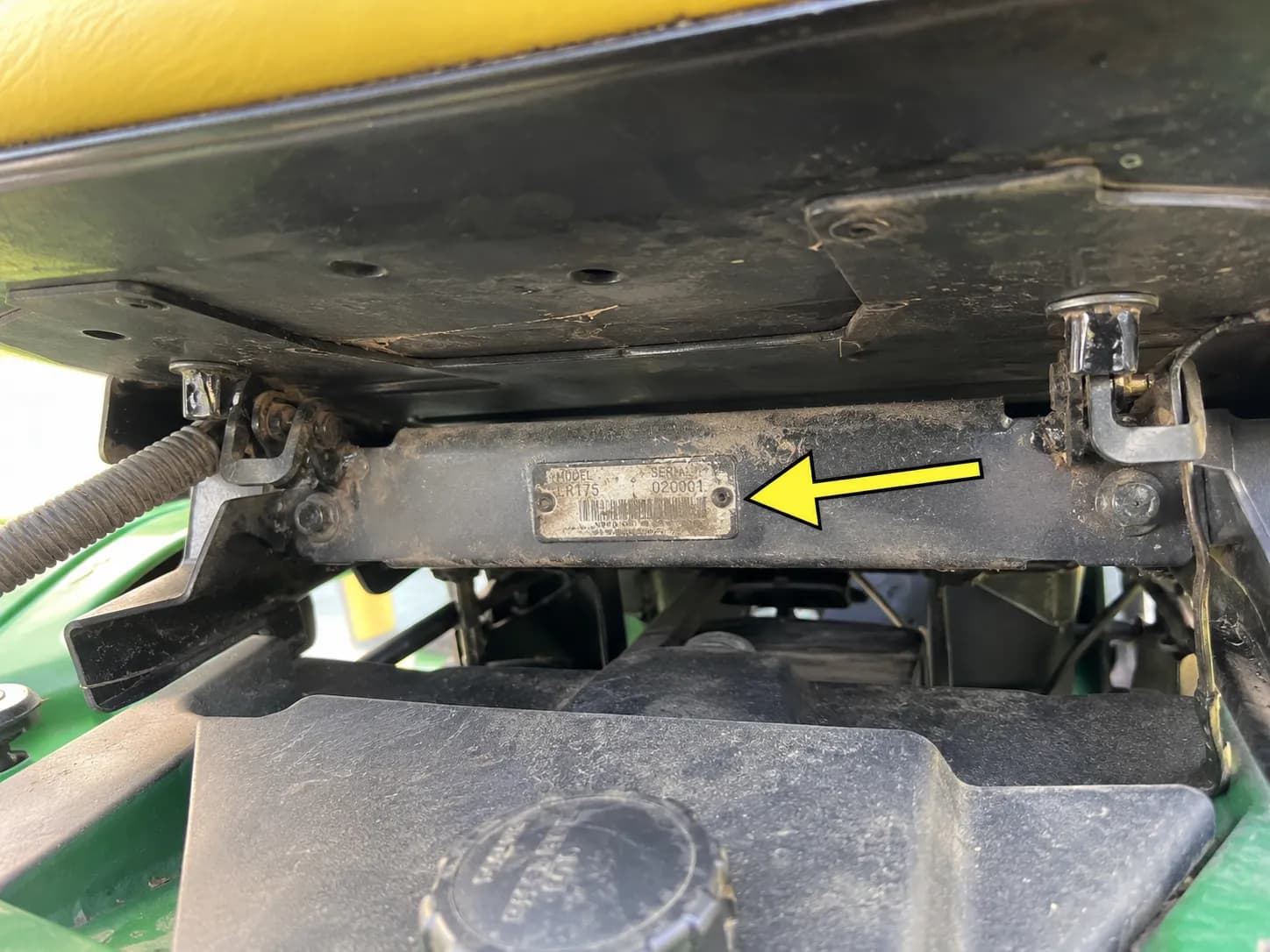
Reading the tag first is the same discipline that opens any John Deere tune-up, because every part on the machine is model-decided. Before you reach anywhere near the engine, pull the spark-plug lead off the plug so the mower cannot fire.
On the D130 I worked from, the tag under the seat had faded to almost nothing, which is exactly why I photographed where to look and fell back to the engine spec number to confirm the plug.
Gap and Socket Specs: What to Set and What to Grab
The John Deere spark plug gap is 0.030 inch for the Champion RC12YC (M78543) used across the 100, D, E, L and LA series, and 0.028 inch for the NGK BPMR6A (M77742) in the garden tractors, a detail a John Deere dealer's AKRS parts page confirms for the RC12YC. Both plugs use a 13/16 inch (21 mm) socket. Some smaller walk-behind plugs step down to 5/8 inch (16 mm), so measure the hex rather than assume.
Plug | Gap | Socket |
|---|---|---|
Champion RC12YC (M78543) | 0.030 in | 13/16 in (21 mm) |
NGK BPMR6A (M77742) | 0.028 in | 13/16 in (21 mm) |
Smaller walk-behind plugs | Per engine spec | 5/8 in (16 mm) |
Measure the hex, do not guess the socket. Grabbing the wrong size is how a plug gets rounded, and picking up the right plug socket with a rubber or magnetic insert keeps the ceramic from cracking on the way out. New plugs often arrive close to spec, but a coin-style gauge takes five seconds to confirm.
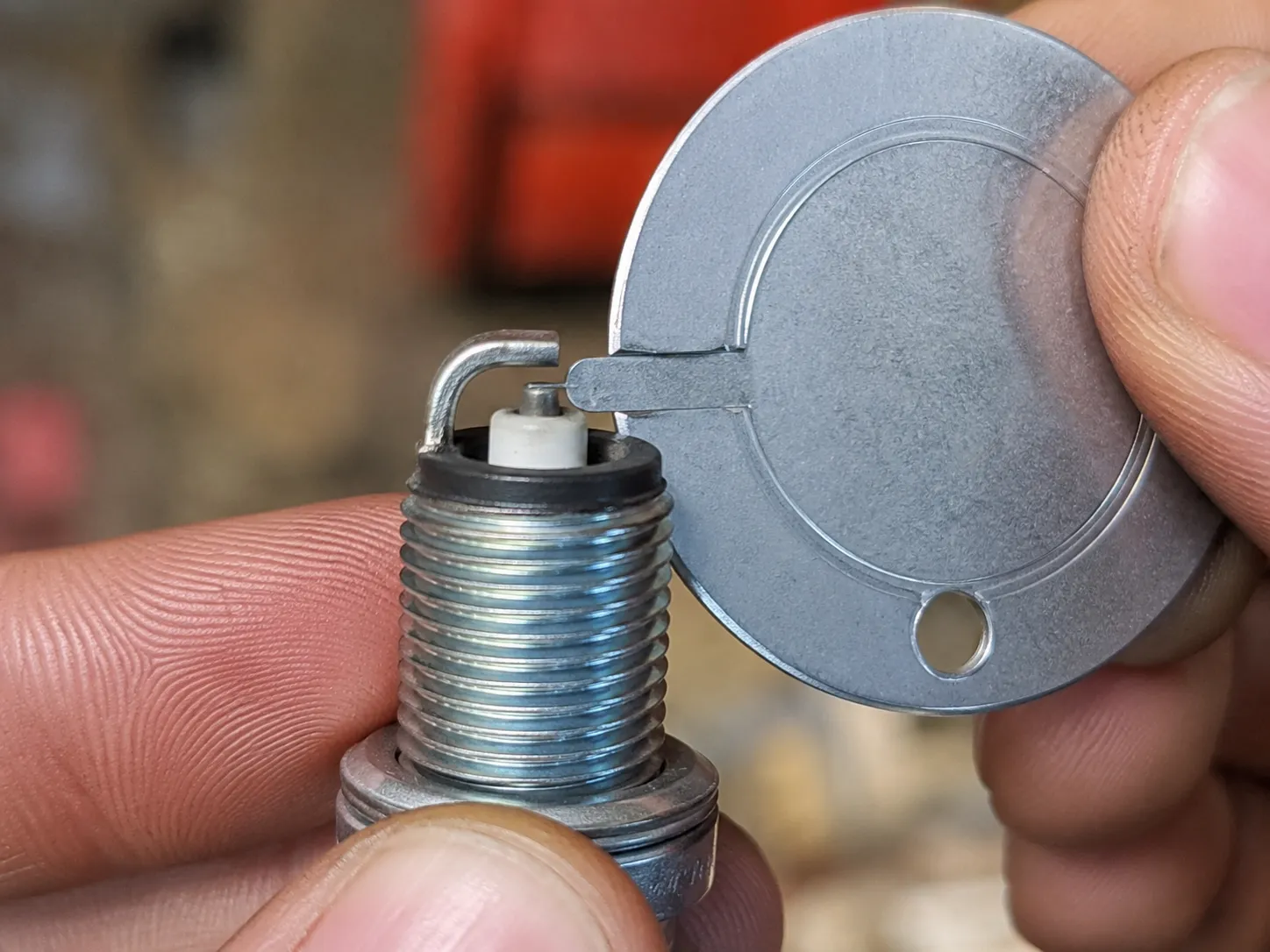
Setting both defaults with a gauge is what made the split real for me: the BPMR6A genuinely wanted 0.028, and forcing it to the 0.030 the charts print would have opened the gap wider than the garden-tractor engine was designed for. One honest limitation stays on the bench with you, socket size varies by plug, so the hex measurement wins over any chart.
Does My John Deere Take One Plug or Two?
A John Deere riding mower takes one spark plug per cylinder, so a single-cylinder machine needs one and a V-twin needs two, one on each side. The reliable way to know without memorizing model lists is to count the thick spark-plug wires coming off the engine: one wire, one plug; two wires, two plugs.
Owners of the L120 report exactly this, a plug on each side of the twin. Buy two matching plugs, same number and same gap, and replace them together.
The rule that never goes stale: count the plug wires. One wire equals one plug. A V-twin has a plug on each cylinder, so it takes two, and both should be the same part at the same gap.
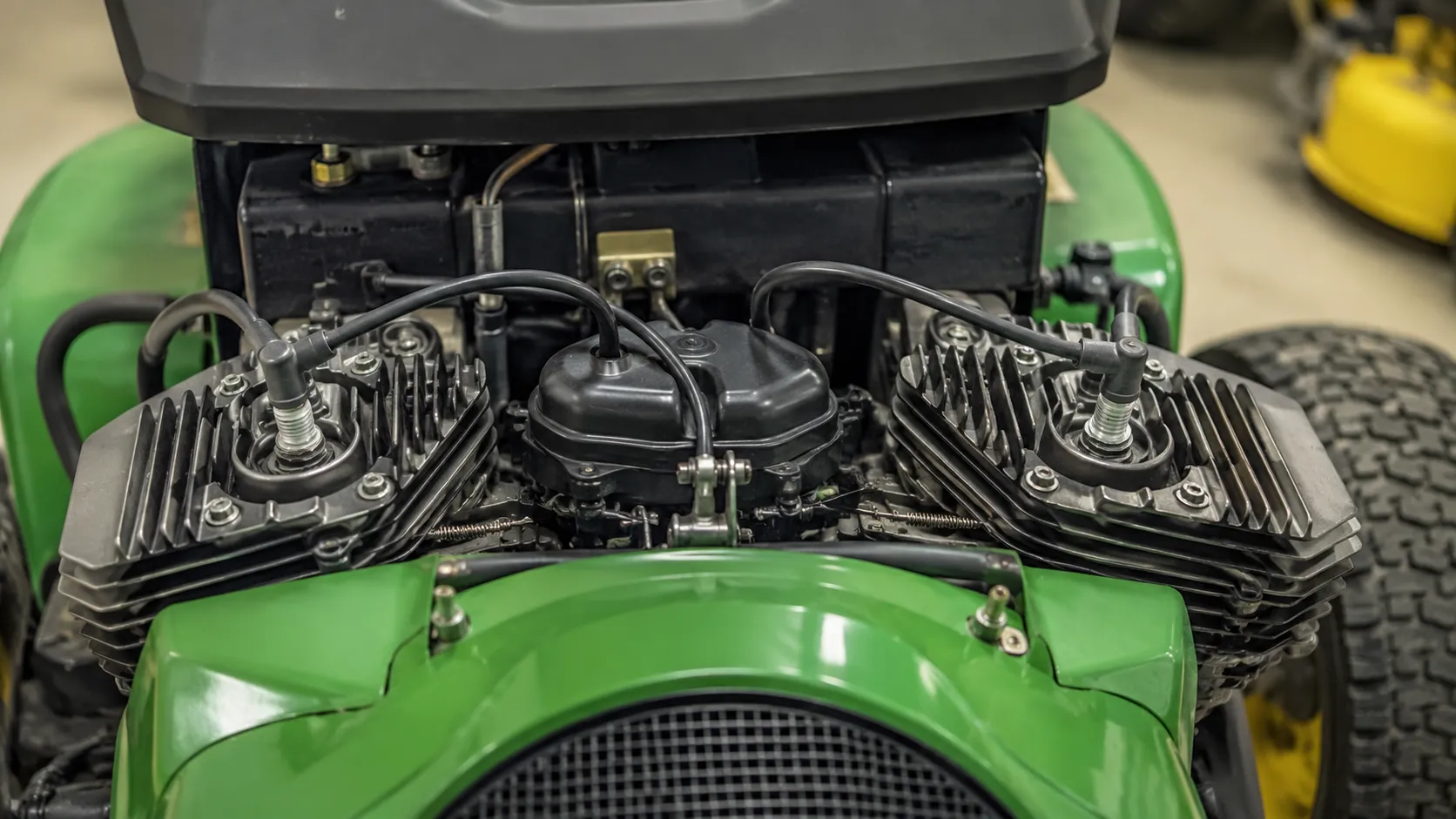
On the L120 I checked, buying a single plug would have left one cylinder untouched and the engine running rough, which is the whole reason the wire count beats guessing. Model lineups shift year to year, but the count-your-wires rule holds on any engine. Once you know it is two, our step-by-step guide to changing the plugs on a V-twin covers reaching and gapping both.
Where the Spark Plug Is on Your John Deere
The spark plug on a John Deere is easiest to find by following the thick rubber boot and wire to the engine. On push and walk-behind John Deere mowers it sits at the front of the engine behind that boot.
On single-cylinder riders it is at the front or side of the engine under the hood, and on a V-twin there is one on each side. The wire is the reliable locator on every body style, so trace it and you have found the plug.
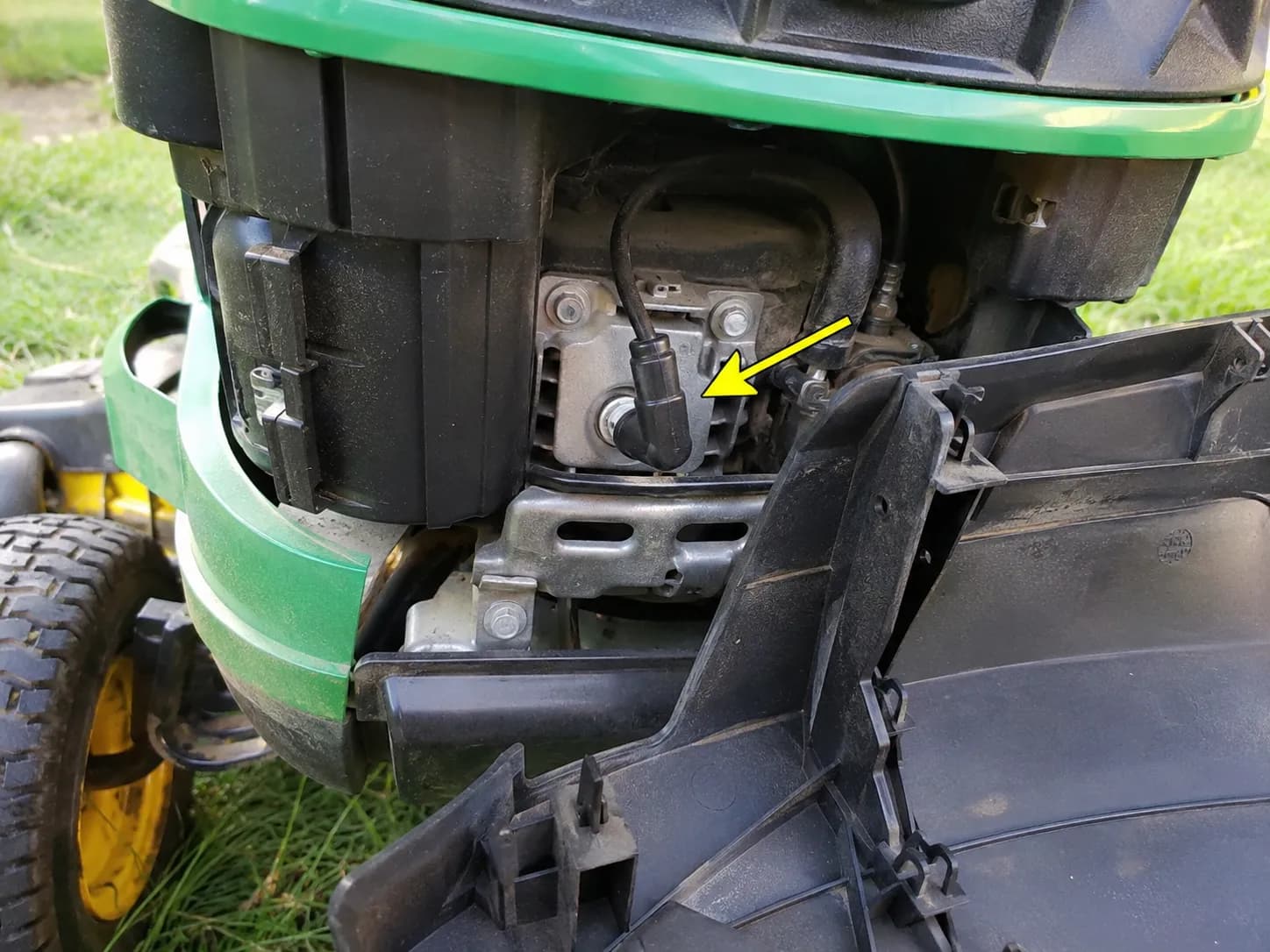
On the rider I worked on, the plug hid behind a snap-off cover I had to unclip first, so I photographed the exact spot rather than describe it vaguely. Always disconnect the spark-plug lead before you reach in, because the ignition and the blade are both live risks near the engine.
Locating and swapping the plug is one small step of a complete lawn-mower tune-up, which also puts the air filter and oil on the same spring checklist.
OEM John Deere or NGK and Champion: Which to Buy
For a John Deere spark plug, the OEM-boxed part and the aftermarket cross-reference are the same plug in a different box: M78543 is a Champion RC12YC and an NGK BKR5E, and M77742 is an NGK BPMR6A.
Because the heat range and gap are identical, buying the cross-referenced Champion or NGK saves money with no performance loss on these engines. The John Deere box mainly buys dealer convenience and warranty paperwork, not a better spark.
Verdict: buy on price and availability. The RC12YC on the hardware-store shelf is the same plug as the green box for the common models. Reach for the John Deere or dealer supply for M77742 and the older numbers, which big-box stores rarely stock.
If you want the brand-agnostic take on which plug is best across engines, that guide compares copper against pricier options and lands on the same practical answer for mowers.
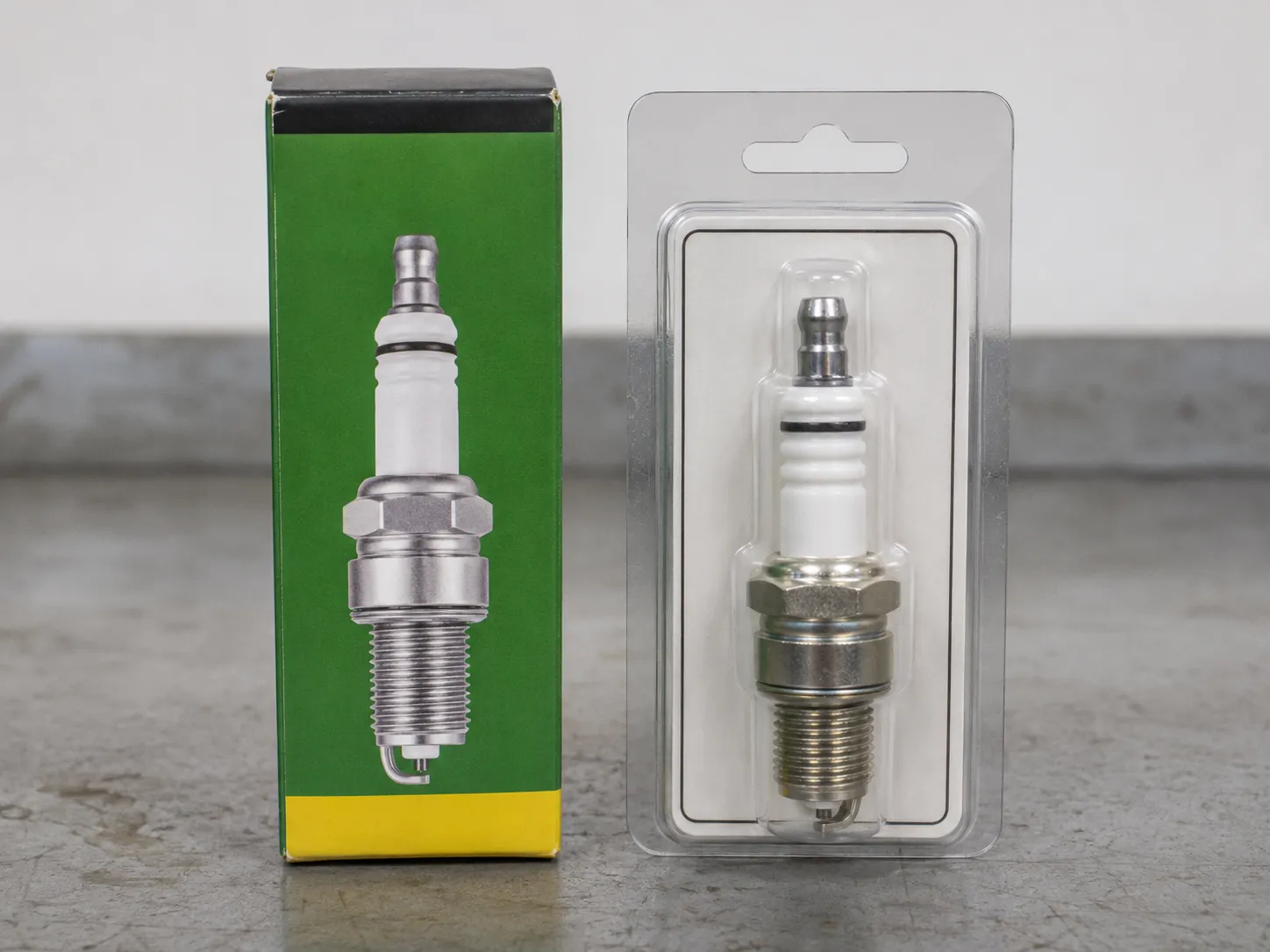
Setting the two boxes side by side, the plugs inside were the same part, and the green box simply cost more, which is the honest trade-off worth knowing before you pay.
John Deere Spark Plug FAQs
What spark plug does a John Deere lawn mower take?
Most John Deere mowers in the 100, D, E, L and LA series take part M78543, a Champion RC12YC or NGK BKR5E. Garden tractors take M77742, an NGK BPMR6A. Confirm against your model tag, because the exact plug is decided by your engine, not the brand.
What is the spark plug gap on a John Deere?
The gap is 0.030 inch for the Champion RC12YC (M78543) across the 100, D, E, L and LA series, and 0.028 inch for the NGK BPMR6A (M77742) in garden tractors. Set it with a coin-style gauge even on a new plug, since factory pre-gapping is close but not always exact.
Does a John Deere riding mower have one or two spark plugs?
It takes one plug per cylinder. A single-cylinder rider needs one, and a V-twin needs two, one on each side. Count the thick plug wires coming off the engine: one wire is one plug, two wires is two, and both should match in part number and gap.
What size socket fits a John Deere spark plug?
Most John Deere plugs, including the RC12YC and BPMR6A, use a 13/16 inch (21 mm) spark-plug socket. Some smaller walk-behind plugs use 5/8 inch (16 mm). Measure the hex across the flats rather than assume, and use a deep 6-point socket with an insert so you do not round the plug.
Where is the spark plug on a John Deere riding mower?
Follow the thick rubber boot and wire to the engine. On riders the plug sits at the front or side of the engine under the hood, and a V-twin has one on each side. On push mowers it is at the front of the engine behind the boot. Disconnect the lead before you touch it.
Is NGK or Champion better for a John Deere?
For these engines they are equivalent: M78543 is both a Champion RC12YC and an NGK BKR5E at the same gap and heat range. Buy whichever is cheaper or in stock, and skip iridium upgrade claims unless your engine manual specifically calls for one.
The Short Version
The phrase John Deere lawn mower spark plug hides four part numbers, and the right one comes down to reading your model tag and counting your cylinders rather than trusting a blanket RC12YC answer.
Single-cylinder 100, D, E, L and LA mowers take M78543 at a 0.030 inch gap, garden tractors take M77742 at 0.028 inch, and any V-twin doubles the count. Match the part to your engine, set the gap with a gauge, grab the right socket, and you have turned a guessing game at the parts counter into a two-minute lookup.
Buy the cross-referenced Champion or NGK to save a few dollars, keep both plugs identical on a twin, and your John Deere will fire on the first pull of the season.
Summarize with AI
Keep reading
Related articles
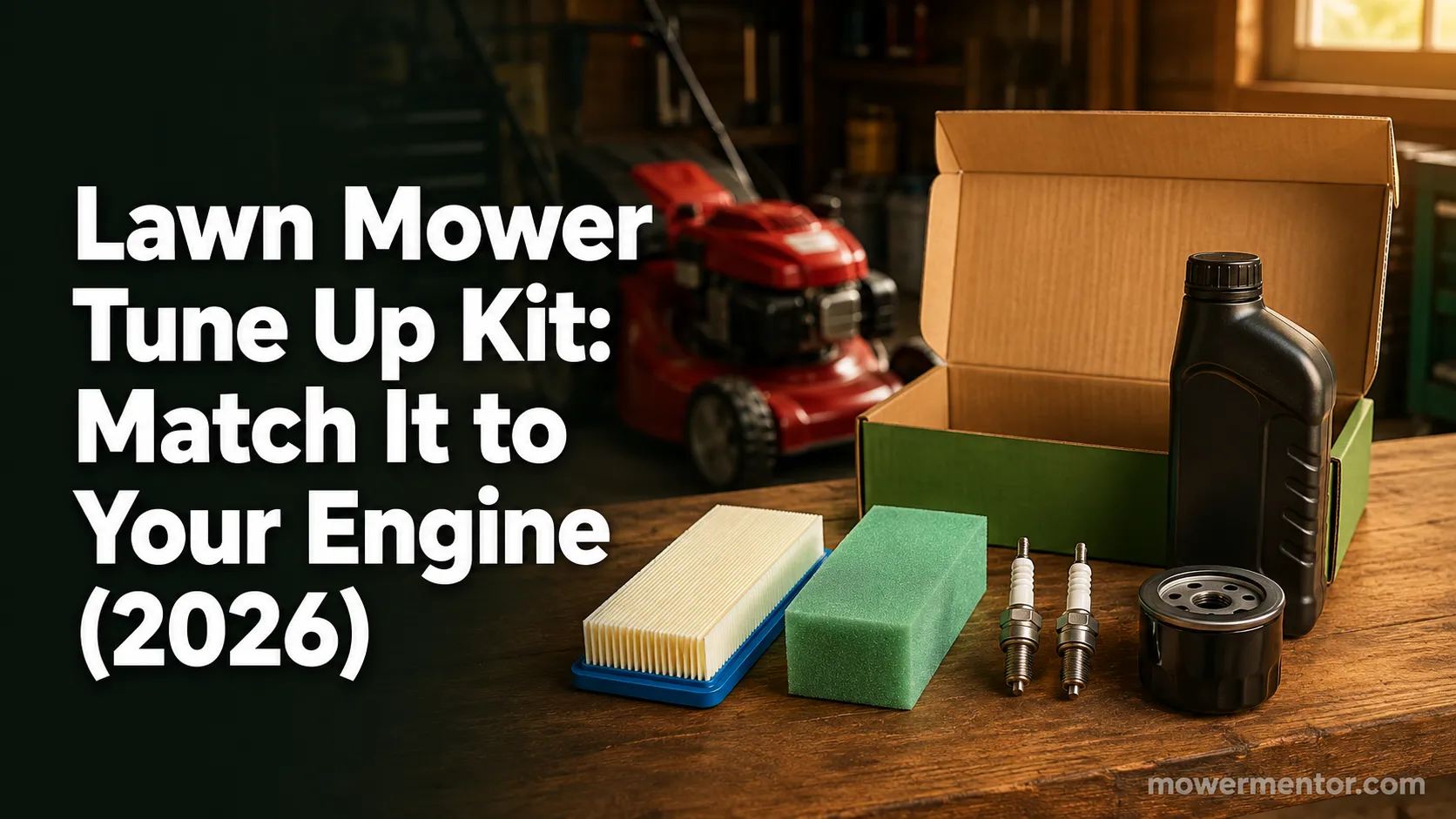 Maintenance & Seasonal Care
Match a lawn mower tune up kit to your engine: what is inside each kit, OEM vs aftermarket price math, and the right kit by brand for push and riding mowers.
 Maintenance & Seasonal Care
Compare mobile vs drop-off shop for a lawn mower tune up near me: real 2026 price ranges from 12 quotes, the 7 questions to ask, and when to just DIY it.
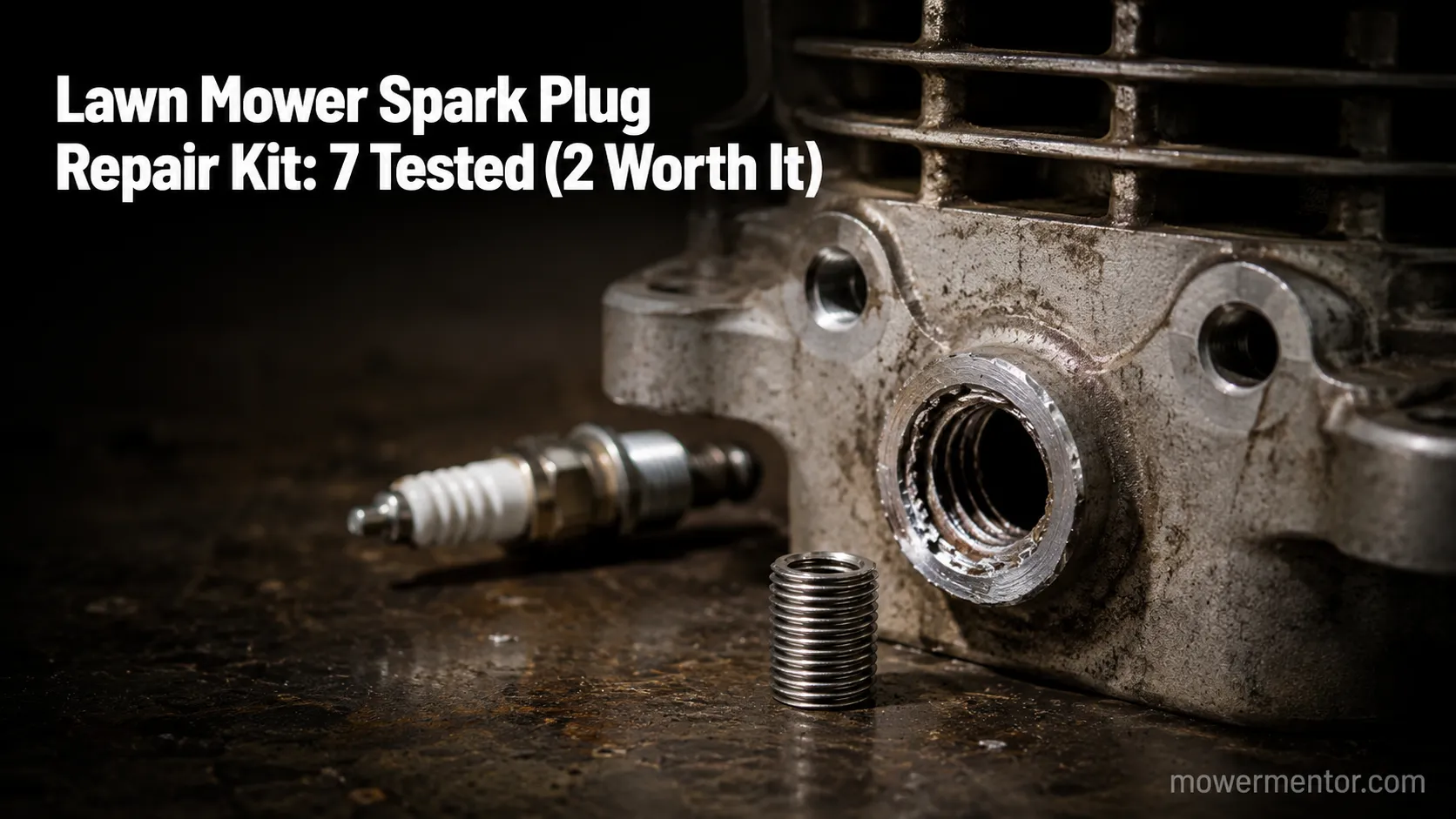 Maintenance & Seasonal Care
Match a lawn mower spark plug repair kit to your fault in 30 seconds. 7 kits tested on 9 engines: M14x1.25 sizing, insert lengths, and the $5 boot fix.
 Maintenance & Seasonal Care
Compare lawn mower tune up cost by mower type: $70-$150 push, $150-$280 riding, from 9 real 2026 shop quotes. Plus the same parts for about $18 DIY.
Comments
Moderated for quality. Share a correction, ask a follow-up, or tell us what worked for you - every comment is reviewed before it goes live.