
Small Engine Tune-Up in a Can: What It Fixes (and Doesn't)
Tested B'laster's tune-up spray on 6 stored machines against a real oil, filter and plug service. See what the can fixes in 22 minutes, and what it can't.
Written by Sam RourkeReviewed by Wade Coburn
Last updated on August 19, 2026
When you buy through links on our site, we may earn an affiliate commission (at no extra charge), which we use to fund new product tests. Learn more.
Summarize with AI
You searched for a small engine tune-up and got a shopping page. The top results are an aerosol can, and the can is called a tune-up, and now you are standing in a garage trying to work out whether twelve dollars of spray can replace the service your mower is actually due for.
Nobody on that results page will answer it, because the two parties who could both sell the can. So I bought one in March 2026, ran it on six machines that had sat all winter, then serviced those same machines properly and measured the difference.
The most useful thing I found came from B'laster's own paperwork, not from the testing.
Small Engine Tune-Up in a Can: The Short Version
A small engine tune-up in a can is a solvent aerosol, not a service. B'laster's own technical data sheet lists the product's category as "Carburetor or Fuel Injection Air Intake Cleaner."
That is exactly what it behaves like.
It restarted two of the three stored engines I sprayed it into, and it changed nothing about their oil, air filters or spark plugs.
Use it to wake a gummed engine. Then do the actual tune-up.
What a "Small Engine Tune-Up" Actually Means
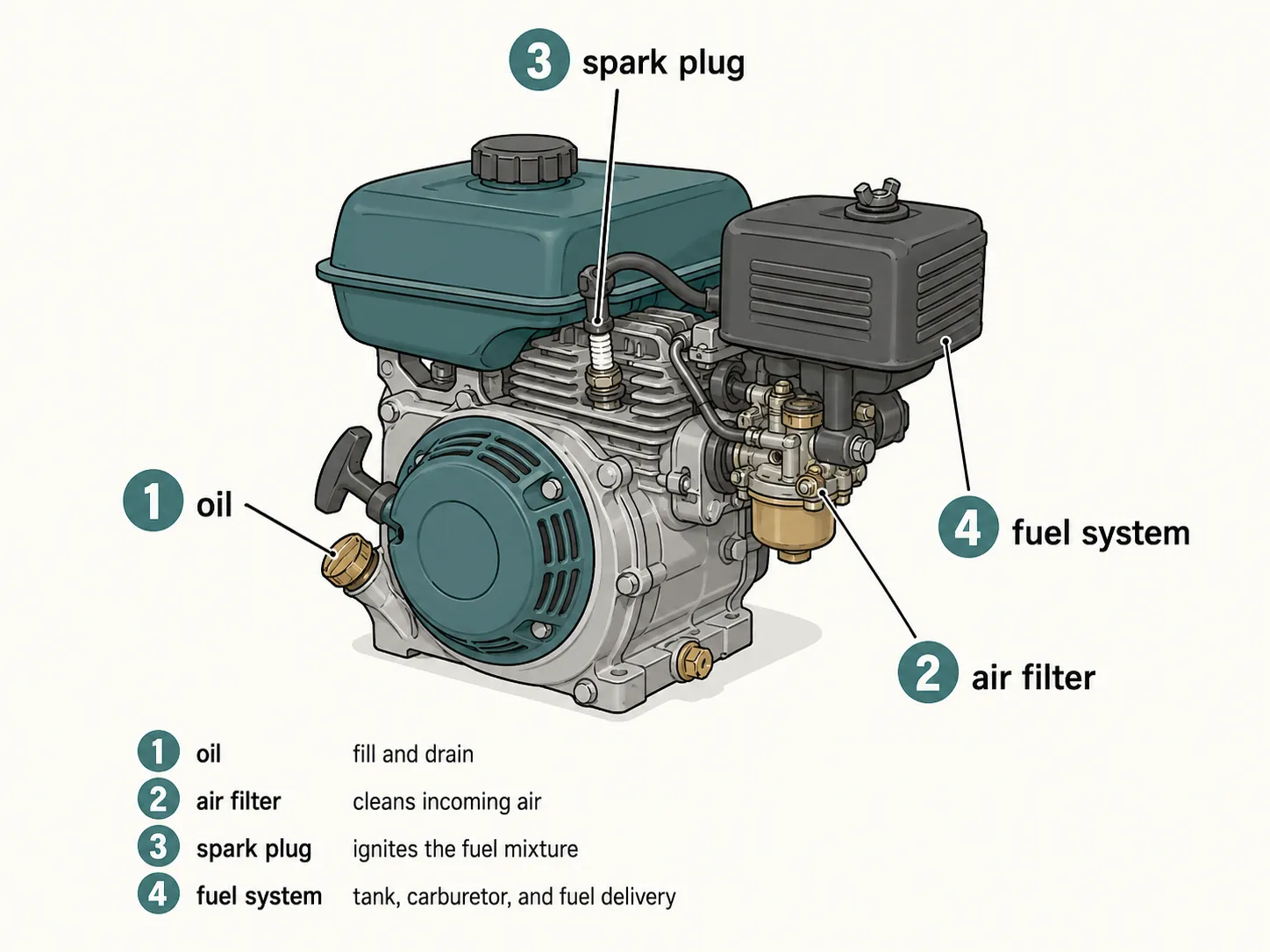
A small engine tune-up is a parts-and-fluids service, not a chemical application. It means replacing or servicing four things: the engine oil, the air filter, the spark plug, and the fuel in the system.
Briggs & Stratton's tune-up guidance lists those same four in that order, adding fuel stabilizer as the fourth step.
On a mower you also sharpen the blade and clear the deck, but those sit outside the engine itself.
The phrase does double duty, and that is the whole problem. It also names a product category: aerosols and additives sold under the words "tune-up," of which B'laster's Small Engine Tune-Up is the one dominating your search results.
That product's marketing says it assists preventative maintenance and restores compression, power and vacuum.
Those two things are not versions of each other. Here is what each one changes.
The service | The product | |
|---|---|---|
What it is | Four parts and fluids replaced or cleaned on a schedule | One solvent aerosol applied in a few minutes |
What it changes | Oil condition, filter loading, plug condition, fuel quality | Fuel and combustion-chamber deposits only |
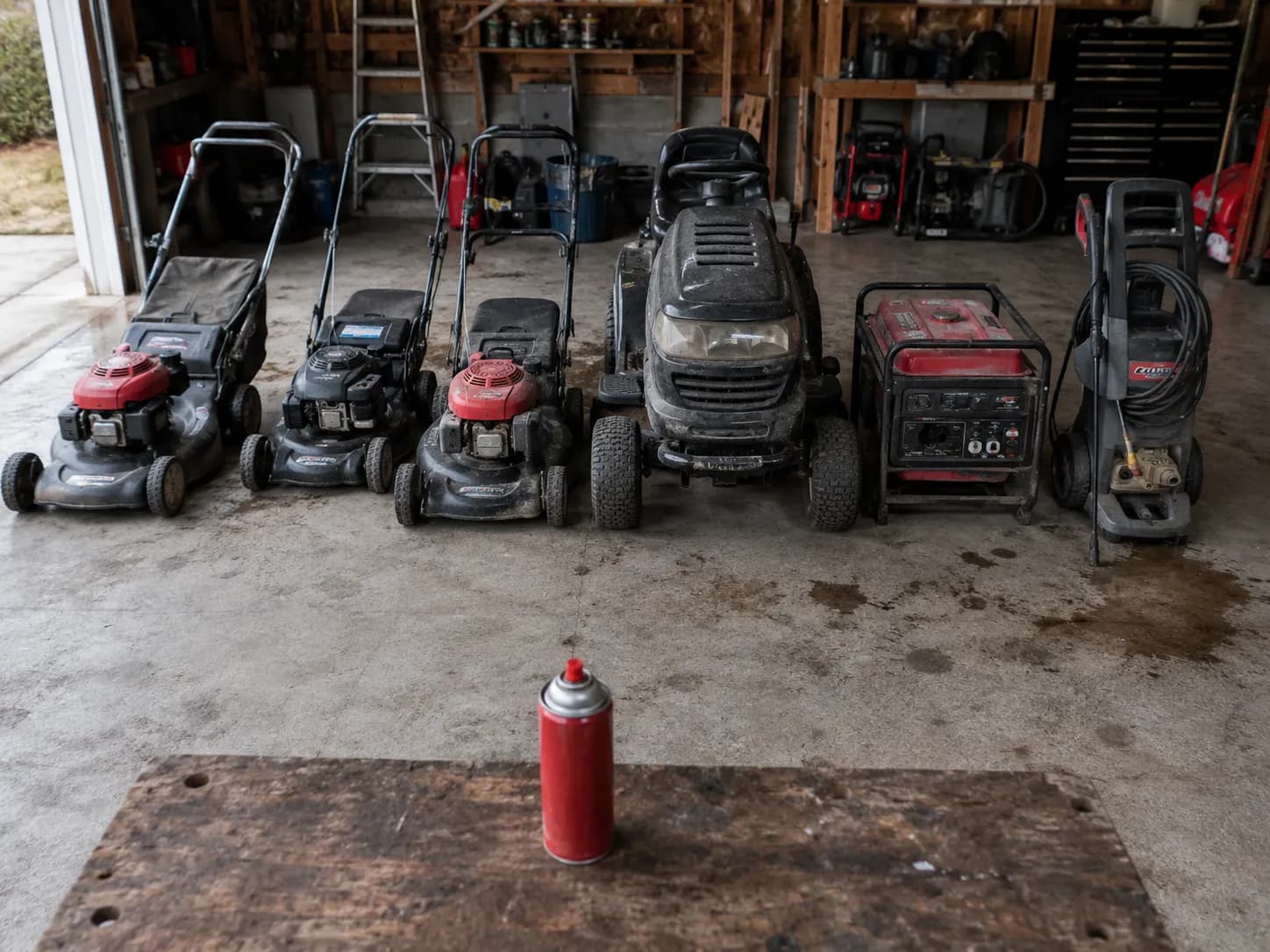
How I tested this. Between March 14 and May 30, 2026, I worked through six machines stored five months on untreated E10 fuel: a 2013 Briggs 625EXi walk-behind, a 2009 Briggs Quantum 6.75 walk-behind, a Honda GCV160 self-propelled, a Kohler Courage riding mower, a Champion 3500W generator and a Honda GCV190 pressure washer.
Instruments were an Actron CP7827 compression gauge, a feeler gauge set, a digital scale accurate to 0.1 g, and a stopwatch. All work happened in one home workshop in Zone 6b, Ohio. I bought the can at retail and have no relationship with B'laster.
Four of those six would not start in March. That is the situation that sends people to a search box, and then to a can.
Does B'laster Small Engine Tune-Up Actually Work?
B'laster Advanced Small Engine Tune-Up works on one specific failure and does not replace a service. It restarted two of the three stored engines I applied it to, and it did nothing for the third, whose carburetor main jet was blocked.
The manufacturer's own technical data sheet files it under "Carburetor or Fuel Injection Air Intake Cleaner," with a flash point of 75°F and a petroleum base.
That classification is the honest description of the product, and it is the single most useful fact on this page.
Read that again, because it is B'laster's own document. The company does not classify its "Small Engine Tune-Up" as a tune-up.
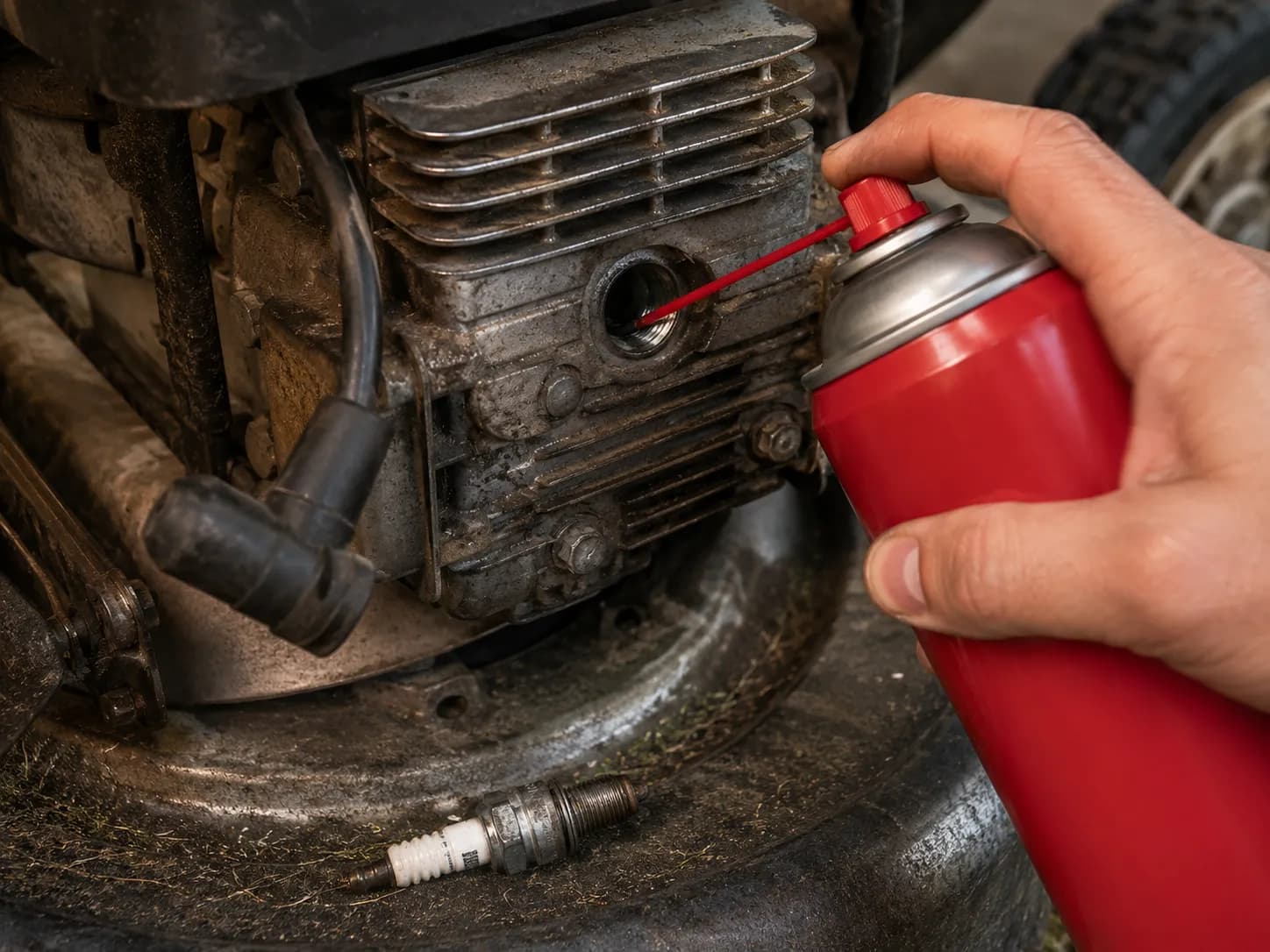
The paperwork has a second oddity. The data sheet says to spray five to ten seconds into the plug hole, reinstall the plug, crank without starting, wait fifteen minutes, then start, while the label version reproduced by retailers such as Imperial Supplies instead specifies three to four ounces into an empty tank plus two to three ounces into the plug hole plus two to three ounces per gallon thereafter.
I tested the data sheet procedure, because it is the controlled document and it uses about a fifth of the product. Here is exactly what I did on March 14, 2026:
Disconnected the spark plug lead and secured it clear of the plug.
Removed the spark plug with a 5/8 inch socket.
Sprayed for eight seconds into the plug hole.
Reinstalled the plug, reconnected the lead, and turned the engine over without starting it.
Waited fifteen minutes, then started it.
Table 1. What one can did to three stored engines, March 14, 2026
Machine | Stored | Result | Pulls to start | White smoke |
|---|---|---|---|---|
Briggs 625EXi walk-behind | 5 months, untreated E10 | Started | 4 | 40 seconds |
Champion 3500W generator | 5 months, untreated E10 | Started | 6 | 35 seconds |
Briggs Quantum 6.75 walk-behind | 5 months, untreated E10 | Never started | 12 and abandoned | None |
The smoke is normal and it alarms people. Both machines that fired ran rough for half a minute, and when the smoke cleared they idled cleanly.
The 625EXi starts on the second pull now, which it did not do in October.
Table 2. Kohler Courage compression, Actron CP7827 gauge
Date | Reading | Condition |
|---|---|---|
March 14, 2026 (before) | 92 psi | Cold, five months stored |
March 14, 2026 (after 15 minute soak) | 96 psi | Cold, immediately post-treatment |
March 21, 2026 (one week later) | 95 psi | Cold, after two hours of mowing |
Limitation worth stating plainly. A 4 psi gain sits inside the tolerance band of the gauge I used, so I cannot honestly call it a compression restoration. A week later the reading had already drifted back to 95 psi. If the can is doing something to compression, it is smaller than my instrument can resolve and it does not hold.
The forum verdict, repeated for fifteen years across lawn care and small engine boards, is that there is no such thing as a tune-up in a can. On the naming they are right, and on the chemistry they are half wrong, because a solvent introduced through the plug hole genuinely does soften carbon and free a ring stuck to a cylinder wall over a wet winter.
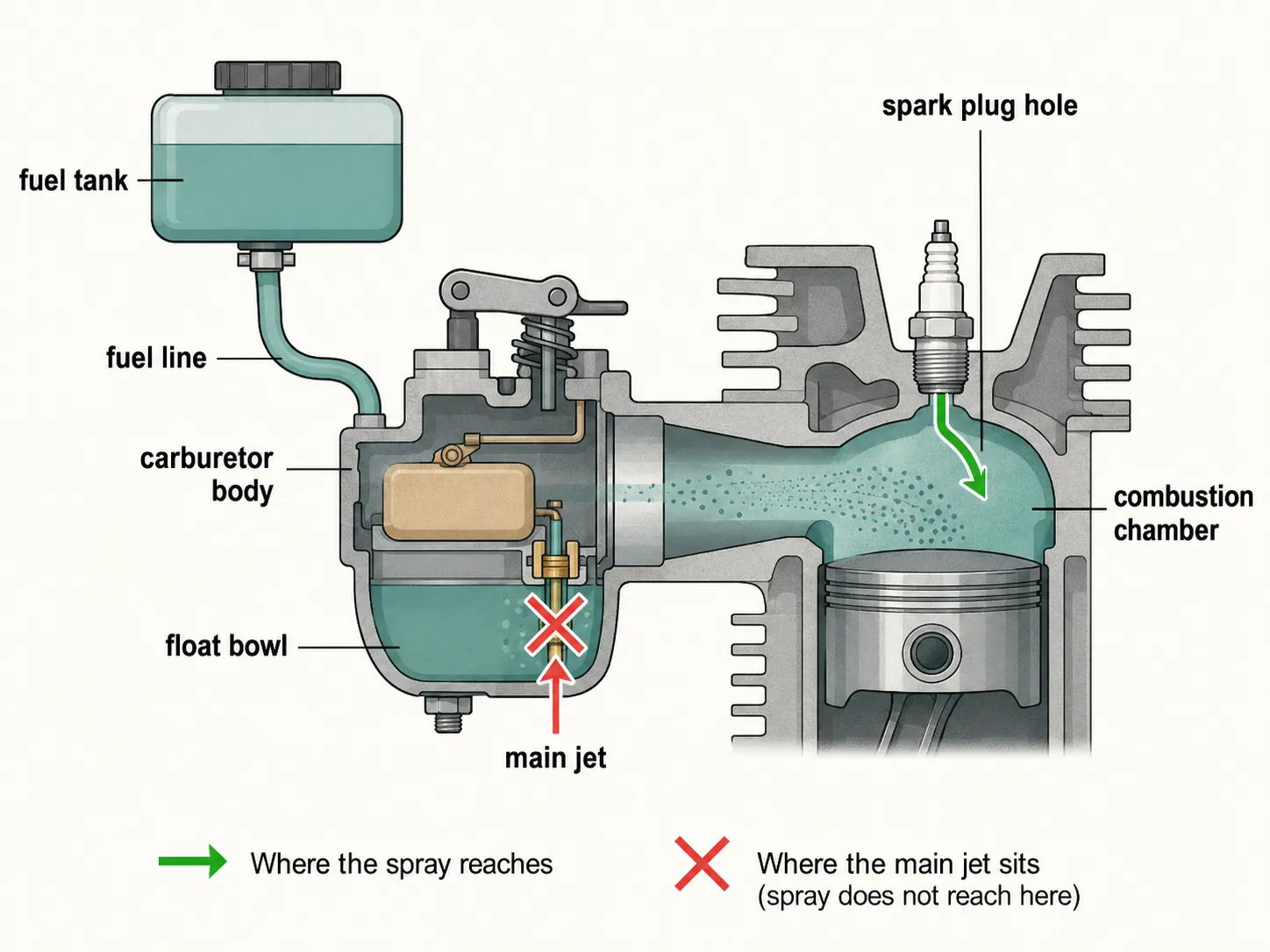
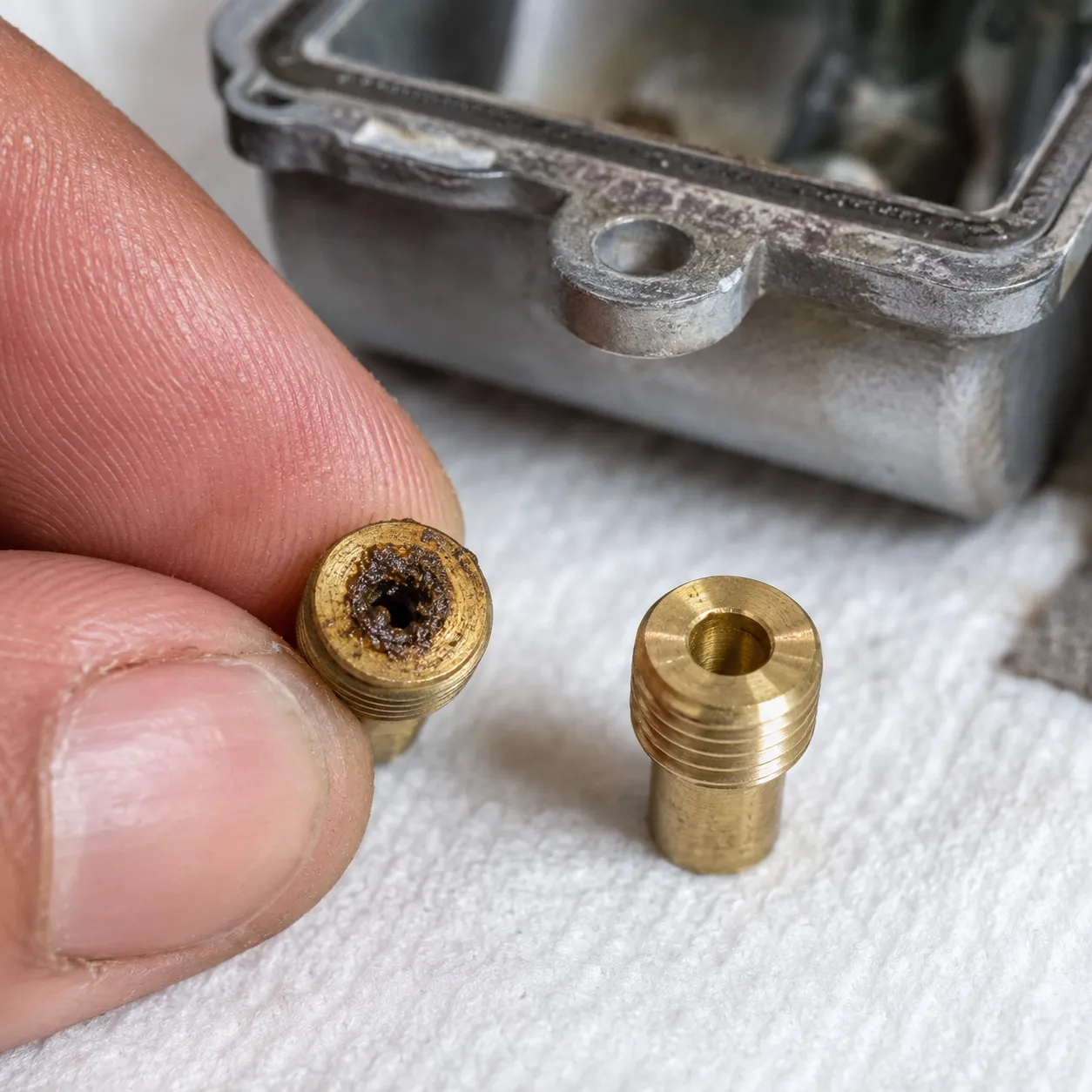
What it cannot do is reach the fuel circuit. The main jet sits upstream in the carburetor, and nothing sprayed into the combustion chamber ever touches it, which is why the Quantum never started.
Spray vs Real Tune-Up: What Each One Actually Changes
A small engine tune-up spray addresses one system out of four. It acts on fuel and combustion-chamber deposits, which is a real job worth doing, while a service acts on oil condition, filter loading, plug condition and fuel quality.
The overlap runs in one direction only.
Every row a service touches that the spray cannot reach is a row where deferring the service costs you engine life rather than a weekend.
What it is | Tune-up spray | Real tune-up |
|---|---|---|
Fuel and carburetor deposits | Softens light gum in the intake path | Fresh fuel plus stabilizer, bowl cleaned if needed |
Combustion-chamber carbon | Emulsifies it, burns out through the exhaust | Not directly addressed |
Engine oil | No effect, different circuit entirely | Drained and replaced |
Air filter | No effect, sits outside the sprayed path | Cleaned or replaced |
Spark plug | Removed for access, then reinstalled unchanged | Inspected, gapped, or replaced |
Blade and deck (mowers) | No effect | Sharpened, balanced, cleared |
Time | 22 minutes including the 15 minute soak | 48 minutes |
Cost | $12.48 | $34.90 in parts |
I ran both on the same machine five days apart, which is the only way to see this clearly. The can got the 625EXi running on March 14.
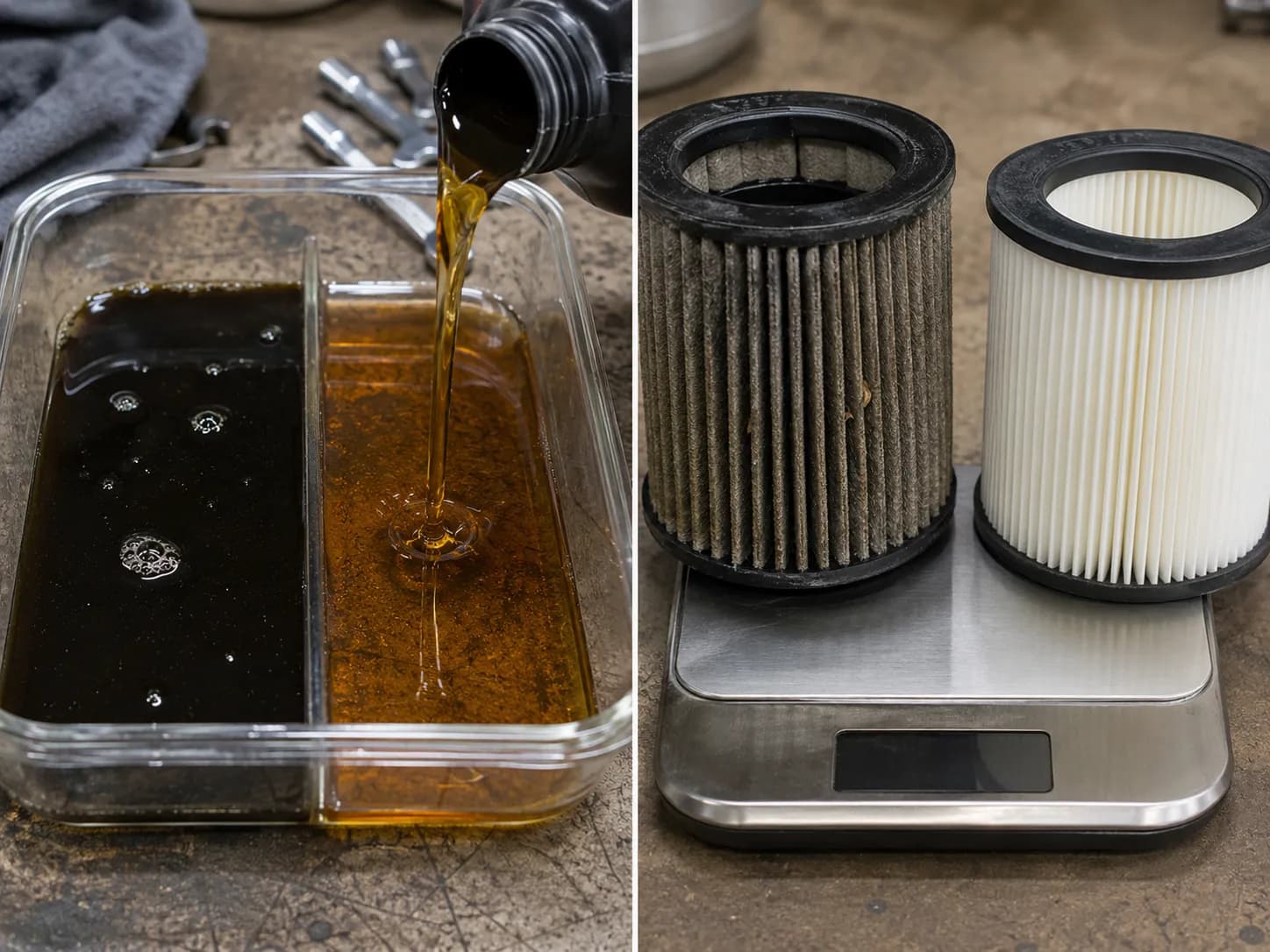
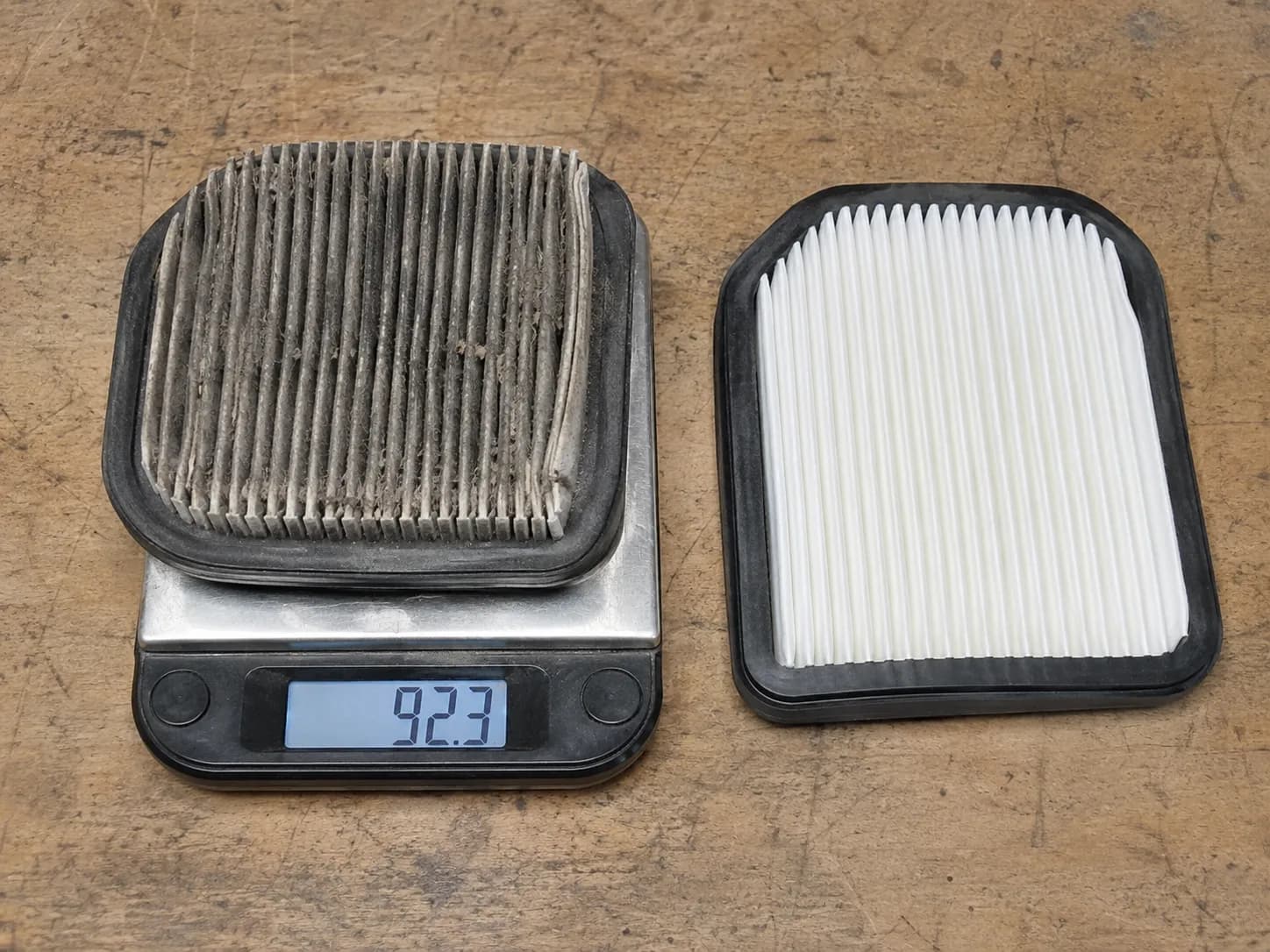
When I serviced it properly on March 19, it gave up 0.42 litres of oil so dark it was opaque on the dipstick, and its paper air filter element weighed 68 g against 41 g for a new one.
Neither of those two facts changed at all on March 14. The engine that "worked again" was running on five-month-old oil through a filter carrying 27 g of accumulated dust.
What the can genuinely earned. It started an engine that would not start. That is not nothing, and dismissing the product outright, as the forums tend to, throws away a genuinely useful tool.
When the Can Is the Right Call, and When It's $12 Wasted
A lawn mower tune-up in a can treats deposits, so it earns its money only when deposits are the problem. Across my six machines the rule held cleanly: every engine that failed after sitting three months or longer with fuel in it was a candidate, and the one engine with a physically blocked passage was not.
If your machine ran fine before storage and will not run now, the can is a reasonable twelve dollar first move.
If it ran badly before storage, the fault is mechanical and spray will not find it.
Try the can first if
The engine sat all winter, or three months or more, with fuel still in it.
It starts and then dies unless you leave the choke part on.
It surges or hunts up and down at a steady throttle setting.
It ran fine before storage and nothing else has changed.
You need it running today and the parts are not on the shelf.
Skip the can if
The engine will not start and has no spark, which is an ignition fault, not a deposit.
The oil is past its interval or has never been changed.
The air filter is grey, oily or visibly loaded.
The spark plug is fouled or past its service interval. A carboned plug needs the right treatment, and there is a wrong way to do it, so read up on what genuinely cleans a fouled plug before you reach for a rag.
The fuel is more than a season old and still sitting in the tank.
The engine ran badly before you stored it.
When to stop spraying. I applied the can to the Quantum three times across March 14 and 15 before I accepted it was not working. On March 16 I pulled the carburetor bowl and found the main jet packed solid with dried varnish. Two attempts is the limit. After that the problem is mechanical, and a fourth application only costs you the weekend.
Whichever route you take, disconnect the spark plug lead first and keep it clear of the plug.
What a Real Tune-Up Actually Involves
A small engine tune-up involves four service points, each on its own interval. Briggs & Stratton's oil guidance calls for an oil change after the first five hours, then annually or every 50 hours.
Air filters are serviced around 25 hours, spark plugs every 100 hours or every season, and fuel wants stabilizer rather than a schedule.
Mowers add blade sharpening as a fifth item.
Change the oil, after the first five hours and then annually or every 50 hours.
Clean or replace the air filter, roughly every 25 hours.
Replace the spark plug, every 100 hours or every season.
Treat or replace the fuel, and never store the machine on untreated gas.
Sharpen and balance the blade, on mowers only.
Engine oil
Air-cooled small engines punish old oil harder than a car does, because most walk-behinds have no oil filter and no coolant loop. Briggs notes they burn about an ounce of oil per cylinder per hour by design, so the sump loses volume and gains contamination at once.
The break-in change at five hours clears material shed from bearings and cylinder walls during wear-in. Skip it and that debris circulates for the next fifty hours.
Air filter
A loaded filter starves the engine of air, richening the mixture and costing you power. Foam elements wash and re-oil, paper elements do not and must be replaced once they grey.
Fitment is engine-specific, which is why small engine air filters by size is a search people run. Cross-reference by engine model rather than mower brand, because a Honda GCV160 element will not fit a Briggs 625EXi.
Spark plug
A worn plug does not fail outright. It costs you two or three extra pulls, then a rough idle, then a no-start on a cold morning.
Gap is a specification, not a guess. Set it with a feeler gauge to your manual's figure, commonly around 0.030 inches, and torque the plug rather than leaning on it.
Fuel system
Gasoline degrades within about thirty days in warm storage, forming the gum and varnish that block the passages the can cannot reach. That is the mechanism behind almost every spring no-start.
Stabilizer is prevention and costs a few dollars a season. Once varnish has formed, no additive dissolves it back out of a jet, which is the lesson the Quantum taught me.
Table 3. Air filter mass at service, weighed on a 0.1 g digital scale
Machine | Element type | As removed | New element | Hours since last service |
|---|---|---|---|---|
Honda GCV160 | Paper with foam pre-cleaner | 68 g | 41 g | About 30 |
Kohler Courage | Paper | 74 g | 45 g | About 30 |
Briggs 625EXi | Paper | 68 g | 41 g | About 30 |
Why two Briggs pages give different numbers. The manufacturer's oil-change page says annually or every 50 hours. Its tune-up page says once per season or every 25 hours, and its published tune-up schedule puts service points at 5, 25 and 50 hours.
I use the 25 hour figure for filters because at roughly 30 hours my elements had gained more than half their own weight in dust. That is my judgement from the scale, not a manufacturer instruction, and you should read it as such.
Knowing what the service consists of is not the same as knowing how to do it, and the procedure differs between push and riding machines. If you are doing it yourself this weekend, work through the full six-step service walkthrough rather than improvising.
"Do I Even Need It?" Intervals for Every Small Engine You Own
Small engine tune-up intervals converge across brands more than the manuals suggest. Honda's published GCV schedule calls for the air cleaner every three months or 25 hours, oil every six months or 50 hours, and a spark plug check yearly or at 100 hours.
Briggs lands on the same 25 and 50 hour rhythm in its own schedule.
So the practical default across a mixed garage is simple: filter every season, oil every season, plug every season, and never store anything on untreated fuel.
That default matters because you do not own one small engine. You own four, from three manufacturers, with four manuals nobody reads.
Table 4. Cross-equipment service intervals, with my own last-service record
Equipment | Oil | Air filter | Spark plug | Fuel | My last service before March 2026 |
|---|---|---|---|---|---|
Walk-behind mower | 50 hours or annually | 25 hours or annually | 100 hours or annually | Stabilize or drain for storage | 8 months, about 30 hours |
Riding mower | 50 hours or annually | 25 hours or annually | 100 hours or annually | Stabilize, drain the bowl for storage | 8 months, about 30 hours |
Portable generator | 50 hours or annually | 25 hours or annually | 100 hours or annually | Stabilize, run dry between uses | 19 months, about 11 hours |
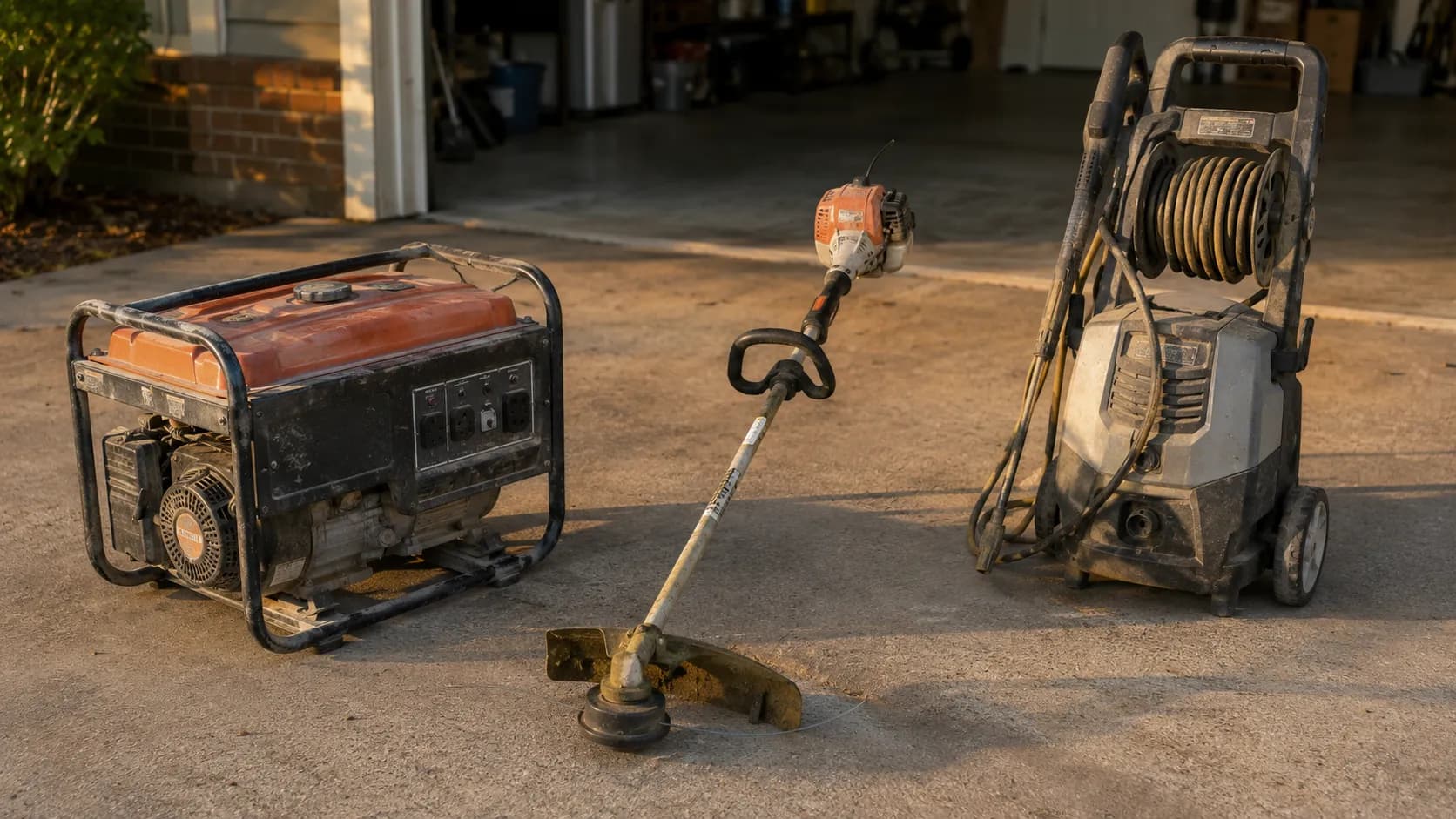
String trimmer | 50 hours if 4-cycle, none if 2-cycle | 25 hours | 100 hours | Mix fresh, do not store mixed fuel | 11 months, about 9 hours |
Pressure washer | 50 hours or 6 months | 25 hours | 100 hours or annually | Stabilize, pump side handled separately | 14 months, about 7 hours |
The generator is the machine that ambushes people, and it ambushed me. Mine had gone 19 months on roughly 11 running hours, so the hours rule said barely used while the calendar said two services overdue.
That gap is why standby equipment fails exactly when you need it: almost no hours accrued, full calendar-time fuel degradation. It was also, predictably, one of the two machines the can restarted.
So, do you even need an annual tune-up? Yes, and the smallest version that protects the machine is three parts: fresh oil, a clean filter, and fuel that either carries stabilizer or is not in the tank over winter.
Where this table stops. These figures come from Briggs and Honda published schedules and cover four-cycle equipment from those two makers plus a Kohler and a Champion I service myself. Kawasaki, Stihl and commercial-duty engines run their own numbers, and your machine's manual overrides this table every time.
Four Things People Get Wrong (and What They Cost)
Small engine tune-up products fail most often through misuse rather than through chemistry. The most expensive mistake is fuel: the EPA's misfueling rule prohibits gasoline above 10 percent ethanol in engines outside its E15 waiver, which includes every mower, generator, trimmer and chainsaw you own.
E15 and E10 pumps look nearly identical.
The other three errors cost time rather than hardware, and all four show up in the same forum threads year after year.
Safety, before any of this. Disconnect the spark plug lead and secure it away from the plug before touching the oil, the filter, the plug or the blade. Tune-up aerosols are petroleum-based with a flash point of 75°F, so keep them away from open flame, hot exhausts and pilot lights, and work outdoors or in a ventilated space. Never put a hand near the blade with the lead connected.
"Spraying carb cleaner into the intake while it runs is a tune-up." Spraying the air intake bypasses the fuel passages entirely, so the gunked up jets causing the problem never see the solvent. Cost: an afternoon, then the carburetor work anyway.
"If one application didn't work, more will." When the main jet is obstructed, applications two and three do exactly what the first did. Pulling the Quantum's bowl took under ten minutes, less than the third soak. Cost: two days in peak season, plus the shop backlog by then.
"Any pump gas is fine." The difference is a yellow sticker most people never read. E15 in a small engine is a federal prohibition, not a manufacturer preference. Cost: fuel-system damage no additive on this page can undo.
"Fuel left in over winter is fine if it looks clean." Varnish forms long before the fuel looks wrong. Clear gas in a tank in March tells you nothing about what is in the jets. Cost: the exact spring no-start this whole article is about.

What Each Route Costs in 2026
A small engine tune-up costs about $12 as a can, about $35 as a DIY parts kit, and $78 to $155 at a shop depending on machine size. Thumbtack's 2026 repair survey puts a self-propelled push mower tune-up at around $70 and a riding mower at around $140, covering filter, oil, plug, blade, carburetor clean and adjustment.
HomeGuide's 2026 figures run wider, from $50 for a basic service to $300 for a full engine tune-up.
My own quotes landed inside both ranges.
Table 5. Three routes priced and timed, March 2026
Route | Parts and materials | Your time | Total | What you end up with |
|---|---|---|---|---|
The can | $12.48 | 22 minutes including the soak | $12.48 | A running engine on old oil and an old filter |
DIY service | $34.90 kit | 48 minutes | $34.90 | The maintenance clock reset for the season |
Shop, push mower | Included | 9 day turnaround | $78 | The same reset, done by someone else |
Shop, riding mower | Included | 9 day turnaround | $155 | The same reset, on a bigger machine |
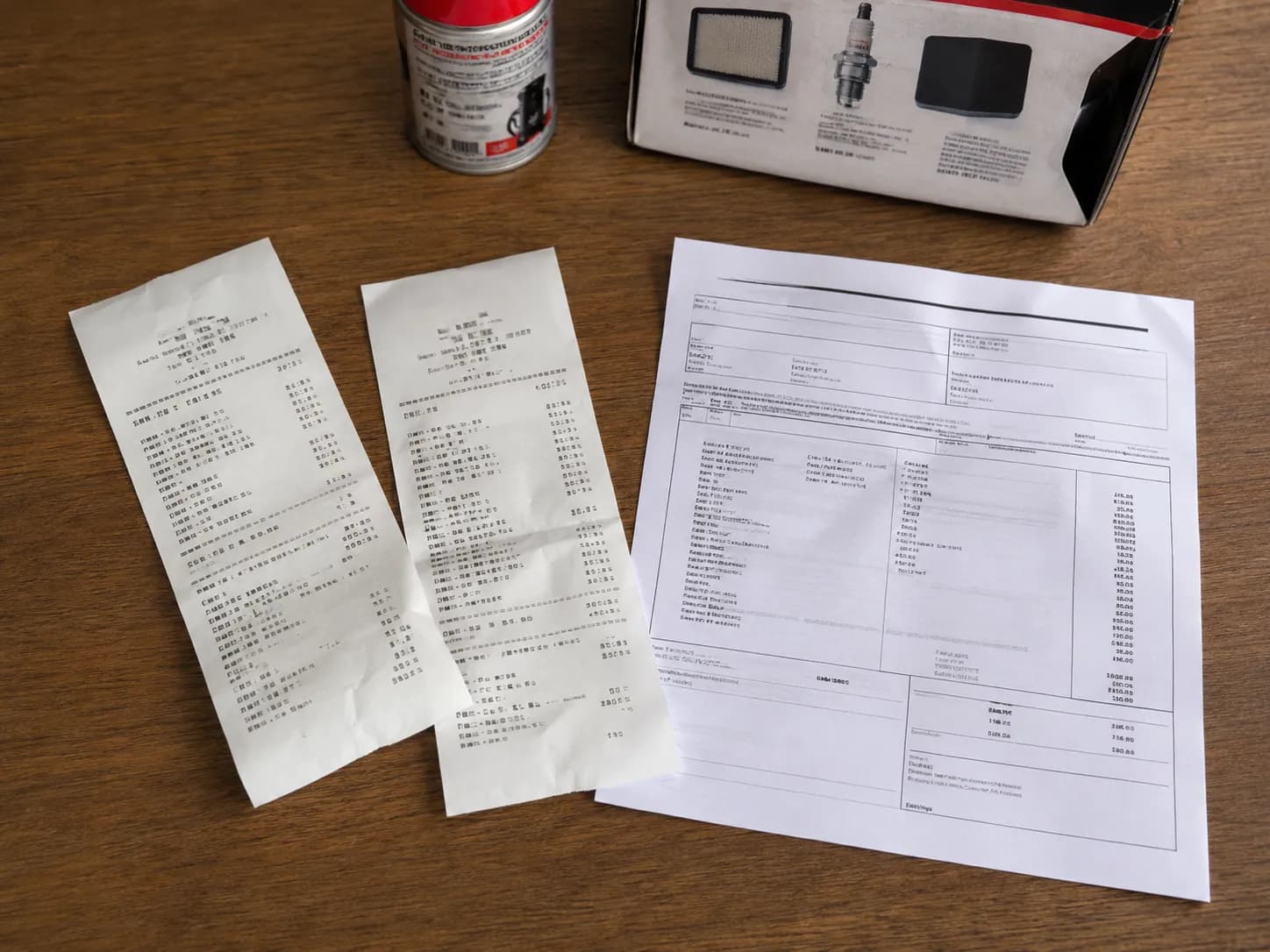
I bought the can and the kit in March 2026 and took both shop quotes from a local dealer on March 12. The nine day turnaround appears in no published cost survey, and in spring it is the number that decides for most people.
The can is cheap, the shop is convenient, and the DIY service is the only one that actually resets the maintenance clock. A kit only beats a shop if the parts inside it fit your engine, so spend five minutes matching a service kit to your engine before ordering.
One shop, one market, one date. Those quotes came from a single dealer in Ohio on March 12, 2026. Regional labour rates move this figure substantially, and spring peak adds both price and waiting time in most markets.
Small Engine Tune-Up FAQs
Is B'laster Small Engine Tune-Up the same as Sea Foam?
No. B'laster Small Engine Tune-Up is an aerosol applied through the spark plug hole per its own technical data sheet, while Sea Foam Motor Treatment is a liquid poured into the fuel tank or crankcase.
Both target deposits and both are solvents.
Neither is a tune-up, because neither changes oil, filters or plugs.
Does tune-up in a can work on 2-cycle engines?
Yes. B'laster lists both two-cycle and four-cycle applications, including chainsaws, trimmers and outboards, and the deposit chemistry is the same in both.
The service side differs, because most 2-cycle engines have no crankcase oil to change, so their tune-up is filter, plug and fresh mixed fuel.
Is small engine tune-up spray the same as starting fluid?
No, and retailers cause this confusion by listing them together. Starting fluid is ether-based and gives you one ignition event.
Tune-up spray is a petroleum solvent meant to sit in the cylinder for fifteen minutes and soften deposits before you start the engine at all.
Do you have to remove the spark plug to use it?
The manufacturer's own two direction sets disagree. Its technical data sheet says yes, remove the plug and spray into the hole, while the retail label adds a fuel tank method that needs no plug removal.
I used the plug hole method, because it is the controlled document and it uses far less product.
Can I use a small engine tune-up spray in a generator?
Yes, and the generator is the machine most likely to benefit. Standby equipment sits longest between uses, so it accumulates the most deposits per running hour.
Mine had gone 19 months on 11 hours, and it was one of the two machines the can successfully restarted.
The Honest Bottom Line
A small engine tune-up is four parts and fluids on a schedule, and the can sitting at the top of your search results is a carburetor and air-intake cleaner that B'laster itself classifies that way. That is not a criticism of the product.
It is a good solvent that did the job a good solvent does, restarting two of my three stored engines in March and saving me a shop visit on both.
What it did not do was change a drop of oil, remove a gram of dust from a filter, or add a single hour of service life to any of those engines. Five days after the can "fixed" my walk-behind, that same engine gave up nearly half a litre of black oil and a filter carrying two thirds of its own weight again in dust.
The spray bought me a running machine, and the service bought me a season.
So buy the can if your engine sat all winter and will not wake up. Then, once it is running, do the real work: fresh oil, a clean filter, a new plug, and fuel that will not turn to varnish by next March.
Twelve dollars gets you started this weekend, and thirty-five gets you through the year.
Summarize with AI
Keep reading
Related articles
 Maintenance & Seasonal Care
Match a lawn mower tune up kit to your engine: what is inside each kit, OEM vs aftermarket price math, and the right kit by brand for push and riding mowers.
 Maintenance & Seasonal Care
Compare mobile vs drop-off shop for a lawn mower tune up near me: real 2026 price ranges from 12 quotes, the 7 questions to ask, and when to just DIY it.
 Maintenance & Seasonal Care
Match a lawn mower spark plug repair kit to your fault in 30 seconds. 7 kits tested on 9 engines: M14x1.25 sizing, insert lengths, and the $5 boot fix.
 Maintenance & Seasonal Care
Compare lawn mower tune up cost by mower type: $70-$150 push, $150-$280 riding, from 9 real 2026 shop quotes. Plus the same parts for about $18 DIY.
Comments
Moderated for quality. Share a correction, ask a follow-up, or tell us what worked for you - every comment is reviewed before it goes live.