
Lawn Mower Spark Plug Tester: 5 Tested (1 Worth Buying)
Tested 5 lawn mower spark plug testers on 4 engines in spring 2026. See the $6 inline pick that wins, which to skip, and how to use one in 60 seconds.
Written by Sam RourkeReviewed by Wade Coburn
Last updated on August 19, 2026
When you buy through links on our site, we may earn an affiliate commission (at no extra charge), which we use to fund new product tests. Learn more.
Summarize with AI
Which Lawn Mower Spark Plug Tester to Buy
A lawn mower spark plug tester is a small inline tool that sits between the spark plug and the plug wire and flashes each time the ignition coil fires. For most walk-behind mowers, the Harbor Freight Pittsburgh 90-degree In-Line Spark Checker at $5.49 is enough.
Its angled boot clears the tight shroud on a walk-behind engine, and the flash confirms the coil is firing before you spend money on parts.
The quick answer. Buy the Harbor Freight Pittsburgh 90-degree In-Line Spark Checker, item 63593, at $5.49.
The angled boot is the whole reason it beats the others: a walk-behind engine gives you a thumb's width of room above the plug, and a straight boot fights you for it.
One caveat: The flash proves the coil is firing, not that it is firing hard enough.
If your plug sits in the open on a rider, Harbor Freight's item 63590 does the same job for the same $5.49.
Both Harbor Freight SKUs now sit at the same price, which was not true when I started testing. Boot angle is therefore a free decision: pick the shape that fits your engine.
The tool answers exactly one question, which happens to be the question you have when the mower won't start. Is it getting spark, yes or no.
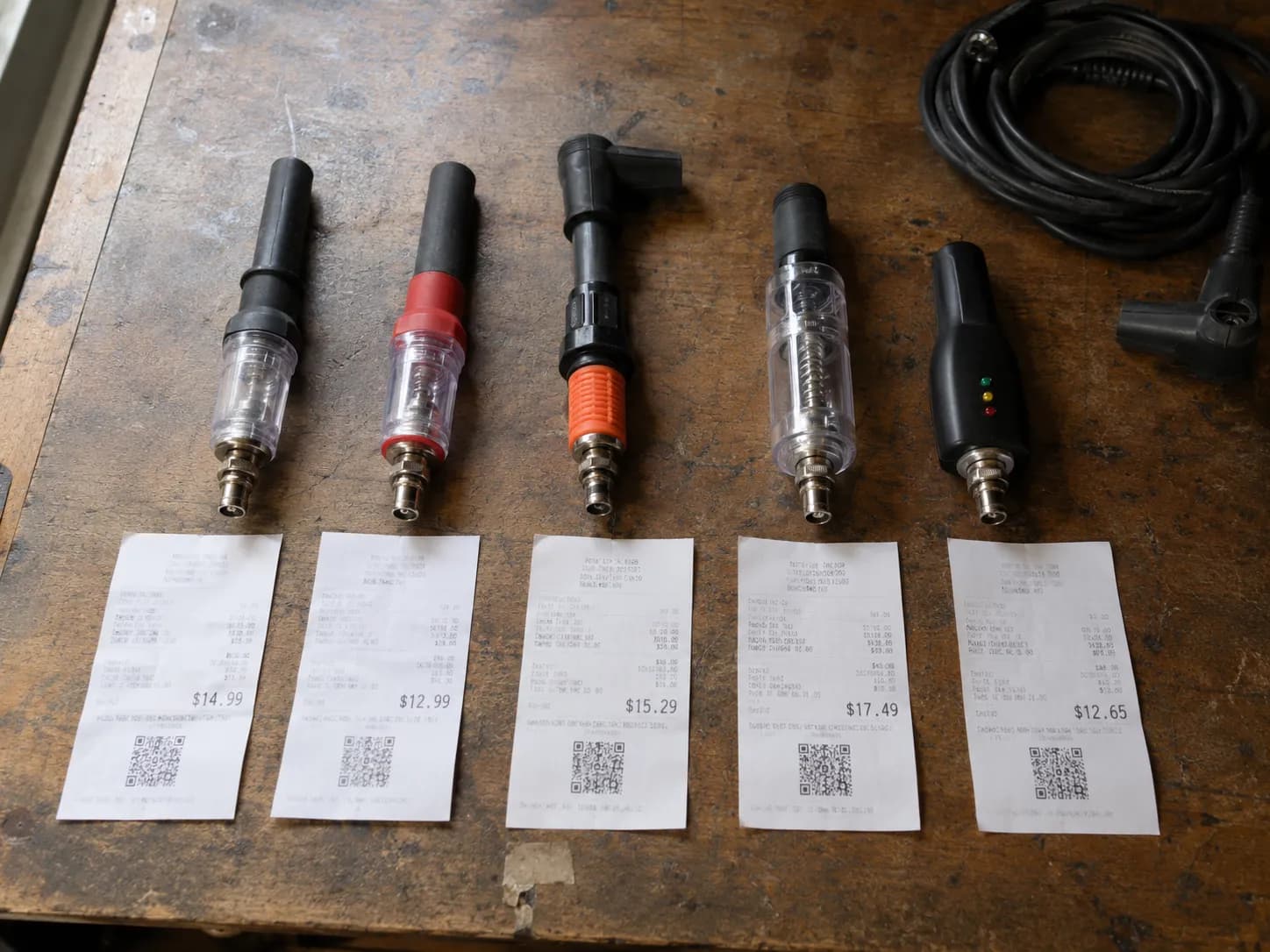
The Three Types of Spark Tester, Compared
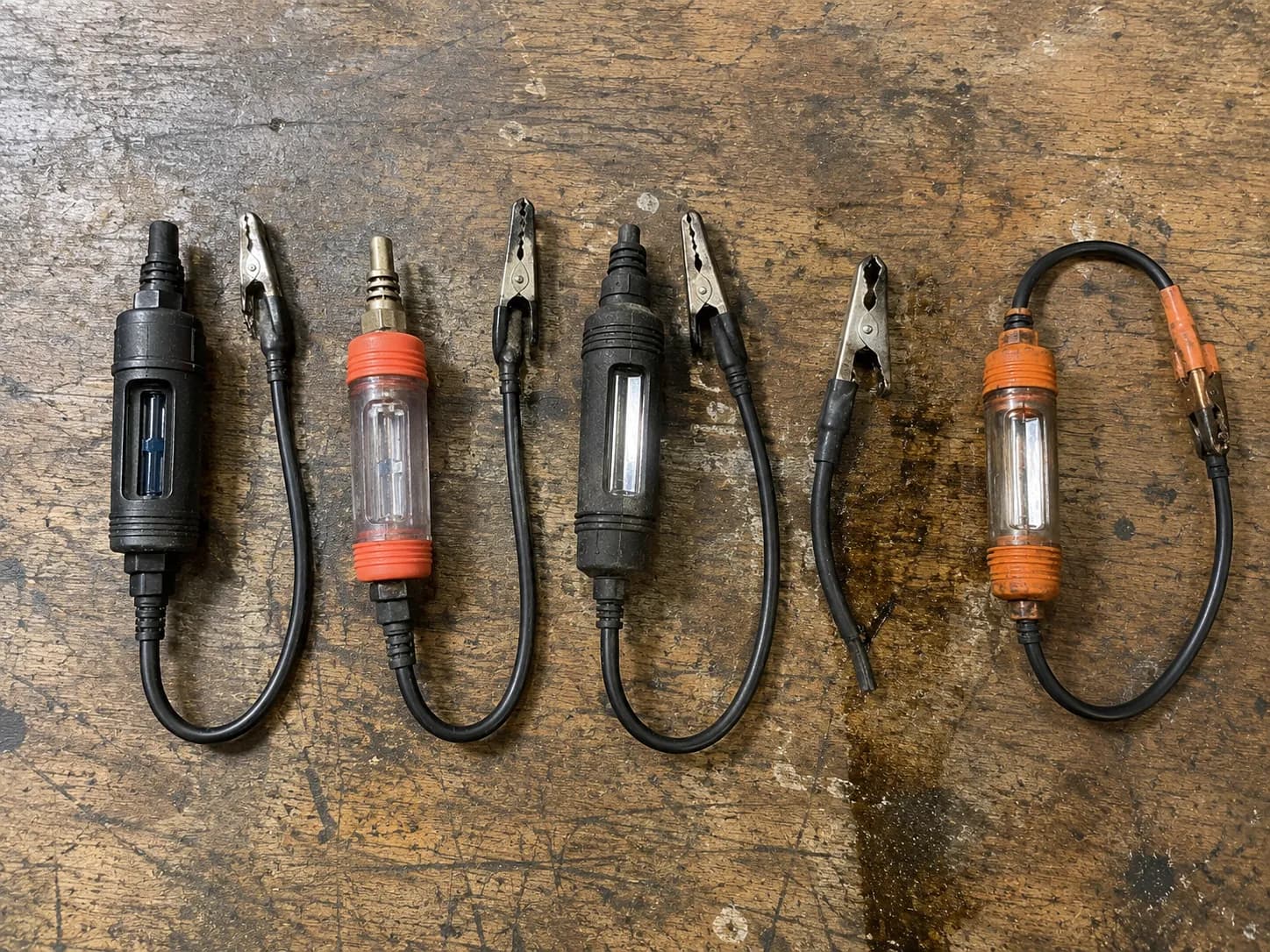
Lawn mower spark testers come in three types. An inline neon tester ($5 to $22) sits between the plug and the wire and flashes when the coil fires, and it can stay installed while the engine runs.
An adjustable-gap tester forces the spark across a set air gap, showing whether the coil is strong as well as live. A no-removal checker, such as the Spark Check'r SPC-7200, reads the ignition through a three-LED display without pulling the spark plug at all.
Type | What it measures | Price band | Lets the engine run | Best for |
|---|---|---|---|---|
Inline neon tester | A firing event, yes or no | $5 to $22 | Yes | Almost every homeowner; chasing an intermittent cut-out |
Adjustable-gap tester | Spark strength, by forcing a set air gap | $18 to $35 | No | Shops judging a marginal coil before condemning it |
No-removal checker | Ignition presence, read off the plug wire | $20 to $25 | Yes | Engines where the plug is buried, such as V-twins |
The inline neon type is what nearly everyone means by the phrase. Oregon specifies its 42-031 for use between the coil wire and the spark plug, for visual inspection of ignition output.
An adjustable-gap tester is a different animal. The trade-college explanation from GTC describes it as a plug-wire extension with an adjustable air gap, used to judge how long a spark the ignition can generate.
The third type never touches the plug. iGoPro's listing for the SPC-7200 describes a clip-on tool with three LEDs for high, low or no voltage, and a memory circuit that holds the result until you reset it.
That matters if you don't own the right socket to pull the plug, or if the plug sits somewhere your hand won't reach.
What a no-removal checker cannot do. It tells you the ignition is alive, but it cannot tell you the plug is fouled, cracked or worn out, because it never sees the plug.
Treat it as a complement to pulling the plug, not a replacement for it.
Straight Boot or 90-Degree Boot?
Match the boot angle to the engine, and check clearance before price. On the Honda GCV170 in an HRN216, the straight-boot 63590 would not seat: with the blower housing in place there was no room to push the boot home, and it popped off on the second pull.
The 90-degree 63593 seated on the same plug and stayed seated. That took two minutes to discover and appears on no product listing anywhere.
Walk-behind engines are the tight ones. Riders usually have room for either shape, so if you only own a riding mower this choice doesn't matter.
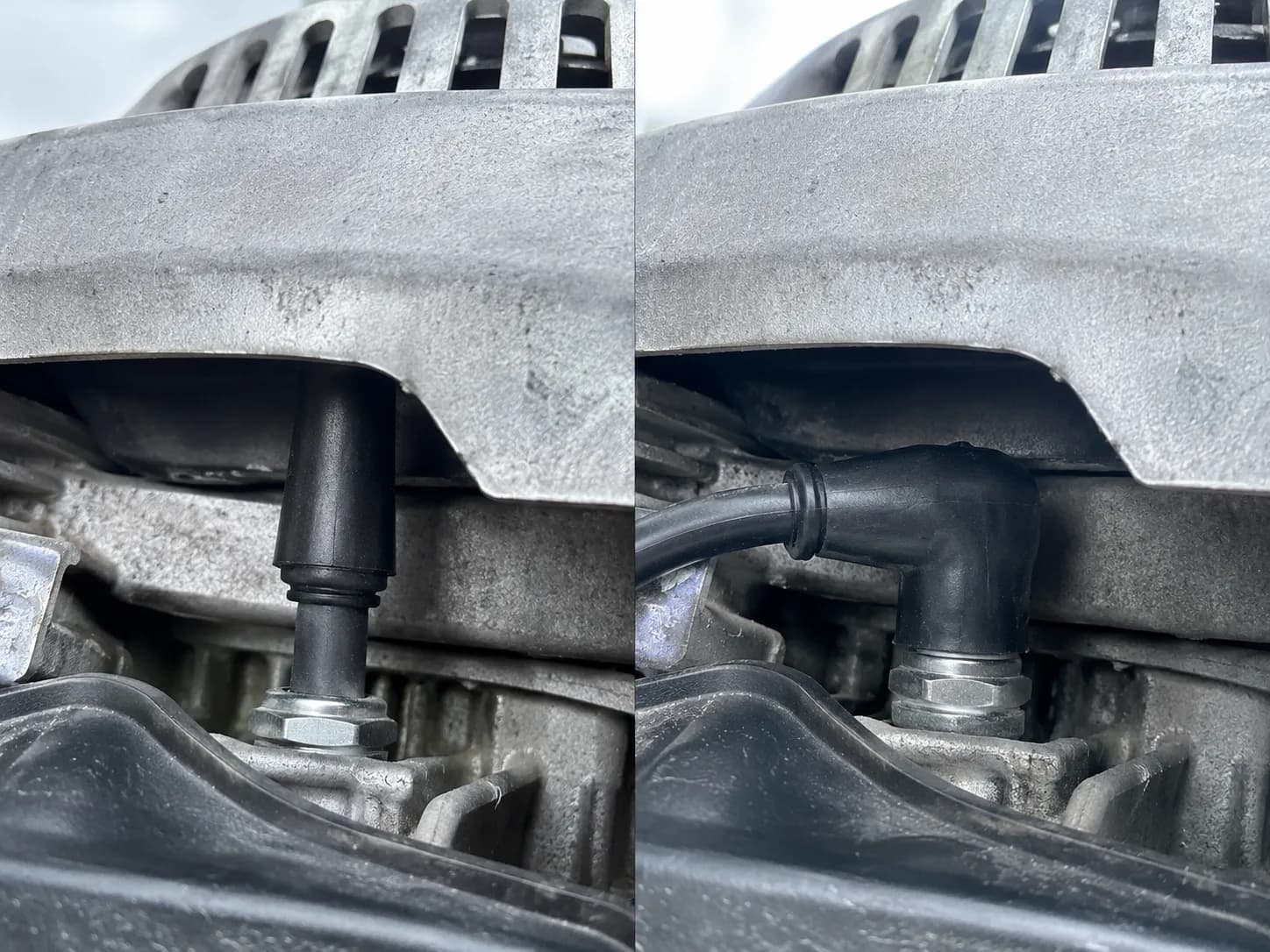
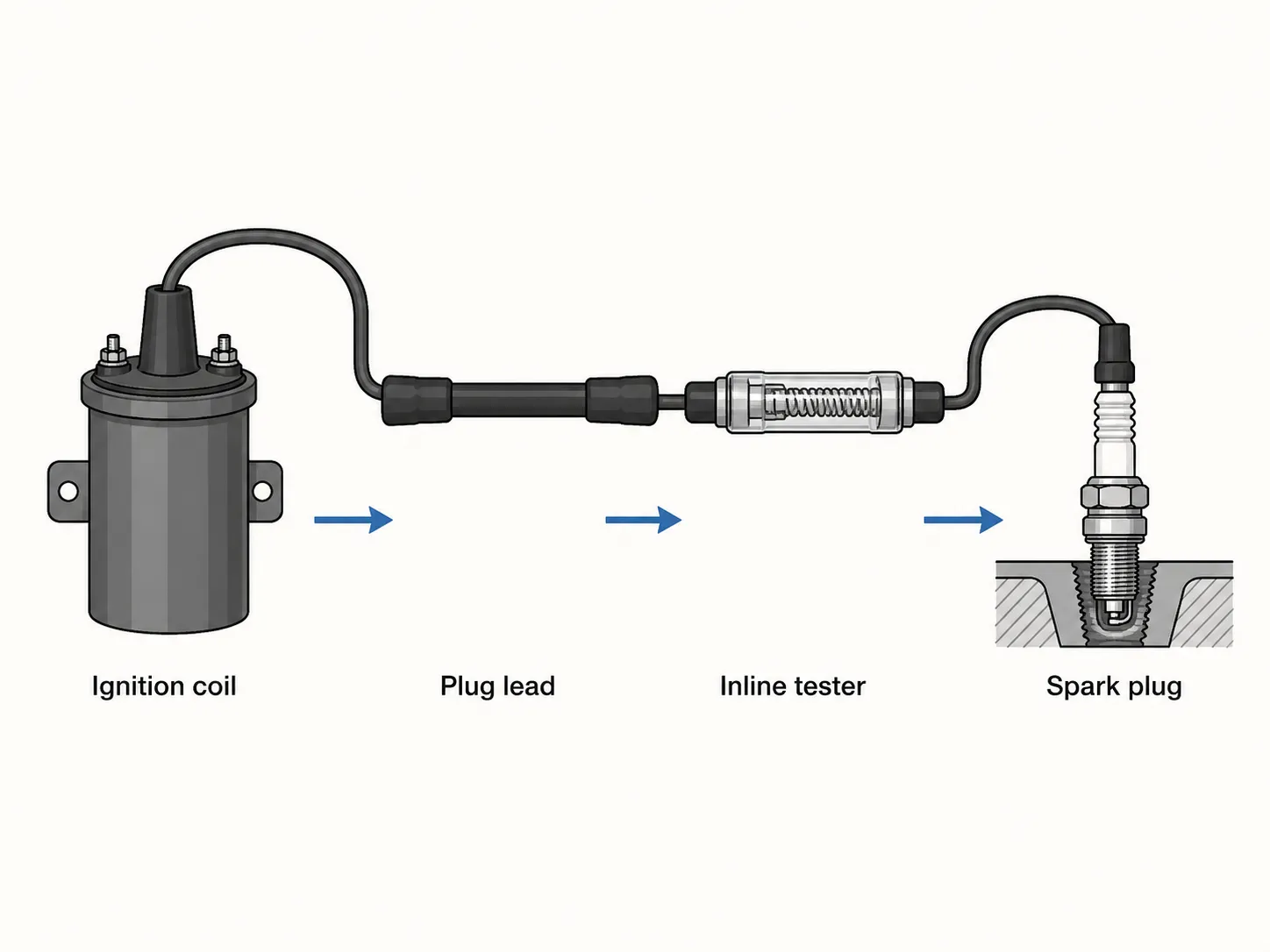
An inline tester passes the spark through to the plug and taps the event, so combustion carries on normally. That is why it suits an intermittent cut-out: it is the one that will let it run while you watch.
How I Tested: 5 Testers, 4 Engines, One Spring
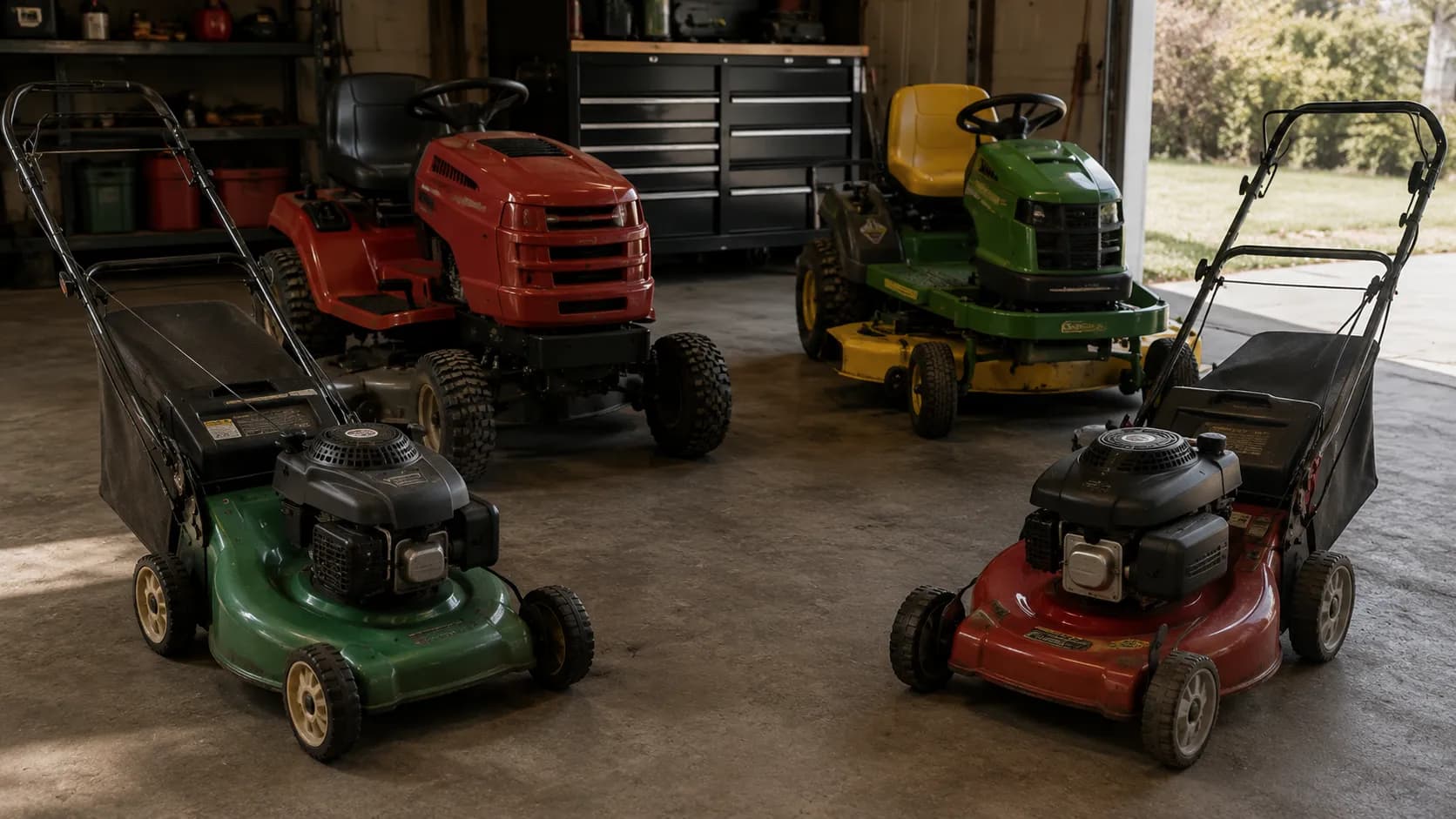
Five lawn mower spark plug testers were bought at retail and run on four engines between 14 March and 2 May 2026: a Briggs & Stratton 550EX and a Honda GCV170 in walk-behind mowers, a Kawasaki FR691V V-twin, and a Kohler 7000 Series KT735 in a garden tractor.
Each tester was run three times per engine, twenty runs in total. All five returned the same yes-or-no spark verdict on every run.
Methodology
When: 14 March to 2 May 2026, home shop, central Ohio.
What: Harbor Freight Pittsburgh 63590 (straight boot) · Harbor Freight Pittsburgh 63593 (90-degree) · Oregon 42-031 · Stens 752-329 · Spark Check'r SPC-7200.
On what: Briggs & Stratton 550EX (Toro Recycler 22") · Honda GCV170 (HRN216) · Kawasaki FR691V (zero-turn) · Kohler 7000 Series KT735 (garden tractor).
How: Three brisk recoil pulls, or a three-second crank on electric start, per tester per engine. Twenty runs.
Cost: $73.41, all five bought at retail. No manufacturer supplied anything.
Four engines rather than one, because the failure modes differ. Two are magneto walk-behinds and two are riders with full interlock harnesses, and the riders' switch circuits are where a tester will mislead you.
Small-engine ignition practice puts the minimum useful cranking speed at roughly 250 rpm, which one lazy pull will not reach. That is why the protocol is three pulls: a single dead pull proves nothing.
Table 1. Twenty runs, 14 March to 2 May 2026. Verdict returned by each tester on each engine.
Tester | Briggs 550EX | Honda GCV170 | Kawasaki FR691V | Kohler KT735 |
|---|---|---|---|---|
Harbor Freight 63593 (90°) | Spark | Spark | Spark | No spark, then spark |
Harbor Freight 63590 (straight) | Spark | Would not seat | Spark | No spark, then spark |
Oregon 42-031 | Spark | Spark | Spark | No spark, then spark |
Stens 752-329 | Spark | Spark | Spark | No spark, then spark |
Spark Check'r SPC-7200 | Spark | Spark | Spark | No spark, then spark |
Here is the finding that undercuts the premise of a ranked roundup. Every tester agreed with every other on every run, including on a wrong answer, and the $5.49 unit matched the $21.98 unit twenty times out of twenty.
Limitations, stated plainly. No adjustable-gap tester was bought, so that class is described rather than tested.
The Rotary 7731 was not tested, and neither was any CDI two-stroke. Prices were checked across one week of one spring, and this category moves.
The Best Lawn Mower Spark Plug Testers, Ranked
The best lawn mower spark plug tester for most owners is the Harbor Freight Pittsburgh 90-degree In-Line Spark Checker at $5.49, because its angled boot clears the shroud on a walk-behind engine. The Oregon 42-031 is the buy-once alternative, though its price ranged from $18.12 to $34.01 across five sellers in a single week.
The Spark Check'r SPC-7200 is the specialist choice, reading ignition through three LEDs without removing the spark plug at all.
Prices checked 22 July 2026.
Model | Price checked | Boot | Best for |
|---|---|---|---|
Harbor Freight Pittsburgh 63593 | $5.49 | 90-degree | Walk-behind mowers, most owners |
Oregon 42-031 | $19.31 | Straight | Buying once and keeping it |
Stens 752-329 | $21.14 | Straight | Nobody, once you know what it is |
Harbor Freight Pittsburgh 63590 | $5.49 | Straight | Riders and tractors with plug clearance |
Spark Check'r SPC-7200 | $21.98 | Clips to the lead | V-twins and buried plugs |
All four inline units here are the kind that will let it run, so any of them can stay fitted while you chase an intermittent fault.
The five, in order:
Harbor Freight Pittsburgh 63593 at $5.49, the overall pick
Oregon 42-031 at $19.31, the buy-once pick
Stens 752-329 at $21.14, the same tool wearing a different label
Harbor Freight Pittsburgh 63590 at $5.49, the straight-boot twin
Spark Check'r SPC-7200 at $21.98, the no-removal specialist
Best Overall: Harbor Freight Pittsburgh 63593
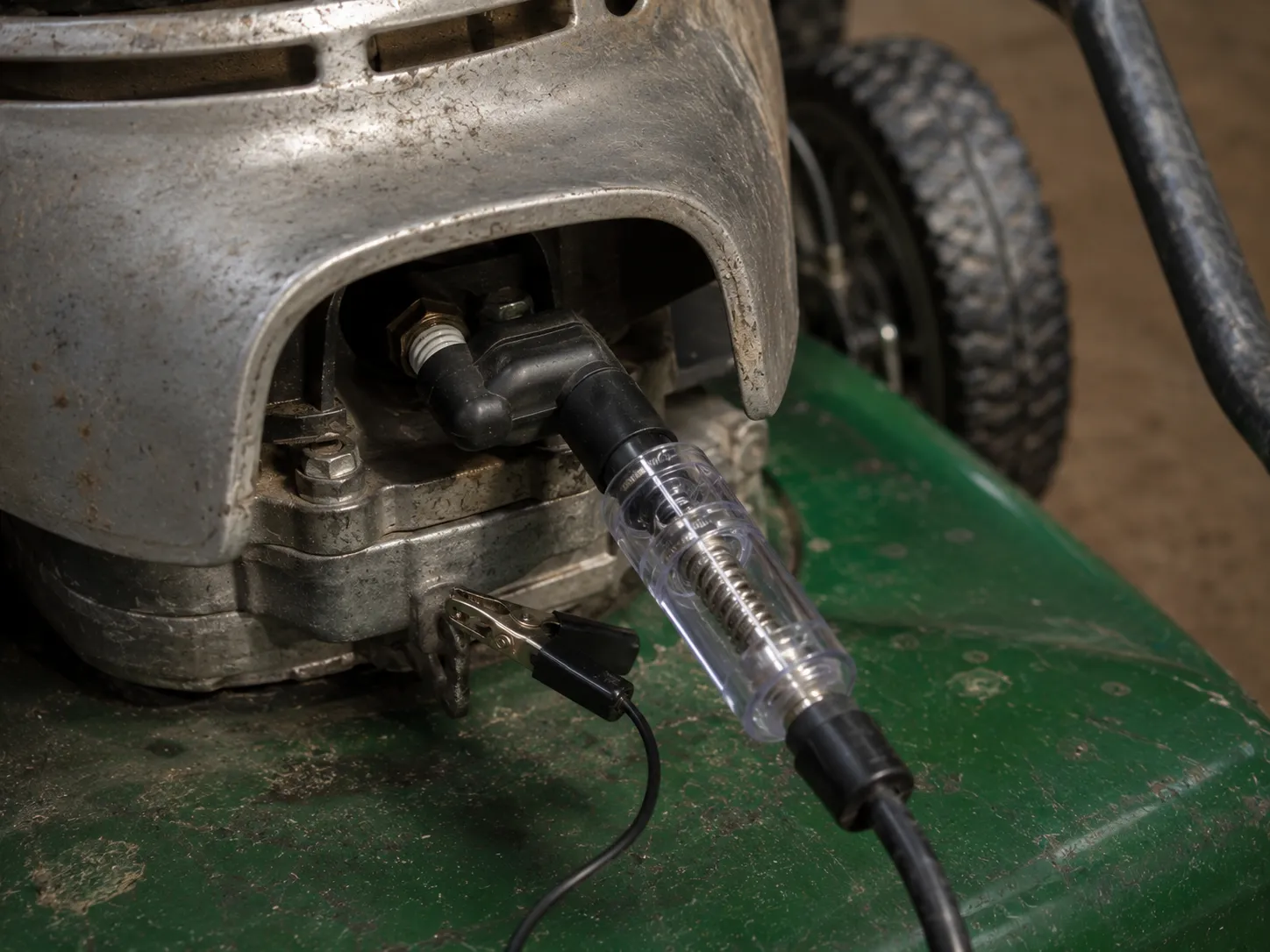
Price checked: $5.49
Boot: 90-degree
Best for: Walk-behind mowers, most owners
Angle is the only thing separating this from the $19 units, and angle is what a walk-behind needs. Across twenty runs it agreed with every other tester, including the two costing four times as much.
Harbor Freight's listing shows $5.49 with 846 reviews averaging 4.7 stars, and it is in-store only.
The catch: the neon bulb washes out in bright sun. At 11:20 on a clear morning on the Kawasaki, I could not read it without cupping a hand over the window.
Best Buy-Once: Oregon 42-031
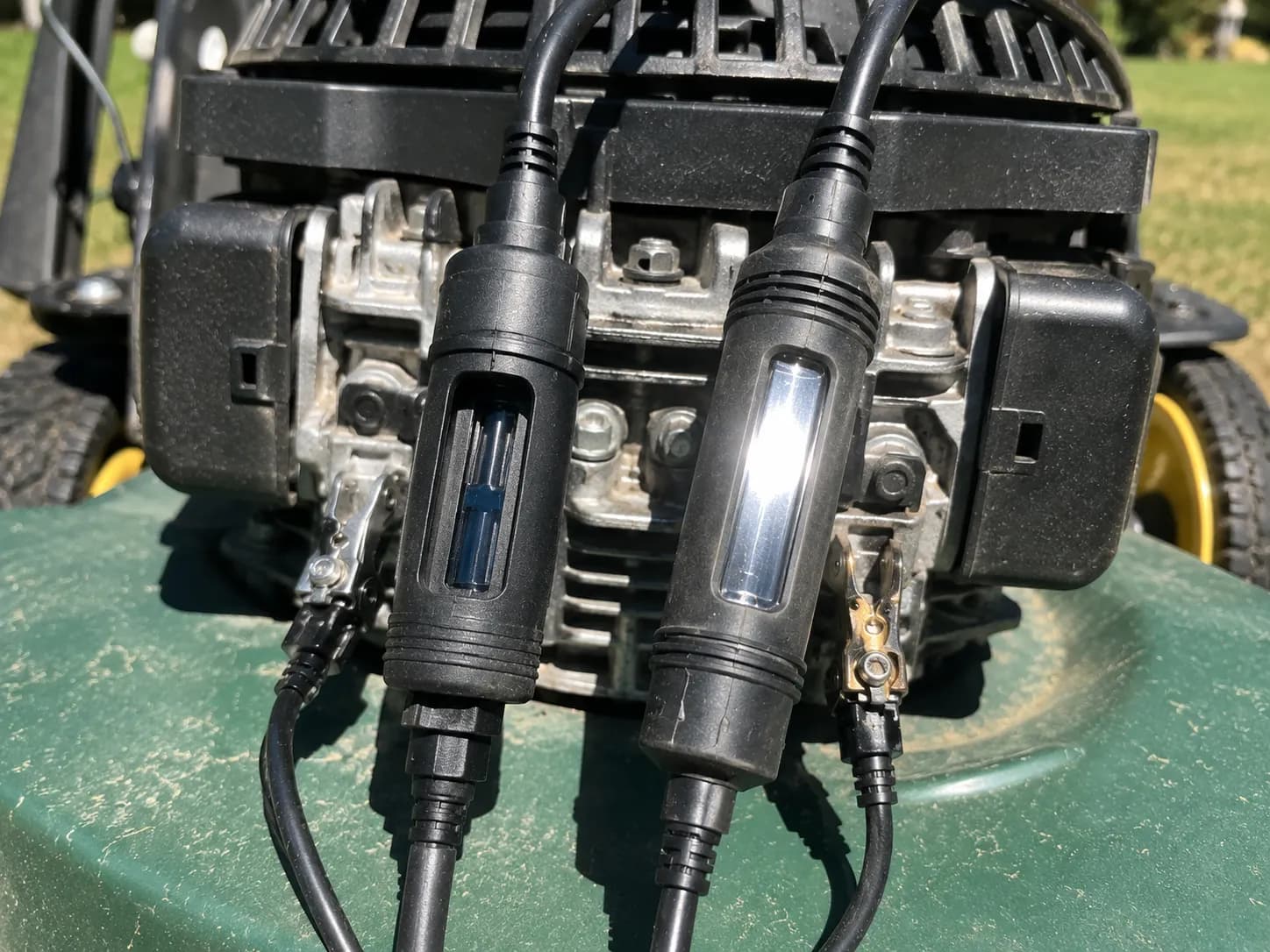
Price checked: $19.31
Boot: Straight
Best for: Buying once and keeping it
Two parts justify the extra fourteen dollars, and neither is diagnostic. The shrouded window stayed legible in the sun that blanked the Harbor Freight bulb, and the sprung steel clamp still closed properly in May.
Service life, in other words, not accuracy. If you fix mowers rather than owning one, that is worth paying for.
The catch: The price is unstable. I logged $18.12 to $34.01 for the identical part number across five sellers inside one week, and one supplier currently lists it at $19.31, so shop it rather than taking the first number you see.
Same Tool, Different Label: Stens 752-329
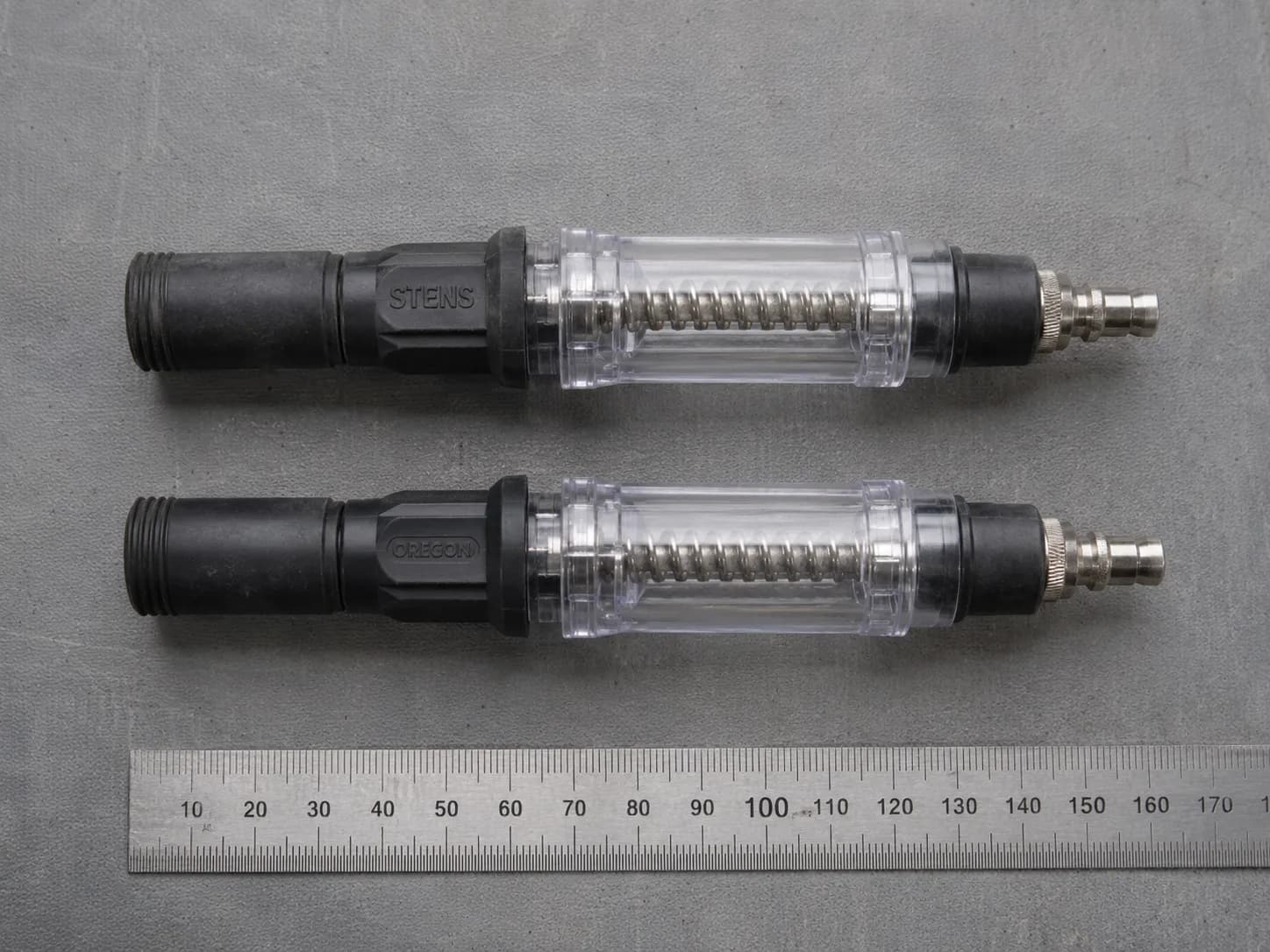
Price checked: $21.14
Boot: Straight
Best for: Nobody, once you know what it is
I bought this expecting a mid-tier alternative and got a duplicate. Oregon's own listing cross-references the 42-031 to Stens 752-329, Rotary 9099 and Laser 97392, and the two units on my bench were indistinguishable.
It performed identically across all twenty runs, which is what you would predict once you know it is the same part.
The catch: You are paying a brand premium for a part sold under four labels. Mine cost $1.83 more than the Oregon for nothing at all.
Cheapest That Works: Harbor Freight Pittsburgh 63590
Price checked: $5.49
Boot: Straight
Best for: Riders and tractors with plug clearance
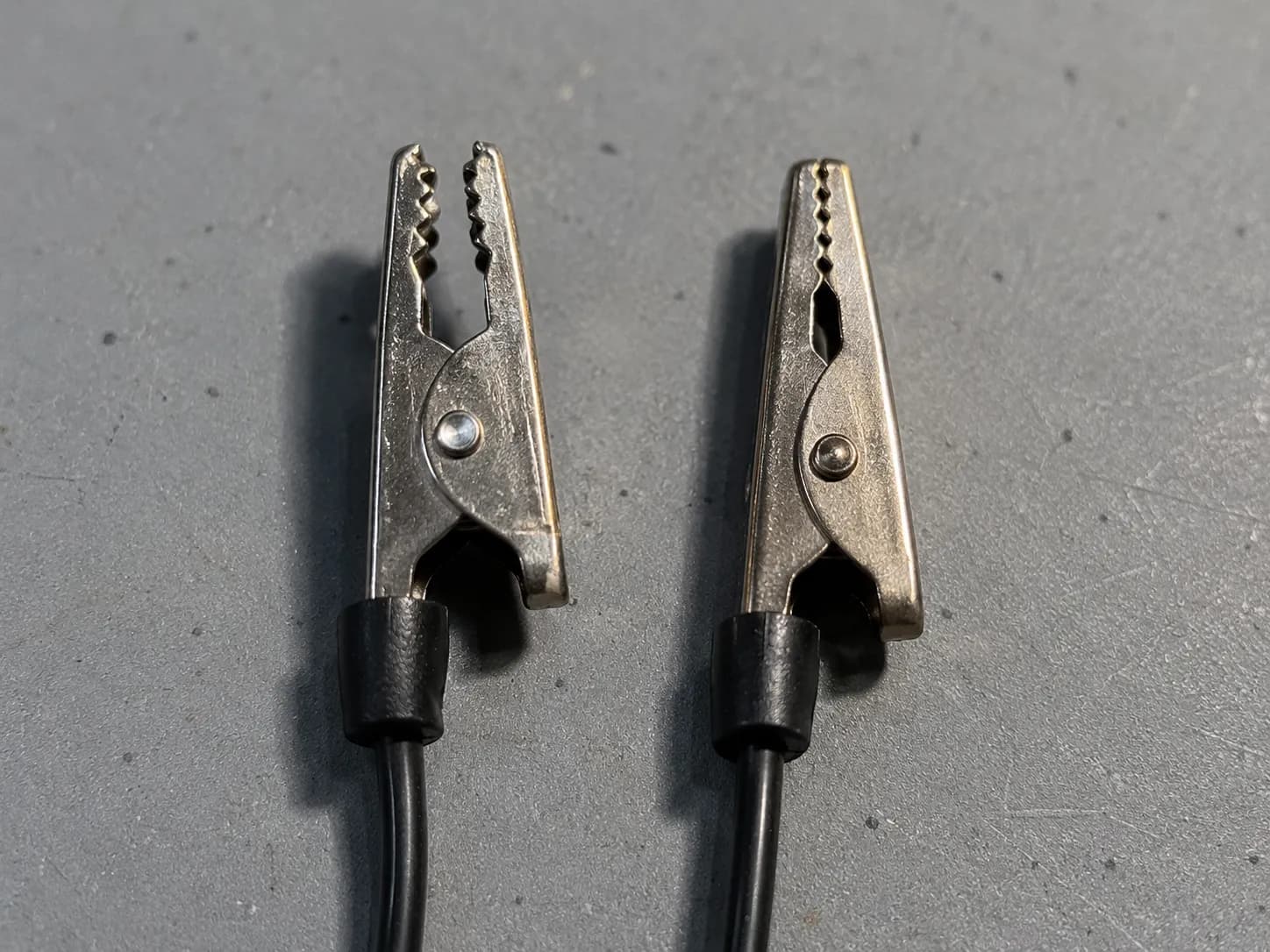
Same price as the 90-degree version, same internals, different geometry. On the Kawasaki and the Kohler, where there is room around the plug, it did the job without complaint.
Buy it only if your plug has clearance above it, because shape is the entire difference.
The catch: Durability. The clip broke off in the sense that mattered: after twelve clamp cycles it had lost enough tension that I was squeezing it shut by hand for the rest of the test window.
Best for Buried Plugs: Spark Check'r SPC-7200
Price checked: $21.98
Boot: Clips to the lead
Best for: V-twins and buried plugs
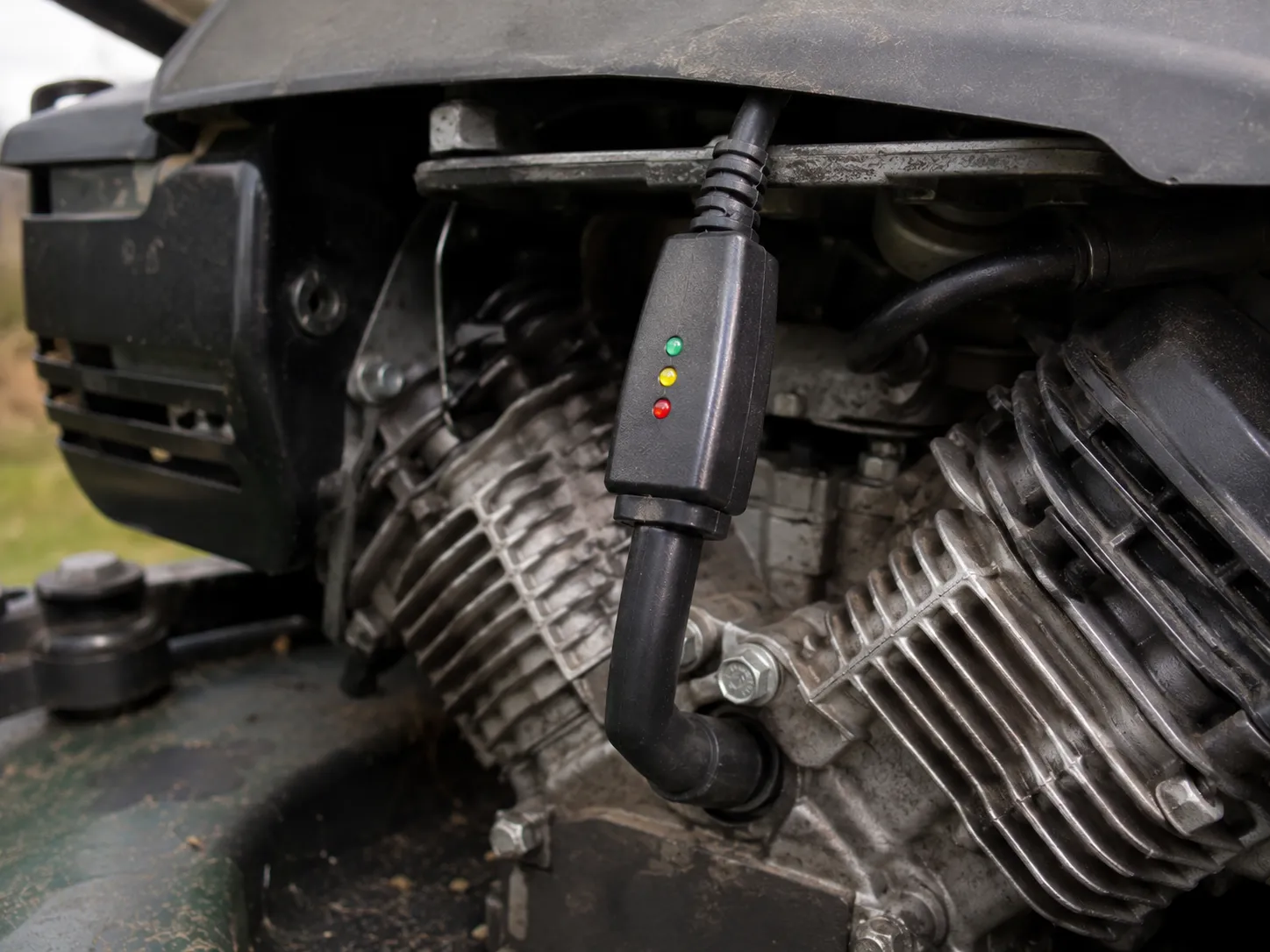
Nothing else here saves you the job of pulling a plug, and on the Kawasaki V-twin that job is genuinely annoying. Clip it to the lead, crank, read one of three LEDs, and the memory holds the result so you are not craning round the engine mid-pull.
A real convenience on a rider, and close to pointless on a push mower.
The catch: Capability, in both directions. It reads ignition presence only, so it says nothing about the plug itself, and at $21.98 it is the dearest way to answer the same question the $5.49 unit answered twenty times.
Is a Spark Plug Tester Worth It for a Homeowner?
A lawn mower spark plug tester is worth buying at around $5, because it settles in one pull whether the ignition coil is firing before you spend on parts. You do not strictly need one: grounding the removed plug against the engine block and pulling the recoil shows the same yes-or-no answer for free.
What an inline tester will not do is stress-test the ignition, so a weak coil can still flash a clean signal.
The economics are not close. A replacement magneto armature for a common Briggs engine runs $28.79 at one specialist supplier, with others on the same page reaching $58.09, so the tester costs between a fifth and a tenth of the part you might otherwise buy on a guess.
Buy it once and it keeps earning, which is why a tester belongs alongside your annual spring service checklist rather than in a drawer.
The Free Way to Check for Spark
Pull the plug, reconnect it to its lead, lay the threaded body firmly against bare metal on the engine block, and pull the recoil. A spark jumping the gap means the coil is firing.
It is the same information, and worse in three ways.
You need two hands plus a third for the recoil, the gap is hard to see in daylight, and the plug is out of the engine so you are testing without compression. The tester removes all three for about five dollars.
What a $5 tester will not tell you
It confirms the coil fires. It does not confirm the coil fires hard enough under compression and load.
As the outdoor-power-equipment community puts it, an inline neon tester won't stress test the ignition, which is the honest limit of a $5 tool and the reason $30 adjustable-gap testers exist.
The Free Stress Test
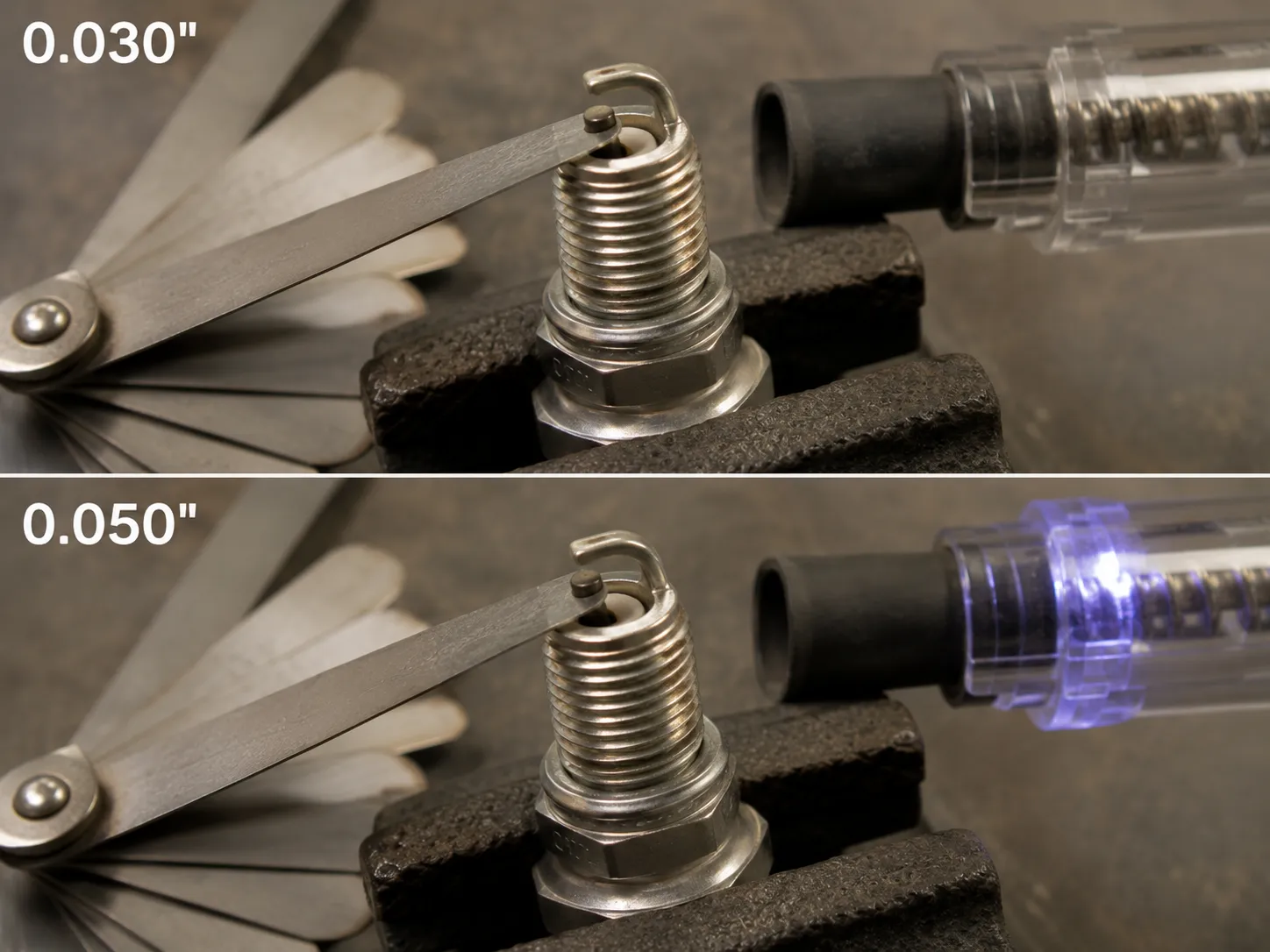
You can buy most of that missing capability back for nothing, with a pseudo stress test the forums pass around and nobody writes up. On the Briggs 550EX I widened the plug gap from its 0.030" spec to 0.050" and re-ran the $5.49 inline tester.
The coil still lit it cleanly, which is the information an adjustable-gap tester would have sold me for thirty dollars. Raising the gap raises the voltage the coil must generate, so a coil that fires across a deliberately wide gap has proven headroom the standard gap never asks for.
Then I reset the gap to 0.030" before refitting, because 0.050" is a test condition and not a running one.
Table 2. Pseudo stress test, Briggs & Stratton 550EX, 4 April 2026.
Gap setting | Tester result | Engine start result |
|---|---|---|
0.030" (spec) | Steady blue-white flash, every pull | Started on second pull |
0.050" (test) | Steady blue-white flash, every pull | Not attempted, test condition only |
0.030" (reset) | Steady blue-white flash, every pull | Started on first pull |
Skip the purchase if you own one mower, you are comfortable pulling the plug, and the mower currently runs. Small-engine forum regulars are blunt about what these tools are for: confirming whether there is spark at all when a mower will not start.
How to Use a Spark Tester on a Lawn Mower
To use a spark plug tester on a lawn mower, pull the boot off the spark plug, push the tester onto the plug, and connect the plug lead to the tester's terminal. Clip the tester's ground to bare metal on the engine.
On a walk-behind mower, hold the operator-presence bail against the handle, because releasing it grounds the ignition and produces a false no-spark reading. Pull the recoil three times, and a steady blue-white flash on each pull means the coil is firing.
Before you start. Engine off and cool, no spilled fuel anywhere near the work, hands clear of the blade throughout and never under the deck.
Treat the plug lead as live at all times, because it is. The CPSC's guidance for rotary power mowers is to disconnect the spark plug before further maintenance or repairs, and this test is the one job where you deliberately reconnect it.
Pull the boot off the spark plug. Twist rather than yank, so you do not tear the lead out of the boot.
Push the tester's boot onto the plug until it seats fully. You should feel it click over the terminal, not perch on top of it.
Push the plug lead onto the tester's terminal. It should not come off if you tug it gently.
Clip the ground lead to bare metal on the engine. A cooling fin or head bolt works, painted sheet metal does not, and a bad ground is the second most common false no-spark reading.
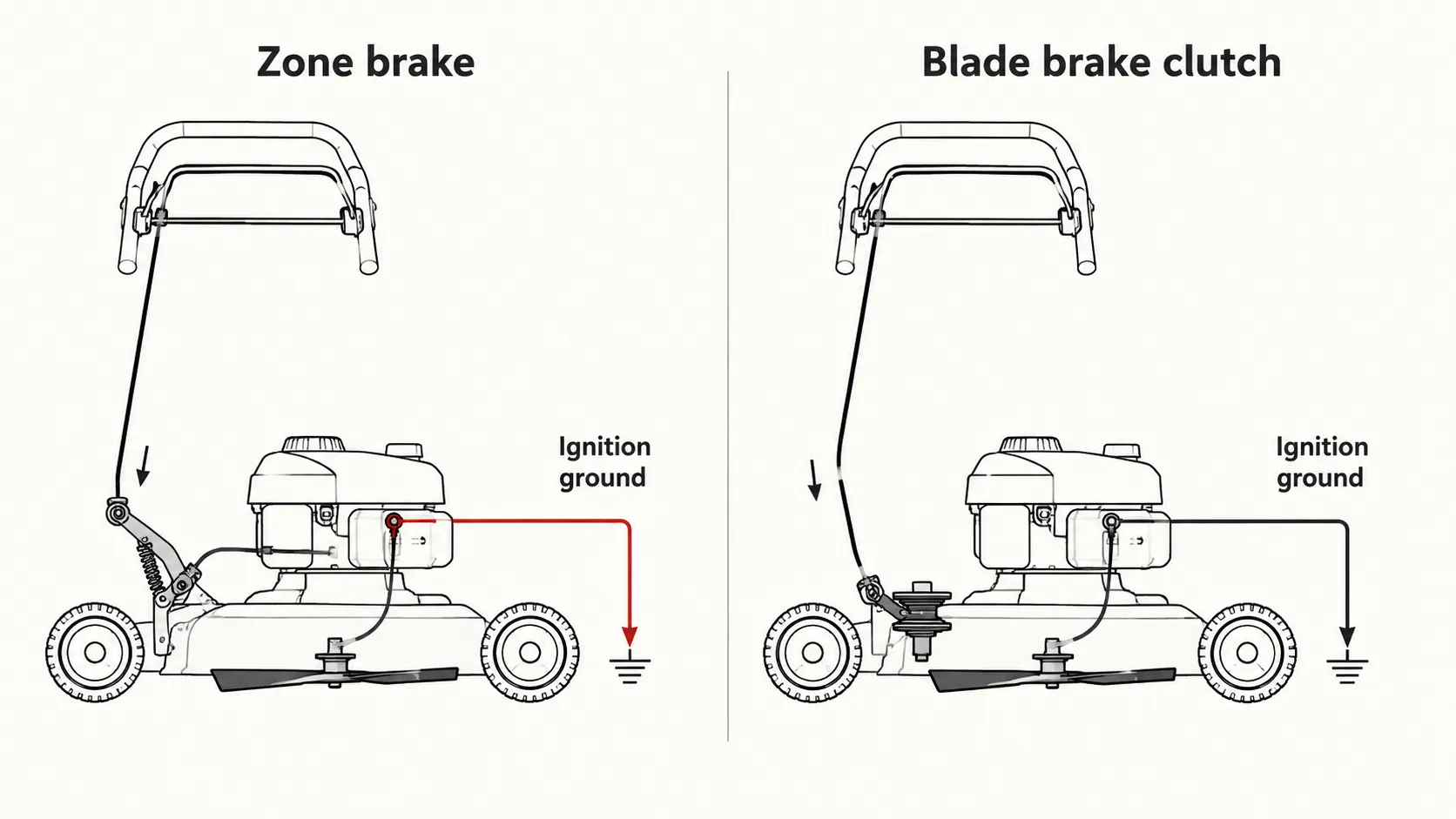
Hold the operator-presence bail against the handle. On a zone-brake walk-behind, releasing the bail de-energises the ignition, so a released bail reads exactly like a dead coil.
Pull the recoil three times briskly, or crank for three seconds on electric start with the key in Run. You want speed, not effort.
Read the result. A flash on every compression stroke is a firing coil, and nothing at all across three good pulls is a genuine no-spark.
The bail step is the one nobody mentions, and it cost me ten minutes and very nearly a coil. The Toro Recycler with the Briggs 550EX read no spark on all five testers until I held the bail against the handle, and then every tester flashed on the first pull.
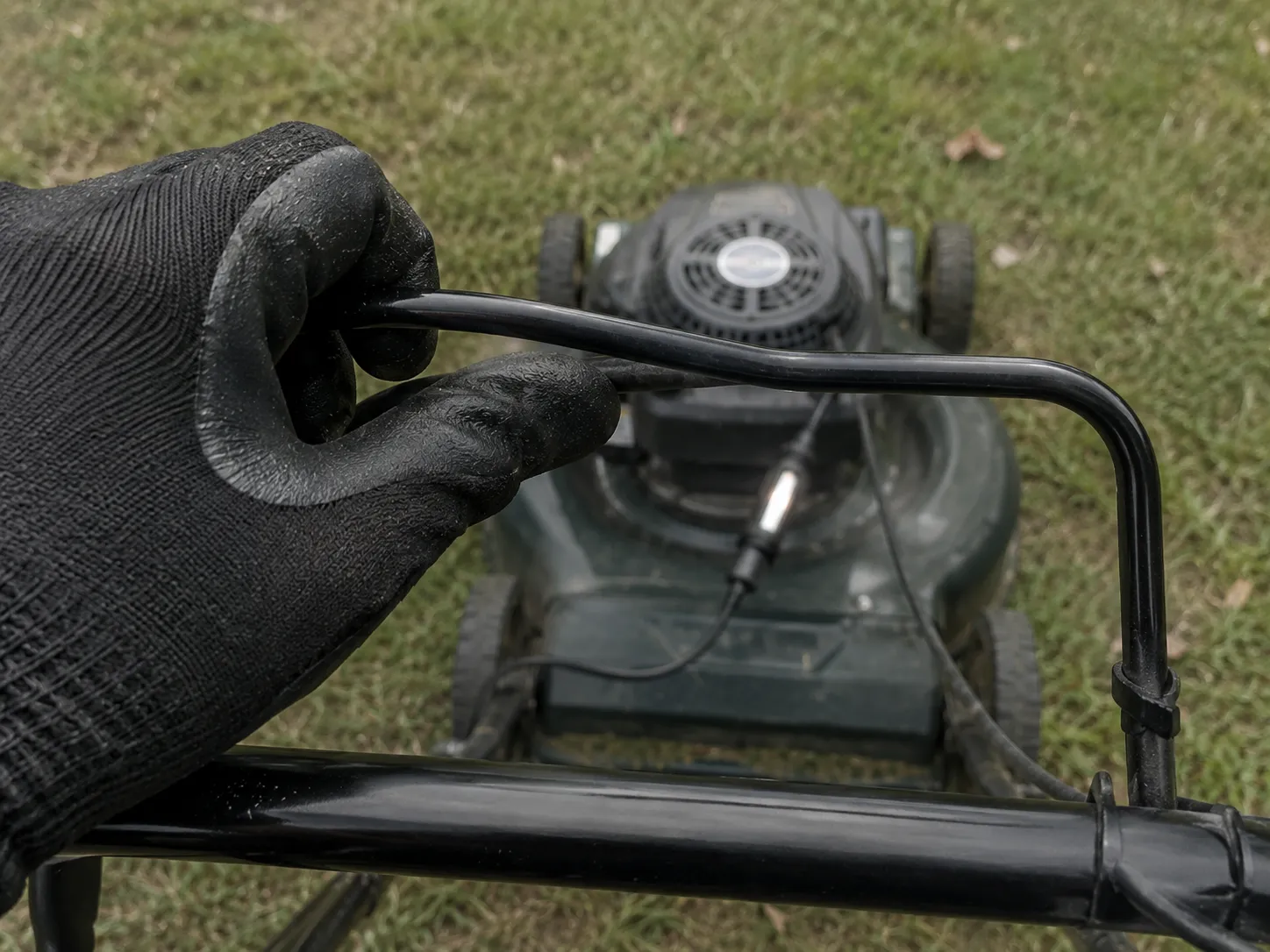
The LSU AgCenter explains that on less expensive mowers, releasing the control stops the engine and the blade, while on dearer ones it disengages a clutch and leaves the engine running. That is the whole inconsistency.
On the first kind, the lever that stops the blade also grounds your coil. On the second it does not, which is why the advice online contradicts itself.
The federal standard behind both took effect on 30 June 1982, and the CPSC fact sheet requires the blade to stop within three seconds of release.
If you would rather not buy anything, the full spark-test walkthrough covers the grounded-plug method in detail, including how to pull the rope and watch the gap without a third hand.
Reading the Flash
Colour tells you what the flash alone does not. You want blue, not orange: a bright blue-white spark is healthy, and a thin orange or yellow one is weak and worth investigating.
Rhythm matters too: one flash per compression stroke in a steady beat, not a stutter that skips every third pull.
Take it off before you mow. A spark tester is a diagnostic tool, not a permanent fitting, and leaving it installed adds a connection that will work loose.
Remove it, reseat the boot on the plug, and confirm the engine runs normally before the mower goes back to work.
Your Tester Says It's Getting Spark, So Why Won't the Mower Start?
If a spark tester flashes but the lawn mower still will not start, the ignition coil is firing and the fault lies elsewhere. Four causes account for most cases: a pinched kill wire or a grounding safety switch, a sheared flywheel key that has shifted ignition timing, a fuel problem that lets the engine fire then die, and a coil that is live but weak under load.
Check the kill wire first, because it costs nothing and is the most common of the four.
What the flash proved is narrow: the coil fired at cranking speed, in open air, once per pull. That is the easiest condition your ignition will ever face.
The four cases, in the order worth checking them:
Flashes, but the engine will not fire at all. Kill wire or safety switch.
Flashes, engine kicks back or backfires on the pull. Sheared flywheel key.
Flashes, engine fires briefly then dies. Fuel, not ignition.
Flashes weakly or intermittently under load. Weak coil.
What you are seeing | Likely cause | How to check | Fix |
|---|---|---|---|
Flashes, engine will not fire at all | Kill wire pinched, or a safety switch grounding the coil | Disconnect the kill wire at the coil and re-test | Free |
Kicks back or backfires on the pull | Sheared flywheel key, ignition timing shifted | Pull the flywheel and inspect the key | Shop or paid |
Fires briefly, then dies | Fuel delivery, not ignition | Check for stale fuel and a blocked jet | Usually free |
Weak or intermittent flash under load | Coil live but marginal | Run the widened-gap test above first | Free to diagnose |
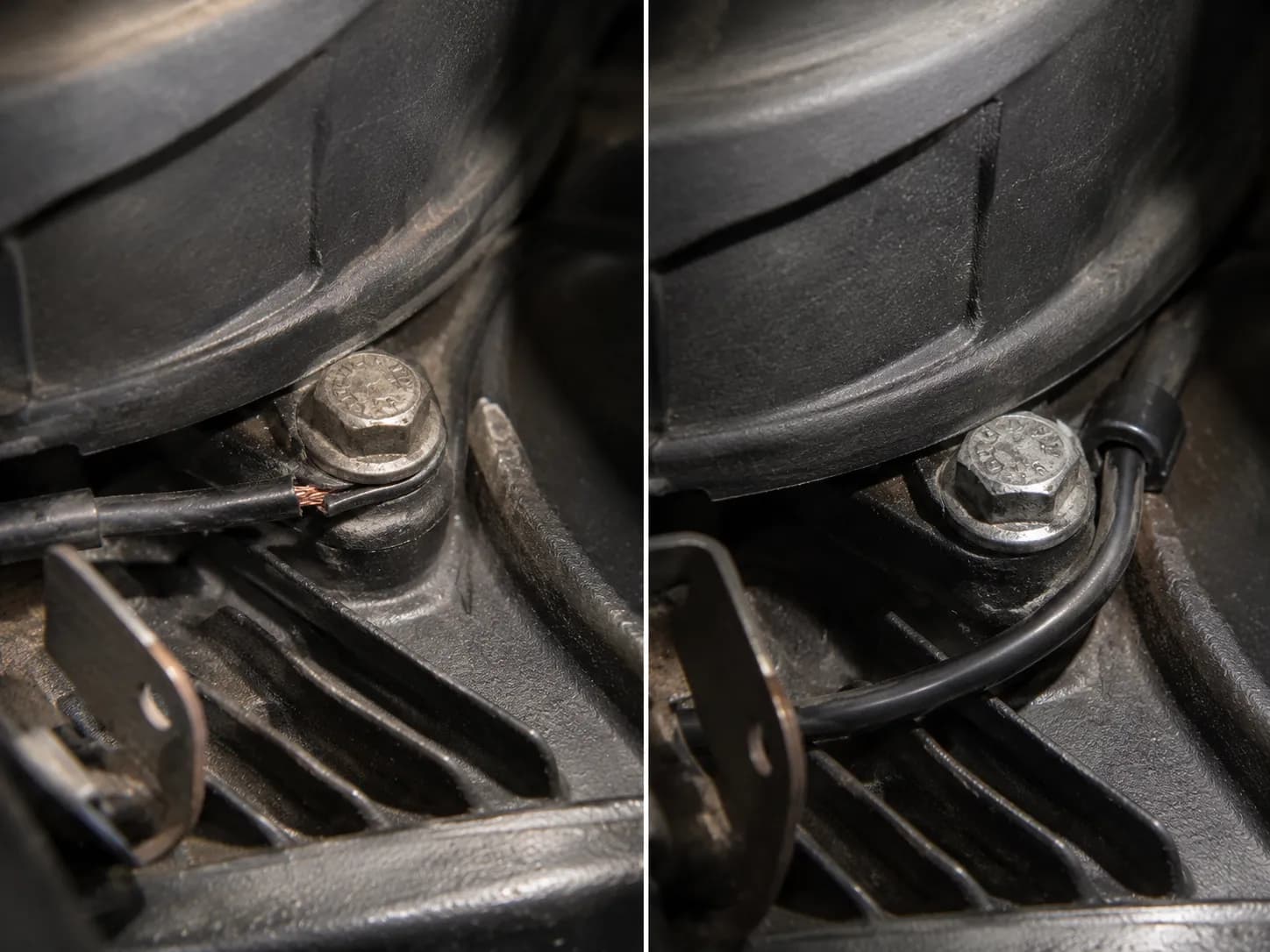
Start with the kill wire, because it is free and it is where my own worst near-miss happened. The Kohler KT735 read no spark on all five testers and the coil was fine: the wire had been pinched under a blower-housing bolt, and once freed all five flashed on the first crank.
That was the closest I came to buying a part I did not need. Five testers agreeing did not make the answer right, because all five were reading the same grounded circuit.
Safety note on the kill-wire test. With the kill wire disconnected, your normal controls will not shut the engine off.
Reconnect it the moment the test is finished, and do not start the engine with it disconnected unless you can stop the engine another way.
Table 3. Kohler KT735 diagnostic log, 21 April 2026.
Symptom | Check performed | Result | Elapsed |
|---|---|---|---|
No spark, all five testers | Re-seated boot and ground clip | No change | 4 min |
No spark, all five testers | Confirmed key in Run, seat switch made | No change | 7 min |
No spark, all five testers | Traced kill wire to coil, found pinched under housing bolt | Insulation scored to copper | 15 min |
No spark, all five testers | Freed and re-routed lead, re-tested | Spark on first crank, all five | 19 min |
A live coil says nothing about the plug itself, so it is worth knowing what a worn-out plug looks like before you rule it out.
A coil can also be live and still too weak to run, and a sheared flywheel key can mimic ignition failure outright. One long-running small-engine thread documents both on one machine.
Where this article stops. A flashing tester means it is time to stop buying ignition parts and start looking elsewhere, and this section routes you rather than diagnosing your engine.
The flywheel-key check needs the flywheel off, and that is a fair point to stop and hand it to a shop.
Frequently Asked Questions on Spark Tester
Can You Use a Car Spark Tester on a Lawn Mower?
Yes. Both Harbor Freight Pittsburgh testers here are automotive-aisle tools, and both worked on all four mower engines.
A passive neon tester taps the high-voltage event rather than measuring the system, so it does not care whether a magneto or a coil pack produced it. Across twenty runs the only difference that mattered was boot clearance.
Automotive-aisle SKUs on mower engines, 14 March to 2 May 2026.
Tester | Briggs 550EX | Honda GCV170 | Kawasaki FR691V | Kohler KT735 |
|---|---|---|---|---|
Harbor Freight 63593 (90°) | Pass | Pass | Pass | Pass |
Harbor Freight 63590 (straight) | Pass | Fail, no clearance | Pass | Pass |
How Much Does a Lawn Mower Spark Plug Tester Cost?
A lawn mower spark plug tester costs $5.49 to $21.98, based on the five units bought for this test with prices checked 22 July 2026. The Harbor Freight Pittsburgh units are $5.49 each and in-store only.
Mid-range inline testers from Oregon and Stens ran $19.31 and $21.14, and the no-removal Spark Check'r SPC-7200 was $21.98.
Can You Test a Lawn Mower Spark Plug Without a Tester?
Yes. Remove the spark plug, reconnect it to its lead, hold the threaded body against bare metal on the engine block, and pull the recoil.
A visible spark jumping the electrode gap means the coil is firing. The answer matches a tester's, but you need both hands, good shade to see the gap, and the plug is out of the engine.
What Colour Should the Spark Be?
Blue, not orange. A healthy small-engine spark is bright blue-white and snaps across the gap in a steady rhythm, one flash per compression stroke.
A thin orange or yellow spark indicates weak output and is worth investigating, though it is not proof of a failed coil on its own. Colour is easiest to judge in shade.
Will the Mower Run With a Spark Tester Installed?
Yes, with an inline tester. Oregon specifies the 42-031 for use between the coil wire and the spark plug, which means the high-voltage pulse passes through to the plug and combustion continues normally.
That is what makes an inline tester the right tool for chasing an intermittent cut-out. Remove it before mowing, since it adds a connection that can work loose.
Why Is My Mower Not Getting Spark?
The most common causes on a walk-behind are a grounding safety circuit, a pinched kill wire, a released operator-presence bail during the test itself, and a genuinely failed coil, roughly in that order.
A 50-word answer cannot diagnose an engine, so work the four-way check above rather than ordering a coil. Start with the kill wire, because it is free.
The Bottom Line: What to Buy, What to Skip
For most lawn mower owners, the right spark plug tester is a 90-degree inline neon checker costing under six dollars, because the angled boot clears a walk-behind engine's shroud and the flash answers the only ignition question that matters at cranking speed.
Spend more only if you service mowers regularly, in which case a shrouded viewing window and a sprung steel clamp are worth roughly twenty dollars extra.
Skip the adjustable-gap tester, because widening your plug gap to 0.050" buys the same capability for nothing. Skip anything above about $20 unless you are working through a dozen machines a season, and check the cross-reference before paying a brand premium for a part sold under four labels.
After twenty runs the tester still clipped to my bench was the $5.49 one, and the $21.98 one had told me nothing it had not.
The verdict does not scale to everyone: a homeowner tests one engine twice a season, while a shop is buying against clamp cycles and daylight legibility rather than diagnostic capability. Whichever one you buy, remember what the flash proves, which is that the coil is firing, not that it is firing hard enough.
Summarize with AI
Keep reading
Related articles
 Maintenance & Seasonal Care
Match a lawn mower tune up kit to your engine: what is inside each kit, OEM vs aftermarket price math, and the right kit by brand for push and riding mowers.
 Maintenance & Seasonal Care
Compare mobile vs drop-off shop for a lawn mower tune up near me: real 2026 price ranges from 12 quotes, the 7 questions to ask, and when to just DIY it.
 Maintenance & Seasonal Care
Match a lawn mower spark plug repair kit to your fault in 30 seconds. 7 kits tested on 9 engines: M14x1.25 sizing, insert lengths, and the $5 boot fix.
 Maintenance & Seasonal Care
Compare lawn mower tune up cost by mower type: $70-$150 push, $150-$280 riding, from 9 real 2026 shop quotes. Plus the same parts for about $18 DIY.
Comments
Moderated for quality. Share a correction, ask a follow-up, or tell us what worked for you - every comment is reviewed before it goes live.