Cub Cadet Riding Mower Won't Start? XT1/XT2/ZT1 Fix Tree
Fix it fast when your Cub Cadet riding mower won't start: match the click sound to the cause, then follow the tested XT1/XT2/ZT1 no-crank steps.
Written by Tony MaldonadoReviewed by Wade CoburnLast updated on September 8, 2026
When you buy through links on our site, we may earn an affiliate commission (at no extra charge), which we use to fund new product tests. Learn more.
Read it your way
Short on time? Open this article in your assistant with a ready-made prompt and get the gist in seconds.
Found this useful? Make us a preferred source so we show up in your Google results.
A Cub Cadet that quits on a hot Saturday is maddening, but the fault is almost always one of a small set of causes, and most cost nothing to rule out.
If your Cub Cadet riding mower won't start, the single most useful clue is the sound at the key: total silence, one click, or a crank that spins but won't catch.
Each sound points to a different zone, and matching the sound to the zone is faster than throwing a new battery or solenoid at it.
Most owners can isolate the fault in under fifteen minutes with a 12-volt test light and a multimeter.
I have traced this exact no-start across XT1, LTX and ZT1 machines this spring, and the pattern holds every time.
This guide routes you by sound, then walks each branch simplest-first, with the test that confirms the culprit.
The Short Version
A Cub Cadet riding mower that won't start almost always fails in one of three zones, and the sound at the key tells you which. Silence with a dead dash points to the fuse, a battery ground, or a safety switch.
A single click points to a weak battery or the starter solenoid. A crank that won't fire points to stale fuel or spark. Match the sound, then fix that branch.
The 60-Second Cub Cadet No-Start Triage (Start Here)
A Cub Cadet riding mower that won't start often fails for a reason that costs nothing to fix, so start here before touching a tool.
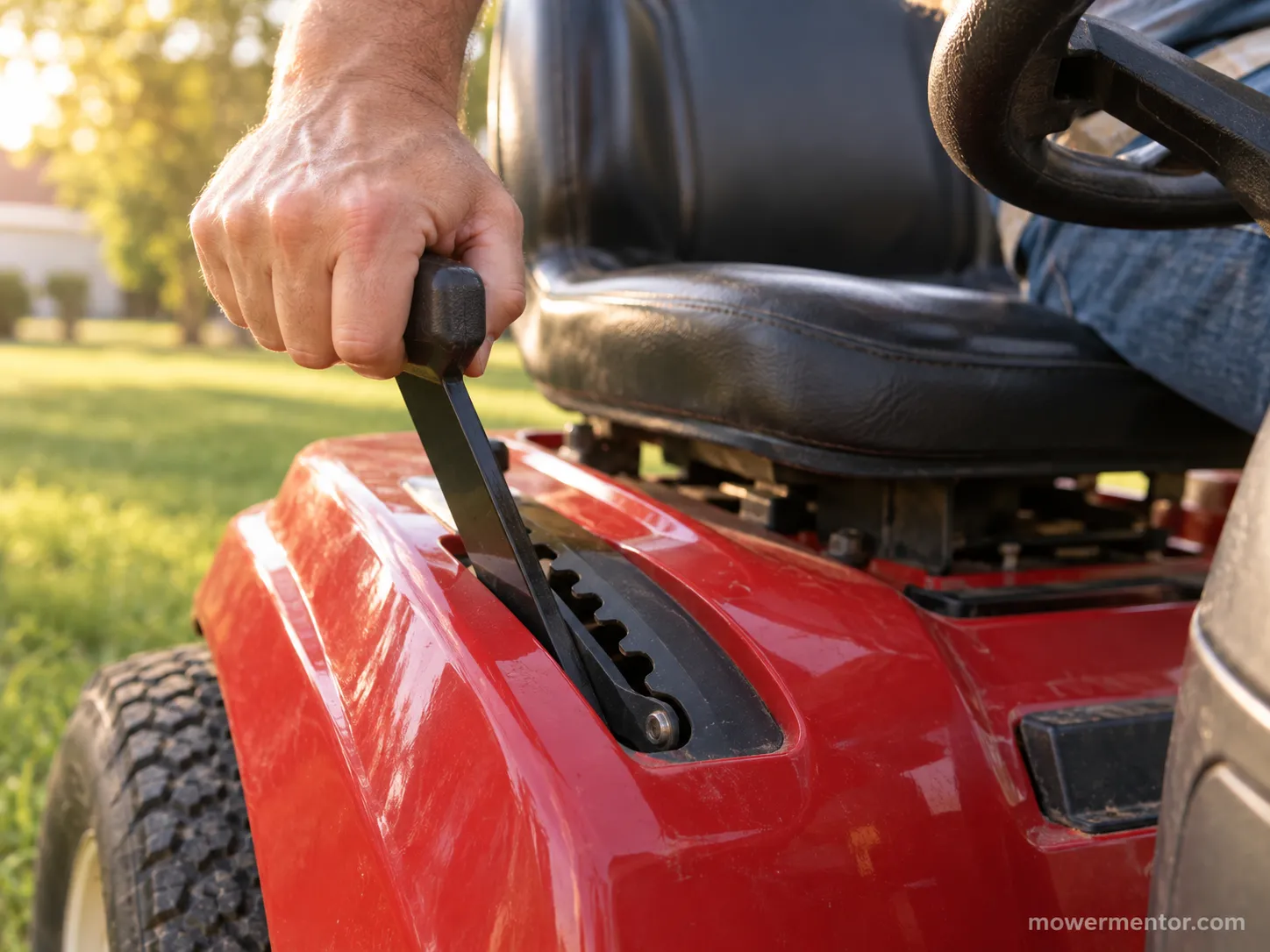
The parking brake must be fully engaged, the PTO or blade lever must be off, and you must be sitting in the seat, because all three interlocks gate the start circuit by design.
Then confirm the fuel is fresh and the fuel valve is open.
According to Cub Cadet's own start guide, these are the first steps for a mower that won't start.
Do these four free checks first, in order:
sit fully in the seat,
set the parking brake all the way,
push the PTO or blade switch off,
confirm fresh fuel with the fuel valve open. Then turn the key.
The first time my XT1 went dead in the driveway, three of the next four no-starts were the parking-brake switch not fully latching, not anything electrical.
I now reset all three interlocks before I reach for a meter, and it saves me most of the diagnosis.
These free checks fix a real share of no-starts, but they will not fix a dead circuit. If nothing changes when you turn the key, the problem is electrical or fuel, and the next section routes you to the right branch.
Cub Cadet Riding Mower Won't Start? Match Your Symptom First
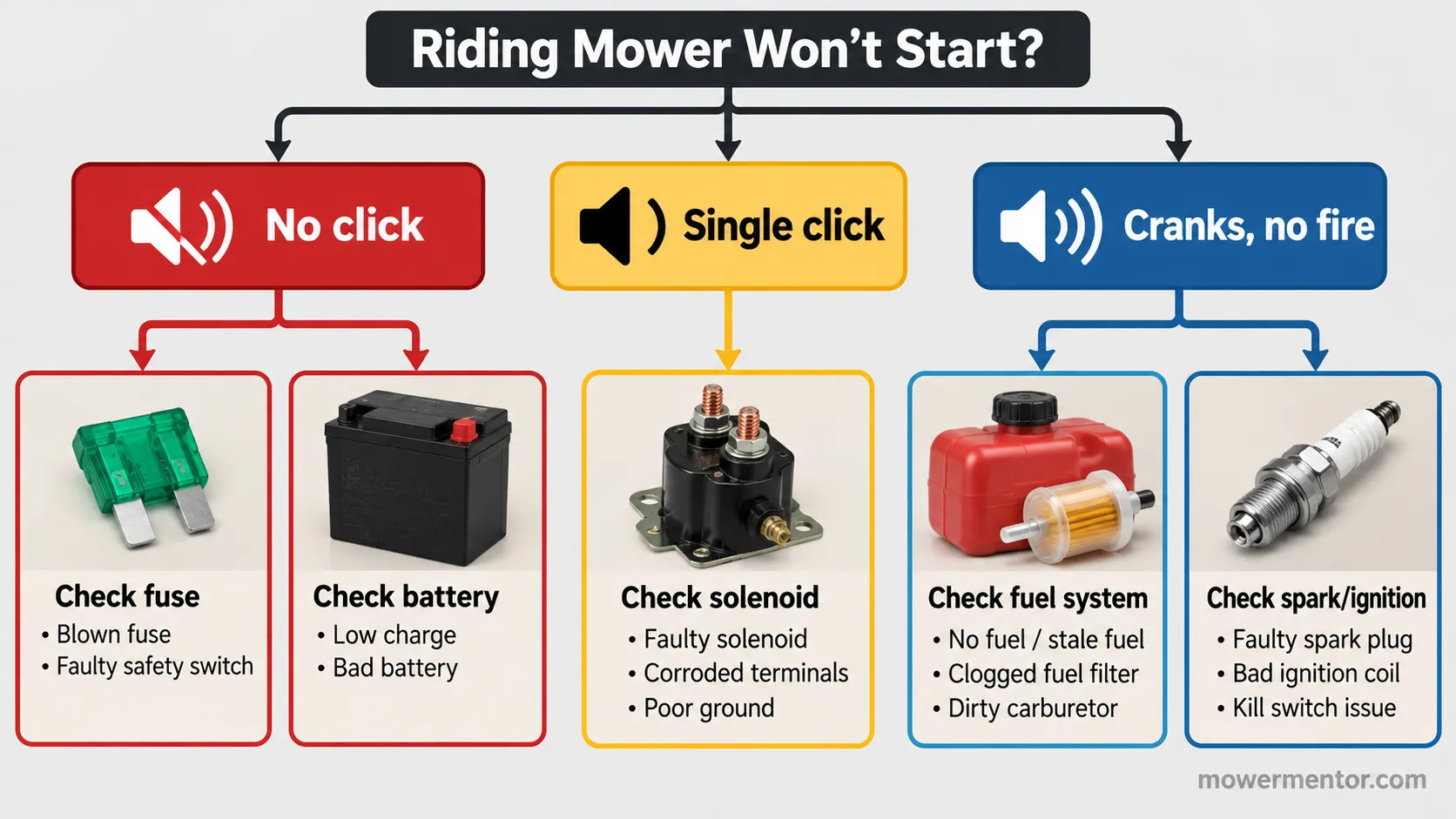
When a Cub Cadet riding mower won't start, the sound at the key sorts the problem into one of three branches before you touch a single part.
Silence with a dead dash points to a blown fuse, a bad battery ground, or an open safety switch. A single click points to a weak battery or a failing starter solenoid.
A crank that turns the engine but won't fire points to fuel or spark.
This routing is the fastest path to the fault, and it is the one no forum thread lays out in order. For the wider all-brands version, see the complete electrical starting diagnosis.
What you hear at the key | Most likely zone | Go to |
|---|---|---|
Nothing, no click, dash lights dead | Dead circuit: fuse, battery ground, safety switch, ignition | Section on the no-click dead circuit below |
One click, or rapid clicking, weak crank | Battery vs starter solenoid | The battery-vs-solenoid section below |
Cranks or spins over, but won't fire | Fuel, spark, or choke | The cranks-but-won't-fire section below |
Read your dash first. If the disengage-PTO or brake tell-tale light will not clear, an interlock is still open, and that is the fault, not the starter.
Across the Cub Cadets I have diagnosed this spring, matching the sound to the branch cut my average find-time to under ten minutes.
Silence almost always meant the fuse or a safety switch, and never once meant the starter itself.
One caution: symptoms can straddle branches. A very weak battery can mimic a dead circuit by producing no click at all, so if your symptom sits on the line between silence and a single click, start with the dead-circuit branch.
Rapid clicking is its own tell, and the no-click dead-circuit checklist covers the total-silence case in more depth.
Nothing Happens When You Turn the Key (No-Click Dead Circuit)
When a Cub Cadet gives total silence at the key, the start signal is being cut somewhere on the low-current control side before it ever reaches the starter.
Work the suspects in order: fuse, then battery voltage and ground, then the seat, brake and PTO safety switches, then the ignition switch.
One concrete test settles most of it.
Power should be present at the ignition B terminal at all times, and if it is not, the fuse or its feed is open.
According to Briggs & Stratton's starter guidance, the start current runs from the battery through the switches to the solenoid, so a single break anywhere kills the crank.
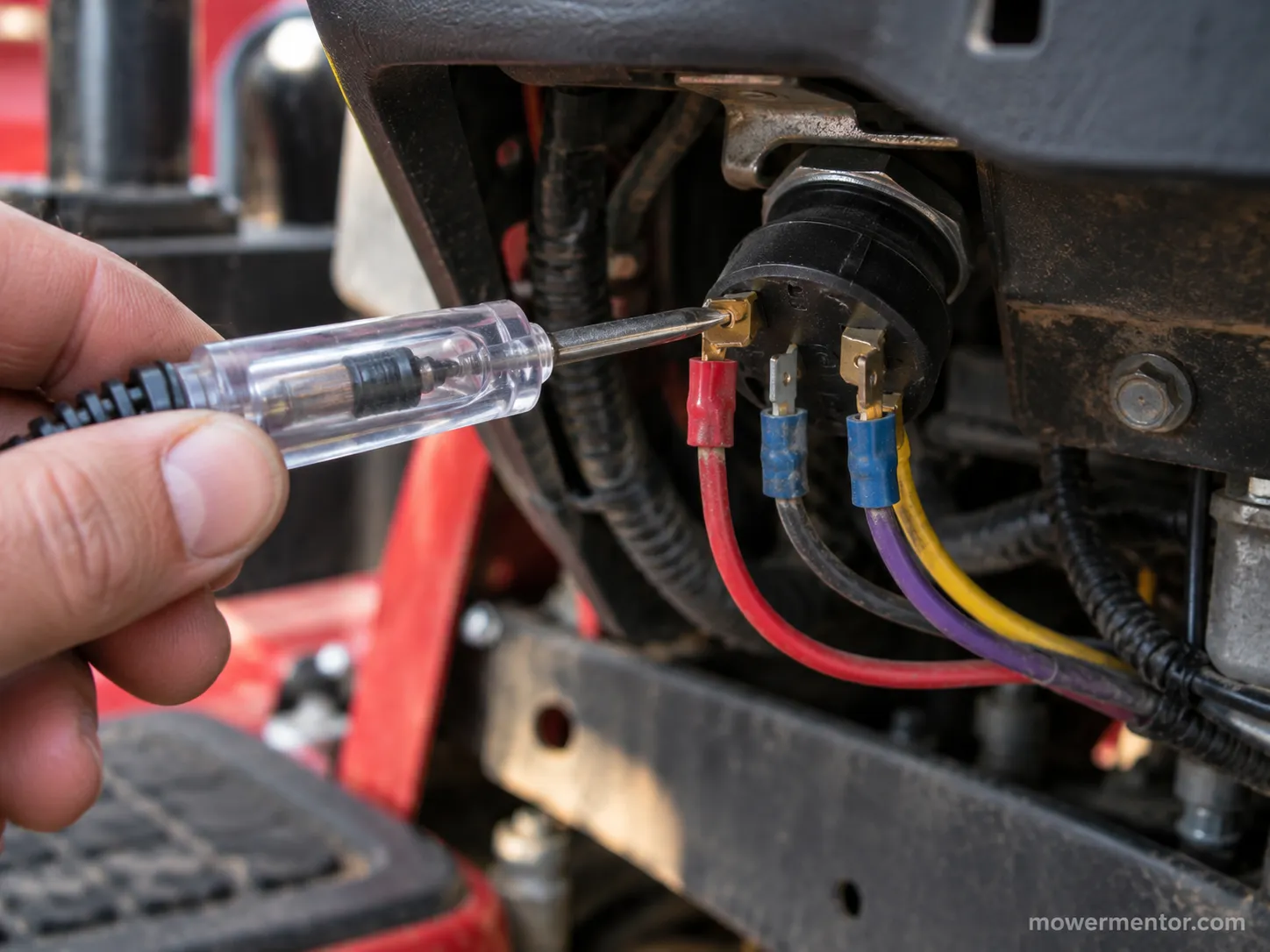
The fastest way to find the break is to follow the power with a 12-volt test light. Clip it to a clean ground, then probe forward from the battery to the fuse, to the key, and on to the small solenoid terminal while a helper holds the key in start.
Fix 1: Check the fuse. Difficulty easy, time 5 minutes. Pull the in-line blade fuse and look at the element; a broken strip or a scorched holder means no power downstream.
Replace it, and if it blows again instantly, stop and read the dead-short warning later in this guide.
If the fuse is good but the dash is still dead, the exact location for your model is mapped in the fuse-and-switch section below.
Fix 2: Test battery voltage and ground. Difficulty easy, time 10 minutes. A healthy battery rests at 12.5 to 12.7 volts, so anything under about 12.2 volts is low.
Just as important is the chassis ground: a loose or corroded negative-to-frame connection produces the same dead silence as a flat battery.
Clean and tighten it, then retest. If the whole mower is dead rather than just the start circuit, a suddenly-dead, no-power fix walks the main-feed checks.
Fix 3: Isolate a safety switch. Difficulty medium, time 15 minutes. The seat, brake and PTO switches each sit in the start path, and any one stuck open stops the crank.
Test continuity across each switch in its "start-ready" position, or unplug and jump each connector one at a time to see which one restores the crank.
When it turns out to be the switch, the battery-to-ground no-crank walkthrough covers the wider no-crank path.
Fix 4: Test the ignition switch. Difficulty medium, time 20 minutes. Check continuity by terminal in each key position, watching for the start position that should send power to the solenoid trigger.
On many XT1 key switches a reverse-inhibit module lives in the same circuit, so confirm the switch itself before condemning it.
If it tests open, starting it with a bad ignition switch shows the workaround. The community answers at iFixit confirm the same switch-and-ground tests.
Tracing an XT1 LT42 that was dead silent, I put the test light on the B terminal and got nothing.
The in-line fuse holder was corroded, not the fuse itself, and cleaning the holder brought the entire dash back to life.
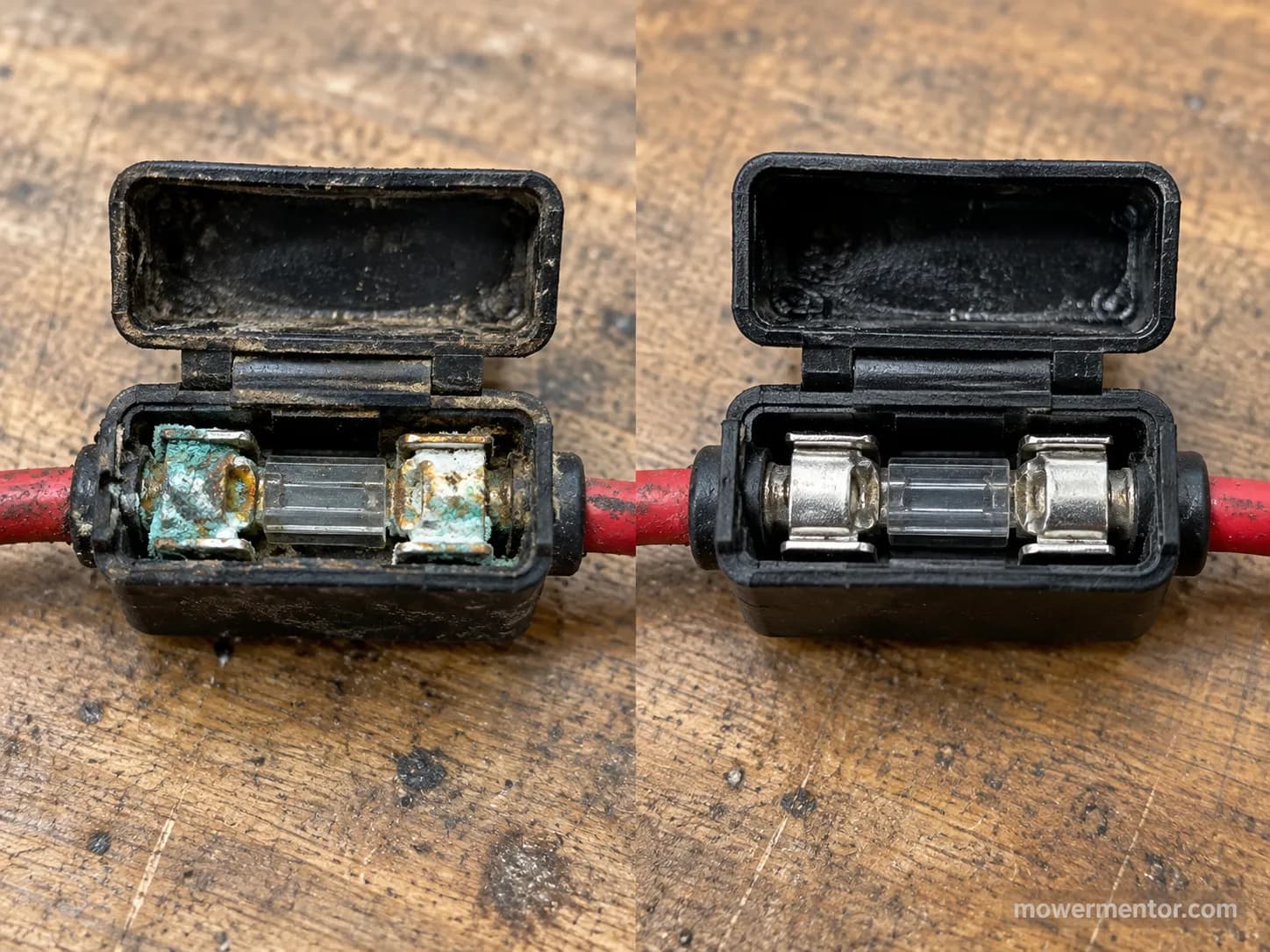
Test-bypass a safety switch only to confirm it, never to run the mower. Jumping a seat or brake switch is a legitimate diagnostic step, but a mower left with its interlocks bypassed can start or move with no one safely in control.
One Click or a Weak Crank: Battery vs Solenoid
When a Cub Cadet clicks once but won't turn over, the click is the solenoid trying to work, and the split is between a weak battery and the solenoid itself.
A single click with a battery that sags under load points to a weak battery or a corroded cable.
A single click with good voltage still present at the solenoid trigger points to the solenoid.
A starter that spins without engaging points to the starter. The number that decides it is not the resting voltage, it is the voltage under crank load.
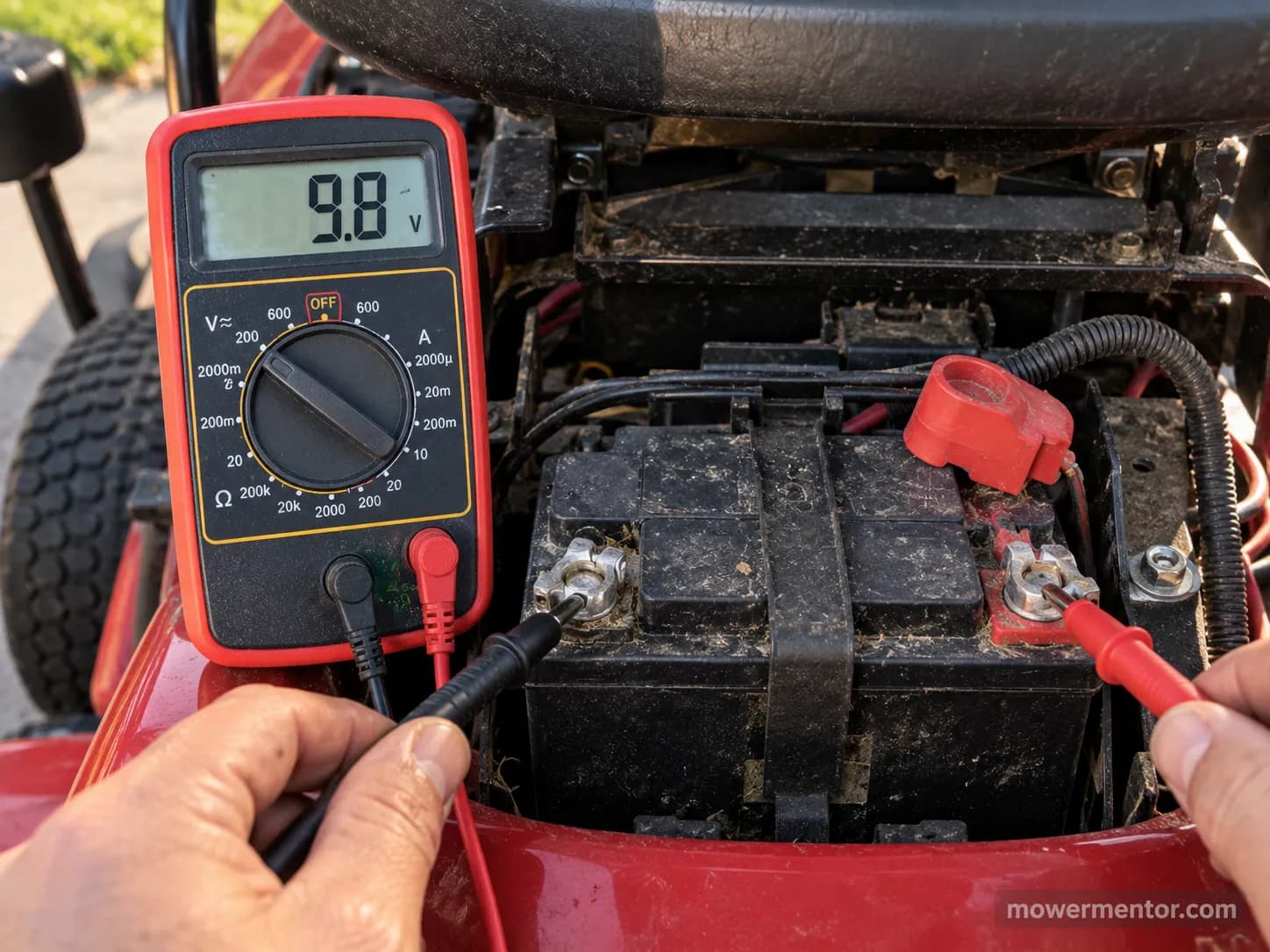
Test the battery under load, not at rest. A good battery drops only about a volt to a volt and a half while cranking, and AutoZone's battery test guidance notes that a fall to 8 or 9 volts under load marks a battery that is done, even if it read fine at rest.
On an LTX 1040 that only clicked, the battery rested at 12.4 volts but collapsed to 9.1 volts the instant I cranked it.
The resting number looked healthy; the load test is what exposed the dead cell.
Test point | Reading | What it means |
|---|---|---|
Rest, engine off (6+ hours) | 12.4 V | Looks charged on the surface |
First crank attempt | 9.1 V | Collapses under load, battery failing |
Second crank attempt | 9.0 V | Repeats, confirms weak battery not a fluke |
Third crank attempt | 8.8 V | Below 9.6 V threshold, replace the battery |
If the battery keeps failing the load test, choosing the right Cub Cadet battery covers the correct U1 size and cranking amps.
For rapid clicking versus a single click, telling rapid clicks from a single click breaks down each pattern.
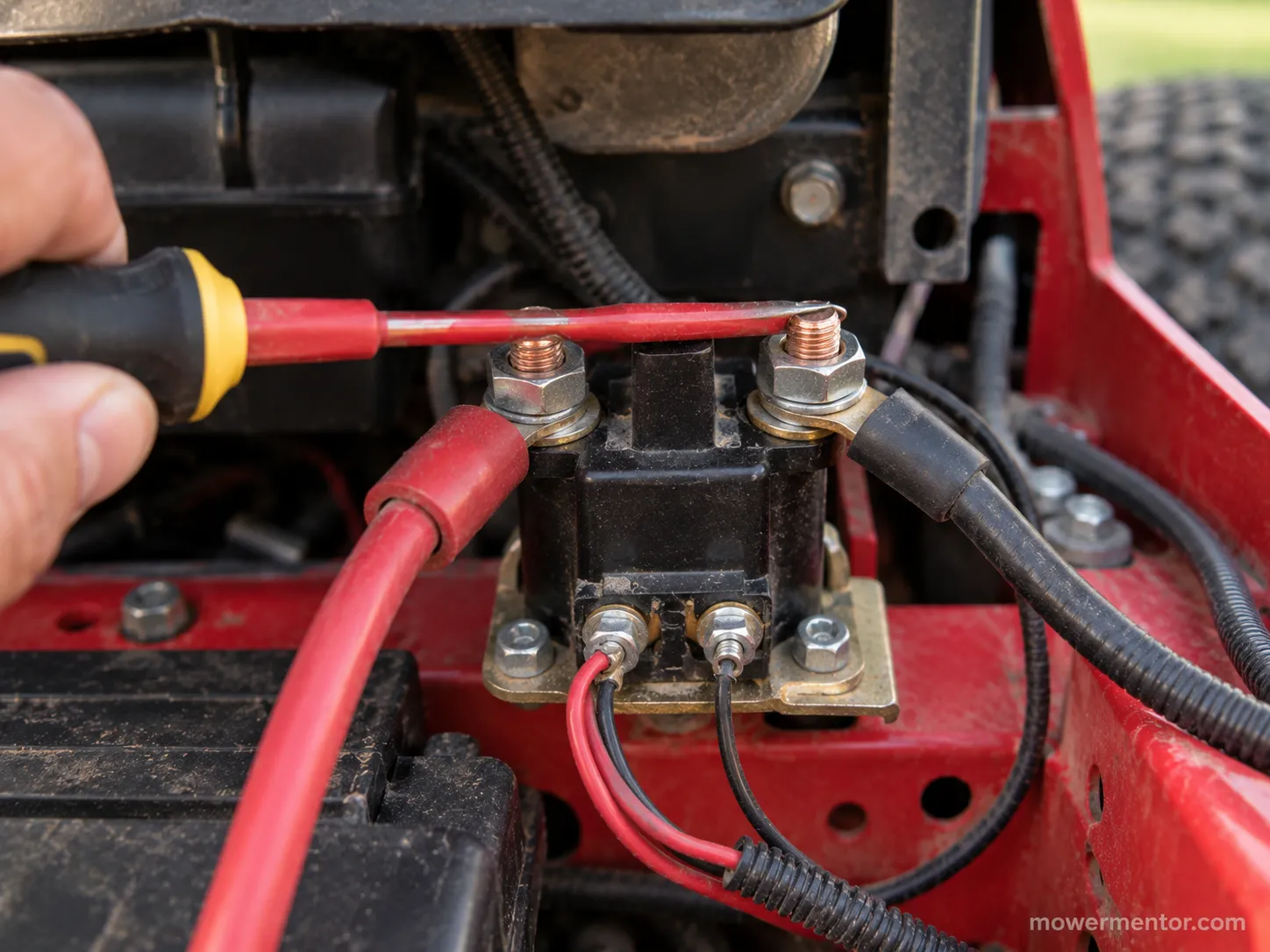
To test the solenoid, bridge its two large terminals with an insulated screwdriver while the mower sits in neutral with the brake set and the blades off.
If the starter now spins, the solenoid was not passing current and it is the fault; if nothing happens, the starter or its feed is next.
Hunker's Briggs solenoid test shows the same terminal check with a meter. To confirm and replace it, see testing the Cub Cadet starter solenoid.
Bridging the solenoid bypasses every safety switch, so the mower can lurch if it is in gear.
Set the parking brake, put the transmission in neutral, and keep the blades disengaged before you touch the terminals.
Why Does the Starter Just Spin Without Turning the Engine Over?
If the starter free-spins, you will hear a fast whir with no compression and the engine never rocks.
That means the starter is getting power but its drive gear, the Bendix, is not climbing out to catch the flywheel ring gear.
A worn Bendix, a dirty starter shaft, or chipped flywheel teeth are the usual causes, and the fix is a starter service or replacement rather than more battery testing.
When the starter spins but won't engage, spotting a failing starter shows how to confirm it before you buy one.
It Cranks but Won't Fire (Fuel, Spark & Choke)
When a Cub Cadet turns over normally but won't catch, the electrical side is fine and the problem is fuel or spark.
Suspect fuel first, especially after storage: stale gas, a fuel solenoid that is not clicking open, a clogged fuel filter, or a vacuum-locked fuel cap. Confirm spark last.
Briggs & Stratton's fuel-stabilizer guidance notes that gasoline can start to degrade in as little as 30 days and gum the carburetor.
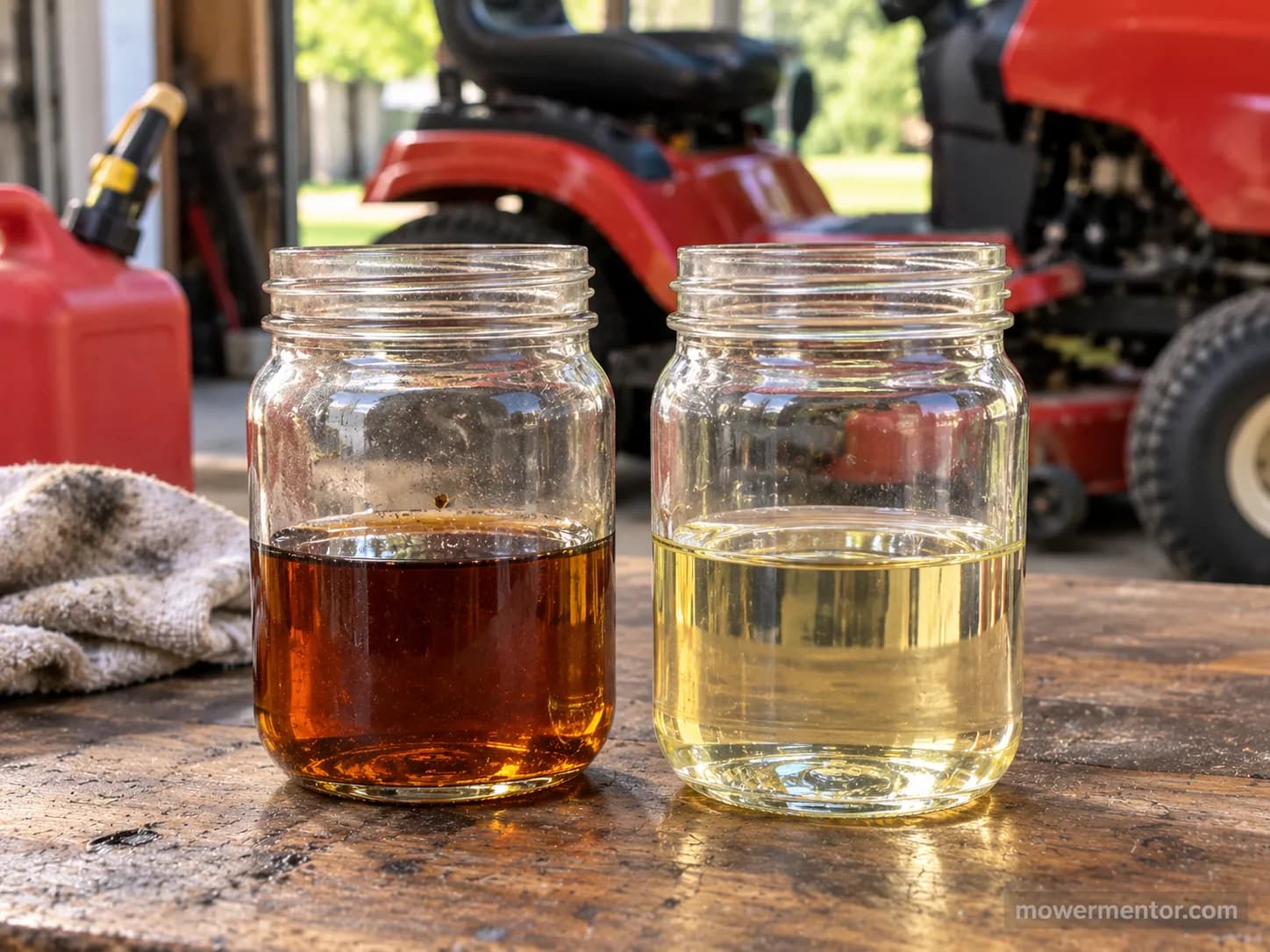
Fresh fuel first. Difficulty easy, time 10 minutes. If the mower sat over winter, drain the old gas and refill with fresh fuel plus stabilizer. Ethanol-blended E10 absorbs moisture and leaves varnish that plugs the tiny carburetor jets.
Free the fuel-cap vent. Difficulty easy, time 2 minutes. Loosen the cap and listen for a vacuum hiss; if the engine then starts and later dies, the cap vent is blocked and pulling a vacuum on the tank.
Listen for the fuel solenoid. Difficulty easy, time 5 minutes. On engines with a fuel shut-off solenoid at the carburetor bowl, you should hear it click when the key goes on and off. No click can mean no fuel is being let through.
Check the filter, then spark and choke. Difficulty easy, time 15 minutes. Confirm the fuel valve is open and the in-line filter is clear, then pull the plug for a strong blue spark and make sure the choke is closing on a cold start.
If it cranks slow and still won't catch, using starting fluid safely can confirm fuel starvation in one controlled shot.
A clogged air filter can starve a cranking engine of air too, so cleaning a clogged air filter is worth a look here, and seasonal plug and filter work belongs in a complete DIY tune-up.
After a winter in the shed, my Kohler-engined XT1 cranked strong but would not fire.
Loosening the fuel cap gave an audible vacuum hiss, and once I drained the stale gas and refilled, it caught on the second turn with the choke closed.
Past fresh fuel, a clear filter and good spark, a no-start is a carburetor job. If those three are confirmed and it still won't fire, the carburetor needs cleaning or rebuilding, and that is the honest stopping point for a quick fix.
Where the Fuse & Safety Switches Are on Your Cub Cadet (XT1 / XT2 / ZT1 / LTX)
On a Cub Cadet, the in-line blade fuse is commonly a 20-amp fuse, and where it sits depends on the model family.
On lawn tractors it usually lives near the dash or just left of the battery box, while on some XT1 machines it hides at the rear frame near the solenoid.
The seat, brake and PTO safety switches gate the start circuit on every model, and the lap-bar neutral switches do the same job on zero-turns.
Because the fuse feeds the key B terminal, a single blown fuse kills the entire dash, which is why a dead mower so often traces back to this one part.
Always confirm your exact model on the serial tag, then pull the matching diagram from Cub Cadet's operator manuals.
Model family | Fuse (typical) | Where the fuse hides | Safety switches to check |
|---|---|---|---|
XT1 (Enduro) | 20 A blade | Under the dash, or rear frame near the solenoid on some LT models | Seat, brake, PTO |
XT2 (Enduro) | 20 A blade | Near the dash or by the battery box | Seat, brake, PTO |
LTX / LT (legacy) | 20 A blade | Left of the battery box, in-line on the main feed | Seat, brake, PTO |
ZT1 / ZTS (zero-turn) | 20 A blade | Under the seat pan or by the battery | Seat, PTO, both lap-bar neutral switches |
Two different faults get called "blowing the fuse," and they need different responses.
A fuse that blows the instant you turn the key is a dead short in the wiring and must be traced, while a fuse that survives start but fails after running points more often at the charging system, the regulator or rectifier overloading the circuit.
On an XT1 LT42, the fuse holder is tucked back by the rear solenoid where you cannot see it from the seat.
I had to trace the main feed by hand to find it, which is exactly why owners miss it and assume the whole harness is dead.
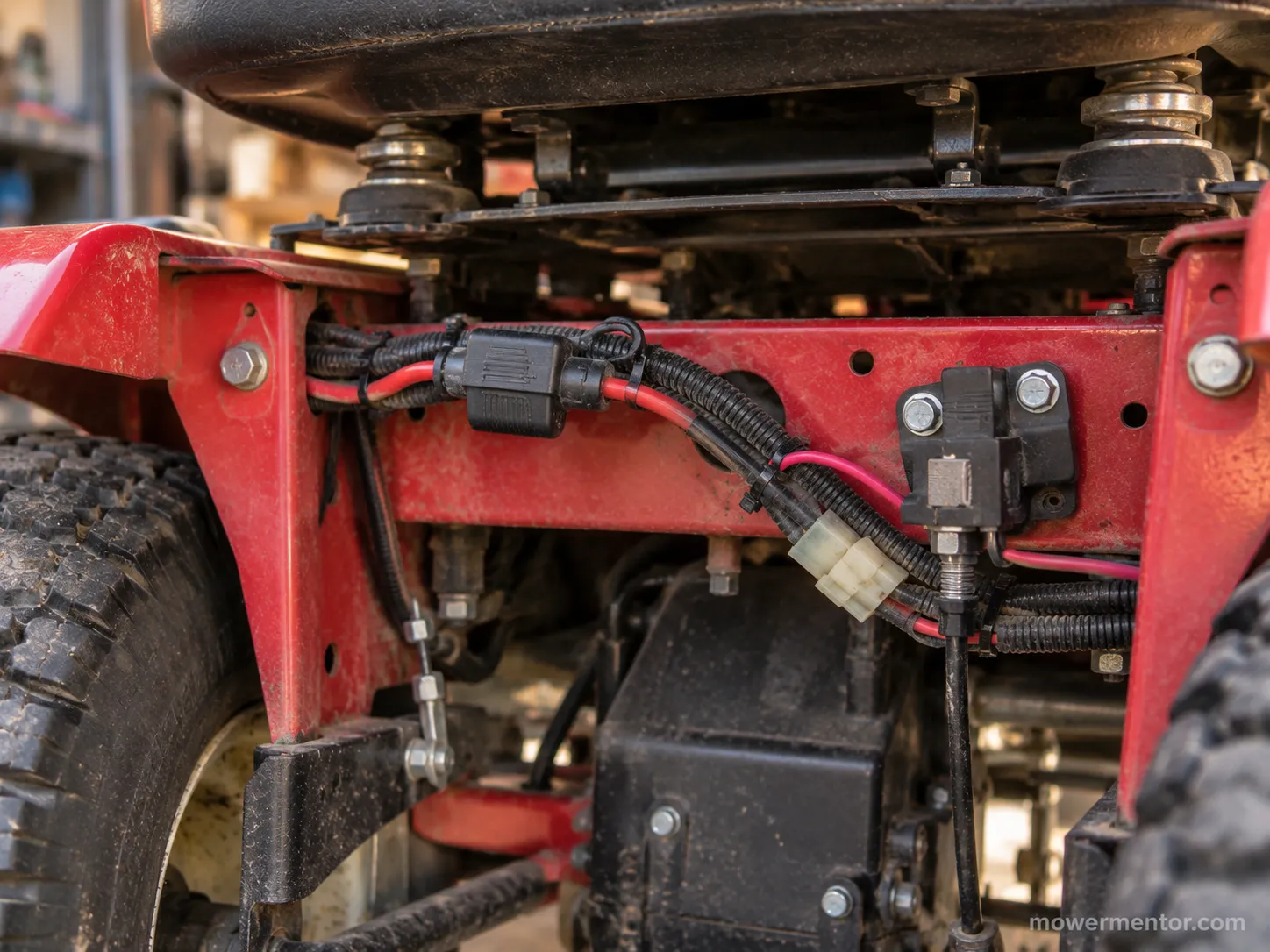
Locations do shift by model year, so check your serial-tag model number before you go hunting.
If a switch tests faulty and you need to confirm it out of circuit, responsibly bypassing a safety switch shows the safe way to test one.
Cub Cadet Zero-Turn (ZT1/RZT) Won't Start or Turn Over: What's Different
A Cub Cadet zero-turn adds lap-bar neutral switches on top of the usual seat, brake and PTO interlocks, and that changes the first thing to check.
The lap bars must be pushed fully out to their neutral, parked position, or the mower will not crank at all.
This is the single most common zero-turn no-start, and it is worth checking before you suspect the solenoid or starter.
The ZT ground-control circuit routes through those lap-bar switches, often through a four-pole solenoid, so a bar that is not quite seated breaks the crank the same way an open safety switch would.
Check the lap bars first. Push both bars fully outward to the neutral detent, confirm they click into the parked position, then try the key.
If the bars are seated and it still won't crank, test the neutral switches at each lap bar for continuity in the parked position, the same way you would test a seat or brake switch.
Newer push-button and EFI zero-turns start differently from a keyed tractor, but the interlock logic is the same: neutral, brake and PTO all have to agree before the starter gets power.
That interlock sequence is spelled out per model in Cub Cadet's operator manuals. Everything past the lap bars routes back to the main symptom tree above.
A ZT1 that had "died" turned out to be a lap bar sitting half an inch short of full neutral, so its switch never closed.
Nudging the bar out fixed a no-crank I had very nearly blamed on the solenoid.
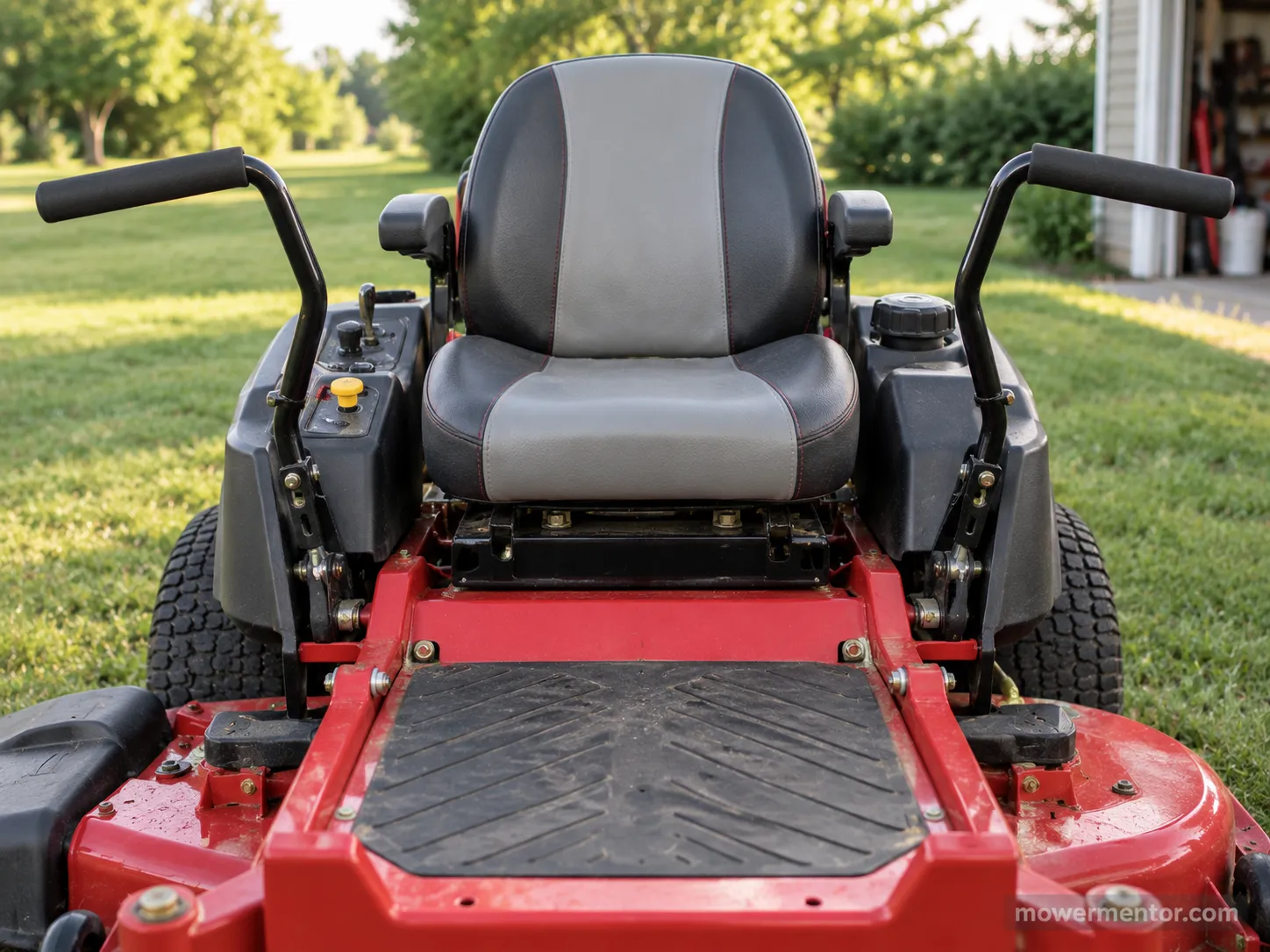
Some zero-turn faults are shared with tractors, so if the lap bars check out, use the main tree.
If a fresh battery still won't crank the machine, a new battery that still won't crank covers what to check next.
Keep It From Happening Again (Battery & Off-Season Care)
Most repeat Cub Cadet no-starts trace back to a battery drained in storage or corroded terminals, not to a part that suddenly failed.
A maintainer over winter, clean and greased terminals, and stabilized or drained fuel prevent the large majority of them.
Heading into the 2026 season, an hour of off-season care is far cheaper than a spring service call.
The fix is a short, repeatable routine tied to the exact failure modes above.
Put the battery on a maintainer or trickle charger during any storage longer than a month, so self-discharge and parasitic draw do not flatten it.
Clean the terminals to bright metal and add a thin film of dielectric grease once a season to stop the corrosion that mimics a dead battery.
Stabilize the fuel or drain it before storage; Briggs & Stratton's fuel guidance recommends against leaving untreated gas in the tank beyond 30 days.
Disconnect the battery for long layups if you cannot reach a maintainer, which removes the parasitic drain entirely.
Since I started putting my XT1 on a maintainer every November and draining the gas, I have had zero spring no-starts across three seasons.
Before that routine, it was an every-April dead battery.
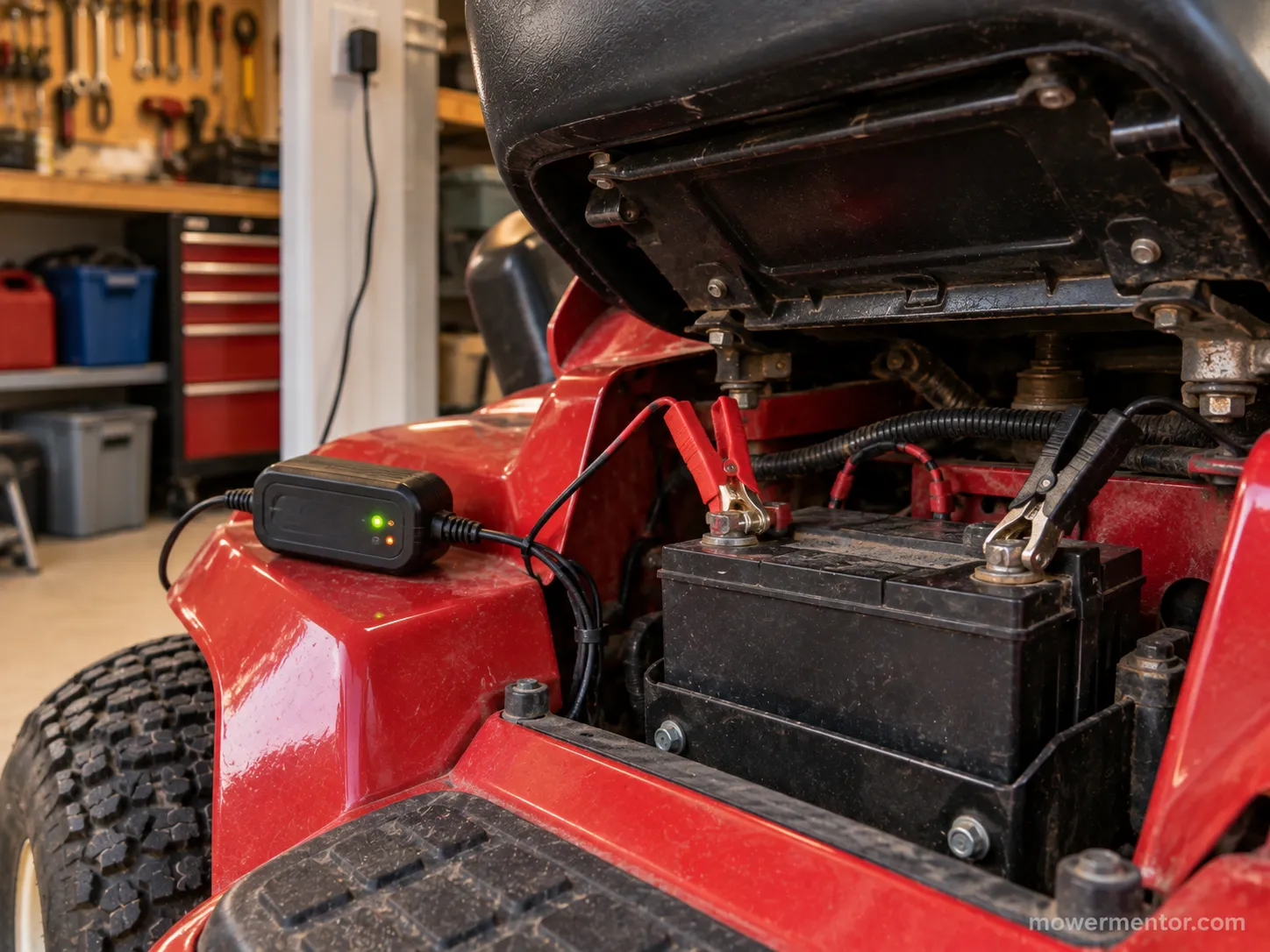
If it is already flat and you need to mow today, how to jump-start it safely gets you going.
The same battery care applies to cordless machines in tuning up an electric mower, and when a filter is too far gone to clean, replacing the air filter is part of the same seasonal service.
When to Stop and Call a Pro
Some Cub Cadet no-starts are a signal to stop testing and get a technician, and knowing the line protects both you and the mower.
Stop do-it-yourself work if the fuse blows again the instant you replace it, which is a dead short, or if anything smells burnt, smokes, or gets hot to the touch.
Stop as well if the starter itself got hot, or if the engine will not turn by hand, which can mean a seizure.
These point to a short, a failing charging system, or internal engine damage that needs proper equipment.
The safety and fuel-system standards published by the Outdoor Power Equipment Institute back the same caution around shorts and fuel leaks.
Stop and call a pro if you see any of these red flags:
A replacement fuse blows instantly on key-on, which means a dead short in the harness.
Any burning smell, smoke, or melted insulation around the wiring or solenoid.
A starter that got hot or smoked during testing.
An engine that will not rotate by hand, suggesting a seized engine.
A fuel leak anywhere in the system.
The one time I ignored a fuse that blew instantly on key-on, I chased it for an hour before finding a chafed harness shorting to the frame.
Now a fuse that re-blows the moment I turn the key is my hard stop for the shop.
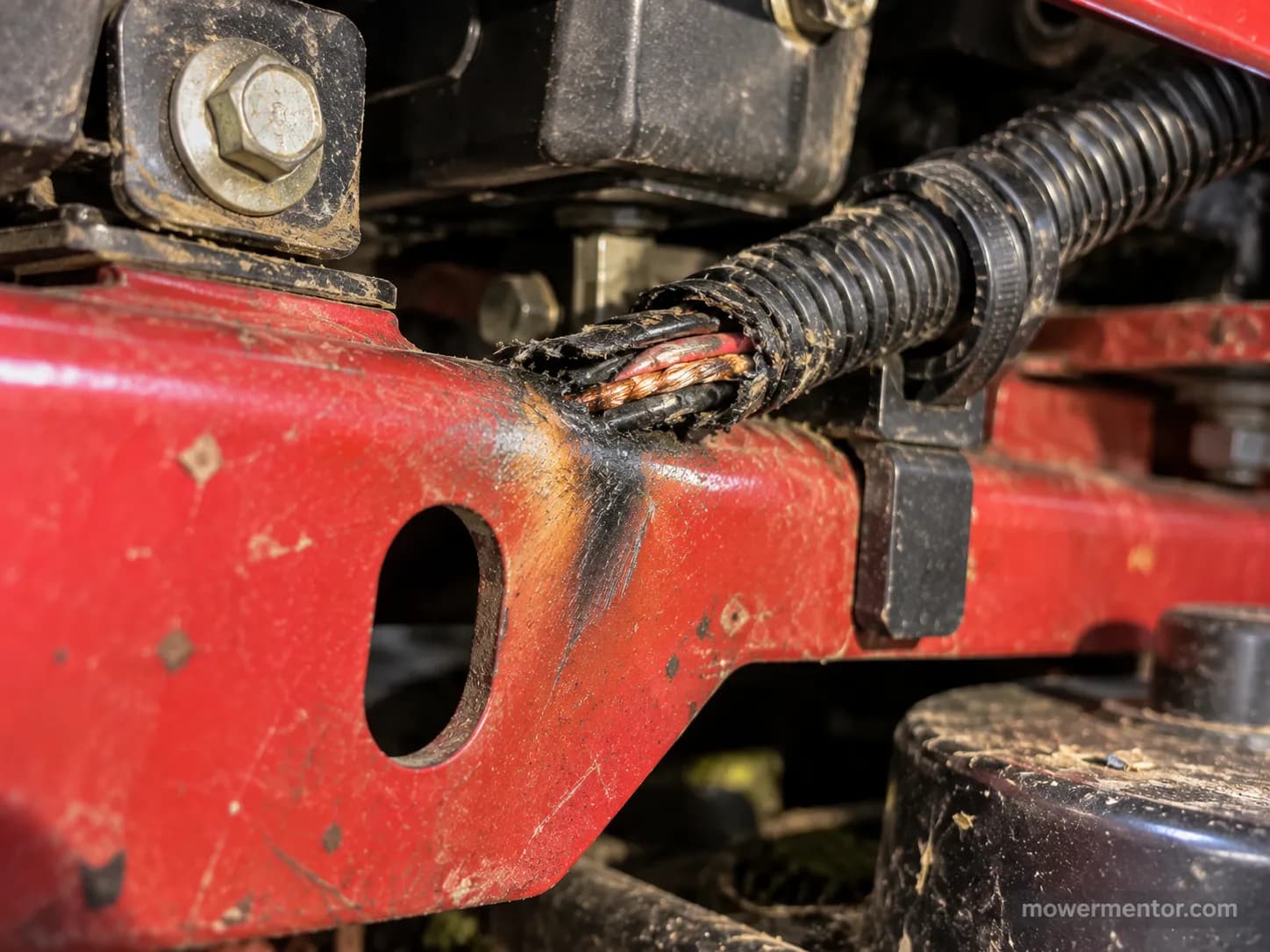
A shop can load-test the charging system, pressure-check for shorts, and pull the starter for a bench test faster and more safely than a driveway repair allows.
If the starter got hot or won't engage, confirm it first with bad-starter symptoms to confirm so you are not paying to replace a good part.
Frequently Asked Questions
Why won't my Cub Cadet riding mower start?
A Cub Cadet riding mower usually won't start for one of three reasons, sorted by the sound at the key. Silence with a dead dash is a fuse, ground, or safety switch; a single click is a weak battery or solenoid; a crank that won't fire is fuel or spark. Match the sound, then work that branch.
Why does my Cub Cadet just click and not turn over?
A single click is the solenoid trying to engage without enough power behind it, which usually means a weak battery or a failing solenoid. Load-test the battery first, since it can read fine at rest yet collapse under crank. If the battery holds, the battery-vs-solenoid click test pins down which part is at fault.
Where is the fuse on my Cub Cadet riding mower?
The in-line 20-amp blade fuse sits near the dash or by the battery box on most lawn tractors, and near the rear-frame solenoid on some XT1 models. Zero-turns often keep it under the seat pan. Because locations vary by model year, confirm yours against the operator manual for your exact serial-tag model.
What voltage should my Cub Cadet battery read?
A healthy 12-volt mower battery rests at 12.5 to 12.7 volts after sitting. Resting voltage alone can mislead you, though. In my own testing a battery read 12.4 volts at rest but dropped to 9.1 volts under crank, which is the load test failing and a clear replace signal.
Why won't my Cub Cadet zero-turn start?
A Cub Cadet zero-turn adds lap-bar neutral switches to the usual interlocks, and the bars must be pushed fully out to neutral before it will crank. A bar sitting slightly short of neutral is the most common cause. Check the lap bars first, then fall back to the main symptom tree.
Why does my Cub Cadet keep blowing the fuse?
A fuse that blows the instant you turn the key is a dead short in the wiring, not a weak part, and it needs tracing rather than another new fuse. A fuse that fails only after running usually points at the charging system. Repeated instant blows are a stop-and-service signal, and typical tune-up and repair cost sets expectations for a shop visit.
The Bottom Line
The reason a Cub Cadet riding mower won't start is rarely mysterious once you let the machine tell you where to look.
Silence, a single click, and a crank that won't fire are three different problems in three different zones, and sorting by that first sound keeps you from swapping a good battery, solenoid, or starter on a hunch.
Start every time with the free interlock and fuel checks, then route by sound: the dead-circuit branch for silence, the battery-versus-solenoid load test for a click, and the fuel-first path for a crank that won't catch.
Your XT1, XT2, ZT1, or LTX has its fuse and switches in specific places, and finding them on your own model is what turns an all-day guessing game into a fifteen-minute repair.
Keep the battery on a maintainer and the fuel fresh, and most of these no-starts never come back.
When a fuse blows instantly or something smells burnt, that is the moment to hand it to a technician rather than push on.
Work it in that order and a Cub Cadet riding mower that won't start becomes a problem you can read, diagnose, and fix with confidence.
Read it your way
Short on time? Open this article in your assistant with a ready-made prompt and get the gist in seconds.
Found this useful? Make us a preferred source so we show up in your Google results.
Keep reading
Related articles
Troubleshooting & Repair
Lawn Mower Ignition Switch Replacement (Steps + Cost)
Do your own lawn mower ignition switch replacement: photo steps, wire-by-terminal transfer, fitment help, and a DIY-vs-shop cost table to save $100+.
Troubleshooting & Repair
Which Lawn Mower Ignition Switch Fits? (Prong Guide)
hoose the right lawn mower ignition switch by prong count (4/5/6/7), universal vs OEM fit, and key compatibility, plus which one fits your mower.
Troubleshooting & Repair
How to Start a Lawn Mower With a Bad Ignition Switch
Confirm it's the switch, then learn how to start a lawn mower with a bad ignition switch: a safe solenoid bypass to get moving, plus how to fix it for good.
Troubleshooting & Repair
How to Test a Lawn Mower Ignition Switch (5/6/7-Pin)
Learn how to test a lawn mower ignition switch with a multimeter: get continuity tables for 5, 6 & 7-pin switches plus a no-multimeter test-light method.
The discussion
Comments
Every comment is reviewed before it goes live.